Our readers keep the lights on and my smoothie glass nicely filled. As an Amazon Associate, I earn from qualifying purchases.
Specs are compiled from manufacturer listings and verified buyer reviews and can change over time — please confirm the key details on the product page before buying.
If your legs ache during a run or feel heavy for hours after, the fix is often right on your calves. Compression socks for running use steady, graduated pressure to keep blood moving, so your muscles feel fresher mile after mile and recover faster once you stop. But the wrong fit or a weak compression level can leave you with the same soreness you tried to escape.
I’m Mohammad Maruf — the founder and writer behind WellFizz. This guide is built by comparing the manufacturers’ published specifications and the patterns across verified customer reviews, so you get each pick’s real strengths and trade-offs instead of marketing spin.
Whether you are logging daily miles, standing a twelve-hour nursing shift, or nursing tired legs from a long flight, these reviews pinpoint exactly which compression socks for running deliver the measurable support you actually need without wasting money on a gimmick.
Quick Picks
- Sooverki Copper Compression Socks — Best Overall
- Physix Gear Compression Socks 20-30 mmHg — Best Firm Compression
- Cute Compression Socks for Women — Best Cute Support
- PRO Compression Marathon Knee High Socks — Best Mileage Specialist
- Zensah Tech+ Compression Socks — Best Shin Splint Defense
- PULIOU Cooling Compression Socks — Best Thermal Pack
How To Choose The Best Compression Socks For Running
Picking the right pair starts with understanding the two numbers that matter: the compression level (mmHg) and the fabric blend that keeps your feet dry. A runner’s needs differ from a nurse’s, so you want a sock that targets muscle fatigue and stays put without cutting into your calf.
Compression Level: 15-20 mmHg vs. 20-30 mmHg
The pressure rating is measured in millimeters of mercury, or mmHg. A 15-20 mmHg sock gives a light squeeze — good for general travel, mild swelling, or recovery on casual days. A 20-30 mmHg sock delivers firmer support that really helps with shin splints, calf soreness, and blood pooling during and after a hard run. Most serious runners want the 20-30 mmHg range because it keeps blood moving efficiently when your legs are pounding the pavement. A 15-20 mmHg pair might feel too loose if you are dealing with muscle fatigue or varicose veins (swollen, twisted veins near the skin surface), so match the level to your activity intensity.
Fabric and Moisture Management
Nylon and spandex blends are common because they stretch just enough to maintain compression without sagging. A moisture-wicking weave pulls sweat off your skin so your feet do not get clammy inside a running shoe. Polyester and copper fibers add odor resistance and durability, but you need a knit that breathes — especially for warm-weather miles. Overheating your feet on a long run leads to blisters and discomfort, so check the fabric weight class: lightweight socks handle heat better than medium-weight ones.
Fit, Sizing, and Toe Design
A compression sock that is too loose will bunch up behind the knee or wrinkle at the ankle. A sock that is too tight can restrict blood flow and cause deep grooves in the skin. Look for a smooth toe closure — that simple difference prevents chafing during 5+ mile runs. Also check whether the sock is marked for left and right feet; an anatomical fit creates less friction. Size charts vary by brand, so measure your calf circumference and shoe size against the chart, not by guesswork.
Quick Comparison
| Model | Best For | Compression Level | Material | Pairs per Pack | Amazon |
|---|---|---|---|---|---|
| Sooverki Copper Compression Socks | Budget-friendly daily use | 15-20 mmHg | 85% Nylon, 10% Polyester, 5% Copper Fiber | 8 | Amazon |
| Physix Gear Compression Socks | Long shifts & firm recovery | 20-30 mmHg | Nylon, Spandex | 1 | Amazon |
| PULIOU Cooling Compression Socks | Thermal insulation & cold runs | 20-30 mmHg | — | 2 | Amazon |
| Cute Compression Socks for Women | Supportive style with great comfort | 20-30 mmHg | Polyester | 3 | Amazon |
| PRO Compression Marathon Knee High | Running & marathon training | 20-30 mmHg | Nylon, Spandex | 1 | Amazon |
| Zensah Tech+ Compression Socks | Shin splint prevention for serious runners | Graduated (level not stated) | 82% Polyamide, 18% Elastane | 1 | Amazon |
In‑Depth Reviews
1. Sooverki Copper Compression Socks
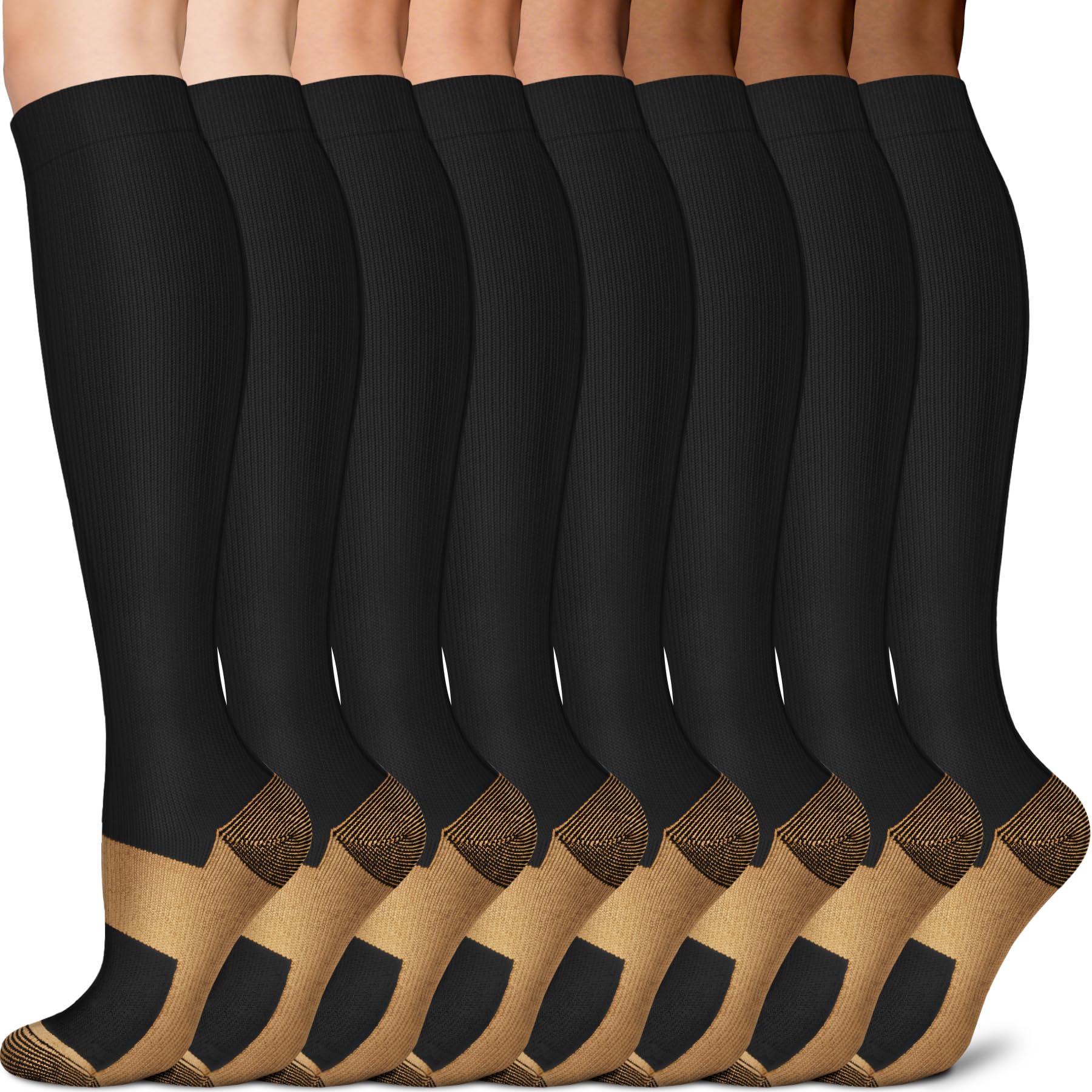
The value champion that stuffs your drawer with eight reliable pairs without emptying your wallet.
You get 8 pairs for the price of 1 from many other brands — that real-world buyer quote nails why this pack is so popular. A 15-20 mmHg sock delivers a mild squeeze perfect for daily recovery runs, office shifts, or casual travel. It is not the strongest pressure on this list, but that makes it a comfortable entry-level companion for most runners. The knit uses 85% Nylon, 10% Polyester, and 5% Copper Fiber, which buyers report handles moisture without feeling hot. One reviewer noted the value of having 8 pairs for the price of just one in a store, and that math captures the real-world appeal.
Compared to the 20-30 mmHg Physix Gear below, the Sooverki applies 33% less pressure, so it is gentler on calves that are not used to heavy compression. The trade-off: consistent sizing across colors can vary — one buyer found the grey baggy, the white perfect, and the black too tight on the calf. If you want a softer compression for everyday leg recovery and hate doing laundry every other day, the 8-pair count here is tough to beat.
Why Runners Grab These
- Eight pairs cover a full week of training without washing.
- Copper fibers help manage odor during sweaty runs.
- Owners mention they are easy to pull on compared to tighter compression socks.
Know Before You Buy
- 15-20 mmHg is lighter — not ideal if you need firm shin splint support.
- Color-specific sizing can be inconsistent across the pack.
Best for: Runners who want a low-cost daily compression sock that works for work, travel, and easy jogs without a sink full of laundry.
Trade-off: The 15-20 mmHg level will feel too mild if you are training for a marathon or dealing with significant calf fatigue.
2. Physix Gear Compression Socks 20-30 mmHg

This 20-30 mmHg workhorse survives twelve-hour shifts without leg pain, customers note.
This sock applies the firmer 20-30 mmHg compression level that most active runners and standing workers actually need. The knit does not feel overly tight despite the pressure, and reviewers point out it stays in place all day. One reviewer summed it up clearly: “An entire 12 hour shift at the hospital and my legs still don’t hurt when I get home!” That level of endurance carries directly over to long training runs where muscle fatigue sets in around mile eight.
The main sizing quirk — some users find the sock comes too far up the leg, reaching the bend of the knee instead of sitting two inches below it, which can cause wrinkling at the top of the foot. If you have shorter legs, check the size chart carefully. But for runners with average to long calves, the combination of durable knit material and reliable 20-30 mmHg pressure makes this a strong choice over the Sooverki when you need that firmer squeeze.
What Stands Out
- Firm 20-30 mmHg compression for effective leg fatigue reduction.
- Breathable material that holds up after multiple washes.
- Cute, attractive patterns — a rarity for serious compression socks.
What to Watch For
- Length can be too long for shorter legs, creating ankle wrinkles.
- Requires a small learning curve to pull on smoothly.
Reach for this pair if: You need consistent 20-30 mmHg support for long runs or twelve-hour standing days and appreciate a sock that looks good too.
Look elsewhere if: Your calves are on the shorter side and you can’t tolerate fabric bunching behind your knee.
3. Cute Compression Socks for Women
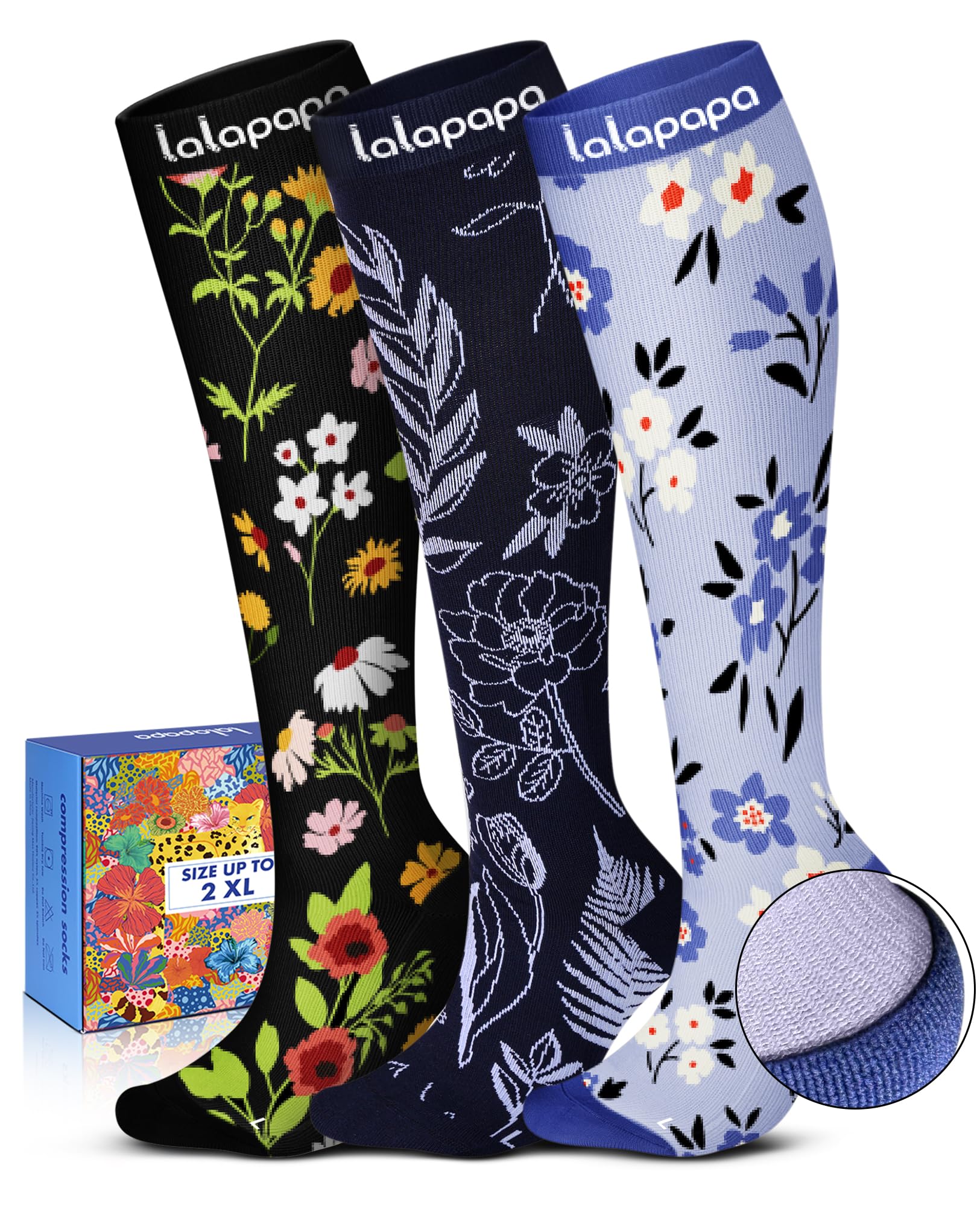
Three pairs of 20-30 mmHg support with genuinely fun, woven designs.
What makes these stand out is the unexpected combination of a cute woven pattern and serious compression. Multiple buyers confirmed the 20-30 mmHg level is real — one reviewer with blood pooling and deep soreness said they “could feel the difference in comfort right away.” The footbed has a cushioned feel that makes walking or running feel softer, and the socks are marked left and right for a better anatomical fit. The packaging is also notably nice, including a little keychain that surprised one first-time buyer.
The catch: one review noted the box read “extra wide” even though the listing did not mention that, and the ankle fit felt loose with wrinkling. If you have slender ankles or extra-wide calves, this model may not deliver consistent pressure across the leg. The 20-30 mmHg graduated support is 33% firmer than the 15-20 mmHg Sooverki, so these are a step up for runners who want both style and a real performance boost.
Why Buy These
- Genuine 20-30 mmHg compression that helps with blood pooling and foot soreness.
- Soft, cushioned footbed adds comfort for daily wear and light runs.
- Beautiful woven patterns that do not look cheap.
Potential Issues
- Some packs may be sent as “extra wide” despite standard listing.
- Orange thread required cutting before first wear — a minor nuisance.
Best for you if: You want a mid-range priced, well-made compression sock with style and strong 20-30 mmHg pressure, plus a cushioned insole for comfort.
Not for you if: Your ankle circumference is very narrow and you need wrinkle-free fit at the foot.
4. PRO Compression Marathon Knee High Socks
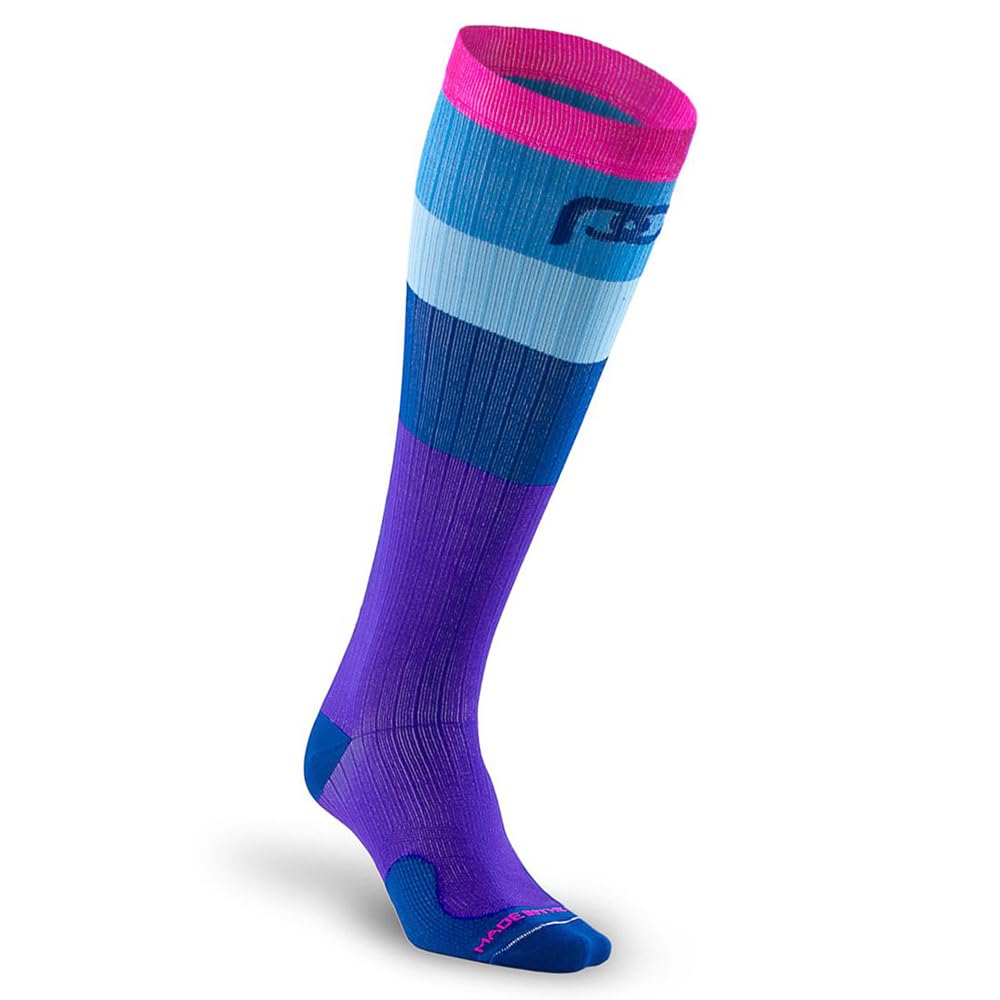
The American-made marathon specialist with a roomy toe box and bold patterns for race day.
Designed and manufactured in the USA using a proprietary nylon and spandex blend, this sock delivers 20-30 mmHg graduated compression targeted at runners who push through 5Ks, marathons, and triathlons. It features a roomy toe box and cushioned padding underfoot, which one buyer appreciated on hot days because it stayed put and reduced leg fatigue. The moisture-wicking fabric also keeps feet dry during long miles. Shoppers say the compression feels solid and the sock does not slide down during a run.
A couple of downsides: the foot section is on the thinner side — one trail runner wished the bottom was thicker for ultra-distance terrain. Another buyer called the single pair too expensive for the limited Amazon design selection. Compared to the Zensah below, the PRO Compression Marathon sock costs less but lacks the smooth toe and the same level of moisture-wicking tech for cold-weather running. If you want a reliable, USA-made compression sock for road running, this is your pick.
Why It Wins for Runners
- Made in the USA with a nylon-spandex blend that holds shape.
- Roomy toe box prevents squished toes on long runs.
- Cushioned padding underfoot adds shock absorption.
Drawbacks
- Thinner foot material not ideal for ultra or heavy trail use.
- Limited pattern variety on Amazon compared to the main brand store.
Take this for road races if: you want a bona fide marathon compression sock that is built to handle repeated miles without losing its squeeze.
Skip it for trails if: you need a thicker sole underfoot for rocks and roots.
5. Zensah Tech+ Compression Socks
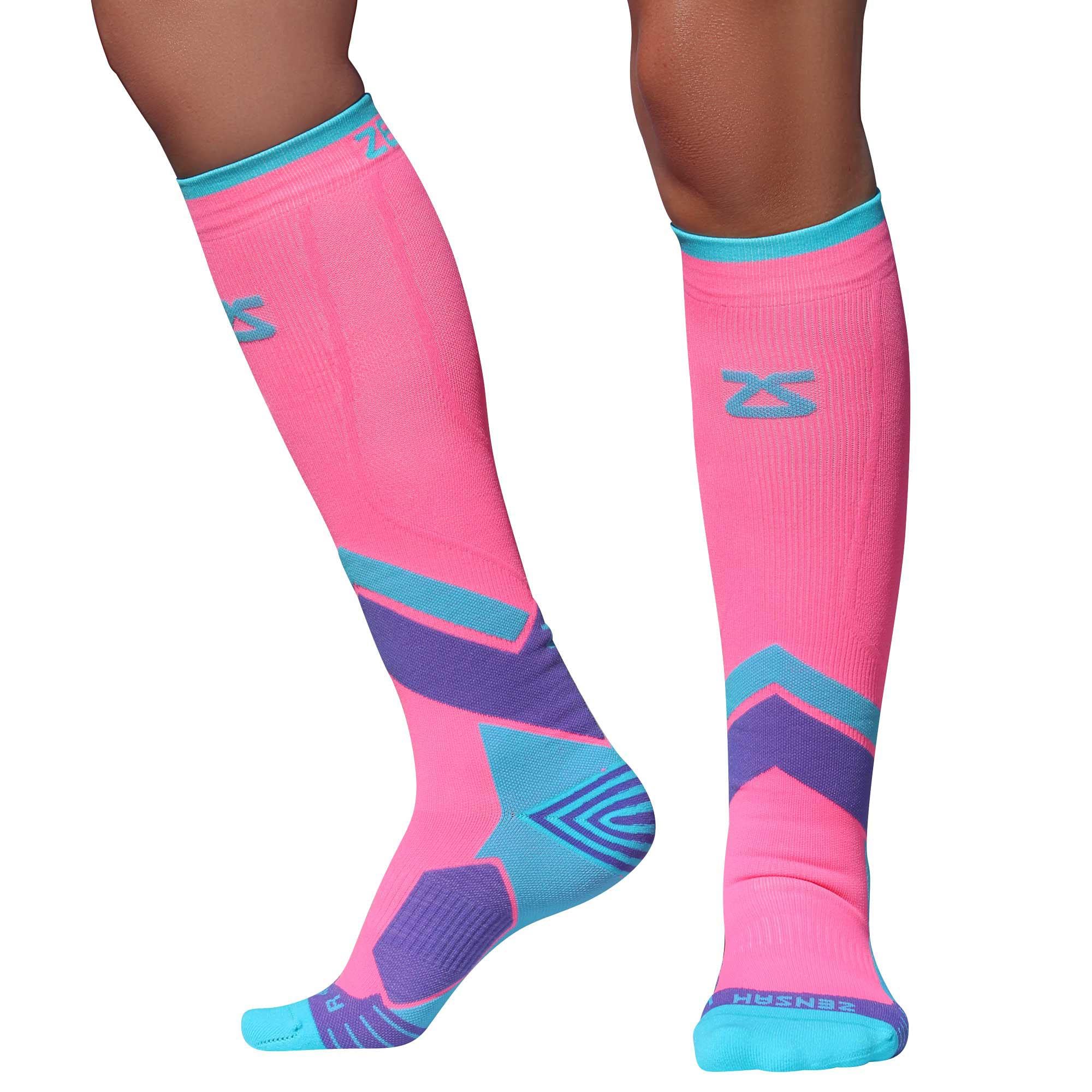
The premium Italian-made sock that runners swear by for stopping shin splints mid-stride.
Material-wise, this is 82% Polyamide and 18% Elastane (spandex) knit in Italy, giving it a lightweight, moisture-wicking feel that one buyer mentioned handled 7°F runs without freezing. The defining feature is the smooth toe — it prevents chafing and blisters on 5+ mile runs, a detail that separates it from every other pair on this list. Another buyer reported going through about 100 runs without holes forming, which is rare durability for any compression sock. The graduated compression helps promote blood flow and stabilize the calf, which directly combats shin splints.
The premium price tag is the obvious hurdle — it is the most expensive single-pair sock here. Some users also noted the top band has been reduced in width compared to older versions, and if not positioned carefully it can dig into the calf. Limited color availability is another minor gripe. But for runners who prioritize blister-free miles and proven shin splint prevention over cost, this is one of the best picks available.
class-leading for Long Runs
- smooth toe eliminates hot spots and blisters on 5+ mile runs.
- Durable construction — buyers report no holes after ~100 uses.
- Moisture-wicking fabric works in cold weather down to 7°F.
The Premium Price Trade-Off
- Expensive single-pair purchase compared to multipacks.
- Narrower top band than earlier versions can dig into calf if not adjusted.
- Limited pattern and color selection.
Reach for these if: shin splints sideline your training and you want a smooth, durable sock that keeps you running blister-free in cold or hot weather.
Look elsewhere if: your budget is tight or you need a wide top band for larger calves.
6. PULIOU Cooling Compression Socks
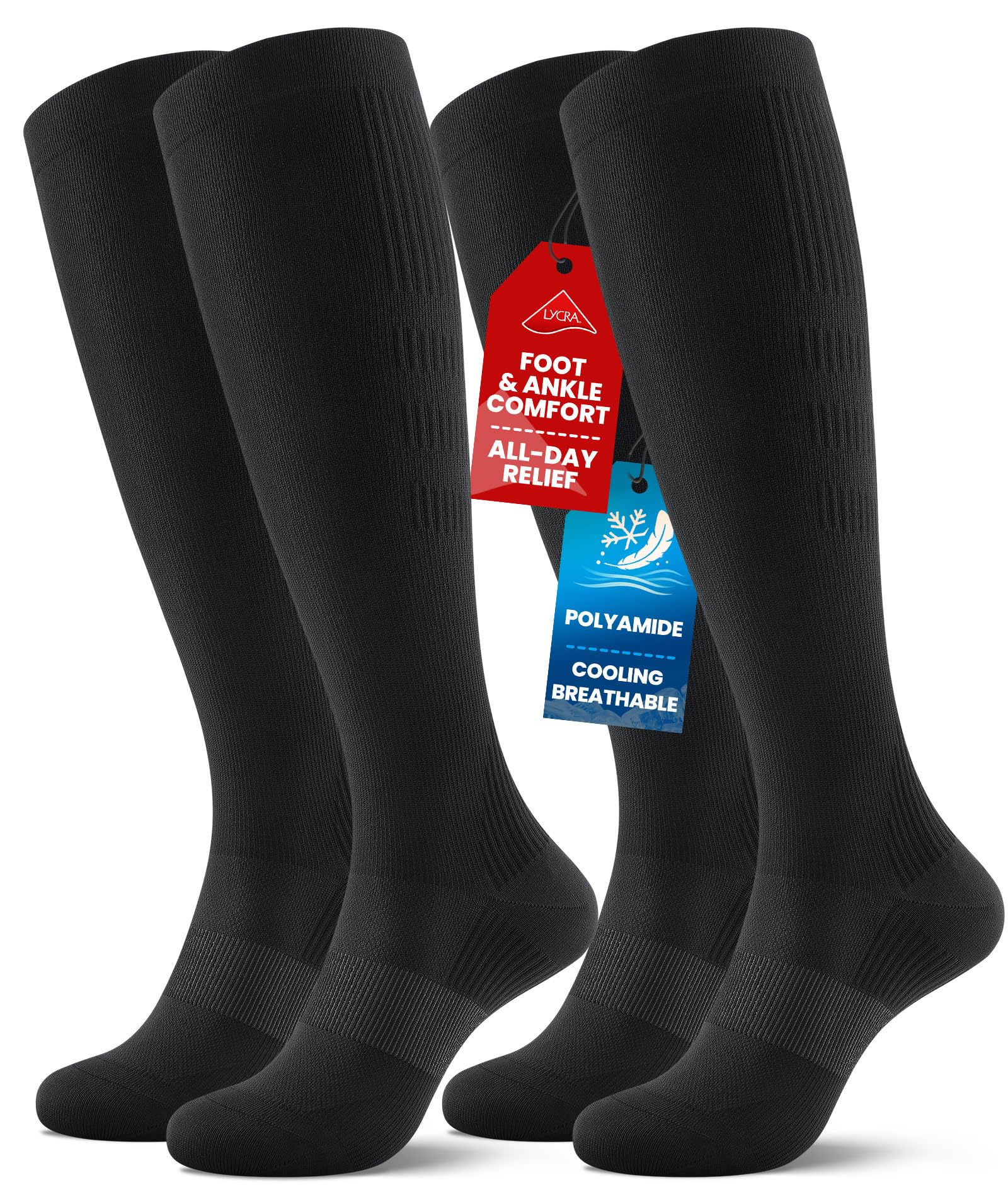
A two-pack with 20-30 mmHg pressure that pairs well with cold-weather miles and trail walks.
These socks deliver a firm 20-30 mmHg compression level — matching the Physix Gear — but European buyers describe them as “warm and comfortable” and “really warm and high quality,” suggesting a thicker knit better suited for cooler pavement temperatures. One reviewer wore them on a trip to Sweden and found them top-quality even after a year of washing. The material makes a high-quality impression and the fit is snug without being restrictive.
On the downside, the only English-language review notes the socks run “a little big,” which can affect the precision of graduated compression (the squeeze is supposed to be tightest at the ankle and loosen up the calf). Also, the thermal insulation that works great down to about -2°C may feel too warm for summer running. Compared to the Sooverki’s 8 pairs, the PULIOU pack gives you 2 pairs (a 4x gap in pack count) at a very similar per-pair price, which is a notable difference. If winter training is your main concern, this is a solid pick.
Ideal for Cold Weather
- Firm 20-30 mmHg compression for solid leg support.
- Warm, high-quality knit that survives repeated washing.
- Performs well for hiking and trail activity in cold climates.
Considerations
- Sizing runs slightly big for some buyers.
- Too warm for hot summer training runs.
- Only two pairs in the pack.
Best for winter runners and cold-climate walkers who: want 20-30 mmHg compression without compromising on warmth and long-lasting knit quality.
Not for summer miles if: you overheat easily and need a lightweight, breathable weave.
Understanding the Specs
What Does mmHg Mean for Your Legs?
A 20-30 mmHg sock exerts 20 to 30 millimeters of mercury pressure, which is a standard medical-grade compression level. In plain terms, it squeezes your calf enough to keep blood from pooling in your ankles and feet — so you feel less heaviness during a run and recover faster. A 15-20 mmHg sock is gentler and better for travel or light recovery days. The higher number equals tighter compression, so match it to the intensity of your training.
Graduated Compression: Why the Squeeze Starts at Your Ankle
Graduated means the sock is tightest at your ankle and gradually loosens as it moves up your leg. This design pushes blood upward against gravity, which reduces swelling and muscle vibration during impact. If the sock is not graduated — meaning it squeezes evenly up and down the calf — it can actually restrict circulation. Look for the term “graduated compression” or “tapered compression” in the description to be sure you are getting the real thing.
FAQ
What compression level is best for running?
Can I wear compression socks for running on a hot day?
How do I measure my calf for compression socks?
Are compression socks good for shin splints?
How long do compression socks for running last?
Can I wear compression socks for running if I have varicose veins?
Should I wear compression socks during the run or only after?
How tight should compression socks feel?
Final Thoughts: The Verdict
For most runners, the compression socks for running winner is the Sooverki Copper Compression Socks because its 8-pair pack makes daily compression affordable and the 15-20 mmHg level is gentle enough for new users. If you want firmer 20-30 mmHg support and stylish patterns, grab the Cute Compression Socks for Women. And for shin splint prevention and a smooth toe on long runs, the standout is the Zensah Tech+ Compression Socks.
How We Picked
We do not accept paid placement. Every pick is matched to a real buyer and a real use-case; we do not hands-on test units.
Sources & Methodology
Specifications: manufacturer listings and product documentation. Review insights: verified customer reviews, as of July 2026. Pricing: not shown on this page (it changes often); check the current price via the retailer link.
As an Amazon Associate, WellFizz earns from qualifying purchases. This does not affect which products we feature.

Mo Maruf
I created WellFizz to bridge the gap between vague wellness advice and actionable solutions. My mission is simple: to decode the research and give you practical tools you can actually use.
Beyond the data, I am a passionate traveler. I believe that stepping away from the screen to explore new environments is essential for mental clarity and physical vitality.