Our readers keep the lights on and my smoothie glass nicely filled. As an Amazon Associate, I earn from qualifying purchases.
Specs are compiled from manufacturer listings and verified buyer reviews and can change over time — please confirm the key details on the product page before buying.
That plastic bottle of clear, odorless refined oil in your pantry might be quietly sabotaging your meals. Real cold pressed groundnut oil is not transparent and does not sit on a shelf without a smell. It packs the deep, roasted aroma of actual peanuts and the fats your body actually recognizes. This guide cuts through the labels to help you pick the bottle that delivers real flavor and honest processing, not marketing hype.
I’m Mohammad Maruf — the founder and writer behind WellFizz. This guide is built by comparing the manufacturers’ published specifications and the patterns across verified customer reviews, so you get each pick’s real strengths and trade-offs instead of marketing spin.
The best cold pressed groundnut oil for you depends on how you cook and how much you value that pure, unrefined nuttiness in every dish. For most homes, the Tata Simply Better is the top pick because it balances honest cold-pressed quality with an anti-spill bottle you can grab mid-cook without a mess.
Quick Picks
- Tata Simply Better Pure and Unrefined Cold Pressed Groundnut Oil — Best Overall
- Daana Peanut Oil: CERTIFIED USDA ORGANIC, EXTRA VIRGIN, COLD PRESSED — Organic Champion
- Rigel Spices Naturally Milled Cold Pressed Peanut Oil (Eco-Friendly Tin) — Eco-Friendly Pick
- Fresh Press Farms Cold Pressed Extra Virgin Peanut Oil (Pack of 2) — Georgia Grown
- Organic Tattva Cold Pressed Groundnut Oil for Cooking (1 Litre) — Budget Organic
- Gramiyaa Cold Pressed Peanut Oil (150 Fl. Oz) — Bulk Value
- GirOrganic Wood Pressed Peanut Oil (33 oz) — Traditional Craft
How To Choose The Best Cold Pressed Groundnut Oil
The simplest difference between an average bottle and a great one depends on the extraction process and what happens after. Here are the three things that matter most when you are standing in the aisle scrolling a product page.
Cold Pressed vs. Refined — What Those Words Actually Mean
Cold pressed means the peanuts are crushed in a slow, low-heat process (often in a traditional wooden mill called a “kachi ghani”) to squeeze the oil out without any chemical solvents or high temperatures. This keeps the natural flavor, aroma, vitamins like Vitamin E, and heart-friendly fats intact. Refined oils, by contrast, are chemically stripped, bleached, and deodorized — which makes them shelf-stable and neutral-tasting but also removes nearly all the character and a lot of the nutrition. If the label does not say “unrefined” and “cold pressed,” it is likely a processed oil in disguise.
Smoke Point and Cooking Fit
Because cold pressed groundnut oil keeps all its natural compounds, it has a lower smoke point (the temperature at which the oil starts to smoke and break down) compared to refined versions. Most cold pressed peanut oils smoke around 320–350°F. That makes them excellent for sautéing, shallow frying, tempering, and salad dressings — but they are not ideal for deep frying at very high heat. If heavy smoking happens at a low temperature, it could signal the presence of impurities or added sugars, so check reviews for that red flag.
Packaging Matters More Than You Think
Light and air are enemies of unrefined oil. A dark glass bottle or an opaque tin protects the oil from going rancid, while a flimsy transparent plastic bottle invites spoilage. Some eco-friendly tins or metal containers are great for freshness, but their pour spouts can be tricky. Buyers report that thin plastic bottles can collapse or spill unexpectedly. A sturdy, opaque, or dark container is a sign the maker respects the oil’s shelf life.
Quick Comparison
| Model | Best For | Volume | Weight | Certification | Amazon |
|---|---|---|---|---|---|
| Tata Simply Better | Daily All-Around Cooking | 33.8 fl oz | 2.2 lbs | Vitamin E Rich | Amazon |
| Daana Organic | Organic Purity | 34 fl oz | 1.98 lbs | USDA Organic | Amazon |
| Rigel Spices | Eco-Friendly Tin | 33.8 fl oz | 2.31 lbs | No Preservatives | Amazon |
| Fresh Press Farms | Georgia Grown Flavor | 32.8 fl oz | 2.87 lbs | Non-GMO | Amazon |
| Organic Tattva | Budget Organic Choice | 30.7 fl oz | 2.2 lbs | USDA Certified | Amazon |
| Gramiyaa | Bulk Kitchen Supply | 150 fl oz | 9.68 lbs | Zero Trans Fat | Amazon |
| GirOrganic | Traditional Wood Press | 33 fl oz | 2.2 lbs | 100% Natural | Amazon |
In‑Depth Reviews
1. Tata Simply Better Pure and Unrefined Cold Pressed Groundnut Oil
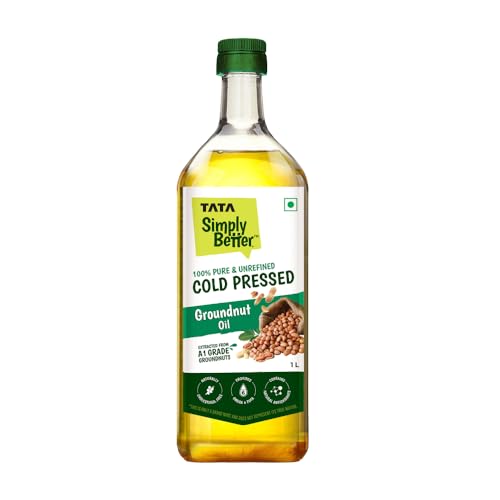
You get real groundnut flavor and a bottle that won’t dump oil on your counter mid-stir-fry.
Tata extracts this oil from A1 grade groundnuts and keeps it completely unrefined, so you get the full spectrum of natural antioxidants like Vitamin E and cholesterol-free heart-friendly fats (MUFA & PUFA, the types that support heart health) with every drizzle. The maker designed the bottle as anti-spill, a practical touch when you are reaching for it mid-cook. At 33.8 fluid ounces and 2.2 pounds, it compares with the Daana at 34 fluid ounces and 1.98 pounds — a smart pick for the family kitchen that cooks groundnut-heavy meals every day.
Owners mention using it for 6–7 months straight and say it feels “pure, light, and healthy for daily use,” with One reviewer noted that switching to this oil resolved heart pain issues they had experienced with a refined oil.. Compared to the Rigel Spices tin, the Tata bottle is a more practical shape for grabbing off a shelf, though neither is a light-proof container, so store it in a dark cabinet.
Why It Earns the Top Spot
- Cholesterol-free and rich in Vitamin E for everyday health-conscious cooking
- Anti-spill bottle keeps your counter clean
- Natural aroma enhances the flavor of dal, stir-fries, and even raw use
One Thing to Be Aware Of
- Not in an opaque or dark container, so light exposure can degrade freshness over time
If you want one reliable cold pressed groundnut oil for daily cooking, sautéing, and tempering that tastes noticeably better than refined oil, this is it. Stick with the Daana or Gramiyaa if you need a dedicated deep-fry oil for very high heat cooking.
2. Daana Peanut Oil: CERTIFIED USDA ORGANIC, EXTRA VIRGIN, COLD PRESSED
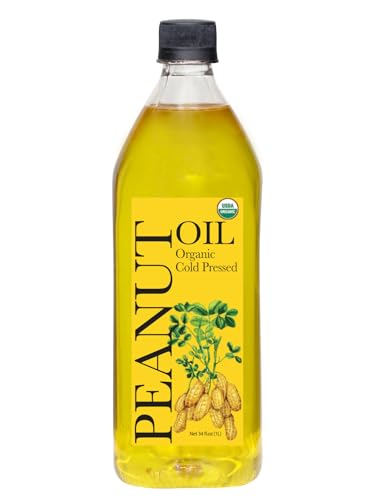
The USDA organic seal meets a bold, fresh-from-the-mill peanut punch that beats the Tata for pure peanut character.
Daana uses the traditional Indian “kachchi ghani” method, meaning the oil is pressed slowly in a wooden mill without any heat or chemical solvents, preserving every natural antioxidant and nutrient. Buyers rave about the “strong peanut aroma and flavor” and note it is “pure, no seed oils.” One reviewer called the taste “OMIGOSH AMAZING.” It is keto-friendly (low in carbs) and contains no cholesterol or trans fats, plus it pulls double duty as a skin and hair oil since it is high in Oleic acid (a heart-healthy fat) and Vitamin E. The only catch: while the product images sometimes show a glass bottle, it ships in plastic to reduce weight and breakage risk.
If you want an organic-certified oil with an unmistakable roasted peanut character that works as both a cooking medium and a finishing drizzle, this is the most straightforward pick on the list. Pass on it if you prefer a glass bottle for long-term storage or find the peanut aroma too intense for neutral cooking.
What Makes It Special
- USDA Organic certification you can trust
- Bold, pure peanut flavor that stands out in Asian and African style recipes
- Fair trade, sustainably grown by women farmers
Keep in Mind
- Plastic bottle instead of glass (though much safer for shipping)
3. Rigel Spices Naturally Milled Cold Pressed Peanut Oil (Eco-Friendly Tin)
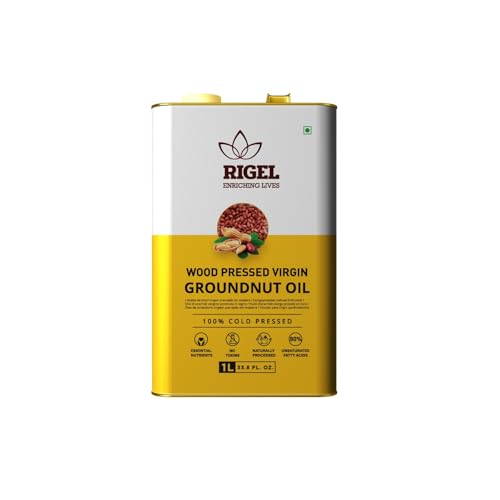
An old-school tin blocks light better than any plastic bottle, but one surprise ingredient limits your heat.
Rigel Spices uses an ancient cold-pressing technique to retain natural nutrients and flavor, and packages it in a recyclable tin that keeps light out far better than the Tata or Daana. The 33.8 fluid ounce tin weighs 2.31 pounds, versus the Tata at 33.8 fluid ounces and 2.2 pounds, which tells you the metal packaging is sturdy. Unlike flimsy plastic bottles used by some competitors, this tin will not crack or spill from a middle-squeeze.
Customers note it has a “great smell and taste,” but one experienced cook flagged a serious caveat: the oil “smoked heavily above 300°F” and appears to contain jaggery (a type of unrefined sugar), which likely lowers the smoke point well below the advertised 450°F. That makes it a poor choice for deep frying or searing, but still excellent for low-heat sautéing, dressings, and drizzling over finished dishes. It is also the only product on this list where a reviewer explicitly mentioned switching exclusively to this or olive oil for all cooking.
This is a flavor-first, texture-rich oil for low-heat cooks who want a light-proof, eco-friendly container. Skip it if you plan to deep fry or sear at high temperatures.
What Works Well
- Eco-friendly tin packaging blocks light and is recyclable
- Distinctive flavor profile that adds depth to stir-fries and dressings
- Sourced from farmers using sustainable practices
A Notable Issue
- Contains jaggery, which causes heavy smoking above 300°F despite the label claim — not for high-heat cooking
4. Fresh Press Farms Cold Pressed Extra Virgin Peanut Oil (Pack of 2)
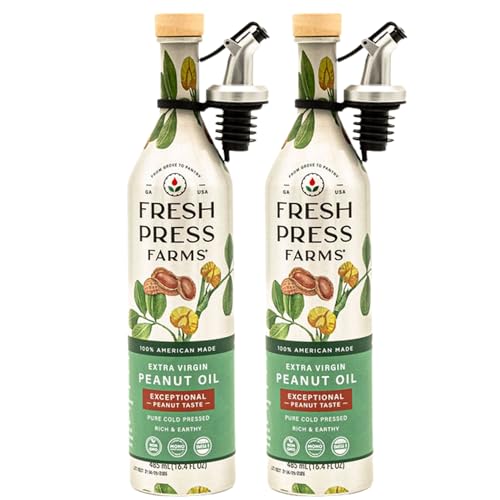
Straight from Georgia farms, this oil tastes like fresh boiled peanuts in liquid form — and beats the Tata for pure flavor intensity.
Fresh Press Farms grows, harvests, cold presses, and bottles everything locally in Georgia, and the difference is in that first taste: buyers call it “stellar delicious” and say it “tastes like fresh peanuts.” At 2.87 pounds for the two-pack, versus the Daana’s single 1.98-pound bottle, it gives you more oil per purchase. Each of the two recyclable aluminum bottles comes with a convenient spout for precise pouring, which is a step up from the Rigel tin or the open-top containers.
However, one buyer mentioned a head-scratcher: the container has an open top with a rubber double loop and no instructions, so you “must transfer to a sealed container.” The maker describes a “convenient spout,” but the actual packaging seems to vary. If you get the version that needs a transfer, pour it into a dark glass bottle immediately. The oil itself is minimally processed — no solvents, no refining, Non-GMO and Kosher — making it a top-tier flavor bomb for salads, brownies, and deep frying where you want that peanut crunch.
Choose this if you prioritize peak flavor over convenience and do not mind transferring oil to your own container for the sake of that farm-fresh taste. Pass on it if you want a straightforward, pour-and-go experience without any extra steps.
Why It Stands Out
- class-leading fresh peanut flavor — buyers call it “the best tasting peanut oil”
- Locally grown, harvested, and pressed in Georgia
- Non-GMO, Kosher, and no solvents used in extraction
Packaging Quirk
- Container design can be confusing — some units arrive with an open top requiring transfer to a sealed bottle
5. Organic Tattva Cold Pressed Groundnut Oil for Cooking (1 Litre)
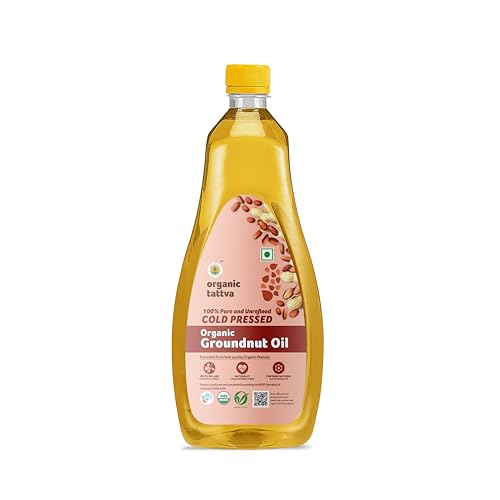
USDA organic at an entry-level price, but the bottle design demands a steady hand — and a backup container.
Organic Tattva brings you a USDA-certified organic cold pressed groundnut oil packed with Vitamin A, D, and E, zero trans fats, and no added preservatives — all at a price that undercuts the Daana. It comes in a 30.7 fluid ounce bottle, versus the Daana’s 34 fluid ounces, and it weighs 2.2 pounds, similar to the Tata. If you are new to cold pressed oils and want an organic option without the premium tag, this is a solid entry point.
Buyers love the taste — “wonderful flavor and aroma,” “very clean and nice taste” — but one reviewer issued an important warning: “the plastic bottle is very flimsy. When it is full or nearly full, if you grab the bottle in the middle, and the cap is off, the oil will spill out of the top before you get a chance to pour it.” Their solution was to transfer the oil to a glass bottle. At 10.43 x 4.33 x 2.95 inches, the bottle is also wider than the compact Daana bottle (3 x 3 x 8 inches), making it harder to store in a narrow cabinet.
Good oil, bad bottle design — plan for a transfer. Go for it if you want an organic cold pressed oil on a budget and are willing to decant it into your own container. It’s not for you if you want a grab-and-pour bottle that will not dump its contents on your counter every time you pick it up.
What You Get
- USDA certified organic at a friendlier price point
- Rich in vitamins A, D, E, with zero trans fat and low saturated fats
- Traditional cold press method, no preservatives
The Catch
- Flimsy bottle design causes easy spills when squeezed from the middle — plan to decant into a sturdier container
6. Gramiyaa Cold Pressed Peanut Oil (150 Fl. Oz)
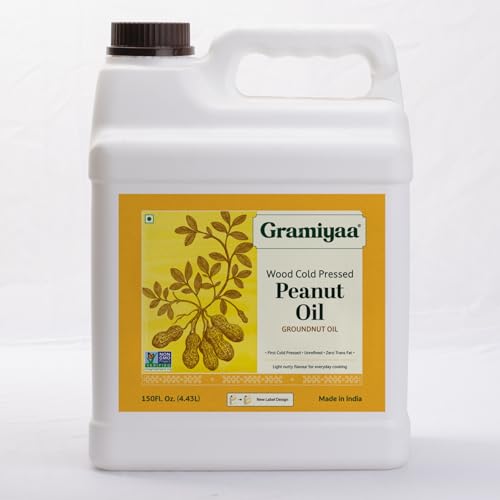
A gallon-plus of lab-tested purity for the kitchen that goes through oil fast — and the best per-ounce value on the list.
If you deep fry regularly or cook for a large family, the Gramiyaa is your most practical option. At 150 fluid ounces (4.43 liters), versus the Daana bottle at 34 fluid ounces, and at 9.68 pounds, it is the heavyweight of the lineup. That 9.68-pound jug compares with the 2.2-pound Tata, so it is not a bottle you grab with one hand — but you will refill far less often. It is the only product on this list that uses an opaque pack that blocks light and is oxygen-free, keeping the oil fresh without any preservatives.
Reviewers point out it tastes “authentic” with “the rich, sweet aroma of real peanuts” and works great for deep frying turkey, chicken tenders, and Chinese stir-fries. One owner reported it is “slightly thicker” and “coats well,” a sign of its unrefined viscosity. Gramiyaa cold presses every batch in-house and makes each bottle traceable via a QR code, so you are never getting mystery oil from unknown sources. The only downside? The opaque plastic jug is still plastic, and some reviewers wished for a dark glass alternative.
This is the bulk-workhorse oil for the serious home cook who values traceability and freshness over bottle aesthetics. Perfect for heavy-duty kitchens that go through oil quickly. Not right for small households or those who prefer glass bottles for long-term storage.
What Makes It a Value King
- Massive 150 fl oz volume — the cheapest per-ounce option on the list
- First cold pressed in wood and stone mills for authentic flavor
- Opaque, oxygen-free packaging keeps oil fresh naturally
A Consideration
- Plastic packaging, not glass; heavy jug at nearly 10 pounds can be unwieldy
7. GirOrganic Wood Pressed Peanut Oil (33 oz)
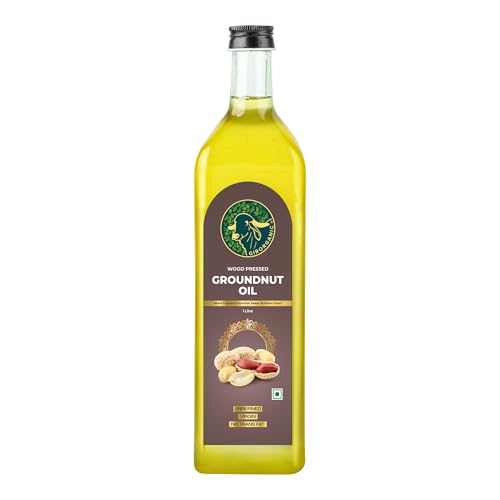
A wood-pressed oil that smells like the kitchens of your childhood — if you are willing to pay a premium for the nostalgia over the Tata.
GirOrganic takes the traditional wood-pressed (kacchi ghani) approach and uses groundnuts sourced from Gujarat, India, without any refining, filtering, or coloring. The result is an oil shoppers say “smells like the real wood pressed oil that I had tasted many many years ago” and “brings back nostalgia of mom’s cooked food.” At 33 fluid ounces and 2.2 pounds, versus the Tata at 33.8 fluid ounces and 2.2 pounds, the price is significantly higher — making it more of a specialty purchase than an everyday stock-up.
Buyers report the oil “tastes amazing” and enhances Indian breads, and one customer observed it lasted over two years while “still excellent quality,” which speaks to the oil’s stability when stored properly. A minor downside: some units arrive with a slightly damaged package, and the bottle seal could be improved. The price is the biggest barrier — one reviewer called it “extremely nice” but said “price is not,” specifically pointing to high international shipping costs driving up the total.
This is for the purist who wants that wood-pressed, naturally processed oil that is as close to homemade as possible and is willing to treat it as an occasional indulgence. Pass on it if you need a budget-friendly oil for daily deep frying or sautéing — the cost per ounce is simply too high.
what separates it
- Authentic wood-pressed (kacchi ghani) extraction from Gujarat-sourced peanuts
- Owners mention exceptional stability — one bottle lasted over 2 years with no quality loss
- Pure, unrefined, unfiltered, and uncolored — the most natural option here
The Trade-Off
- Premium price that is hard to justify for daily heavy cooking; bottle seal could be better
Understanding the Specs
Cold Pressed vs. Kachi Ghani vs. Wood Pressed
These three terms essentially describe the same slow, low-heat extraction method using a mill to crush peanuts without chemicals or high temperatures. “Cold pressed” is the general industry term. “Kachi ghani” and “wood pressed” refer specifically to the traditional Indian wooden mill (a ghani) that rotates a pestle inside a mortar to crush the peanuts. Any of these labels means the oil is unrefined and retains its natural flavor, aroma, Vitamin E, and fatty acids. If you see none of these terms on the label, the oil is almost certainly chemically refined and has lost most of its nutritional character.
Smoke Point and Cooking Method Fit
Smoke point is the temperature at which the oil starts to visibly smoke and break down into harmful compounds. Cold pressed groundnut oil typically has a lower smoke point (around 320–350°F) than refined peanut oil (around 450°F). The exact smoke point depends on the purity of the oil and whether any natural sugars or impurities are present — as the Rigel Spices review showed, added jaggery dropped the smoke point well below its advertised temperature. If you plan to deep fry frequently, look for an oil with verified high smoke point reviews. For everyday sautéing, stir-frying, and dressings, the standard cold pressed smoke point is perfectly fine.
FAQ
Is cold pressed groundnut oil the same as peanut oil?
Can I use cold pressed groundnut oil for deep frying?
Does cold pressed groundnut oil need to be refrigerated?
How long does cold pressed groundnut oil last once opened?
What is the difference between cold pressed and filtered groundnut oil?
Which bottle material is best for cold pressed groundnut oil?
Is cold pressed groundnut oil good for weight loss?
Why does my cold pressed groundnut oil turn solid or cloudy?
Final Thoughts: The Verdict
For the majority of shoppers, the best cold pressed groundnut oil winner is the Tata Simply Better because it delivers honest cold-pressed quality with an anti-spill bottle and proven daily-use satisfaction at a fair price. If you want USDA organic certification with the boldest peanut punch, grab the Daana Organic. And for bulk cooking and deep frying where value per ounce and freshness matter most, the Gramiyaa is your kitchen workhorse.
How We Picked
We do not accept paid placement. Every pick is matched to a real buyer and a real use-case; we do not hands-on test units.
Sources & Methodology
Specifications: manufacturer listings and product documentation. Review insights: verified customer reviews, as of July 2026. Pricing: not shown on this page (it changes often); check the current price via the retailer link.
As an Amazon Associate, WellFizz earns from qualifying purchases. This does not affect which products we feature.

Mo Maruf
I created WellFizz to bridge the gap between vague wellness advice and actionable solutions. My mission is simple: to decode the research and give you practical tools you can actually use.
Beyond the data, I am a passionate traveler. I believe that stepping away from the screen to explore new environments is essential for mental clarity and physical vitality.