Our readers keep the lights on and my smoothie glass nicely filled. As an Amazon Associate, I earn from qualifying purchases.
Specs are compiled from manufacturer listings and verified buyer reviews and can change over time — please confirm the key details on the product page before buying.
A yellowing lemon tree that stops fruiting is frustrating, especially when you know it needs something more than just water and sunlight. The right citrus fertilizer makes the difference between a plant that survives and one that delivers a bounty of juicy fruit, but picking the wrong one can waste your time or even harm your tree. This guide cuts through the marketing hype for the six best options on the market today.
I’m Mohammad Maruf — the founder and writer behind WellFizz. This guide is built by comparing the manufacturers’ published specifications and the patterns across verified customer reviews, so you get each pick’s real strengths and trade-offs instead of marketing spin.
Here, you’ll find the top contenders for your money, complete with key specs and real buyer insights, to help you pick the best citrus fertilizer for your home orchard or patio potted tree.
Quick Picks
- Espoma Organic Citrus-tone 5-2-6 — Best Overall
- Nelson NutriStar Citrus & Avocado 12-10-10 — Premium Pick
- GARDENWISE Professional Citrus Fertilizer 6-4-6 — Best for Trees in Pots
- Jobe’s Organics Fruit & Citrus Tree Fertilizer Spikes 3-5-5 — No-Mess Solution
- TPS Nutrients Liquid Citrus Fertilizer 32oz — Budget Champion
- FoxFarm Happy Frog Citrus & Avocado Fertilizer 7-3-3 — Micronutrient Specialist
How To Choose The Best Citrus Fertilizer
To get your citrus tree to grow and fruit well, you need to look at three specific specs that matter most. Ignore the marketing fluff and focus on these factors.
NPK Ratio: The Big Three Numbers
The three numbers on a fertilizer bag (e.g., 5-2-6) stand for Nitrogen (N), Phosphorus (P), and Potassium (K). Nitrogen fuels leafy green growth, which is vital for a healthy canopy. Potassium is key for fruit quality and helping trees survive colder weather. A citrus-specific formula typically has a higher potassium number relative to phosphorus, like the 5-2-6 or 6-4-6 ratios you will see in this list.
Organic vs. Synthetic: Feeding Your Soil
Organic fertilizers, like the Espoma Citrus-tone, feed the soil microbes that then nourish your tree. They release nutrients slowly and reduce the risk of burning roots. Many synthetic or mineral-based options deliver faster results but may require more careful dosing. If you want to avoid synthetic chemicals, look for an “OMRI Listed” label on the product.
Slow-Release Granules vs. Liquid Feed
Slow-release granular formulas are the most common choice for citrus. You sprinkle the pellets around the tree’s drip line and water them in. They break down over weeks or months, providing a steady supply of food. Liquid fertilizers, like the TPS Nutrients option, are absorbed quickly by the roots, giving a fast green-up, but they require more frequent mixing and application.
Quick Comparison
| Model | Best For | NPK Ratio | Form | Size | Amazon |
|---|---|---|---|---|---|
| Espoma Citrus-tone | Organic feeding | 5-2-6 | Powder | 4 lb | Amazon |
| GARDENWISE Professional | Slow-release potted trees | 6-4-6 | Granules | 2 lb | Amazon |
| TPS Nutrients Liquid Citrus | Fast greening | — | Liquid | 32 oz | Amazon |
| Jobe’s Organics Spikes | No-mess container trees | 3-5-5 | Spikes | 6 Spikes | Amazon |
| FoxFarm Happy Frog | Micronutrient boost | 7-3-3 | Granules | 4 lb | Amazon |
| Nelson NutriStar | Cold weather hardiness | 12-10-10 | Granules | 4 lb | Amazon |
In‑Depth Reviews
1. Espoma Organic Citrus-tone 5-2-6

The go-to organic granule that has kept citrus growers happy for decades.
This 4 lb. bag of powder feeds your tree without synthetic chemicals, relying on a 5-2-6 NPK ratio that delivers a solid potassium punch for fruit development. It is approved for organic gardening (OMRI listed), so you can feel good about what goes into your soil. The included Bio-tone formula is an exclusive blend of microbes that helps break down the material for your tree’s roots, and it also provides 5% calcium, which strengthens cell walls and prevents blossom-end rot.
Buyers report that it is “the best I’ve found for citrus,” though you should plan to use it outdoors — one reviewer noted it has a strong odor that attracts dogs. The directions call for applying it around the drip line late winter, spring, and fall, then watering it in thoroughly. No mixing is required, which makes it a simple routine. Unlike the liquid TPS Nutrients option, this powder works slowly through the season, so you do not need to reapply every two weeks.
Perfect for organic growers: A time-tested, no-fuss blend that feeds the soil and your tree. skip it if you need a fast-acting liquid or if odor sensitivities are a concern.
Best for: Gardeners who value OMRI-listed organic ingredients and prefer a simple “sprinkle and water” method over mixing liquids.
Watch out for: The distinct smell is strong in the first week; keep your dog away from treated soil and use it only in outdoor spaces.
2. Nelson NutriStar Citrus & Avocado 12-10-10
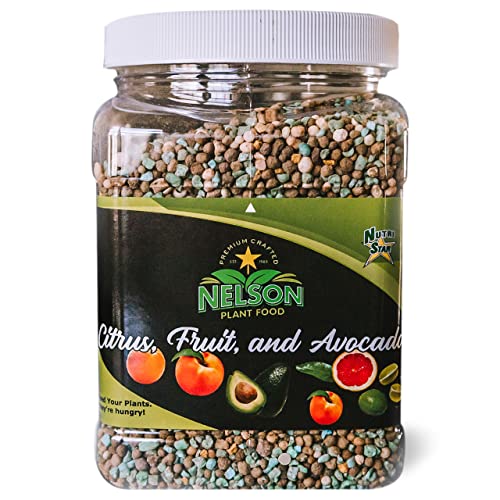
A powerful, high-nitrogen formula that offers the highest NPK numbers on this list.
For established trees that need a serious boost, this 12-10-10 granular fertilizer from Nelson delivers the highest concentration of nutrients among our picks. The high potassium content, specifically cited on the label as helping trees survive in colder weather, makes it a strong choice if you live in a borderline hardiness zone. It also includes calcium to increase trunk and limb strength. This 4-pound bag is designed for in-ground and container trees alike.
One buyer mentioned that their orange tree “has taken off and grown a full batch of new leaves since I started using this only two months ago.” The brand’s NutriStar formula claims to work with the soil biology to provide immediate results alongside lasting benefits. You apply it every 30 days during the growing season — a more frequent schedule than the Jobe’s spikes, but it gives you more control over the feeding dose.
Strengths at a glance
- Highest NPK ratio (12-10-10) for a major growth push
- Added calcium for stronger tree structure
- Formulated to help trees withstand cold
Trade-offs
- Requires monthly reapplication during growing season
- Synthetic formula, not OMRI-listed organic
Reach for this if: You have a mature, in-ground citrus tree that needs a strong recovery after a tough winter or poor fruiting season.
Look elsewhere if: You prefer organic gardening principles or want a “low-maintenance” slow-release application.
3. GARDENWISE Professional Citrus Fertilizer 6-4-6
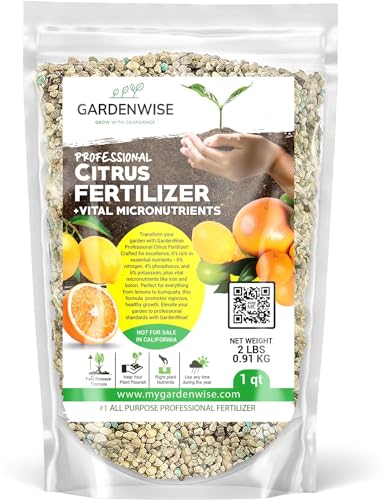
A balanced slow-release granule that caused explosive growth on a lime tree in just one week.
This 2-pound bag is packed with a scientific blend of 6% nitrogen, 4% phosphorus, and 6% potassium, plus a line-up of vital micronutrients like magnesium (for greener leaves), zinc (for plant defenses), and iron (for vibrant foliage). The maker claims it nourishes for up to two months with a single application, which buyers confirm works well for potted trees. One reviewer shared that using a half-cup of this along with fish emulsion on a potted Cara Cara orange boosted flowers and fruit, calling it “great slow release fertilizer for citrus trees in pots at a good price.”
The specially coated granules are designed to melt with each watering. This makes it a stronger contender than the FoxFarm Happy Frog for container trees because its NPK ratio (6-4-6) is more tailored to the fruiting needs of a potted citrus. Follow the 6-8 week feeding schedule to avoid over-fertilizing, which can harm roots in a confined pot.
Perfect for potted trees: The balanced NPK and micronutrients are a great match for the limited soil environment of a container.
Reach for this if: You keep your Meyer lemon or Cara Cara orange in a pot and want a slow-release granule with proven, fast results.
Watch out for: The small 2-pound bag size means you will need to reorder more frequently than a 4-pound option.
4. Jobe’s Organics Fruit & Citrus Tree Fertilizer Spikes 3-5-5

Pre-measured spikes that remove the guesswork and mess of measuring powder.
If you want the simplest possible feeding system, these time-release spikes are it. Just push them into the soil around your tree — the package contains 6 spikes — and they release a 3-5-5 NPK ratio directly at the roots. They are OMRI listed for organic gardening, so no synthetic chemicals are involved. The formula includes Jobe’s Biozome, a proprietary microorganism that aggressively breaks down material for faster results and helps the tree resist disease and drought.
One happy owner of three potted Meyer lemon trees says: “I get an abundance of juicy, sweet lemons every year!” Because the spikes are pre-measured, they eliminate the risk of over-fertilization that can happen with loose granules. However, one reviewer advised paying attention to the timing (late fall or early spring) and placement, as placing them too close to the trunk can harm the tree. Unlike the Espoma powder, which you sprinkle in a wide circle, these spikes are a targeted root-zone feed.
Why choose spikes
- Pre-measured, no measuring or mixing needed
- Biozome microbes improve soil and fight disease
- Prevents runoff and waste
Limitations
- Fixed dosage; cannot fine-tune for small pots
- Higher NPK ratio is best for fruiting, less for leafy growth
Best for: New gardeners or anyone who hates measuring messy powders and wants a “push and forget” organic solution for container citrus.
Watch out for: The spikes have a fixed dosage of 3-5-5, which is lower in nitrogen than many other picks, so trees needing a green-up may benefit from a supplemental liquid feed.
5. TPS Nutrients Liquid Citrus Fertilizer 32oz
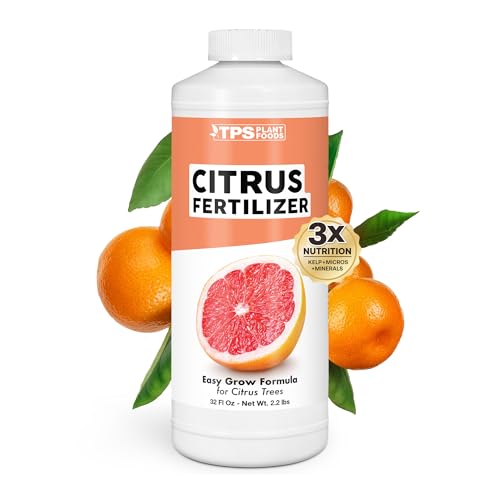
A fast-absorbing liquid feed that greens up leaves in days, especially for potted trees.
This 32-ounce liquid formula from TPS Nutrients is designed for immediate nutrient delivery. You mix 2 tablespoons per 1 gallon of water and apply it directly to the soil. It is specially formulated for citrus trees, including oranges, lemons, limes, and avocados. Owners mention it “improved leaf greenness and fruit yield on lemon/orange trees,” and one called it “amazing fertilizer for healthy, thriving citrus trees.”
Because it is a liquid, it is absorbed faster than any granular option on this list, making it ideal for a quick rescue of a struggling tree. However, the mix ratio means a single 32-ounce bottle makes 32 gallons of feed, which can get expensive if you have many trees. One experienced reviewer noted it “lacks nitrogen” and suggested supplementing with a higher-nitrogen source for optimal growth, unlike the balanced GARDENWISE 6-4-6 which has that covered.
Best for quick results: Use this when you see yellowing leaves and want a fast recovery. pass on it if you want a single all-in-one nutrient source without needing extra supplements.
Reach for this if: You have a single potted citrus that needs a rapid green-up or you prefer the control of mixing your own feed.
Watch out for: The nitrogen content is lower than expected for some soils, and the per-feed cost adds up compared to buying a bag of granules.
6. FoxFarm Happy Frog Citrus & Avocado Fertilizer 7-3-3

A high-nitrogen organic granule with mycorrhizae that turned yellow leaves green in days.
FoxFarm’s 7-3-3 formula is designed for citrus, avocado, and other fruiting trees, providing slow-release nitrogen for vegetative growth. The unique ingredient here is the inclusion of Mycorrhizal fungi, which form a symbiotic relationship with the roots to increase nutrient and water absorption. One owner reported their trees “were struggling with yellow leaves” and that this fertilizer “fixed yellowing in days, new growth emerged, and lime yield increased significantly.”
It has a strong smell, described as “like horse food,” which one longtime user (over a decade!) says their dogs find irresistible. You need to water it in well and keep pets inside. While the 4-pound bag is a good value, another reviewer pointed out that “needs more frequent use during growing season” to avoid leaves yellowing again from under-fertilization. Its 7-3-3 NPK is much higher in nitrogen than the Jobe’s 3-5-5 spikes, making it a better choice if your main goal is rebuilding a lush, green canopy.
Key benefits
- Mycorrhizal fungi boost root efficiency
- Fast-acting on yellow leaves and new growth
- OMRI listed for organic gardening
Things to know
- Strong smell may attract pets
- May need more frequent application than other slow-release formulas
Reach for this if: Your citrus tree has yellow leaves (a classic nitrogen deficiency sign) and you want an organic fix with beneficial fungi for long-term soil health.
Look elsewhere if: You cannot store it away from curious dogs due to the strong alfalfa smell, or you prefer a granule with a higher potassium ratio for heavier fruiting.
Understanding the Specs
NPK Ratio
The three numbers on the bag — for example 5-2-6 — are the percentages of Nitrogen (N), Phosphorus (P), and Potassium (K) in the fertilizer. Nitrogen pushes out green leaves and stems, making the tree look lush. Phosphorus helps with root development and flower production. But for citrus, Potassium is the star: it directly drives the size, sweetness, and quantity of your fruit. A good citrus blend typically has a higher middle (P) and a much higher last (K) number than a standard all-purpose lawn feed.
Slow-Release vs. Liquid
Slow-release granules (like the Espoma or GARDENWISE picks) are coated to break down over several weeks or months. You apply them a few times a year, and they keep feeding the tree gradually. This is the most forgiving method for beginners because it is hard to over-fertilize. Liquid formulas (like the TPS Nutrients option) are absorbed within hours, making them perfect for correcting a deficiency fast, but they require you to remember to mix and apply every 1-2 weeks during the growing season. Your choice depends on how hands-on you want to be.
FAQ
What does the NPK ratio mean for my citrus tree?
How often should I fertilize my citrus tree?
Can I use a regular fruit tree fertilizer on my citrus?
Is organic citrus fertilizer better than synthetic?
My citrus leaves are turning yellow. Which fertilizer should I buy?
How do I apply granular fertilizer to a potted citrus tree?
What are citrus fertilizer spikes and how do they work?
Can I over-fertilize my citrus tree?
Is citrus fertilizer good for avocado trees?
What does OMRI Listed mean on a fertilizer bag?
Final Thoughts: The Verdict
If you want one dependable pick, the best citrus fertilizer is the Espoma Organic Citrus-tone 5-2-6 because it combines an ideal NPK ratio with OMRI-listed organic ingredients and a proven track record across thousands of home gardens. If you need a more powerful nitrogen boost for a struggling tree or want a formula that helps with cold weather, grab the Nelson NutriStar 12-10-10. And for the absolute simplest no-mess routine on a potted tree, the Jobe’s Organics Spikes 3-5-5 are just push-and-forget.
How We Picked
We do not accept paid placement. Every pick is matched to a real buyer and a real use-case; we do not hands-on test units.
Sources & Methodology
Specifications: manufacturer listings and product documentation. Review insights: verified customer reviews, as of July 2026. Pricing: not shown on this page (it changes often); check the current price via the retailer link.
As an Amazon Associate, WellFizz earns from qualifying purchases. This does not affect which products we feature.

Mo Maruf
I created WellFizz to bridge the gap between vague wellness advice and actionable solutions. My mission is simple: to decode the research and give you practical tools you can actually use.
Beyond the data, I am a passionate traveler. I believe that stepping away from the screen to explore new environments is essential for mental clarity and physical vitality.