Our readers keep the lights on and my smoothie glass nicely filled. As an Amazon Associate, I earn from qualifying purchases.
Specs are compiled from manufacturer listings and verified buyer reviews and can change over time — please confirm the key details on the product page before buying.
You want deep, detailed bass without muddying the mix, and you need it from a closed-back headphone that stays comfy for hours — but many models only deliver one or the other. That’s the trade-off you face when shopping for closed back headphones under 1000. After sorting through manufacturer specs and patterns across verified customer reviews, these five picks stand out as the most reliable options for different listeners and studio tasks.
I’m Mohammad Maruf — the founder and writer behind WellFizz. This guide is built by comparing the manufacturers’ published specifications and the patterns across verified customer reviews, so you get each pick’s real strengths and trade-offs instead of marketing spin.
Quick Picks
- FiiO FT1 32Ω Large Dynamic Driver Headphones with Solid Wood Cups — Best Overall
- AKG Pro Audio K371 Wired Over-Ear, Closed-Back, Foldable Professional Recording Studio Headphones — Best Value
- Shure SRH840A Professional Over-Ear Wired Studio Headphones for Recording, Mixing & Monitoring — Studio Favorite
- beyerdynamic DT 770 Pro X Wired Over-Ear Headphones, 48 Ohm, Closed-Back Professional Studio Monitor — Premium Pick
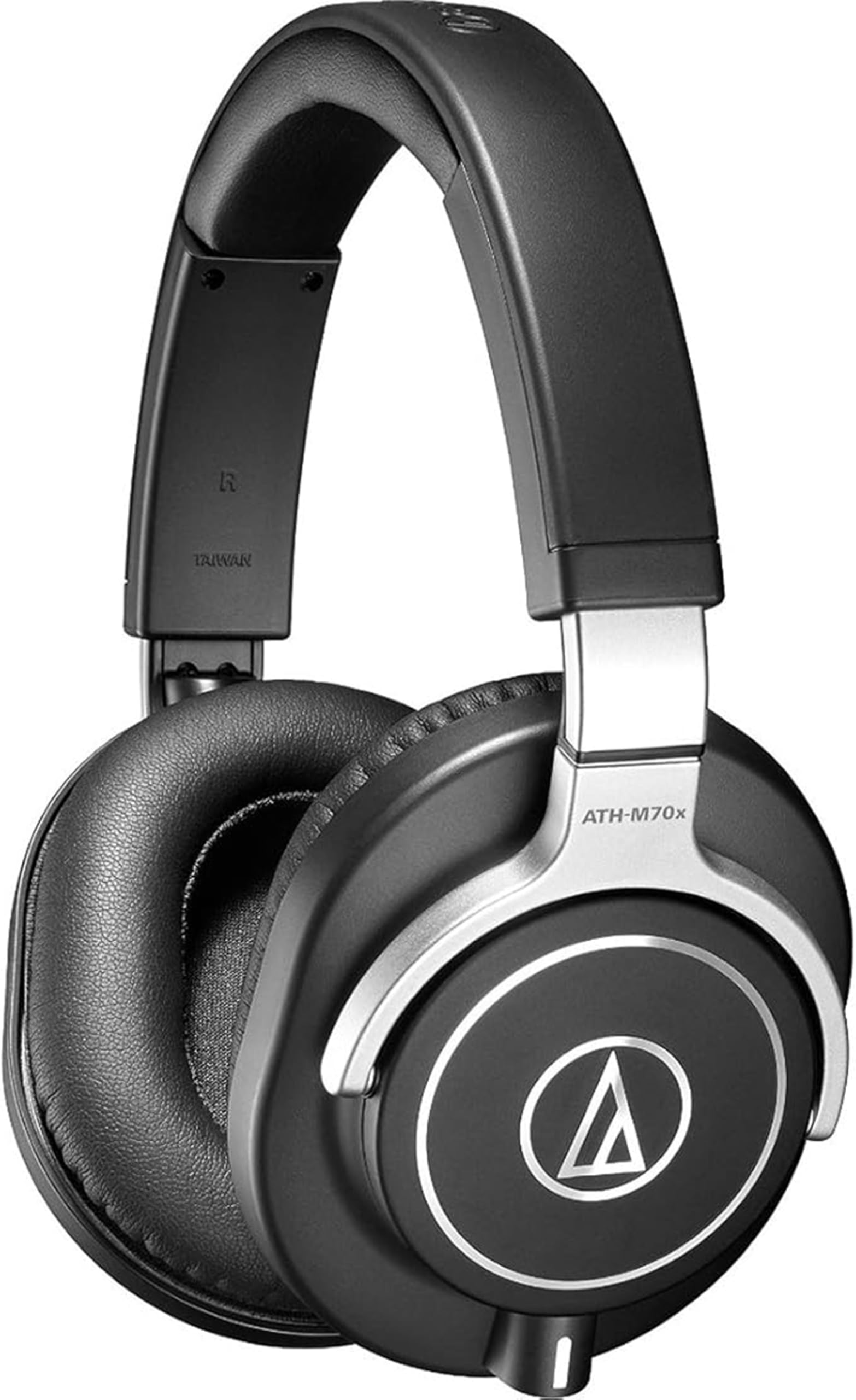
- Audio-Technica ATH-M70x Closed-Back Dynamic Professional Studio Monitor Headphones — Flattest Reference
How To Choose The Best Closed Back Headphones Under 1000
Choosing a closed-back headphone in this price range means balancing driver technology, impedance (measured in ohms — the electrical resistance that tells you how much power the headphones need), and tonal accuracy against your specific listening environment. The wrong pick can mask mix imperfections or fatigue your ears after one session.
Driver Size and Material
Larger drivers, like a 60mm dynamic driver, can move more air for deeper, more controlled bass — so kick drums and bass lines sound punchy rather than boomy. The diaphragm material — whether nano wood fibre composite or titanium-coated — directly impacts how quickly the driver responds to transients (sudden volume changes like a drum hit), which matters for percussive clarity in a mix.
Impedance and Sensitivity
Impedance (ohms) tells you how much power the headphones need. A 32-ohm pair runs easily off a laptop or phone, while a 48-ohm or higher model often benefits from a dedicated DAC (digital-to-analog converter) or headphone amplifier to reach full clarity. Sensitivity (dB) indicates how loud they get per milliwatt — higher sensitivity means easier to drive without extra gear, so you get louder sound from the same volume setting.
Closed-Back Isolation for Critical Listening
The closed-back, circumaural design (ear cups that fully enclose your ears) physically blocks outside noise and prevents sound leakage that could bleed into a live mic. For studio tracking or mixing in a noisy room, reliable passive isolation (noise blocking through the physical ear cup seal) is more important than any EQ curve — you cannot judge a mix accurately if ambient sound seeps through the ear pads.
Quick Comparison
| Model | Best For | Driver Size | Impedance | Frequency Response | Amazon |
|---|---|---|---|---|---|
| FiiO FT1 | Warm, rich listening | 60mm | 32Ω | — | Amazon |
| AKG K371 | Neutral analytical reference | 50mm | 32Ω | 5 Hz – 40 kHz | Amazon |
| Shure SRH840A | Recording and vocal monitoring | — | — | — | Amazon |
| beyerdynamic DT 770 Pro X | Durable studio workhorse | 45mm | 48Ω | 5 – 40,000 Hz | Amazon |
| Audio-Technica ATH-M70x | Flattest mixing reference | 45mm | — | 5 – 40,000 Hz | Amazon |
In‑Depth Reviews
1. FiiO FT1 32Ω Large Dynamic Driver Headphones with Solid Wood Cups

The 60mm giant that delivers deep, textured bass without bleeding into the mids.
You get a full 10mm more driver surface here than on the AKG K371 — the FiiO FT1’s 60mm dynamic driver is the largest on this list. That extra diameter, combined with a nano wood fibre composite diaphragm just 0.1mm thick, lets the FT1 move more air for bass that buyers describe as “deep, non-muddy bass; clear mids and highs.” You hear that low-end weight without the typical closed-box boominess, so bass lines stay clean and separated.
The solid wood cups are not just for looks — they add a slight warmth to the tonality that reviewers call “warm-tilted” but still precise. At 32Ω impedance, you can drive these from a basic laptop or phone dongle without needing a dedicated amplifier — so you get powerful bass straight from the start. Buyers report they are “very comfortable and lightweight” and that the clarity “surpasses wireless/gaming headsets like Audeze Maxwell.” The main trade-off: the included cables can be microphonic (noise transfers when rubbing against clothing), and isolation is only average for a closed-back, so noisy environments might push you toward the DT 770 Pro X instead.
What owners love
- 60mm driver provides exceptional bass texture and air movement
- Lightweight and comfortable for long listening sessions
- Solid wood cups add a premium feel and warm tonal balance
The drawbacks
- Microphonic cables transmit noise when brushing against clothing
- Average passive isolation compared to denser closed-back designs
Reach for this if: you want the biggest driver possible for rich, rich listening without needing an extra amp — ideal for electronic, ambient, and cinematic music.
Look elsewhere if: you need maximum passive isolation for a live tracking session or a completely neutral reference for mastering.
2. AKG Pro Audio K371 Wired Over-Ear, Closed-Back, Foldable Professional Recording Studio Headphones

The analytical reference that punches far above its price bracket.
If you need a neutral baseline to judge a mix, the K371 is your headphone — it offers the most accurate sound after the ATH-M70x, but for a lower price. AKG engineered these to match their reference response curve (a target yielding an accurate, largely flat sound so you hear the mix as the engineer intended). Owners mention it is “neutral, analytical sound with tight, clean bass and clear highs” and that “with EQ (equalization adjustments), soundstage (the perceived width and depth of audio) improves.” The 50mm titanium-coated drivers with oxygen-free copper voice coils help deliver that clarity.
Unlike the FiiO FT1’s warmer signature, the K371 aims for neutrality. You get a frequency response (the range of pitches it can reproduce) spanning 5 Hz to 40 kHz and a high 114 dB sensitivity (loudness efficiency), so they play loud even from a mobile device — making them a great pick for laptop mixing. The foldable, notched headband and included carrying pouch make them more portable than any other pick here — a real advantage if you move between studios. One owner sums it up: “comfortable, secure fit, decent sound with slight bass emphasis.” The biggest concern among reviewers is long-term durability of the hinges and ear pad seals, especially if you wear glasses.
Why it stands out
- Engineered to AKG’s reference response curve for accurate, neutral sound
- 114 dB sensitivity makes it easy to drive without a headphone amp
- Foldable design with carrying pouch offers genuine portability
Watch out for
- Some customers note fragility in the hinge and ear pad glue over time
- Cables have noticeable microphonics (noise from cable movement)
The one-liner: the most accurate, detail-oriented closed-back under — perfect for identifying mix imperfections, but not built like a tank.
Not for you if: you need a bombproof headphone for daily travel or heavy live-use abuse.
3. Shure SRH840A Professional Over-Ear Wired Studio Headphones for Recording, Mixing & Monitoring

The comfortable monitoring companion that reveals deep bass detail without fatigue.
Shure built the SRH840A for the recording booth, not for casual listening — it shines in vocal tracking and monitoring. The closed-back circumaural design isolates well enough that one buyer reports: “I use these in my recording studio for excellent sound quality and ease of use with the Shure Mic.” The tailored frequency response delivers controlled bass and detailed mids — listeners say “the bass isn’t just loud: there’s a level of detail to them that isn’t matched by, say, the Audio Technica’s ATH-M50x.” You hear the specific bass note and its amplitude (volume level), not just a thump.
Where these pull ahead of the AKG K371 is comfort for all-day wear — the wide padded headband and plush ear cushions make long mixing sessions bearable. One owner who tried a dozen other models, including the DT 770 and M50x, settled on these specifically because “they are the perfect combo of comfort and sound quality.” The catch: the stock cable is non-braided and feels flimsy compared to the braided cable on Shure’s own cheaper SRH440s. And if you mix rock music, one reviewer found the midrange definition slightly lacking for surgical EQ cuts compared to the ATH-M50x.
What works
- Deep, detailed bass response that reveals frequency and amplitude nuance
- Wide padded headband and plush cushions for long studio sessions
- Detachable locking cable adds durability and easy replacement
What disappoints
- Stock cable is non-braided and feels less durable than cheaper Shure models
- Midrange definition may fall short for critical rock mixing
Best for: vocal recording, tracking, and monitoring where comfort and detailed bass matter more than hyper-surgical midrange — especially if you already use a Shure mic.
Skip if: you need the flattest possible reference for mastering or you mix rock music and require aggressive midrange detail.
4. beyerdynamic DT 770 Pro X Wired Over-Ear Headphones, 48 Ohm, Closed-Back Professional Studio Monitor

The bombproof German tank with a spacious soundstage for closed-back.
If longevity matters more than anything, the DT 770 Pro X is your pick — you can replace every part (ear pads, headband, cable with mini-XLR connector) if it wears out, and it is handmade in Germany. The 45mm STELLAR.45 drivers deliver a clean V-shaped tuning (boosted bass and treble, with slightly recessed mids) with crisp treble and present bass. One reviewer calls it “the best passive noise cancellation tested” and notes everything is replaceable if worn out. The 48Ω impedance offers versatility: it plays from a laptop well but scales (sounds clearer and louder) with a proper DAC.
Where this headphone beats both the FiiO FT1 and the AKG K371 is isolation — the closed-back design blocks sound so effectively that you can track vocals or monitor in a noisy room without leakage. Reviewers also praise the “surprisingly spacious soundstage (perceived width of audio) for a closed-back” — wider than most competitors. The con is that some ears find the treble slightly sharp from the start, and the very long 3m cable can bump your neck. Buyers advise using EQ to tame the high end if needed, but the build quality is described as “built like a tank.”
Why it endures
- Replaceable parts and German craftsmanship for decades of use
- Best passive noise cancellation of any closed-back on this list
- Spacious soundstage that rivals open-back designs
Be aware
- Treble can sound sharp or sibilant without EQ for sensitive ears
- Long 3m cable picks up transmission noise and can bump your neck
The verdict: if you need one pair of closed-backs to survive a decade of studio work and you are willing to EQ the treble, this is the most durable option under.
Look elsewhere if: you want a warmer, more forgiving tuning from the start without any EQ adjustment.
5. Audio-Technica ATH-M70x Closed-Back Dynamic Professional Studio Monitor Headphones
The flattest frequency response in the list, built for mastering engineers, not casual listeners.
The ATH-M70x is the only headphone here explicitly designed to be unforgiving — it reveals every mix flaw without flattery. Its 45mm drivers reproduce 5 Hz to 40,000 Hz (the range of pitches it can handle) with minimal coloration (added tonal character). Buyers confirm they deliver “the flattest sound with deep, tight bass, balanced mids, and fast, non-fatiguing treble.” Unlike the FiiO FT1’s warmth or the DT 770’s V-shape, the M70x reveals every flaw in a mix — you cannot hide a bad EQ or a harsh sibilance (sharp ‘s’ sounds) behind a pleasant tuning. Reviewers point out it beats the popular ATH-M50x for accuracy because it “has no bloated bass, clearer highs, and better midrange.”
The 90-degree swiveling earcups make one-ear monitoring practical for FOH (front-of-house sound) or tracking sessions, and the circumaural design offers solid passive isolation. The hard truth: these are not enjoyable for casual music listening. One owner states flatly: “NOT for everyday use like the M50X! These are STUDIO Headphones!” That flatness, however, is exactly what a mastering engineer needs to make final mix decisions. The known weak point is the swivel hinge, which a few shoppers say breaking after normal use — repairable with epoxy, but a design flaw worth noting.
Strengths
- Flattest, most neutral sound of any headphone on this list — ideal for mastering
- Swivel earcups allow one-ear monitoring for live and tracking work
- Wide frequency range from 5 Hz to 40,000 Hz with excellent transient detail
Weaknesses
- Flat tuning makes them unenjoyable for casual or pleasurable listening
- Swivel hinge reported as a breakage point under normal use
Reach for this if: you are a mastering engineer or producer who needs the flattest possible closed-back to find mix errors — no sonic flattery, just truth.
Not for you if: you want a headphone that sounds fun for music, podcasts, or gaming.
Understanding the Specs
Driver Size and Diaphragm Material
The driver diameter, measured in millimeters, determines how much air the driver can physically push — more air means deeper, more controlled bass without distortion, like feeling a kick drum rather than just hearing it. The diaphragm material — whether nano wood fibre composite (like the FiiO FT1’s 0.1mm film) or titanium-coated polymer (like the AKG K371) — affects how fast the driver responds to sudden changes in volume, called transients (think of a snare hit). A slower driver can make drums sound soft or “blurred” instead of punchy.
Impedance and Sensitivity
Impedance, measured in ohms, tells you how much electrical resistance the headphones have — lower numbers need less power. Lower impedance, around 32Ω, means they reach high volumes from a phone, laptop, or audio interface without a headphone amplifier, so you get loud, clear sound from your daily devices. Higher impedance, like 48Ω or above, often benefits from a dedicated DAC (digital-to-analog converter) or amp to reach full potential, giving cleaner sound at higher volumes. Sensitivity, measured in dB, measures how efficiently they turn power into volume — a headphone with 114 dB sensitivity (like the AKG K371) will sound much louder at the same volume setting than a less sensitive model.
FAQ
Can I use closed-back headphones for mixing at home?
Do I need a headphone amplifier for 32-ohm headphones?
What is the difference between closed-back and open-back headphones?
How long do closed-back studio headphones typically last?
Will a 60mm driver sound better than a 45mm driver?
What does frequency response range mean for my listening?
Is passive noise isolation enough for recording vocals?
Can I use these headphones for gaming instead of a gaming headset?
Which model has the most replaceable parts for long-term use?
Do closed-back headphones over 300 dollars sound noticeably better than cheaper ones?
Final Thoughts: The Verdict
For most buyers, the closed back headphones under 1000 winner is the FiiO FT1 because its 60mm driver delivers class-leading bass depth and clarity while remaining easy to drive from any device, making it the best choice for rich, rich listening. If you want the most accurate neutral reference for studio mixing, grab the AKG K371 — it offers analytical precision at a great value. And for bombproof durability and top-tier passive isolation (physical noise blocking), the standout is the beyerdynamic DT 770 Pro X, built to survive years of studio work with fully replaceable parts.
How We Picked
We do not accept paid placement. Every pick is matched to a real buyer and a real use-case; we do not hands-on test units.
Sources & Methodology
Specifications: manufacturer listings and product documentation. Review insights: verified customer reviews, as of July 2026. Pricing: not shown on this page (it changes often); check the current price via the retailer link.
As an Amazon Associate, WellFizz earns from qualifying purchases. This does not affect which products we feature.

Mo Maruf
I created WellFizz to bridge the gap between vague wellness advice and actionable solutions. My mission is simple: to decode the research and give you practical tools you can actually use.
Beyond the data, I am a passionate traveler. I believe that stepping away from the screen to explore new environments is essential for mental clarity and physical vitality.