Our readers keep the lights on and my smoothie glass nicely filled. As an Amazon Associate, I earn from qualifying purchases.
Specs are compiled from manufacturer listings and verified buyer reviews and can change over time — please confirm the key details on the product page before buying.
You want binoculars that slip into a jacket pocket but still let you read a license plate across a parking lot or see a singer’s face from the nosebleeds. The trick is balancing magnification and lens size. Crank the power too high on a tiny lens, and the image turns shaky and dim. Skimp on reach, and you are not seeing any more detail than your naked eye. This guide covers seven compact binoculars — from cheap and cheerful to rugged and premium — so you find the pair that fits your actual life: birding at sunrise, hiking a ridge, or tucked in your glove box for surprise wildlife.
I’m Mohammad Maruf — the founder and writer behind WellFizz. This guide is built by comparing the manufacturers’ published specifications and the patterns across verified customer reviews, so you get each pick’s real strengths and trade-offs instead of marketing spin.
Here are the compact binoculars that give you sharp views without the bulk.
Quick Picks
- Vortex Triumph HD 10×28 Binoculars — Premium Pick
- Nikon TRAVELITE EX 10×25 Binoculars — Best Overall
- Nocs Provisions Standard Issue 10×25 Waterproof Binoculars — Most Stylish
- Compact Binoculars for Adults 10×26 High Powered — Best Waterproof
- OLIMT 6×25 Compact Binoculars — Widest View
- Nikon ACULON A30 10×25 Compact Binoculars — Trusted Brand
- Hontry 12×25 Compact Binoculars — Budget Champion
How To Choose The Best Compact Binoculars
Compact binoculars give you portability, but smaller lenses capture less light. You need to find the balance where magnification, lens size, and build quality match your use — whether that is casual backyard birding, travel, or day hikes.
Magnification vs. Lens Size — The Trade-Off
The first number in a spec like “10×25” is the magnification power — 10x means objects look ten times closer. The second is the objective lens diameter in millimeters. A 25 mm lens captures less light than a 28 mm lens, so 10×25 images are dimmer in twilight. Common compact combos are 8×25, 10×25, and 12×25. Be honest: can you hold 12x steady? Every hand shake gets magnified too, turning a bird into a blur.
Exit Pupil and Eye Relief
The exit pupil (the circle of light reaching your eye) is the lens size divided by magnification. A larger exit pupil — over 4 mm — means brighter images at dawn or dusk. A smaller one — under 3 mm — looks dimmer. Eye relief is the distance your eye can stay from the eyepiece and still see the full image. You need at least 15 mm of eye relief if you wear glasses, or the view tunnels. A wide field of view on a 6x binocular helps you track moving birds; a 10x can feel like peering through a straw, demanding a steady hold.
Quick Comparison
| Model | Best For | Magnification | Weight | Field of View | Amazon |
|---|---|---|---|---|---|
| Vortex Triumph HD 10×28 | Rugged all-weather use | 10x | — | — | Amazon |
| Nikon TRAVELITE EX 10×25 | Premium travel companion | 10x | — | — | Amazon |
| Nocs Provisions Standard Issue 10×25 | Style and pocketability | 10x | 11.85 oz | 315 ft @ 1000 yds | Amazon |
| Compact Binoculars for Adults 10×26 | Waterproof one-handed use | 10x | 0.94 lbs | — | Amazon |
| OLIMT 6×25 Compact Binoculars | Widest field of view | 6x | — | 498 ft @ 1000 yds | Amazon |
| Nikon ACULON A30 10×25 | Trusted brand lightweight pick | 10x | — | 5° | Amazon |
| Hontry 12×25 Compact Binoculars | Budget long-range spotting | 12x | 10.6 oz | 288 ft @ 1000 yds | Amazon |
In‑Depth Reviews
1. Vortex Triumph HD 10×28 Binoculars
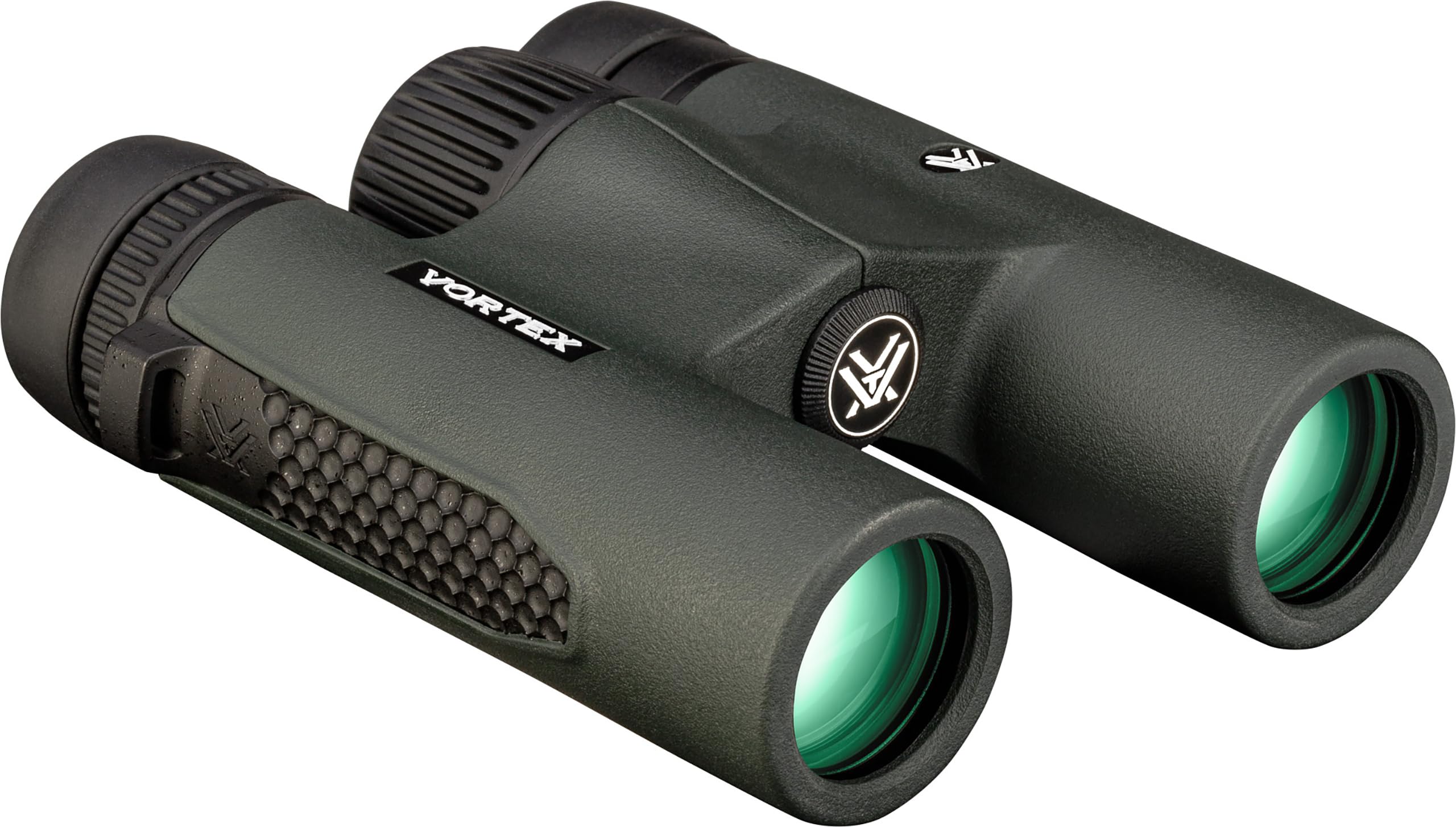
Rugged clarity that survives a 20-foot drop — and a lifetime warranty that backs it up.
When reliability matters most — think damp marshes, dusty trails, or a rain-soaked stadium — the Vortex Triumph HD earns its place as the premium pick. The HD optical system uses fully multi-coated lenses (lenses with multiple anti-reflective layers on every glass surface) to deliver crisp, true-color images with minimized chromatic aberration (the purple-green fringing you sometimes see at high-contrast edges). At 10x magnification with 28 mm objective lenses, it strikes a solid balance between reach and light-gathering — the 2.8 mm exit pupil keeps the view bright enough for early morning or late afternoon. The rubber-armored polycarbonate chassis is both shockproof and tripod-adaptable, and it is nitrogen-purged (filled with inert gas to stop internal fogging) so it stays clear in temperature swings. Buyers report that even after a 20-foot drop from a tree, the binoculars suffered no damage — proof of the build. The bigger objective lens (28 mm vs 25 mm on most competitors) gives it a slight edge in dim conditions over the OLIMT 6×25 or the Honorace 10×26. With Vortex’s unconditional, unlimited, transferable VIP warranty, this is a buy-once, never-replace choice.
Built Tough
- HD optics with fully multi-coated lenses for excellent color and sharpness
- Nitrogen-purged, waterproof, and fog-proof for all-season use
- Unlimited, unconditional lifetime warranty — covers any damage or defect
Consider This
- Image is bright and clear but not razor-sharp compared to much more expensive glass
- Weighs more than some slim 10×25 models
Reach for this if: You need a rugged, waterproof pair that can handle rough outdoor use and you value a lifetime warranty over the lightest possible weight.
Look elsewhere if: You only use binoculars a few times a year in bright daylight and want the smallest possible form factor.
2. Nikon TRAVELITE EX 10×25 Binoculars

the balance for travelers — light, rugged, and sharp enough to justify the premium.
If you have ever fumbled with bulky binoculars while trying to enjoy a scenic viewpoint, the Nikon TRAVELITE EX is the fix. It uses a 25 mm objective lens and multilayer-coated optics with aspherical eyepiece lenses (curved lens elements that reduce distortion across the entire field of view) to deliver vivid, true-color images from edge to edge. At just 11.1 mm of eye relief, it works reasonably well with glasses, though eyeglass wearers might prefer the 15 mm of the Vortex above. The die-cast aluminum body wrapped in rubber armoring gives it a dense, well-built feel without being heavy. Buyers consistently praise the “sharp and bright” image, with one noting it is “the balance for travel” and another saying they would “buy another pair in a heartbeat.” Unlike the Nikon ACULON A30, the TRAVELITE EX is fully waterproof and fog-proof — nitrogen-purged and O-ring sealed to survive submersion up to 2 meters for 5 minutes. That alone makes it a better bet for unpredictable weather. The 10x magnification is steady enough for most users, though the 498-foot field of view on the OLIMT 6×25 makes that model easier for tracking fast-moving birds.
Why It Wins
- Waterproof to 2 meters and nitrogen-purged for fog-free performance
- Rugged die-cast aluminum body with protective rubber armor
- True-to-life color and edge-to-edge sharpness from aspherical lenses
Keep In Mind
- Eye relief is 11.1 mm — eyeglass wearers may need to press close
- Some users have reported prism alignment issues on used units
Best for: The frequent traveler or hiker who wants a proven, waterproof compact from a trusted brand without going to the highest-end price tier.
skip it if: You wear glasses and need more than 12 mm of eye relief — check the Vortex Triumph HD instead.
3. Nocs Provisions Standard Issue 10×25 Waterproof Binoculars

Pocket binoculars that look good enough to keep on your coffee table — and perform in the field.
The Nocs Provisions Standard Issue brings a fresh aesthetic to a category that often looks all business. With a patented ergonomic Wave Grip design (grooves molded into the rubber casing that keep a secure hold even in wet hands) and a 10×25 configuration, these binoculars weigh 11.85 oz and deliver a 315-foot field of view at 1000 yards. That field of view is narrower than the 498 feet on the OLIMT 6×25, which makes the 6x model easier for scanning treelines, but the Nocs make up for it with clarity: fully multi-coated optics and a Swiss-designed BAK4 prism (a high-quality glass prism that reduces light loss and keeps images bright) ensure crisp, bright views even in overcast conditions. The IPX7 waterproof rating means it can survive a dunk up to three feet of water for 30 minutes, and the nitrogen filling prevents fogging. One avid birder says these are her “purse binoculars” — always ready and easily packed. The eye relief is 10 mm, which is tight for glasses, but the multi-stop twist-up eyecup offers three positions to help dial in your view. Unlike the Honorace 10×26, which has a manual focus wheel some buyers found a bit loose, the Nocs focus is smooth and positive.
Looks + Function
- IPX7 waterproof and fog-proof with nitrogen-filled construction
- Unique Wave Grip design provides excellent hold in wet or sweaty hands
- Multi-stop twist-up eyecups for eyeglass and non-eyeglass users
Trade-Offs
- Only 10 mm eye relief — not ideal for eyeglass wearers
- Neck strap is a little tricky to install through the barrel grooves
Perfect if: You want a compact, waterproof daily companion with personality — and you are not a glasses-wearer.
Consider another if: You need maximum eye relief or the widest possible field of view for scanning.
4. Compact Binoculars for Adults 10×26 High Powered
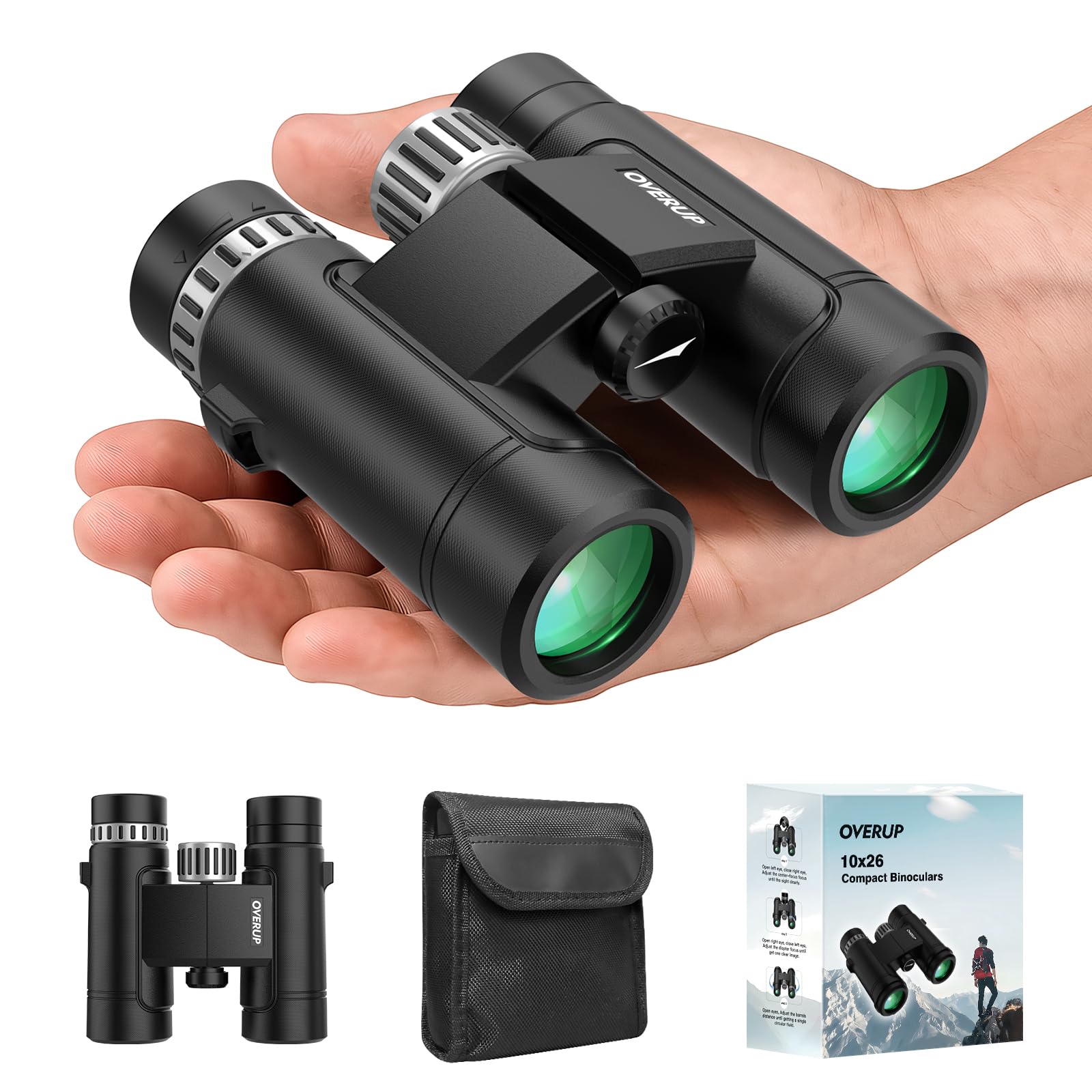
One-handed operation meets full waterproofing — a true all-weather compact.
Most compact binoculars require two hands and a steady stance, but the Honorace 10×26 is designed to be used one-handed. At 0.94 lbs (about 15 oz), it is the heaviest of the 10x compacts here, but the weight comes from a rubberized, rugged build that feels durable in the hand. The 26 mm objective lens (4% larger than the 25 mm on the Hontry 12×25) lets in slightly more light, and the BAK4 prisms with fully multi-coated lenses produce sharp, high-contrast images even in early morning or late evening light. The IPX7 rating is a standout at this price point — these binoculars can survive a drop in a stream or heavy rain, and the anti-fog coating prevents condensation when moving between cold and warm air. One reviewer noted these are “surprisingly clear” and “easy one-handed use,” though the same reviewer noted that finding subjects again after zooming in can be tricky. The eye relief is 10 mm, which is standard for budget compacts but means glasses wearers should demo them first. Unlike the Vortex Triumph HD, which has a more advanced HD optical system, the Honorace is a straightforward performer that puts waterproofing first at a mid-range price.
Built for Wet Weather
- IPX7 waterproof and anti-fog coated for all-conditions use
- One-handed operation — grab and focus instantly
- BAK4 prisms with FMC lenses for crisp images in low light
Watch For
- Center view is clear but some edge cloudiness reported
- Focus wheel feels a little loose on some units
Ideal for: The birder or hiker who needs a weatherproof, one-handed compact that can handle rain and damp conditions without sweating the cost.
Not for you if: You need glasses-friendly eye relief or want the lightest possible pocket carry.
5. OLIMT 6×25 Compact Binoculars

A massive 498-foot field of view at 6x — built for scanning, not shaking.
If you have ever struggled to find a bird through a 10x lens, the OLIMT 6×25 is a revelation. That means you can track a moving sparrow or scan a treeline without constantly readjusting. The larger exit pupil at 4.16 mm (vs 2.08 mm on the Hontry) delivers a noticeably brighter image in low light, which makes a real difference at dawn or dusk. The 16 mm eye relief is generous — glasses wearers will see the full image without pressing the eyepieces into their lenses. This is also among the most comfortable compacts for extended use, thanks to the 21 mm large eyepiece and twist-up eyecups. One buyer called them “as good as binocs that cost twice the price.” The trade-off is that a 6x magnification will not bring far-distant subjects as close as the 10x or 12x models will, so it is less suited for stadium seats or long-range wildlife spotting.
Scanning Superpower
- Wide 9.5-degree field of view makes tracking moving subjects easy
- 16 mm eye relief is excellent for eyeglass wearers
- Compact and lightweight with premium BAK-4 prism and ED glass
Limitation
- 6x magnification will not match the reach of 10x or 12x for distant objects
- Neck strap design makes it hard to keep binoculars in the carry case when the strap is attached
This pick: The go-to for birders, hikers, and glasses wearers who value a wide, bright, stable view over raw magnification power.
Pass on it if: You need to zoom in on specific details far away — reach for a 10x or 12x model instead.
6. Nikon ACULON A30 10×25 Compact Binoculars
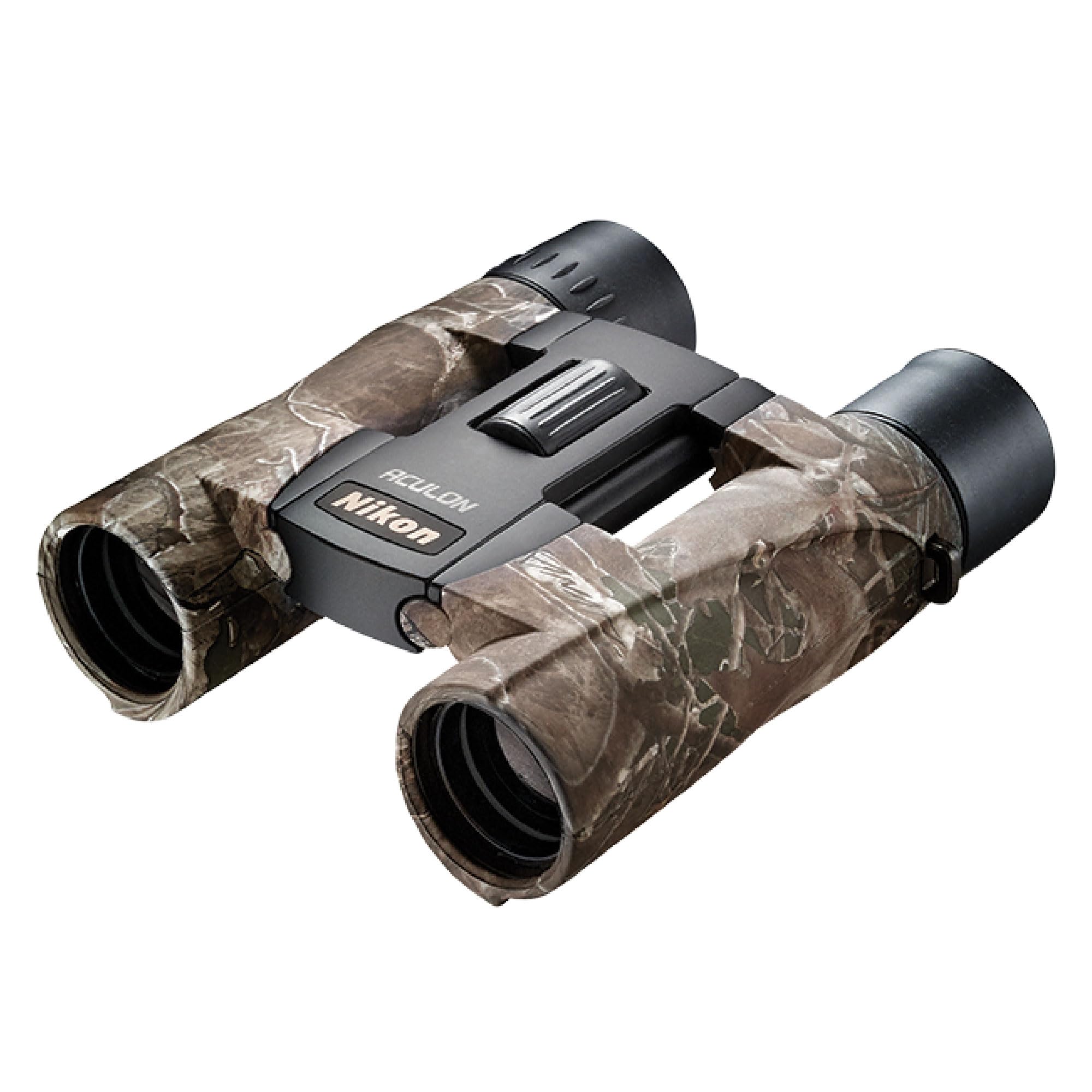
Nikon’s slim dual-hinge design that folds flat and slides into any pocket.
The Nikon name carries weight in optics, and the ACULON A30 proves that even a budget-tier Nikon delivers solid performance. The dual-hinge folding design lets the binoculars collapse into a very compact shape — smaller than most 10×25 models — making them ideal for a purse, backpack, or glove compartment. The multilayer-coated lenses (multiple anti-reflective layers on some surfaces, though not the “fully multi-coated” standard found on pricier models like the Nocs) produce bright, sharp images in good light. The 5-degree field of view is noticeably narrower than the 9.5-degree view of the OLIMT 6×25, so precise aiming matters more. Buyers praise the “crisp at short distances” quality and the “slim and pocketable” form factor. The main weakness is the lack of full waterproofing — the ACULON A30 is not sealed against moisture, and buyers have noted it “may fog” in humid conditions. The eye relief is not specified, but from reviews, it works best in brightly lit environments. Compared to the Nikon TRAVELITE EX above, the ACULON A30 is lighter and cheaper but sacrifices weather protection.
Compact Champion
- Dual-hinge design folds down very small for easy pocket carry
- Multi-layer coated lenses for sharp, clear images in good light
- Smooth central focus knob for fast adjustments
Shortfalls
- Not waterproof or fog-proof — best for fair-weather use
- Narrow field of view can feel shaky at 10x without great stability
Good for: The casual user who wants a reliable name-brand compact for well-lit daytime use and convenience above all.
Not the one if: You need weather-sealing, maximum eye relief, or a wide field of view for scanning.
7. Hontry 12×25 Compact Binoculars
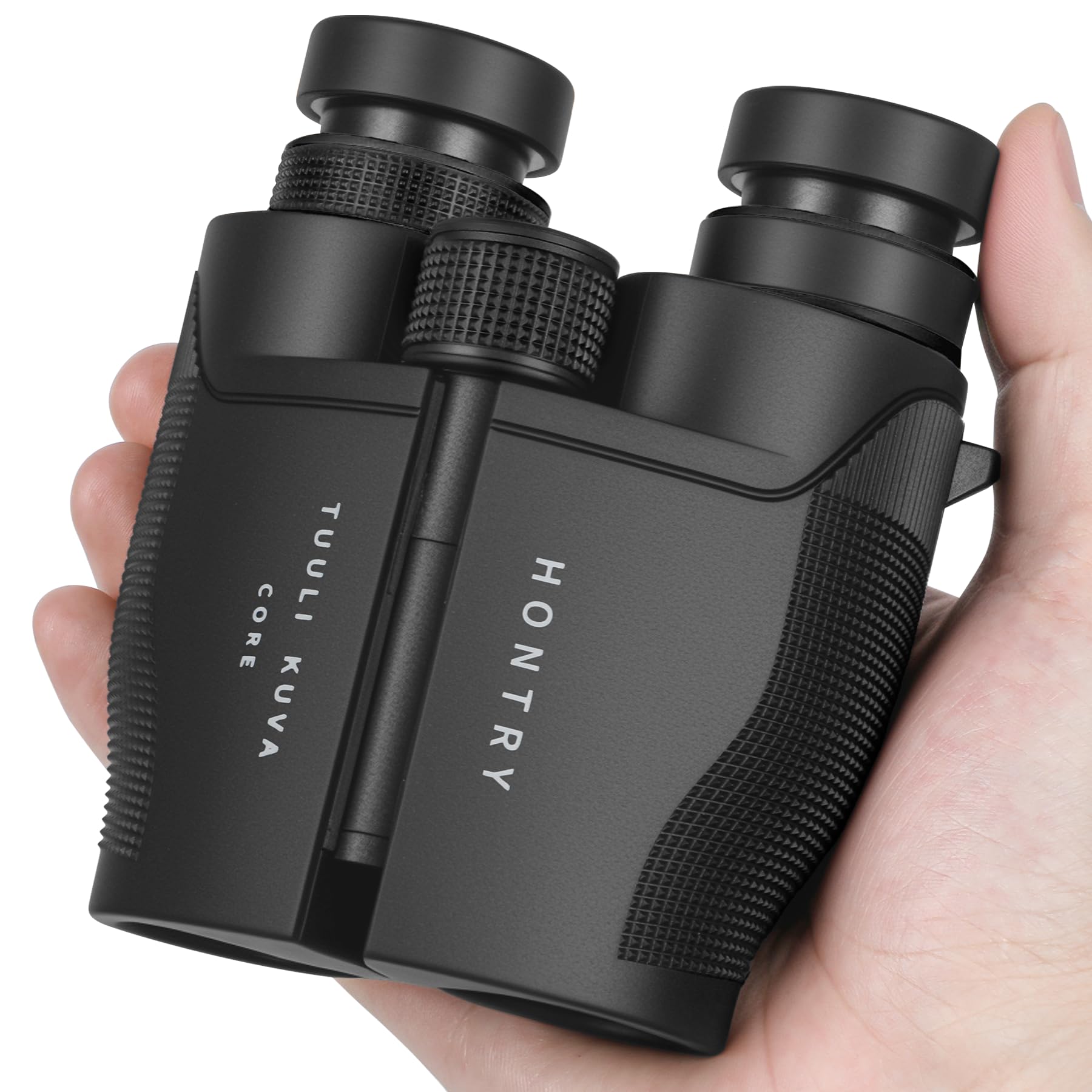
12x magnification in a palm-sized package — a serious reach from a tiny body.
The Hontry 12×25 is the most affordable entry in this list and the one with the highest magnification. At 12x, distant subjects — a bald eagle on a snag, a stage performer, a ship on the horizon — look significantly closer than with a 10x or 6x compact. The BAK-4 prisms and fully coated lenses deliver decent clarity for the price, though the image will naturally be dimmer than models with larger objective lenses because the 2.08 mm exit pupil is the smallest of the bunch. The 288-foot field of view (2.0x narrower than the OLIMT 6×25’s 498 feet) means you need a steady hand and a methodical scanning technique — this is not a grab-and-scan binocular. At 10.6 oz and measuring 4.3 x 2.2 x 5.1 inches, it easily fits a jacket pocket. One buyer mentioned it is the “perfect size for child’s eye distance” and praised the “clearer image than adult binoculars,” thanks to the adjustable 60–75 mm interpupillary distance. The 10 mm eye relief is tight for glasses, and the overall build uses glass, PET, and PVC elements, which is less refined than the all-metal Nikon TRAVELITE EX. For the price, though, this is a capable long-range tool for the budget-conscious buyer.
Big Reach, Small Cost
- 12x magnification brings distant subjects much closer than standard 10x compacts
- Very lightweight at 10.6 oz and compact enough for a jacket pocket
- Adjustable interpupillary distance fits kids to adults
Reality Check
- Small 2.08 mm exit pupil means a dimmer view in low light
- 10 mm eye relief is not great for glasses wearers
Who it fits: The budget shopper who wants maximum reach from a tiny binocular and primarily uses it in good daylight for stationary viewing.
Skip if: You need a wide scanning view, glasses-friendly eye relief, or waterproofing — invest in the OLIMT 6×25 or the Honorace 10×26 instead.
Understanding the Specs
Magnification and Objective Lens
The two numbers you always see — like “10×25” — tell you the magnification power (10x means objects look ten times closer) and the objective lens diameter (25 mm) in millimeters. A higher magnification brings you closer, but it also magnifies every hand shake and reduces the field of view (the width of the scene you see). A larger objective lens gathers more light for a brighter image, but it adds bulk. In compact binoculars, 8×25 and 10×25 are the most common balances. The 12×25 on the Hontry pushes the limit of steady handholding, while the 6×25 on the OLIMT gives you a wide, bright view that is easy to hold steady.
Exit Pupil and Eye Relief
The exit pupil (the circle of light exiting the eyepiece, measured in millimeters) is calculated by dividing the objective lens size by the magnification. A larger exit pupil, around 4 mm or more, gives you a bright image in low light — the OLIMT 6×25 delivers 4.16 mm. A smaller exit pupil under 3 mm, like the 2.08 mm on the Hontry 12×25, will look dimmer in twilight. Eye relief is the distance in millimeters your eye can be from the eyepiece while still seeing the full image. If you wear glasses, aim for 15 mm or more; the OLIMT offers 16 mm, while several 10x compacts offer only 10 mm, which will feel tight.
FAQ
What does 10×25 mean on a compact binocular?
Is 12x magnification too shaky for a small binocular?
What is a good field of view for compact binoculars?
What does eye relief mean and why does it matter for glasses wearers?
Are compact binoculars waterproof?
What is a BAK-4 prism and is it better?
Can I use compact binoculars for stargazing?
What is the difference between fully multi-coated and multi-coated lenses?
How do I choose between 6x, 8x, 10x, and 12x for compact binoculars?
Can I attach compact binoculars to a tripod?
Final Thoughts: The Verdict
For most buyers, the compact binoculars winner is the Nikon TRAVELITE EX 10×25 because it blends a proven waterproof build with sharp Nikon optics in a truly packable size. If you want the widest, most comfortable view for scanning and you wear glasses, grab the OLIMT 6×25. And for the toughest all-weather performance backed by an unconditional lifetime warranty, the standout is the Vortex Triumph HD 10×28.
How We Picked
We do not accept paid placement. Every pick is matched to a real buyer and a real use-case; we do not hands-on test units.
Sources & Methodology
Specifications: manufacturer listings and product documentation. Review insights: verified customer reviews, as of July 2026. Pricing: not shown on this page (it changes often); check the current price via the retailer link.
As an Amazon Associate, WellFizz earns from qualifying purchases. This does not affect which products we feature.

Mo Maruf
I created WellFizz to bridge the gap between vague wellness advice and actionable solutions. My mission is simple: to decode the research and give you practical tools you can actually use.
Beyond the data, I am a passionate traveler. I believe that stepping away from the screen to explore new environments is essential for mental clarity and physical vitality.