Our readers keep the lights on and my smoothie glass nicely filled. As an Amazon Associate, I earn from qualifying purchases.
Specs are compiled from manufacturer listings and verified buyer reviews and can change over time — please confirm the key details on the product page before buying.
Most clothing steam irons remove wrinkles fine, but they are either painfully slow to heat up or so heavy your wrist aches after one shirt. You want an iron that heats fast, glides smoothly, and never dumps water on your trousers. This guide breaks down five models that deliver, from a sub-15-second powerhouse to a cordless quilting marvel.
I’m Mohammad Maruf — the founder and writer behind WellFizz. This guide is built by comparing the manufacturers’ published specifications and the patterns across verified customer reviews, so you get each pick’s real strengths and trade-offs instead of marketing spin.
if you need a quick vertical de-wrinkler before a meeting or a heavy-duty press for cotton sheets, the right clothing steam iron depends on how fast it heats, how much steam it throws, and if you want to wrestle with a cord.
Quick Picks
- Rowenta Pure Force 3in1 Steamer & Iron (DR8855) — Best Overall
- Panasonic 360 Freestyle Cordless Iron (NI-QL2000R) — Quilter’s Dream
- BLACK+DECKER Moonstone Iron (IR2323-1AD) — Best Value
- Hamilton Beach Durathon 3-in-1 Travel Steamer & Iron (11559) — Travel & Steamer Combo
- Proctor Silex Steam Iron (14250) — Heavyweight Presser
How To Choose The Best Clothing Steam Iron
Picking a steam iron sounds simple until you face boxes with 1500 watts, 1875 watts, ceramic vs. stainless steel, and confusing steam buttons.
Heat-Up Time Rules Your Morning
A 45-second heat-up (Hamilton Beach) works if you are patient; a 10-second heat-up (Rowenta) lets you iron a shirt in the time it takes to pour coffee. If you iron in quick bursts before rushing out, a faster heat-up saves frustration daily.
Soleplate Material Determines the Glide
A ceramic soleplate (BLACK+DECKER and Panasonic) resists scratches and distributes heat evenly, so you do not go over the same spot twice. A stainless steel soleplate (Proctor Silex) is durable and budget-friendly, but it can feel slightly stickier on synthetic fabrics. Nonstick coatings help but wear out over time.
Weight Is Not Just About Fatigue
A lighter iron (around 2.2 pounds like the Hamilton Beach) is easier to maneuver and pack, but it may lack the downward pressure needed for tough creases on linen or denim. Heavier irons (4.1 pounds like the Proctor Silex) press wrinkles out with less effort from you, but they can strain your wrist during longer sessions.
Quick Comparison
| Model | Best For | Wattage | Heat-Up Time | Weight | Amazon |
|---|---|---|---|---|---|
| Rowenta Pure Force 3in1 | Super-fast steam bursts | 1875 W | 10 seconds | 3.1 lbs | Amazon |
| Panasonic 360 Freestyle Cordless | Cord-free quilting & detail work | 1700 W | — | — | Amazon |
| BLACK+DECKER Moonstone IR2323 | Lightweight everyday value | — | — | 1.35 kg | Amazon |
| Hamilton Beach Durathon 3-in-1 | Travel + iron combo | 1700 W | 45 seconds | 2.23 lbs | Amazon |
| Proctor Silex 14250 | Heavy-duty cotton & linen | 1500 W | — | 4.1 lbs | Amazon |
In‑Depth Reviews
1. Rowenta Pure Force 3in1 Steamer & Iron (DR8855)
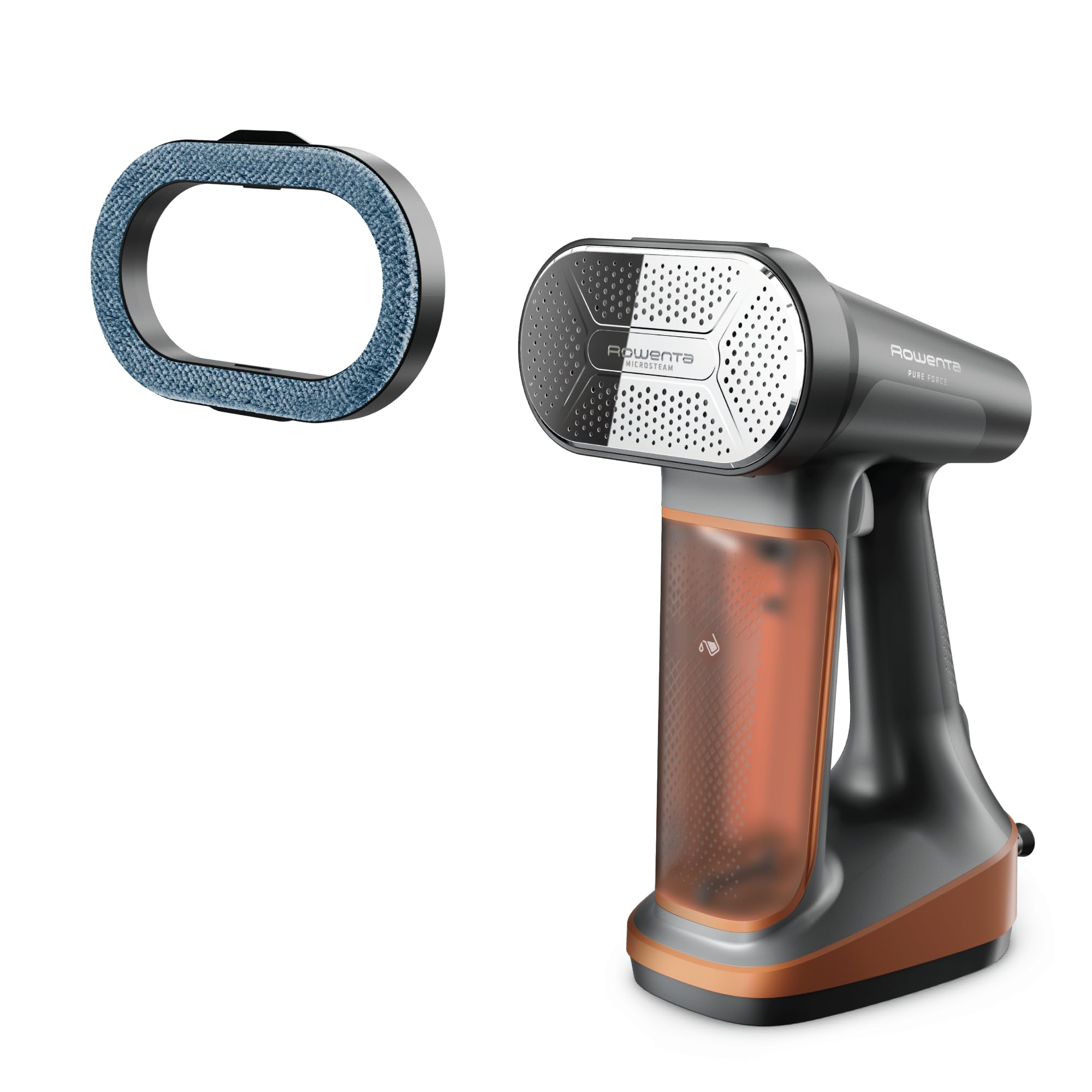
You get wrinkles gone in 10 seconds because the soleplate is hot that fast, and the 1875-watt motor delivers the manufacturer’s high-volume steam output.
This is the iron you grab when you need wrinkles gone immediately and you are tired of waiting around. Buyers report it throws “very high steam output on high settings,” and one owner noted it works even when laid flat, unlike some handheld steamers that only function upright.
The 3-in-1 design lets you switch between vertical steaming for hanging clothes and horizontal ironing on a board, and the reversible pads also work as a lint remover — so you can clean dust off a jacket mid-session. The trade-off is the 7.1 oz tank runs out in about 12 minutes, and the unit is bulky at 11.81 inches long. If you are steaming a single shirt, that is fine; for a whole laundry basket of bedding, you will refill the tank a couple of times.
Speed Demon
- 10-second heat-up gets you ironing before others finish waiting
- High steam output, per the manufacturer
- XL soleplate covers ground fast
Watch Out For
- Hefty 3.1-pound build is not ideal for long sessions
- Water tank is on the small side for big loads
Reach for this if: you value speed above all else — 10-second heat-up and serious steam power make it the fastest finisher here.
Look elsewhere if: you need an ultra-light travel companion or plan to iron through multiple king sheets without refilling.
2. Panasonic 360 Freestyle Cordless Iron (NI-QL2000R)
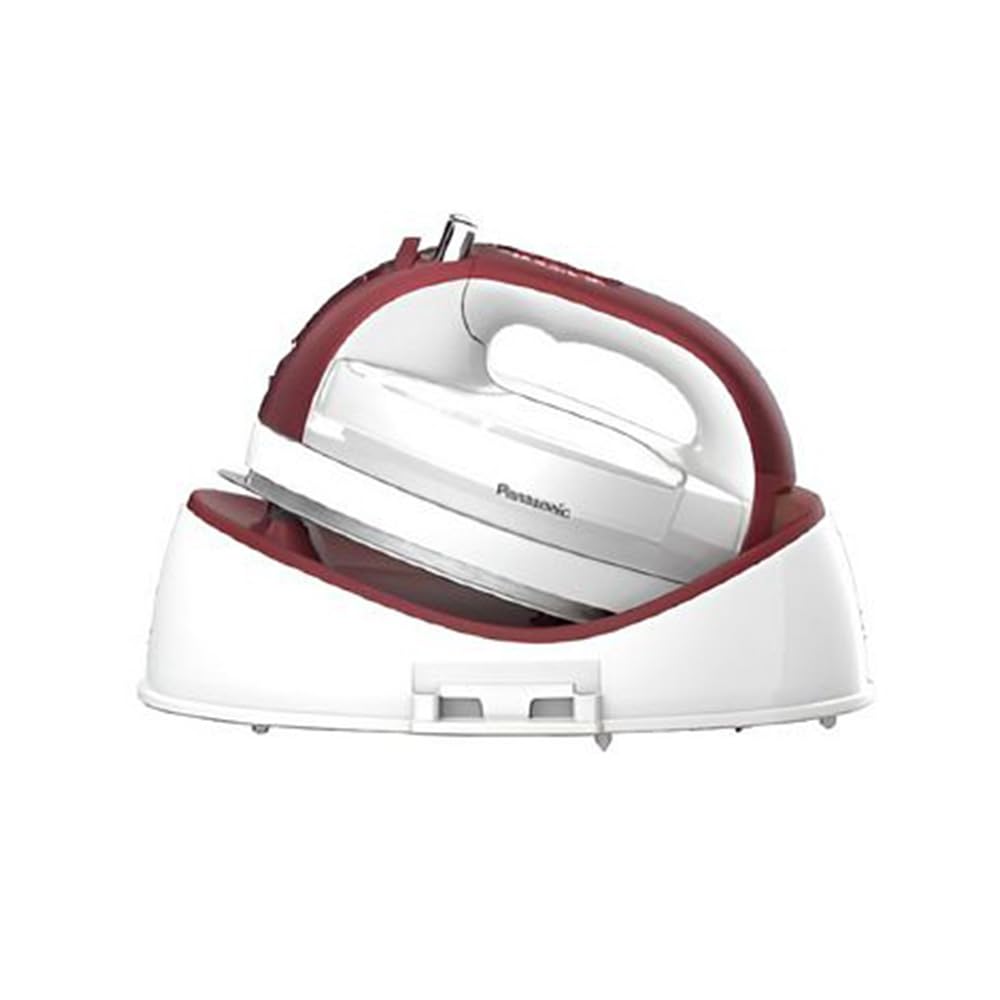
A cordless iron that glides for 5 minutes per dock — no tangles, no dragging.
If you hate the feeling of a cord snagging on a button or yanking the iron off a seam, the Panasonic 360 solves that by removing the cord entirely. It docks onto a ceramic charging base and gives you about 5 minutes of wireless ironing per charge, then re-heats quickly when you dock it again. Reviewers who quilt swear by it — one owner said “for my quilt pieces it is excellent,” and noted the auto shutoff keeps it safe when set down. The double-pointed tip lets you iron in any direction without repositioning the garment, which is a real time-saver when you are working around buttons or shaping pleats.
The catch is that 5 minutes per dock means you will be re-docking several times during a full basket of laundry. The 1700-watt heater keeps the soleplate hot, but the cordless freedom comes with a rhythm of charge-and-glide that suits smaller loads or detail work better than marathon ironing sessions. Buyers also mention the detachable water reservoir prevents dripping when refilling — a small but appreciated detail.
No-Cord Magic
- Double-pointed tip allows ironing from any angle
- Lightweight and easy to maneuver for quilting or small seams
- Ceramic soleplate glides smoothly and resists scratches
The Trade-Off
- 5-minute cordless window requires frequent re-docking for large loads
- Higher upfront cost than most corded irons
Grab it for: quilting, small garment touch-ups, and anyone who is fed up with fighting a cord every time they iron.
skip it if: you regularly iron piles of full-size bedding and do not want to stop every five minutes to re-dock.
3. BLACK+DECKER Moonstone Iron (IR2323-1AD)

A featherlight ceramic iron with a big tank for easy everyday ironing.
The BLACK+DECKER Moonstone hits the balance of price and performance. Its ceramic soleplate is scratch-resistant, and the manufacturer describes it as delivering a smoother glide than basic stainless steel, so you are not fighting to push the iron across a shirt. Buyers consistently mention how lightweight it feels — one reviewer noted their “old iron was SOOOO heavy” and called this one a clear upgrade over a model. The 330ml water tank is among the largest on this list, meaning fewer trips to the faucet. It also packs a 140g steam shot for stubborn creases, anti-drip to keep water spots off your clothes, and vertical steaming for hanging curtains or suits.
One thing to watch: the lightweight build means you may need to press a little harder on thick fabrics like denim compared to heavier irons. But for everyday cotton shirts, khakis, and blouses, it handles the job with zero complaints. The auto shutoff and self-cleaning function add confidence without adding cost.
Why It Wins for Value
- Large 330ml tank means fewer refills mid-session
- Ceramic soleplate gives a noticeably smooth glide
- Anti-drip and auto shutoff at a budget-friendly price
One Caveat
- Lighter weight requires more downward pressure on heavy linens
Perfect for: anyone who wants a smooth-gliding, lightweight iron with a big tank without spending a lot.
Not ideal if: you need the mass of a heavy iron to press thick denim or canvas with minimal effort.
4. Hamilton Beach Durathon 3-in-1 Travel Steamer & Iron (11559)
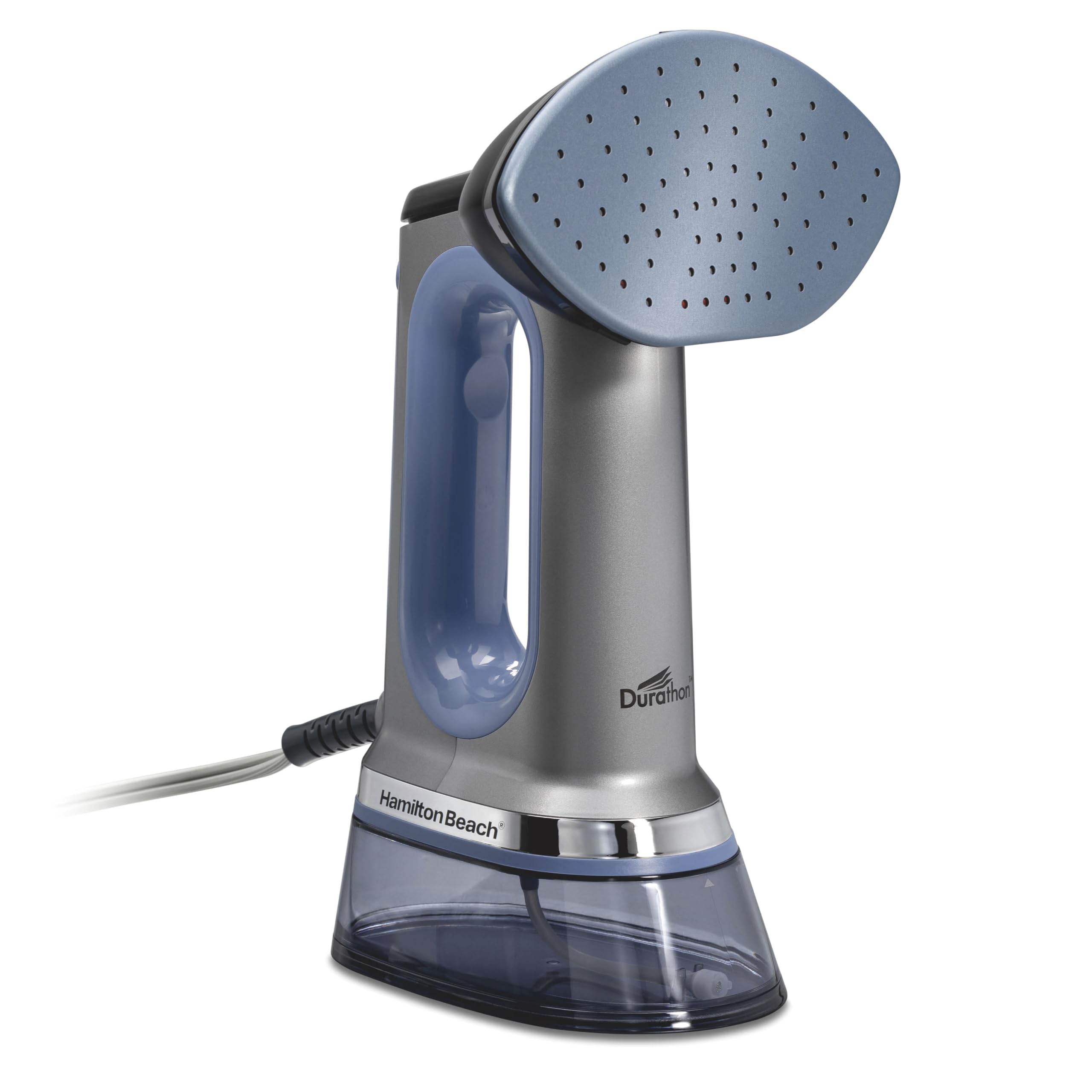
A 3-in-1 that works as an iron, a handheld steamer, and a travel companion.
This is the Swiss Army knife of wrinkle removal. The Hamilton Beach works three ways: vertical steaming on hanging clothes, traditional ironing on a board, or dry-ironing delicate fabrics. Its 300ml removable tank delivers up to 27 minutes of continuous steam, versus the Rowenta’s 12 minutes, so you can work through a full wardrobe without pausing. At 2.23 pounds, it is the lightest full-featured option here, and its 5.31 x 3.78 x 10.67-inch dimensions make it genuinely travel-friendly. One buyer called it the “best of eight handheld steamers tested,” praising the steam force and lack of water spitting.
The heat-up takes 45 seconds, versus the Rowenta’s 10 seconds. The nonstick Durathon coating is said to be 10 times more durable than traditional nonstick, but the plastic drip guard can fall off, as a few reviewers noted. For everyday quick jobs and travel, it is a versatile win; for a head-to-sole iron blitz, the Rowenta or Proctor Silex will feel more sturdy.
Versatility King
- 27 minutes of steam from one tank fill
- At 2.23 lbs, it is the lightest full-powered option here
- Three modes cover vertical, horizontal, and dry ironing
Room for Improvement
- 45-second heat-up versus the Rowenta’s 10 seconds
- Plastic drip guard is not securely attached per some owners
Best suited for: travelers and anyone who wants the flexibility to steam on a hanger or iron on a board without hauling two devices.
Not for: speed demons who need a sub-15-second heat-up for a fast morning press.
5. Proctor Silex Steam Iron (14250)

A 4.1-pound workhorse that flattens heavy cotton and canvas fast.
If you are ironing dense fabrics like cotton quilting fabric or canvas work shirts, gravity is your friend, and the Proctor Silex gives you plenty of it. At 4.1 pounds versus the 2.23-pound Hamilton Beach, it presses wrinkles out with its own weight, so your arm does less work. The 1500-watt heater delivers powerful steam, and buyers confirm it heats almost instantly. One reviewer who quilts with cotton said it provides “great steam for cotton quilting” and praised the retractable 8-foot cord for neat storage. The 3-way auto shutoff turns the iron off within one minute if it falls on its face or side, or in 30 minutes if left on its heel, which is a welcome safety net.
The downside is the weight — holding 4.1 pounds overhead for vertical steaming is a chore, and the unit is noticeably taller than lightweight rivals. Some reviewers also noted the cord retracts with “stutter steps” and that the iron beeps after 30 minutes idle. If you mostly do light shirts and synthetics, you will be happier with a lighter model. But for anyone who regularly tackles thick cottons, denim, and linen, this iron’s heft is exactly the point.
The Muscle
- 4.1 lbs of weight does the pressing work for you on thick fabrics
- 8-foot retractable cord keeps the counter tidy
- 3-way auto shutoff with motion-sensitive restart
Heavy Price
- Too heavy for comfortable vertical steaming or long sessions
- Must unplug to fully turn off — no off switch on the body
Choose this if: you regularly iron heavy cottons, linens, or denim and want gravity to do the hard work.
Pass on it if: you are looking for a lightweight, travel-friendly iron or do most of your work with vertical steaming.
Understanding the Specs
Wattage and Heat-Up Time
Wattage tells you how much power the iron draws to heat its soleplate and produce steam. Higher wattage (1500W to 1875W) generally means faster heat-up and stronger steam, but the difference between, say, 1500W and 1700W matters less than how quickly the iron is ready to use. A 10-second iron (like the Rowenta) saves you real time across every session. A 45-second iron (Hamilton Beach) still works fine — you just wait a bit longer.
Soleplate Materials
The soleplate is the flat metal bottom that touches your clothes. Ceramic (BLACK+DECKER, Panasonic) resists scratches and glides smoothly, which helps you iron faster without snagging. Stainless steel (Proctor Silex) is durable and affordable but can feel slightly stickier on synthetic fabrics. Nonstick coatings help but eventually wear off. A larger soleplate covers more fabric per stroke, cutting down your total ironing time.
Anti-Drip and Auto Shutoff
Anti-drip technology prevents water from leaking out of the steam vents when the iron is not hot enough, so you do not end up with water spots on your silk blouse. Auto shutoff (also called auto-off) turns the iron off if it is left sitting too long — usually 30 seconds on its side or 8-30 minutes on its heel — which is a genuine fire safety feature for anyone who has ever been distracted mid-ironing.
Water Tank Capacity and Steam Duration
A bigger tank (330ml on the BLACK+DECKER, 300ml on the Hamilton Beach) means fewer interruptions to refill. But bigger also means heavier. Steam duration is the real-world measure: the Hamilton Beach runs for up to 27 minutes on one tank, while the Rowenta lasts about 12 minutes. If you steam multiple garments or heavy linens, a longer steam time saves you the trip to the sink.
FAQ
Can I use tap water in my steam iron?
What is the difference between a steam iron and a garment steamer?
How often should I clean my steam iron?
Why does my iron spit water instead of steam?
What does anti-drip mean and do I need it?
Which soleplate is best: ceramic, stainless steel, or nonstick?
Can I iron delicate fabrics like silk with these irons?
How long should a good steam iron last?
Is a cordless iron as powerful as a corded model?
What does 3-way auto shutoff mean?
Final Thoughts: The Verdict
If you want one dependable pick, the best clothing steam iron is the Rowenta Pure Force 3in1 because its 10-second heat-up and 1875 watts of steam power turn ironing from a chore into a quick task. If you want the freedom of no cord for quilting and detail work, grab the Panasonic 360 Freestyle Cordless. And for a budget-friendly iron that punches above its price with a smooth ceramic soleplate and huge tank, the BLACK+DECKER Moonstone is a fantastic choice.
How We Picked
We do not accept paid placement. Every pick is matched to a real buyer and a real use-case; we do not hands-on test units.
Sources & Methodology
Specifications: manufacturer listings and product documentation. Review insights: verified customer reviews, as of July 2026. Pricing: not shown on this page (it changes often); check the current price via the retailer link.
As an Amazon Associate, WellFizz earns from qualifying purchases. This does not affect which products we feature.

Mo Maruf
I created WellFizz to bridge the gap between vague wellness advice and actionable solutions. My mission is simple: to decode the research and give you practical tools you can actually use.
Beyond the data, I am a passionate traveler. I believe that stepping away from the screen to explore new environments is essential for mental clarity and physical vitality.