Our readers keep the lights on and my smoothie glass nicely filled. As an Amazon Associate, I earn from qualifying purchases.
Specs are compiled from manufacturer listings and verified buyer reviews and can change over time — please confirm the key details on the product page before buying.
You want a compact binocular that slips into a pocket but still shows you a leopard’s spots in the early morning light. The wrong one leaves you squinting at blurry shapes or hauling heavy gear you never use. This guide compares the specs that matter — light-gathering, magnification (how many times closer an object looks), and weather toughness — so you pick the right pair for a real game drive.
I’m Mohammad Maruf — the founder and writer behind WellFizz. This guide is built by comparing the manufacturers’ published specifications and the patterns across verified customer reviews, so you get each pick’s real strengths and trade-offs instead of marketing spin.
A few “compact” binoculars still weigh you down. Others that look tiny on paper deliver surprisingly bright, crisp images from dusk to dawn. This breakdown of the best compact binoculars for safari helps you spot the real standout before you book your trip.
Quick Picks
- ZEISS Victory Pocket 8×25 Binoculars — Top Performer
- Celestron TrailSeeker ED 10×32 Binoculars — Best Value
- SWAROVSKI OPTIK 8×25 CL Pocket Binoculars — Premium Pick
- ZEISS Terra ED Pocket Binoculars 8×25 — Best Display
- Leica 10×25 BCA Binoculars — Classic Compact
- Nikon TRAVELITE EX 10×25 Binoculars — Best Travel Companion
- Vortex Triumph HD 10×28 Binoculars — Budget Champion
- Nocs Provisions Standard Issue 10×25 Waterproof Binoculars — Compact Style
How To Choose The Best Compact Binoculars For Safari
Safari binoculars need to work in a moving vehicle, under bright midday sun, and in the low light of early morning or evening. You want a pair small enough to carry all day but powerful enough to see a lion’s mane clearly from a hundred yards. Here are the key specs to check before you buy.
Magnification and Objective Lens Size
The first number (magnification, like 8x or 10x) tells you how many times closer an object appears — so at 8x, a zebra 100 feet away looks like it is 12.5 feet away. The second number (objective lens diameter in millimeters, like 25mm or 32mm) tells you how much light the front lens collects. For a safari, 8x is easier to hold steady from a bumpy vehicle. A larger objective lens, like 32mm, lets in more light, so the image stays brighter at dusk. A 10×25 binocular (10x magnification, 25mm lens) is more compact but can feel shaky and dim at twilight.
Exit Pupil Diameter
This is the diameter of the beam of light that leaves the eyepiece and enters your eye. You calculate it by dividing the objective lens diameter by the magnification — for example, 25mm ÷ 8 = 3.1mm. A larger exit pupil (around 3.2mm or more) gives a brighter image in low light, like at dawn or dusk. A very small exit pupil (under 2.5mm) can feel dim and hard to use when light is low, so you may struggle to see details in shadows.
Eye Relief
Eye relief is the distance you can hold the binocular from your eye and still see the full field of view. If you wear glasses, you need at least 14 to 15mm of eye relief to see the whole image without taking your glasses off. Models with shorter eye relief force glasses-wearers to squint or miss the edges of the view.
Lens Coatings and Prism Glass
Lens coatings (like fully multi-coated or phase coating) reduce glare and improve brightness and color accuracy. ED (Extra-low Dispersion) glass cuts down color fringing — the purple or green edge you sometimes see around a high-contrast object — which is useful when a zebra is backlit by the sun. BaK-4 prisms (a high-quality glass type) deliver a rounder, brighter image than the cheaper BK-7 prisms.
Quick Comparison
| Model | Best For | Magnification | Objective Lens | Eye Relief | Amazon |
|---|---|---|---|---|---|
| Zeiss Victory Pocket 8×25 | Ultra-premium compact clarity | 8x | 25mm | 16.5mm | Amazon |
| Celestron TrailSeeker ED 10×32 | Best mid-range all-rounder | 10x | 32mm | 14.4mm | Amazon |
| Swarovski CL Pocket 8×25 | Top-tier optics in a tiny package | 8x | 25mm | 17mm | Amazon |
| Zeiss Terra ED Pocket 8×25 | Premium build at a mid-range price | 8x | 25mm | 16mm | Amazon |
| Leica 10×25 BCA | Classic compact with legendary color | 10x | 25mm | 13.7mm | Amazon |
| Nikon TRAVELITE EX 10×25 | Reliable travel companion | 10x | 25mm | 11.1mm | Amazon |
| Vortex Triumph HD 10×28 | Best budget-friendly durability | 10x | 28mm | 15mm | Amazon |
| Nocs Provisions Standard Issue 10×25 | Stylish and pocketable | 10x | 25mm | 10mm | Amazon |
In‑Depth Reviews
1. ZEISS Victory Pocket 8×25 Binoculars
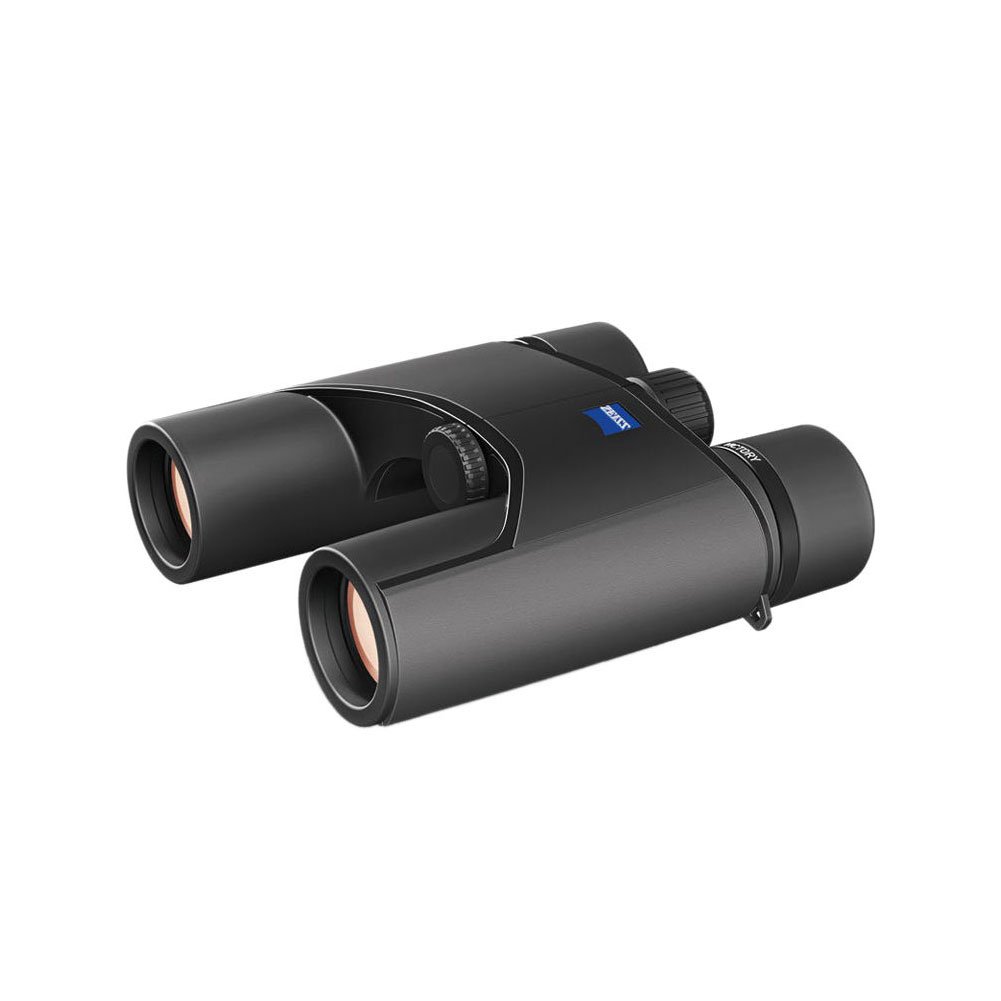
A pocket-size powerhouse that rivals bigger binoculars in brightness and sharpness — the Zeiss Victory Pocket uses SCHOTT fluoride glass to achieve 91% light transmission (a rare spec for a 25mm lens), so even in fading light the image stays brilliant.
The 16.5mm eye relief (the distance your eye can sit from the eyepiece and still see the full view) is generous for glasses wearers. The 315-foot field of view at 1000 yards (width of the visible area) lets you track a running cheetah without constant panning. The asymmetrical bridge (a hinge design that lets each barrel fold independently) folds the barrels fast to match your eye width. The LotuTec coating (a water- and dust-repelling layer) sheds rain and dust with a shake — so you keep a clear view even in dust kicked up by a passing vehicle.
Reviewers report this pair “performs like a much larger binocular.” One buyer notes the 8×25 Victory “punches above its weight.” They praise its extremely light build — no neck strain after a full day. The catch is the price and the fact it ships without lens caps, which some users find odd for this tier. The Zeiss Victory Pocket delivers images as close to full-size as physics allows in a body that disappears in a daypack.
Standout Specs
- 91% light transmission with SCHOTT fluoride glass
- Asymmetrical bridge for stable eye-width adjustment
- LotuTec coating sheds water instantly
Know Before You Buy
- No lens caps included
- Premium price bracket
Reach for it if: you want the sharpest, brightest image in the smallest possible package with zero compromises on glass quality.
Look elsewhere if: you need a larger 32mm objective lens for very low-light viewing, or you are on a mid-range budget.
2. Celestron TrailSeeker ED 10×32 Binoculars
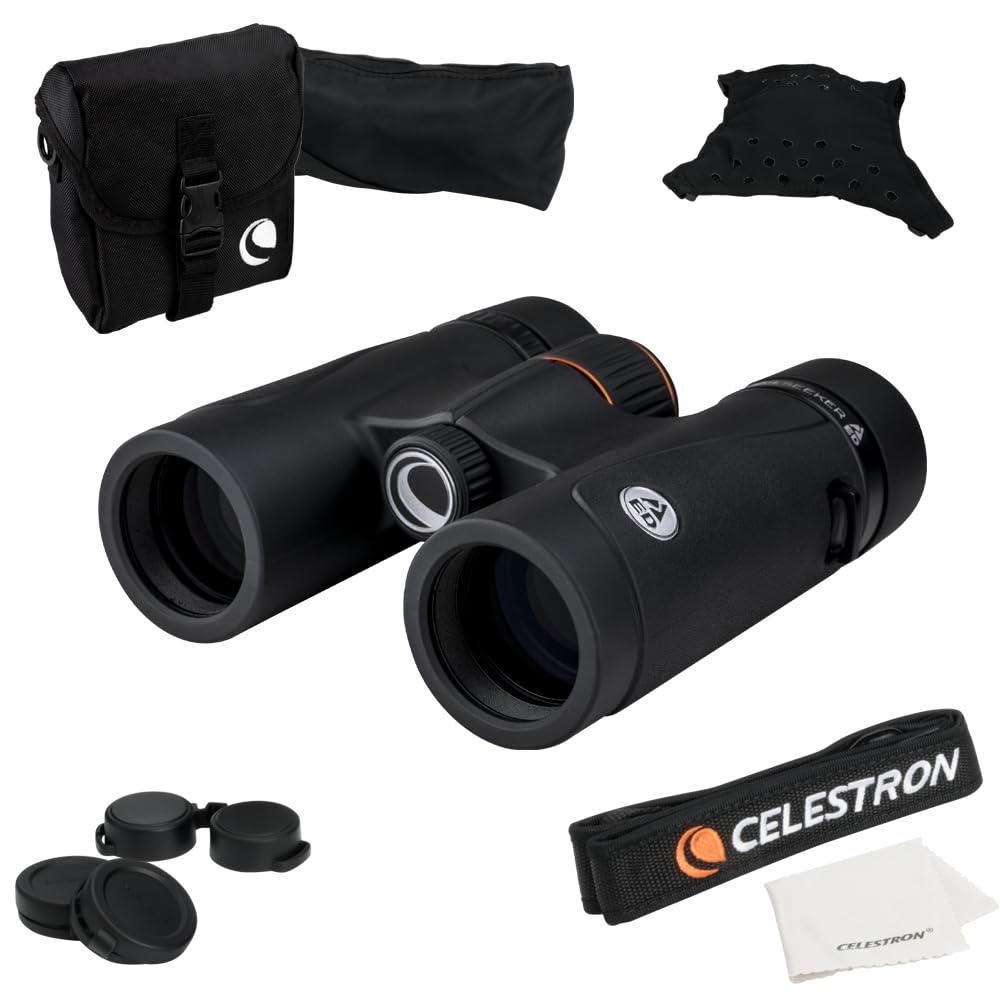
The 32mm objective lens gathers more light than the 25mm model above, yet the body stays light enough for a walking safari — the Celestron TrailSeeker ED uses Extra-low Dispersion (ED) glass to virtually eliminate the purple or green fringing around a backlit giraffe’s silhouette.
At 10×32, you get better low-light performance than any 25mm binocular. The exit pupil (the beam of light entering your eye) is 3.2mm (32mm ÷ 10), versus 2.5mm on a 10×25 like the Leica BCA. The 14.4mm eye relief works for most glasses, and the close focus of 8.2 feet (the shortest distance you can clearly see) means you can study a chameleon from almost arm’s length. The diopter adjustment (the ring that fine-tunes focus for the difference between your left and right eye) has a range of +/-5 diopters, wider than most, giving you fine control.
One safari-goer calls these “great clarity and weight for a safari.” Buyers report the TrailSeeker delivers “bright, vivid, edge-to-edge sharpness” that beats many pricier options. A minor gripe: the limited Celestron warranty requires you to pay shipping for repairs, unlike the lifetime policies of other brands. For the price, the TrailSeeker is the smartest compromise between light-gathering (32mm versus 25mm objective lenses) and portability on this list.
Smart compromise: The ED glass rivals premium optics for color accuracy, while the 32mm objective gathers noticeably more light than any 25mm — a real advantage on early morning drives.
Choose this if: you want 10x reach and a brighter image than any compact 25mm model, but don’t want to carry a full-size 42mm binocular.
skip it if: you need a binocular that fits inside a shirt pocket — the 32mm objective is still larger than a 25mm model.
3. SWAROVSKI OPTIK 8×25 CL Pocket Binoculars

Swarovski’s legendary glass in a fold-down package that fits inside a purse — the CL Pocket gives you an exit pupil of 3.13mm (25mm ÷ 8), versus 3.13mm on the Zeiss Victory Pocket in twilight.
The 17mm eye relief is the longest on this list, so glasses wearers see the full 357-foot field of view at 1000 yards without squinting. Twist-in eyecups adjust individually to three positions, keeping the view comfortable even during a bumpy ride. Owners mention the optics here make “birds in deep shade appear as if in sunlight.” One reviewer notes that the entire case fits comfortably in a purse and that the CL Pocket “outperforms larger Swarovski models for portability.” The steep price is the main barrier. The Swarovski CL Pocket is one compact binocular that will last a lifetime with color fidelity that customers note is tough to top — but a mid-range model like the Celestron TrailSeeker costs less.
Brightness note: The 3.13mm exit pupil matches the Zeiss Victory Pocket’s 3.13mm, so both are similar on paper for low-light brightness.
Best for: frequent travelers and birders who want the finest optics in a tiny foldable body and value both size and image quality equally.
Consider something else if: the price is a stretch — you can get most of the performance for half the cost with a mid-range model.
4. ZEISS Terra ED Pocket Binoculars 8×25

A taste of Zeiss quality at roughly a third of the Victory Pocket’s price — the Terra ED brings SCHOTT ED glass and Zeiss T* coating (a multi-layer anti-reflective coating) to deliver 88% light transmission, a major step up from entry-level compacts.
The large, smooth focus wheel falls right under your index finger, so you can snap focus on a distant elephant without fumbling. The magnesium casing with glass-fiber reinforcement feels solid. The LotuTec coating means a sudden rain shower won’t ruin your view — water beads off with a shake. The exit pupil is 3.1mm (25mm ÷ 8), slightly smaller than the Victory Pocket’s 3.1mm, so both perform similarly in brightness. The 16mm eye relief works for most glasses.
Reviewers describe the image quality as “accurate colors, no fringes” and find it “compact and lightweight, easy to carry everywhere.” One buyer was disappointed to find the unit made in China despite the German brand, but most agree the optics outperform the price. The Zeiss Terra ED is the sensible step down from the Victory Pocket that still feels premium.
Why It Works
- SCHOTT ED glass with T* multi-coating
- Fast, ergonomic focus wheel
- LotuTec coating for all-weather use
The Caveat
- Some units manufactured in China, not Japan/Germany
- No lens caps included
Perfect for: someone who wants premium Zeiss optics and build without spending Victory Pocket money — a great gateway premium binocular.
Not ideal if: you need a larger objective lens for low-light game drives, or you are bothered by the manufacturing origin.
5. Leica 10×25 BCA Binoculars

A legendary compact that prioritizes color accuracy and a silky matte finish — the Leica 10×25 BCA uses a proprietary Hi-Lux multi-coating system (a type of anti-reflective coating) to deliver the faithful color reproduction Leica is known for, a big plus when distinguishing a golden jackal from a fox in tall grass.
The aluminum alloy body is wrapped in polyurethane armor with a silky matte surface that feels excellent in hand and does not slide. The center focus mechanism is internal, so the barrel length stays short and pocket-friendly. At 10x magnification with a 25mm objective, the exit pupil is 2.5mm — smaller than the 8x compacts like the Swarovski CL Pocket (3.13mm) — which means dimmer performance in low light. The 13.7mm eye relief is tight for glasses wearers; you may not see the full field. The 285-foot field of view at 1000 yards is narrower than the 315-foot or 357-foot views of its 8x rivals. The Leica 10×25 BCA is a stylish, compact tool for a traveler who values build quality and color science above raw brightness or wide views.
Real-world trade-off: The 10×25 configuration lets you see farther than 8x models, but the small exit pupil (2.5mm) means you lose noticeable brightness at dusk compared to an 8×25 like the Swarovski CL Pocket.
Choose it for: daytime game drives where you want 10x reach in a very compact body, and you appreciate Leica’s color science and build quality.
Look elsewhere if: you wear glasses — 13.7mm eye relief is tight — or you need a binocular that performs well in low light.
6. Nikon TRAVELITE EX 10×25 Binoculars

A die-cast aluminum body wrapped in rubber that can take a bump on the trail — the Nikon TRAVELITE EX 10×25 is built with a rugged chassis and protective rubber armoring, making it one of the toughest compacts in the mid-range.
Nitrogen-purged (filled with nitrogen gas to stop internal fogging) and O-ring sealed, it is waterproof to 2 meters for 5 minutes and fully fogproof — exactly what you need if a sudden rainstorm hits during your game drive. The multilayer-coated optics and aspherical eyepiece lenses (lenses with a curved surface that reduces distortion) work together to keep the image sharp edge to edge. One reviewer calls this the “balance for stability, price, ruggedness, portability, and light weight.”
The 10×25 setup gives you good reach, but the exit pupil is 2.5mm — among the smallest on this list. That means it struggles in anything but good light, so early morning views will look dim. The 11.1mm eye relief is low for glasses wearers. The Nikon TRAVELITE EX is a sturdy, reliable choice for daytime safari use where build quality matters more than dawn-to-dusk versatility.
Built Tough
- Die-cast aluminum + rubber armor
- Waterproof to 2m / nitrogen-purged
- Aspherical lenses for edge sharpness
Know the Limits
- 2.5mm exit pupil is dim in low light
- 11.1mm eye relief is short for glasses
Reach for it if: you want a battle-proof compact for sunny day hikes and travel, and you do not need it to perform at dusk.
pass on it if: you plan to use binoculars primarily at dawn, dusk, or from a safari vehicle in low light — you will want a larger exit pupil like the Celestron TrailSeeker’s 3.2mm.
7. Vortex Triumph HD 10×28 Binoculars
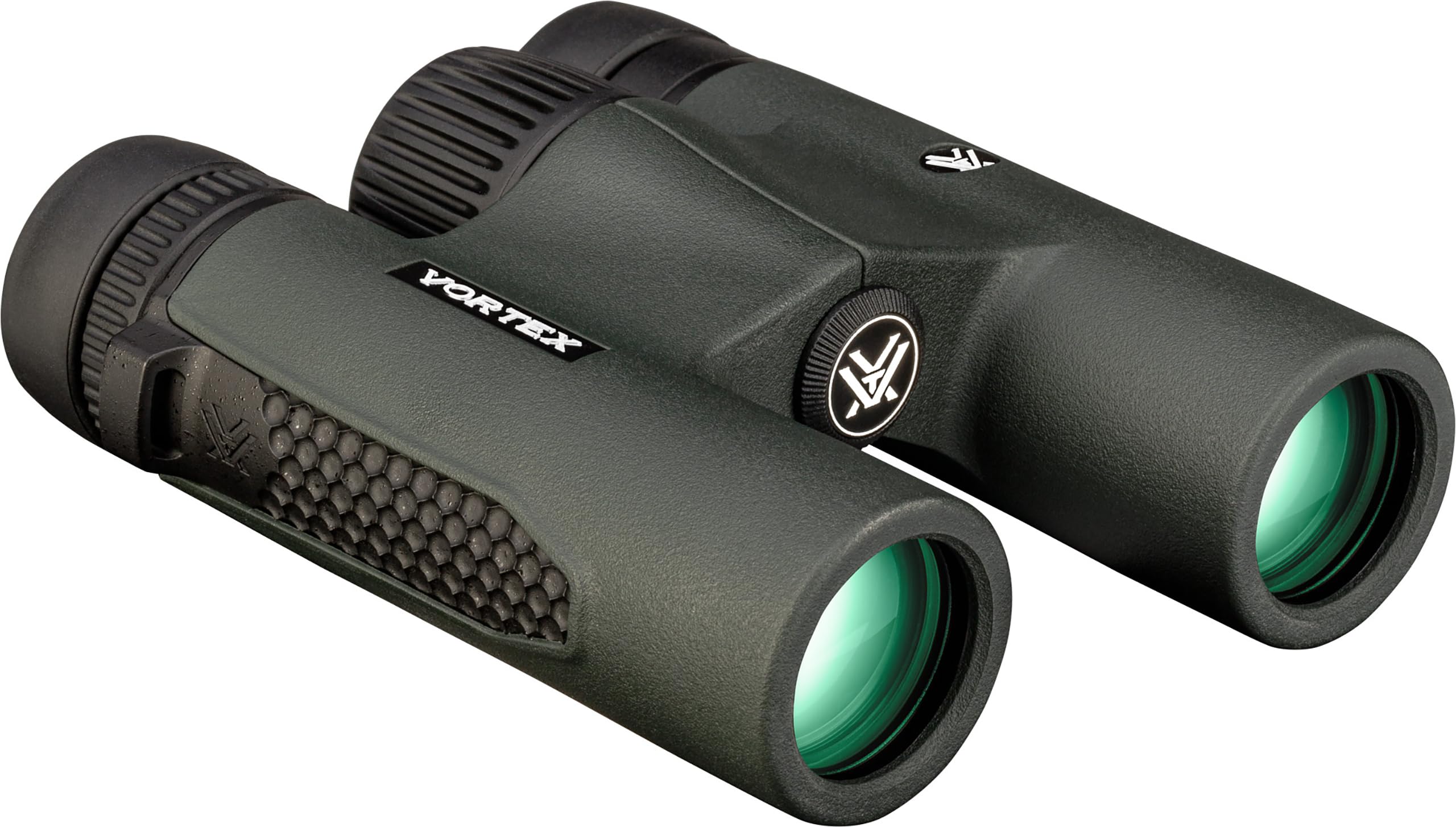
The 28mm objective lens gives you a bigger exit pupil than most budget compacts — the Vortex Triumph HD 10×28 pushes the exit pupil to 2.8mm (28mm ÷ 10), versus 2.5mm for the Nikon TRAVELITE and 2.5mm for the Nocs.
The HD optical system with fully multi-coated lenses delivers good resolution and color fidelity for its price. The polycarbonate chassis with full rubber armor survived a drop from “about 20 feet in a tree with no damage,” according to one buyer. The 15mm eye relief is generous for the price, making it usable for glasses wearers. It is also tripod-adaptable if you want to steady it for long scans.
Some users find the image “not quite as crisp as expected” compared to higher-end optics like the Zeiss Terra ED, and the 10×28 size is a touch bulkier than true 25mm pocket binoculars. Backed by Vortex’s unlimited, unconditional, lifetime VIP warranty, the Triumph HD is the safest long-term bet in the budget tier. It is a great starter for a first safari.
Value edge: The 2.8mm exit pupil is larger than the 2.5mm on the Nocs and the 2.5mm on the Nikon TRAVELITE, giving it a real brightness advantage without jumping to a 32mm body.
Best for: first-time safari-goers on a budget who still want a bright enough image for early mornings and a warranty that covers just about anything.
Consider upgrading if: you need edge-to-edge sharpness for bird identification or you prioritize premium glass coatings like ED glass.
8. Nocs Provisions Standard Issue 10×25 Waterproof Binoculars

A fun, colorful compact that is waterproof to IPX7 (submersible up to 3 feet for 30 minutes) — and slips into your pocket. The Nocs Provisions Standard Issue 10×25 weighs 11.85 oz and is small enough to fit into a purse or the “center console cubby of my car,” as one reviewer describes it.
It is filled with inert nitrogen gas to prevent fogging, so a wet safari morning won’t bother it. The fully multi-coated optics and Bak4 prism (a high-quality prism that delivers a round, bright image) deliver a bright field of view. The multi-stop twist-up eyecups offer three positions to help glasses wearers find a comfortable spot. The 315-foot field of view at 1000 yards is decent for a 10×25.
Buyers call it “clear image” and “perfect for bird watching, ball games.” However, the 10mm eye relief is very tight — one of the shortest on the list — so glasses wearers will struggle to see the full image. One owner also worries that the rubber coating “has become an oily and sticky mess after several years” on similar gear. The Nocs is a stylish, affordable, waterproof pocket binocular for casual safari use, but its low eye relief limits who can use it comfortably.
The Good
- IPX7 waterproof / nitrogen-purged
- Very pocketable at 11.85 oz
- Multi-stop eyecups for glasses
The Catch
- 10mm eye relief — very short for glasses
- Rubber coating may degrade over time
Pick it if: you want a compact, stylish, waterproof binocular for casual daytime use without glasses — and you like the colorful design.
Pass on it if: you wear glasses, or you want a binocular that performs well in low light — the 10×25 combination is dim and the 10mm eye relief is too short.
Understanding the Specs
Objective Lens Diameter & Light Gathering
The bigger the second number on a binocular (the one after the “x”), the more light the front lens can collect. A 32mm objective lens collects more light than a 25mm one. That makes a real difference during the golden hours of a safari — early morning and late afternoon when animals are most active. If you plan to use binoculars mostly at midday, a 25mm is fine. But for edge-of-light viewing, prioritize a 32mm or larger, even if it means a slightly bigger body.
Exit Pupil and Your Eye
This is the bright circle of light you see when you hold the binoculars at arm’s length. A larger exit pupil (3mm or more) sends more light into your eye, which matters when your pupils are dilated in dim conditions. A small exit pupil (under 2.5mm) forces you to align the binoculars perfectly with your eyes — harder to do in a moving vehicle or when you are tired. For safari, aim for 3mm or above if you plan dawn or dusk viewing.
FAQ
Is 8x or 10x magnification better for safari?
What does the 8×25 or 10×32 number mean?
How important is waterproofing for safari binoculars?
Can I use my binoculars with glasses?
What is ED glass and do I need it?
How do I clean binoculars in the field?
What is the best size binocular for a walking safari?
Do I need a tripod for safari binoculars?
Why are premium binoculars so expensive?
Can I use my phone with compact binoculars for photos?
Final Thoughts: The Verdict
If you want one dependable pick, the best compact binoculars for safari winner is the ZEISS Victory Pocket 8×25 because it packs top-tier 91% light transmission and premium SCHOTT fluoride glass into a truly pocketable body without sacrificing brightness or sharpness. If you want the best value with a brighter 32mm objective lens, grab the Celestron TrailSeeker ED 10×32 for its excellent ED glass at a mid-range price. And for absolute luxury in a foldable package, the standout is the SWAROVSKI OPTIK 8×25 CL Pocket — the ultimate compact companion for the dedicated observer.
How We Picked
We do not accept paid placement. Every pick is matched to a real buyer and a real use-case; we do not hands-on test units.
Sources & Methodology
Specifications: manufacturer listings and product documentation. Review insights: verified customer reviews, as of July 2026. Pricing: not shown on this page (it changes often); check the current price via the retailer link.
As an Amazon Associate, WellFizz earns from qualifying purchases. This does not affect which products we feature.

Mo Maruf
I created WellFizz to bridge the gap between vague wellness advice and actionable solutions. My mission is simple: to decode the research and give you practical tools you can actually use.
Beyond the data, I am a passionate traveler. I believe that stepping away from the screen to explore new environments is essential for mental clarity and physical vitality.