Our readers keep the lights on and my smoothie glass nicely filled. As an Amazon Associate, I earn from qualifying purchases.
Specs are compiled from manufacturer listings and verified buyer reviews and can change over time — please confirm the key details on the product page before buying.
Struggling with leggings that slide down after a few hours is frustrating — especially when they promise 20-30 mmHg (medical-grade) compression. A pair that feels snug in the store but sags by lunchtime does no good for lymphedema. This guide highlights the pairs that deliver steady support through a full day and the ones that fall short.
I’m Mohammad Maruf — the founder and writer behind WellFizz. This guide is built by comparing the manufacturers’ published specifications and the patterns across verified customer reviews, so you get each pick’s real strengths and trade-offs instead of marketing spin.
Whether you stand for 12-hour shifts or manage post-procedure swelling, these are the best compression leggings for lymphedema that balance medical-grade pressure with all-day comfort.
Quick Picks
- Absolute Support A717BL4 (Footless Compression Tights) — Best Overall
- Absolute Support A717VV (Medical Compression Footless Leggings) — Tall-Fit Pick
- KOEOSSO 2-Pair Compression Pantyhose — Best 2-Pair Value
- CASMON 2-Pair Medical Compression Pantyhose — Budget Entry
How To Choose The Best Compression Leggings For Lymphedema
Managing lymphedema requires steady, even pressure to push fluid out of the affected limb. The wrong leggings will not just be uncomfortable — they may not give you the therapy you need. Here are the three specs that matter most.
Compression Level: Why 20-30 mmHg Is The Gold Standard
Compression is measured in millimeters of mercury (mmHg), which tells you how much pressure the fabric applies to your leg. Over-the-counter “slimming” leggings usually fall around 8-15 mmHg (a level too low for lymphedema). Medical-grade compression starts at 20-30 mmHg — strong enough to prevent fluid pooling but designed for all-day wear. For lymphedema, this is the level doctors typically prescribe, and every product on this list meets it.
Graduated vs. Uniform Compression
Graduated compression means the fabric is tightest at the ankle and gradually loosens as it moves up your leg. This gradient helps push blood and lymphatic fluid upward toward your core — the entire goal of lymphedema therapy. All four picks here use graduated compression, so therapeutic pressure goes where it is needed most.
Fabric, Sizing, and Durability Over Months
Look for a high nylon-to-spandex ratio (around 70-75% nylon, 25-30% spandex). Nylon holds compression longer, and spandex provides stretch. Check that the sizing chart includes your thigh, calf, and ankle circumference — not just your waist. A poor fit lets the leggings sag and slide, which buyers report as the single most common frustration in this category.
Quick Comparison
| Model | Best For | Compression Level | Material | Fit Issue Noted | Amazon |
|---|---|---|---|---|---|
| Absolute Support A717BL4 | Long-term daily wear | 20-30 mmHg | 75% Nylon, 25% Spandex | Waist rolls slightly | Amazon |
| Absolute Support A717VV | Longer legs / greater height | 20-30 mmHg | Latex-free, hypoallergenic | May be too short for tall users | Amazon |
| KOEOSSO 2-Pair | Value / 2-pair rotation | 20-30 mmHg | 70% Nylon, 30% Spandex | No abdominal compression | Amazon |
| CASMON 2-Pair | Budget-friendly entry | 20-30 mmHg | Top-quality material (per reviews) | Sagging after 4 hours | Amazon |
In‑Depth Reviews
1. Absolute Support A717BL4 (Footless Compression Tights)

This legging keeps its 20-30 mmHg compression through months of daily washing without losing shape — unlike the KOEOSSO pair that lacks abdominal grip.
The fabric uses 75% nylon and 25% spandex (a dense blend), which explains why owners mention the compression stays consistent in the legs and does not feel overly tight on the tummy. One verified owner at 5’4″ reported wearing their small size daily for 2.5 months with no leg pain, and they even machine-dried them without losing compression. Absolute Support has been making compression garments since 1997. These are also latex-free with opaque (non-see-through) fabric, so the upper thigh does not show through under scrubs.
Unlike the KOEOSSO pair, which only concentrates compression through the upper thighs, the A717BL4 delivers graduated pressure from ankle to high waist. However, one buyer at 5’8″ noted that the large size slides down about 4 inches after 10 minutes. Taller users or those with longer inseams may prefer the A717VV instead. Most shorter-to-average-height buyers find the fit reliable with no crotch sagging even after hours of wear.
What buyers love
- Survives machine washing and drying without losing compression — one buyer confirmed this at 2.5 months of daily wear.
- Latex-free, opaque fabric — no transparency at the upper thigh unlike some beige styles.
- Firm leg compression without being tight on the abdomen.
The fit caveat
- The waistband rolls slightly — manageable but noticeable for some.
- One reviewer noted a hole or run in the black pair after multiple washes.
Reach for this if: you want a durable daily-wear legging that won’t slide down and holds 20-30 mmHg compression for months.
Look elsewhere if: your inseam is over 30 inches — the sizing runs short and taller customers note constant pulling up.
2. Absolute Support A717VV (Medical Compression Footless Leggings)
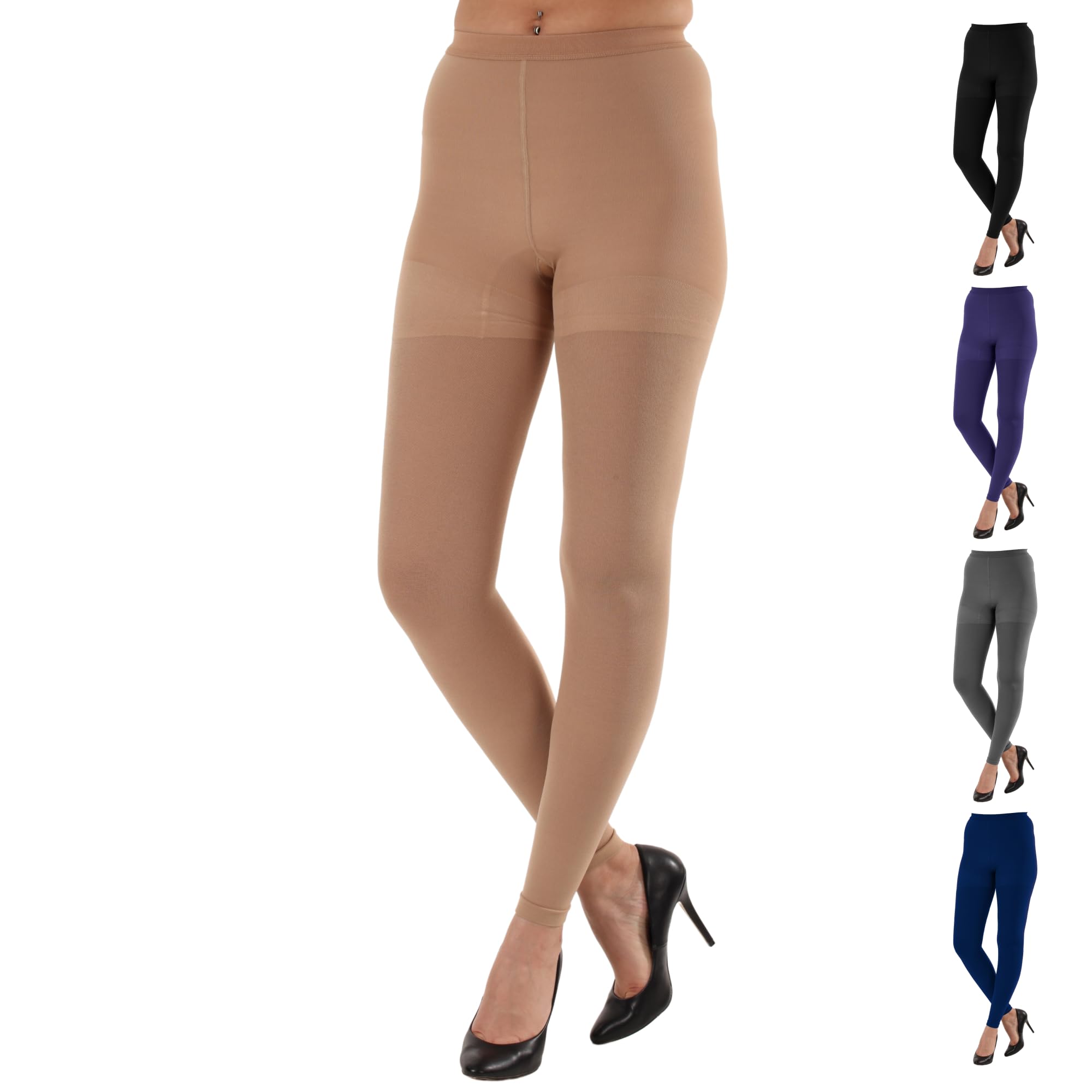
The version built for longer legs, offering the same 20-30 mmHg compression as the A717BL4 but with extra leg length so taller users do not have to pull up all day.
One verified reviewer at 5’5″ with superficial thrombophlebitis (surface vein inflammation) noted the A717VV still left them with an inch or two to pull up to the crotch, so average-height or taller people should try this fit. Another buyer who is 5’8″ and long-legged said the length was perfect and the compression was easy to pull on without causing runs — a common problem with medical-grade garments. The graduated 20-30 mmHg pressure is the same strength as the A717BL4, but the cut is designed for a taller frame. The leg panel adds length, not the waist.
Reviewers point out the fabric breathes well, unlike some compression socks that trap heat. One user, prescribed the same compression level by their doctor, noted these were half the price of the clinic’s recommended brand. A trade-off: a reviewer mentioned the leggings kept sliding down. If you are between sizes, sizing up may help with grip. The A717VV works best for anyone 5’6″ or taller who found the previous Absolute Support pair too short.
Standout strength: best length-to-compression ratio for taller users — easy to pull on, no runs, good material quality.
Single caution: if you are under 5’4″, the crotch may sit too low and bunch, creating a pinch point that restricts circulation.
Pick this over the A717BL4 if: you need that extra inch or two of leg length to avoid tugging.
skip it if: you are short-waisted — the waistband lacks abdominal compression and may not stay anchored.
3. KOEOSSO 2-Pair Compression Pantyhose
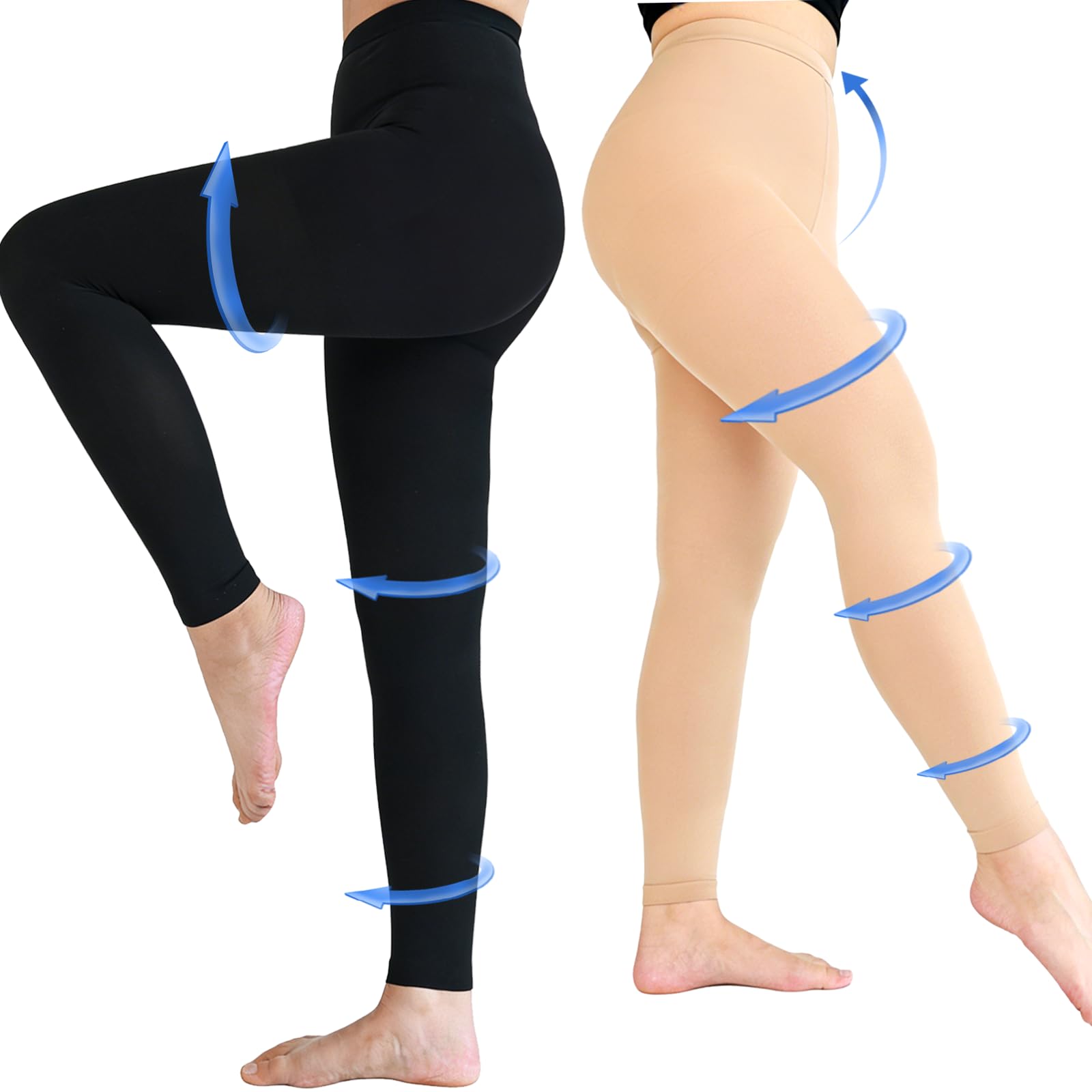
A two-pack at roughly the price of one premium pair, with 20-30 mmHg compression, but still a step down from the A717BL4 in staying power because the waistband offers no abdominal grip.
A buyer who works 12+ hours on their feet said these provide the support they need without the bulkiness of traditional leggings, making them a go-to for nurses and restaurant workers. The fabric is 70% nylon and 30% spandex, giving a snug, compressive feel at the medically relevant 20-30 mmHg level. Unlike the Absolute Support options, this comes as two pairs for the same price as a single premium pair, so you can rotate wash days without buying duplicates.
However, the same 12-hour-shift reviewer pointed out a real limitation: compression only extends through the upper thighs, with no abdominal support. If your lymphedema or swelling reaches your lower abdomen, or if you need a high-waist garment that grips your midsection to stay put, the KOEOSSO will slide down. Another buyer confirmed it slides slightly on their body type. The material is also thin — one pair arrived with holes, so inspect upon arrival. For the price of a two-pack, it is a practical budget rotation but not a stand-alone champion for all-day wear.
Why it works for shift workers
- Two pairs in one box — you always have a clean backup in rotation.
- Snug compression through the thighs without being too tight on the waist.
- Skin-tone color matches well under scrubs, as one buyer mentioned.
The abdominal gap
- No compression above the upper thigh — the waistband is just coverage, not support.
- Thin material — one owner reported holes on arrival.
Best for: anyone who needs a cost-effective rotation pair and keeps the compression zone to the legs only.
Not right for: those who need full-torso grip — the waistband won’t anchor, so you will be pulling up by lunch.
4. CASMON 2-Pair Medical Compression Pantyhose
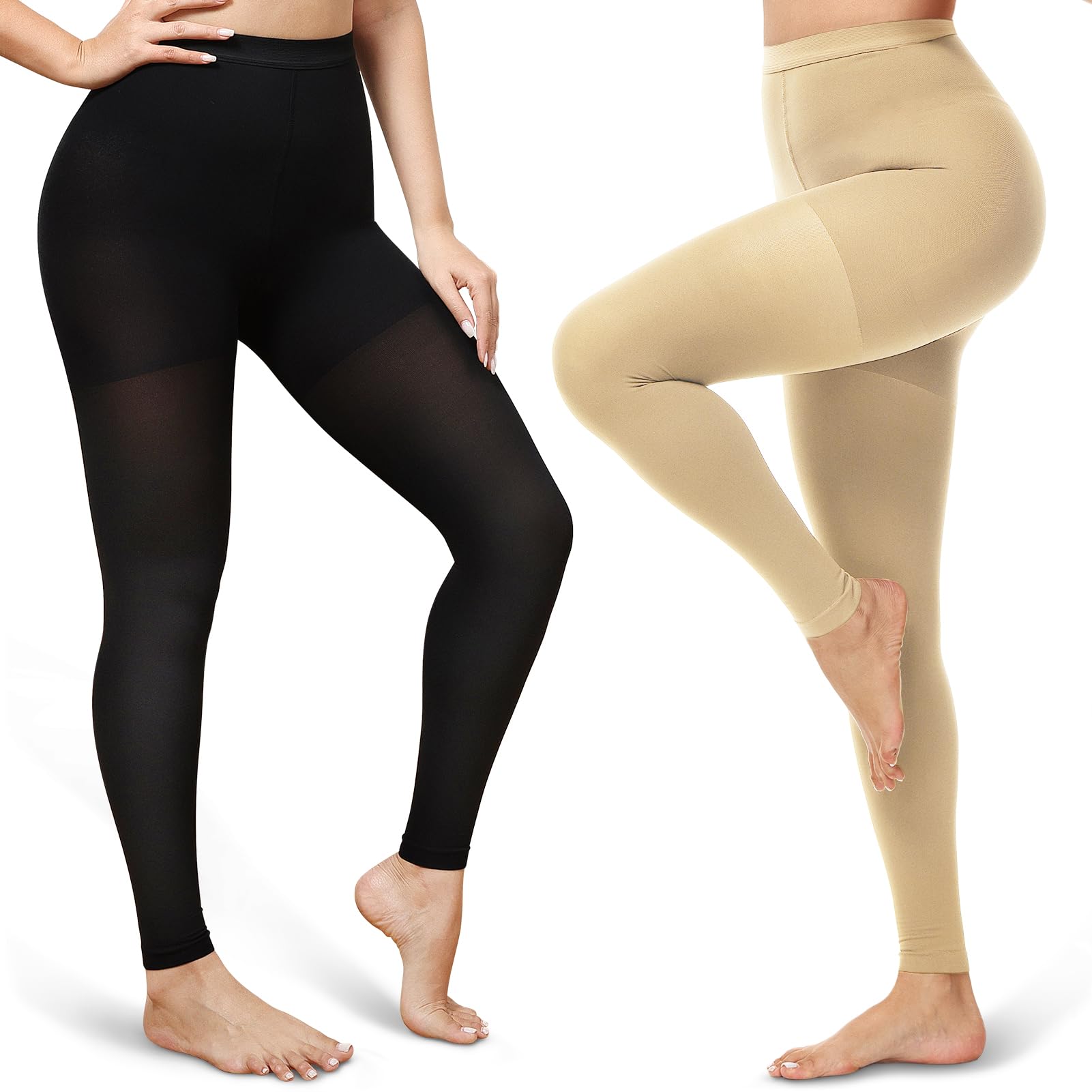
Strong material and strong compression at a budget two-pack price, but the crotch starts sagging around the four-hour mark — a dealbreaker if you need all-day support like the A717BL4 delivers.
For the price of a two-pack at this compression level, the CASMON is tempting. Buyers praise the “top quality material” and firm feel. The waistband is thick enough to resist rolling even when seated on a plane for hours, per one reviewer. However, the data reveals a clear pattern: after about four hours of wear, the crotch and upper thigh area creeps downward, creating a saggy “penguin pants” feel that requires constant adjustment. This is less noticeable under jeans but obvious under a dress.
The lower-leg compression stays consistent, and buyers with knee surgery or circulation concerns appreciated not having the ring-like compression lines you get from knee-high socks. But the fit drift at the waist is a real problem for all-day lymphedema management, where you need the garment to stay put for 8-10 hours. One buyer also mentioned a chemical smell out of the package that required washing before first use. The CASMON is a fine backup pair for shorter wear periods, but it cannot compete with the Absolute Support options for staying power through a full day.
Upside: two pairs for the budget price, strong graduated compression below the knee, and a waistband that stays rolled up even when seated.
Downside confirmed by buyers: once you hit hour four, expect to tug — the upper thigh weave relaxes and the crotch drops, requiring a trip to the restroom to pull back up.
Reach for it: as a spare pair for days when you are mostly seated and won’t need to be on your feet for hours.
Skip it: if you rely on your leggings to stay anchored through a full shift without bathroom re-adjustments.
Understanding the Specs
20-30 mmHg Compression
This number tells you how much pressure the fabric applies to your leg, measured in millimeters of mercury (mmHg). Consider it the “tightness rating.” 20-30 mmHg is considered medical-grade and is the level typically prescribed for lymphedema and venous insufficiency (a condition where veins have trouble sending blood from the legs back to the heart). It is strong enough to prevent fluid accumulation but designed to be tolerable for full-day wear. Anything under 15 mmHg is not therapeutic for lymphedema.
Graduated vs. Uniform Compression
Graduated compression means the garment is tightest at your ankle and gradually loosens as it goes up your leg. This gradient helps push blood and lymphatic fluid upward toward your heart — the primary goal of compression therapy for lymphedema. Uniform compression (same pressure everywhere) does not help with fluid movement. All four products on this list use graduated compression.
Material Blend: Nylon vs. Spandex Ratio
Nylon gives the fabric its structure and long-term compression retention, while spandex adds stretch and recovery. A high nylon content (70-75%) means the leggings hold their shape and pressure longer through repeated washing. The remaining 25-30% spandex provides the stretch needed to pull them on. Lower-quality blends use more spandex, which loses elasticity faster over time.
Opaque vs. Sheer Fabric
Opaque fabric means the material is thick enough that your skin tone does not show through. This matters because many buyers wear compression leggings under scrubs, jeans, or dresses. A sheer or semi-transparent upper thigh panel becomes visible when you bend or sit, which some buyers find embarrassing. Latex-free opaque fabric also reduces the risk of allergic reactions during all-day wear.
FAQ
Can I sleep in 20-30 mmHg compression leggings?
How do I know which size to pick if I am between two sizes?
Will these leggings help with post-surgery swelling?
How do I wash compression leggings without ruining them?
How long does a pair of 20-30 mmHg compression leggings last?
Why do my compression leggings keep sliding down?
Are footless compression leggings as effective as full-length stockings?
What is the difference between compression leggings and compression stockings?
Can men wear these compression leggings?
Do I need a prescription for 20-30 mmHg compression leggings?
Final Thoughts: The Verdict
If you want one dependable pick, the best compression leggings for lymphedema is the Absolute Support A717BL4 because it delivers consistent 20-30 mmHg graduated compression through a dense 75% nylon blend that actually lasts months of daily wear without sagging — unlike the CASMON pair that droops after four hours. If you are taller than 5’6″ and found other leggings too short, grab the Absolute Support A717VV. And for building a cost-effective rotation of two pairs for under the price of a single premium pair, the KOEOSSO 2-Pair is a solid backup if you don’t need abdominal compression.
How We Picked
We do not accept paid placement. Every pick is matched to a real buyer and a real use-case; we do not hands-on test units.
Sources & Methodology
Specifications: manufacturer listings and product documentation. Review insights: verified customer reviews, as of July 2026. Pricing: not shown on this page (it changes often); check the current price via the retailer link.
As an Amazon Associate, WellFizz earns from qualifying purchases. This does not affect which products we feature.

Mo Maruf
I created WellFizz to bridge the gap between vague wellness advice and actionable solutions. My mission is simple: to decode the research and give you practical tools you can actually use.
Beyond the data, I am a passionate traveler. I believe that stepping away from the screen to explore new environments is essential for mental clarity and physical vitality.