Our readers keep the lights on and my smoothie glass nicely filled. As an Amazon Associate, I earn from qualifying purchases.
Specs are compiled from manufacturer listings and verified buyer reviews and can change over time — please confirm the key details on the product page before buying.
Picking the right liquid for your ultrasonic cleaner is the difference between dazzling results and a disappointing rinse. The wrong mix can leave residue, fail to shift stubborn grime, or even damage delicate items—whether you are cleaning a family heirloom ring or a carburetor you pulled from the garage.
I’m Mohammad Maruf — the founder and writer behind WellFizz. This guide is built by comparing the manufacturers’ published specifications and the patterns across verified customer reviews, so you get each pick’s real strengths and trade-offs instead of marketing spin.
This guide breaks down the best formulas for specific jobs, from a concentrated jewelry solution to heavy-duty engine cleaners, helping you find the right cleaner for ultrasonic cleaner without guessing about dilution ratios or safety.
Quick Picks
- GemOro Jewelry Cleaner Solution Concentrate (1 Gallon) — Best Overall
- Shooter’s Choice Ultrasonic Cleaning Solution (1 Gallon) — Gun Specialist
- CREWORKS Ultrasonic Cleaner Solution for Carburetors and Engine Parts — Heavy-Duty Pick
- 32 Oz Ultrasonic Jewelry Cleaner Solution + Free Cloth — High-Value Jewelry
- CREWORKS 17 fl oz Jewelry Cleaner Solution, 1:40 Extra Concentrated — Gentle Concentrate
- NORTHWEST ENTERPRISES Ultrasonic Retainer Cleaner Solution Concentrate (8 oz) — Dental Specialist
- UltraSonic Gun Cleaner Solution for Gun Parts Cleaning, Concentrate (32 oz) — Gun Concentrate
How To Choose The Best Cleaner For Ultrasonic Cleaner
The single most important factor is matching the chemical formula to the material you plan to clean. A jewelry-specific cleaner that is safe for gemstones will not shift carbon buildup on engine parts, and a heavy-duty degreaser can cloud soft stones or damage anodized finishes. Always check the listed use-case first.
Dilution Ratio and Cost Per Cycle
Every concentrate lists a mix ratio (1:40, 1:10, 1:5, 1:250). That number tells you how many bottles of ready-to-use fluid you get from one bottle of concentrate. A tighter ratio like 1:5 means you use more product per fill, but it is designed for heavy, baked-on grime. A 1:250 ratio stretches one bottle into dozens of gallons for light dirt like lotion and oils on jewelry.
Safety Labels: Non-Ammoniated, Non-Toxic, pH-Neutral
For daily-use items like retainers, eyeglasses, or gold rings, choose a non-ammoniated and pH-neutral formula so it will not discolor metals or irritate skin. For metal parts and gun components, a non-flammable, non-corrosive label protects aluminum and steel finishes even while dissolving grease and carbon.
Quick Comparison
| Model | Best For | Dilution Ratio | Volume | Safe For | Amazon |
|---|---|---|---|---|---|
| GemOro Jewelry Cleaner Concentrate | Professional jewelry cleaning | Super-concentrated (per review: small amount needed) | 128 fl oz | Gold, silver, diamonds, eyeglasses | Amazon |
| Shooter’s Choice Ultrasonic Solution | Firearm parts cleaning | Concentrate (per review: use extra) | 128 fl oz | Aluminum, metal parts, receivers | Amazon |
| CREWORKS Carburetor & Engine Parts Cleaner | Heavy engine and carburetor cleaning | 1:10 | 34 fl oz | Brass, iron, titanium, plastic | Amazon |
| NORTHWEST ENTERPRISES Retainer Cleaner | Dental retainer and aligner care | 1 capful per use | 8 oz | Invisalign, dentures, mouthguards | Amazon |
| 32 Oz Jewelry Cleaner + Free Cloth | High-value everyday jewelry cleaning | 1:250 | 32 fl oz | Gold, silver, diamonds, gemstones, glasses | Amazon |
| CREWORKS 17 fl oz Jewelry Cleaner | Gentle concentrated jewelry cleaning | 1:40 | 17 fl oz | Gold, silver, gemstones, glasses, watches | Amazon |
| UltraSonic Gun Cleaner Solution | Gun parts carbon removal | 1:5 | 32 fl oz | Metal firearms parts, tools | Amazon |
In‑Depth Reviews
1. GemOro Jewelry Cleaner Solution Concentrate (1 Gallon)

Serious cleaning power that professionals reach for, but priced for home use.
This is the gallon-sized jug that gives you 128 fluid ounces of super-concentrated formula — buyers report it takes just a small amount per cycle, so it lasts dozens of cycles and saves money compared to pre-diluted bottles. The formula is non-ammoniated (no harsh ammonia) and non-toxic, meaning you can put gold, silver, diamonds, and even eyeglasses in the tank without worrying about corrosion or discoloration.
Unlike the CREWORKS 17 fl oz jewelry cleaner (which uses a 1:40 ratio), the GemOro is so concentrated that owners mention a tiny amount gets the job done, making it the more economical choice in the long run. It is also non-flammable, a useful safety margin if you clean near a workshop.
One jewelry photographer mentioned it removes all the dust and dirt from manufacturer residue before shooting, and the solution leaves no film. For anyone who cleans several pieces a week, this is the one-bottle solution that replaces frequent restocking.
Why it leads: Huge 128 fl oz volume, non-toxic and non-ammoniated safety, ultra-efficient concentration that stretches the cost per cycle well below smaller bottles.
The honest trade-off: It is a premium up-front buy at around mid-range cost for a gallon — if you clean only one ring every few months, a smaller concentrate like the 32 oz option might not sit unused as long.
Grab this for: Regular jewelry cleaning, eyeglasses, and delicate metal items where you want professional-grade results at home.
Pass if: You need a dedicated formula for engine grime or dental appliances — this is tune for sparkle, not carbon or plaque.
2. Shooter’s Choice Ultrasonic Cleaning Solution (1 Gallon)

The gallon that makes firearm maintenance feel almost easy.
Shooter’s Choice is formulated specifically for ultrasonic tanks and targets carbon, oil, grease, and powder buildup on actions, receivers, and trigger assemblies. It is non-corrosive (won’t eat metal), non-toxic, and non-flammable, so it works safely on both aluminum and steel parts without the worry of etching. One reviewer noted it cleans far better than other fluids in a Hornady 2L cleaner.
Compared to the UltraSonic Gun Cleaner Solution (which uses a more aggressive 1:5 ratio), Shooter’s Choice comes in a full 128 fl oz gallon and is biodegradable. Customers note that on a second gallon purchase they are still thoroughly satisfied, and many note it works well even when diluted a bit richer than the label suggests for heavily fouled brass. The only common complaint is that the jug lid can be stubborn to open.
If you clean multiple firearms or a high volume of brass, this gallon jug means fewer reorders and a consistent cleaning profile every time.
What stands out
- Full gallon (128 fl oz) for heavy use
- Biodegradable and non-hazardous formula
- Effective on carbon and powder residue in receivers
A real annoyance
- Lid is extremely difficult to open — several reviewers had to cut the seal with a knife
Buy this if: You maintain multiple guns and want a biodegradable, non-toxic cleaner that handles baked-on carbon in a standard ultrasonic tank.
Skip it for: Jewelry or dental items — this is a dedicated firearms formula and not designed for gemstones or plastics.
3. CREWORKS Ultrasonic Cleaner Solution for Carburetors and Engine Parts

Tackles thick grease and varnish that other solutions leave behind.
This 34 fl oz bottle is built for the toughest jobs — carburetors, engine parts, valves, and heat exchangers. The concentrate mixes at a 1:10 ratio with water (one part cleaner to ten parts water), and reviewers point out it cleans really thick grease and grime in under 30 minutes. It is safe on brass, iron, titanium, and even some plastics, which is rare for a degreaser this strong.
One buyer mentioned using it to clean brake calipers on a 2001 BMW and was impressed with the results. Compared to the CREWORKS jewelry cleaner (which uses a 1:40 ratio), this formula is much more aggressive — you absolutely want to wear gloves as the maker recommends. The 9.92 x 4.17 x 4.17 inch bottle is also noticeably larger than the 17 fl oz jewelry version, giving you more working solution per mix.
Where it wins: Cuts through baked-on grease and varnish that mere soap-and-water mixes cannot touch. Safe on multiple metals including brass and titanium.
Buy it for: Restoring carburetors, cleaning engine brackets, or any greasy metal part that needs a deep ultrasonic bath.
Not for: Jewelry, eyeglasses, or dental gear — this is strictly for heavy mechanical grime.
4. 32 Oz Ultrasonic Jewelry Cleaner Solution + Free Cloth
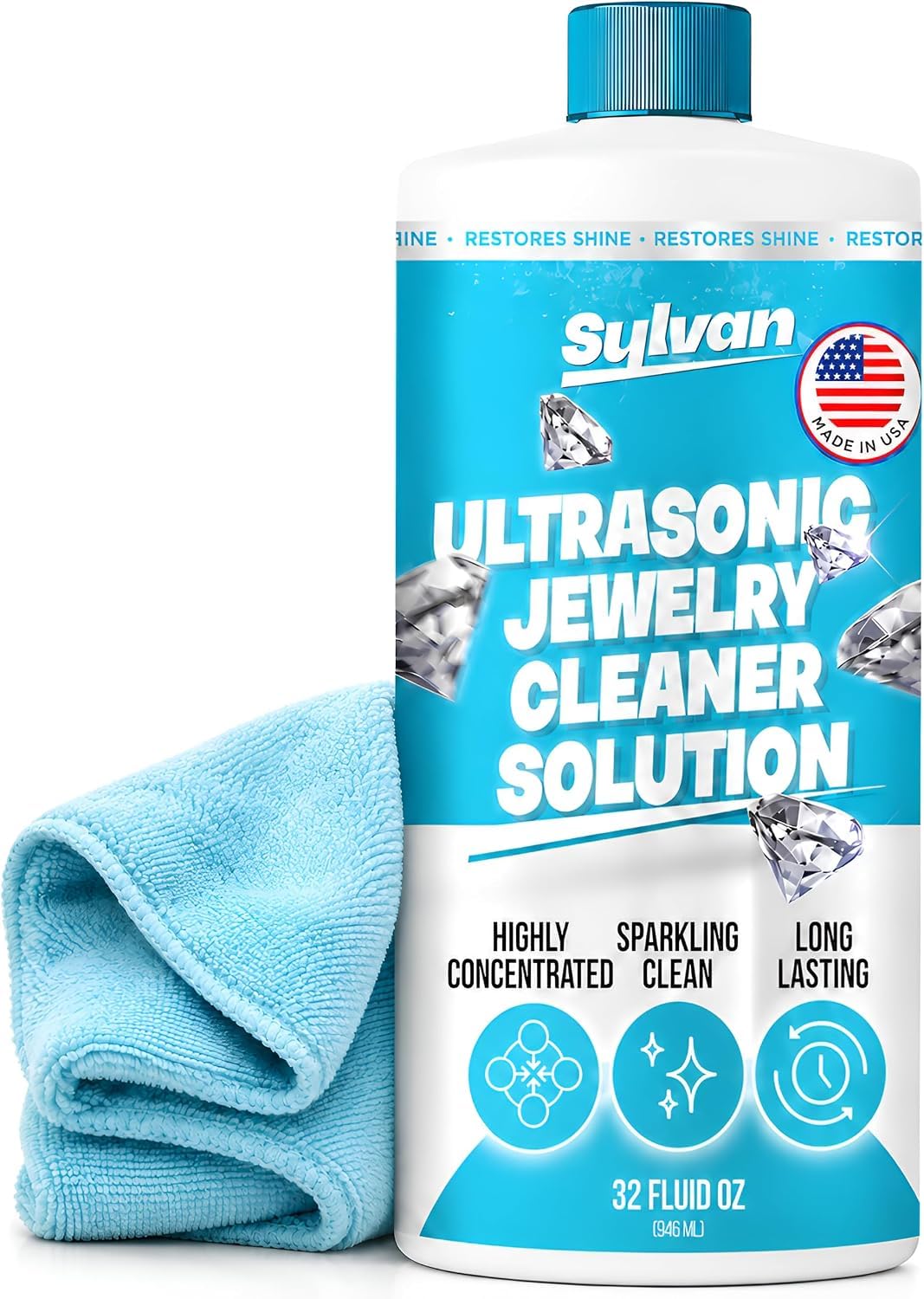
Over 500 cycles per bottle makes this the most economical jewelry formula we found.
This 32 oz bottle mixes at an extremely lean 1:250 ratio with water (one part cleaner to 250 parts water), producing over 50 gallons of ready-to-use fluid. That means you get 500+ cleaning cycles from one bottle, which is a far better cost-per-use than the CREWORKS 17 fl oz (1:40 ratio). The formula is non-ammoniated and non-toxic, so it is gentle enough for gold, silver, diamonds, gemstones, and even eyeglass lenses.
Shoppers say it makes jewelry look shiny again and works well in both ultrasonic cleaners and magnetic tumblers. A smaller trade-off noted in reviews: the included polishing cloth was sometimes missing from the package. The bottle measures 9.13 x 3.35 x 3.23 inches and weighs 2 pounds, a full 54% more by weight than the 1.3-pound CREWORKS 17 fl oz bottle, confirming the bigger value.
If you clean multiple rings, necklaces, or glasses regularly and want to minimize reorders, this is the budget-smart choice that does not cut corners on safety.
The high points
- Extreme 1:250 dilution stretches one bottle into 50+ gallons
- Non-toxic and safe for daily use on delicate stones
- Made in the USA
The letdown
- Buyers report the free polishing cloth is not always included in the package
Grab this if: You clean jewelry or eyeglasses at home and want the absolute best value per cycle — 500+ uses is tough to top.
Pass if: You need a heavy-duty degreaser for metal parts — this formula is designed for light body oils and lotions, not carbon or grease.
5. CREWORKS 17 fl oz Jewelry Cleaner Solution, 1:40 Extra Concentrated
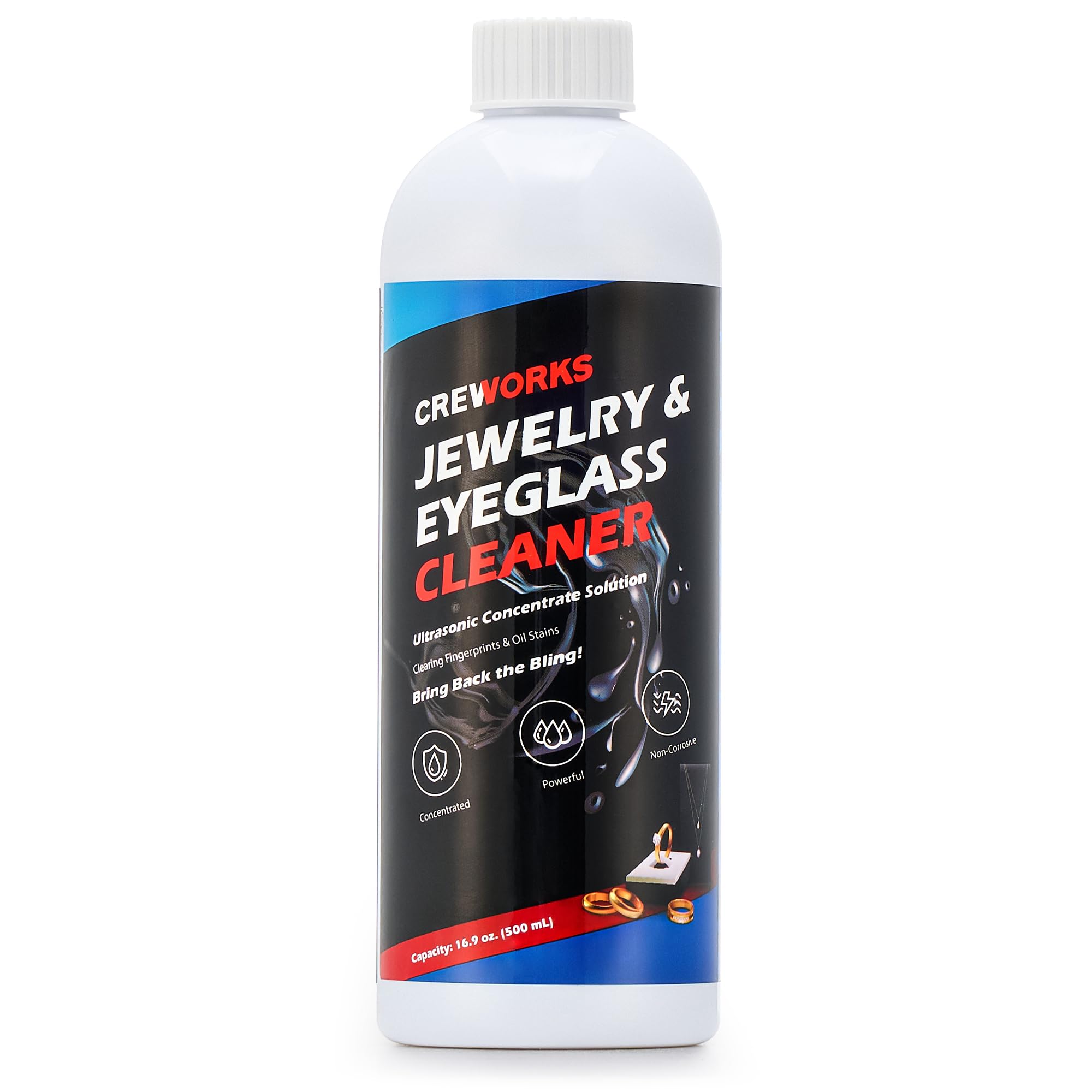
The pH-neutral formula that made one buyer’s diamond ring sparkle noticeably brighter.
This 17 fl oz bottle uses a 1:40 dilution ratio (one part cleaner to 40 parts water) and a pH-neutral formula, meaning it is gentle enough for delicate gemstones and precious metals while still cutting through fingerprints and everyday grime. One owner reported this is their replacement bottle since they finished the first one that lasted them over a year — a solid real-world gauge of value.
The bottle is more compact than the 32 oz option (8.11 x 3.03 x 2.87 inches, 1.3 pounds), so it tucks into a smaller drawer. Owners mention that while dish soap and tap water did very little in an ultrasonic, this solution pulled out dirt the water alone could not touch. It handles gold, silver, gemstones, glasses, and watches, and a single capful per fill is all you need for a load.
Compared to the 32 oz jewelry cleaner (which uses a 1:250 ratio), this CREWORKS formula is less diluted, meaning you use more per cycle, but some buyers prefer the simplicity of a 1:40 mix that feels more substantial in the tank.
The strong point: pH-neutral cleaning that is safe for delicate stones and metals while still visibly outperforming plain water.
Pick this if: You want a trusted, gentle jewelry concentrate that is easy to measure and has a proven track record from a well-known brand.
Skip if: You clean high volumes — the 32 oz option or GemOro gallon gives far more cycles per dollar.
6. NORTHWEST ENTERPRISES Ultrasonic Retainer Cleaner Solution Concentrate (8 oz)

A capful in the tank and your retainer comes out fresh rather than funky.
This 8 oz bottle uses a multi-enzymatic formula (contains enzymes that break down biological matter) designed to break down starches, fats, and plaque on dental appliances — retainers, Invisalign aligners, mouthguards, and dentures. Customers note they simply use a capful and it works well, which keeps measuring simple to use. The concentrated solution is designed to preserve the clear plastic of aligners without clouding or warping.
The bottle is compact at 2 x 2 x 6 inches, making it much smaller than the CREWORKS carburetor cleaner (9.92 x 4.17 x 4.17 inches) — a 5.0x gap in physical footprint. One reviewer did mention that the bottle arrived without a lid twice, which is worth checking on delivery. For daily dental hygiene, this is the most targeted formula on the list, specifically matching the pH and enzyme profile of your dentist’s cleaner.
Compared to using plain dish soap or generic jewelry cleaner on retainers, this solution eliminates the risk of leaving a chemical taste or damaging the acrylic.
What makes it work
- Enzymatic formula targets plaque and odor specific to dental use
- One capful per use is easy to measure
- Safe for Invisalign and delicate nightguards
What to watch
- Multiple deliveries arrived with no lid — inspect the seal on arrival
- Small 8 oz bottle may need reordering more often than larger concentrates
Buy this for: Daily or weekly ultrasonic cleaning of retainers, aligners, and mouthguards where enzyme action beats soap.
Not for: Jewelry or engine parts — this formula is specific to organic dental debris and will not shift grease or tarnish.
7. UltraSonic Gun Cleaner Solution for Gun Parts Cleaning, Concentrate (32 oz)
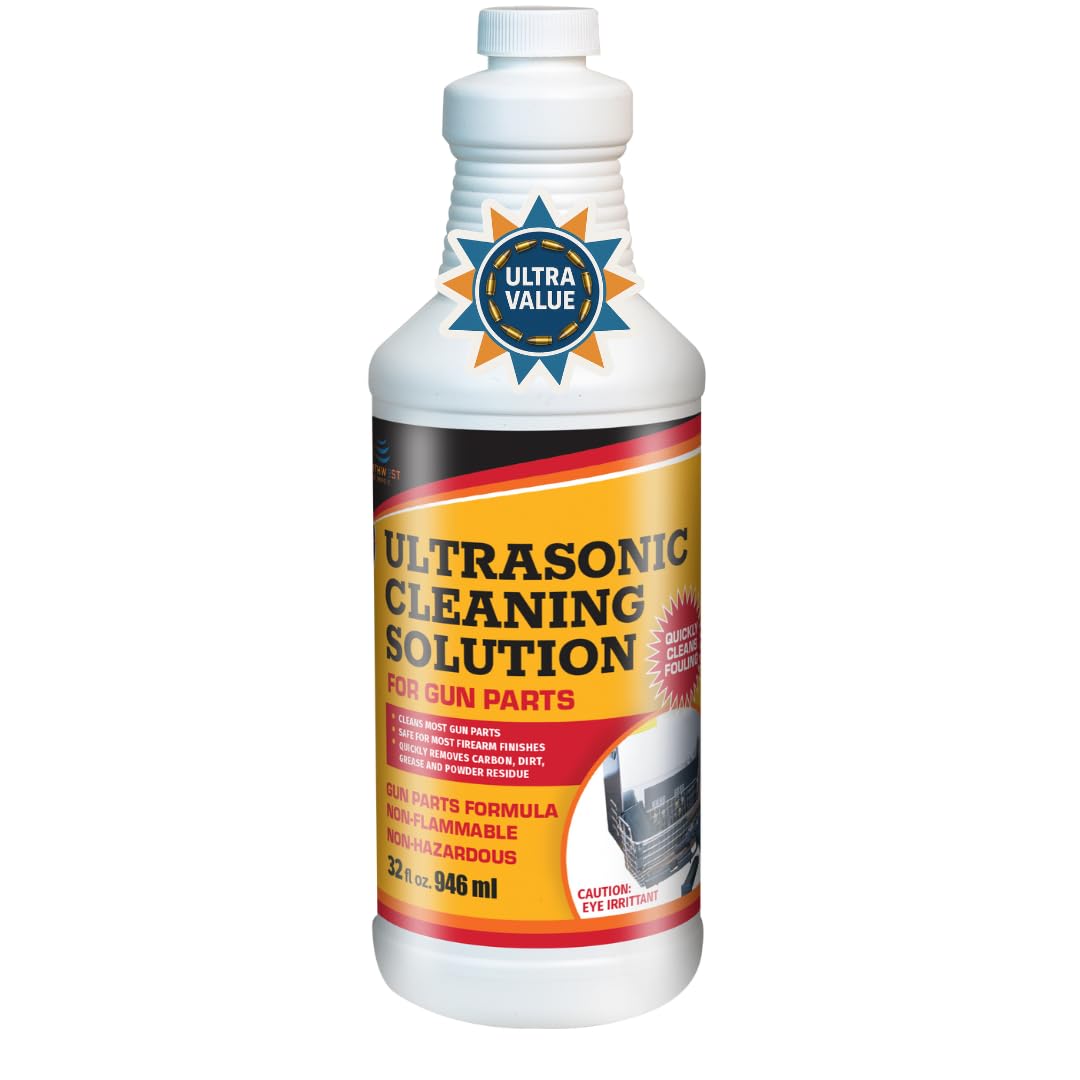
The concentrated formula that a gun shop uses as its number-one go-to for carbon removal.
This 32 fl oz concentrate mixes at a 1:5 ratio with water (one part cleaner to five parts water), making it the most potent dilution on this list — designed to dissolve heavy carbon buildup, powder residue, and grease from actions, receivers, and trigger assemblies. It is non-corrosive to aluminum and contains no petroleum solvents, so it is safer on firearms than generic degreasers.
Reviewers point out it pulls out carbon from areas they could not see or reach, and one customer observed it made the action noticeably smoother. Compared to the Shooter’s Choice gallon, this is a smaller bottle with a more aggressive mix ratio — you use more per cycle, but it is designed for shop-level fouling rather than routine maintenance. Note the manufacturer warns it is not recommended for cleaning Cerakote finishes, and some users saw slight discoloration on plastic grips.
Best use: Heavy carbon removal on metal gun parts where a stronger mix is needed to break through baked-on residue quickly.
Choose this for: Deep-cleaning bolt carriers, suppressors, and trigger groups after heavy range sessions.
Skip if: You only do light cleaning or need to preserve Cerakote finishes — the 1:5 mix is strong and not universal.
Understanding the Specs
Dilution Ratio
This number tells you how much water to mix with the concentrate. A 1:10 ratio means one part cleaner to ten parts water. The lower the second number, the stronger the mix. 1:5 is for heavy carbon and grease; 1:250 is for light body oils on jewelry. Picking the right ratio for your item prevents wasted product or insufficient cleaning.
Non-Ammoniated vs Solvent-Based
Non-ammoniated formulas (no ammonia) are gentle and safe for delicate items like gemstones, gold, and eyeglass lenses — they clean without etching. Solvent-based formulas (use chemical solvents) are for metal engine parts and gun components where strong grease-cutting is the priority but where a solvent could cloud soft stones or soften plastics. Always match the label to the material.
FAQ
Can I use dish soap in my ultrasonic cleaner instead of a special solution?
How do I know which dilution ratio to use for my item?
Is ultrasonic cleaner solution safe for all metals?
Can I reuse the ultrasonic cleaning solution?
How long should I run the ultrasonic cycle with a cleaning solution?
Will the cleaner damage the plastic of my retainer or Invisalign aligners?
What is the difference between a 1:10 and 1:40 concentrate?
Can I use a gun cleaner solution on brass shell casings?
Why does some jewelry cleaner come with a polishing cloth?
Does the ultrasonic solution expire?
Final Thoughts: The Verdict
If you want one dependable pick, the cleaner for ultrasonic cleaner winner is the GemOro Jewelry Cleaner Concentrate because it blends professional-grade, non-toxic cleaning with a huge 128 fl oz volume that makes each cycle extremely affordable. If you want a dedicated formula for heavy engine or carburetor grime, grab the CREWORKS Carburetor Cleaner. And for dental appliance care where plaque and odor are the enemy, the NORTHWEST ENTERPRISES Retainer Cleaner is the enzyme-powered specialist that matches what your dentist uses.
How We Picked
We do not accept paid placement. Every pick is matched to a real buyer and a real use-case; we do not hands-on test units.
Sources & Methodology
Specifications: manufacturer listings and product documentation. Review insights: verified customer reviews, as of July 2026. Pricing: not shown on this page (it changes often); check the current price via the retailer link.
As an Amazon Associate, WellFizz earns from qualifying purchases. This does not affect which products we feature.

Mo Maruf
I created WellFizz to bridge the gap between vague wellness advice and actionable solutions. My mission is simple: to decode the research and give you practical tools you can actually use.
Beyond the data, I am a passionate traveler. I believe that stepping away from the screen to explore new environments is essential for mental clarity and physical vitality.