Our readers keep the lights on and my smoothie glass nicely filled. As an Amazon Associate, I earn from qualifying purchases.
Specs are compiled from manufacturer listings and verified buyer reviews and can change over time — please confirm the key details on the product page before buying.
If you spend all day on your feet — as a nurse, on a warehouse floor, or stuck in a cramped airplane seat for hours — you know the heavy ache that settles into your calves and ankles by late afternoon. That tired, swollen feeling signals your circulation is fighting gravity. The right pair of socks can change that completely. This guide cuts through the marketing noise to find the best compression socks for men, explaining what the numbers mean and which picks hold up under real conditions.
I’m Mohammad Maruf — the founder and writer behind WellFizz. This guide is built by comparing the manufacturers’ published specifications and the patterns across verified customer reviews, so you get each pick’s real strengths and trade-offs instead of marketing spin.
These reviews focus on the compression level, material feel, and everyday fit that determine how your legs feel by the end of the day, so you can find the right compression socks for men without guessing.
Quick Picks
- FITRELL 3 Pairs Compression Socks — Best Overall
- Physix Gear Compression Socks 20-30 mmHg — Nurse Favorite
- Medical Compression Socks 20-30 mmHg (BBFREY) 3 Pairs — Premium Mid-Range
- Sockwell Pulse OTC Firm Graduated Compression Sock — Made in USA
- Sockwell Men’s Sportster Graduated Compression Socks — Merino Comfort
- Benirap Breathable Compression Socks 20-30 mmHg — Easy Fit
- PULIOU Cooling Compression Socks 20-30 mmHg — Budget 2-Pack
How To Choose The Best Compression Socks For Men
Not all compression socks deliver the same squeeze. Buying the wrong level or size is the most common mistake. Here are the three specs you need to check before you click “add to cart.”
Compression Level: What the mmHg Numbers Actually Mean
The most important spec is the compression rating, measured in mmHg (millimeters of mercury — the same unit a blood pressure monitor uses). The 15-20 mmHg range gives you light, everyday support that helps with mild fatigue or minor swelling. The 20-30 mmHg range steps up to firm medical-grade pressure that prevents deeper swelling, reduces heavy legs, and is the range most nurses, frequent flyers, and athletes choose for serious relief. Anything above 30 mmHg is typically prescription-grade for chronic conditions and needs a doctor’s guidance.
Graduated Compression vs. Uniform Pressure
A true medical-grade sock uses “graduated compression” — meaning it is tightest at the ankle and gradually loosens as it moves up toward the knee. This design helps push blood back up your leg toward your heart, fighting gravity where it hits hardest. A sock that feels equally tight all the way up is not graduated and will not give you the same circulation benefit.
Fit: Calf Circumference and Shoe Size Matter More Than “S/M/L”
Most compression socks list a sizing chart that asks for both your shoe size and your calf circumference (measured at the widest part). Ignore the generic S/M/L label and actually measure your calf with a fabric tape measure. A sock that fits well stays up without rolling down, does not pinch behind your knee, and does not leave deep indentations in your skin after a full day of wear.
Quick Comparison
| Model | Best For | Compression | Pairs | Material Feel | Amazon |
|---|---|---|---|---|---|
| FITRELL 3 Pairs | Best Overall Value | 20-30 mmHg | 3 | Soft, Breathable | Amazon |
| Physix Gear | Shift Workers | 20-30 mmHg | 1 | Sturdy Knit | Amazon |
| PULIOU Cooling | Budget 2-Pack | 20-30 mmHg | 2 | Warm Knit | Amazon |
| Benirap Breathable | Easy On/Off | 20-30 mmHg | 2 | Thick/Warm | Amazon |
| Medical (BBFREY) 3 Pairs | Premium Mid-Range | 20-30 mmHg | 3 | Dense/Substantial | Amazon |
| Sockwell Sportster | Merino Wool Comfort | 15-20 mmHg | 1 | Soft Merino Wool Blend | Amazon |
| Sockwell Pulse OTC Firm | Premium Firm Support | 15-20 mmHg | 1 | Fine Merino Wool | Amazon |
In‑Depth Reviews
1. FITRELL 3 Pairs Compression Socks

The three-pack that delivers firm medical-grade pressure without feeling like a wrestling match to put on.
You get three pairs of 20-30 mmHg compression socks (millimeters of mercury, the firm level that prevents swelling in your lower legs). That squeeze hits the balance between serious leg support and all-day comfort. Buyers report wearing them on an 8-hour flight and keeping them on all day, with no swollen ankles or calf aches afterward. One reviewer managing POTS (a condition that causes blood to pool in the legs) noticed a real difference in lightheadedness and those heavy feelings, but the material stayed breathable through an 88-degree day.
Compared to the PULIOU 2-pack that offers the same compression level, the FITRELL gives you 3 pairs versus 2. That makes it a smarter buy if you want to rotate pairs through a work week. The smooth toe is a standout detail for sensitive feet — reviewers on this model specifically note they cannot feel a seam at all. The trade-off is that the 20-30 mmHg rating here feels slightly easier to pull on than some competing socks at the same level. If you want the absolute firmest squeeze, you might prefer a tighter brand. But for nearly everyone, that ease of use is a feature, not a flaw.
What Stands Out
- Three pairs for the price of one premium sock
- Breathable fabric that stays cool even in warm weather
- smooth toe with no irritating stitching
The Trade-Off
- Compression feels slightly less firm than some 20-30 mmHg competitors
- Limited color options
Reach for this if: you need reliable, affordable compression socks you can wear all day at work, on a plane, or just running errands.
Look elsewhere if: you require the absolute tightest squeeze possible and are willing to pay more per pair for maximum firmness.
2. Physix Gear Compression Socks 20-30 mmHg

The sock that survives a full twelve-hour hospital shift and still leaves your legs pain-free when you get home.
One buyer’s review sums it up: “An entire 12 hour shift at the hospital and my legs still don’t hurt when I get home!” That real-world endurance is what makes the Physix Gear stand out for stand-all-day professions. The 20-30 mmHg compression level provides the firm squeeze that nurses, retail workers, and warehouse staff need. The knit material has held up well after multiple washes without sagging or losing elasticity, according to reviewers.
The XL size accommodates calves measuring 15-16 inches comfortably — wider than what some budget options handle. However, some owners mention the socks run a bit long, reaching the bend of the knee rather than stopping a couple inches below. That can cause wrinkling at the ankle for shorter legs. Check the calf length chart before ordering. This is a single-pair sock. Unlike the FITRELL 3-pack, you pay a similar price for one pair instead of three. The sturdy construction and proven shift-long support justify the cost for heavy-duty users.
Why It Works
- Holds compression through a 12-hour shift without sagging
- Wider calf fit (customers note 15-16 inch calves fit well)
- Breathable and durable after many washes
Downsides
- Reported to run long for some, hitting the knee bend
- Single pair at a mid-range price
Ideal for: anyone standing all day — nurses, warehouse workers, or cooks — who needs proven compression that lasts the full shift.
skip it if: you have short legs or want a multi-pack for the same money.
3. Medical Compression Socks 20-30 mmHg (BBFREY) 3 Pairs
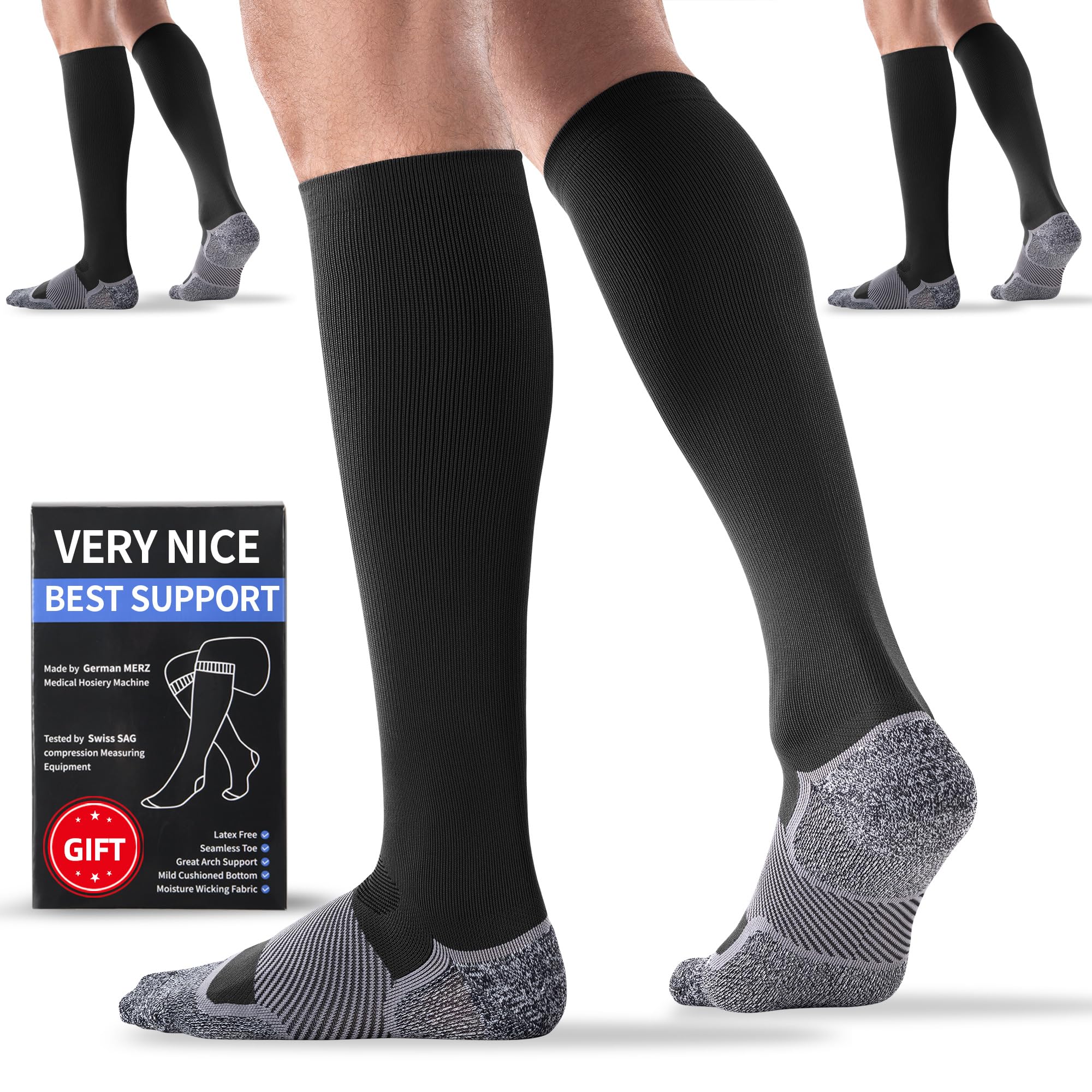
German-made sock machines produce a 3-pack that competes with socks costing twice as much per pair.
The BBFREY compression socks use German medical knitting machines and a unique inlay method that, according to the manufacturer, keeps the pressure consistent and the sock durable over time. The 20-30 mmHg compression here feels firm and accurate. The 3-pack format puts it in direct competition with the FITRELL. The edge this one has is in build quality — the fabric has more substance to it. The flat stitching at the toe is nearly invisible against the skin, which reviewers with sensitive feet appreciate.
Unlike the softer knit on the Sockwell models, this sock uses a denser microfiber nylon blend that holds its shape well. One reviewer noted the socks stayed up without falling down for over 11 hours, yet the top band did not cut into the skin. The sizing chart proved accurate for a size 10.5 women’s shoe and 14.5-inch calf. The main gripe is color selection — the grey is described as “very dark” and there are not many pattern options. For pure compression reliability at a mid-range price, this three-pack is tough to top.
Build Quality Verdict: The German machine knitting yields a precise graduated compression that feels consistent from ankle to knee, with a dense fabric that holds up after multiple washes.
The One Catch: Color choices are limited, and the grey is darker than expected — not a dealbreaker if function matters more than fashion.
Choose this for: precise medical-grade compression in a durable 3-pack that outperforms the per-pair cost of most single-sock competitors.
Pass if: you want merino wool softness or a variety of colors.
4. Sockwell Pulse OTC Firm Graduated Compression Sock
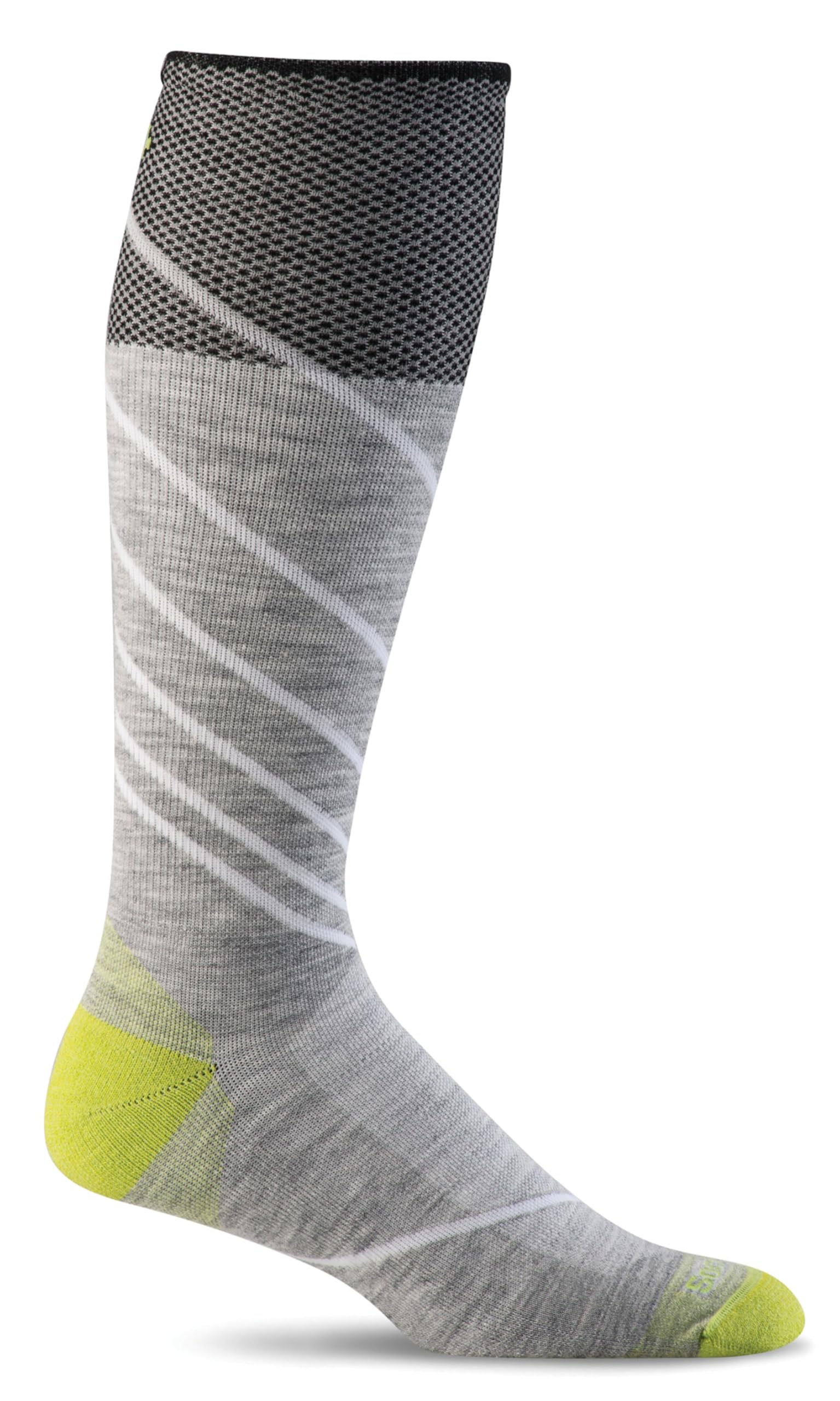
A USA-made merino wool sock that one reviewer called the best compression sock they have worn in 30 years.
The Sockwell Pulse is not the highest compression level on this list (15-20 mmHg, a lighter medical grade), but it earns its premium price through material and construction. It is knit in the USA from American wool-based yarns — a Fine Merino Wool blend with rayon from bamboo. That feels noticeably softer and more breathable than the synthetic nylon blends on the budget picks. One buyer, who has worn compression hose since the 1990s, says these are the best he has tried in 30 years, noting that they fit over his calf comfortably where many others would not go up.
Reviewers consistently praise the graduated compression on this model, saying it is never too tight but you can feel it working all day. A traveler used these on a 24-hour transcontinental flight and reported no swelling or discomfort. The trade-off is a higher per-pair cost compared to the FITRELL 3-pack. At least one long-term owner noted that after a few months, the internal seams left indentations on the skin that caused itching. If you prioritize natural fibers and USA manufacturing and need a lighter everyday compression, this is a standout choice.
Why It’s Worth the Price
- Fine Merino wool blend that breathes and regulates temperature
- Made in the USA with high-quality knit construction
- Graduated compression that maintains its feel all day
Notable Limitations
- Some users report inner seams creating skin irritation over weeks of wear
- Higher per-pair price than multi-pack competitors
Best for: someone who wants merino wool comfort, USA craftsmanship, and a reliable everyday compression level.
Look elsewhere if: you need the stronger 20-30 mmHg squeeze or want to pay less per pair.
5. Sockwell Men’s Sportster Graduated Compression Socks

The wool blend sock that runners and hikers praise for softness and help with shin splint relief.
The Sportster offers a 15-20 mmHg graduated compression made with the same USA-sourced merino wool and bamboo rayon blend as the Pulse model. It costs slightly less and feels lighter overall. It is thick enough to hold up well — one buyer mentioned owning six pairs with no holes — yet breathable enough for year-round wear. Buyers specifically note that the socks help with shin splints and feel “very soft and comfortable” while still providing the compression support for running or hiking.
One important caveat: a buyer buying for her husband found the XXL size still too small for a size 12 wide foot with edema (swelling from fluid retention). If you have very wide feet or high-volume calves, you may need a more specialized fit. The compression is also lighter than the 20-30 mmHg options above. If you need serious swelling prevention for standing all day, the FITRELL or Physix Gear would serve you better. The Sportster shines as an everyday athletic sock with a bonus of mild compression that keeps legs fresh during active use.
Softness Score: The merino wool blend gives a noticeably softer feel against the skin than the all-synthetic compression socks on this list.
The Trade-Off: Lighter compression (15-20 mmHg) and a fit that may not accommodate very wide feet or large calves.
Reach for this if: you run, hike, or walk a lot and want soft merino wool socks that also provide light compression to ward off soreness.
pass on it if: you need 20-30 mmHg compression or have extra-wide feet.
6. Benirap Breathable Compression Socks 20-30 mmHg
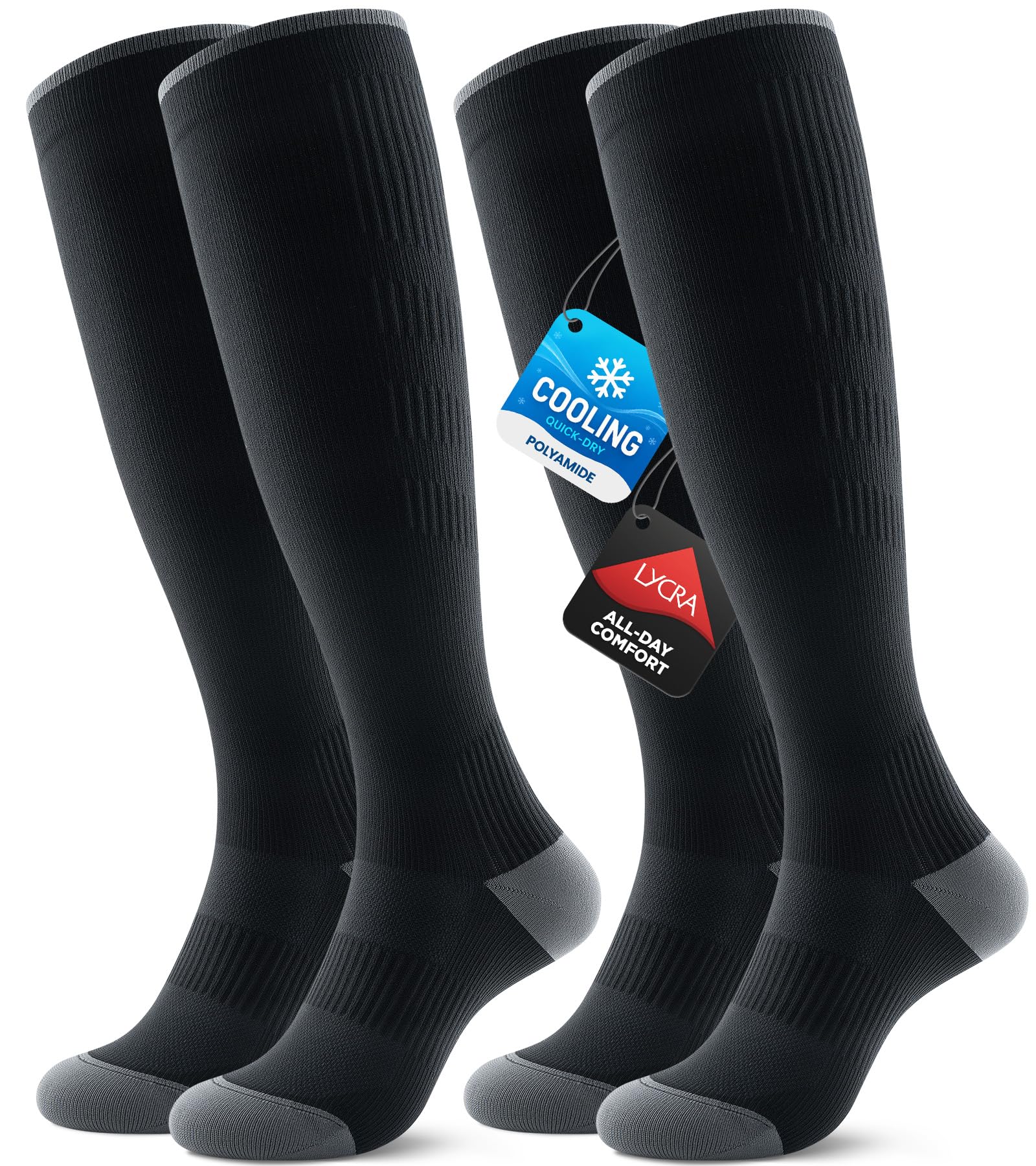
The compression sock one owner reported no longer needed a “wrestler in a cage match” struggle to get on.
Getting compression socks on can be a real battle, especially at the 20-30 mmHg level. The Benirap pair stands out because it is noticeably easier to pull up than other firm-compression socks. One frustrated repeat buyer who had tried four other brands before this one said there was “no struggle” — he just rolled the sock down, worked his foot in, and pulled it up bit by bit. The top band did not cut into the back of the knee, a common pain point with socks that are too long or too tight in the band.
The 2-pack comes in a unisex fit, with package dimensions of 3.94 x 3.94 x 0.79 inches and a weight of 3.53 ounces. Reviewers describe them as comfortable to wear all day and easy to take off at night. The catch is that several reviews describe the socks as “thick and warm,” which is great for winter but may be too hot during spring and summer. If you need breathable socks for warm weather, the FITRELL or Physix Gear handle heat better. This is a solid budget-friendly choice if getting the socks on is your biggest hurdle.
Biggest Strength
- Easier to put on than most 20-30 mmHg socks
- Top band does not dig into the back of the knee
- 180-day free replacement policy
Consider This
- Described as thick and warm, not ideal for hot climates
- Limited to 2 pairs
Pick this if: you have struggled with other compression socks being too hard to pull on and need a 20-30 mmHg option that goes on smoothly.
it’s not for you if: you intend to wear compression socks in hot weather or need the thinnest possible fabric.
7. PULIOU Cooling Compression Socks 20-30 mmHg
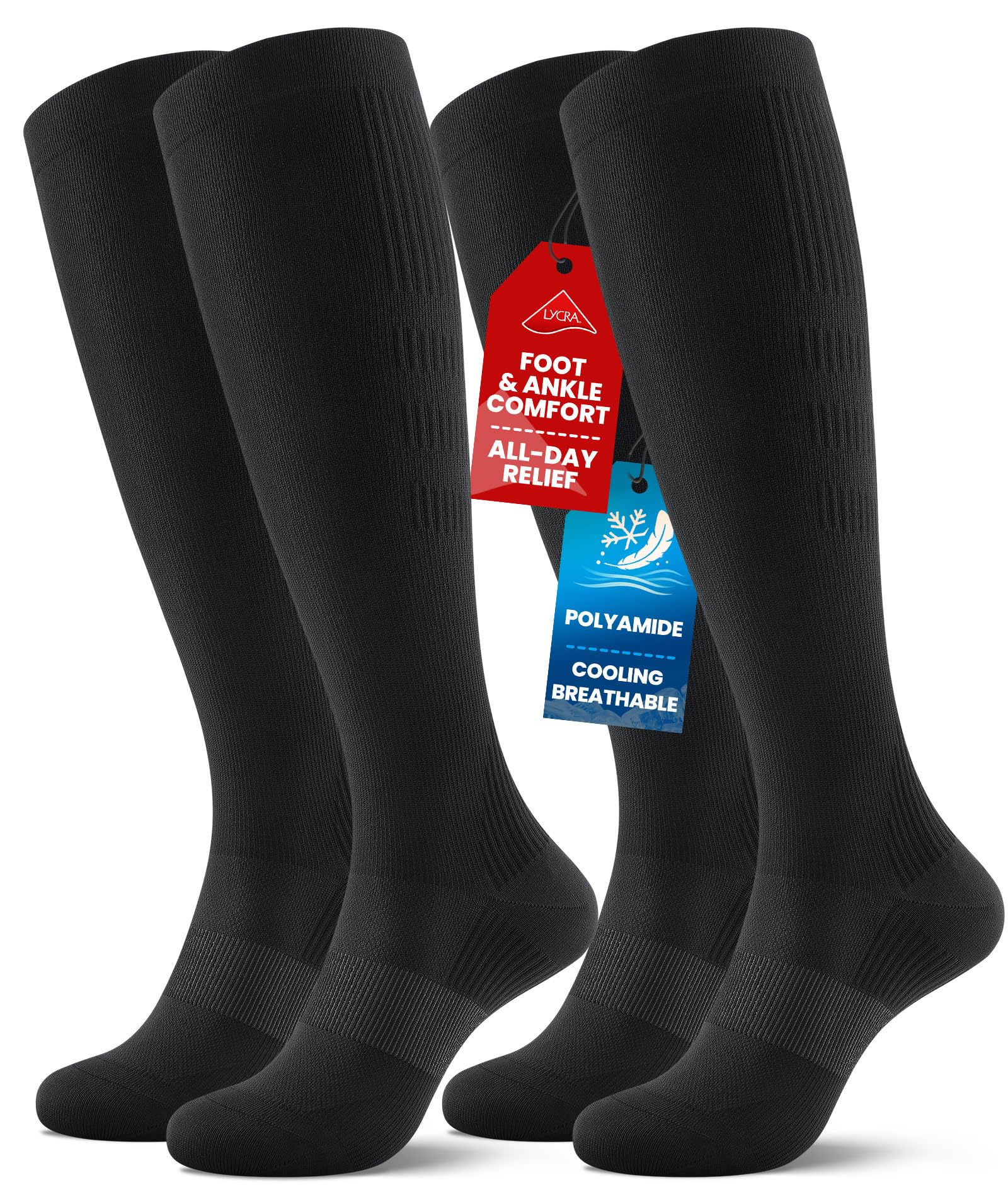
A budget-friendly 2-pack that offers 20-30 mmHg compression but delivers a warm knit more than a cooling feel.
The PULIOU socks target the traveler or runner who wants strong compression without spending premium money. At 20-30 mmHg, the compression level matches the more expensive picks here. The 2-pack format gives you a backup pair. However, real customer reviews — written in German, French, and English — consistently describe these socks as “warm” and “thermoregulating,” not cooling. One reviewer used them on a trip to Sweden in near-freezing temperatures and called them “top” for hiking. That means they function best as a cold-weather compression sock, not a hot-weather option.
Compared to the FITRELL 3-pack, the PULIOU gives you one fewer pair for a slightly higher price, so the per-pair value is lower. A few buyers also noted the socks run “a little big” but still fit fine with sneakers. If you want a simple, warm compression sock for winter travel or outdoor work at a low price, this works — but the FITRELL remains the stronger all-around pick for the same money.
Value Check: A functional 2-pack with real 20-30 mmHg pressure, but the warm knit makes the “cooling” name misleading.
The Bottom Line: Acceptable for winter use if budget is the primary concern, but the FITRELL 3-pack beats it on value and breathability.
Choose this for: a low-cost cold-weather compression option, especially if you want a thick, warm sock for hiking in low temperatures.
Pass if: you need a breathable, cool sock for summer or a better per-pair deal.
Understanding the Specs
20-30 mmHg — The Standard for Serious Support
This is the compression level most commonly found on the socks in this guide. It is a firm medical-grade pressure that helps prevent swelling during long hours of standing or sitting. It reduces the feeling of heavy or tired legs and aids recovery after athletic activity. It is tighter than the 15-20 mmHg “light support” you find in drugstore travel socks, but it is still manageable for all-day wear once you get used to the feeling.
Graduated Compression — How It Works
Graduated compression means the sock is tightest at the ankle and gradually loosens as it goes up the leg. This design pushes blood upward against gravity, improving circulation and preventing fluid from pooling in your feet and lower calves. A non-graduated sock squeezes equally everywhere and does not give you the same medical benefit. Every product in this guide uses graduated compression, but the quality of that graduation varies between brands.
FAQ
How do I measure my calf for compression socks?
Can I wear 20-30 mmHg compression socks all day?
What is the difference between 15-20 mmHg and 20-30 mmHg?
How long do compression socks last before losing their elasticity?
Can compression socks help with shin splints?
Are compression socks safe for people with diabetes?
How do I get compression socks on easily?
Should I wear compression socks on a long flight?
Can I wear compression socks to bed?
What is graduated compression?
Final Thoughts: The Verdict
For most people, the compression socks for men winner is the FITRELL 3 Pairs. It combines the 20-30 mmHg compression level that actually prevents swelling with the best value (3 pairs for a budget price) and a comfortable, breathable fabric that holds up all day. If you want a sock that survives a full nursing shift in durable knit, grab the Physix Gear. For the highest-quality USA-made merino wool experience, nothing on this list beats the Sockwell Pulse OTC Firm.
How We Picked
We do not accept paid placement. Every pick is matched to a real buyer and a real use-case; we do not hands-on test units.
Sources & Methodology
Specifications: manufacturer listings and product documentation. Review insights: verified customer reviews, as of July 2026. Pricing: not shown on this page (it changes often); check the current price via the retailer link.
As an Amazon Associate, WellFizz earns from qualifying purchases. This does not affect which products we feature.

Mo Maruf
I created WellFizz to bridge the gap between vague wellness advice and actionable solutions. My mission is simple: to decode the research and give you practical tools you can actually use.
Beyond the data, I am a passionate traveler. I believe that stepping away from the screen to explore new environments is essential for mental clarity and physical vitality.