Our readers keep the lights on and my smoothie glass nicely filled. As an Amazon Associate, I earn from qualifying purchases.
Specs are compiled from manufacturer listings and verified buyer reviews and can change over time — please confirm the key details on the product page before buying.
Making fresh cheese at home does not need a farmhouse kitchen — just a countertop and the right kit. A good cheese making kit turns a gallon of milk into warm mozzarella or silky ricotta in about the time it takes to watch a sitcom, no aging or fancy gear required.
I’m Mohammad Maruf, the founder of WellFizz. This guide compares manufacturers’ published specs and real customer review patterns so you see each pick’s true strengths and trade-offs.
You want to cut store costs, impress guests, or find a weekend hobby that delivers. The right cheese making kit determines whether your first curd cut feels like a triumph or a cleanup chore.
Quick Picks
- Ultimate Cheese Making Kit — Standing Stone Farms — Top Performer
- The Big Cheese Ultimate Cheese Making Kit — Best Variety
- Cheddar Cheese-Making Kit — Know-How Foods — Aged Cheese Specialist
- Ricki’s Goat Cheese Kit — New England Cheesemaking Supply — Goat Cheese Pro
- Mozzarella & Ricotta Cheese Making Kit — Cultures for Health — Quick & Easy
- Fermentaholics DIY Fresh Cheese Making Kit — Best Fresh Variety
- Beginner Cheese Making Kit — New England Cheesemaking Supply — Budget Champion
How To Choose The Best Cheese Making Kit
A good cheese making kit removes mystery without removing fun. The differences between a kit you use once and a kit you use for years come down to a few deliberate choices.
Fresh vs. Aged Cheese Ambition
If you want pizza toppings tonight, a kit focused on fresh cheeses like mozzarella, ricotta, and paneer is your match — many take under an hour. If you want a mature cheddar or a firm Monterey Jack, you need a kit that includes mesophilic or thermophilic cultures (starter bacteria for different temperatures) and accept that the payoff comes weeks or months later.
Rennet Form Really Matters
Rennet is the enzyme that turns liquid milk into solid curds. Liquid rennet is easiest to measure and mix evenly; tablets require splitting or crushing, which can be uneven. Most kits use microbial or vegetable rennet, keeping the cheese vegetarian-friendly — animal rennet is rarer in beginner kits.
What Else Is Actually in the Box
A thermometer you can read, a muslin cloth thick enough to strain without tearing, and a recipe booklet that does not skip steps separate a complete kit from one that forces you to run to the kitchen store mid-batch. Some kits also include molds, curd knives, or citric acid — skim the included tools before buying.
Quick Comparison
| Model | Best For | Cheeses Made | Rennet Type | Kit Weight | Amazon |
|---|---|---|---|---|---|
| Standing Stone Farms Ultimate | Most versatile (14+ cheeses) | 14+ (hard & soft) | Liquid microbial | 1.06 lb | Amazon |
| The Big Cheese Ultimate | 10-cheese variety with spices | 10 cheeses | Vegetarian tablets | 1.85 lb | Amazon |
| Cheddar Cheese-Making Kit | True aged cheddar from scratch | Cheddar | Rennet (unspecified) | — | Amazon |
| Ricki’s Goat Cheese Kit | Dedicated goat cheese fans | Chèvre | Chèvre DS culture | 11.2 oz | Amazon |
| Cultures for Health Mozzarella & Ricotta | Fast 30-min mozzarella | Mozzarella, ricotta | Vegetable tablets | 4 oz | Amazon |
| Fermentaholics DIY Fresh Cheese | Wide fresh cheese variety | Ricotta, mozzarella, burrata, paneer, cottage cheese | Microbial tablets | 7.23 oz | Amazon |
| Beginner Cheese Making Kit | Budget entry with 20-batch capacity | Ricotta, mascarpone, paneer | — (citric & tartaric acid) | — | Amazon |
In‑Depth Reviews
1. Ultimate Cheese Making Kit — Standing Stone Farms

The Food Network winner that takes you from mozzarella to aged cheddar without a second kit.
This is the only kit here that Food Network’s test kitchen named both Best Overall Cheese Making Kit and Best Hard and Soft Cheese Kit. It makes 14+ varieties including burrata, cheddar curds, Monterey Jack, chèvre, cultured butter, and ghee — enough ingredients for 20–25 gallons of milk. The liquid microbial rennet (an enzyme that curdles milk) is vegetarian and non-GMO, and it measures more easily than the tablets in most other kits.
A full 2-hour instructional video is free on the company’s YouTube channel, and the step-by-step recipes cover both fresh and aged cheeses. Buyers report the cultures and rennet work reliably, though one reviewer noted the included thermometer is basic and the curd bag is just cloth. The box arrives gift-ready, making it a thoughtful present for a serious home cook who already has a stockpot and a slotted spoon. Unlike the Cheddar Cheese-Making Kit which focuses on a single aged cheese, this kit lets you practice quick mozzarella on weeknights and then build up to something that needs weeks of patience. It does not include spices or flavorings — Standing Stone Farms removed them to keep prices down — so add your own if you want herbed chèvre or peppercorn gouda.
What makes it stand out
- Food Network’s Best Overall and Best Hard & Soft Cheese Kit — two honors, both awarded
- Liquid microbial rennet (vegetarian, easy to measure) instead of fiddly tablets
- Makes 14+ cheese types from fresh to aged
- Free 2-hour companion video on YouTube
Things to know
- No spices or flavorings included; you supply those
- Thermometer quality has drawn mixed feedback from buyers
- Curd bag is basic cloth, not a press or mold
Your best bet if: you want one kit that grows with you from 30-minute mozzarella to aged hard cheeses, backed by a respected test kitchen award.
Reconsider if: you only want pre-measured quick cheeses and do not plan to ever age a wheel — you will pay for cultures you may not use.
2. The Big Cheese Ultimate Cheese Making Kit

Ten cheese types and five spices in one box that can keep your kitchen producing for weeks.
This kit takes you through mozzarella, ricotta, mascarpone, halloumi, Greek-style, Scottish crowdie, labneh, goat cheese, queso blanco, and paneer — all without needing an aging fridge or a cheese cave. Each batch yields 21–32 ounces of fresh cheese, and the package includes vegetarian rennet, citric acid, organic sea salt, and five separate spices (basil, cinnamon, mint, lemon pepper, paprika) so you can flavour each batch differently. It is noticeably larger than the Fermentaholics kit at 32.0 ounces compared to 7.23 ounces — about a 4.4x gap in ingredient weight.
The three included cheese molds and the full-color recipe book are a step above the bare-bones instructions some other kits provide. One reviewer who made goat cheese and mozzarella said the learning process is straightforward, though they found the price a little high for what you get. The dry ingredients have a 1-year shelf life, so you do not have to start the morning it arrives. Unlike the Standing Stone Farms kit which uses liquid rennet, this one uses rennet tablets that need splitting, which some buyers found fiddly.
Strength of this kit
- 10 cheese varieties — more than any other single-fresh-cheese kit on this list
- 5 spice packets included for built-in flavour variation
- 3 cheese molds and a thermometer included
- No aging required; most cheeses ready in under an hour
Limitations
- Rennet tablets require splitting, which some buyers found fiddly
- Some users felt the value lagged behind buying ingredients separately
- Kit is from Scotland — US users may need to source local milk
Grab this if: you want a broad cheese-making tour — halloumi one weekend, labneh the next — without buying separate cultures.
Pass if: you only want mozzarella and ricotta; the simpler kits below cost less for that narrower focus.
3. Cheddar Cheese-Making Kit — Know-How Foods
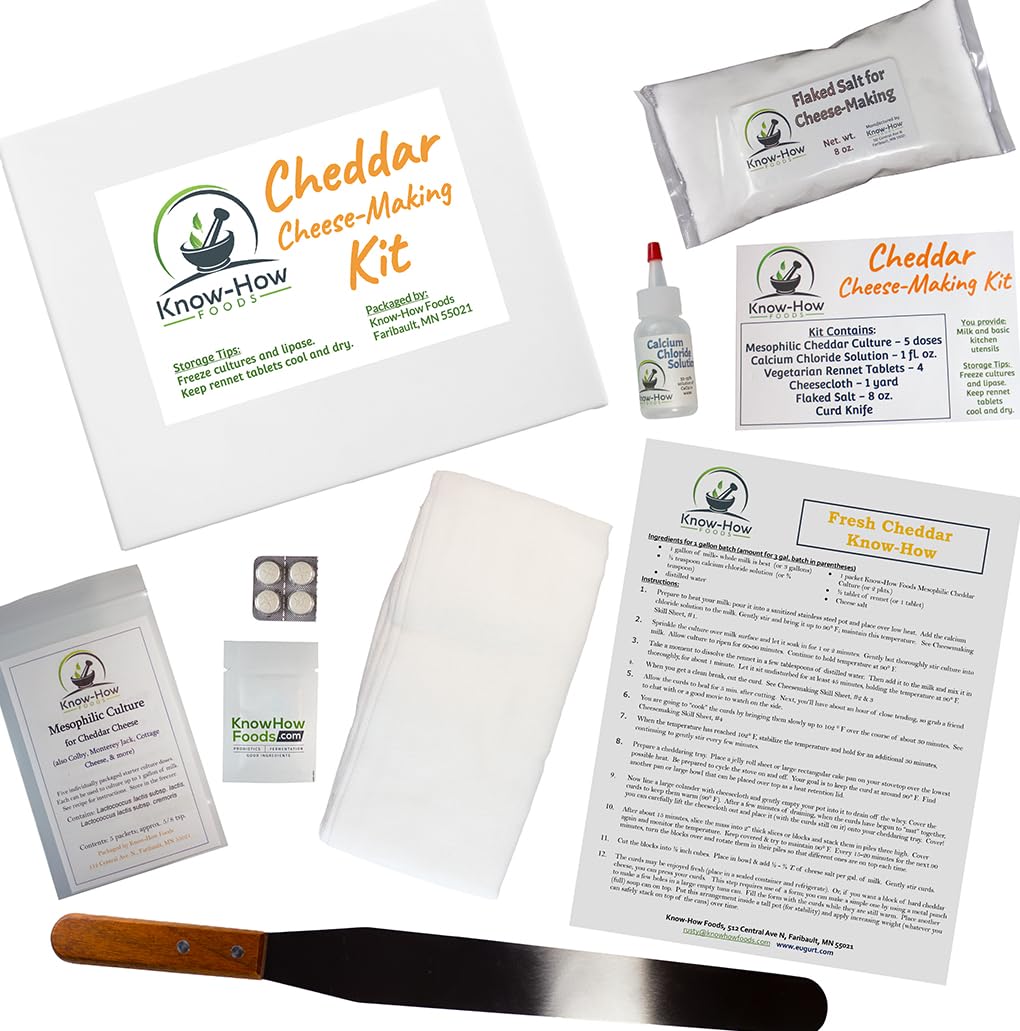
The one-box way to make real aged cheddar — if you can wait several months to taste it.
This 9-piece set includes a curd knife, cheesecloth, and all the ingredients for fresh cheddar: rennet, calcium chloride, cheese salt, and mesophilic culture. The kit is designed for 1-gallon batches, and one buyer mentioned doubling the first batch worked fine. Unlike the Standing Stone Farms kit which includes liquid rennet, this one packages everything you need in a box labelled for British cuisine — just add milk. The Standing Stone Farms kit makes 14+ cheese types, but the Know-How Foods kit is the only one here built purely for aged cheddar.
Here is the honest reality: cheddar needs to age. One buyer admitted they could not wait the full 9 months to get the deep flavour they wanted, and their kids kept digging into the cheese before it ever hit the aging milestone. If you enjoy the anticipation of a long-term kitchen project and want true farmhouse cheddar, this is the only kit here built for that exact goal. It does not include a cheese mold, press, or thermometer — you will need to supply those separately.
What works
- Dedicated cheddar kit with culture, rennet, calcium chloride, and curd knife
- Ingredients packaged per 1-gallon batch; doubling tested as fine
- Skill sheet included to track your aging progress
What you need to know
- No cheese mold, press, or thermometer in the box
- Requires several months of aging for full flavour
- Only makes cheddar — no ricotta or mozzarella option here
Ideal if: you are set on making aged cheddar from scratch and already own or plan to buy a cheese press and mold.
Skip if: you want a cheese tonight — this is a weeks-to-months commitment, not an after-dinner project.
4. Ricki’s Goat Cheese Kit — New England Cheesemaking Supply

A dedicated chèvre kit with four molds — the narrowest focus but the best tooling for goat cheese.
If your cheesemaking goal starts and ends with creamy, tangy goat cheese, this kit skips all the distraction. It includes 4 goat cheese molds, a 5-pack of Chèvre DS culture (a specific bacterial starter for goat cheese), 1 yard of reusable butter muslin, an E4 thermometer, and a recipe booklet. The package is compact — 6 x 4 x 4 inches at 11.2 ounces, which is noticeably larger than the Mozzarella & Ricotta Kit at 4 ounces — but everything is purpose-built for chèvre.
Unlike the broader kits above, you cannot make mozzarella or cheddar from this box. But the four molds mean you can shape multiple batches at once, and the butter muslin is pre-cut and reusable. Beginners who want a single cheese to master without juggling multiple cultures will appreciate the laser focus — no rennet tablets to split, no citric acid to measure, just culture, milk, and time. No customer reviews are available in the data to validate the experience.
What you get
- 4 dedicated goat cheese molds for multi-batch shaping
- Chèvre DS culture 5-pack included
- Reusable butter muslin and thermometer in the box
- Simple, single-cheese focus reduces guesswork
What it does not do
- Only makes goat cheese — no mozzarella, ricotta, or aged options
- No customer reviews available in the data to validate the experience
Perfect if: fresh chèvre is your only cheese-making ambition and you want the proper tools — molds, culture, and muslin — in a single purchase.
Look elsewhere if: you want to make multiple cheese types or need reassurance from existing user reviews before buying.
5. Mozzarella & Ricotta Cheese Making Kit — Cultures for Health
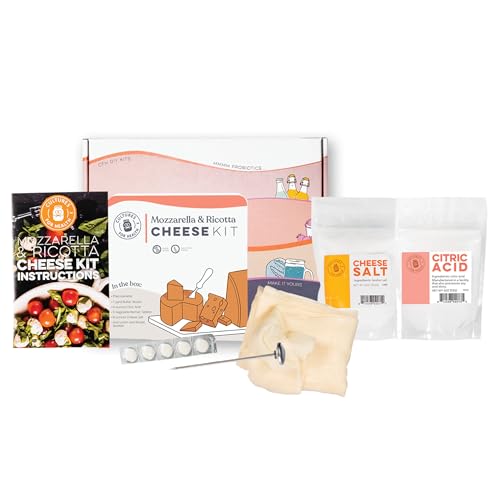
The kit that gets stretchy mozzarella on your pizza in about half an hour from pouring milk.
This 5-piece kit focuses on the two freshest, fastest cheeses: mozzarella and whole milk ricotta. It includes 5 rennet tablets, 4 ounces of citric acid, 8 ounces of cheese salt, a thermometer, and 1 yard of butter muslin. The instructions say the mozzarella takes about half an hour, which matches what several buyers reported. Compared to the Fermentaholics kit below, this one uses vegetable rennet tablets rather than microbial rennet, so it is vegetarian-friendly. At 4 ounces, it weighs about half of what Fermentaholics does (7.23 ounces), meaning you get fewer ingredient refills before you need to restock.
Buyers across the board praised the clear instructions and the high-quality, gluten-free, non-GMO ingredients. One reviewer of the Mozzarella & Ricotta Kit reported their first attempt yielded cream cheese instead of mozzarella, but the second succeeded. Common culprits for failed first batches: milk temperature too high or low, using ultra-pasteurized milk, or not dissolving rennet tablets completely.
Why it works
- Fast — mozzarella instructions claim about 30 minutes from start to stretch
- Vegetable rennet tablets keep it vegetarian-friendly
- Gluten-free and non-GMO ingredients confirmed
- High customer satisfaction with easy directions
Trade-offs
- Only makes mozzarella and ricotta — limited variety
- First attempt can produce cream cheese if milk temperature is off
- No cheese mold included
Reach for this if: mozzarella and ricotta are your goals and you want a low-friction first experience with vegetarian-friendly ingredients.
Consider another kit if: you want to make burrata, paneer, or aged cheeses — this kit does not stretch that far.
6. Fermentaholics DIY Fresh Cheese Making Kit

Seven fresh cheeses from a single box — including burrata, which most beginner kits skip.
This 7.23-ounce kit from Fermentaholics packs 4 microbial rennet tablets, 100g of cheese salt, 100g of citric acid, a yard of grade 90 cheesecloth, and a recipe booklet called “Easin’ Into Cheesin’.” The recipes cover ricotta, mozzarella, burrata, paneer, cottage cheese, and more, and the kit works with cow, goat, sheep, or buffalo milk. One owner reported their first batch of mozzarella came out perfect, while another aimed for mozzarella but ended up with delicious burrata instead — not a failure, just a happy detour.
Note that some users found the instructions required trial and error; one customer observed they had no successful cheese using the provided instructions until doing their own research. The microbial rennet tablets are vegetarian, and the grade 90 cheesecloth is a finer weave than standard muslin, giving you a cleaner curd separation. Unlike the Cultures for Health kit which only makes mozzarella and ricotta, this one offers the widest variety of fresh cheeses from a single entry-level kit — if you are willing to learn from a small hiccup or two.
Reasons to choose it
- 7 fresh cheese recipes including hard-to-find burrata
- Works with any type of milk — cow, goat, sheep, or buffalo
- Grade 90 cheesecloth gives finer curd separation than basic muslin
- One reviewer’s first mozzarella came out perfect
Heads-up
- Instructions may require trial and error; one buyer had zero success until they researched elsewhere
- Some users wished for more salt in the recipes
- No cheese molds or curd knife included
Choose this kit for: the broadest fresh-cheese variety including burrata, paneer, and cottage cheese, all from one box.
Not the one if: you want simple to use step-by-step instructions that work on the first try regardless of milk source.
7. Beginner Cheese Making Kit — New England Cheesemaking Supply
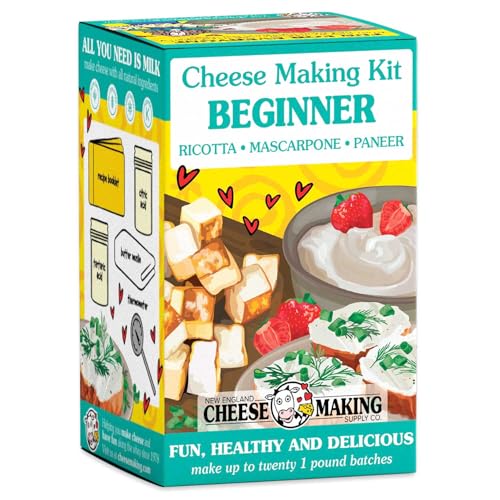
Twenty one-pound batches from a single kit — the cheapest way to see if cheese making sticks.
This kit from New England Cheesemaking Supply covers ricotta, mascarpone, and paneer — three acid-set cheeses that do not require rennet. Instead, it uses citric acid and tartaric acid to curdle the milk, which simplifies the process significantly. A buyer reported they successfully made delicious ricotta and planned to move on to paneer and mascarpone, also noting the kit works with a Greek yogurt maker.
The kit includes a dairy thermometer, 1 yard of reusable butter muslin, and a recipe booklet. It is the lightest and simplest option here, designed for someone who has never made cheese before and wants a low-cost test run. One reviewer called the instructions the easiest they had ever followed, and another said making the ricotta was “super easy.” Since it makes 20 one-pound batches, you get plenty of practice before needing to buy more supplies. Keep in mind you are limited to fresh, acid-set cheeses — no mozzarella stretch, no aged curds, no burrata. There is also no cheese mold or curd knife included.
What we like
- 20 one-pound batches — the highest batch count in this line-up
- No rennet to fiddle with; uses citric and tartaric acid
- Only makes ricotta, mascarpone, and paneer — simple, fast, forgiving
- Reviewed as very easy and fun for kids
Limitations
- No mozzarella, burrata, or cheddar option — acid-set cheeses only
- No cheese mold or curd knife included
- Ingredients are limited; you will outgrow this kit quickly if you get serious
Best for: absolute beginners or families who want to make a quick ricotta without learning about rennet, cultures, or aging.
Not for you if: stretchy mozzarella or aged cheddar is your dream — this kit cannot make them and you will need to upgrade within weeks.
Understanding the Specs
Rennet Type
Rennet is the enzyme that solidifies liquid milk into curds. The three common types are liquid (easiest to measure, dissolves instantly), tablets (need to be crushed or split — less even), and microbial/vegetable (vegetarian-friendly, works at room temperature). A kit with liquid microbial rennet, like the Standing Stone Farms Ultimate, removes one of the biggest beginner stumbling blocks.
Number of Cheeses
This tells you how many different cheese recipes the kit supports from the start. A kit advertising 14+ cheeses (like Standing Stone Farms) includes separate cultures (starter bacteria) for hard and soft cheeses, while a 2-cheese kit (mozzarella and ricotta) uses the same basic process for both. More cheeses means more variety but also more leftover ingredients to store.
Included Tools vs. Needed Tools
Some kits include a curd knife, cheese molds, and a thermometer; others expect you to own a stockpot, a slotted spoon, and a cheese press. The Cheddar Cheese-Making Kit, for example, includes a curd knife and culture but requires you to supply a mold and press — an extra expense. Always scan the “what’s in the box” section before buying.
Batch Yield
This measures how much cheese one kit makes before you run out of ingredients. “20 one-pound batches” (Beginner Cheese Making Kit) is ideal for frequent use; “1.85 pounds total weight” (The Big Cheese) means fewer batches but more variety per batch. If you plan to make cheese weekly, prioritize higher batch counts over higher cheese variety.
FAQ
Can I use ultra-pasteurized milk for cheese making?
How long does a cheese making kit last if I do not use it immediately?
Do I need special equipment beyond what the kit includes?
Can I make cheese without rennet?
What is the difference between vegetable rennet and microbial rennet?
How much cheese does a kit actually make?
Can I freeze the cheese I make?
Are cheese making kits a good gift?
Why did my first batch of cheese fail?
What is the difference between mesophilic and thermophilic cultures?
Final Thoughts: The Verdict
Across the board, the cheese making kit winner is the Standing Stone Farms Ultimate because it offers the widest cheese variety (14+ types from fresh to aged), uses liquid microbial rennet for easier measuring, and comes with a free 2-hour video guide that shows how each cheese works. If you want a massive 10-cheese tour with included spices and ready-in-under-an-hour results, grab the The Big Cheese Ultimate. And for absolute beginners on the lowest budget who just want to test whether cheese making is for them, the Beginner Cheese Making Kit gives you 20 one-pound batches of ricotta, mascarpone, and paneer with no rennet required.
How We Picked
We do not accept paid placement. Every pick is matched to a real buyer and a real use-case; we do not hands-on test units.
Sources & Methodology
Specifications: manufacturer listings and product documentation. Review insights: verified customer reviews, as of July 2026. Pricing: not shown on this page (it changes often); check the current price via the retailer link.
As an Amazon Associate, WellFizz earns from qualifying purchases. This does not affect which products we feature.

Mo Maruf
I created WellFizz to bridge the gap between vague wellness advice and actionable solutions. My mission is simple: to decode the research and give you practical tools you can actually use.
Beyond the data, I am a passionate traveler. I believe that stepping away from the screen to explore new environments is essential for mental clarity and physical vitality.