A dull knife that squashes a tomato instead of slicing through it turns a good meal into a frustrating chore. You want a blade that holds its edge without spending a fortune — and that is exactly what these seven knives deliver. This guide breaks down the real specs and verified buyer experiences so you know what you are getting before you click buy.
I’m Mohammad Maruf — the co-founder and writer behind WellFizz. This guide is built by comparing the manufacturers’ published specifications and the patterns across verified customer reviews, so you get each pick’s real strengths and trade-offs instead of marketing spin.
How To Choose The Best Chef Knife Under 200
The right chef knife for you comes down to three decisions: how the blade is made, what steel is in it, and how the handle fits your hand. Here is what each one means for your daily chopping, slicing, and dicing.
Forged vs. Stamped: Blade Construction
A forged blade (like the KYOKU or ZWILLING) is shaped from a single hot piece of steel — it is denser, heavier, and usually thicker behind the edge so it can handle tougher tasks like cutting through squash. A stamped blade (like the Victorinox or WÜSTHOF Gourmet) is laser-cut from a steel sheet, making it lighter and more nimble for fast, repetitive prep. Forged blades cost more to produce, but stamped blades often deliver the same cutting performance at half the weight and price.
Steel Hardness and Edge Retention
Steel hardness is measured on the Rockwell scale (HRC). A blade at 57-58 HRC, like the ZWILLING Professional S, is tough and resists chipping but needs more frequent honing. A blade at 60 HRC, like the Miyabi Kaizen, holds its edge far longer but is more brittle — you would not want to twist it sideways against a bone. For a chef knife under 200, look for VG-10 or high-carbon stainless steel (X50CrMoV15) because they strike the best balance between sharpness and durability for home use.
Blade Geometry: Japanese vs. German Profile
Japanese blades (KYOKU, Miyabi) have a thinner edge, sharpened to 9.5-15 degrees per side, which gives you cleaner, more precise cuts through vegetables and fish. German-style blades (WÜSTHOF, ZWILLING, Victorinox) have a thicker edge at 15-20 degrees per side and a curved belly that rocks easily on a cutting board, making them better for chopping herbs and mincing garlic. Neither is superior — the choice depends on whether you slice or rock-cut more often.
Handle Material and Ergonomics
Your handle determines whether the knife feels secure or slippery after an hour of prep. Fibrox (Victorinox) is a textured thermoplastic that stays grippy even when wet. Micarta (Miyabi) and G10 (KYOKU) are dense, moisture-resistant composites that resist heat and cold. Olive wood (Made In) is beautiful but requires oiling to prevent cracking. Polypropylene (Dexter-Russell) is sanitation-friendly but can feel cheap to some hands. If you cook with wet hands or for long stretches, a non-slip synthetic handle is a better bet than raw wood.
Quick Comparison
On smaller screens, swipe sideways to see the full table.
| Model | Category | Best For | Key Spec | Amazon |
|---|---|---|---|---|
| KYOKU Shogun Series 8″ | Best Overall | All-purpose home prep with Japanese precision | VG-10 core, 67-layer Damascus, 58-60 HRC | Amazon |
| Victorinox Fibrox Pro 8″ | Best Value | Budget-conscious cooks wanting pro-grade sharpness | Stamped, 6 oz, non-slip Fibrox handle | Amazon |
| WÜSTHOF Gourmet 8″ | Premium Pick | Daily heavy chopping with German heritage | Stamped, high-carbon steel, 240g | Amazon |
| ZWILLING Professional S 8″ | Top Performer | Rigorous daily use with forged durability | Forged, FRIODUR ice-hardened, 57 HRC | Amazon |
| Miyabi Kaizen 8″ | Best Display | Thin, ultra-sharp slicing with artisan beauty | VG-10 CRYODUR, 65-layer Damascus, 60 HRC | Amazon |
| Made In 8″ Chef Knife | Top Performer | Versatile, French-forged all-rounder | Forged, X50CrMoV15 steel, olive wood handle | Amazon |
| Dexter-Russell Sani-Safe 8″ | Budget Champion | Commercial kitchens and heavy, worry-free use | Stamped, high-carbon steel, 0.45 lbs | Amazon |
In‑Depth Reviews
1. KYOKU Chef Knife – 8″ Shogun Series

The VG-10 steel core hardened to 58-60 Rockwell (a tough-but-sharp balance that keeps the edge working for months, not weeks) is the reason this is the top pick. It gives you Japanese precision without a fragile blade, so you can stop searching after you buy this one.
The 67-layer Damascus cladding (a folded-steel pattern that resists rust and looks striking) is paired with a 1.4-pound weight that buyers report “cuts through onions like they’re nothing” — the heft does the work for you. The G10 fiberglass handle resists moisture and heat, so an hour of dicing leaves no cramping.
The catch: at 1.4 pounds, it is noticeably heavier than a Victorinox (which weighs just 6 oz), so cooks who prefer a feather-light blade for fast rock-chopping may find it tiring over a long prep session. If you want heft that powers through vegetables and meat without wavering, this is your knife.
Why it’s great
- Razor-sharp VG-10 core holds edge long-term (58-60 HRC)
- Beautiful forged Damascus pattern resists corrosion
- Sturdy G10 handle stays comfortable during heavy use
Good to know
- Heavier than many stamped knives (1.4 lbs)
- Not dishwasher safe — hand wash only
- Thin edge may chip if twisted against bones
2. ZWILLING Professional S 8″ Chef’s Knife

Where the KYOKU is heavier and Japanese-thin, the ZWILLING Professional S is forged from a single piece of German steel ice-hardened to 57 Rockwell (a durable toughness that resists chipping better than the KYOKU’s 60 HRC peak). It is built for cooks who need a blade that survives daily abuse without losing its edge fast.
The ergonomic polymer handle with three rivets is perfectly bonded to the full tang (the steel runs all the way through the handle for balance), and the 15-degree edge per side slices cherry tomatoes cleanly. Owners mention that blades from the company-owned German factory start sharper and stay sharper than many competitors’ in the same price bracket.
Choose this over the KYOKU if you want a dishwasher-safe forged knife that handles heavy chopping without fragility. Its 277-gram weight is lighter than the KYOKU’s 1.4 pounds but still has the heft of a German workhorse, making it ideal for breaking down chickens or cutting thick squash.
Where it shines
- Ice-hardened FRIODUR blade for long-lasting sharpness
- Dishwasher safe for easy cleanup
- Forged from a single piece of steel for durability
Worth noting
- Edge angle (15°) not as thin as Japanese knives
- May feel heavy for cooks preferring ultra-light blades
- Price is higher than mid-range stamped options
3. WÜSTHOF 8″ Gourmet Chef’s Knife

You are prepping a week’s worth of stir-fries and need a knife that feels balanced from the first chop — the WÜSTHOF Gourmet is a stamped blade (laser-cut from steel, not hammered) that brings German heft at only 240 grams, so your knuckles clear the board without fatigue. It is the choice for anyone who wants the WÜSTHOF name without paying forged-blade prices.
Customers note it is “razor-sharp out of box, holds edge well after month” thanks to the high-carbon stainless steel that resists corrosion and dulling. The polypropylene handle fights heat and impact, making it comfortable for mincing garlic or slicing through thick cuts of meat during long cooking sessions.
The key spec here is the 8-inch blade that is stamped rather than forged — this keeps the weight lower while still offering a German steel formula that outperforms many cheaper forged knives. It lacks the full-tang balance of a pricier forged WÜSTHOF, but for everyday home cooking, the downside is barely noticeable.
What stands out
- Lightweight (240g) and well-balanced for extended use
- Excellent edge retention reported after a month of daily use
- Ergonomic polypropylene handle resists heat and fading
The trade-offs
- Stamped construction, not forged
- Not dishwasher safe
- Edge angle is thicker than Japanese-style knives
4. Miyabi Kaizen 8-Inch Chef’s Knife

The number that defines this blade is its 60 Rockwell hardness — harder than any other knife on this list, which means it holds a razor edge far longer but is also more brittle if abused. This knife is for the precision cook who slices sashimi, herbs, and thin vegetables and wants a blade that glides with almost no pressure.
The 65-layer flower Damascus cladding is hand-honed using the three-step Honbazuke method to a 9.5- to 12-degree edge (about half the angle of a German chef knife). Reviewers point out it “glides through herbs, proteins, tough vegetables” but note it is “not for heavy-duty cutting” like spaghetti squash or boning meat because the thin edge can chip.
If your kitchen routine is all about clean, paper-thin slices rather than rocking through tough ingredients, the Miyabi gives you artisan Japanese craftsmanship (made in Seki, Japan) that no other pick at this price matches. The Micarta handle with a red accent spacer is as comfortable as it is beautiful, delivering a price-to-value read that rewards precision over versatility.
The upsides
- Extremely hard VG-10 Cryodur blade (60 HRC) for lasting sharpness
- Stunning 65-layer Damascus pattern with traditional Honbazuke edge
- Comfortable Micarta handle resists moisture and fatigue
Keep in mind
- Fragile edge — not for boning or heavy squash
- Requires whetstone sharpening only
- Thin profile may not suit cooks who rock-chop aggressively
5. Made In Cookware – 8″ Chef Knife
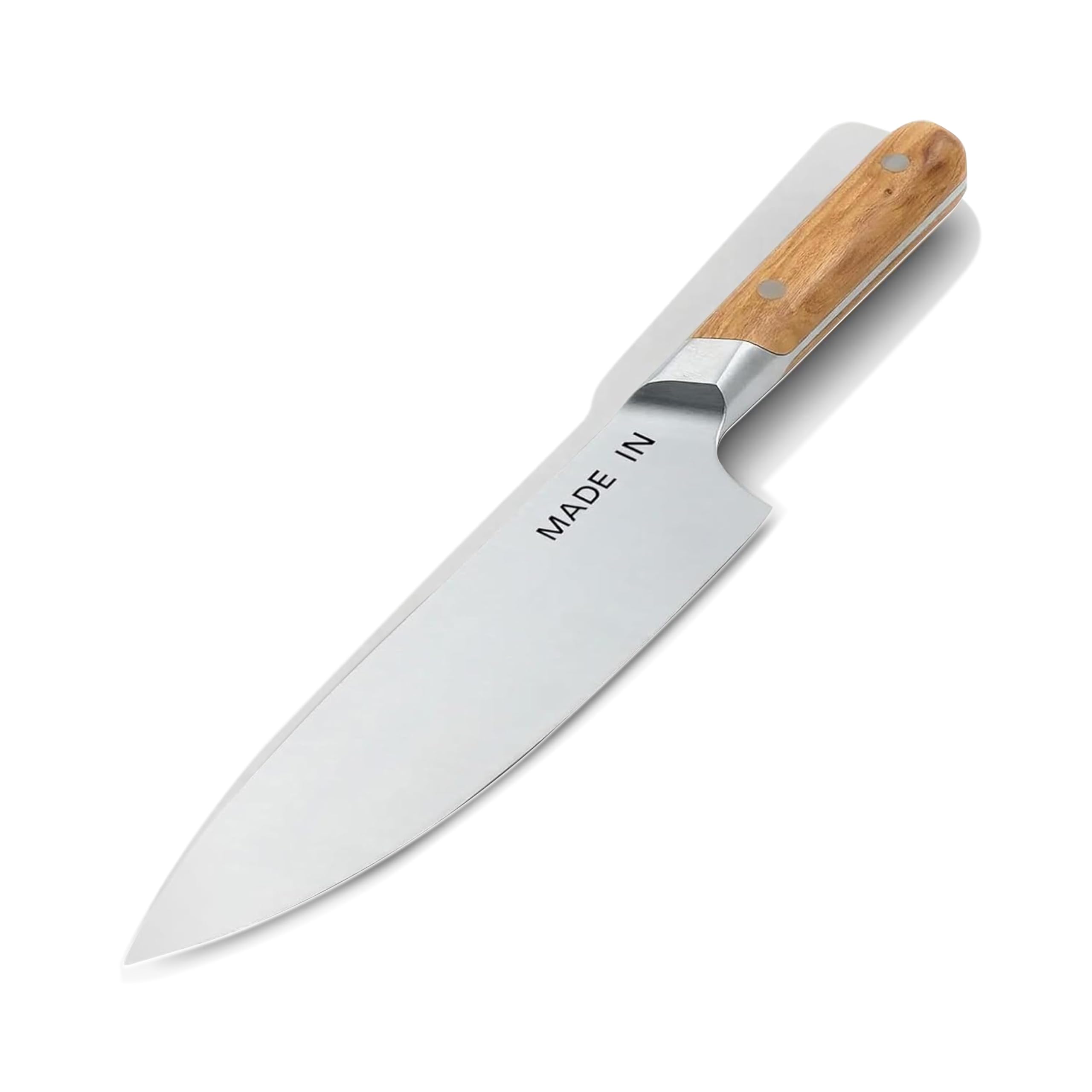
At 8 ounces (0.5 lbs), the Made In knife is almost three times lighter than the KYOKU (1.4 lbs) — and that weight savings comes from a fully forged X50CrMoV15 stainless steel blade forged by a fifth-generation bladesmith in Thiers, France. It is the choice for cooks who want European forging tradition in a nimble package.
The olive wood handle is full tang (steel runs through the entire grip) for balance, and the 2mm-thin blade slices through meat, fruit, and cheese with “razor sharpness out of box” according to reviewers. One reviewer noted it is “superior to Wüsthof” and praised the craftsmanship, though the natural wood handle requires occasional oiling to prevent cracking.
If you value aesthetics and a lightweight forged blade that excels at everything from mincing garlic to scoring dough, the Made In delivers that French refinement. Just be ready to hand wash and avoid the dishwasher — the olive wood handle is not moisture-proof. This knife is perfect for the budget buyer who prioritizes nimble European forging and is willing to maintain a natural wood handle.
Why we’d pick it
- Forged in France with nitrogen-treated stainless steel
- Lightweight (8 oz) and full tang for agile balance
- Beautiful olive wood handle with artisan craftsmanship
A few caveats
- Wood handle requires oiling and cannot go in dishwasher
- Thin 2mm blade may flex under heavy cuts
- No included sheath or guard for storage
6. Victorinox Fibrox Pro Chef’s Knife, 8 Inch
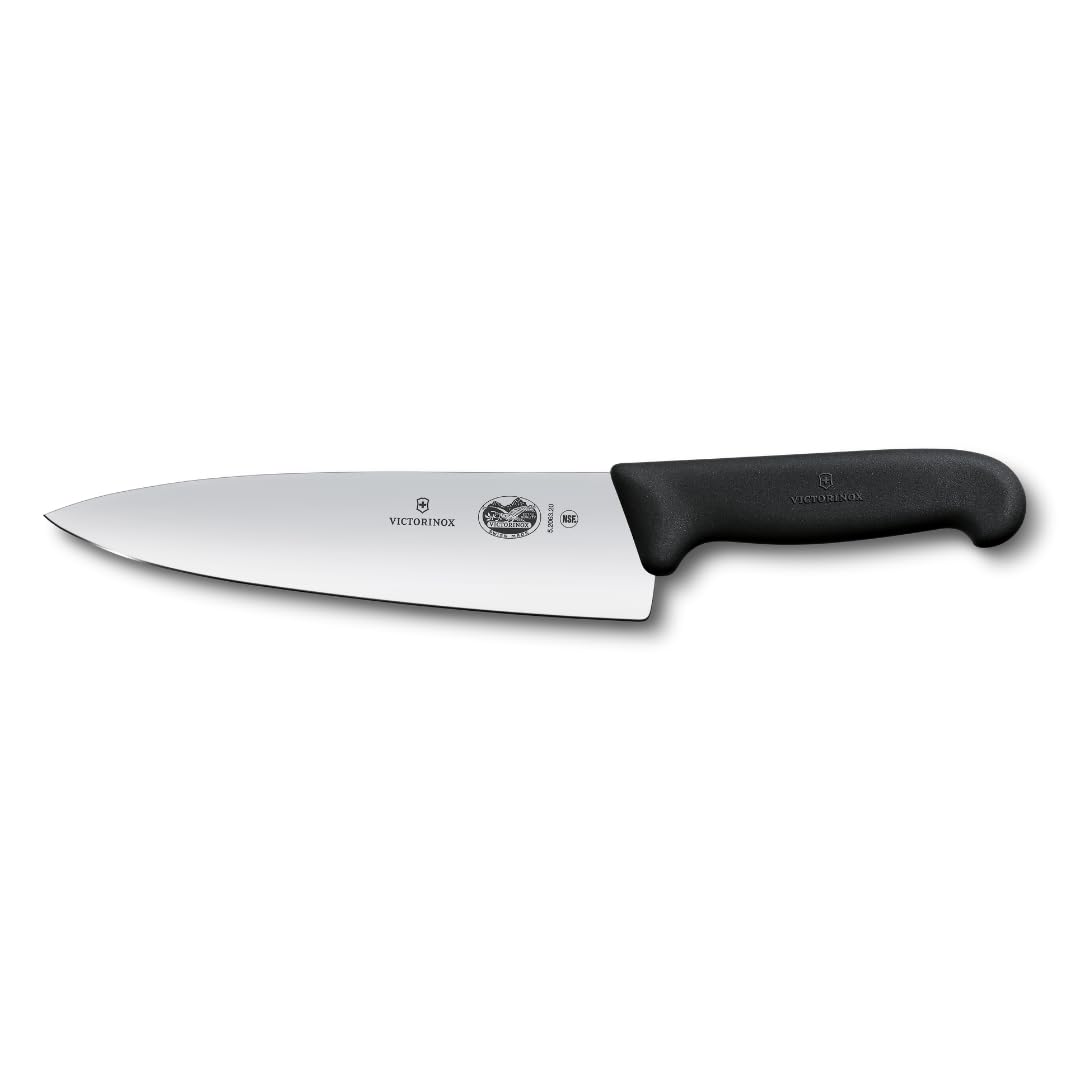
This is the best entry-level knife for new cooks, college students, or anyone who wants pro performance without spending more on a single knife than on a week of groceries.
It is stamped rather than forged (so the blade is thinner and less sturdy for hacking through dense squash), and it lacks the showmanship of Damascus cladding or a wood handle. But for 90% of kitchen tasks — slicing chicken, dicing onions, mincing herbs — reviewers confirm it stays sharp for over two months without honing.
You can get a blade that rivals knives costing three times as much for less than many dinner-out meals. The Victorinox Fibrox Pro is a stamped Swiss blade that weighs only 6 ounces — making it the lightest full-size chef knife in this guide — and its high-carbon stainless steel edge arrives laser-sharp, ready for precise vegetable work. The non-slip Fibrox handle is also one of the most comfortable wet-grip handles on the market. Just keep in mind that its thinner blade is less sturdy for hacking through dense squash.
Strong points
- Extremely sharp out of box with minimal effort slicing
- Lightweight (6 oz) reduces hand fatigue during long prep
- Non-slip Fibrox handle is comfortable even when wet
Before you buy
- Stamped blade is thinner and less durable than forged
- No visual flair — plain design compared to Damascus knives
- Dishwasher safe, but hand washing is recommended for edge longevity
7. Dexter-Russell 8″ Chef’s Knife – S145-10PCP SANI-SAFE
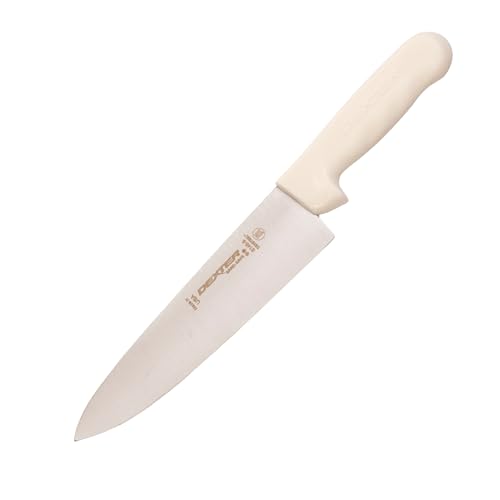
At 0.45 pounds, the Dexter-Russell is the lightest knife here (3.1 times lighter than the KYOKU’s 1.4 pounds) and was originally built for high-volume commercial kitchens where durability matters more than beauty. It is NSF certified, meaning it meets professional sanitation standards, and its high-carbon stainless steel blade keeps an edge that shoppers say “slices tough rib bones easily.”
What you give up: the handle is hard polypropylene with a textured grip that some reviewers describe as “bubbled and cheap feeling” compared to the Victorinox’s soft Fibrox. It also lacks the visual appeal of a Damascus pattern or wood handle. But for home cooks who want a beater knife they can abuse without guilt — or for anyone working in a commercial setting — this knife outperforms its tiny price tag by a mile.
This is the exact pick for budget-conscious buyers who care about edge sharpness and sanitation and could not care less about how the knife looks in a knife block. If you need a reliable, lightweight workhorse that can handle tough cuts, this is your choice.
What we like
- Exceptional sharpness right out of box — slices rib bones easily
- NSF certified for professional kitchen sanitation standards
- Lightweight (0.45 lbs) and easy to handle all day
The downsides
- Handle feels plasticky and cheap to some users
- Not dishwasher safe despite commercial rating
- No guard or sheath included for safe storage
Understanding the Specs
Rockwell Hardness (HRC)
This number tells you how hard the steel is — a higher HRC (like 60-61 on the Miyabi) means the blade stays sharp longer but is more brittle and can chip if you twist it against bone. Lower HRC (like 57 on the ZWILLING) means the blade is tougher and less likely to chip but needs more frequent honing. For a chef knife under 200, 58-60 HRC is the sweet spot: you get good edge retention without the fragility of ultra-hard Japanese steel.
Forged vs. Stamped
A forged blade is hammered from a single piece of hot steel, making it denser and heavier with a thicker spine that powers through tough ingredients. A stamped blade is laser-cut from a steel sheet, making it lighter, thinner, and more agile for fast repetitive cuts. Forged knives cost more to produce but offer better balance; stamped knives like the Victorinox deliver 90% of the performance at half the cost and weight.
Edge Angle
The angle at which each side of the blade is sharpened determines how the knife cuts. Japanese knives (Miyabi, KYOKU) use a 9.5- to 15-degree angle per side — thinner, sharper, and better for clean slices through vegetables and fish. German knives (ZWILLING, WÜSTHOF) use a 15- to 20-degree angle per side — thicker, more durable, and better for rocking cuts like chopping herbs. A thinner edge cuts with less effort but dulls faster; a thicker edge lasts longer but requires more force.
Handle Material
The handle material affects grip, comfort, and maintenance. Fibrox (Victorinox) is a textured synthetic that stays tacky when wet — ideal for slippery hands. Micarta (Miyabi) and G10 (KYOKU) are dense composites that resist heat, cold, and moisture, offering a secure grip during long prep. Wood handles (Made In) look beautiful but require oiling and cannot go in the dishwasher. Polypropylene (Dexter-Russell) is easy to sanitize but can feel hard or cheap to some users.
FAQ
Is a harder steel blade always better for a chef knife?
Can I put my chef knife in the dishwasher?
What is the difference between German and Japanese chef knives?
How often should I sharpen my chef knife?
What does “forged” mean and is it worth paying more for?
Final Thoughts: The Verdict
Across the board, the chef knife under 200 winner is the KYOKU Shogun Series 8″ because it packs a VG-10 steel core, forged Damascus construction, and a hefty 58-60 HRC edge into a package that outperforms knives twice its price. If you want a lighter, dishwasher-safe forged blade that handles heavy abuse, grab the ZWILLING Professional S 8″. And for the budget-aware cook who needs pro-level sharpness without spending much, the standout is the Victorinox Fibrox Pro.

Mo Maruf
I created WellFizz to bridge the gap between vague wellness advice and actionable solutions. My mission is simple: to decode the research and give you practical tools you can actually use.
Beyond the data, I am a passionate traveler. I believe that stepping away from the screen to explore new environments is essential for mental clarity and physical vitality.