A sore backside after your daily commute isn’t a badge of honor — it’s a sign your saddle doesn’t fit you. The right seat should disappear beneath you, letting you focus on the road, not the ache. This guide cuts through the cushioning and cutout claims to find the actual seat that supports your sit bones, protects your soft tissue, and handles weather, all without breaking your routine or your budget.
I’m Mohammad Maruf — the co-founder and writer behind WellFizz. This guide is built by comparing the manufacturers’ published specifications and the patterns across verified customer reviews, so you get each pick’s real strengths and trade-offs instead of marketing spin.
Whether you are fighting numbness on a long ride or just want a pain-free trip to work, the best commuter bike saddle is the one that fits your body shape, riding style, and local weather without making you feel like you are sitting on a park bench.
How To Choose The Best Commuter Bike Saddle
The wrong saddle can turn a 15-minute commute into a misery. Here is what matters when you are shopping for a seat that you will sit on every single day, in all weather, often in regular clothes.
Match the saddle to your riding position
Commuter bikes usually put you in an upright or slightly leaned-forward posture. A saddle designed for a racing tuck (nose-diving forward) will press the wrong spots on your sit bones when you are sitting upright. Look for a saddle shape that matches how you actually sit on your bike — flat or slightly scooped profiles usually work best.
Know your sit bone width, not your pant size
Your sit bones (the two hard points at the bottom of your pelvis) carry your weight on the saddle. Many saddles now come in multiple widths. Measuring your sit bone distance at home is simple: sit on a piece of corrugated cardboard on a hard chair, stand up, and measure the distance between the two deepest indentations. Add roughly 20 mm to that number for your ideal saddle width.
Padding type determines long-ride comfort
Memory foam molds to your shape but can pack down over months. Gel padding absorbs vibration well but tends to be heavier. Vulcanised natural rubber (used by Brooks Cambium) acts as a shock absorber without any padding layer — it flexes with your movement. Polyurethane (PU) padding is a middle ground: supportive and durable without excess weight.
Relief channels vs cutouts
A pressure-relief channel is a groove down the center of the saddle that reduces pressure on the perineal area (the soft tissue between your sit bones). A cutout is a full hole through the saddle shell. Both aim to prevent numbness and improve blood flow. Cutouts offer more ventilation but can feel like a gap if the saddle is too narrow for your frame.
Weather resistance is non-negotiable for commuters
Your saddle lives outdoors. Waterproof covers (like Selle Royal’s Royal Vacuum technology that makes the saddle fully sealed) and all-weather materials (like Brooks’s vulcanised rubber) prevent the seat from becoming a waterlogged sponge after a rainstorm. Leather saddles need periodic treatment with a weatherproofing wax to survive wet commutes.
Quick Comparison
On smaller screens, swipe sideways to see the full table.
| Model | Category | Best For | Key Spec | Amazon |
|---|---|---|---|---|
| Selle Royal Respiro Relaxed | Mid-Range | Ventilation & heat relief | Royal Gel + 25°C cooler cover | Amazon |
| Width Adjustable HUGEOAKS | Mid-Range | Adjustable width for fit | 3 settings, 352 lb capacity | Amazon |
| SMP Selle TRK Medium | Premium | Numbness prevention | 280 x 160 mm, 395 grams | Amazon |
| Brooks England Cambium C17 | Premium | All-weather durability | Vulcanised natural rubber | Amazon |
| Serfas RX Saddle | Mid-Range | Split-saddle pressure relief | 0.5 kg, twin-bar flex | Amazon |
| Brooks England B67 | Premium | Upright classic touring | Leather + suspension springs | Amazon |
| Sunlite Cloud-9 | Budget | Max cushion on a budget | Multi-stage memory foam | Amazon |
In‑Depth Reviews
1. Selle Royal Respiro Relaxed

The Selle Royal Respiro Relaxed is the top pick because its ventilation channel keeps the seat surface 25°C cooler than a standard black saddle, and it is for commuters who prioritize a cool, dry, pressure-free ride. Its anatomically designed cutout lets air flow through to reduce perineal pressure, while Royal Gel padding absorbs vibration and spreads your weight across the saddle surface.
The cool cover reflects sunlight to keep the seat surface 25°C cooler than a standard black saddle — a real difference if you lock your bike outside in the sun. It weighs 0.97 kilograms, which is heavier than the Serfas RX (0.5 kg) by nearly double, so you do feel the heft. But the catch is day-long comfort without sweat buildup. Buyers report the narrow shape is comfortable for bony behinds and the vent works well for male anatomy, though one rider noted they still felt their butt after 18 miles and took short breaks.
Scuff guards on the sides protect the saddle when you lean the bike against a wall, and the Royal Vacuum seal makes it fully waterproof. For the rider who wants a cool, dry, pressure-free commute, this is the one.
Why it’s great
- Ventilation channel reduces heat and pressure
- Cool cover keeps 25°C cooler in sun
- Fully waterproof construction
Good to know
- Heavier than many competitors
- Narrow shape may not suit wider sit bones
2. Width Adjustable HUGEOAKS Bike Seat

Compared to the top-pick Selle Royal, the HUGEOAKS saddle offers three width settings (7.08, 7.87, and 8.66 inches) versus the Selle Royal’s single size, giving you a precise fit for your sit bone width. The 304 spring steel arc hardware provides strong support and absorbs bumps on rough terrain.
One reviewer noted riding a 25-mile trip with no tailbone or sciatica pain and full sit bone support. The thickened high-density memory foam padding prevents your sit bones from hitting the hard plastic shell on bumpy roads. It supports up to 352 pounds and comes with a one-year warranty.
Choose the HUGEOAKS over the Selle Royal if you have struggled to find a saddle that fits your sit bone width, or if you share a bike with a partner who sits differently than you do.
Where it shines
- Three width settings for custom fit
- High-density memory foam padding
- Supports up to 352 pounds
Worth noting
- Slightly heavier due to adjustable mechanism
- Nose could be narrower to prevent chafing
3. SMP Selle TRK Medium

If numbness is your primary complaint, the SMP Selle TRK Medium is a targeted solution. It has a large central cutout and a dropped nose design — meaning the front tip slopes downward — which relieves pressure on the perineal nerves. The dimensions are 280 x 160 mm, making it a medium-width saddle suitable for most commuters, and it weighs just 395 grams (0.87 lb).
The polyurethane gel padding is firmly supportive rather than plush. One buyer mentioned that the firm saddle eliminated crotch numbness completely but the dipped tip can cause thigh chafing with shorter shorts, so plan your wardrobe accordingly. The polypropylene shell and steel rails are durable, with buyers reporting the seat lasting 5 years before needing replacement.
The dropped nose design is its defining feature — it creates stability and support in an upright commuting position while keeping pressure off the nerves that cause numbness.
What stands out
- Large central cutout for nerve relief
- Dropped nose stabilizes riding position
- Lightweight at 395 grams
The trade-offs
- Firm padding — not plush cushioning
- Dropped tip can chafe thighs with shorts
4. Brooks England Cambium C17

Vulcanised natural rubber sets the Cambium C17 apart from every other saddle on this list. There is no foam or gel pad — the entire saddle top is rubber harvested from trees, which flexes with your movement and absorbs shocks from rough pavement. It is also virtually waterproof, so you never worry about rain soaking into a foam pad.
Owners mention zero break-in needed: it is comfortable straight out of the box, even without padded shorts. One rider on a Surly Straggler with 200 miles reported no discomfort. The rubber surface provides grip without damaging your clothing. It survived a downpour without any issues. The dimensions are 14 x 10 x 3 inches, and it weighs 1 pound.
There is no padding here — the C17 is firmer than a gel saddle. But the suspension comes from the rubber flexing, which actually eliminates the need for what one reviewer called “butt conditioning” rides.
The upsides
- No break-in period
- 100% waterproof without needing covers
- Rubber flex absorbs road shock naturally
Keep in mind
- Firm feel — not plush like a gel saddle
- May need slight upward tilt for best comfort
5. Serfas RX Saddle

The Serfas RX gives you a split saddle design with independent lobes that move separately under each sit bone, plus a twin-bar flex system that lets each side move independently to eliminate the pressure a single solid base creates. At only 0.5 kilograms (1.1 lb), it is significantly lighter than the Selle Royal Respiro at 0.97 kilograms — a 1.9x weight difference.
Customers note that the split saddle provides independent lobe support and eliminated numbness on 30-mile e-bike rides. A 6’1″/158 lb rider (data from a real review) on a Trek SuperCommuter 8+ with a Kinekt seatpost praised the comfort. The gel padding is supplemented by the split design, so you get both cushioning and movement. The vinyl outer material is waterproof and easy to wipe clean.
The downside is that the split design can feel unusual at first, and one owner reported he had replaced three saddles on his e-bike before settling on the Serfas. It is a specialized shape, not for everyone, but for those it fits, it works exceptionally well — making this the perfect budget buy for the e-bike commuter who has tried multiple saddles and needs independent sit-bone movement to eliminate numbness on long rides.
Why we’d pick it
- Split lobes move independently with sit bones
- Very lightweight at 0.5 kg
- Gel padding plus twin-bar flex
A few caveats
- Split saddle takes getting used to
- Men’s version may fit women better (and vice versa)
6. Brooks England B67
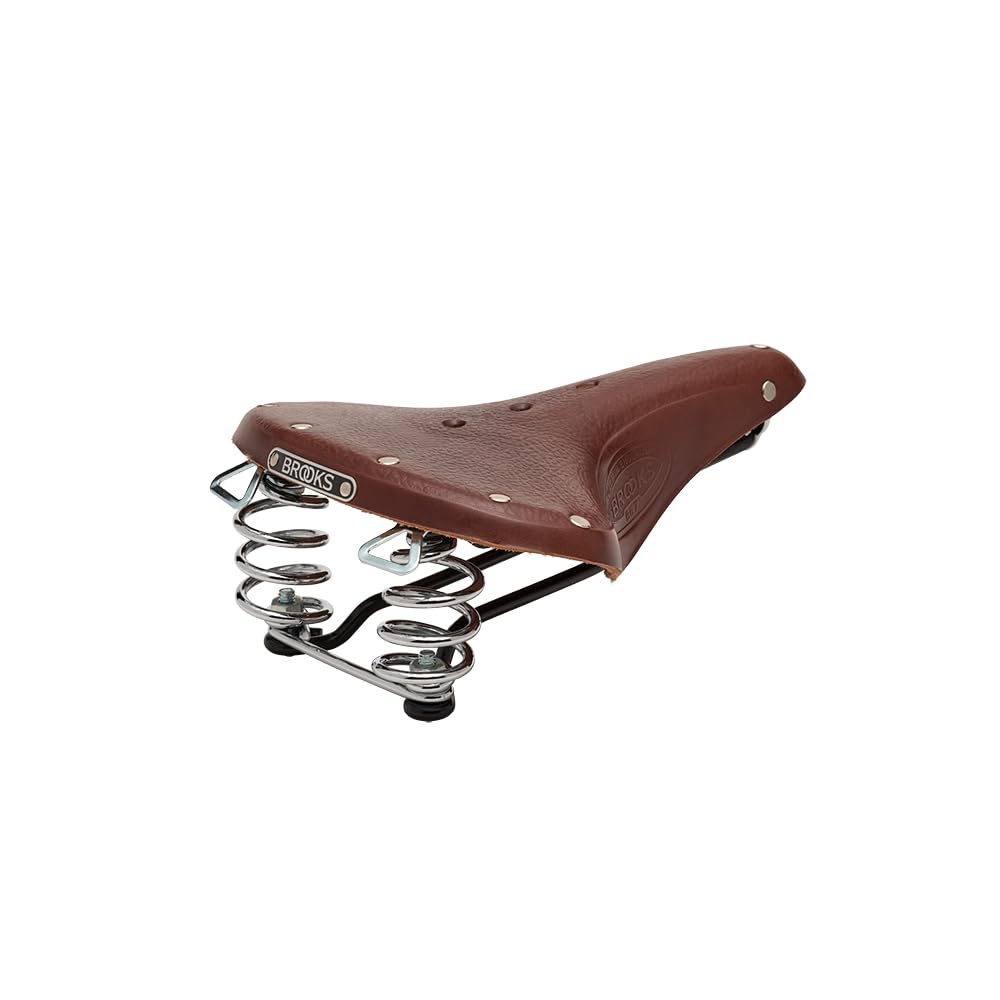
The upright commuter who prizes handcrafted tradition and long-term durability will find a perfect match in the Brooks B67. It features a wide rear portion and classic suspension springs that absorb large bumps, and it is made in England from vegetable-tanned leather with black steel rails and tubular steel rivets, carrying a 100-year-old heritage.
At 2.9 pounds (1.3 kg), the B67 is significantly heavier than the Cambium C17 at 1 pound, and it requires a break-in period where the leather molds to your sit bones. One customer observed that initially they thought it was too hard, but after a few rides it became extremely comfortable. The saddle requires Proofide treatment and a rain cover for weather protection, and it is designed for upright riding only — leaning forward in a hunched position causes discomfort.
The one reason to choose the B67 over the C17 is the sprung suspension: the springs under the leather top absorb bumps that would otherwise travel straight into your spine, making it ideal for hardtail bikes or rough urban roads. However, be aware that its weight and need for regular maintenance may not suit riders seeking a low-fuss, lightweight saddle.
Strong points
- Classic leather molds to your sit bones
- Suspension springs absorb big bumps
- Handmade in England with traditional materials
Before you buy
- Requires break-in and weather treatment
- Only comfortable on upright bikes
7. Sunlite Cloud-9 Comfort Saddle

At its entry-level price, the Sunlite Cloud-9 gets you multi-stage memory foam that is ergonomically shaped to distribute your body weight evenly, making it the most affordable option in this guide for riders who prioritize immediate plushness over premium materials. It has steel rails that absorb road vibrations, a comfort cutout for perineal relief, and a waterproof cover for all-weather riding. The dimensions are 14.5 inches long, 9.5 inches wide, and 5 inches tall — that is 71% more width and height than the Selle Royal Respiro.
What you give up is the premium materials and precise engineering of the pricier options. Reviewers point out that the Cloud-9 has “good cushioning but too narrow for larger bottoms.” The foam can feel thick and cushy, but it lacks the targeted support of a gel or rubber saddle. It is best for short to moderate commutes and for riders who prefer a plush feel over performance.
The Sunlite Cloud-9 is perfect for the budget-conscious commuter who wants immediate softness without spending much. It is a comfort-first seat for gentle upright riding on paved roads, and the one clear reason to choose it is its unmatched value for a plush, all-weather saddle at the lowest price point in this guide.
What we like
- Plush multi-stage memory foam cushioning
- Waterproof cover for wet weather
- Comfort cutout for nerve pressure relief
The downsides
- Narrow shape for riders with wider sit bones
- Foam may pack down over time with heavy use
Understanding the Specs
Sit Bone Width vs Saddle Width
Your sit bones are the two bony points at the base of your pelvis — they carry your entire seated body weight on a bike saddle. Measure between them by sitting on corrugated cardboard on a hard chair, standing up, and measuring the gap between the deepest dents. Add about 20 mm for your ideal saddle width. A saddle that is too narrow lets your sit bones slide off the edges; one too wide causes chafing on your inner thighs.
Relief Channel vs Full Cutout
A relief channel is a groove molded into the saddle pad that runs down the center to reduce pressure on the perineal area (the soft tissue between your sit bones). A full cutout is a complete hole through the saddle shell. Both prevent numbness and improve blood flow. Cutouts offer better ventilation but can create a pressure ridge on the edges. Channels are gentler but offer less airflow. Your choice depends on personal anatomy and how far forward you lean while riding.
Padding Types: Gel vs Foam vs Rubber
Gel padding (Selle Royal, Serfas) absorbs vibration well but is heavier. Memory foam (Sunlite Cloud-9) conforms to your shape but packs down over time with regular use. Vulcanised natural rubber (Brooks Cambium) has no padding layer — it flexes as you move, absorbing shock without compressing. There is no single “best” type: plush foam is comfortable for short rides, gel suits long, steady commutes, and rubber works for all-weather riders who never want their saddle to degrade.
Weight and Rail Material
Heavier saddles (over 1 kg) absorb more vibration but add weight to your bike. Lighter saddles (under 0.5 kg) are better for carrying up stairs or on multi-modal commutes. Steel rails are the standard for commuter saddles — strong, reliable, and work with most seatposts. Chromoly rails are lighter but cost more. Avoid carbon rails on a commuter saddle unless your seatpost specifically requires them.
FAQ
How do I measure my sit bone width at home?
Why does my saddle hurt even with thick padding?
Can I use the same saddle for my road bike and my commuter bike?
How often should I replace my commuter bike saddle?
Do I need a saddle with springs for a comfortable commute?
Final Thoughts: The Verdict
For most commuters, the best commuter bike saddle winner is the Selle Royal Respiro Relaxed because it combines ventilation, cooling, waterproofing, and Royal Gel comfort in one balanced package that works for daily use. If you need an adjustable width to fit your exact sit bone measurement, grab the HUGEOAKS Width Adjustable Saddle. And for all-weather durability with zero break-in, the Brooks Cambium C17 is the best long-term investment that will outlast the bike itself.

Mo Maruf
I created WellFizz to bridge the gap between vague wellness advice and actionable solutions. My mission is simple: to decode the research and give you practical tools you can actually use.
Beyond the data, I am a passionate traveler. I believe that stepping away from the screen to explore new environments is essential for mental clarity and physical vitality.