You bought that cedar fence or deck for its rich reddish-brown look, not the tired silvery gray it turns after a season in the sun. A clear stain is supposed to stop that without hiding the wood’s natural grain — but most either peel, fade too fast, or change the color more than you expected. This guide compares five transparent options using manufacturers’ specs and real customer feedback, so you pick the one that keeps your cedar looking like cedar.
I’m Mohammad Maruf — the co-founder and writer behind WellFizz. This guide is built by comparing the manufacturers’ published specifications and the patterns across verified customer reviews, so you get each pick’s real strengths and trade-offs instead of marketing spin.
After sorting through the specs and real-world feedback, here is the best clear stain for cedar that actually delivers on its promises without the peeling or muddied grain.
How To Choose The Best Clear Stain For Cedar
Picking a clear stain for cedar is less about color and more about what kind of protection layer you want. The wrong choice means peeling within months, a color shift you did not expect, or re-doing the job every season. Here is what actually matters.
Transparent vs. Semi-Transparent vs. Solid
A transparent stain has very fine pigments that let the wood grain show through completely — it tints the wood slightly but does not form a thick film on top. A semi-transparent stain hides more of the grain and sits heavier on the surface. Solid stain is basically paint. For cedar, transparent is the right call if you want natural beauty; just know that it offers less UV protection than a semi-solid, so reapplication comes sooner.
Oil-Based vs. Water-Based
Oil-based stains soak deep into the cedar fibers, so they do not peel or crack — they fade gradually instead. Water-based stains sit more on the surface and can peel if not applied perfectly. For outdoor cedar that expands and contracts with weather, oil-based is almost always the safer bet. But water-based dries faster and cleans up with soap.
Coverage and Porosity
A rough, weathered cedar fence can drink a gallon in half the area a smooth new deck would cover. Most cans say 150 to 400 square feet per gallon — assume the lower end for old, dry wood. Buy an extra gallon if you are unsure; running out mid-project ruins the consistency.
UV and Water Resistance
Cedar turns gray because of UV rays, not just moisture. A good clear stain should have UV blockers in the formula. Look for language like “fade resistant” or “UV protection” in the specs. For water resistance, the standard is ASTM D-4446 — a test that measures how much water the treated wood absorbs. Thompson’s explicitly mentions exceeding this standard.
Quick Comparison
On smaller screens, swipe sideways to see the full table.
| Model | Category | Best For | Key Spec | Amazon |
|---|---|---|---|---|
| Wolman 14416 F&P | Oil-Based | Long-lasting protection on decks & siding | 150–200 sq. ft/gal coverage | Amazon |
| Wood Defender 200 Series | Transparent | Fast-cure application for walkable surfaces | 128 fl oz (1 gallon) | Amazon |
| Penofin Transparent | Penetrating Oil | Cedar fences in wet climates like the PNW | High coverage per gallon | Amazon |
| Thompson’s WaterSeal | Waterproofing | Quick, easy application on damp wood | 150–400 sq. ft/gal | Amazon |
| Wood Defender 5-Gal Fence | Professional-Grade | Large fence projects & sprayer application | 5 gallons, 100-150 sq. ft/gal | Amazon |
In‑Depth Reviews
1. Wolman 14416 F&P Oil-Based Wood Finish & Preservative Transparent Stain, Gallon, Cedar
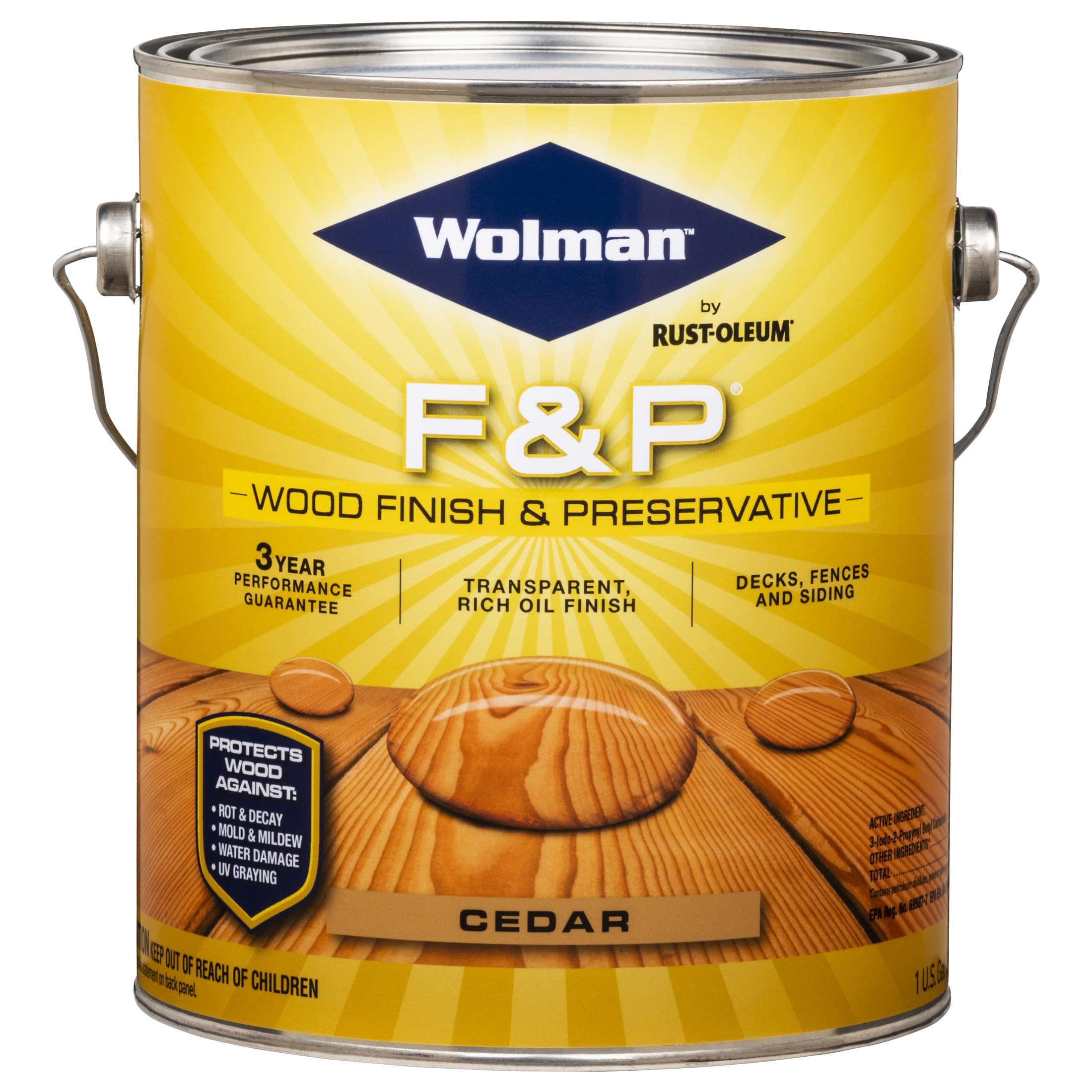
With 150–200 square feet of coverage per gallon and a deep-penetrating oil base that won’t peel or crack, this Wolman formula is for anyone who wants long-lasting protection on cedar without a glossy film. It creates a water-repellent layer that buyers report “stands up well to water, sun and other elements” for years on cabins and decks, preserving cedar’s natural matte look.
The mildew-resistant formula fights mold on shaded fences or damp surfaces, and one long-time user reports using it for over 20 years, calling it “unmatched” as an all-in-one. The honest trade-off is that oil-based takes longer to dry than water-based options—plan for a full day between coats—whereas a wet-climate fence treated with Penofin needs water repellency reapplied every 6 months, while Wolman owners mention years of protection before re-coating. This one is for you if durability matters more than speed, and you’d skip it if you need a same-day-cure product for a walkable deck.
For cedar that stays protected and natural-looking season after season, this is the clear top pick.
Why it’s great
- Deep-penetrating oil base prevents peeling and cracking
- Mildew resistant for damp, shaded wood surfaces
- Proven 20-year track record in cold, wet climates
Good to know
- Oil-based formula takes longer to dry than water-based options
- Coverage is on the lower end at 150–200 sq. ft per gallon
2. Wood Defender 200 Series Cedar Tone Transparent Stain & Sealer Gallon
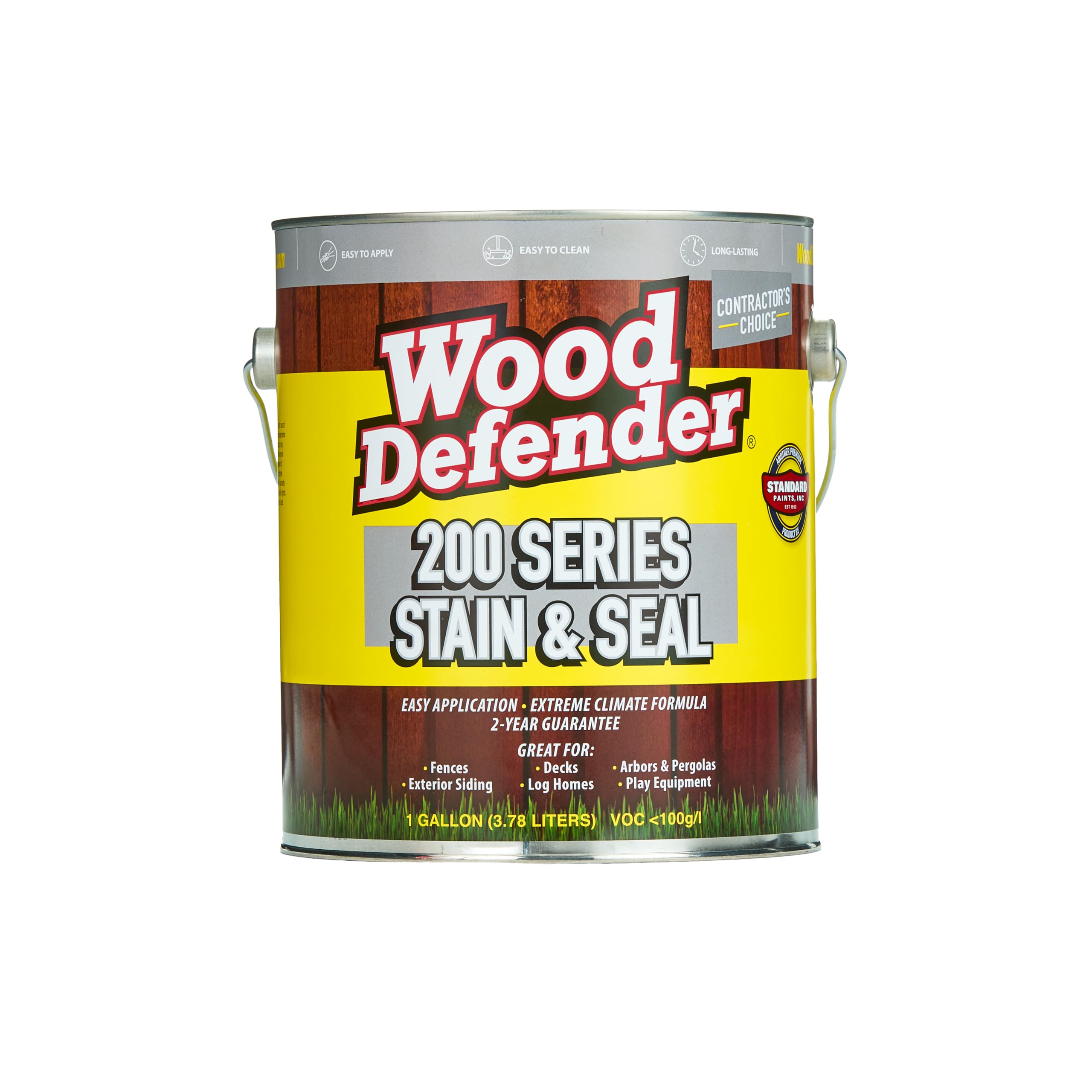
This stain cures faster than the Wolman, which means you can walk on your deck or re-furnish it the same day — a real advantage for high-traffic surfaces. It also contains additives that prevent graying (that silvery UV damage) during the stain’s life, which is the number one complaint about transparent finishes on cedar.
One reviewer applied two coats on treated pine and said it “brings the color very close to cedar,” noting the first coat soaks in fast while the second takes longer — a sign the wood is saturating well. After drying, water beads up on the surface, which tells you the water repellency is working. The 128-fluid-ounce gallon is priced higher per ounce than budget options, but customers note it is “absolutely worth its price” because the color stays accurate and the finish holds up for about two years between re-coats.
pass on it if you’re on a tight budget per gallon; choose it over the Wolman if you need to use the deck the same day you stain it. The only nitpick from reviewers is the lack of a pouring spout on the container — you will want a funnel or a separate spout to avoid drips.
Where it shines
- Cures faster than typical oil stains, ideal for decks you walk on
- Formulated to resist UV graying during the stain’s lifespan
- Excellent water beading after application, per real buyer reports
Worth noting
- Container lacks a pouring spout, making transfer messy
- Premium price per gallon compared to entry-level stains
3. Penofin Transparent Penetrating Oil Finish Stain & Sealer 1 Gallon Cedar
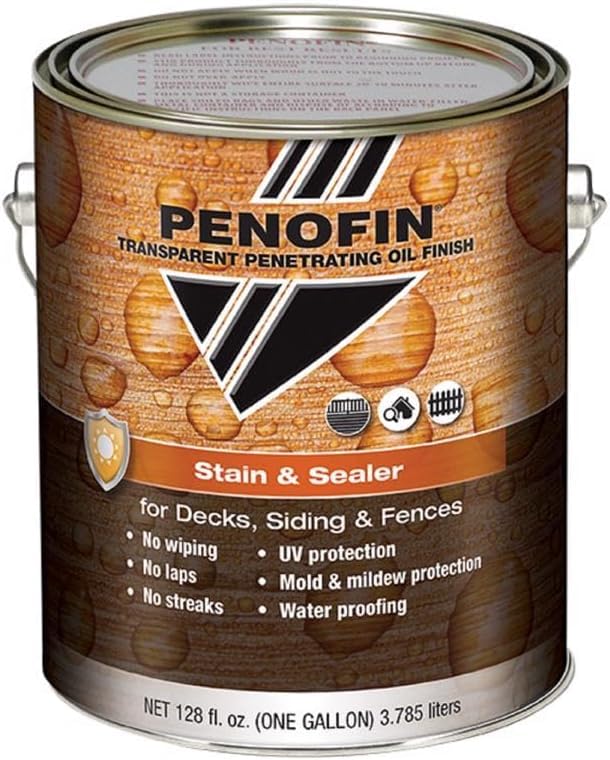
Say you have a weather-beaten cedar fence in the Pacific Northwest that has gone gray after years of rain. You want to revive it without scraping off old layers of coating. That is exactly the scenario one real buyer described: “PNW cedar fence revived. Water repellency lasts ~6 months; color fades over 2 years. No coating, no scraping.” Penofin is a penetrating oil finish, meaning it soaks in rather than forming a separate film, so you never have to deal with peeling.
The low-odor formula means you are not choking on solvent fumes while working near your house. Application is straightforward: brush or spray on, let it sit, then wipe off the excess after about 15–30 minutes (the instructions could be clearer here, as one reviewer learned after a spill). A second application goes on more evenly since the wood is already saturated. One thing cedar lovers should know: the color leans orange on fence pickets — one reviewer’s wife felt it looked “somewhat orange,” though he liked it. If you want a neutral cedar tone like the Wood Defender 200 Series offers, this may not be it. But for raw, weathered wood that needs deep oil nourishment without a full strip-and-start-over project, Penofin excels.
it’s not for you if an orange tint would bother you or if you want water repellency to last longer than 6 months.
What stands out
- Penetrating oil finish means zero peeling or scraping down the line
- Low odor compared to traditional solvent-based stains
- Perfect for reviving weathered wood without heavy prep work
The trade-offs
- Color can appear orange on cedar, not a neutral cedar tone
- Water repellency lasts only about 6 months, per real users in wet climates
4. Thompson’s WaterSeal Transparent Waterproofing Wood Stain and Sealer, Natural Cedar, 1 Gallon

The single number that matters most in this category is water resistance, and Thompson’s WaterSeal scores a pass on ASTM D-4446 — the only product here that explicitly states it exceeds that industry standard for water repellency. That matters because a clear stain that fails to keep moisture out will let your cedar rot, warp, or grow mold within a single wet season.
The catch you accept with Thompson’s is that “transparent” here comes with more tint than you might expect. Multiple buyers warned that the Natural Cedar color is stronger than it looks on the shelf — one reviewer noted it was “more tinted than I thought” and another on mahogany called the change “drastic.” If you want truly invisible protection like the Penofin offers on raw wood, this is not it. But if you want a waterproof shield with some color enhancement, it delivers. The upside is speed and ease: you can apply it to damp wood (rare in this category), it dries fast, and cleanup is simple with soap and water since the advanced polymers make it water-based. Coverage ranges from 150 to 400 square feet per gallon depending on how thirsty your wood is, so a single gallon can go a long way on a smooth fence. Pick this over the Wolman if you need to stain damp wood or want the fastest possible application, and look elsewhere if you want a purely clear finish with no tint.
For the price, you get a gallon that covers up to 400 square feet and meets a formal water-repellency standard — a strong value if your priority is moisture protection over an invisible finish.
The upsides
- Exceeds ASTM D-4446 industry standard for waterproofing wood
- Can be applied to damp wood — flexible timing for outdoor projects
- Dries fast and cleans up easily with soap and water
Keep in mind
- Transparent finish is more tinted than expected; not purely clear
- Water-based formula may not penetrate as deeply as oil alternatives
5. Wood Defender Transparent Fence Wood Stain and Seal in One, Oil-Based, 5-Gallon
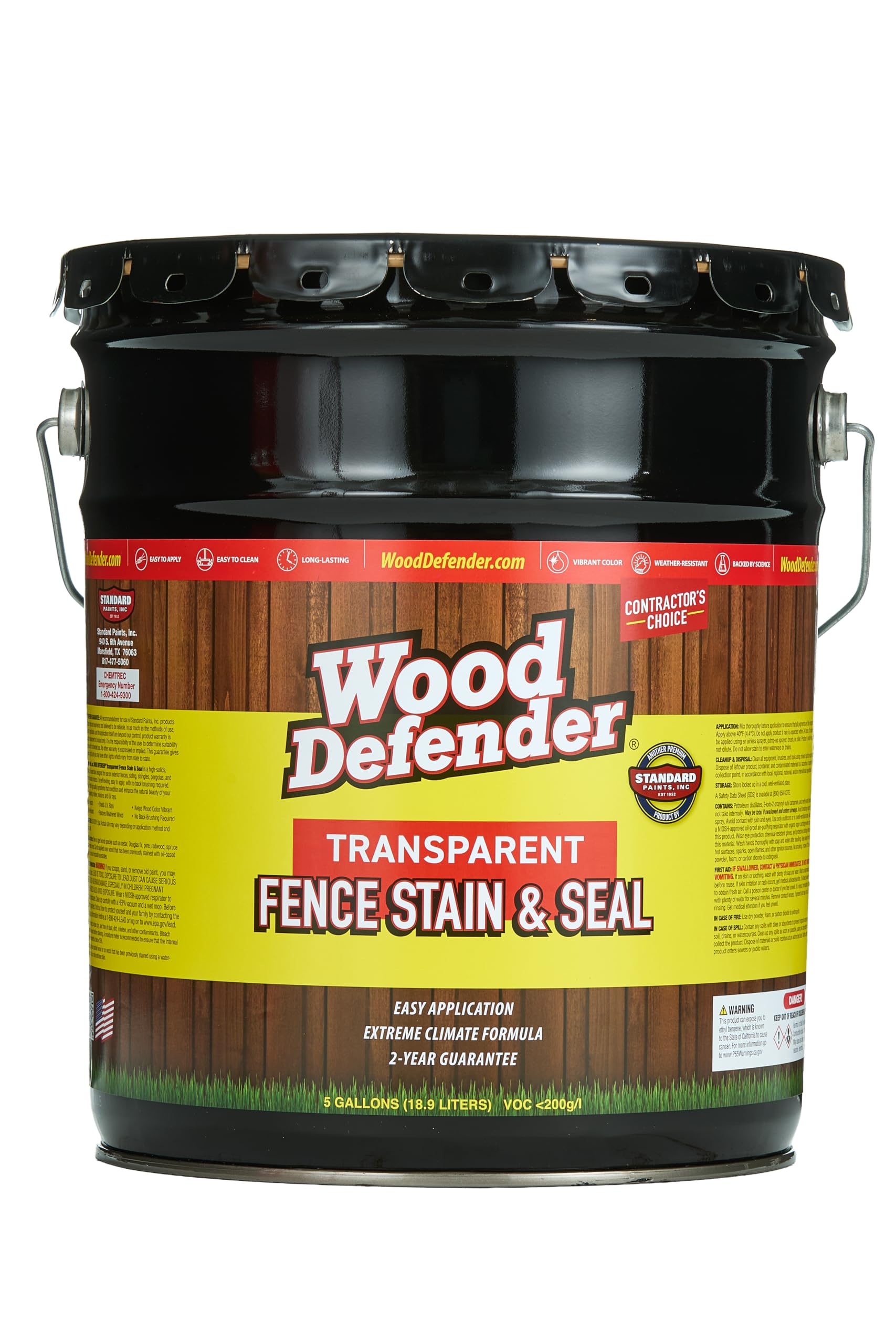
What you actually get at this lower price is an oil-based penetrating sealer that goes on smoothly with a sprayer (a Harbor Freight-type sprayer works great, reviewers point out) with no runs, drips, or need for back-brushing. The “Clear Glow” color is genuinely transparent — it uses ultra-fine pigments to highlight grain rather than tint it.
One reviewer who applied 20 gallons in a year said it keeps a 20-year-old fence looking new with reapplication every 4 years. For context, that beats the 6-month water repellency of the Penofin by a massive margin. At roughly 100 to 150 square feet per gallon, you need 12 gallons for a standard 200-foot fence (one reviewer used 12, another recommended 20 for a thirsty fence). The 5-gallon pail means fewer trips to the store and consistent color across the entire project because every drop came from the same batch.
The Wolman is a better choice if your project is under 500 square feet; this Wood Defender pail is for you only if you are covering a large fence or multiple structures — making it the exact budget buyer it is perfect for: someone tackling 200 linear feet or more who wants professional-grade, oil-based protection at a bulk price.
Why we’d pick it
- 5-gallon pail covers massive fence projects in one purchase
- Sprays on smoothly with no runs, drips, or back-brushing needed
- Real shoppers say 4-year reapplication cycles, far above average
A few caveats
- Overkill for small fences or single-deck projects under 500 sq ft
- Thirsty old wood may absorb more than the label’s coverage estimate
Understanding the Specs
Transparent Finish
A transparent finish uses very fine pigments that tint the wood slightly but let the natural grain show through completely. Do not confuse it with “clear” — transparent still adds some color; it just does not hide the texture. If you want zero color change, you need a truly clear sealer, which is rare. Most “clear” stains for cedar are actually transparent.
Coverage (sq. ft/gal)
This is the area one gallon can cover in a single coat. Smooth, new wood falls on the high end (350–400 sq ft); rough, weathered, or highly porous cedar can drop to 100–150 sq ft. Always buy 10% extra for rough wood. A 5-gallon pail like the Wood Defender covers roughly 500 to 750 square feet depending on porosity.
Oil-Based vs. Water-Based
Oil-based stains penetrate the wood fibers, forming a flexible bond that moves with the wood as it expands and contracts. They do not peel — they just fade. Water-based stains sit on the surface as a thin film, which is why they can peel if applied wrong. Water-based dries faster, but oil-based lasts longer on horizontal surfaces like deck boards.
Water Repellency (ASTM D-4446)
This is a lab test that measures how much water a treated wood sample absorbs compared to untreated wood. Thompson’s WaterSeal explicitly says it exceeds this standard. If you live in a rainy area or have wood near sprinklers, prioritizing a stain that mentions this standard is a smart move.
FAQ
How often do I need to reapply a clear stain on cedar?
Can I apply a clear cedar stain over old paint or solid stain?
Will a clear stain turn my cedar orange?
Final Thoughts: The Verdict
For most buyers, the best clear stain for cedar is the Wolman 14416 F&P because it combines deep oil penetration, mildew resistance, and a proven track record of lasting through cold, wet conditions without peeling. If you want a faster-curing stain that handles foot traffic on a deck, grab the Wood Defender 200 Series. And for reviving a weathered fence without the headache of scraping old coatings, the Penofin is your best bet for a no-peel, penetrating oil finish.

Mo Maruf
I created WellFizz to bridge the gap between vague wellness advice and actionable solutions. My mission is simple: to decode the research and give you practical tools you can actually use.
Beyond the data, I am a passionate traveler. I believe that stepping away from the screen to explore new environments is essential for mental clarity and physical vitality.