Our readers keep the lights on and my smoothie glass nicely filled. As an Amazon Associate, I earn from qualifying purchases.
You want a compact camera under $500 that takes sharp, versatile images without the bulk of an interchangeable-lens system and without the low-light frustration of your phone. The real question you face is whether you need a massive optical zoom for distant wildlife, a 1-inch sensor for smooth video and blurry backgrounds, or a pocket-sized point-and-shoot for everyday travel snaps. This guide cuts through the spec-sheet noise to match you with the camera worth your money.
I’m Mohammad Maruf — the co-founder and writer behind WellFizz. This guide is built by comparing the manufacturers’ published specifications and the patterns across verified customer reviews, so you get each pick’s real strengths and trade-offs instead of marketing spin.
You will find the right compact camera under $500 for your specific needs and budget here.
How To Choose The Best Compact Camera Under $500
An affordable point-and-shoot is a big decision because it is meant to replace your phone for photos and videos. Your main choices boil down to sensor size, zoom reach, and what kind of shooting you do most—travel, vlogging, wildlife, or just daily life.
Sensor Size: The Real Image Quality Driver
The sensor is the part of the camera that captures light. A larger sensor (measured in inches) soaks up more light, which gives you better photos in dim settings, more realistic background blur, and richer colors. In this price range, cameras typically have either a 1-inch sensor (like the Sony ZV-1F and DJI Osmo Pocket 3) or a smaller 1/2.3-inch sensor (like the Canon ELPH 360). A 1-inch sensor has roughly four times the surface area of a 1/2.3-inch sensor, so the difference in low-light quality and depth of field is significant—skip the megapixel count and check the sensor size first.
Optical Zoom vs. Digital Zoom
Optical zoom uses the camera’s lens to physically move glass and magnify a distant subject, so you get a closer shot without losing any picture quality—this is the real zoom that matters. Digital zoom simply crops and enlarges the image inside the camera, which makes your photos look pixelated and blurry. If you shoot wildlife, sports, or concerts, look for an optical zoom of at least 12x (like the Canon ELPH 360) or the massive 42x or 60x offered by the Nikon P510 and Panasonic FZ80D. For vlogging and everyday use, a fixed wide-angle lens like the Sony ZV-1F’s 20mm is more useful because it captures a wide scene without needing to step back.
Video Features: Frame Rate, Stabilization, and Autofocus
If you plan to record video, look for 4K resolution at 30 frames per second (fps) as a baseline, but 4K at 120fps (offered by the Xtra Muse and DJI Osmo Pocket 3) gives you the ability to create smooth slow-motion footage. Image stabilization is critical for getting smooth handheld video without the bouncy, seasick effect—cameras with a 3-axis gimbal (Xtra Muse, DJI Osmo Pocket 3) are dramatically smoother than those relying only on electronic or optical stabilization. Fast autofocus points, like the 425 points on the Sony ZV-1F, keep you or your moving subject in sharp focus without hunting back and forth.
Quick Comparison
On smaller screens, swipe sideways to see the full table.
| Model | Category | Best For | Key Spec | Amazon |
|---|---|---|---|---|
| Sony ZV-1F | Premium | Vlogging & content creation | 1-inch sensor, 425 autofocus points, 20mm lens | Amazon |
| DJI Osmo Pocket 3 | Premium | Ultra-smooth 4K vlogging | 1-inch sensor, 3-axis gimbal, 4K/120fps | Amazon |
| Xtra Muse | Mid-Range | Budget vlogging with gimbal stabilization | 1-inch sensor, 3-axis gimbal, 4K/120fps | Amazon |
| Nikon COOLPIX P510 | Mid-Range | Long-zoom nature & travel shots | 42x optical zoom, 16.1 MP sensor | Amazon |
| Panasonic LUMIX FZ80D | Value | Super-zoom wildlife & sports | 60x optical zoom, 20-1200mm lens | Amazon |
| Canon PowerShot ELPH 360 HS | Budget | Pocket-sized everyday travel photos | 20.2 MP sensor, 12x optical zoom | Amazon |
In‑Depth Reviews
1. Sony ZV-1F Vlog Camera for Content Creators and Vloggers Black

The 1-inch sensor and ultra-wide 20mm lens make the Sony ZV-1F the top pick for vloggers and content creators who want rich video with defocused backgrounds from a jacket-pocket body. You get 425 autofocus points—a huge leap from the Nikon P510’s single point—so the camera locks onto your face or eyes and stays sharp as you move around.
For vloggers, the side-articulating touchscreen lets you frame yourself easily. The directional 3-capsule microphone with a windscreen accessory captures clear voice audio without needing an external mic for most situations. Buyers report the one-press background defocus button and Product Showcase mode (which shifts focus to an object you hold up) make it straightforward for product reviews and unboxings.
The honest trade-off is battery life. Owners mention it lasts about 45 minutes per charge, so plan on buying a spare or two for longer sessions. The Sony ZV-1F is the smartest mix of video quality, autofocus speed, and portability for anyone serious about creating content under $500.
Why it’s great
- Large 1-inch sensor gives you excellent low-light video and natural background blur.
- 425-point autofocus is incredibly fast and reliable for face and eye tracking.
- Ultra-wide 20mm lens is ideal for vlogging at arm’s length.
Good to know
- Battery life is very short at around 45 minutes, so you will need spares.
- Lacks a built-in flash, which limits indoor still photography without external light.
2. DJI Osmo Pocket 3
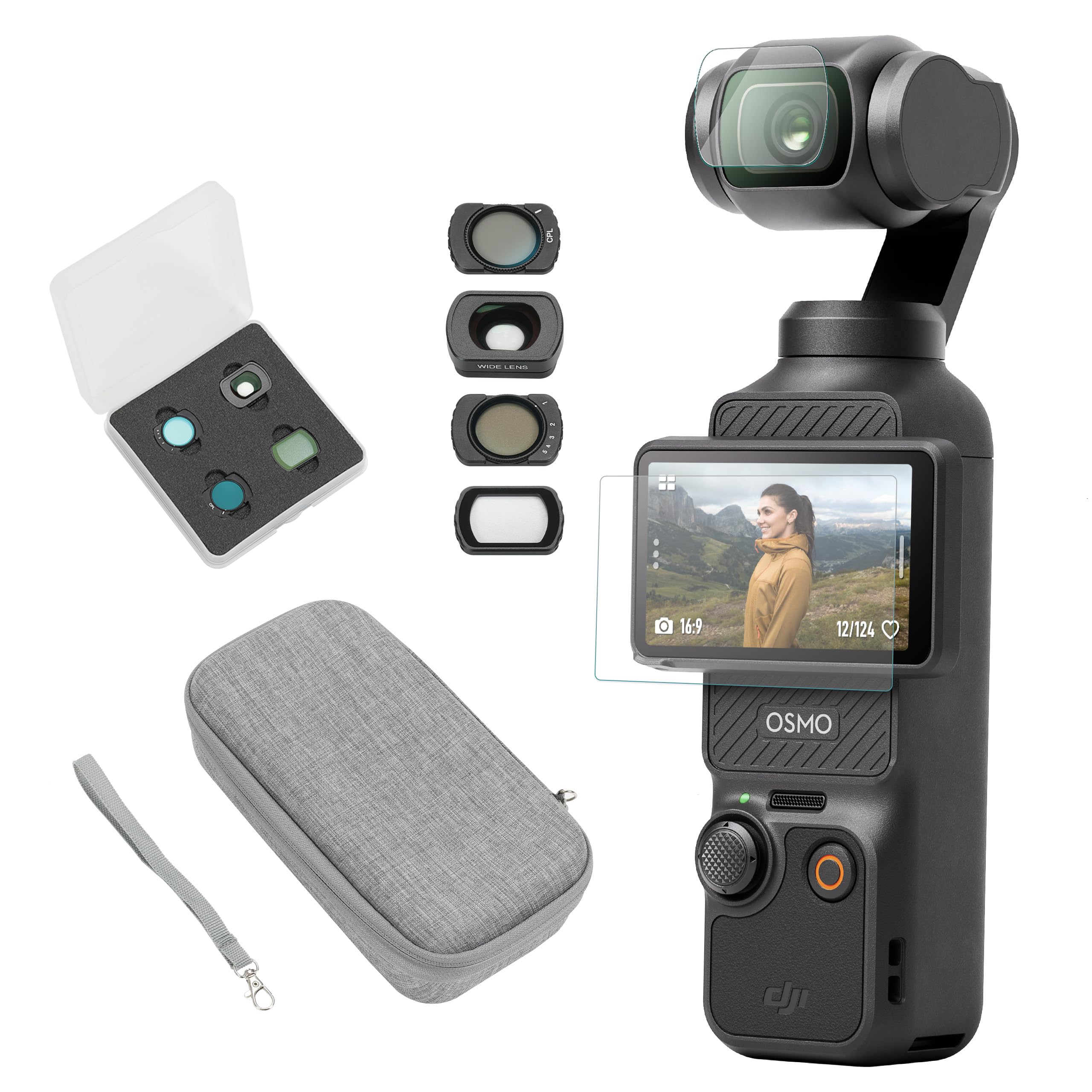
The DJI Osmo Pocket 3 beats the Sony ZV-1F on one critical spec for active vloggers: a built-in 3-axis mechanical gimbal that physically steadies the camera. It delivers buttery-smooth video even when you run or spin around—the Sony relies on electronic stabilization, which is good but not gimbal-smooth. It matches the Sony’s 1-inch sensor and records 4K video at 120fps for silky slow-motion, making it the top choice for run-and-gun creators.
Its 2-inch rotatable touch screen flips to frame horizontal or vertical shots instantly, saving time when posting to YouTube and TikTok. Reviewers consistently praise ActiveTrack 6.0 face and object tracking—tap your subject on the screen and the gimbal swivels to keep them centered automatically. That works well for solo vloggers or filming moving kids on a tripod.
Choose the DJI Osmo Pocket 3 over the Sony ZV-1F if gimbal-stabilized video is your absolute priority and you accept a smaller 2-inch screen. It is for active shooters who want steady footage without post-processing.
Where it shines
- 3-axis mechanical gimbal provides professional-level stabilization that no other camera in this range can match.
- Records 4K video at 120fps, allowing for exceptional slow-motion footage.
- Rotating screen easily switches between horizontal and vertical shooting.
Worth noting
- It has a lower effective still resolution of 9.4 MP compared to other options, so it is primarily a video camera.
- The 2-inch screen, while effective, is smaller than many dedicated camera screens.
3. Xtra Muse, Vlogging Camera with 1” CMOS & 4K/120fps Videos

If you want the gimbal-stabilized video quality of the DJI Osmo Pocket 3 but need to stay under a tighter budget, the Xtra Muse delivers a 1-inch CMOS sensor and 4K at 120fps for less. Customers note battery life of roughly 2 hours—significantly longer than the Sony ZV-1F’s 45 minutes—and you can extend it further by plugging in a USB power bank. That makes it practical for all-day trips or long vlog sessions where you cannot stop to swap batteries.
In real shooting, the 3-axis gimbal eliminates shake from walking or light running. Face and object tracking keeps you centered during solo recordings. The 2-inch touchscreen is bright enough for outdoor framing, and the built-in handle with a 1/4-inch thread lets you mount it on a tripod or selfie stick without extra adapters. The standout is 10-bit X-Log color mode, which records over a billion colors and gives you flexibility to adjust the look in editing—a feature more common on cameras costing twice as much.
The Xtra Muse is your entry into gimbal-stabilized vlogging without the premium tag of the DJI. skip it if you want a large established ecosystem of accessories and guaranteed support; that is DJI’s territory.
What stands out
- Offers gimbal stabilization and a 1-inch sensor at a more accessible price point.
- Longer battery life (~2 hours) that can be extended with an external USB battery.
- 10-bit X-Log color grading gives advanced editing flexibility.
The trade-offs
- It is a newer, less established brand, so long-term support and accessory ecosystems are smaller than DJI’s.
- Some DJI-compatible accessories may fit, but DJI microphones require a software update to work.
4. Nikon COOLPIX P510 16.1MP 42x Opt Zoom 3.0 LCD Digital Camera Black – (Renewed)

The single number that matters most in this category is optical zoom, and the Nikon P510 scores a massive 42x—enough to pull a bird across a field or a performer from the back row into clear frames that standard compacts cannot reach, blowing past the Canon ELPH 360’s 12x zoom by a factor of 3.5x. The 3.0-inch 921K-dot LCD screen is also 50% larger than the Xtra Muse’s 2-inch display, making it easier to frame and review distant scenes.
The catch for that zoom reach is an older sensor design (16.1 megapixels, less capable in dim light) and autofocus limited to just 1 point—compared to the Sony ZV-1F’s 425—so tracking a moving subject through the long lens takes practice. While some reviewers point out the included battery went bad immediately, they also note the camera works great once you buy fresh ones, and it offers full manual and semi-automatic modes for learning photographers.
At a budget-friendly price point, the Nikon P510 delivers massive optical reach and a large screen, offering strong price-to-value for beginners exploring wildlife or sports photography without buying into an expensive super-telephoto lens system. pass on it if you mainly shoot indoors or want fast autofocus; those buyers should look at the Sony ZV-1F.
The upsides
- 42x optical zoom provides tremendous reach for wildlife, sports, and events.
- Large 3.0-inch high-resolution LCD screen makes composing and reviewing shots easy.
- Offers a range of manual and semi-automatic shooting modes for learning photographers.
Keep in mind
- The 16.1 MP sensor is older and less performant in low light than 1-inch options.
- Single-point autofocus can be slow and struggles to track moving subjects at full zoom.
5. Panasonic LUMIX FZ80D Point and Shoot Digital Camera

At this lower price, you get a superzoom specialist with a 60x optical zoom lens covering a 20-1200mm equivalent range, capable of pulling in subjects so far away your phone cannot even see them. Its Power O.I.S. (Optical Image Stabilizer) effectively suppresses shake at the tele-end, and reviewers confirm you can get sharp handheld shots at the full 1200mm—a real achievement at this price.
The downside for that extraordinary zoom is image quality in anything but bright sunlight. Multiple shoppers say that photos get grainy even at low ISO settings, and the camera struggles significantly in low light, making it less suitable for evening events or indoor gyms. It also lacks built-in Wi-Fi, so you cannot instantly transfer photos to your phone for sharing.
If your goal is sharp, detailed photos of distant subjects in good light—a hawk in a tree or a soccer player on the far goal line—the Panasonic FZ80D’s 60x zoom is a specific and compelling advantage no other camera in this range can match. it’s not for you if you shoot at dusk or need Wi-Fi sharing; those users should consider the Sony ZV-1F. It is perfect for the budget buyer who prioritizes extreme reach over low-light performance and wireless connectivity.
Why we’d pick it
- Massive 60x optical zoom (20-1200mm) offers unmatched reach for its class.
- Power O.I.S. stabilization keeps handheld shots at full zoom remarkably steady.
- 4K Photo mode lets you extract crisp 8MP stills from 4K video bursts.
A few caveats
- Image quality degrades significantly in low light and shows grain even at moderate ISO settings.
- Lacks built-in Wi-Fi for easy sharing, and the user interface is not the most intuitive.
6. Canon PowerShot ELPH 360 HS A Digital Camera (Silver)
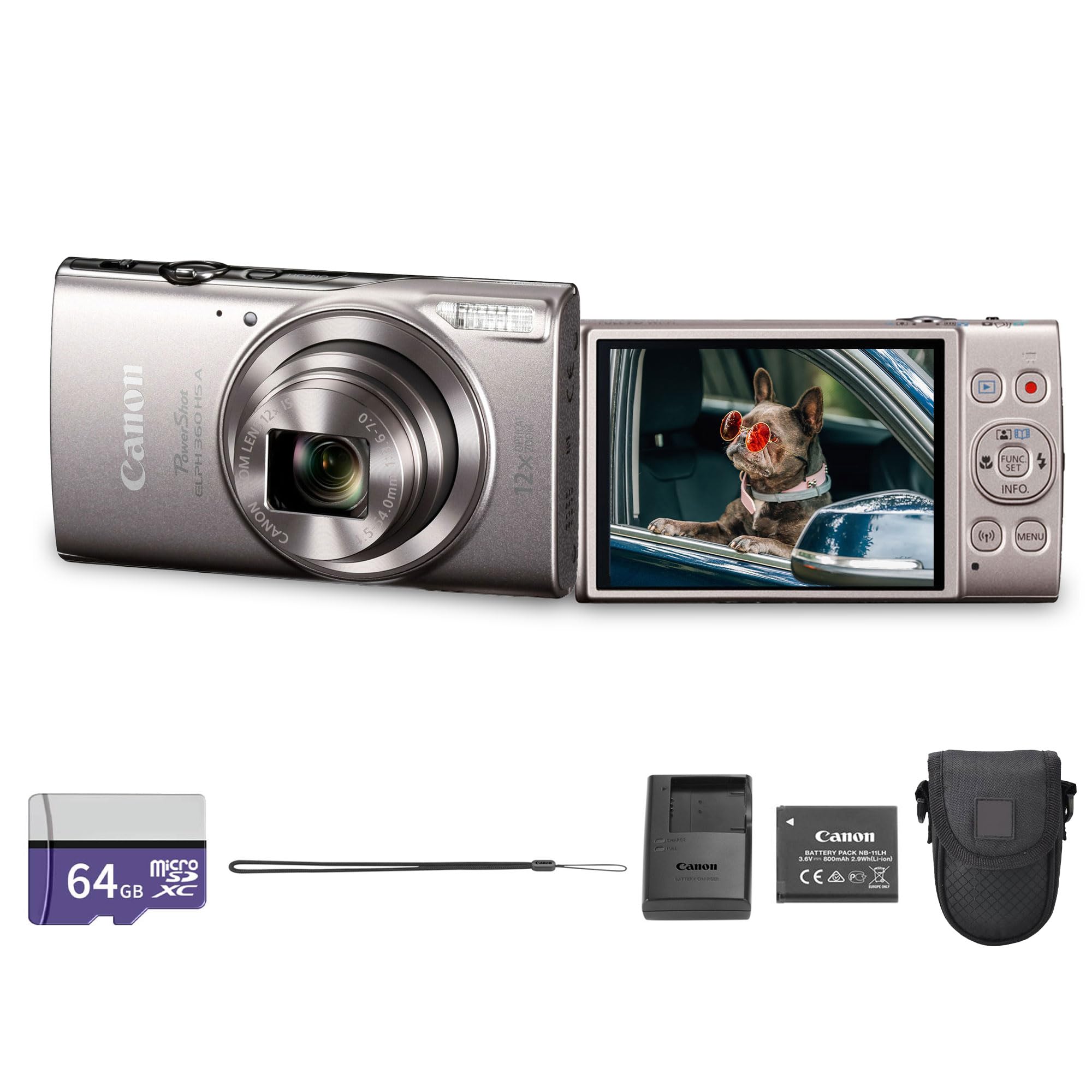
The Canon PowerShot ELPH 360 HS is the true pocket camera for travel and everyday photography. It delivers a 20.2 MP CMOS sensor and a 12x optical zoom lens (25-300mm equivalent) in a slim body that slips easily into a jeans pocket or small clutch bag. Compared to bulky bridge cameras like the Panasonic FZ80D, the Canon wins on pure portability. Its 20.2 MP resolution is 25% higher than the Nikon P510’s 16.1 MP, giving you more cropping flexibility in post-processing.
The trade-off is a smaller 1/2.3-inch sensor, which produces noticeably grainier photos in low light compared to the 1-inch sensors in the Sony or DJI options. It is not ideal for serious night shooting or low-light indoor gatherings without flash. Also, the battery and charger are not included in the box—an unexpected omission that means you need to purchase them separately before your first outing.
If you want a straightforward camera that takes bright, vibrant photos in daylight, fits in your smallest bag, and costs less than most alternatives while including a 64GB memory card, the Canon ELPH 360 HS is a reliable, fuss-free travel companion that simply works. look elsewhere if you often shoot after sunset; the Sony ZV-1F handles dim light far better.
Strong points
- Extremely compact and pocketable design is ideal for travel and daily carry.
- 20.2 MP sensor captures detailed, vibrant photos with good out-of-box color quality.
- 12x optical zoom offers useful reach for landscapes and group shots.
Before you buy
- Battery and charger are not included in the box, which is a notable inconvenience.
- The small sensor produces grainy, noisy photos in low-light conditions.
Understanding the Specs
Sensor Size
The sensor is the light-catching surface inside the camera. A larger sensor collects more light, so your photos stay sharp and colorful in dim environments, and you can blur the background behind a subject for a professional look. In a compact camera under $500, you typically find either a 1-inch sensor (larger, better low light) or a 1/2.3-inch sensor (smaller, more affordable). The 1-inch sensor is found in the Sony ZV-1F, DJI Osmo Pocket 3, and Xtra Muse—these are the best choices if you shoot indoors, at dusk, or want creamy background blur. The smaller sensor is found in the Canon ELPH and Panasonic FZ80D, which work great in bright daylight but struggle when the lights go down.
Optical Zoom vs. Digital Zoom
Optical zoom is the lens physically moving glass elements to magnify the scene—this keeps every detail sharp because no pixels are lost. Digital zoom simply crops into the center of the picture and stretches it, which makes your image pixelated and blurry. A 12x optical zoom (Canon ELPH) is useful for compressing a landscape or getting closer to a stage. A 42x (Nikon P510) or 60x (Panasonic FZ80D) zoom can reach a bird across a large field or a player at the far end of a pitch. For most family and travel needs, 12x-20x is plenty. For wildlife or sports, the higher zoom numbers make a real difference—stick to optical zoom numbers only, and ignore digital zoom ratings entirely.
Image Stabilization
Image stabilization reduces hand shakiness so your photos look sharp and your videos do not look shaky. There are three types: Optical (moving glass elements inside the lens), Electronic (cropping and compensating digitally), and Mechanical 3-Axis Gimbal (physically rotating the camera on a tiny motorized arm). The DJI Osmo Pocket 3 and Xtra Muse both have the 3-axis gimbal, the gold standard for video because it eliminates step-shake and bounce during walking. The Panasonic’s Power OIS and Sony’s electronic stabilization are good for casual use but cannot match the buttery smoothness of a gimbal for active shooting.
Autofocus Points
Autofocus points are the areas on the image where the camera can lock focus. More points mean the camera can track a moving subject quickly and keep them sharp as they move across the frame. The Sony ZV-1F has 425 autofocus points—a massive advantage for vloggers and action shooters because the camera can reliably track your face or a moving child. The Panasonic has 39 points, which is decent, while the Nikon P510 has just 1 point, meaning you must keep your subject dead center for reliable focus. For static landscape shots, fewer points are fine. For people, pets, or any movement, more autofocus points make a visible difference in how many keepers you get.
FAQ
Is a 1-inch sensor camera worth the extra cost over a standard point-and-shoot?
Can a compact camera under $500 replace my smartphone for photos and video?
What does the ‘renewed’ or ‘refurbished’ label mean on products like the Nikon P510?
Is 4K video at 120fps important, or is standard 30fps good enough?
Final Thoughts: The Verdict
For most buyers looking for the best all-around compact camera under $500, the winner is the Sony ZV-1F because it pairs a large 1-inch sensor with 425-point autofocus and an ultra-wide lens in a body designed for vlogging and content creation straight out of the box. If you prioritize silky-smooth, gimbal-stabilized video for active vlogging and want slow-motion 4K at 120fps, grab the DJI Osmo Pocket 3. And for the purest super-zoom reach—whether it is wildlife from a distance or a sports field from the stands—the Panasonic LUMIX FZ80D with its 60x optical zoom is in a league of its own at this price level.

Mo Maruf
I created WellFizz to bridge the gap between vague wellness advice and actionable solutions. My mission is simple: to decode the research and give you practical tools you can actually use.
Beyond the data, I am a passionate traveler. I believe that stepping away from the screen to explore new environments is essential for mental clarity and physical vitality.