Our readers keep the lights on and my smoothie glass nicely filled. As an Amazon Associate, I earn from qualifying purchases.
You want better audio for calls, gaming, or a podcast without blowing your budget. The problem is most cheap PC microphones sound tinny, pick up every keyboard click, or stop working after a few months — so you end up sounding worse than if you had just used your laptop’s built-in mic. This guide cuts through the noise to find the few sub- options that actually deliver clear, reliable voice pickup.
I’m Mohammad Maruf — the co-founder and writer behind WellFizz. This guide is built by comparing the manufacturers’ published specifications and the patterns across verified customer reviews, so you get each pick’s real strengths and trade-offs instead of marketing spin.
The best affordable options balance a sensible pickup pattern (how the mic hears your voice and ignores the room), a durable build, and an honest mute function. Read on for the cheap pc microphone picks that survive everyday use without the usual frustrations.
How To Choose The Best Cheap PC Microphone
Picking a budget microphone is about finding the right trade-offs, not the cheapest price. Here are the three things that separate a usable mic from a waste of .
Pickup Pattern: Cardioid vs. Omnidirectional
The pickup pattern determines where the microphone hears sound from. A cardioid polar pattern hears mostly what is directly in front of the mic and rejects sound from the sides and rear — this is what you want for a home desk setup because it ignores keyboard clatter, mouse clicks, and air conditioner hum. An omnidirectional mic hears equally from all directions, which can be useful for a small group around a table, but at a desk it will pick up every room noise. For a cheap PC mic, aim for cardioid.
Build Quality and Mute Reliability
A cheap mic that falls over or has a mute button that does not fully mute the audio is worse than no mic at all. Look for a weighted base (to stop the mic tipping) and a mute function that reviewers confirm actually cuts the signal completely, not just dims it. Metal enclosures also tend to last longer and survive an accidental drop better than cheap plastic, as buyers of the FIFINE K669B confirm with reports of surviving multiple falls over five years.
Connectivity and Setup
Every mic on this list connects via USB and works without installing software (true plug-and-play). Avoid mics that require you to install drivers or configure sound settings before they work — a budget mic should be ready the second you plug it in. The cable length also matters: a 5.9-foot or longer USB cable lets you position the mic where it sounds best rather than where the port is.
Quick Comparison
On smaller screens, swipe sideways to see the full table.
| Model | Category | Best For | Key Spec | Amazon |
|---|---|---|---|---|
| FIFINE K669B | Best Overall | Everyday calls, vocals, streaming | Audible Noise: 16 Decibels | Amazon |
| HyperX SoloCast 2 | Premium Pick | High-res recording & gaming | 24-bit / 96kHz sampling | Amazon |
| Razer Seiren V3 Mini | Compact Pick | Small desks & quick tap-to-mute | Supercardioid pickup pattern | Amazon |
| FIFINE K054 | Best Value | Flexible gooseneck placement | 78 Decibels audible noise | Amazon |
| AIRHUG 21 | Budget Champion | Noise-canceling for calls | AI Noise Reduction mode | Amazon |
In‑Depth Reviews
1. FIFINE K669B

The FIFINE K669B is 4.9 times quieter than the gooseneck-style FIFINE K054, making it the top pick for anyone who needs clear voice capture without background noise. Its cardioid polar pattern rejects sound from the sides and rear, and its audible noise rating is just 16 decibels — so your co-workers hear your voice, not your fan. Buyers report that after five years of heavy use the mic “still sounds amazing,” and that the metal enclosure survives being knocked off a desk.
Plug-and-play USB works instantly on Windows 11 and Mac, with no drivers to track down. The volume knob on the front lets you adjust your input level on the fly, and the tripod stand stays planted during use. The catch is that the stand takes desk space, and the USB-B to USB-A/C cable is fixed (so if it breaks, you replace the whole mic).
The K669B is the reliable default: for anyone who just wants their voice heard clearly on a budget, this is the one.
Why it’s great
- Solid all-metal construction that survives drops
- Very low 16 Decibels audible noise for clean audio
- True plug-and-play on Windows and Mac
Good to know
- Tripod stand takes desk space
- Fixed USB cable; cannot replace separately
2. HyperX SoloCast 2
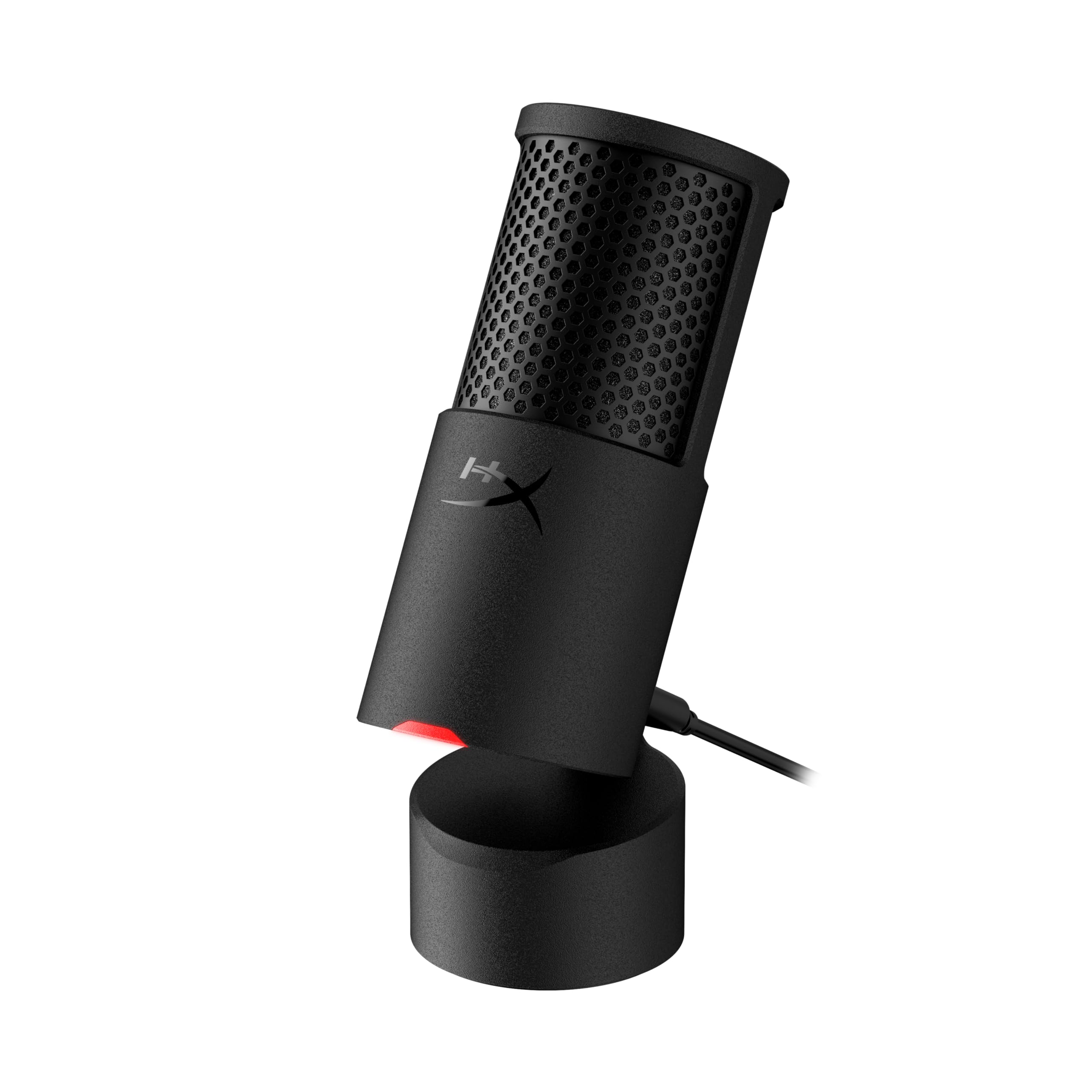
The HyperX SoloCast 2 captures more audio detail than the FIFINE K669B — it records at 24-bit depth and a 96kHz sampling rate, meaning it picks up higher frequencies and subtle vocal texture. But its audible noise rating of 79 Decibels is higher than the K669B’s 16 Decibels, so in a noisy room it can pick up more background rumble. Where it truly shines is the built-in pop filter and internal shock mount that reduce plosive sounds (those hard “P” and “B” pops) and handle desk bumps without extra accessories.
Gamers and streamers will value the tap-to-mute sensor on top — one tap mutes you instantly, and the red LED indicator turns off so you never accidentally broadcast a private comment. The compact tiltable stand has a weighted base that stays put, and the built-in 3/8″ and 5/8″ threads let you screw it onto a boom arm immediately. Owners mention that without a boom arm it may pick up more keyboard noise than the K669B.
Choose the SoloCast 2 over the top pick if you want studio-quality recording specs and a seamless mute, and you plan to pair it with a boom arm for cleanest sound.
Where it shines
- High-resolution 24-bit / 96kHz recording for clear detail
- Built-in pop filter and shock mount for clean sound
- Excellent tap-to-mute sensor with LED feedback
Worth noting
- More prone to background noise due to higher 79 Decibels sensitivity
- Low stand may require a boom arm for best position
3. Razer Seiren V3 Mini

The Razer Seiren V3 Mini fits on the smallest desks at just 3.59 x 3.59 inches of footprint — about the size of a coffee cup. Its supercardioid pickup pattern is narrower than standard cardioid, so it focuses tighter on your mouth and rejects more side noise like typing and mouse clicks. That makes it your best pick for a shared room where you need your voice to cut through.
The tap-to-mute sensor on top is intuitive and fast, and reviewers rave about it as a “10/10” feature for work calls — you instantly silence yourself without fumbling. The built-in shock absorber inside the stand damps noise from accidental desk knocks, and you can detach the mic from its base to mount it on a boom arm later. It works plug-and-play on PC, and with Razer Synapse software you can adjust sample rates if you want deeper control. For an average user on Zoom calls, some reviewers felt the sound quality is not a huge leap over a decent headset mic.
The standout feature is the supercardioid focus, making it the best option for noisy environments where absolute audio purity matters less than clear voice pickup.
What stands out
- Ultra-compact size fits on the smallest desks
- Narrow supercardioid pattern rejects side noise well
- Excellent tap-to-mute sensor for quick muting
The trade-offs
- Sound quality not a drastic upgrade over a good headset mic
- No onboard sensitivity or volume controls
4. FIFINE K054

The single number that matters most in this category is the audible noise rating, and the FIFINE K054 scores 78 Decibels — higher than the K669B’s 16 Decibels, meaning it picks up more room echo and background noise, so you need to keep it within 6-8 inches of your mouth. The flexible gooseneck lets you position the mic exactly where you need it — bend it up for standing use or angle it down for a seated desk. The 11-inch metal gooseneck holds its shape without sagging, and the heavy-duty ABS base (weighing 200 grams) stays planted even when you stretch the neck.
The downside: the mute button “muffles sound but doesn’t fully cut it” according to buyers — so if you need absolute mute reliability, choose another. The foam cover reduces plosive pops, and the volume knob on the base gives you quick control. It works plug-and-play on Windows and Mac. Skip this if you must fully mute your mic; pick it if you often move between standing and sitting during calls and do not want to fuss with a boom arm.
For the price, you get a flexible gooseneck and stable base, but the higher noise floor and unreliable mute make it a mixed value.
The upsides
- Flexible 11-inch gooseneck for precise positioning
- Weighted base (200g) keeps it stable on desk
- True plug-and-play with volume knob control
Keep in mind
- Higher 78 Decibels audible noise picks up more background sounds
- Mute button doesn’t fully cut the audio signal
5. AIRHUG 21

The AIRHUG 21 uses an omnidirectional pickup pattern (hears sound from all directions equally) paired with an AI noise reduction mode that actively filters background fan noise, keyboard clicks, and room hum. The 48kHz sampling rate keeps your voice clear, and customers note you do not need to lean in or speak loudly — ideal for hands-free calls. You give up the focused voice capture of a cardioid mic: in a noisy shared office, the AI noise reduction does its best, but it cannot match the directional rejection of the K669B or Seiren V3 Mini.
The LED indicator stays on whenever the mic is plugged in, even when not in use, which one reviewer found annoying (“The only complaint that I have is that the LED is on all of the time even when not active unless you unplug it”). The plastic enclosure feels less premium than the metal-bodied picks above, and it lacks echo cancellation, so in a two-way conversation a dedicated speakerphone-style mic would be better.
The AIRHUG 21 is for the budget buyer who takes frequent video calls from a quiet home office, does not want to position a mic arm, and values simple plug-and-play operation over audio purity.
Why we’d pick it
- AI noise reduction effectively filters keyboard and fan noise
- Excellent sensitivity — no need to speak loudly
- Ultra-compact size (3.38 inch diameter) for travel
A few caveats
- Omnidirectional pattern picks up all room noise, not just your voice
- No echo cancellation for two-way conversations
Understanding the Specs
Polar Pattern: Cardioid vs. Supercardioid vs. Omnidirectional
This spec tells you where the microphone hears sound from. Cardioid (heart-shaped) hears mostly from the front and rejects sound from the sides and rear — best for a single person at a desk ignoring keyboard clicks. Supercardioid is an even tighter version of cardioid that picks up a narrower area in front, ideal for noisy rooms. Omnidirectional hears equally from all directions, good for small group calls around a table but bad for personal desk use. For a cheap PC mic, cardioid or supercardioid is almost always the right choice.
Audible Noise in Decibels (dB)
This number measures how much background noise the microphone adds to your signal. A lower number is better: 16 Decibels (like the FIFINE K669B) means the mic itself is very quiet and your voice comes through clean. 78-79 Decibels (like the FIFINE K054 or HyperX SoloCast 2) means the mic picks up more room echo and ambient sound, so you need to speak closer or use noise reduction software. Do not confuse this with microphone sensitivity — audible noise is about how quiet the mic’s own electronics are.
FAQ
Will a cheap USB microphone work with my PlayStation or Xbox?
Why does my cheap microphone sound tinny or echoey?
Do I need a pop filter for a cheap microphone?
Final Thoughts: The Verdict
For most buyers, the cheap pc microphone winner is the FIFINE K669B because it offers the best balance of durable metal construction, low background noise, and true plug-and-play simplicity at a price that leaves room in the budget for a boom arm or a better cable. If you want studio-grade recording specs and a satisfying tap-to-mute, grab the HyperX SoloCast 2. And for the tightest desk footprint with focused noise rejection, the standout is the Razer Seiren V3 Mini.

Mo Maruf
I created WellFizz to bridge the gap between vague wellness advice and actionable solutions. My mission is simple: to decode the research and give you practical tools you can actually use.
Beyond the data, I am a passionate traveler. I believe that stepping away from the screen to explore new environments is essential for mental clarity and physical vitality.