Our readers keep the lights on and my smoothie glass nicely filled. As an Amazon Associate, I earn from qualifying purchases.
You reach for your chef’s knife more than any other tool in the kitchen — so picking the wrong one can mean hours of struggling with dull edges and a sore hand. The best option under $200 is the one that keeps its sharpness longest and feels natural in your grip. Here are seven real choices, each explained in plain language with the exact specs and honest trade-offs you need to decide.
I’m Mohammad Maruf — the co-founder and writer behind WellFizz. This guide is built by comparing the manufacturers’ published specifications and the patterns across verified customer reviews, so you get each pick’s real strengths and trade-offs instead of marketing spin.
The chef’s knife under 200 that fits your kitchen is here, backed by real specs and honest buyer feedback — whether you need a daily workhorse for meal prep or a precision blade for delicate slicing.
Quick Comparison
On smaller screens, swipe sideways to see the full table.
| Model | Category | Best For | Key Spec | Amazon |
|---|---|---|---|---|
| ZWILLING Professional S | Premium Forged | All-day durability and edge retention | 57 HRC, 15° edge angle | Amazon |
| WÜSTHOF Gourmet 8″ | Premium Stamped | German craftsmanship at a fair price | 8″ blade, 240g weight | Amazon |
| KAWAHIRO Gyuto 8″ | Japanese Premium | Ultra-sharp precision slicing | VG-10, 62+ HRC | Amazon |
| KYOKU Shogun Series | Japanese Mid-range | Damascus beauty with performance | 67-layer Damascus VG-10 | Amazon |
| DRGSKL Damascus 8″ | Value Damascus | Budget Damascus with G10 handle | 8.1″ blade, carbon steel | Amazon |
| Victorinox Fibrox Pro | Budget Stamped | Lightweight daily workhorse | 6 oz weight, 8″ blade | Amazon |
| Henckels Forged Accent | Budget Forged | Entry-level forged German steel | 4.3 oz, 8″ blade | Amazon |
In‑Depth Reviews
1. ZWILLING Professional S 8-inch Razor-Sharp German Chef’s Knife

This blade holds its sharpness longer than the stamped Victorinox Frost because of the FRIODUR treatment. FRIODUR is an ice-hardening process that freezes the blade to make it tougher. With a Rockwell hardness of 57 HRC, the edge stays intact through months of daily use, buyers report. The full tang means the metal runs all the way through the handle for balanced weight. At 277 grams (about 9.8 ounces), it powers through dense squash yet remains nimble for precise cuts. One reviewer noted they could slice cherry tomatoes into ten thin slices without crushing them. The catch: the 15-degree edge angle per side is extremely sharp but needs a honing rod every few days to keep peak performance. This knife is forged in a company-owned German factory with nearly 300 years of steel refinement. It will outlast you, but its weight (37 grams more than the WÜSTHOF Gourmet) can tire your wrist during long prep. Best for the cook who prioritizes edge longevity over lightness.
Why it’s great
- Ice-hardened FRIODUR blade stays sharp far longer than stamped knives
- Perfectly balanced full-tang design with ergonomic handle
- Dishwasher safe, though hand washing preserves the edge
Good to know
- Heavier than stamped alternatives, which some may find tiring
- Regular honing required to maintain the razor edge
2. WÜSTHOF 8″ Gourmet Chef’s Knife, Black

This is a stamped blade (laser-cut from a sheet of steel) that still carries the Solingen, Germany quality stamp — a designation for products meeting strict local standards. At 240 grams (about 8.5 ounces), it is 37 grams lighter than the ZWILLING, so it feels less fatiguing during long prep sessions. Both hold an edge for about a month of daily use, owners mention, but this WÜSTHOF costs noticeably less while coming from a family-owned forge with over 200 years of history. The synthetic polypropylene handle resists fading, heat, and impact; reviewers consistently praise its comfortable, non-slip grip. One buyer who switched from a heavier knife called it “lightweight yet sturdy” and said it transformed their everyday chopping. Choose this over the ZWILLING if you want German brand prestige with a lighter, stamped design that won’t tire your wrist dicing five pounds of onions. skip it if you want a blade that can handle decades of sharpening cycles — stamped construction means it won’t last as many resharpening sessions as forged.
Where it shines
- Razor-sharp edge out of the box that stays sharp for a month
- Lightweight 240g build reduces hand fatigue
- Limited lifetime warranty from a 200-year-old German brand
Worth noting
- Must be hand-washed — not dishwasher safe
- Stamped construction means it won’t last as many sharpenings as forged
3. KAWAHIRO Japanese Chef Knife, 8 Inch Hand Forged VG10 Gyuto
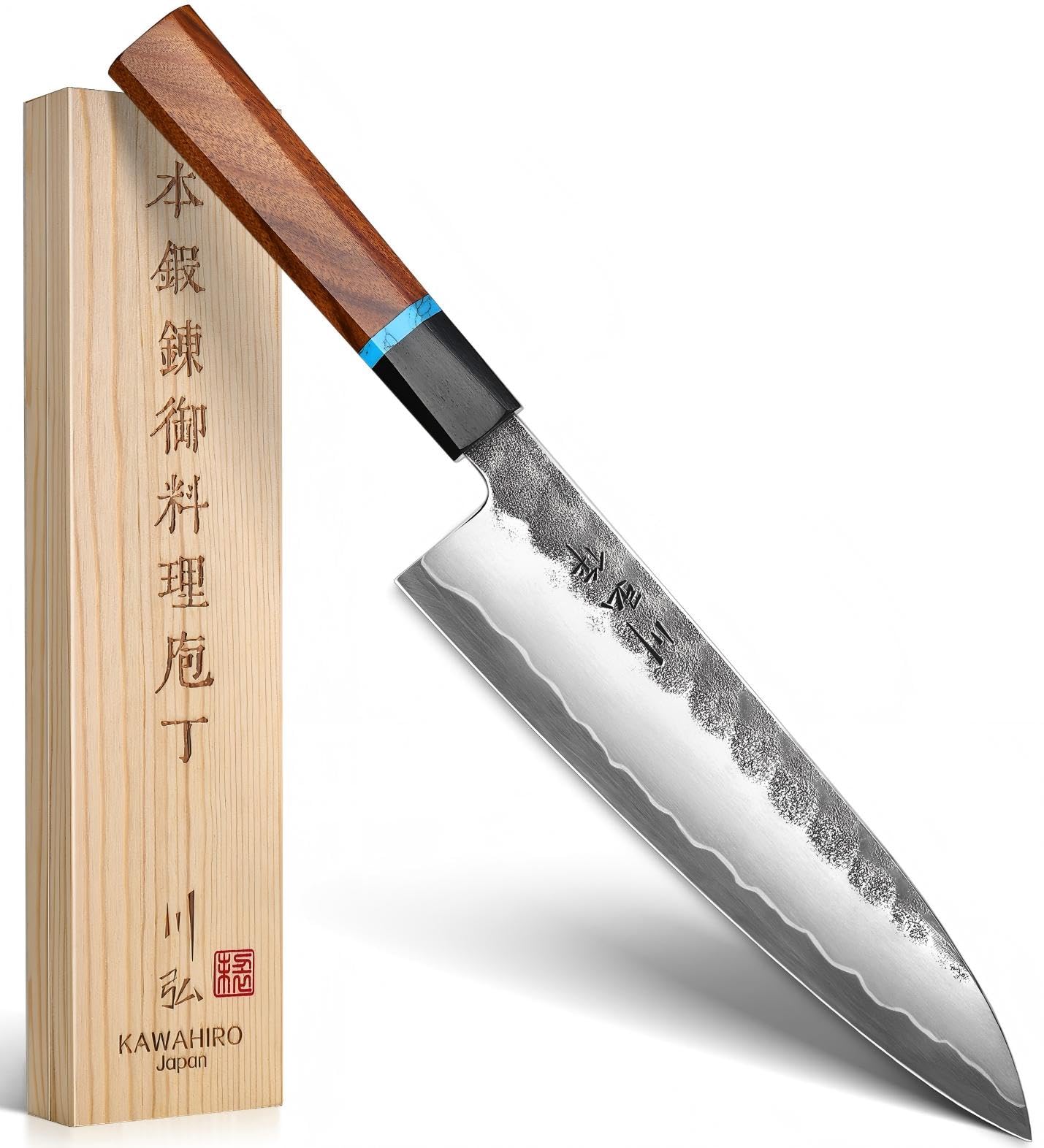
You get a blade that glides through ingredients with almost no resistance, thanks to a 3-layer composite construction. The core is VG-10 stainless steel (estimated 62+ HRC, meaning it’s very hard and holds a razor edge for weeks) sandwiched between softer steel layers for durability. The black forged finish and octagonal handle from ebony, turquoise, and premium ruby wood look like a showpiece. The blade is 8.24 inches long — slightly longer than standard 8-inch knives, giving you extra reach for large items. Customers note it’s “incredibly sharp” out of the box; one buyer mentioned a coworker accidentally cut a paper plate because they weren’t used to such a sharp blade. The downside: after about six months of daily use, some reviewers noticed minor edge chipping, which a 5000-grit whetstone (a fine sharpening stone) fixed easily. This knife is not dishwasher safe and needs careful maintenance. It’s for the passionate cook who enjoys the ritual of sharpening, not for someone who wants a low-maintenance blade.
What stands out
- VG-10 core with 62+ HRC holds a superior edge
- Beautiful octagonal handle from ebony, turquoise, and ruby wood
- Comes with elegant wooden gift box and certificate
The trade-offs
- Can chip if used on hard surfaces or for bone work
- Not dishwasher safe — requires hand washing and careful storage
4. KYOKU Chef Knife – 8″ Shogun Series Japanese Style VG10 Steel Core Hammered Damascus

You get the visual drama of a Damascus pattern (layered wavy lines on the blade) without spending over $200, using the same VG-10 steel core found in knives costing three times as much. The edge is sharpened to 8 to 12 degrees using the traditional 3-step Honbazuke method, meaning it cuts through onions “like they’re nothing,” according to one buyer. The hammered finish (tsuchime in Japanese) creates small divots that prevent food from sticking — helpful when slicing cheese or starchy potatoes. The fiberglass handle with a mosaic pin is cold- and moisture-resistant, so it won’t swell or crack. At 1.39 pounds (about 22 ounces), it is heavier than every other knife here — some users find it reassuringly solid, others find it fatiguing for long prep. The blade is 58-60 HRC (harder than the ZWILLING’s 57 HRC but less tough), so avoid twisting it against bones. For vegetable prep and meat slicing, buyers consistently mention the “wow” factor. pass on it if you need a lighter daily workhorse; consider the Victorinox Fibrox instead.
The upsides
- 67-layer Damascus with VG-10 core offers stunning looks and performance
- Hammered finish prevents food from sticking
- Includes sheath and gift-ready case
Keep in mind
- Heavier than many 8-inch chef’s knives
- Not dishwasher safe — hand wash only
5. DRGSKL Damascus Chef Knife 8 Inch – VG10 Kitchen Knife with G10 Handle
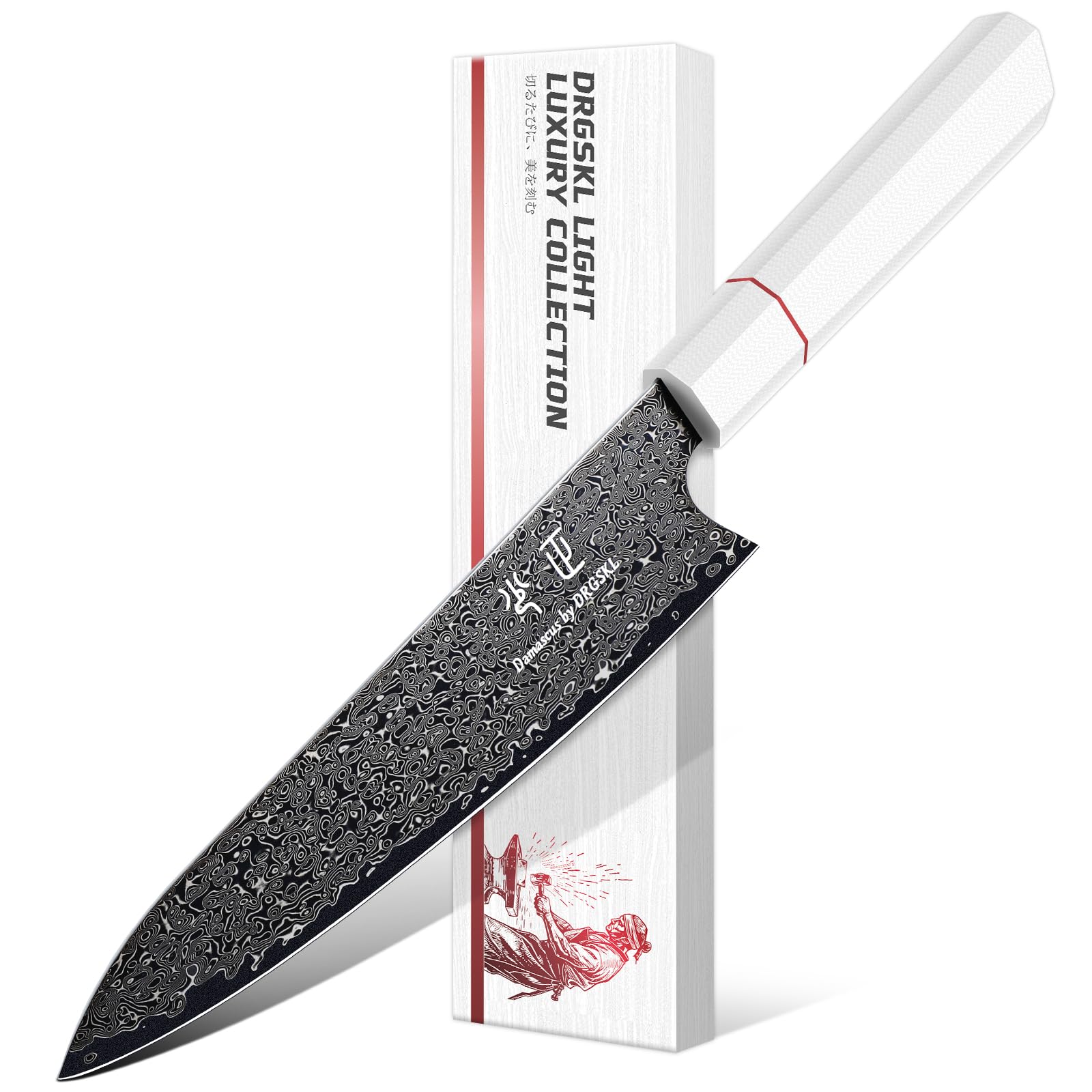
At a lower entry price, you get a hand-forged Damascus pattern and a G10 handle (fiberglass laminate that resists moisture and won’t crack like wood). The 8.1-inch carbon steel blade is ground wet to prevent overheating, and reviewers point out it creates a “razor-sharp edge” that glides rather than chops. What you give up: the steel is carbon steel, not VG-10 or German stainless, so it is harder to sharpen and more prone to rust if not dried immediately. Shoppers say the edge holds well for constant fruit and vegetable prep, but one noted the handles “get smudge pretty easily.” It comes in a gift box. This pick suits the cook who wants a Damascus look without a big investment, but it’s not for you if you dislike hand-washing and drying immediately after use — carbon steel rusts on contact with moisture if left wet.
Why we’d pick it
- Hand-forged Damascus pattern looks far more expensive than it is
- Moisture-resistant G10 handle for secure grip
- Gift-box packaging makes it ready to give
A few caveats
- Carbon steel requires immediate drying to prevent rust
- Handle smudges easily and shows fingerprints
6. Victorinox Fibrox Pro Chef’s Knife, 8 Inch – Swiss Army Kitchen Knife
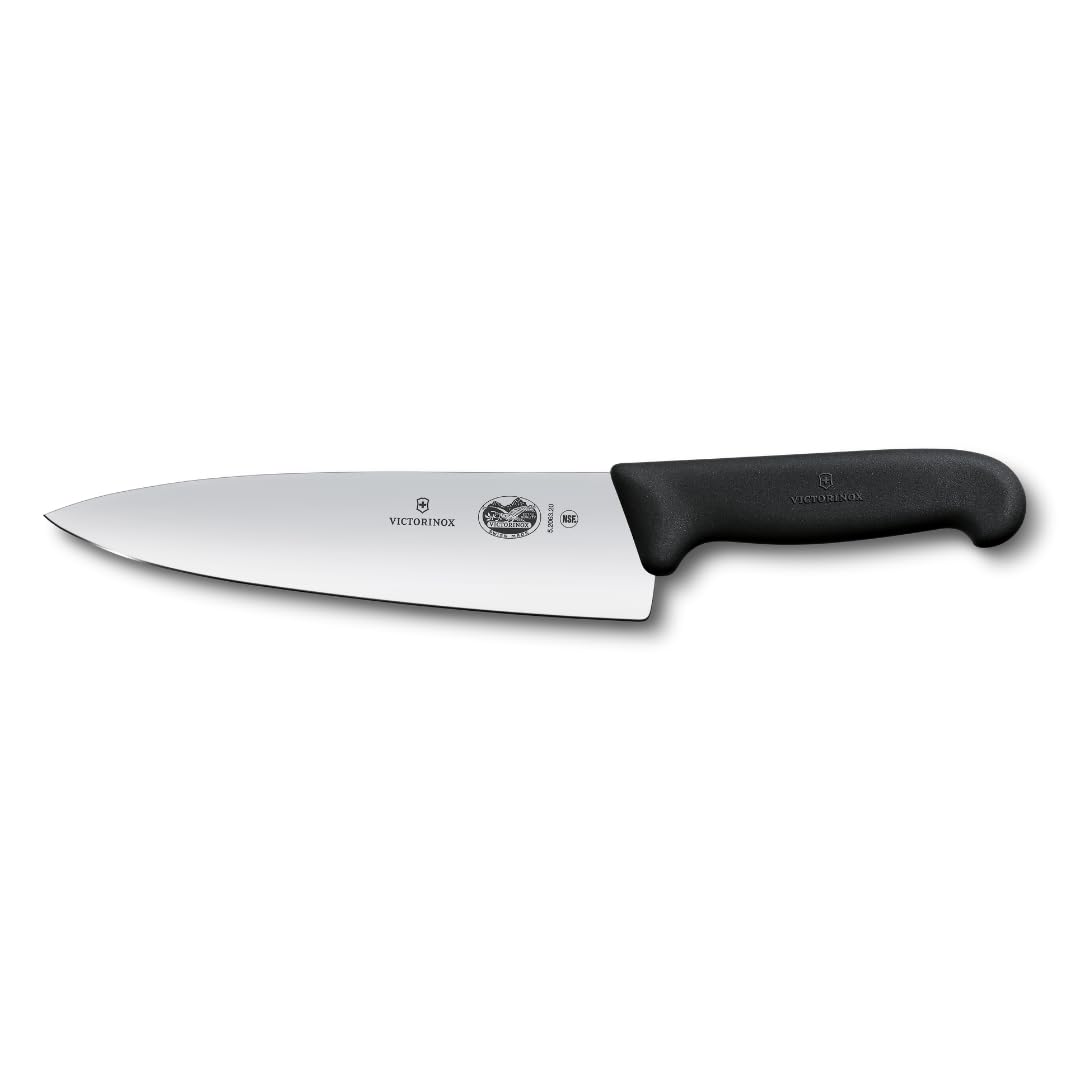
If wrist fatigue is your issue, this knife is a no-brainer at just 6 ounces (170 grams) — dramatically lighter than the ZWILLING’s 277 grams. The Fibrox thermoplastic handle (textured, rubbery material) stays firmly in your grip even when wet. It has been the top-rated chef’s knife by America’s Test Kitchen for years. Buyers who used it daily for two months report it stays sharp with minimal edge roll, handles vegetables, meats, and fish with ease, and the non-slip handle prevents accidents even with greasy hands. The trade-off: it is a stamped blade, so it won’t hold an edge as long as a forged VG-10 or German steel blade, and the Fibrox handle is utilitarian black rubber — not pretty. But it costs a fraction of the premium options. Pick this for light daily tasks; look elsewhere if you want a blade that lasts through decades of frequent resharpening.
Strong points
- Ultra-light 6-ounce design reduces hand fatigue significantly
- Non-slip Fibrox handle performs great even when wet
- Laser-tested sharpness out of the box and long-lasting edge
Before you buy
- Utilitarian handle won’t impress anyone visually
- Stamped blade won’t withstand as many sharpening cycles as forged
7. Henckels Forged Accent 8-inch Chef’s Knife, Black

This knife brings forged construction and German stainless steel to a very accessible price point. Unlike the stamped Victorinox, this blade is forged from a single piece of steel with a bolster (the thick metal collar between blade and handle) for balance and seamless transition. At 4.3 ounces, it is even lighter than the Victorinox, yet the satin-finished blade stays sharp for a good while. Buyers report it is “well constructed, comfortable to use, and sharp out of the box,” with one comparing it favorably to a WUSTHOF — noting it “cuts just as well.” The triple-riveted handle with stainless steel endcap feels solid. One owner reported the blade isn’t perfectly straight — a minor quality-control issue that is rare but possible at this level. If you want to try a forged blade without the premium investment, this is the obvious choice. steer clear if you need a blade with guaranteed perfect straightness; choose the WUSTHOF Gourmet instead for more consistent quality control.
What we like
- Forged German steel at a very accessible price point
- Light 4.3-ounce build with comfortable triple-riveted handle
- Out-of-box sharpness competitive with pricier brands
The downsides
- Some units may have slight blade straightness issues
- Dishwasher safe but hand washing is recommended for longevity
Understanding the Specs
Rockwell Hardness (HRC)
This number tells you how hard the steel is. A higher number (58-62 HRC) means the blade holds a sharp edge longer but is more brittle and can chip if you misuse it. A lower number (55-57 HRC) means the steel is softer, tougher, and easier to sharpen but needs more frequent honing to stay sharp. For most home cooks, 56-58 HRC offers the best balance: sharp enough for precise cuts and tough enough to survive the occasional twist or accidental bone contact.
Forged vs. Stamped Blades
Forged blades are created by heating a single piece of steel and hammering it into shape — they’re heavier, better balanced, and have full tangs (metal extending through the handle). Stamped blades are cut from a flat sheet of steel like a cookie cutter — they’re lighter, cheaper, and still very sharp, but they don’t offer the same heft or balance. Forged knives generally last longer through decades of sharpening; stamped knives are perfectly fine for everyday home use and are easier on your wrist.
Blade Steel Types
German stainless steel (Henckels, WÜSTHOF, ZWILLING) is a high-carbon alloy that resists rust and staining — it’s softer (55-57 HRC) but very tough. Japanese VG-10 steel (KYOKU, KAWAHIRO) is a “super steel” with vanadium and cobalt additives that make it much harder (58-62 HRC) and able to take a finer edge, but it’s more brittle and prone to chipping. Carbon steel (DRGSKL) is extremely sharp but will rust if not dried immediately.
Handle Materials and Ergonomics
Fibrox (Victorinox) is a rubbery thermoplastic that provides excellent grip even when wet — it’s utilitarian but incredibly functional. G10 (DRGSKL, KYOKU) is a dense fiberglass laminate that resists moisture, won’t crack, and feels solid in hand. Ebony, turquoise, and ruby wood (KAWAHIRO) look beautiful but require careful maintenance and can be slippery when wet. Polypropylene (WÜSTHOF) resists heat and impact but offers less grip than Fibrox.
FAQ
What is the best blade length for a chef’s knife under $200?
Is a forged knife always better than a stamped knife?
How do I keep my chef’s knife sharp without spending on a professional sharpener?
Can I put a $200 chef’s knife in the dishwasher?
Final Thoughts: The Verdict
For the majority of shoppers, the chef’s knife under 200 winner is the ZWILLING Professional S because its forged FRIODUR blade offers the best combination of edge retention, balance, and durability at a price that doesn’t break the bank. If you want a lighter, more nimble blade that still carries legendary German craftsmanship, grab the WÜSTHOF Gourmet 8″. And for the cook who obsesses over precision slicing and loves the ritual of Japanese steel care, the KAWAHIRO Gyuto delivers a stunning edge and a beautiful wooden handle that makes every prep session feel special.

Mo Maruf
I created WellFizz to bridge the gap between vague wellness advice and actionable solutions. My mission is simple: to decode the research and give you practical tools you can actually use.
Beyond the data, I am a passionate traveler. I believe that stepping away from the screen to explore new environments is essential for mental clarity and physical vitality.