Our readers keep the lights on and my smoothie glass nicely filled. As an Amazon Associate, I earn from qualifying purchases.
Your computer’s processor is the part that decides how fast games load, how smoothly you can edit video, and whether juggling a dozen browser tabs feels instant or frustrating. Unfortunately, the market throws a confusing jumble of numbers at you — cores, threads, boost clocks, and cache sizes — and it is rarely obvious which one actually matters for what you plan to do. This guide breaks down nine processors by real-life performance, not just a spec list.
I’m Mohammad Maruf — the co-founder and writer behind WellFizz. This guide is built by comparing the manufacturers’ published specifications and the patterns across verified customer reviews, so you get each pick’s real strengths and trade-offs instead of marketing spin.
The picks range from a budget-friendly workhorse to an absolute top-tier performer, covering gaming rigs, creative workstations, and reliable home servers. By the end, you will know exactly which computer processor belongs in your next build.
How To Choose The Best Computer Processor
The right processor matches its strengths to what your computer does most. Gaming loves fast single-core speed and a large cache, while video editing or 3D rendering needs more cores and threads. The wrong choice can slow down your whole system or waste money on features you never use.
Core Count vs. Clock Speed — Which Wins?
A processor’s core count tells you how many tasks it can handle at once, while its clock speed (measured in GHz) tells you how fast each core works. For gaming, a higher clock speed on fewer cores often matters more than a massive core count. For compiling code or exporting a video project, more cores speed up the work significantly. This is why a 6-core chip with a 5.3 GHz boost can sometimes outperform a 16-core chip with a lower clock in games, while the 16-core crushes it in multi-threaded workloads.
Socket and Platform — Your Motherboard Matters
A processor fits into a specific socket on the motherboard, and sockets are not interchangeable. Intel’s 12th through 14th Gen use LGA 1700, while the newer Core Ultra series uses LGA 1851. AMD’s AM4 socket supports most Ryzen 5000 chips, while AM5 is required for Ryzen 7000 and 9000 processors. Picking a processor first and then buying a motherboard for the matching socket saves you the headache of a return.
Integrated Graphics — Do You Need It?
Most processors with an “F” suffix (like the Intel Core i5-14400F) lack integrated graphics — meaning you must have a dedicated video card to see anything on screen. Models with integrated graphics (like the AMD Ryzen 7 8700G) let you use the computer without a graphics card, which is useful for a budget office build or a temporary setup while you save for a GPU. The catch is that you pay a little more for an iGPU (built-in graphics chip) you might never use if you already own a dedicated card.
Quick Comparison
On smaller screens, swipe sideways to see the full table.
| Model | Category | Best For | Key Spec | Amazon |
|---|---|---|---|---|
| Ryzen 7 9800X3D | Premium | Gaming | 8 Cores / 96MB L3 Cache | Amazon |
| Ryzen 9 9900X3D | Premium | Gaming & Creation | 12 Cores / 140MB Cache | Amazon |
| Intel Core Ultra 9 285K | Premium | Multi-threaded Work | 24 Cores / 5.7 GHz Boost | Amazon |
| Intel Core i9-14900KF | High-End | Extreme Multitasking | 24 Cores / 6.0 GHz Boost | Amazon |
| AMD Ryzen 9 5900XT | Mid-Range | Content Creation | 16 Cores / 72MB Cache | Amazon |
| AMD Ryzen 7 8700G | Mid-Range | Compact & iGPU Builds | 8 Cores / 5.1 GHz Boost | Amazon |
| Intel Core i5-14600K | Mid-Range | Versatile Performance | 14 Cores / 5.3 GHz Boost | Amazon |
| AMD Ryzen 5 5600X | Budget | 1080p Gaming | 6 Cores / 4.6 GHz Boost | Amazon |
| Intel Core i5-14400F | Budget | Value Gaming Builds | 10 Cores / 4.7 GHz Boost | Amazon |
In‑Depth Reviews
1. AMD Ryzen 7 9800X3D
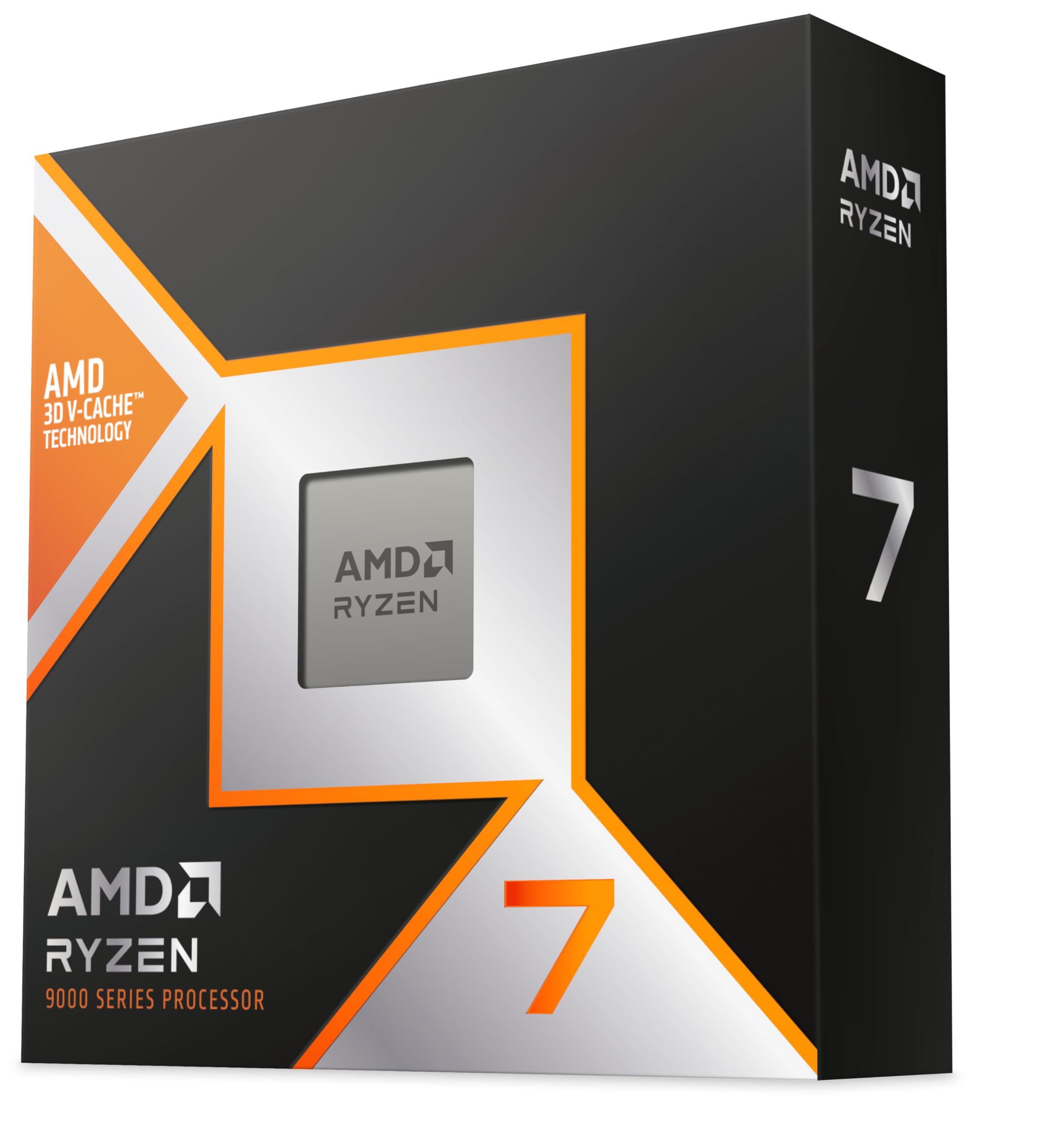
With a massive 96MB L3 cache and a 5.2 GHz boost clock across 8 Zen 5 cores, the AMD Ryzen 7 9800X3D is the top pick for gamers who prioritize higher and more consistent frame rates. Buyers report that this chip is “top-tier gaming CPU with consistent frame times, minimal bottlenecks” and that it stays cool with manageable power draw, while also handling light productivity chores without slowing down.
The head-to-head advantage here is clear: while the Intel Core i9-14900KF can hit a 6.0 GHz boost clock, the 9800X3D’s 3D V-Cache technology gives it an edge in CPU-heavy games where waiting for data matters more than raw speed. One reviewer who upgraded from a 7700X called it “the best gaming CPU a consumer can buy,” noting that it has “fantastic temps even with poor airflow.” For gamers using a high-end GPU like an RTX 4090, this processor makes sure you are never leaving performance unused.
The honest trade-off: this is a gaming-focused chip. If you spend more time rendering 3D scenes or compiling code, a 12-core or 16-core processor will finish those tasks faster. You also need to buy a separate cooler, as one is not included in the box. This processor is the definitive choice for a pure gaming build where every frame matters.
Why it’s great
- 96MB L3 cache delivers best-in-class gaming performance
- Runs cool and power-efficient under load
- Drop-in upgrade on existing AM5 motherboards
Good to know
- No cooler included — budget for an aftermarket one
- 12-core alternatives are faster for multi-threaded work
2. AMD Ryzen 9 9900X3D

Against the top pick’s pure gaming focus, the Ryzen 9 9900X3D offers 12 cores and 24 threads versus the 9800X3D’s 8 cores and 16 threads, and its 140MB total cache dwarfs the 9800X3D’s 96MB — delivering roughly 50% more multi-threaded throughput while retaining V-Cache gaming benefits.
Owners mention that the 9900X3D “runs cool and tears through heavy workloads, gaming, and multitasking easily,” and that the “extra cache provides snappy responsiveness.” It outperforms the 9800X3D in productivity tasks by roughly the core count advantage while still delivering excellent gaming frame rates. One buyer called it “the easiest to obtain high core count X3D processor” and described it as “amazing value” for someone who does both gaming and productivity. It also supports the AM5 socket, meaning you can drop it into a modern motherboard with DDR5 memory support.
Choose this over the top pick if you are building a system that pulls double duty — gaming at night and working during the day — and want the best of both worlds without compromise.
Where it shines
- 12 cores for heavy multitasking and rendering
- 140MB total cache improves gaming and responsiveness
- AM5 platform supports DDR5 and future upgrades
Worth noting
- Overkill if you only game — 9800X3D is cheaper and slightly faster at it
- Requires a strong aftermarket cooler
3. Intel Core Ultra 9 285K

For engineers, video editors, and professionals who run simulation software, the Intel Core Ultra 9 285K is a new benchmark for stability and throughput. This processor uses Intel’s performance hybrid architecture with 8 performance cores and 16 efficiency cores (for a total of 24 cores), reaching up to 5.7 GHz on its fastest cores. In heavy multi-threaded tasks like Cinebench rendering (a common benchmark for 3D scene rendering), customers note stable temperatures of 73-78°C even at 100% load on all cores — a significant improvement over previous generations that were known to run hot and unstable. One engineer running SolidWorks workstations (a professional CAD program) noted that these CPUs “are reliable compared to the previous generations that were overheating and crashing.” The 40MB cache helps keep data flowing quickly to those 24 cores.
The key spec that sets this apart is its 5.7 GHz boost clock, which beats the AMD Ryzen 9 5900XT’s 4.8 GHz boost by a clear 24% margin — meaning single-threaded tasks like modeling and light gaming will feel noticeably snappier on the Intel chip. And while the Core i9-14900KF has a slightly higher peak boost (6.0 GHz), reviewers point out that the Core Ultra 9 generation has fixed the stability and overheating issues that plagued the 13th and 14th Gen processors. This processor pairs exclusively with the new Intel 800-series motherboards using the LGA1851 socket, so you need to factor that into your build cost. It also requires a discrete GPU, as no integrated graphics are built in.
If your work involves sustained rendering, CAD modeling (computer-aided design), or running virtual machines for hours at a time, the Core Ultra 9 285K delivers the reliable performance you need without worrying about overheating. It runs quieter and cooler than the 14900KF, making it the smarter choice for a workstation that stays on all day.
What stands out
- 24 cores handle heavy multi-threaded workloads effortlessly
- 5.7 GHz boost is faster than the AMD Ryzen 9 5900XT by a clear margin
- Improved stability and thermals over previous Intel generations
The trade-offs
- Requires new LGA1851 motherboard — not compatible with older boards
- No cooler included; you will need a high-end AIO or air cooler
4. Intel Core i9-14900KF

The single number that defines this processor is 6.0 GHz — that is the maximum turbo frequency (peak speed) it can hit, making it the highest-clocked chip in this entire lineup. For gaming, faster clock speed means higher frame rates, and the 14900KF delivers stable 240 FPS in competitive titles like Fortnite without needing to overclock (manually push it beyond its stock speed). It has 24 cores (8 P-cores + 16 E-cores) and 32 threads, which is the same core structure as the Core Ultra 9 but with 8 more threads thanks to hyper-threading (a technology that lets each core handle two tasks at once) on the P-cores. This makes it an absolute monster for both gaming and multitasking — one buyer described it as “blazing fast performance in gaming, multitasking, and heavy workloads.”
The downside you accept with this chip is heat and stability concerns. Shoppers say that it “runs hot and power-hungry, requires proper cooling,” with idle temperatures around 35°C and load temps reaching 70-80°C even with a quality AIO liquid cooler. A small number of reviewers experienced severe instability, reporting “frequent BSODs and crashes during gaming, idle, and shutdown” — though this appears to be a minority experience, with most users reporting flawless operation after BIOS updates. You also need a dedicated graphics card since this is a KF model with no integrated graphics. It works on Intel 600 and 700-series motherboards, which is a wide base of compatibility.
For the enthusiast who wants the absolute highest clock speed available and is willing to invest in top-tier cooling and a stable motherboard, the 14900KF is a raw performance powerhouse. The price-to-performance here is strong if you use all 24 cores, but the 9800X3D beats it for pure gaming at a similar cost while running cooler.
The upsides
- 6.0 GHz boost clock is the highest in this lineup
- 24 cores and 32 threads for extreme multitasking
- Wide motherboard compatibility with 600 and 700-series chipsets
Keep in mind
- Runs very hot — requires premium cooling solution
- Some stability issues reported in early batches
5. AMD Ryzen 9 5900XT
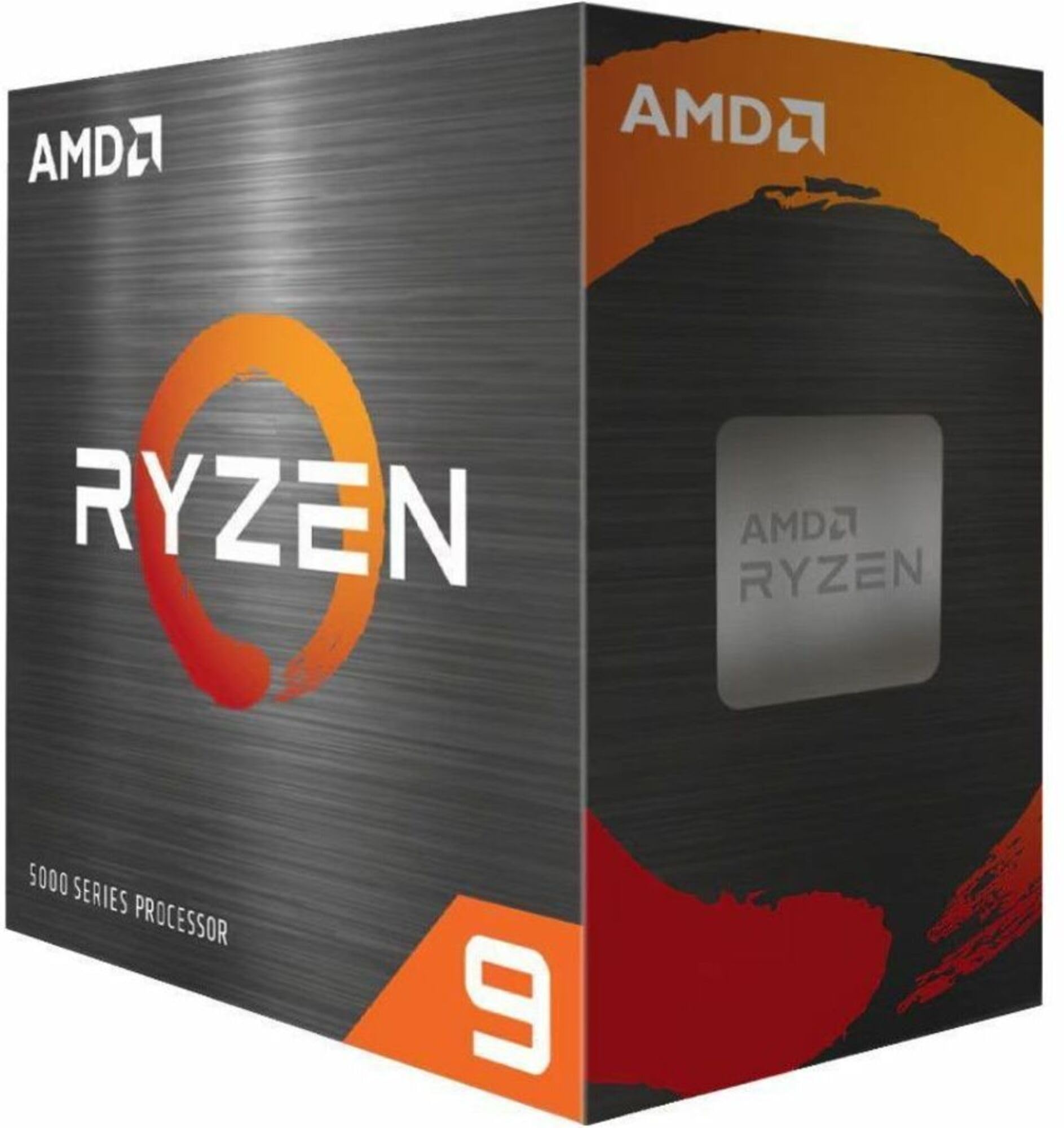
What you actually get at this lower price is 16 cores and 32 threads — 10 more cores and 20 more threads than the budget AMD Ryzen 5 5600X, creating a 4.0x gap in cores and a 2.7x gap in threads. This makes the 5900XT a phenomenal choice for content creation, video transcoding, or running virtual machines. Its 72MB cache is 3.6 times larger than the Intel Core i5-14400F’s 20MB cache, so data-heavy workloads feel much snappier. It runs on the mature AM4 platform with DDR4 memory, which keeps the total build cost lower than going with a new AM5 build.
Buyers report that the 5900XT runs cooler than the 5950X and is “great for multitasking” especially when “using OBS and playing video games at the same time.” One reviewer noted that it “never reaches 4.8 GHz boost” but that the all-core speed varies by workload type, which is common for high-core-count chips. Gamers should note that this chip has split CCDs (two separate groups of cores), which can introduce small delays in some games — one user recommended turning off the second CCD for gaming to get better performance. It also lacks an included cooler, so you need to budget for an AIO liquid cooler or a high-end air cooler.
If you are upgrading an existing AM4 system and want to maximize multi-threaded performance without buying a new motherboard and RAM, the 5900XT offers great value for money — the exact budget buyer it is perfect for.
Why we’d pick it
- 16 cores and 32 threads for heavy multitasking
- 72MB cache speeds up data-heavy workloads
- AM4 platform compatibility — extend your existing system’s life
A few caveats
- Not ideal for gaming due to split CCD latency
- No cooler included; requires a strong aftermarket cooler
6. AMD Ryzen 7 8700G

The AMD Ryzen 7 8700G is perfect for a compact mini ITX build under 3 liters where there is no room for a separate graphics card, as it is the only processor in this lineup with powerful integrated graphics that can actually play modern games without a dedicated GPU. It uses AMD’s “Zen 4” architecture with 8 cores and 16 threads, and its built-in RDNA3 graphics (a type of graphics chip designed for gaming) is roughly 20% as powerful as a dedicated RTX 4060 Ti (one reviewer measured it at 4.5 TFLOPS vs the RTX 4060 Ti’s 22 TFLOPS). This lets you run games at 1080p low-to-medium settings between 32 and 65 FPS — playable for many titles.
Owners mention that the processor itself draws only 65 watts under load, which is remarkably efficient for an 8-core chip and keeps temperatures manageable even in small cases. One buyer mentioned it is “ideal for sub-3L mini ITX builds for light gamers,” praising its low power consumption. However, buyers flagged an important detail: while the product page advertises a Wraith Spire (95-watt) cooler, it actually ships with the smaller Wraith Stealth (65-watt) cooler — adequate for stock operation, but you may want to upgrade if you push the processor hard. It requires an AM5 motherboard and DDR5 memory, so it is not a drop-in upgrade for older systems.
If you want a tiny home theater PC, a portable gaming rig, or an office computer that can handle a bit of light gaming without a dedicated GPU, the 8700G is the only processor here that delivers that specific capability. Just be realistic about its gaming limits — it will not replace a real graphics card for high-fidelity gaming.
Strong points
- Built-in RDNA3 graphics for light gaming without a GPU
- 65W power draw perfect for compact builds
- 8 Zen 4 cores for solid CPU performance
Before you buy
- Ships with lower-wattage cooler than advertised
- Limited gaming performance — not for AAA titles at high settings
7. Intel Core i5-14600K

The Intel Core i5-14600K occupies a sweet spot where you get 14 cores (6 P-cores + 8 E-cores) and 20 threads with a 5.3 GHz boost clock for a price that undercuts the higher-end chips. In terms of pure value, this processor matches or beats the more expensive AMD Ryzen 7 8700G in raw CPU performance while also including integrated Intel UHD Graphics 770 for basic display output. One reviewer called it “better value than 12700K” and noted that a modest cooler keeps temperatures under control, with idle settling around 35-70°C. It runs on either DDR4 or DDR5 memory and fits Intel 600 and 700-series motherboards, making it a flexible choice for upgrades.
Customers note that the 14600K “runs hot (85°C under load) but manageable with quality paste/cooler,” and that underclocking (running it slower to reduce heat) can deliver excellent results with less heat — one user who underclocked rated it a “10/10.” It handles video editing encoding tasks “snappily” compared to older 8th Gen processors, and for gaming it delivers smooth performance across all modern titles. The integrated graphics are not powerful enough for gaming, but they allow you to set up the system or troubleshoot without a dedicated GPU installed.
The one reason to choose this over the cheaper 14400F is the unlocked multiplier — the “K” suffix means you can overclock it (manually increase its speed), and the extra four E-cores give you more multitasking headroom for background tasks while gaming. It is the ideal choice for a mid-range gaming or content creation build where you want flexibility to overclock later.
What we like
- 14 cores with 5.3 GHz boost for excellent multi-threaded perf
- Integrated UHD Graphics 770 for basic display output
- Unlocked for overclocking — room to grow performance
The downsides
- Runs hot under full load — needs a decent cooler
- Integrated GPU is not for gaming
8. AMD Ryzen 5 5600X

6 cores and 12 threads from the Zen 3 architecture make the AMD Ryzen 5 5600X the gold standard for budget gaming builds — it is for the builder who wants proven 1080p and 1440p gaming performance without overspending. This processor delivers a Cinebench R23 score of approximately 1600 single-core and 11,000 multi-core, translating to roughly 90 FPS in Cyberpunk 2077 at 1080p Ultra and 140 FPS in Shadow of the Tomb Raider as measured by one reviewer. The included Wraith Stealth cooler is adequate for stock operation, running in the mid-70s°C under load, though you can upgrade later for quieter operation or overclocking.
At this lower price point, the 5600X delivers exceptional single-core performance on the mature and inexpensive AM4 platform with DDR4 memory, supporting PCIe 4.0 on compatible X570 and B550 motherboards for fast NVMe SSDs and modern graphics cards. One reviewer called it a “fantastic mid-range CPU for gaming and productivity,” noting it “beats Intel 10th-gen i5/i7” and competes with the i5-12600K while drawing less power at 65 watts. This makes it a strong choice for upgrading an older AM4 system or building a first gaming PC.
What you give up versus the Intel Core i5-14400F is core count — 6 cores and 12 threads versus 10 cores and 16 threads — meaning heavy multitasking like streaming while gaming is smoother on the Intel chip. But for pure gaming at 1080p where single-core speed is king, the 5600X remains a powerhouse and the top choice for the most frames per dollar.
Why it’s great
- Excellent single-core gaming performance for its price tier
- Runs cool at 65W — stock cooler is usable
- AM4 platform keeps total build cost low
Good to know
- 6 cores can struggle with heavy multitasking
- No integrated graphics — dedicated GPU required
9. Intel Core i5-14400F

What you actually get at this lower price point is 10 cores (6 performance cores plus 4 efficiency cores) and 16 threads with a 4.7 GHz boost — a substantial core count advantage over the top-pick AMD Ryzen 5 5600X’s 6 cores. This performance hybrid architecture (two different types of cores) means the Intel chip can assign background tasks to the efficiency cores while the performance cores focus on your game, which gives it an edge in multitasking scenarios. Reviewers point out excellent results: one reviewer measured temperatures of 60°C while gaming and 75°C during heavy video editing, calling it “stable after a week of heavy video editing and gaming.” The processor supports both DDR4 and DDR5 memory and works with Intel 600 and 700-series motherboards.
What you give up versus the 5600X is raw single-core gaming performance — the AMD chip’s Zen 3 architecture still holds an edge in many CPU-bound games. The 14400F also lacks integrated graphics, so you absolutely need a dedicated GPU to get any display output. Buyers who upgraded from older processors noticed significant improvements: one user who came from an i7 9700F reported about “25+ fps higher in games, smoother overall” and called it “excellent value.” The included RM1 thermal solution is basic but adequate for stock operation — you can always swap to a better cooler later for quieter operation.
This processor is perfect for the budget-minded builder who wants more multitasking headroom than the top-pick 5600X offers, especially if you stream, run Discord and Chrome in the background while gaming, or do light video editing. For the price, you get a modern architecture, plenty of cores, and the flexibility to choose between DDR4 and DDR5 memory.
Where it shines
- 10 cores (6P+4E) for smooth multitasking
- Runs cool — 60°C gaming with basic cooler
- Supports both DDR4 and DDR5 memory for flexible builds
Worth noting
- Locked multiplier — no overclocking support
- No integrated graphics — dedicated GPU required
Understanding the Specs
Cores and Threads
A core is a single processing unit within the processor — think of it as one brain doing one job. More cores let you do more jobs at the same time. Threads are the number of tasks a core can handle at once, with technologies like Intel Hyper-Threading and AMD Simultaneous Multi-Threading letting each core handle two threads simultaneously. For gaming, 6 to 8 cores is usually enough; for video editing or 3D rendering, 12 to 16 cores make a real difference. The Ryzen 9 5900XT with 16 cores and 32 threads is an example of a high-core-count chip built for multi-threaded workloads.
Clock Speed and Boost Clock
The clock speed, measured in GHz, tells you how fast a core executes instructions. A higher number means snappier response in games and single-threaded tasks. Boost clock is the maximum speed a processor can reach under load — the Intel Core i9-14900KF hits up to 6.0 GHz, the highest in this lineup. That boost speed matters most for gaming, where fast core-to-core communication translates directly into higher frame rates.
Cache
Cache is a small, ultra-fast memory pool built directly onto the processor that holds data the CPU needs frequently. A larger cache means the processor spends less time waiting for data from the main system memory (RAM), which reduces latency and improves performance in games and data-heavy apps. The AMD Ryzen 7 9800X3D has a massive 96MB L3 cache — a key reason it leads the pack in gaming benchmarks. The Ryzen 9 9900X3D goes even further with 140MB of total cache.
Socket and Platform
The socket is the physical interface that connects the processor to the motherboard. Choosing the wrong socket means the processor will not physically fit. Intel’s current sockets include LGA 1700 (for 12th-14th Gen) and LGA 1851 (for Core Ultra). AMD uses AM4 (for Ryzen 5000 series and 5900XT) and AM5 (for Ryzen 7000 and 9000 series). Always match the processor’s socket to a compatible motherboard — for example, the Ryzen 5 5600X is an AM4 chip that fits B550 and X570 motherboards.
FAQ
Do I need more cores or a higher clock speed for gaming?
What is the difference between a K and KF Intel processor?
Can I use DDR4 memory with an AM5 processor?
Do I need a cooler if the processor box says cooler included?
Final Thoughts: The Verdict
For the majority of shoppers, the computer processor winner is the AMD Ryzen 7 9800X3D because it offers the highest gaming performance available with excellent efficiency and runs on the modern AM5 platform. If you want a balance between gaming and content creation, grab the AMD Ryzen 9 9900X3D for its 12 cores and massive 140MB cache. And for the best value that does not compromise on everyday performance, the Intel Core i5-14400F delivers 10 cores of solid power at a budget-friendly price point.

Mo Maruf
I created WellFizz to bridge the gap between vague wellness advice and actionable solutions. My mission is simple: to decode the research and give you practical tools you can actually use.
Beyond the data, I am a passionate traveler. I believe that stepping away from the screen to explore new environments is essential for mental clarity and physical vitality.