Our readers keep the lights on and my smoothie glass nicely filled. As an Amazon Associate, I earn from qualifying purchases.
You want to drill a perfectly round, exactly-placed 35mm hole in every cabinet door, without splitting the wood or misaligning the hinge. One loose guide or a missed measurement, and your door tilts, gaps unevenly, or just will not close right. The right jig removes that guesswork, turning a nerve-racking task into something you can repeat on every door.
I’m Mohammad Maruf — the co-founder and writer behind WellFizz. This guide is built by comparing the manufacturers’ published specifications and the patterns across verified customer reviews, so you get each pick’s real strengths and trade-offs instead of marketing spin.
After drilling through the specs of all the top contenders, one model stands out for its metal build, double-clamp stability, and positive owner feedback as the best concealed hinge jig for both hobbyists and production jobs.
How To Choose The Best Concealed Hinge Jig
Every hinge jig does one core job: guide a 35mm Forstner bit straight into the back of a cabinet door at a precise distance from the edge. The difference between a frustrating afternoon and a smooth assembly lies in a few key decisions. Here is what to check before you click “buy.”
Guide Bushing Fit — The Real Accuracy Factor
The metal sleeve inside the jig that your drill bit passes through is called the guide bushing (a tube that keeps the bit from wandering). If that bushing is noticeably wider than your bit, you get “slop” — the bit can lean side-to-side by as much as 1/8 inch, as some owners have found. A tight, bearing-supported bushing keeps the bit perpendicular (straight up and down) to the door face, so every cup hole is round and positioned exactly where you marked it.
Edge Spacing and Overlay Adjustment
The distance from the edge of the cup hole to the door edge is called edge spacing (usually adjustable between 3mm and 7mm). That tiny number controls the “overlay” — how much the door overlaps the cabinet frame. Most standard hinges use 4mm or 5mm. A jig with a precise, lockable adjustment saves you from having to shim or re-drill doors to get an even gap around every cabinet face.
Clamp System and Panel Thickness
You need the jig to hold still while you push the drill in. Quick-clamp levers are faster to set up than screw-knobs, but they must reliably grip panels between 15-25mm thick (the standard for most cabinet doors). A jig with two clamps, front and back, is much less likely to rock under drilling force than a single-clamp design.
Quick Comparison
On smaller screens, swipe sideways to see the full table.
| Model | Category | Best For | Key Spec | Amazon |
|---|---|---|---|---|
| 35mm Metal Concealed Hinge Jig | Aluminum Alloy | Budget-friendly metal build | 12mm bore with double bearings | Amazon |
| BI-DTOOL 35mm Jig | Engineering Plastic | Entry-level simplicity | Adjustable dial: 3, 4, 5, 6mm | Amazon |
| Milescraft 1342 | Plastic/Metal | Complete kit for first-timers | Includes 35mm Forstner bit, pilot bit | Amazon |
| JEEJINYAN Hinge Hole Punch | Aluminum Alloy | High-precision metal jig | 3-bearing guide for reduced wobble | Amazon |
| XUNTOP 35mm Hinge Jig | Aluminum Alloy | Best Overall Pick | Double clamp, bearing sleeve | Amazon |
In‑Depth Reviews
1. XUNTOP 35mm Concealed Hinge Jig
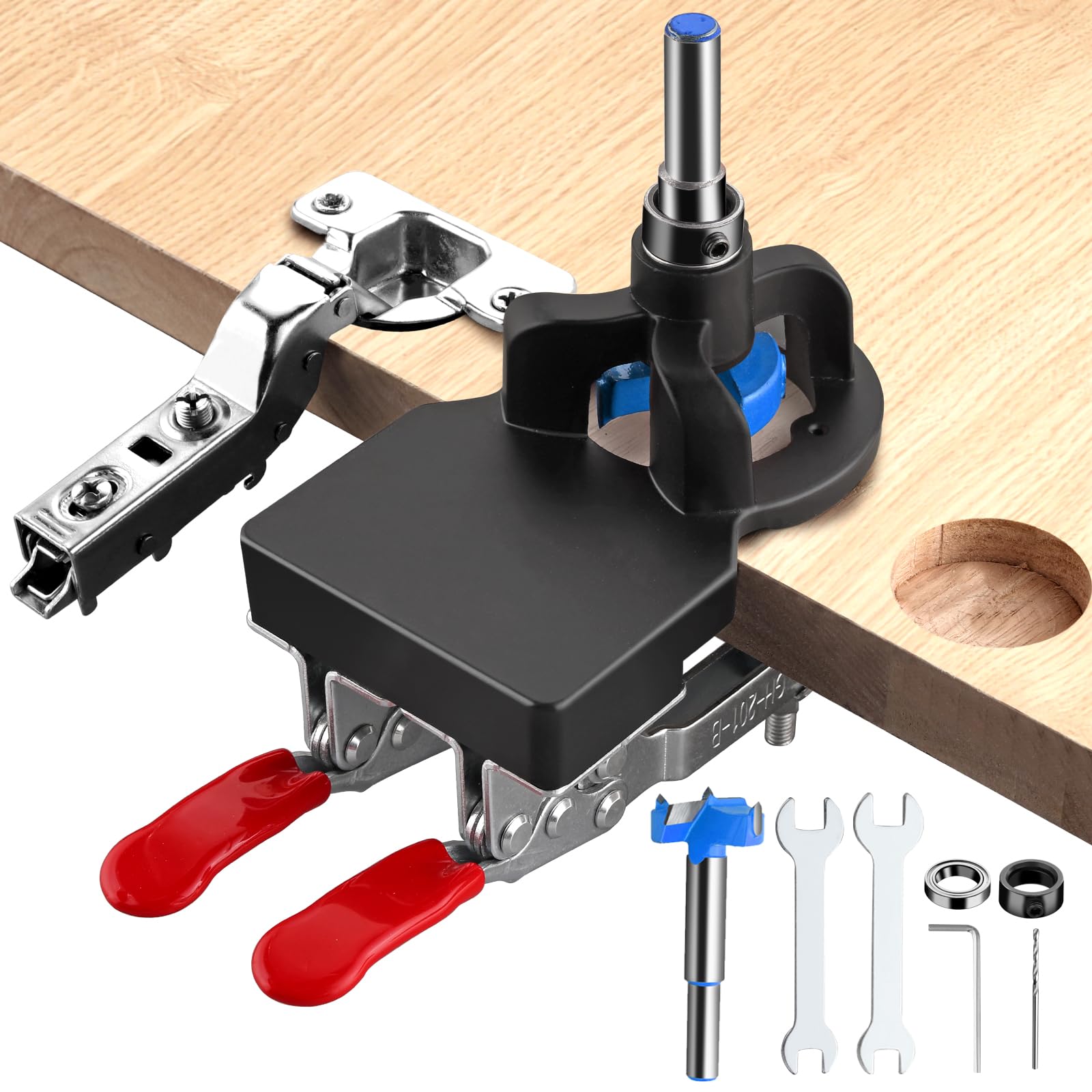
35mm bit size and a precision-machined aluminum alloy body make the XUNTOP the top pick for anyone who wants reliable, repeatable results without needing a second attempt — a material that resists rust and stays dimensionally stable (it will not warp over time) pairs it with a bearing-supported drilling sleeve that stops the bit from binding or wobbling mid-hole.
Its double-clamp design grips panels front and back, which matters when you are drilling 40-plus holes in one session: one reviewer noted drilling over 40 holes without any issue and the included 35mm bit staying sharp the whole way. The adjustable depth setting lets you limit the cup hole to between 10-15mm deep, so you do not punch through the face of the door.
The only real friction is the setup time; several buyers mention it takes a few test cuts to dial in the edge spacing and clamp tension. Once it is set, though, you can run through a whole kitchen’s worth of doors without re-measuring. Buy this if you want to move from frustration to finished in one afternoon.
Why it’s great
- Double clamps for rock-solid hold on panels 15-25mm thick
- Aluminum alloy body resists wear and stays accurate
- Includes bearing for smoother, wobble-free drilling
Good to know
- Setup requires a few test cuts to dial in the measurements
- Some users found the included bit could be sharper for dense hardwoods
2. JEEJINYAN Concealed Positioning Hinge Hole Punch

Where the XUNTOP leads on overall value, this JEEJINYAN jig beats it on pure guide stability. Its three-bearing design — compared to the XUNTOP’s single bearing sleeve — reduces lateral shaking of the drill bit noticeably, which makes a real difference when you need the cup hole perfectly vertical in a thick hardwood door.
It has a thoughtful extra: a 2mm-deep edge-banding groove machined into the base. That means if your cabinet doors have a plastic or wood veneer strip glued to the edge, the jig sits flat instead of rocking. One buyer mentioned they built 8 cabinet doors and hinged them easily with this device, and the work looked professional.
Its clamping range (15-25mm) and drilling depth (10-15mm) match the XUNTOP exactly, but the extra bearing support makes this the better choice if you are working with dense materials like oak or maple where drift is more likely. Choose this over the top pick when your project involves thick hardwood doors or edge-banded panels where stability and a flat seating surface matter more than overall value.
Where it shines
- Three bearings minimize bit wobble for straighter holes
- Edge-banding groove lets it sit flush on sealed doors
- Spray-finished aluminum base stays flat and durable
Worth noting
- Setup takes time to dial in, similar to most metal jigs
- Some owners found it slower to adjust than a Kreg jig
3. 35mm Metal Concealed Hinge Jig by Idong

If you need an affordable metal jig for lighter use — maybe you are building a single cabinet unit or replacing the hinges on a bathroom vanity — this Idong model gets the job done without the premium price. At its core is an aluminum body with a 12mm bore lined with double bearings intended to reduce wear on the drill shank.
But the honest trade-off here is guide fit. One owner reported that the metal guide aligning the Forstner bit is “way oversize,” allowing side-to-side play of up to 1/8 inch. That slop can shift the hole location enough to cause a cabinet door to tilt after assembly. The clamp assembly itself works well and feels solid, but the loose bushing means this jig demands careful, slow drilling to keep things true.
It is a decent entry-point for DIYers, but for a project where every door must line up perfectly — like a kitchen with multiple cabinets — the tighter bushing of the XUNTOP or JEEJINYAN is a safer bet.
What stands out
- Aluminum alloy body at a budget-friendly price point
- Double clamps hold the jig firmly on the door edge
- Adjustable edge spacing from 3-7mm covers common overlays
The trade-offs
- Guide bushing is oversize, allowing 1/8 inch bit wobble
- Not suitable for large or multi-door professional projects
4. Milescraft 1342 Euro Hinge Jig

The single number that matters most in this category is the included 35mm Forstner bit with a depth stop, and this Milescraft jig scores a perfect 1.0 by arriving with everything in the box: a 35mm Forstner bit with a depth stop, a 1/16 inch pilot bit for the hinge screws, a metal locator pin, a cabinet marking template, and even a 3mm Allen key. That completeness is its main argument, saving you the separate trip to buy a Forstner bit.
The body is mostly plastic with metal bushings built into the guide — a design that keeps weight down but does have limits. Buyers report that the 1/16 inch guide holes for the mounting screws are not perfectly positioned; one buyer found Blum hinge holes off by about 0.015 inches, though they still worked fine. Multiple owners recommend greasing the bit shaft to prevent plastic deformation around the bushing during longer drilling runs.
Where it stands out is the integrated depth-setting fixture and the detachable hinge marking guide that helps you transfer center lines to the cabinet frame. It is a well-thought-out kit for hobbyists, but the plastic construction and slight offset inaccuracies mean it is not the daily driver for seasoned pros, making its price-to-value read as a budget-friendly starter kit rather than a pro-grade investment.
The upsides
- Includes 35mm Forstner bit, pilot bit, and marking gauge
- Self-contained design stores all parts in the jig body
- Depth stop built into the bit for consistent cup depth
Keep in mind
- Plastic body can deform if bit overheats; grease the shaft
- Pilot guide holes may shift ~0.015 inches from perfect
5. BI-DTOOL 35mm Hinge Drilling Jig

What you actually get at this lower price is an engineering plastic jig with a clever adjustable dial that clicks into four edge-spacing positions — 3, 4, 5, and 6mm — so you do not have to fiddle with a loose screw or guess a measurement. Its small size (under 9 inches long) and light weight (0.1 kg) make it easy to tuck into a tool pouch.
What you give up is durability and consistency over many holes. The plastic body lacks the thermal stability of metal; after drilling 24 holes on 12 doors in one session, a buyer reported slight offset inconsistency and recommended using the marking guide plate to keep orientation the same every time. Another owner found their order was missing the locating rod and drill bit, which is a quality-control risk at this budget tier.
However, the included bit is described as “razor sharp,” and one nervous first-timer who was scared to drill into their cupboards said the jig “worked perfectly and made it very easy.” Pick this for a single small project — one cabinet, one door — where you want the lowest cost and you are okay with a few extra minutes of setup care. For repeat work or production runs, the XUNTOP’s metal build earns its higher tier. This is the perfect budget buyer for a one-off kitchen fix or a weekend DIY task with no plans for a second cabinet.
Why we’d pick it
- Click-stop dial for fast, repeatable edge spacing changes
- Works with both 35mm and 26mm hinges
- Very lightweight and compact for easy storage
A few caveats
- Plastic body may show offset drift over many holes
- Some units arrive missing parts like the locating rod
Understanding the Specs
Edge Spacing
This is the distance from the edge of the 35mm cup hole to the edge of the cabinet door. It controls how much the door overlaps the cabinet frame (called the overlay). Standard concealed hinges expect an edge spacing of 4mm or 5mm. A jig with a lockable, adjustable edge-spacing mechanism — usually between 3mm and 7mm — lets you fine-tune that gap so doors sit flush and gaps stay even across the whole kitchen.
Guide Bushing Fit
The guide bushing is the metal sleeve inside the jig that the Forstner bit passes through. If the bushing has too much clearance — meaning it is wider than the bit by more than a hair — the bit can wobble side to side, producing an oversized or off-center hole. A bearing-supported bushing with a tight fit keeps the bit perfectly perpendicular to the door face, which is the single biggest factor in hole accuracy.
FAQ
Can I use a concealed hinge jig on doors that already have edge banding?
What is the difference between a 35mm jig and a 26mm jig?
Why does the jig need a bearing in the guide bushing?
Final Thoughts: The Verdict
For the majority of shoppers, the best concealed hinge jig winner is the XUNTOP 35mm Hinge Jig because its aluminum alloy body, double clamps, and bearing-supported guide deliver professional-grade accuracy without the premium price. If you want the most stable drill guidance possible, grab the JEEJINYAN Hinge Hole Punch with its three-bearing system. For a single-project budget buy, the BI-DTOOL 35mm Jig gives you simplicity and the lowest cost.

Mo Maruf
I created WellFizz to bridge the gap between vague wellness advice and actionable solutions. My mission is simple: to decode the research and give you practical tools you can actually use.
Beyond the data, I am a passionate traveler. I believe that stepping away from the screen to explore new environments is essential for mental clarity and physical vitality.