Our readers keep the lights on and my smoothie glass nicely filled. As an Amazon Associate, I earn from qualifying purchases.
Tired of wiggling a mouse every time you need to draw a straight line or sign a document? A drawing tablet is the fix you need. It replaces your mouse with a pressure-sensitive pen that feels like a real marker or pencil, so your hand moves naturally while the lines appear on your computer screen. The hard part is picking one from the dozens of models that all claim to be the best. This guide cuts through the noise to show you exactly which one fits your skill level, your software, and your desk space.
I’m Mohammad Maruf — the co-founder and writer behind WellFizz. This guide is built by comparing the manufacturers’ published specifications and the patterns across verified customer reviews, so you get each pick’s real strengths and trade-offs instead of marketing spin.
Whether you are a beginner sketching in Photoshop or a pro running ZBrush in 4K, the right best computer drawing tablets depend on how much active area you need and whether you want to draw directly on a screen or look at your monitor while your hand works on a pad.
How To Choose The Best Computer Drawing Tablets
Picking the right drawing tablet comes down to three clear decisions: do you want to look at your computer monitor or at the tablet’s own screen, how large an area do you want your hand to move across, and how fine a line do you need your pen to draw. Answer those three questions, and everything else — shortcut keys, wireless connection, brand — falls into line naturally.
Pen Tablet vs Pen Display
The single biggest fork in the road: a pen tablet (sometimes called a “pad” or “board”) has no screen — you draw on the blank surface while looking up at your monitor. A pen display has a built-in LCD screen where the image appears right under the pen tip, so you draw directly on top of your work. Pen tablets cost much less and stay portable, whereas pen displays give a more natural hand-eye coordination because you are not looking away from your hand. If you are a beginner or operate on a tight desk, start with a pen tablet. If you are a professional illustrator who needs pixel-perfect placement, get a pen display.
Active Area Size
This is the rectangle you draw on, measured in inches. A larger active area (10 by 6 inches or bigger) lets you make broad, sweeping arm strokes rather than tiny wrist flicks. That is a big deal for painters and animators who need fluid curves. A smaller area (around 6 by 4 inches) fits in a laptop bag and works fine for note-taking, signing documents, or editing photos where you zoom in anyway. Match the active area to the size of your monitor — a 10-inch tablet maps well to a 24-inch screen, while a 6-inch pad feels cramped on a 32-inch 4K display.
Pressure Sensitivity and Tilt
Pressure sensitivity is measured in levels. 8192 levels is the modern standard for nearly every tablet on the market today — it captures every light sketch to a heavy press. A few premium pen models, like the X3 Pro stylus, reach 16384 levels. That matters if you do extremely subtle charcoal or watercolor shading. Tilt support (usually 60 degrees) means the tablet detects the angle of your pen, letting you shade with the side of the nib just like a real pencil. Every tablet in this guide includes tilt, but not all software uses it — check that your app (Photoshop, Krita, Clip Studio Paint) has a tilt-aware brush before relying on it.
Shortcut Keys, Scroll Wheel, and Connectivity
Shortcut keys (also called ExpressKeys or press keys) let you assign common commands like undo, save, or brush size to physical buttons instead of reaching for the keyboard. A scroll wheel lets you zoom or scroll through layers. If you use multiple apps, look for a tablet with multiple button sets — some Huion models offer 3 sets of 8 keys. Connectivity can be USB-C wired (simplest and most reliable), Bluetooth (great for desk clutter or wireless freedom, but adds a tiny bit of latency), or a USB wireless receiver. If you plan to use the tablet with an Android phone or iPad, verify Bluetooth compatibility before buying — not every model supports mobile wireless pairing.
Quick Comparison
On smaller screens, swipe sideways to see the full table.
| Model | Category | Best For | Key Spec | Amazon |
|---|---|---|---|---|
| Wacom Cintiq 16 | Pen Display | Artists who want to draw on-screen | 15.6″ IPS with 2560 x 1600 resolution | Amazon |
| Wacom Cintiq Pro 22 | Pen Display | Professional color-critical work | 21.5″ 4K with 10-bit color depth | Amazon |
| XPPen Deco Pro LW 2nd | Pen Tablet | Wireless freedom and 16K pressure | 9 x 6 inch active area with Bluetooth 5.0 | Amazon |
| HUION Inspiroy Frego | Pen Tablet | Minimalist design with 24-hour battery | 10 x 6.25 inch active area with 2560×1600 native resolution | Amazon |
| HUION Inspiroy 2 Large | Pen Tablet | Budget-conscious beginners and teachers | 10.5 x 6.56 inch with 3 sets of shortcut keys | Amazon |
| HUION Inspiroy 2 Medium | Pen Tablet | Portable laptop companion | 8.7 x 5.4 inch with scroll wheel at 420 grams | Amazon |
| GAOMON M10K | Pen Tablet | Extreme budget for beginners | 10 x 6.25 inch with 10 shortcut keys | Amazon |
In‑Depth Reviews
1. Wacom Cintiq Pro 22

The 21.5-inch Ultra HD 4K screen with 10-bit color depth (over a billion distinct colors) makes the Wacom Cintiq Pro 22 the top pick for the graphic designer, animator, or illustrator who works in color-critical environments. Buyers report that the drawing feel on the etched glass is excellent, and the 120Hz refresh rate keeps the cursor moving with near-zero latency, so your strokes appear instantly.
The Pro Pen 3 offers 8192 levels of pressure sensitivity, three customizable side switches, and adjustable grips so you can fine-tune the weight and balance of the pen exactly to your hand. The built-in Easy Stand lets you tilt the display to any fixed angle, and the 8 ExpressKeys keep your most-used commands right at your fingertips. This is the tablet that pays for itself in precision alone. If you do lighter work and could live with a smaller, non-4K screen, the Wacom Cintiq 16 (our next pick) saves you about half the investment while still delivering professional color.
This is the professional standard for color-critical work.
Why it’s great
- Ultra HD 4K screen with 10-bit color for over a billion colors
- 120Hz refresh rate provides buttery-smooth cursor movement
- Customizable pen grip, weight, and balance in the Pro Pen 3
Good to know
- Heavy at 11 pounds — not meant for casual portability
- Requires a separate stand or arm for ergonomic use (some find the Easy Stand wobbly)
2. Wacom Cintiq 16
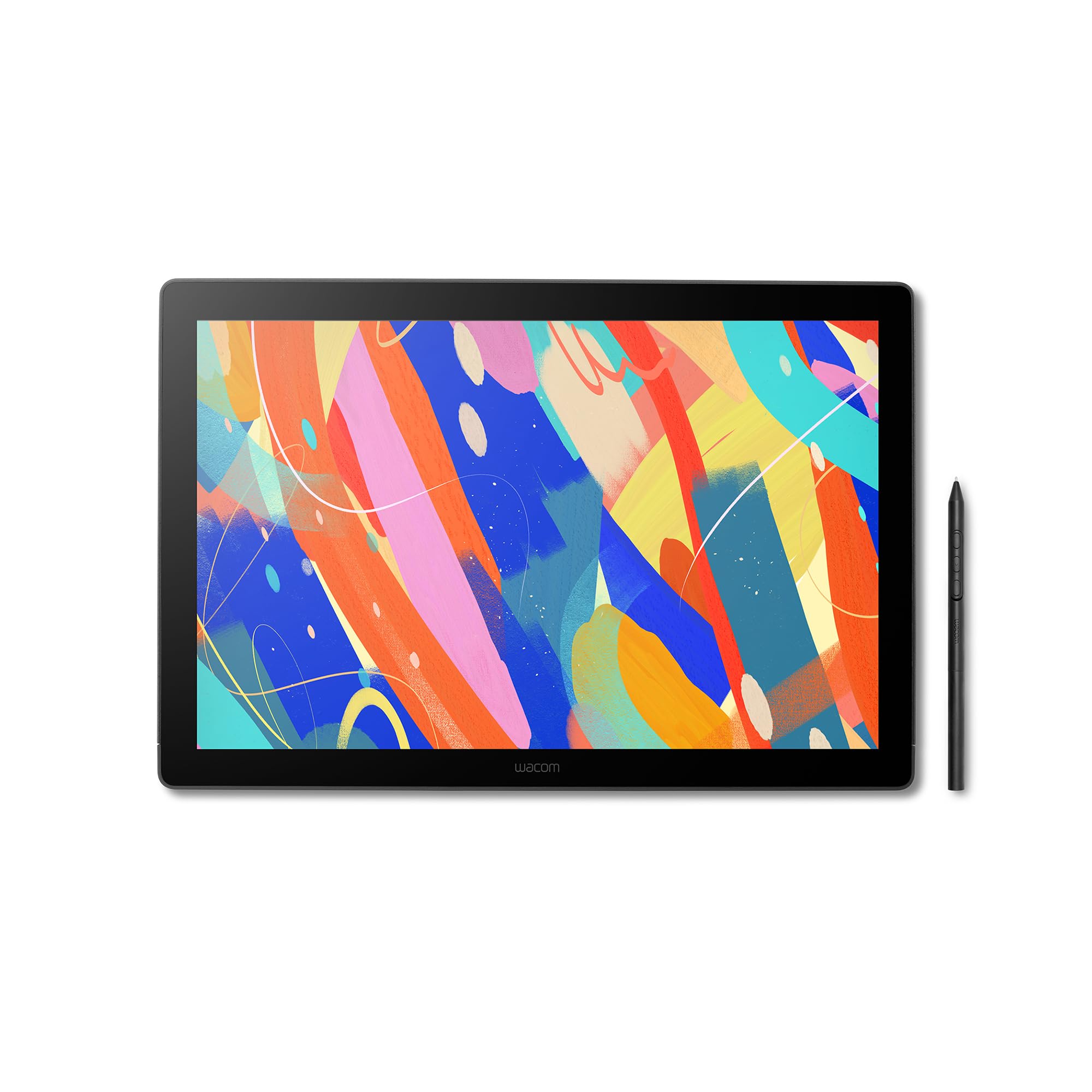
The Wacom Cintiq 16 brings the “draw-on-screen” experience to a much lower price point than the Cintiq Pro 22. You lose the 120Hz refresh and 4K resolution, but you still get a sharp 2560 x 1600 (2.5K) IPS display with 100% sRGB coverage (a standard color gamut for web and print work), so your colors look accurate right under your hand. Owners mention the anti-glare glass has zero sparkle effect, making it feel like you are drawing on real paper rather than a glossy phone screen.
The built-in fold-out legs give you a natural 20-degree working angle without buying a separate stand, and the Pro Pen 3 responds to your lightest touch with 8192 pressure levels. The 15.6-inch active area (13.6 x 8.5 inches) is large enough for broad arm strokes but compact enough to slide into a spare laptop bag — at 4.5 pounds, it is about 60% lighter than the Pro 22.
Choose the Cintiq 16 over the top pick if you want professional color fidelity and pen response without needing the absolute highest resolution or a multi-touch interface, and if you prefer a lighter, more portable setup that saves desk space and budget.
Where it shines
- Professional 100% sRGB color coverage + 99% DCI-P3 for vibrant, accurate colors
- Anti-glare glass eliminates distracting reflections and sparkle
- Built-in fold-out legs for instant 20-degree tilt, no stand required
Worth noting
- No shortcut buttons on the tablet itself — relies on the pen buttons and keyboard
- No HDMI cable included in the box; you may need to purchase one separately
3. XPPen Deco Pro LW 2nd

For the artist who wants to ditch the cable without sacrificing pen quality, the XPPen Deco Pro LW 2nd delivers Bluetooth 5.0 wireless freedom and an upgraded X3 Pro stylus with 16384 levels of pressure sensitivity (double the standard 8192), meaning it picks up every tiny gradation in your brush stroke. Customers note the wireless connection works flawlessly with a high-end laptop, and the large-capacity 1000mAh battery keeps you drawing for over 10 hours on a single charge.
The active area is 9 by 6 inches, which matches a standard A4 notepad. It comes with a Mini Keydial remote — a separate puck with 10 customizable shortcut keys that you can assign in up to 4 different sets for different apps. The metal back plate helps the tablet stay cool during long studio sessions, and at just over a pound, it is easy to slide into a laptop sleeve. The 16384 pressure levels give you control that the standard 8192 models like the HUION Inspiroy Frego simply cannot match — if you do subtle shading or work with soft brushes in Procreate-style apps on your computer, this pen tablet responds to the ghost of a touch.
With 16384 levels of pressure sensitivity, this pen tablet responds to the ghost of a touch.
What stands out
- Double the pressure sensitivity: 16384 levels for ultra-fine brush control
- Bluetooth 5.0 + USB wireless receiver for flexible, cable-free use
- Over 10 hours of continuous battery life on a full charge
The trade-offs
- Bluetooth wireless does not work with Android or Linux — use wired or the receiver for those systems
- Some Mac users report needing to grant accessibility permissions before the driver works smoothly
4. HUION Inspiroy Frego Medium

The HUION Inspiroy Frego focuses on the single number that matters most if you hate charging cables: a 24-hour battery life from a 2.5-hour charge, so you can grab it and go for an entire work week without plugging in. Its 10 by 6.25-inch active area is slightly smaller than a sheet of A4 paper, giving you plenty of room for sweeping sketches without hogging your desk.
The catch you accept here is the lack of physical shortcut keys — the Frego has a minimalist design with no press buttons or scroll wheel, so every command must come from the pen’s two side buttons or your keyboard. The PW550S pen uses PenTech 3.0+ with 60-degree tilt support and a 0.4mm retraction distance (how far the nib pushes in before registering a full-strength line), making it feel solid and responsive. Reviewers point out the surface is accurate with excellent pressure and tilt in apps like Affinity Photo, though Lightroom users mention a bit of lag (that is an app limitation, not the tablet).
If you want shortcut keys and a scroll wheel instead, the HUION Inspiroy 2 Large gives you 24 programmable buttons for a similar price, but you lose the wireless battery life — making the Frego a strong price-to-value read for anyone who prioritizes untethered portability over physical controls.
The upsides
- Up to 24 hours of use from a single 2.5-hour charge — best battery life in this roundup
- Large 10 x 6.25-inch active area in a lightweight 546-gram package
- Bluetooth + USB-C connectivity for flexible, fuss-free setup
Keep in mind
- No physical shortcut keys or scroll wheel — all commands come from the pen or keyboard
- The drawing surface is slightly scratchy with both standard and felt nib tips
5. HUION Inspiroy 2 Large

At this entry-level price, the HUION Inspiroy 2 Large gives you a massive 10.5 x 6.56-inch active drawing area — that is actually larger than the Wacom Cintiq 16’s drawing surface, so your arm can make big, loose gestures without running off the edge. It comes with the PW110 stylus (PenTech 3.0), 8192 pressure levels, 60-degree tilt support, and 3 separate sets of 8 shortcut keys (24 possible shortcuts total across your favorite apps), plus a scroll wheel for zooming through timelines or brush galleries.
What you give up at this price point is the premium build materials — it is a lightweight plastic body (weighing just 1.2 pounds) that reviewers admit feels like it could break if dropped hard. The connection is USB-C wired only (no Bluetooth), so you are tethered to your computer, which is fine for a stationary desk setup. Shoppers say that it works well with Krita and older PC games out of the box, and the driver software is simple to configure.
If you are a beginner, a teacher using it for whiteboarding, or a student on a tight budget who still wants a big canvas, this is the sensible choice — you get the active area of a tablet three times its price without sacrificing pressure sensitivity or shortcut flexibility. If you need wireless, the HUION Inspiroy Frego costs a bit more but cuts the cord.
Why we’d pick it
- Generous 10.5 x 6.56-inch active area for sweeping arm strokes
- 3 sets of 8 shortcut keys (24 total) plus a scroll wheel for efficient workflows
- PenTech 3.0 with 8192 pressure and 60-degree tilt support
A few caveats
- Plastic body feels fragile — handle with care and avoid drops
- Wired USB-C only; no Bluetooth for wireless use
6. HUION Inspiroy 2 Medium

If you work from coffee shops, co-working spaces, or a compact dorm desk, the HUION Inspiroy 2 Medium is the most portable pick in this lineup — it weighs just 420 grams, making it a full 65% lighter than the GAOMON M10K (695 grams), so it disappears into a laptop bag. Its 8.7 x 5.4-inch active area is roughly the size of a small paperback, perfect for sketching on the go without needing to shift your arm.
The feature that serves this nomadic creative best is the scroll wheel and 8 programmable shortcut keys — you can assign brush size, zoom, and undo to physical controls without hunting for keyboard shortcuts. The PW110 stylus has a slim body with a soft silicone grip that reduces hand fatigue during long sessions, and PenTech 3.0 delivers smooth, wobble-free lines. Reviewers praise its simple installation, long USB-C cable, and adjustable pressure sensitivity.
The one honest limit is the lack of Bluetooth — like the Large version, this is a wired-only tablet. If you absolutely need to cut the cord at a similar weight, the HUION Inspiroy Frego (with its 24-hour battery) is a better match, but you lose the shortcut keys. This model is the best balance of portability and physical controls for the mobile digital artist.
Strong points
- Ultra-portable at just 420 grams — 65% lighter than the GAOMON M10K
- Convenient scroll wheel and 8 customizable shortcut keys for quick access
- PenTech 3.0 stylus delivers smooth, accurate lines with no noticeable lag
Before you buy
- Wired USB-C only — no Bluetooth for a cable-free experience
- Pen nibs wear down over time, and some users find the scroll wheel hard to press
7. GAOMON M10K

At the lowest price in this roundup, the GAOMON M10K gives you a surprisingly large 10 x 6.25-inch active area and a battery-free AP31 stylus with 8192 pressure levels — the same core specs found on tablets that cost multiple times more. You also get 10 physical shortcut keys and a touch ring that you can program for zooming, brush adjustment, or page scrolling, all of which make the tablet feel far more capable than its price suggests.
What you give up is the polish in build and feel — at 695 grams, it is noticeably heavier than the HUION Inspiroy 2 Medium, and reviewers report that the pen requires a slightly harder press after the first hour of continuous use. The connection is via USB only (no wireless), and the driver must be downloaded from the GAOMON website. On the plus side, buyers report it is easy to set up in under 10 minutes and works flawlessly with online teaching platforms like Zoom and Microsoft Whiteboard.
If your budget is extremely tight and you need a large active area with plenty of shortcut keys — whether you are a beginner artist, a teacher doing remote instruction, or someone who just wants to sign documents digitally — the GAOMON M10K is the sensible choice, especially if you do not mind the extra weight and wired connection.
What we like
- Large 10 x 6.25-inch active area with battery-free 8192-pressure pen at a budget price
- 10 customizable shortcut keys plus a programmable touch ring for efficient navigation
- Compatible with certain Android devices (Android 11–14) for mobile sketching
The downsides
- Heavier than most competitors at 695 grams — less portable for travel
- Pen sensitivity may feel slightly heavier after extended use (1–2 hours)
Understanding the Specs
Pressure Sensitivity Levels
This number (8192, 16384, etc.) tells you how many different levels of force the pen can detect, from a light hover to a hard press. The higher the number, the finer the control you have over brush opacity and line thickness. 8192 is the modern standard and is plenty for all but the most subtle charcoal or watercolor work — 16384 is a premium upgrade that matters mainly for professionals who work in very soft mediums.
Active Area
This is the rectangular drawing surface measured in inches (e.g., 10 x 6.25 inches). A bigger active area lets you draw with your whole arm instead of just your wrist, which produces more natural, fluid lines. Match this to your monitor size — a 10-inch-wide tablet pairs well with a 24-inch monitor, while a 6-inch tablet works for a laptop screen. If the area is too small, you will find yourself zooming in constantly to make fine details.
Pen Technology (PenTech)
PenTech 3.0 and 3.0+ are HUION’s names for the processor inside the stylus that tracks position and pressure. A newer version means less wobble in diagonal lines and faster response. For XPPen, the X3 Pro chip does the same job. Both are battery-free, meaning you never charge the pen — it draws a tiny amount of power from the tablet surface through electromagnetic resonance.
Tilt Support
Tilt (measured in degrees, typically 60°) means the tablet can sense the angle at which you hold the pen, just like a real pencil. When you tilt a pencil to shade the side of the tip, tilt support makes the digital brush do the same thing. This only works in drawing apps that have tilt-aware brushes (many do, including Photoshop, Krita, and Clip Studio Paint).
FAQ
Will a drawing tablet work with my specific drawing software?
Can I use a drawing tablet with my phone or iPad?
Do I need a screen protector for a pen display like the Wacom Cintiq?
Final Thoughts: The Verdict
For most people, the best computer drawing tablets winner is the HUION Inspiroy Frego because it balances a large 10-inch active area, 24-hour Bluetooth battery life, and excellent pressure and tilt support at a price that fits a wide range of budgets. If you want the pinnacle of on-screen drawing performance for professional color-critical work, grab the Wacom Cintiq Pro 22. And for the most portable wired tablet with the best shortcut layout, the compact HUION Inspiroy 2 Medium is the one to beat — it weighs only 420 grams and packs 8 shortcut keys plus a scroll wheel.

Mo Maruf
I created WellFizz to bridge the gap between vague wellness advice and actionable solutions. My mission is simple: to decode the research and give you practical tools you can actually use.
Beyond the data, I am a passionate traveler. I believe that stepping away from the screen to explore new environments is essential for mental clarity and physical vitality.