Our readers keep the lights on and my smoothie glass nicely filled. As an Amazon Associate, I earn from qualifying purchases.
Cooking with clay is one of the oldest culinary traditions still practiced today, and for good reason. The porous walls of a natural earthenware pot create a gentle, all-around heat that braises, steams, and roasts in a way metal cookware simply cannot replicate. If you have ever tasted a slow-simmered bean stew or a perfectly moist roast chicken from a clay pot, you already know the difference is unmistakable.
I’m Mohammad Maruf — the founder and writer behind WellFizz. I’ve spent countless hours researching the material composition, heat tolerance, and real-world durability of traditional clay cookware to separate authentic, high-performing vessels from decorative pieces that crack on first use.
The porous nature of fired clay allows moisture to circulate evenly, locking in nutrients and creating deep, layered flavors. After reviewing dozens of models, I have settled on the clear winners for the best clay pots for cooking.
How To Choose The Best Clay Pots For Cooking
Not every earthenware pot that looks beautiful on a shelf is built to survive a flame. Understanding a few key attributes will help you separate a daily-driver from a decorative piece.
Thermal Shock Resistance
Fired clay is inherently brittle. A pot that cannot handle temperature swings will crack the first time you set it on a hot burner or run it under cold water. Look for pots rated from well below freezing to above 700°F, especially if you plan to take them straight from the fridge to the stove.
Glazed vs. Unglazed Interiors
A glazed bottom makes cleanup effortless and prevents food from absorbing into the porous clay, which is ideal for tomato-based sauces and sticky rice. An unglazed lid, on the other hand, soaks up water before cooking and releases steam into the dish, creating a self-basting environment that yields exceptionally moist meat and fluffy grains.
Capacity and Cooking Style
A 1.5- to 2-quart pot works nicely for rice, individual stews, and side dishes. A 3.5- to 4.5-quart vessel can handle a whole chicken, a large batch of beans, or a loaf of sourdough bread. Match the size to your portion needs: too large and the liquid evaporates too fast; too small and you risk overflowing.
Quick Comparison
On smaller screens, swipe sideways to see the full table.
| Model | Category | Best For | Key Spec | Amazon |
|---|---|---|---|---|
| Eurita Clay Roaster | Dutch Oven Style | Whole Roasts & Loaves | 4 Quart / 11 lb capacity | Amazon |
| Heavy Duty Claypot by Souped Up Recipes | Porcelain Pot | Caramelization & Browning | 4.5 Quart / 4.8 Liters | Amazon |
| Ancient Cookware Cazuela | Handmade | Traditional Mexican Sauces | 3.5 Quart / 10.5″ Diameter | Amazon |
| Ancient Cookware Bean Olla | Traditional Shape | Simmering Beans & Legumes | 3 Quart / Handcrafted | Amazon |
| Crazy Korean Cooking Dolsot | Stoneware Bowl | Individual Bibimbap & Stews | 44 fl oz / Includes Trivet | Amazon |
| BSONEDO 1.9 Quart Clay Pot | Earthenware | Daily Soups & Stews | 1.9 Quart / Fired at 2300°F | Amazon |
| OnggiJonggi Korean Clay Hot Pot | Onggi Earthenware | Fermentation & Rice Dishes | 1400ml / Handmade | Amazon |
In‑Depth Reviews
1. Eurita Clay Roaster

The Eurita Clay Roaster operates on a unique principle: an unglazed lid soaks up water for twenty minutes before cooking, then releases steam throughout the roasting process. This self-basting cycle keeps a whole chicken incredibly moist while the glazed bottom section makes cleanup far simpler than a traditional fully unglazed pot. At 4 quarts, it comfortably fits a 5-pound bird or two loaves of bread simultaneously.
The glazed interior prevents acidic sauces like tomato or lemon from absorbing into the clay, which is a common problem with fully porous earthenware. The oblong shape is purposefully designed for roasting, allowing heat to circulate evenly around the food. Several long-term users report making sourdough bread every few weeks for years before minor cracking appeared, which speaks to the durability when handled with care.
Keep in mind that the lid should never be washed with soap as the unglazed clay will absorb the detergent flavor and transfer it to future meals. A soft brush and hot water are sufficient. The included recipe guide is genuinely useful, offering specific soaking times and temperature curves for different proteins and breads.
Why it’s great
- Unglazed lid creates steam-basting effect for incredibly moist roasts
- Glazed base makes cleanup easy compared to fully unglazed pots
- Large 4-quart capacity fits whole chicken plus vegetables
Good to know
- Requires soaking the lid for 20 minutes before each use
- Some users report cracking after 1-3 years of heavy use
2. Heavy Duty Claypot by Souped Up Recipes

This clay pot is built with noticeably thicker walls than most competitors, which directly improves its ability to sear and caramelize food before the liquid goes in. The enamel coating on the interior is smooth and non-porous, meaning there is zero risk of flavors transferring from one meal to the next. It handles traditional tasks like boiling dumplings and noodles just as well as slow-simmering a pot of congee for hours.
The lid features a steam vent hole, which is rare in clay cookware and helps prevent bubbling over when cooking starchy dishes like rice porridge or beans. The exterior painted finish comes in a vibrant blue that holds up well in the dishwasher.
The smooth enamel coating means seasoning is optional, and the pot can go from stovetop to oven without any special preparation. However, the enamel is not quite as non-stick as a seasoned cast iron surface, so fatty meats may stick slightly during the initial sear if you do not use enough oil. For soups, stews, and braises, this pot is nearly flawless.
Why it’s great
- Thick porcelain walls provide excellent heat retention and caramelization
- Enamel coating prevents flavor transfer and simplifies cleaning
- Lighter than cast iron Dutch ovens of similar size
Good to know
- Enamel can be slightly sticky for searing without sufficient oil
- Lid does not create the steam-basting effect of unglazed clay
3. Ancient Cookware Mexican Clay Cazuela

This cazuela is the real deal for anyone who wants to cook authentic Mexican moles, birria, or frijoles de la olla. Handcrafted in Hidalgo, Mexico, from natural terracotta clay, it has a rustic, slightly uneven surface that is characteristic of traditional pottery. The inner glaze is lead-free and food-safe, providing a barrier that keeps the clay from absorbing strong flavors while still allowing the pot to breathe.
The 3.5-quart capacity hits the sweet spot for cooking for a family of four. Users consistently praise how evenly the pot distributes heat for long simmers, and how the thick walls hold temperature for serving at the table. The round shape and generous diameter make it easy to stir thick sauces without splashing, and the fitted lid seals in moisture effectively.
Because this is handmade natural clay, the pot is more fragile than modern ceramic alternatives. It requires gradual warming on low heat and should never be placed on a cold surface after cooking. Some users express nervousness about breakage, which is understandable, but with proper handling — always using a heat diffuser on electric stoves — these pots last for generations. The pot should also be hand-washed without soap on the unglazed exterior.
Why it’s great
- Handcrafted by Mexican artisans using traditional methods and natural clay
- Glazed interior resists staining while still allowing heat circulation
- Ideal size and shape for cooking and serving moles, stews, and beans
Good to know
- Fragile; must be heated gradually and never shocked with cold water
- Not dishwasher safe; requires careful hand washing
4. Ancient Cookware Traditional Mexican Clay Bean Olla

If your primary goal is to cook dried beans from scratch, this olla is purpose-built for the job. The tall, rounded shape with a narrow opening is designed to reduce evaporation while allowing the beans to tumble and cook evenly without breaking apart. The 3-quart size is perfect for half a pound of dried beans, which yields enough for a week of meals.
Like all authentic Mexican clay cookware, this olla requires some initial care. Many users recommend soaking the pot in garlic water before first use to seal any microscopic pores and add a subtle background flavor to early dishes. A heat diffuser is essential on electric and glass stovetops to distribute the heat gently and prevent hot spots that cause cracking.
The unglazed interior is the key to the olla’s performance. Over time, the pores gradually clog with starch and oils from the beans, creating a natural non-stick seasoning. The first few batches may show some leakage as water seeps through the unglazed walls, but this is normal and stops after several uses. The clay’s thermal mass keeps the beans at a steady simmer with less energy than a metal pot, making it an efficient choice for long, slow cooking.
Why it’s great
- Classic olla shape minimizes evaporation for long bean simmers
- Unglazed interior creates natural seasoning over time
- Handcrafted from natural, lead-free Mexican clay
Good to know
- Requires a heat diffuser for electric and glass stovetops
- May leak water through walls during initial uses
5. Crazy Korean Cooking Korean Stone Bowl (Dolsot)
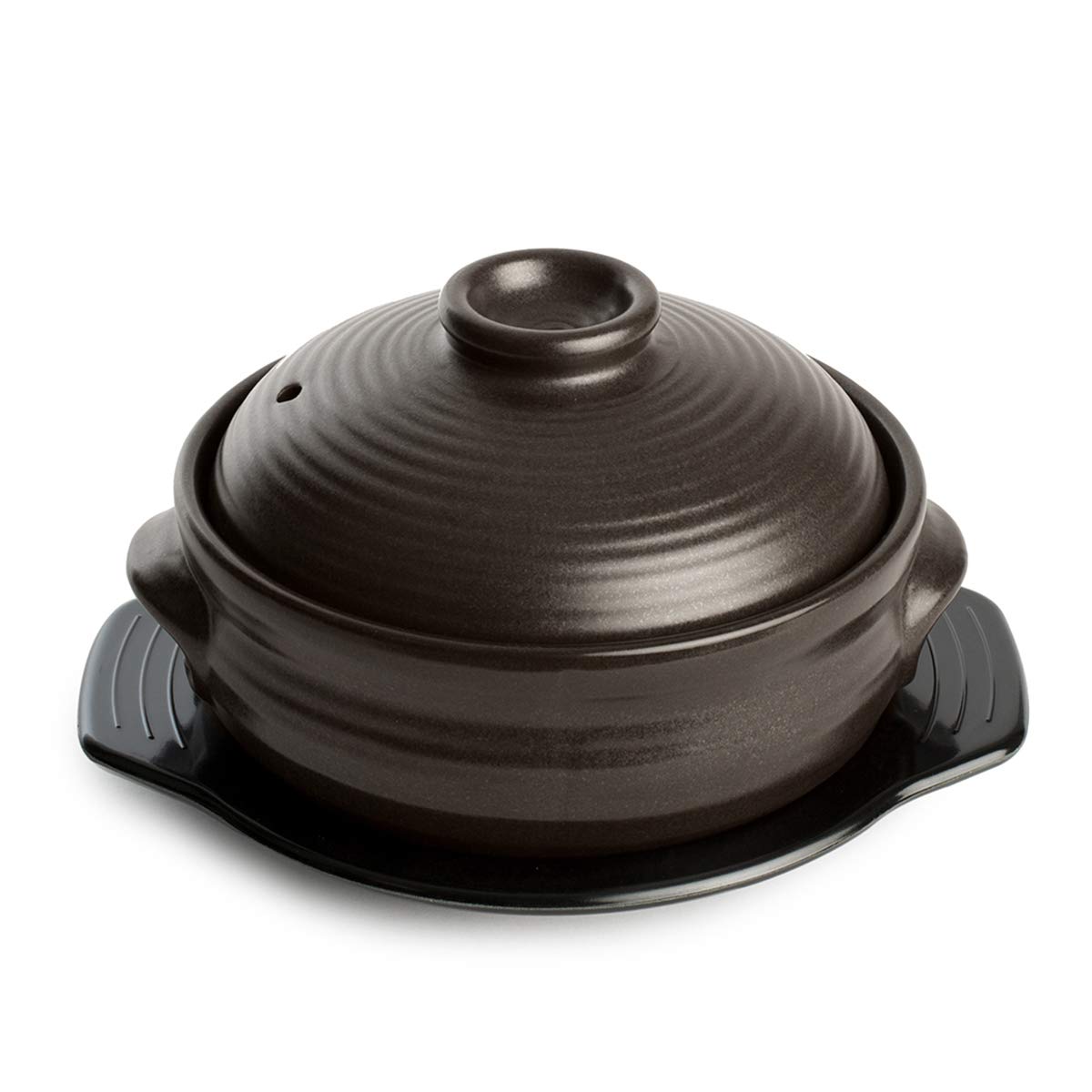
This dolsot is the classic choice for making sizzling bibimbap at home, but its utility goes far beyond that single dish. The thick stoneware retains heat so effectively that the rice at the bottom continues to crisp into nutty, golden nuroongji long after the bowl leaves the stove. The included glass lid traps steam for soups and stews, while the black plastic trivet protects your table from the intense heat.
Unlike natural stone bowls that require seasoning and can crack, this glazed ceramic version is ready to use immediately and is more durable. It is dishwasher safe, though hand washing is recommended to preserve the finish. The 44-fluid-ounce capacity is roughly the size of a large individual serving, making it ideal for single-person meals like kimchi jjigae, ramyeon, or a loaded rice bowl.
The bowl is fired twice with a natural glaze that contains no lead, cadmium, or arsenic, and it performs well on gas and electric stoves. The main limitation is the lack of handles, which makes it awkward to pour out liquid directly. For bibimbap and stews served right in the bowl, that is not an issue. After three years of regular use, the interior remains completely scratch-free with no food sticking, a testament to the quality of the Korean manufacturing.
Why it’s great
- Glazed stoneware creates a perfect crisp rice crust for bibimbap
- Includes lid and heat-resistant trivet for stovetop-to-table serving
- Durable; no seasoning required and resists scratching
Good to know
- No handles make it difficult to pour out liquid
- Individual serving size may be too small for family meals
6. BSONEDO 1.9 Quart Clay Pot

This compact 1.9-quart pot is an excellent entry point for anyone new to clay cooking. The black earthenware is fired at 2300°F, which gives it impressive thermal shock resistance rated from negative 4°F up to 750°F. That means you can take it straight from the refrigerator to a gas burner without worrying about cracking, which is a common fear with traditional clay pots.
The uncoated finish means the clay remains porous, which is what allows for even heat circulation and nutrient retention. Users report that lentils and vegetables cooked in this pot retain significantly more of their original nutritional content compared to metal cookware, and the taste is noticeably richer. The oblong shape is practical for braising chicken thighs or simmering a small batch of soup for one to two people.
The main trade-off for the low price point is fragility when handling. Several users note that the pot chips easily if knocked against a hard surface. The uncoated clay also requires gentle cleaning — soaking and a soft sponge — to avoid absorbing soap flavors. For the price, however, this pot delivers performance that punches well above its weight class for everyday soups and stews.
Why it’s great
- High firing temperature (2300°F) provides excellent thermal shock resistance
- Compact 1.9-quart size is ideal for small households
- Porous clay enhances flavor and nutrient retention
Good to know
- Uncoated clay chips easily if handled roughly
- Requires careful hand washing to avoid soap absorption
7. OnggiJonggi Korean Earthenware Clay Hot Pot

This Korean earthenware pot is made using the traditional Onggi method, which involves hand-building with natural clay and firing at low temperatures to preserve the material’s breathability. The result is a pot that excels not just for cooking but also for fermenting foods like kimchi, doenjang, and gochujang. The porous walls allow beneficial microorganisms to thrive while keeping unwanted bacteria out.
The 1400ml (roughly 1.5-quart) size is versatile enough for cooking rice, stews, and soups for two people. Users consistently praise its heat retention, which keeps dishes hot for a long time at the table. The brown, polished finish is attractive enough for serving, and the sturdy handles make it easy to lift even when full. It is compatible with gas, electric, microwave, and oven cooking.
There is one notable concern: a small number of users report that yellow bubbles ooze from the exterior during cooking. This could indicate porosity issues or residual minerals in the clay. While many users have no such problem, the reports suggest a quality control inconsistency. For fermentation and general cooking, this pot is beautiful and functional, but inspect carefully upon arrival for any irregularities in the finish.
Why it’s great
- Authentic Onggi method provides natural breathability ideal for fermentation
- Excellent heat retention keeps food hot for extended periods
- Versatile across stovetop, microwave, oven, and grill
Good to know
- Some units may ooze mineral bubbles during first uses
- Quality control appears inconsistent across batches
FAQ
Do I need to season a new clay pot before cooking?
Can I use a clay pot on an induction cooktop?
Why did my clay pot crack the first time I used it?
How do I clean an unglazed clay pot without damaging it?
Final Thoughts: The Verdict
For most users, the best clay pots for cooking winner is the Eurita Clay Roaster because its unique unglazed-lid steam system produces exceptionally moist roasts and breads while the glazed base keeps cleanup simple. If you want a versatile daily driver that excels at browning and caramelization, grab the Heavy Duty Claypot by Souped Up Recipes. And for traditional Mexican cooking and long-simmered beans, nothing beats the handcrafted authenticity of the Ancient Cookware Cazuela.

Mo Maruf
I created WellFizz to bridge the gap between vague wellness advice and actionable solutions. My mission is simple: to decode the research and give you practical tools you can actually use.
Beyond the data, I am a passionate traveler. I believe that stepping away from the screen to explore new environments is essential for mental clarity and physical vitality.