Our readers keep the lights on and my smoothie glass nicely filled. As an Amazon Associate, I earn from qualifying purchases.
Actinic keratosis — those rough, scaly patches born from years of sun exposure — demand a treatment that penetrates the epidermis without sending you back to a dermatologist’s chair every month. The right chemical formulation targets the pre-cancerous cellular buildup, sloughing damaged layers while encouraging fresh, healthy turnover beneath.
I’m Mohammad Maruf — the founder and writer behind WellFizz. I’ve spent hundreds of hours dissecting dermatological research, ingredient chemistry, and real-user outcomes across dozens of at-home peels to separate formulas that actually address actinic keratosis from those that merely polish the surface.
The category comes down to acid strength, pH balance, and bioavailable active agents that act on dysplastic cells. After cross-referencing clinical data and thousands of verified experiences, I’ve built this guide to the best chemical peel for actinic keratosis so you can choose with confidence.
How To Choose The Best Chemical Peel For Actinic Keratosis
Actinic keratosis isn’t cosmetic dryness — it’s a precancerous condition. The peel you pick must disrupt the thickened stratum corneum where dysplastic cells live. Generic brightening peels won’t cut it. Here’s what to look for.
Acid Type and Concentration
Glycolic acid (AHA) in the 10–20% range penetrates the upper dermis, dissolving intercellular bonds that hold dead, actinic-damaged cells together. Salicylic acid (BHA) at 30% is oil-soluble, excellent for deeper follicular penetration and for lesions with a warty texture. Some formulas combine both for a dual-action assault on keratotic layers. Avoid peels below 5% — they lack the exfoliative power needed for genuine lesion reduction.
Neutralization Requirement
High-strength peels (20% glycolic or 30% salicylic) require a separate neutralizer to stop the acid’s activity at a precise moment. Kits that include a prep solution and a neutralizing step give you control over depth and reduce the risk of over-peeling. Single-step “leave-on” products are safer for daily use but will not produce the same keratolytic effect on established lesions.
Patch Testing and Downtime
Skin that has accumulated actinic damage is often thinner and more reactive. A mandatory 72-hour patch test behind the ear or under the chin reveals whether the formula triggers excessive burning or prolonged redness. Expect visible peeling for 2–7 days after a deep treatment; plan around social commitments. Never layer additional exfoliants during the recovery window.
Quick Comparison
On smaller screens, swipe sideways to see the full table.
| Model | Category | Best For | Key Spec | Amazon |
|---|---|---|---|---|
| iS CLINICAL Active Peel System | Premium | Gentle, dermatologist-recommended resurfacing | Two-step system with hydrating post-peel | Amazon |
| Dr. Dennis Gross Extra Strength Daily Peel | Premium | Daily repair for visible age/sun spots | 60 treatments; AHA/BHA blend with neutralizer | Amazon |
| Lane Innovative SunSpot ES | Mid-Range | Targeted lesion removal (actinic keratosis, BCC) | Glycoalkaloid + salicylic acid gel | Amazon |
| philosophy microdelivery resurfacing peel kit | Premium | Texture refinement and overall tone correction | Lactic acid + vitamin C two-step treatment | Amazon |
| M-61 PowerGlow Peel Extra Strength 20% | Mid-Range | Rapid glow and pore reduction | 20% glycolic acid single-step peel pad | Amazon |
| NEOSTRATA Smooth Surface Glycolic Peel | Mid-Range | Daily maintenance for rough texture and dark spots | 10% glycolic acid toner + pads | Amazon |
| MedPeel Salicylic Acid Peel 30% Essential Kit | Mid-Range | Deep-strength acne and sunspot treatment | 30% salicylic acid with prep and neutralizer | Amazon |
In‑Depth Reviews
1. iS CLINICAL Active Peel System
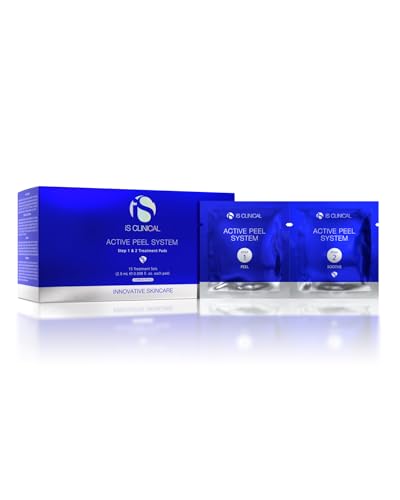
This two-step system was an Allure Best of Beauty winner for good reason. Step 1 is an active exfoliating solution that resurfaces without the harsh drying typical of deep peels, while Step 2 is a leave-on hydrating complex that soothes and restores the barrier. It’s designed specifically for dry, aged, and dull-looking skin — the exact clinical profile of actinic-damaged complexions.
Users report significant lightening of sun spots within 4–6 weeks of twice-weekly use, and fine-line reduction without any visible peeling or downtime. The formulation is gentle enough for those with retinoid intolerance, a common issue among patients treating sun-damaged skin. Each towelette can be cut in half to extend the 10-treatment supply, making the per-use cost more reasonable for a premium product.
Dermatologists and licensed aestheticians recommend this system specifically for patients whose skin barrier is intact but needs resurfacing. It’s the safest entry point for someone new to at-home peels who still wants genuine clinical-grade results on actinic keratosis without aggressive chemical burns.
Why it’s great
- Winner of Allure Best of Beauty award for formulation quality
- Hydrating second step prevents over-drying and barrier damage
- Visible lightening of dark spots within 4–6 weeks
- Gentle enough for retinoid-intolerant skin
Good to know
- Premium pricing; only 10 treatments per box
- Small print on packaging hard to read
- Requires healthy skin barrier before use
2. Dr. Dennis Gross Alpha Beta Extra Strength Daily Peel

This is the undisputed volume leader in the category — 60 individually wrapped two-step treatments per box. Each pre-moistened pad delivers a powerful AHA/BHA blend (glycolic, salicylic, lactic, malic, and mandelic acids) that targets dark spots, fine lines, and the rough textural changes that define actinic keratosis. The numbered Step 1 and Step 2 system neutralizes the acid after 2 minutes, giving you professional control at home.
User reviews from users in their 70s report that after one week of daily use, large pores appear smaller, dark spots lighten noticeably, and the leathery texture of sun-damaged skin becomes smooth and pink. The peel is strong — beginners should start every other day and work up — but the cumulative results on actinic-damaged tissue are unmatched among pre-soaked peel formats. Cutting pads in half extends the 60-treatment box even further.
If you have a full chest, neck, or face of actinic keratosis lesions and want a consistent, measurable improvement over 30 days, this is the volume pick. The per-treatment cost drops substantially when you buy the 60-count, making it one of the most cost-effective premium options on the market.
Why it’s great
- 60 treatments per box; excellent long-term value
- Multi-acid blend covers both AHA and BHA action
- Visible results on age spots within 7 days for many users
- Neutralizer pad controls peel depth and safety
Good to know
- Strong formula; requires gradual introduction to avoid irritation
- Expensive upfront cost despite good per-use value
- Avoid using after shaving or waxing
3. Lane Innovative SunSpot ES

SunSpot ES stands apart from every other product on this list. Instead of relying solely on synthetic AHAs or BHAs, it uses glycoalkaloids from the sand brier plant — natural compounds that dermatological literature shows have selective affinity for damaged, dysplastic cells. This is the only product here with direct patient-reported success clearing actinic keratosis, basal cell carcinoma, and squamous cell carcinoma lesions over 8+ years of continued use.
The protocol involves abrading the lesion surface, applying the gel twice daily, and covering with a bandage. Users report lesions darkening, crusting, and flaking off within 3 days to a month, depending on lesion depth. The gel causes a temporary stinging or burning sensation during application. It is not a cosmetic peel — it is a medical-targeting treatment that happens to exfoliate. Some users report that tubes can burst under pressure, and the price has increased significantly over time.
This is the most direct weapon in the list for established actinic keratosis lesions that have not responded to milder peels. It is not for daily full-face use; it is for spot-treating individual rough patches. If you have a handful of stubborn lesions, SunSpot ES may save you a surgical visit.
Why it’s great
- Only product with direct user evidence for actinic keratosis removal
- Natural glycoalkaloid mechanism targets dysplastic cells
- Clears lesions in 3 days to 1 month with consistent application
- Much cheaper than dermatological surgery per lesion
Good to know
- Not designed for broad-face resurfacing; spot treatment only
- Burning sensation upon application; cannot use daily over large areas
- Tube may burst under pressure; crystallizes if not used regularly
4. philosophy microdelivery vitamin c resurfacing peel kit

Philosophy’s resurfacing peel kit uses lactic acid — a gentler AHA than glycolic — combined with vitamin C peptide crystals. Step 1 is a physical-chemical hybrid scrub that manually exfoliates while the lactic acid dissolves keratin plugs, and Step 2 is a salicylic-acid-based leave-on that continues chemical exfoliation. This two-pronged approach is ideal for actinic-damaged skin that is also sensitive or prone to redness.
The fine vitamin C crystals require light massaging to activate. Step 2 produces a mild warming sensation that users describe as comfortable. One box lasts 4+ months when used twice weekly, making the cost-per-treatment reasonable for a premium brand.
This is not the strongest peel for deep actinic lesions, but it is the best option for sun-damaged skin that needs gentle, sustained resurfacing without harsh chemical downtime. The visible glow after the first use is immediate, and the cumulative effect on overall skin tone is excellent for maintenance therapy between deeper peels.
Why it’s great
- Lactic acid is gentle on sensitive, sun-damaged skin
- Vitamin C crystals provide antioxidant protection during exfoliation
- Box lasts 4+ months with twice-weekly use
- Visible glow and texture improvement after single use
Good to know
- Not potent enough for established, thick actinic keratosis lesions
- Requires dry face and hands before application
- Premium pricing; best value when purchased on sale
5. M-61 PowerGlow Peel Extra Strength 20%

M-61 delivers a 20% glycolic acid concentration in a convenient one-minute, one-step peel pad format. This is professional-strength resurfacing without the need for neutralization — though the high acid percentage means the skin will peel visibly for 2–3 days post-treatment. Clinical results show 100% of users felt smoother skin and 97% saw improved texture in an independent study of 30 participants.
Users report that a single pad can be cut in half to treat the face, neck, hands, and chest — dramatically extending the 10-pack supply. The formula includes chamomile and lavender to calm irritation, but the initial sting is noticeable. For actinic keratosis, this strength is appropriate for broad-area resurfacing where multiple precancerous patches are present, though isolated thick lesions may need the spot-specific power of a product like SunSpot ES.
The 20% glycolic acid concentration places this in the medium-to-high strength range for at-home peels. It is gluten-free, vegan, dermatologist-tested, and free of synthetic fragrances and sulfates — making it a clean option for those whose actinic-damaged skin is also sensitive to additives.
Why it’s great
- 20% glycolic acid delivers professional-level resurfacing at home
- One-minute application with no neutralization required
- Cut pads in half to treat face, neck, chest, and hands
- Clinically tested: 100% saw smoother skin
Good to know
- Noticeable stinging upon application
- Only 10 pads per box; can be expensive per treatment
- Visible peeling for 2–3 days post-treatment
6. NEOSTRATA Smooth Surface Glycolic At-Home Chemical Peel
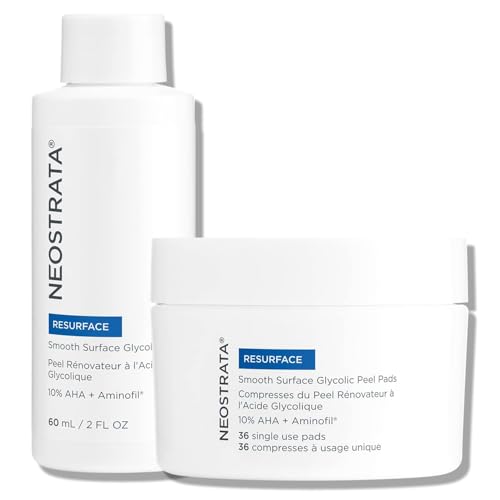
NEOSTRATA’s offering is a 10% glycolic acid solution paired with reusable pads, making it the lowest-strength option on this list. It functions less like a traditional peel and more like a high-powered toner you use nightly. The inclusion of Aminofil targets collagen and hyaluronic acid pathways to support firmness and hydration while the glycolic acid exfoliates the surface.
Users with daily skincare routines report this as a staple for maintaining smooth texture, clearing acne, and fading dark spots. The fragrance-free, oil-free formula is safe for daily use — apply the solution to a pad, wipe over cleansed skin, and follow with moisturizer. No rinsing or neutralization is needed. This is the product to use between deeper peel sessions to sustain the results on actinic-damaged skin.
For active actinic keratosis lesions, 10% glycolic acid alone is unlikely to clear thickened plaques. However, for mild sun damage, rough texture, and hyperpigmentation left behind after lesions have been treated, this is the ideal maintenance product. The 2-ounce bottle lasts approximately 60 nightly applications.
Why it’s great
- Safe and gentle for daily use; no downtime
- Fragrance-free and oil-free for sensitive, damaged skin
- Includes Aminofil to support collagen and hydration
- Effective for maintaining exfoliation between deep peels
Good to know
- 10% strength insufficient for established actinic lesions
- Pads can dry out if jar is not sealed tightly after each use
- Results on dark spots require consistent nightly use over weeks
7. MedPeel Salicylic Acid Peel 30% Essential Peel Kit
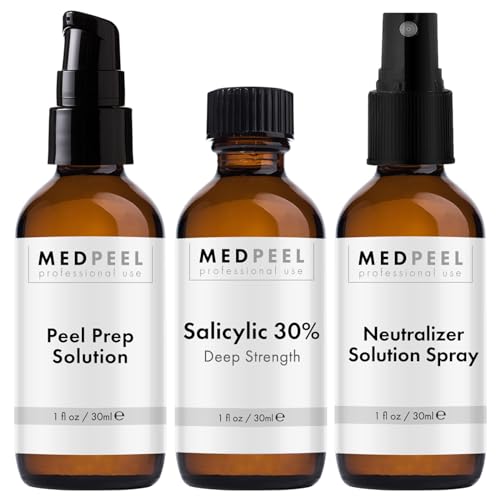
MedPeel brings the highest single-acid concentration in this roundup — 30% salicylic acid — packaged as a three-bottle kit that includes a prep solution, the peel itself, and a neutralizer. Salicylic acid is a BHA that penetrates oily and thickened skin more effectively than glycolic, making this kit particularly suited for actinic keratosis lesions that feel rough, warty, or raised. The included neutralizer allows you to precisely control how long the acid stays active, which is critical at this strength.
User reports describe results comparable to med-spa chemical peels, with visible peeling starting on day 2 and lasting up to 7 days. Some users note that the pump mechanism can leak, and the formula is strong enough to cause frosting (a white discoloration indicating deep penetration). Beginners must start with short application times (1–2 minutes maximum) and wait 3–4 weeks between treatments. A patch test 3 days prior is non-negotiable.
This is the most aggressive entry-level professional peel on the list. It is best for users who already have experience with at-home peels and need a deeper salicylic acid option to tackle persistent actinic lesions that resist lower-strength AHAs.
Why it’s great
- 30% salicylic acid penetrates thickened, keratotic lesions effectively
- Complete kit includes prep and neutralizer for safe application
- Produces clinical-grade peeling comparable to med-spa treatments
- Effective for oily, acne-prone, and sun-damaged skin types
Good to know
- Requires patch testing and careful timing; not for novices
- Leaky pump mechanism reported by some users
- 3–4 week wait between treatments; downtime of up to 7 days
FAQ
Can a chemical peel fully remove actinic keratosis lesions?
How long should I wait between chemical peel treatments for actinic keratosis?
Will a chemical peel prevent new actinic keratosis from forming?
Should I use an AHA or BHA peel for actinic keratosis?
Final Thoughts: The Verdict
For most users, the best chemical peel for actinic keratosis winner is the iS CLINICAL Active Peel System because it balances clinical-grade resurfacing with a hydrating second step that protects the compromised barrier of sun-damaged skin. If you want direct lesion-targeting power, grab the Lane Innovative SunSpot ES. And for daily maintenance and long-term prevention, nothing beats the volume and multi-acid strength of the Dr. Dennis Gross Extra Strength Daily Peel.

Mo Maruf
I created WellFizz to bridge the gap between vague wellness advice and actionable solutions. My mission is simple: to decode the research and give you practical tools you can actually use.
Beyond the data, I am a passionate traveler. I believe that stepping away from the screen to explore new environments is essential for mental clarity and physical vitality.