Our readers keep the lights on and my smoothie glass nicely filled. As an Amazon Associate, I earn from qualifying purchases.
A delicate white fish fillet deserves a cooking medium that respects its flaky texture — not one that masks it with a heavy, fruity, or burnt flavor. The wrong oil can turn a perfectly seared piece of cod or tilapia into a greasy, acrid mess, while the right neutral, high-smoke-point oil delivers a golden, crisp crust in minutes. This choice is the difference between a restaurant-quality meal and a kitchen disappointment.
I’m Mohammad Maruf — the founder and writer behind WellFizz. I’ve spent hundreds of hours researching and analyzing the smoke points, flavor profiles, and fatty acid compositions of cooking oils to understand how each one behaves when heated with fish proteins.
After cross-referencing customer experience data, chemical stability tests, and real-world cooking feedback, the best cooking oil for fish consistently comes down to a single variable: neutral flavor combined with high heat tolerance.
How To Choose The Best Cooking Oil For Fish
Choosing an oil for fish isn’t about picking the healthiest bottle on the shelf — it’s about matching the oil’s heat tolerance and flavor intensity to the fish you’re cooking. A fatty salmon fillet can handle a bit of olive oil character, but a thin flounder or cod fillet will turn bitter if the oil burns before the fish is cooked. Focus on three factors: smoke point, flavor neutrality, and cooking method.
Smoke Point and Fish Texture
When you drop fish into a hot pan, the oil temperature drops instantly. If your oil has a low smoke point — around 350°F or less — it will start to break down and release acrid compounds before the fish’s surface has time to form that desirable golden crust. Oils with smoke points above 400°F, such as grapeseed oil or refined vegetable oil, give you a wider window to achieve a crisp sear without burning the oil itself.
Flavor Neutrality vs. Infused Oils
Infused oils like garlic-and-herb blends can add an extra layer of flavor to stir-fried fish dishes, but only if you want that specific profile. For most home cooks, a neutral oil ensures the fish’s own delicate taste remains the star. Extra virgin olive oil has a distinct peppery, fruity flavor that works well with robust Mediterranean fish preparations but can clash with lighter white fish or Asian-style seasoning.
Oil Purity and Cooking Method
For deep frying fish, you need an oil that can maintain high heat for extended periods without oxidizing or forming off-flavors. Refined vegetable oils and grapeseed oil excel here because they are processed to remove impurities that cause smoking and foaming. For pan-searing, a mid-range oil with a clean finish and moderate viscosity works best. Always check whether the oil is cold-pressed or refined — cold-pressed oils retain more flavor but have lower smoke points.
Quick Comparison
On smaller screens, swipe sideways to see the full table.
| Model | Category | Best For | Key Spec | Amazon |
|---|---|---|---|---|
| Salute Santé! Grapeseed Oil | Mid-Range | Pan-searing and deep frying | Smoke point 420°F | Amazon |
| Pompeian Smooth Extra Virgin Olive Oil | Mid-Range | Mediterranean-style fish baking | First cold pressed | Amazon |
| House of Tsang Stir-Fry Oil | Mid-Range | Asian wok-fried fish | Infused garlic and onion | Amazon |
| AVO ORGANIC Vegetable Oil | Premium | Health-conscious deep frying | USDA Organic certified | Amazon |
| Pure Wesson Vegetable Oil | Budget | High-volume deep frying | 160 fl oz bulk size | Amazon |
In‑Depth Reviews
1. Salute Santé! Cold Pressed Grapeseed Oil

This grapeseed oil hits the ideal performance bracket for fish: a 420°F smoke point that handles high-heat searing without breaking down, and a completely neutral flavor that lets the natural taste of cod, tilapia, or halibut come through. The cold-pressed extraction retains a modest amount of vitamin E and antioxidants, making it a smarter choice than heavily refined vegetable oils for health-conscious cooks.
Customer reviews consistently highlight how well this oil performs in stir-fries and deep frying — the oil does not smoke or leave a greasy residue, and the texture of fried fish stays crisp rather than soggy. The 500 ml bottle is compact enough for frequent use without taking up too much pantry space, yet large enough for a few big-batch frying sessions.
For home cooks who prepare fish multiple times a week, this oil provides the most reliable balance of heat tolerance, purity, and price. The light, clean finish means you can use it in salad dressings and marinades for fish without any unwanted aftertaste.
Why it’s great
- High smoke point prevents burnt oil flavor on delicate fish
- Completely neutral taste does not mask fish
- Cold-pressed with natural vitamin E content
Good to know
- Smaller 500 ml bottle requires more frequent repurchasing
- Not ideal for very low-heat poaching applications
2. Pompeian Smooth Extra Virgin Olive Oil
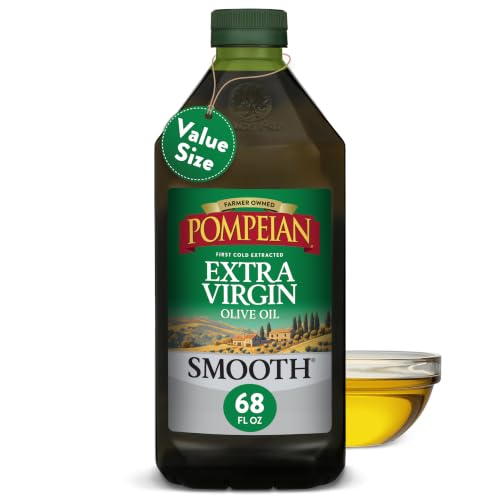
This is the go-to oil for Mediterranean-style fish preparations — baking a whole branzino with lemon and herbs, or drizzling over grilled sea bass before serving. Pompeian’s Smooth EVOO is specifically crafted to have a milder, less peppery profile than traditional extra virgin olive oils, which reduces the risk of overpowering the fish while still adding a subtle fruity depth.
The 68 fl oz value size means you are not constantly restocking, and the multi-region sourcing keeps the price accessible for everyday cooking. Customer reviews note the smooth, delicate taste works well for sautéing as well as finishing dishes, and the oil does not turn bitter when heated to moderate temperatures suitable for fish fillets.
Because the smoke point of extra virgin olive oil hovers around 375°F, this oil is best reserved for baking, poaching, or pan-searing at medium heat. It is not the right choice for high-temperature deep frying, but for oven-roasted fish or gentle stovetop cooking, it delivers excellent flavor without the harshness of a budget olive oil.
Why it’s great
- Smooth, delicate flavor complements rather than overpowers fish
- Large 68 fl oz bottle offers strong value
- Non-GMO Project Verified and Kosher certified
Good to know
- Smoke point too low for deep frying or high-heat searing
- Flavor profile not ideal for Asian-style fish recipes
3. House of Tsang Stir-Fry Oil

This oil flips the script on the neutral-oil rule by intentionally adding flavor. Infused with garlic, onion, and herbs, House of Tsang Stir-Fry Oil is purpose-built for Asian-style wok cooking where you want the fish to carry aromatic notes. The base oil has a moderate smoke point that works well for quick stir-frying — just drop the fish into a hot wok and the oil releases a powerful, savory aroma that fills the kitchen.
Customer reviews are emphatic about the aroma and taste enhancement — several buyers mention they could not find this product locally and note it does not produce excessive smoke during stir-frying. The 10 oz bottles (pack of 2) keep the oil fresh, as infused oils can lose potency once opened if stored for too long.
This is a specialty oil, not an everyday workhorse. Use it when you want to amplify the flavor profile of a fish stir-fry or add depth to a quick pan-fry with ginger and soy sauce. It is not suitable for deep frying or recipes where you want the fish’s pure taste to dominate.
Why it’s great
- Infused garlic and onion add instant flavor without extra prep
- Low smoke production during wok cooking
- Convenient pack of 2 for occasional use
Good to know
- Infused flavor can overpower delicate white fish
- Small bottle size limits large-batch cooking
4. AVO ORGANIC Vegetable Oil
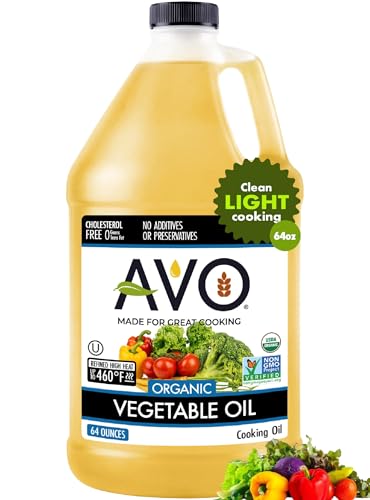
For cooks who prioritize organic sourcing and chemical-free processing, this vegetable oil from AVO delivers a clean, neutral base with USDA Organic certification and Non-GMO Project verification. It is minimally processed without harmful chemicals, which means you get a consistent oil that does not introduce any solvent residues into your fish dishes.
Customer feedback highlights the oil’s lack of smell and its reliable performance in baking cornbread and frying potatoes — two applications that demand a stable, flavorless cooking medium. Several reviewers also use it for homemade body butters, indicating a high level of purity that translates well into the kitchen.
The 64 fl oz half-gallon size strikes a good balance between bulk value and freshness. It works well for deep frying fish when you need a large volume of oil, and the organic certification gives peace of mind for families who want to avoid synthetic additives in their cooking oil.
Why it’s great
- USDA Organic and Non-GMO certified for clean eating
- Completely neutral odor and flavor for versatile fish cooking
- Large half-gallon size supports bulk deep frying
Good to know
- Higher price point than non-organic vegetable oils
- Some units reported cap issues during shipping
5. Pure Wesson Vegetable Oil

When you are frying fish for a crowd — think fish fry parties or weekly meal prep — the Pure Wesson Vegetable Oil in the 1.25 gallon jug is the most practical option. It is a 100% natural all-purpose vegetable oil with zero grams of trans fat per serving and no preservatives added. The massive volume keeps you from running out mid-cook, and the neutral flavor is invisible in the final dish.
Customer reviews consistently note that the oil arrives well-sealed with no leaks, and the quality is reliable for repeated uses over several months. Several buyers use it for both cooking and science experiments with kids, which speaks to its stable, predictable performance at high temperatures.
The trade-off is that this is a heavily refined commodity oil — there are no organic certifications or special cold-pressed claims. If your priority is feeding a large group affordably without worrying about specialty processing, this jug delivers exactly that. For everyday use with smaller fish fillets, it works fine, but you will want to store the bulk container in a cool, dark place to maintain freshness over time.
Why it’s great
- Massive 1.25 gallon size perfect for high-volume frying
- Zero trans fat and no preservatives
- Sealed securely with no shipping leaks reported
Good to know
- Not organic or cold-pressed — heavily refined
- Large jug can be cumbersome to pour and store
FAQ
Can I use extra virgin olive oil to pan-sear salmon?
What is the best oil for deep frying whole fish?
Does infused stir-fry oil work for delicate white fish like cod?
Final Thoughts: The Verdict
For most users, the cooking oil for fish winner is the Salute Santé! Cold Pressed Grapeseed Oil because it offers the ideal combination of a 420°F smoke point and a completely neutral profile that works for anything from pan-seared cod to lightly fried catfish. If you want a Mediterranean touch for baked fish, grab the Pompeian Smooth Extra Virgin Olive Oil. And for high-volume deep frying without worrying about price per ounce, nothing beats the Pure Wesson Vegetable Oil.

Mo Maruf
I created WellFizz to bridge the gap between vague wellness advice and actionable solutions. My mission is simple: to decode the research and give you practical tools you can actually use.
Beyond the data, I am a passionate traveler. I believe that stepping away from the screen to explore new environments is essential for mental clarity and physical vitality.