Our readers keep the lights on and my smoothie glass nicely filled. As an Amazon Associate, I earn from qualifying purchases.
A hemorrhaging limb in the field demands a device proven to occlude arterial flow, not a makeshift strap that fails under pressure. The difference between a functional windlass system and a generic bandage is measured in controlled tissue ischemia time and the ability to hold tension against recoil.
I’m Mohammad Maruf — the founder and writer behind WellFizz. This guide evaluates windlass mechanism quality, buckle integrity, material durability, and real-world feedback from tactical medical users to determine which tourniquets actually perform when seconds matter.
Whether you are building an individual first aid kit or equipping a team, the right choice balances compact storage against reliable one-handed deployment. After cross-referencing dozens of field reports and spec sheets, these five options define the combat tourniquet landscape for 2025.
How To Choose The Best Combat Tourniquet
A tourniquet that fails to occlude the brachial or femoral artery increases the risk of preventable death on the battlefield or in a civilian emergency. The core differentiators — windlass locking mechanism, strap width, and deployment speed — separate field-ready designs from unsuitable alternatives. Understanding these specs before you buy ensures your training translates to effective use under duress.
Windlass Integrity and Locking System
The windlass rod must endure twisting torque without snapping while holding tension against a Kevlar-reinforced strap. Look for a one-piece molded rod with a secure clip or hook that locks into the strap once tightened. Models that rely on a friction hold alone can slip when arterial pressure spikes, releasing the occlusion.
Strap Width and Buckle Design
A standard 1.5-inch wide strap distributes pressure more evenly than narrower alternatives, reducing localized tissue damage and improving occlusion reliability. The buckle or routing system should allow one-handed application and self-application on the upper thigh or arm without requiring a second person to thread the strap through a complex pathway.
Compact Carry Configuration
A tourniquet that stays in a drawer because it is too bulky to carry offers zero utility. Flat-profile designs slide into pockets or IFAK pouches without printing. Rigid belt-carrier cases protect the windlass from impact and sand but add volume. Choose a configuration that matches your daily carry setup so the tourniquet is always within reach.
Quick Comparison
On smaller screens, swipe sideways to see the full table.
| Model | Category | Best For | Key Spec | Amazon |
|---|---|---|---|---|
| Rescue Essentials CAT Gen 7 & Rigid Case | Premium Kit | Duty-belt carry, law enforcement | CAT Gen 7 windlass with rigid Tek-Lok case | Amazon |
| Eleven 10 RIGID TQ Case w/ SOF-TT | Rigid Carrier System | Hard-use patrol, extreme conditions | SOF-TT Wide 1.5-inch windlass tourniquet | Amazon |
| Snakestaff ETQ Gen 2 | Compact EDC | Concealed carry, low-profile pocket carry | 1.5-inch strap, 0.5-inch thick flat profile | Amazon |
| SWAT-T 2 Pack | Stretch-Wrap Design | Secondary TQ, pediatric, canine use | Elastic stretch-wrap, 0.8 oz per unit | Amazon |
| Lightning X LXMB25 Bag | Full BLS Bag | First responder aid bag with 200+ supplies | 18 x 12 x 9-inch bag, tourniquet-compatible | Amazon |
In‑Depth Reviews
1. Rescue Essentials CAT Gen 7 & Rigid TQ Case Combo
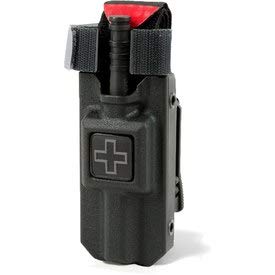
The Combat Application Tourniquet has been the standard-issue windlass design for military and EMS for years, and Gen 7 refines the strap routing and windlass clip to prevent slippage during high-tension application. The included rigid case uses an injection-molded shell that protects the TQ from impact and debris while the TekLok belt attachment supports up to 2.5-inch duty belts without wobble. Users report consistent one-handed deployment after practice, and the case holds the TQ snugly without rattling during vehicle patrol.
Field reviews across 120-degree heat and sustained rain show the plastic case endures without cracking, and the CAT Gen 7 itself maintains its locking integrity after repeated training cycles. The combo eliminates the hassle of sourcing a separate holster that may not fit, especially for law enforcement officers who need immediate access on a crowded belt. The V-notch on the windlass rod engages the pressure bar reliably across different limb circumferences.
Some users note that the rigid case adds noticeable bulk on a belt compared to carrying the TQ loose inside a pocket or pouch. The TekLok clip works best on single-layer or stiffened duty belts — thinner nylon belts may require zip-tie reinforcement for a secure fit. Still, for anyone who wants the most proven windlass tourniquet paired with a purpose-built protective carrier, this combination delivers the lowest deployment friction in a rugged package.
Why it’s great
- CAT Gen 7 is the most field-tested windlass TQ available
- Rigid case protects the TQ from crushing and sand ingress
- TekLok attachment works on up to 2.5-inch duty belts
Good to know
- Rigid case adds bulk compared to a loose TQ
- Clip may need modification for soft nylon belts
- MOLLE attachment requires separate Malice clips
2. Eleven 10 RIGID TQ Case w/ SOF-TT Wide Tourniquet

The Eleven 10 system ships as a single unit — a genuine Tactical Medical Solutions SOF-TT Wide tourniquet pre-loaded into a black textured rigid case with a locking belt attachment. The SOF-TT uses a 1.5-inch wide windlass system that distributes compression across a larger surface area, which can reduce localized pain during prolonged application while still achieving full arterial occlusion. Users who have run this setup for over 1,200 duty hours in sand and 120-degree heat report minimal wear on the case and straps, with only the brass eyelets showing minor patina.
The case depth is slightly deeper than the CAT Gen 7 holder, which adds a few millimeters of protrusion from the belt, but the trade-off is a very secure grip on the TQ — it will not accidentally dislodge during vehicle entry or crawling. The Tek-Lok-style clip includes space bars for adjusting to different belt thicknesses, though some users on thick patrol belts found the clip did not fully close and resorted to zip ties. The removable PVC cross patch lets you customize the medical marking without permanent decoration.
This combo is a premium choice for operators who already prefer the SOF-TT windlass system over the CAT, or who want a rigid carrier that survives extreme environmental exposure. The case fits the SOF-TT and also accepts the SAM-XT tourniquet, which adds flexibility if you rotate between systems. The main downside is the premium price compared to buying a TQ and a nylon pouch separately, but the all-in-one packaging and rugged polymer justify the cost for high-readiness users.
Why it’s great
- SOF-TT Wide 1.5-inch strap for even pressure distribution
- Proven durability through 1,200+ duty hours in harsh conditions
- Compatible with SAM-XT and SOF-TT tourniquets
Good to know
- Deeper case adds slight belt bulk
- Tek-Lok clip may need modification for thick patrol belts
- Premium price point for a complete carry solution
3. Snakestaff Systems ETQ Gen 2 Tourniquet
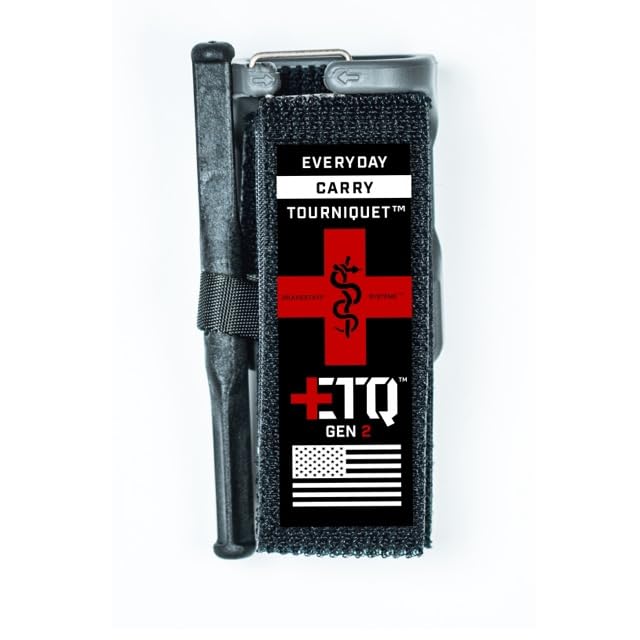
The ETQ Gen 2 solves the common complaint that standard windlass tourniquets are too thick to comfortably carry in a pants pocket or small IFAK pouch. At just half an inch thick and weighing 2.08 ounces, this flat-profile TQ disappears on a horizontal belt mount or inside a compact Fanny pack without printing. The windlass mechanism and strap routing mirror the CAT system, so users familiar with the standard pattern will not face a learning curve — the same twist-and-lock motion applies.
User reviews consistently highlight the smaller volume as the primary advantage over the NAR CAT, making it ideal for concealed carry practitioners who already have limited real estate on their belt. The 1.5-inch wide strap ensures full occlusion capability on adult limbs, while the thinner profile still works effectively on children, expanding its utility for family preparedness. Several reviewers noted that it stored easily in a trusty Fanny pack alongside a CCW without causing discomfort or bulge.
The trade-off is that the reduced flat profile means the windlass rod is less robust feeling under heavy torque compared to the thicker CAT rod. For sustained field use where the TQ may be dropped, stepped on, or compressed under gear, the CAT or SOF-TT may hold up better over years. However, for everyday carry where convenience and low visibility matter most, the ETQ Gen 2 is the best balance of size and proven windlass function at a budget-friendly price.
Why it’s great
- Flat half-inch profile hides easily in pockets or packs
- Weighs only 2.08 ounces for lightweight carry
- Familiar CAT-style operation with no new training needed
Good to know
- Windlass feels less robust than thicker CAT rod
- Not ideal for sustained heavy-duty field abuse
- Best suited for EDC rather than primary duty gear
4. SWAT-T Tourniquet Black 2 Pack
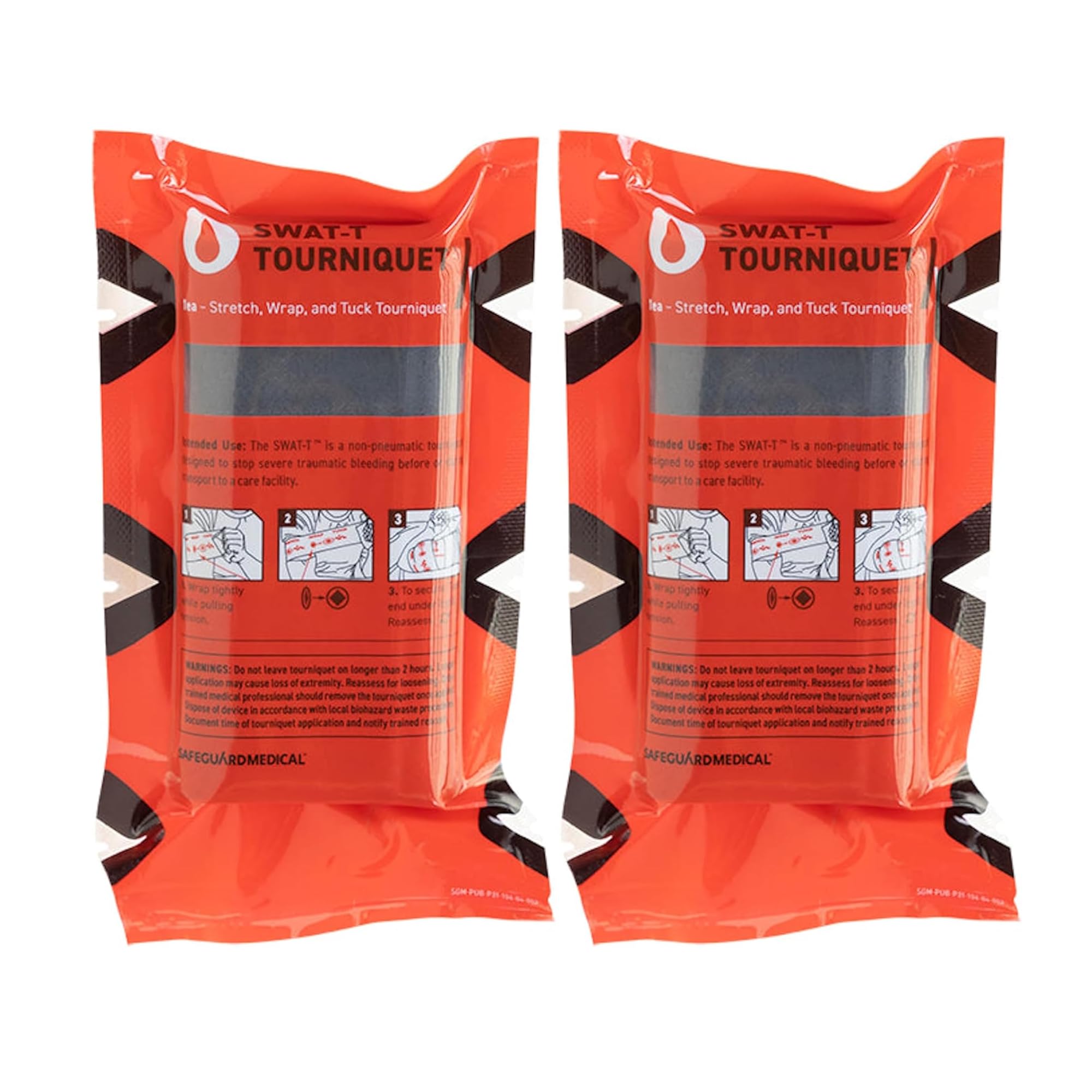
The SWAT-T deviates from the windlass paradigm by using an elastic stretch-wrap design — you stretch the rubber material, wrap it around the limb, and tuck the end to secure tension. This system eliminates the windlass rod entirely, which makes the TQ extremely compact at 0.8 ounces each, and it doubles as a pressure bandage for packed wounds. The lack of a rigid rod also means zero risk of windlass breakage, and the material contour conforms to limbs of varying sizes, including pediatric and canine patients where a standard CAT may be too bulky.
Customer feedback shows it works well as a secondary or backup tourniquet in an IFAK, especially for lightweight EDC or car kits. Self-application on the upper arm is more challenging than with a windlass TQ because you need to maintain tension while wrapping with the same hand, but application on others is straightforward. The UV-resistant packaging extends shelf life, though users should still check the expiration date printed on the wrapper — some older units have been repurposed as training aids.
The elastic material can lose tension over time if repeatedly stretched beyond its limit or stored under heavy compression. It also cannot achieve the same high-pressure occlusion as a windlass system on very large femoral arteries in some adults, so it is best considered a stopgap until a CAT or SOF-TT can be applied. For its low cost, minimal weight, and dual use as a pressure dressing, the SWAT-T earns a dedicated slot in any well-stocked trauma kit.
Why it’s great
- Extremely lightweight at 0.8 oz per unit
- Doubles as a pressure bandage for wound packing
- Effective on pediatric and canine patients
Good to know
- Self-application on arms is difficult
- Elastic may lose tension over time
- Less reliable for large adult femoral occlusion
5. Lightning X Products Mid-Sized EMT Bag LXMB25
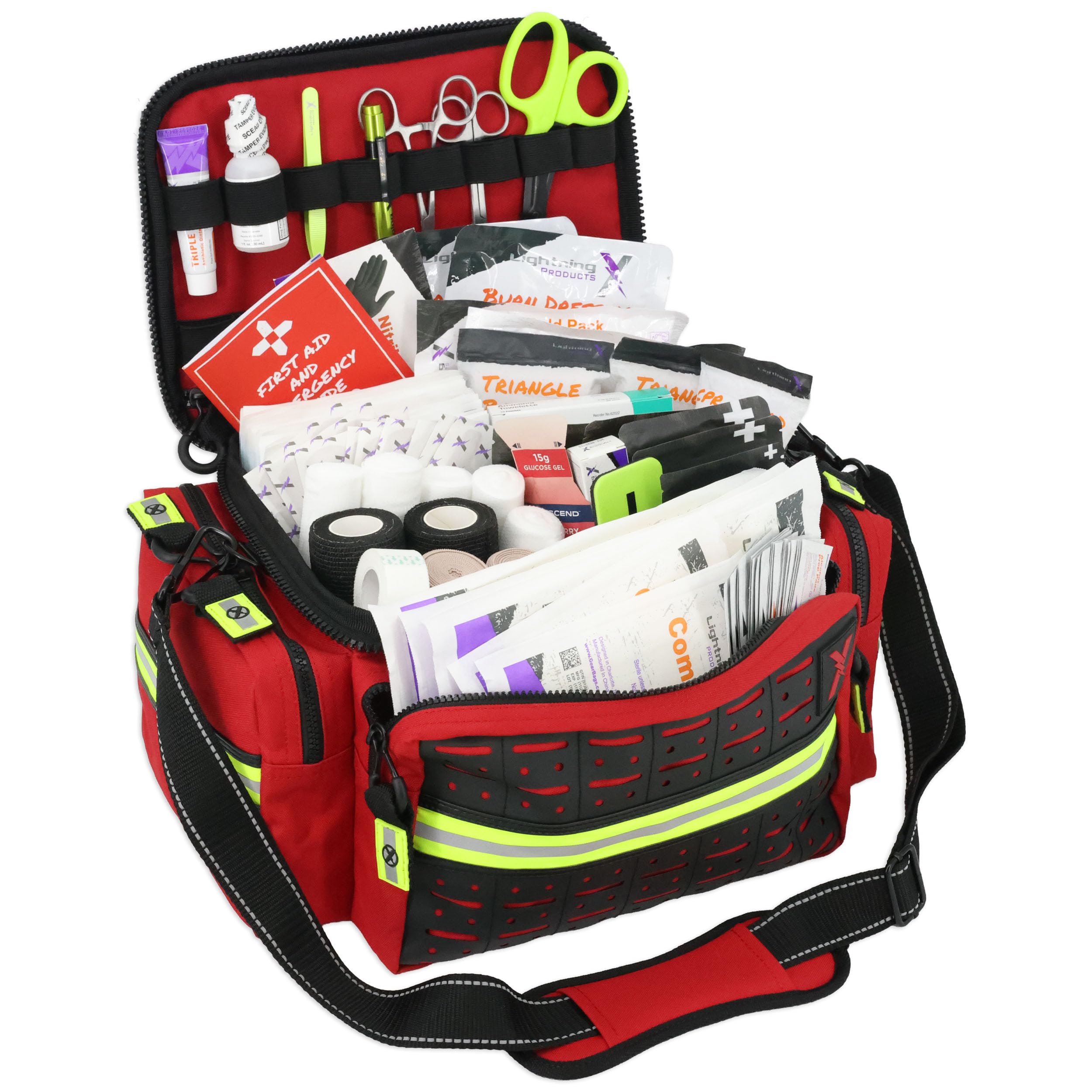
While not a tourniquet itself, the LXMB25 bag serves as the carrying platform for your tourniquets, chest seals, Israeli bandages, and blood-stop gauze in a single organized response kit. The bag uses heavy-duty Vislon zippers instead of coil zippers that bend and jam, with reflective pulls for low-light identification. The embroidered EMT Star of Life logo with over 30,000 stitches holds up better than screen-printed alternatives that peel after a few months of use.
The bag comes fully stocked with over 200 BLS supplies, including bandages, gloves, trauma pads, and basic airway adjuncts, leaving room to add specialized equipment like windlass tourniquets. Users in manufacturing and facility emergency response have praised the unexpired contents and the overall value compared to competing kits that skimp on real-world supplies. The dimensions — 18 x 12 x 9 inches — strike a balance between capacity and portability for vehicle mounting or carrying to the scene.
The main criticism from users is the lack of internal dividers and dedicated pockets, which means tourniquets and other small items may shift around during transport. Adding a few hook-and-loop pouches or small organizer bags solves this, but the empty interior requires intentional packing. For a first responder or facility medic who wants a comprehensive BLS bag ready to roll with the ability to carry multiple tourniquets, this is a solid foundation that outperforms cheaper, loosely-supplied alternatives.
Why it’s great
- Comes pre-stocked with 200+ quality BLS supplies
- Heavy-duty Vislon zippers resist sand and jamming
- Embroidered logo outlasts printed alternatives
Good to know
- No internal dividers — gear shifts during transport
- Requires additional pouches for TQ organization
- Heavy at 8 pounds when fully loaded
FAQ
Can a tourniquet damage the limb if left on too long?
How does the SWAT-T compare to a CAT tourniquet in effectiveness?
Do tourniquets expire and need replacement?
Final Thoughts: The Verdict
For most users, the combat tourniquet winner is the Rescue Essentials CAT Gen 7 & Rigid Case because it pairs the most widely adopted windlass system with a purpose-engineered carrier that survives patrol and vehicle use. If you want a low-profile TQ that disappears on a belt or in a Fanny pack, grab the Snakestaff ETQ Gen 2. And for a comprehensive response bag that can stage multiple tourniquets alongside 200 other BLS supplies, nothing beats the Lightning X LXMB25 EMT Bag.

Mo Maruf
I created WellFizz to bridge the gap between vague wellness advice and actionable solutions. My mission is simple: to decode the research and give you practical tools you can actually use.
Beyond the data, I am a passionate traveler. I believe that stepping away from the screen to explore new environments is essential for mental clarity and physical vitality.