Our readers keep the lights on and my smoothie glass nicely filled. As an Amazon Associate, I earn from qualifying purchases.
Shaky handheld footage, noisy low-light shots, and missing subject focus are the three walls that separate phone video from actual cinematic capture. A dedicated compact camera with a larger sensor and mechanical stabilization cuts through all three at once — no gimmicks, just physics at work.
I’m Mohammad Maruf — the founder and writer behind WellFizz. This guide comes from cross-referencing sensor sizes, stabilization types, bit rates, and real user workflow pain points across eleven of the most talked-about models in this space.
Whether you shoot travel vlogs, client interviews, or family archives, finding the right best compact camera for video hinges on sensor size and stabilization type — not megapixel counts or zoom ranges alone.
How To Choose The Best Compact Camera For Video
Not every pocket‑sized camera is built for video. Prioritize sensor size, stabilization, audio input, bit depth, and battery endurance before you commit. These five factors separate run‑and‑gun usability from frustrating gear that collects dust after one trip.
Sensor Size: The Low‑Light Decider
Video quality in dim interiors, sunset golden hours, or city nightscapes depends almost entirely on sensor surface area. A 1‑inch type CMOS sensor captures roughly four times more light than the tiny sensors in most phones or budget camcorders. This directly reduces grain and boosts dynamic range without needing a bright lens, which is why all the strongest all‑rounders on this list share the 1‑inch format.
Stabilization Type: Mechanical Wins for Walking Shots
Digital stabilization crops your frame and introduces jello artifacts when you walk or pan fast. A three‑axis mechanical gimbal — found on the DJI Osmo Pocket 3, Xtra Muse, and the Insta360 GO Ultra’s pod — physically counter‑rotates the sensor, keeping the horizon steady against footsteps, running, or bike vibrations. For handheld video that looks gimbal‑smooth without carrying a separate rig, a built‑in gimbal is the only real solution.
Audio Input: A Mic Jack Is Worth More Than a Spec Sheet Line
Built‑in stereo mics pick up handling noise, wind, and room echo. A dedicated 3.5mm microphone jack or wireless transmitter compatibility — like the DJI Osmo Pocket 3’s direct DJI Mic 2 pairing — lets you use a lapel or shotgun mic, which instantly elevates spoken clarity. If your video includes interviews or voiceovers, skip any camera that lacks external audio support.
Bit Depth and Log Profiles: For Editors Only
Entry‑level cameras shoot 8‑bit 4:2:0 video, which band artifacts in graded skies and shadows. 10‑bit video with a flat log profile — present in the Sony Alpha 6700, Blackmagic Pocket Cinema Camera 4K, DJI Osmo Pocket 3, and Xtra Muse — records up to a billion colors and retains highlight and shadow detail for color grading. If you never grade, 8‑bit is fine. If you do, 10‑bit non‑negotiable.
Battery Endurance and Charging
A camera that dies after 45 minutes is useless for a full day’s outing. Look for at least 90 minutes of continuous 4K recording and USB‑C PD fast charging so you can top up from a power bank between locations. Removable batteries are ideal; if the battery is built‑in, verify that the camera supports charge‑while‑shooting via USB‑C.
Quick Comparison
On smaller screens, swipe sideways to see the full table.
| Model | Category | Best For | Key Spec | Amazon |
|---|---|---|---|---|
| DJI Osmo Pocket 3 | Gimbal Cam | Ultra‑smooth walking vlogs | 1″ CMOS, 4K 120fps, 3‑axis mech stabilization | Amazon |
| Xtra Muse | Gimbal Cam | Beginner vloggers on a budget | 1″ CMOS, 4K 120fps, 3‑axis gimbal, 10‑bit X‑Log | Amazon |
| Sony Alpha 6700 | Mirrorless | Hybrid photo/video with AI AF | APS‑C 26MP, 4K 120fps, 10‑bit 4:2:2 | Amazon |
| Blackmagic Pocket Cinema 4K | Cinema | Professional color grading workflows | MFT sensor, 13 stops DR, Blackmagic RAW | Amazon |
| Sony RX100 VII | Premium Compact | All‑in‑one travel with zoom reach | 1″ stacked CMOS, 24‑200mm, 4K HLG | Amazon |
| Insta360 GO Ultra | Action Cam | Hands‑free POV and sports | 1/1.28″ sensor, 4K 60fps, FlowState stab, 53g | Amazon |
| Canon PowerShot V10 | Vlog Compact | Ultra‑compact pocket vlogging | 1″ BSI CMOS, 19mm f/2.8, flip‑up screen | Amazon |
| Panasonic LUMIX G100 | Mirrorless | Vlogging with interchangeable lenses | MFT sensor, 4K 24/30p, 5‑axis Hybrid I.S. | Amazon |
| Canon EOS R100 | Entry Mirrorless | First interchangeable‑lens video camera | APS‑C 24.1MP, 4K 24fps, Dual Pixel AF | Amazon |
| Nikon COOLPIX P950 | Superzoom | Wildlife and distant‑subject video | 16MP, 83x optical zoom, 4K UHD | Amazon |
| Panasonic LUMIX FZ80D | Bridge | Budget superzoom for video | 18.1MP, 60x optical zoom, POWER O.I.S. | Amazon |
In‑Depth Reviews
1. DJI Osmo Pocket 3
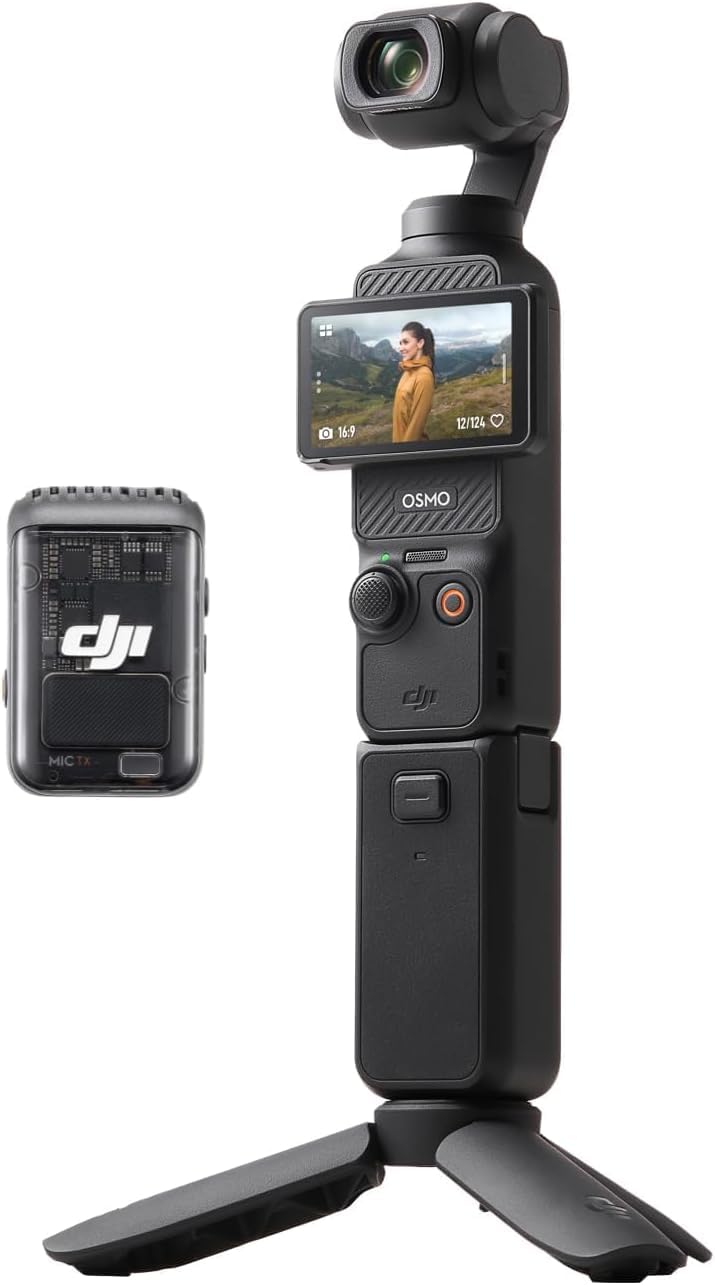
The Osmo Pocket 3 packs a 1‑inch CMOS sensor and a true 3‑axis mechanical gimbal into a body that fits in a jeans coin pocket. At 4K 120fps, the footage is buttery smooth during walking, running, or even quick pans — no digital cropping, no jello wobble. The 2‑inch rotating touchscreen flips between horizontal and vertical framing instantly, a feature that alone saves minutes of cropping in post.
ActiveTrack 6.0 locks onto your face or any moving subject and keeps it dead center while the gimbal follows, which makes solo vlogging or filming a moving pet essentially one‑person crew work. The Creator Combo includes the DJI Mic 2 transmitter, battery handle, wide‑angle lens, and mini tripod — a kit that covers audio, runtime, and mounting without third‑party parts. D‑Log M 10‑bit color means you can grade flat footage without banding.
Battery life hits roughly 160 minutes of mixed use, and the USB‑C PD port lets you charge while filming. The only catch: the lens is fixed at 20mm equivalent, so you’re locked into a wide perspective unless you attach the optional wide‑angle adapter. For the widest cross‑section of video creators, this is the undisputed top performer.
Why it’s great
- True mechanical gimbal delivers walk‑ready stabilization with zero crop
- 10‑bit D‑Log M color for professional grading
- Native DJI Mic 2 pairing eliminates dongles
Good to know
- Fixed 20mm wide‑angle limits telephoto reach
- Battery is built‑in; external battery handle extends runtime
2. Xtra Muse

The Xtra Muse enters the gimbal‑compact space as a direct alternative to the DJI Pocket 3, borrowing the same 1‑inch CMOS and 3‑axis gimbal formula at a lower entry point. It shoots 4K at 120fps and records in true 10‑bit X‑Log color, which gives editors the same grading flexibility as cameras costing twice as much. Face and object tracking keep the subject centered without manual joystick work.
The 2‑inch touchscreen supports horizontal‑to‑vertical switching, and the built‑in stabilizer handles walking, jogging, and even light hiking without introducing digital wobble. Real‑world user reports cite roughly two hours of battery life per charge, with USB‑C pass‑through charging available for extended shoots. The bundle includes a carrying bag, wrist strap, and a handle with a standard 1/4‑inch thread for tripod mounting.
One edge over the Pocket 3: the price lands significantly lower, making this the smartest pick for a first‑time vlogger who wants gimbal‑smooth video without the premium investment. The main trade‑off is that third‑party accessories are less abundant, and DJI’s ecosystem — particularly its wireless mics — does not auto‑pair here as seamlessly without a separate receiver.
Why it’s great
- Full 3‑axis mechanical gimbal at an aggressive price point
- 10‑bit X‑Log for professional color grading
- Compact bundle includes bag, handle, and strap
Good to know
- DJI wireless mics require extra adapter for connectivity
- Fewer dedicated accessories than the Pocket 3 ecosystem
3. Sony Alpha 6700

The Alpha 6700 is a compact APS‑C mirrorless body that delivers 6K‑oversampled 4K at up to 60fps and 4K at 120fps with a 10‑bit 4:2:2 internal recording. The dedicated AI processing chip enables Real‑time Recognition tracking that locks onto human eyes, animal eyes, vehicles, and even specific bird species — making this the most reliable autofocus system in the sub‑ class for video.
Sony’s menu system remains dense, but the a6700 adds a front‑dial and redesigned grip that improves one‑handed operation. The in‑body stabilization is decent for static shots but not gimbal‑level for walking — you will want a gimbal for mobile footage. The S‑Log3 and S‑Cinetone color profiles match Sony’s cinema line, giving editors a consistent look across the whole production chain.
Battery life is excellent for a compact mirrorless, lasting well over an hour of continuous 4K recording. The lack of a built‑in flash is irrelevant for video shooters. If you need a single camera that excels at both photography and high‑end video with industry‑leading autofocus, the a6700 is the top choice.
Why it’s great
- AI autofocus tracks human, animal, and vehicle eyes instantly
- 6K oversampled 4K with 10‑bit 4:2:2 color
- S‑Log3 and S‑Cinetone match Sony cinema cameras
Good to know
- In‑body stabilization insufficient for smooth walking shots
- Sony menu layout has a steep learning curve
4. Blackmagic Pocket Cinema Camera 4K

This is the only camera on the list built exclusively for cinema — no photo modes, no consumer presets. The Micro Four Thirds sensor records up to 4K DCI at 3840×2160 in 12‑bit Blackmagic RAW or 10‑bit ProRes, with 13 stops of dynamic range. Dual native ISO up to 25,600 keeps noise minimal in dim interiors, and the active MFT lens mount lets you adapt vintage glass or native cine lenses with manual aperture control.
The 5‑inch LCD is bright enough for framing but not for direct sun — you will want an external monitor if you shoot outdoors often. There is no in‑body stabilization, no continuous autofocus, and no flip‑out screen, which means this camera demands a tripod, gimbal, or rig for any moving shot. The battery is an LP‑E6 type that lasts roughly 30 minutes of recording; most users operate from a V‑mount battery plate or USB‑C power bank.
What you get in return is uncompromising image quality that matches cameras costing five times more. The included DaVinci Resolve Studio activation means you can grade your 12‑bit RAW files out of the box without extra software purchases. If your primary output is narrative, documentary, or commercial video where color depth and dynamic range matter above everything else, this is the best tool.
Why it’s great
- 12‑bit Blackmagic RAW and 13‑stop dynamic range for high‑end color work
- Active MFT mount adapts to almost any manual lens
- Includes full DaVinci Resolve Studio license
Good to know
- No stabilization, continuous AF, or flip screen — rigging required
- Battery life is short at roughly 30 minutes
5. Sony RX100 VII
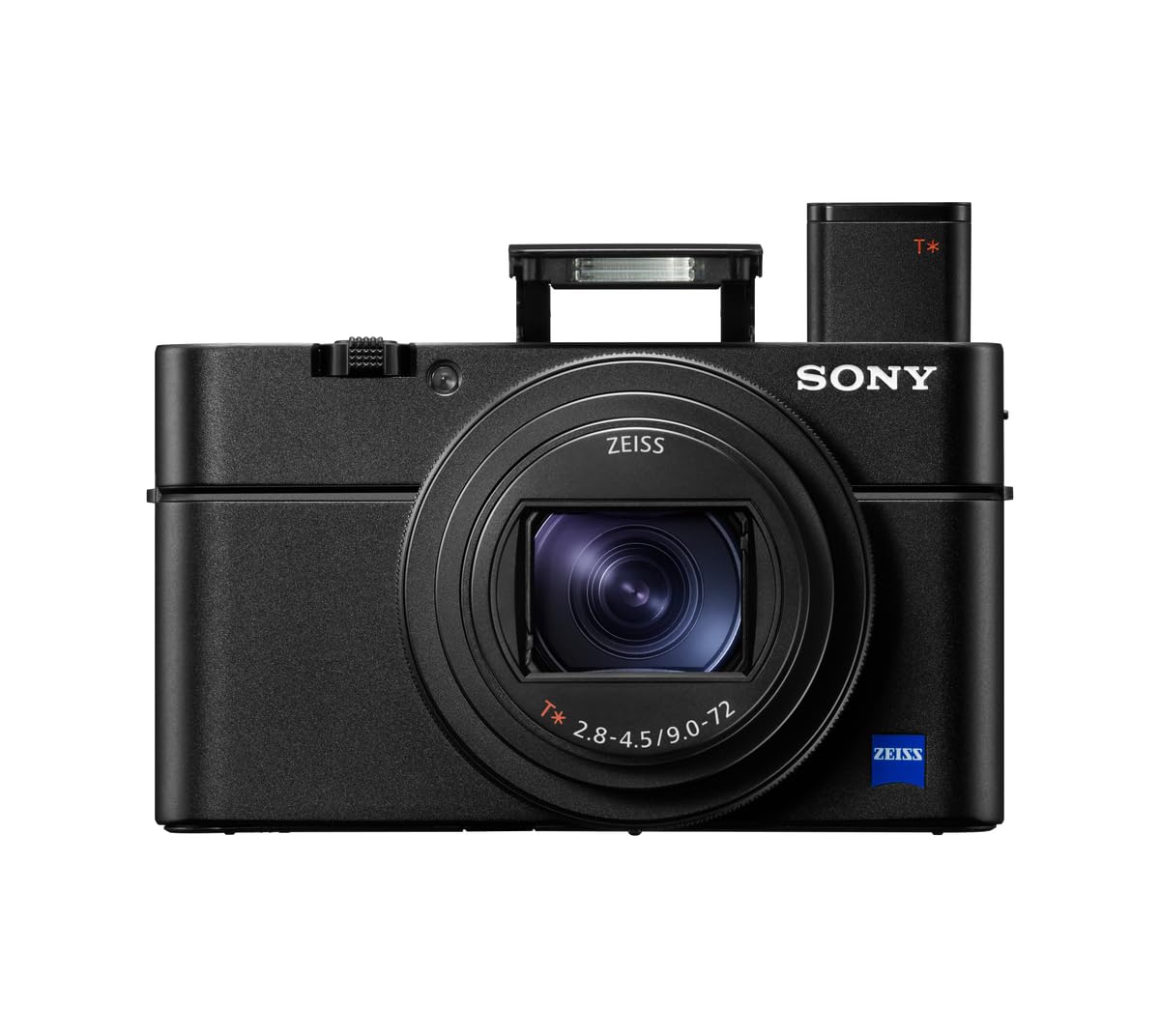
The RX100 VII packs a 1‑inch stacked CMOS sensor behind a Zeiss Vario‑Sonnar 24‑200mm f/2.8‑4.5 zoom, giving you a true all‑in‑one travel lens in a jacket‑pocket body. The stacked architecture enables 0.02‑second phase‑detect AF with 357 points, plus Real‑time Eye AF for both humans and animals in video mode — a rare combination in a compact point‑and‑shoot.
4K video is oversampled from the 20MP sensor, and the camera supports S‑Log3 and HLG for HDR workflows. Active SteadyShot stabilization in 4K mode smooths handheld pans better than any other non‑gimbal compact, though it still falls short of mechanical gimbal quality for walking. The pop‑up electronic viewfinder is a lifesaver in bright sun, and the microphone jack lets you bypass the internal mics.
Vertical position data recording and interval shooting for time‑lapse add further video utility. The main frustrations are a small built‑in flash that is barely useful, no included external charger, and a body that can feel slippery without a third‑party grip. For a single‑device travel companion that shoots both wide landscapes and tight animal close‑ups in 4K, the RX100 VII remains king.
Why it’s great
- 24‑200mm Zeiss zoom fits every travel scenario
- 0.02‑sec phase‑detect AF with eye tracking in video
- S‑Log3 and HLG for HDR and grading
Good to know
- No mechanical stabilization; digital crop reduces quality while walking
- Slippery body without a third‑party grip accessory
6. Insta360 GO Ultra
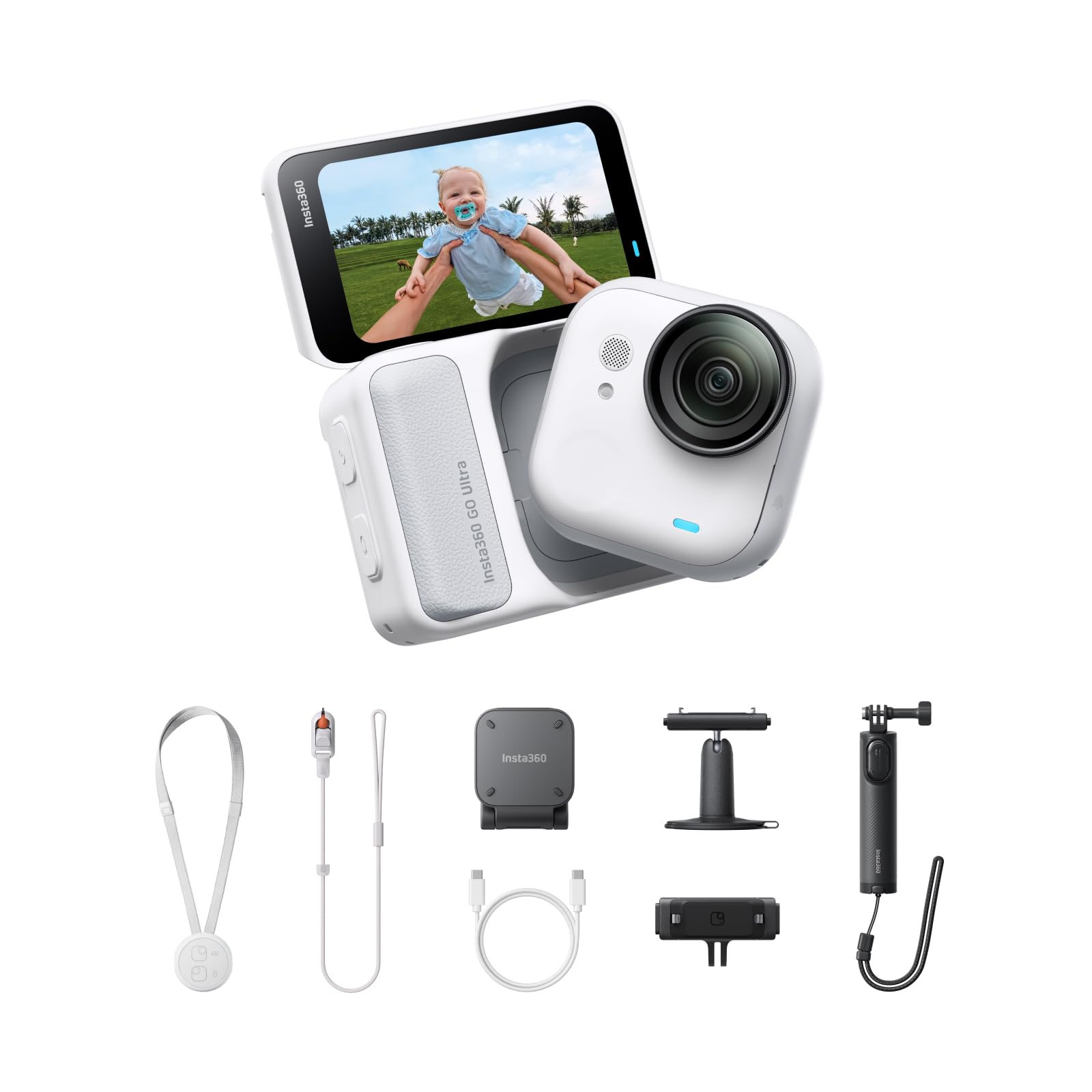
At 53 grams with a form factor smaller than a watch, the GO Ultra is the most wearable camera in this lineup. The standalone module detaches from the Action Pod and mounts magnetically to a pendant, hat clip, or bike frame — no chest straps or helmet rigs required. 4K resolution at 60fps with FlowState Stabilization delivers smooth POV footage from first‑person biking, climbing, or cooking.
The 1/1.28‑inch sensor with a 5nm AI chip and PureVideo Mode handles low light better than most action cameras this size. The Action Pod extends total runtime to 200 minutes, and the standalone camera charges from 0 to 80 percent in about 12 minutes. IPX8 waterproofing on the main module lets you shoot 33 feet underwater without a housing.
The catch is that the Action Pod itself is only splashproof, and the battery is non‑removable. Audio from the built‑in mic is usable but improves dramatically with the optional wireless lav connection. The AI auto‑edit feature is surprisingly useful for quickly cutting clips to social‑friendly length, though purists will want full manual control.
Why it’s great
- Ultra‑light wearable design with magnetic mounts for hands‑free POV
- FlowState Stabilization and 360 Horizon Lock keep horizon level
- Quick charge to 80% in 12 minutes
Good to know
- Pod is only splashproof; underwater depth limited to 33ft on module
- Built‑in battery not user‑replaceable
7. Canon PowerShot V10

Canon’s PowerShot V10 is a purpose‑built vlogging camera with a fixed 19mm f/2.8 wide‑angle lens and a retractable front‑facing flip screen that lets you see yourself as you record. The 1‑inch back‑illuminated CMOS sensor produces clean 4K video at up to 30fps, and the built‑in stereo mic array with a third noise‑canceling mic does a solid job filtering background rumble in busy environments.
The integrated stand folds forward or backward to support hands‑free tabletop shooting — ideal for sit‑down vlogs, cooking demos, or live streams. Image stabilization has three modes (Off, On, Enhanced) updated via firmware version 1.2.0, making handheld shots smoother than the original launch version. The micro‑HDMI and 3.5mm mic jack ensure you can connect an external microphone and monitor.
Battery life is middling compared to larger cameras — around 40 minutes of active 4K recording — and there is no zoom capability, so you are locked into that 19mm perspective. For creators who prioritize ease of use, portability, and decent audio out of the box without extra gear, the V10 is a friction‑free, purpose‑built vlogging tool.
Why it’s great
- Flip‑up front screen makes solo vlogging framing effortless
- Integrated stand for hands‑free tabletop recording
- Third noise‑canceling mic reduces background interference
Good to know
- Fixed 19mm lens has no zoom — no reach for distance subjects
- Battery life is limited to roughly 40 minutes of 4K recording
8. Panasonic LUMIX G100

The LUMIX G100 is a lightweight Micro Four Thirds body with a bundled 12‑32mm retractable zoom, designed squarely for vloggers who want interchangeable‑lens flexibility without the weight. It records 4K video at 24 or 30fps and includes a 5‑axis Hybrid I.S. that works with the lens stabilization to smooth out handheld micro‑jitters.
The standout feature is the built‑in 360‑degree microphone with subject‑tracking audio — the camera can intelligently shift its mic focus to follow a moving speaker, which is surprisingly effective for solo walk‑and‑talk vlogs. The G100 also doubles as a UVC/UAC webcam over USB, making it a solid hybrid for live streaming or video calls with a single cable.
The biggest limitation is the 4K recording time cap — Panasonic imposes a limit that stops recording after roughly 5 to 10 minutes in some modes, a deliberate thermal management choice that can interrupt longer takes.
Why it’s great
- Built‑in 360° tracking mic intelligently follows speaker movement
- Compact MFT body with lens interchangeability
- Plug‑and‑play webcam over USB‑C for streaming
Good to know
- 4K recording stops automatically after a few minutes
- Contrast‑detect AF hunts in low‑light or fast‑moving scenes
9. Canon EOS R100

The EOS R100 is the smallest and lightest body in Canon’s RF mirrorless lineup, pairing a 24.1‑megapixel APS‑C CMOS sensor with the DIGIC 8 processor. It records 4K video at up to 24fps and Full HD at up to 60fps, with Dual Pixel CMOS AF covering 143 zones for human face and eye detection in video mode. The RF‑S 18‑45mm f/4.5‑6.3 kit lens provides optical stabilization at up to 4 stops.
At roughly with the kit lens, this is the cheapest interchangeable‑lens video camera on the list, and the Canon RF lens ecosystem gives room to grow into better glass. The interface is beginner‑friendly with guided modes, and the 6.5 fps continuous shooting in One‑Shot AF is fast enough for capturing action stills alongside video.
The video drawbacks are real: 4K is limited to 24fps with a crop factor, and there is no 10‑bit recording or log profile, so grading is limited. The battery is rated for roughly a day of casual use but drains faster during extended recording. The lack of a charger in the box is a cost‑saving move that forces a separate purchase for multi‑battery workflows.
Why it’s great
- Cheapest entry into an interchangeable‑lens system with 4K video
- Canon Dual Pixel AF provides reliable face detection in video
- Extremely compact and lightweight RF body
Good to know
- 4K recording capped at 24fps with sensor crop
- No 10‑bit or log profile for color grading
10. Nikon COOLPIX P950

The COOLPIX P950 is the zoom king of this list — an 83x optical lens that reaches 2000mm equivalent, capable of capturing video of birds, planes, or the moon in 4K UHD resolution. The 16‑megapixel sensor is small compared to 1‑inch alternatives, but the zoom range is simply unmatched by any other compact form factor. POWER O.I.S. stabilization allows reasonably steady handheld shooting at the telephoto end, though a tripod is recommended at maximum zoom.
Built‑in Bird and Moon scene modes instantly optimize exposure and ISO for those specific subjects, and the rotating LCD screen helps shoot from awkward low or high angles. The 4K video quality is acceptable in bright sunlight but degrades noticeably in shadow or overcast conditions due to the sensor’s limited dynamic range and higher base ISO noise.
Autofocus can occasionally hunt on distant or low‑contrast subjects — using the manual focus ring on the lens barrel is sometimes faster than trusting continuous AF. The P950 is not a general‑purpose vlogging camera; it is a telephoto specialist. If your video content is wildlife, lunar, or distant sports footage, this is the only budget‑sensible choice that reaches that far without a dedicated super‑telephoto lens system.
Why it’s great
- 83x optical zoom reaches 2000mm for wildlife/moon video
- Dedicated Bird and Moon scene modes simplify exposure
- Rotating LCD and decent OIS for a superzoom body
Good to know
- Small sensor produces grainy video in low light
- Autofocus hunts on distant subjects; manual focus ring works better
11. Panasonic LUMIX FZ80D

The FZ80D is Panasonic’s budget bridge camera offering a 60x optical zoom that spans 20mm wide‑angle to 1200mm telephoto, making it a low‑cost entry to superzoom 4K video. The POWER O.I.S. stabilization is decent enough to steady handheld footage at the mid‑range zoom, but at full 1200mm the shake becomes visible without a tripod. 4K video and 4K Photo mode let you extract 8‑megapixel stills from video clips.
The 2,360k‑dot electronic viewfinder is bright enough for sunny outdoor shooting, and the Post Focus feature lets you tap the subject you want sharp after the shot — useful for macro or still‑life video scenes. The small sensor is the same weakness as the P950: image quality degrades fast in low light, and the contrast‑detect autofocus is slower than newer phase‑detect systems.
Build quality feels lighter and more plastic‑based than premium competitors, but the weight makes it easy to carry on long hikes. Battery life is acceptable but prolonged zoom use drains it noticeably. For a sub‑ superzoom that records 4K with a 1200mm reach, the FZ80D fills a specific niche for budget‑conscious nature shooters who prioritize reach over low‑light fidelity.
Why it’s great
- 60x optical zoom (1200mm equivalent) at a budget price
- Post Focus lets you select focus point after shooting
- Lightweight bridge body for all‑day hiking trips
Good to know
- Small sensor leads to grainy video in dim conditions
- Contrast‑detect AF is slower than phase‑detect alternatives
FAQ
Is a 1‑inch sensor enough for professional video work?
What is the difference between 8‑bit and 10‑bit video for these cameras?
Can I use external microphones with these compact cameras?
How important is optical zoom for video in a compact camera?
Why do some compact cameras stop recording 4K after a few minutes?
Final Thoughts: The Verdict
For most users, the best compact camera for video winner is the DJI Osmo Pocket 3 because its 1‑inch sensor, mechanical 3‑axis gimbal, and 10‑bit D‑Log M color deliver the widest performance range in the smallest package. If you want an interchangeable‑lens system with professional autofocus, grab the Sony Alpha 6700. And for no‑compromise cinema‑grade color science and raw recording, nothing beats the Blackmagic Pocket Cinema Camera 4K.

Mo Maruf
I created WellFizz to bridge the gap between vague wellness advice and actionable solutions. My mission is simple: to decode the research and give you practical tools you can actually use.
Beyond the data, I am a passionate traveler. I believe that stepping away from the screen to explore new environments is essential for mental clarity and physical vitality.