Our readers keep the lights on and my smoothie glass nicely filled. As an Amazon Associate, I earn from qualifying purchases.
Twelve-hour shifts standing on tile floors take a real toll on your legs, calves, and feet. Swelling, achiness, and that heavy, tired feeling by hour eight can make the last third of a shift miserable. A properly fitted pair of graduated compression socks can change all of that — they work from the ankle up to keep blood moving and reduce fluid buildup so you finish your shift feeling human.
I’m Mohammad Maruf — the founder and writer behind WellFizz. I’ve spent countless hours analyzing the compression levels, fabric blends, and sizing charts of scores of socks designed specifically for healthcare workers.
If you’re looking for options that can truly carry you through a long clinical day, reading this breakdown of the best compression socks for nurses will help you find a pair that fits well and actually performs.
How To Choose The Best Compression Socks For Nurses
Not every compression sock is built for a twelve-hour shift. The ones that work for a short flight or a casual walk often fail when you’re on your feet all day. You need to focus on three specific things: the compression level, the sizing, and the fabric construction.
Compression Level: Why 15-20 mmHg and 20-30 mmHg Are the Standards
Medical-grade compression is measured in millimeters of mercury. For nursing, the sweet spot is 15-20 mmHg for general fatigue and mild swelling, or 20-30 mmHg if you already deal with significant edema or varicose veins. The higher level provides more squeeze but requires careful sizing to avoid discomfort behind the knee.
Measuring for a True Graduated Fit
Graduated compression works only when the sock fits correctly. Measure your ankle circumference at the narrowest point, your calf circumference at the widest point, and the length from the floor to the bend of your knee. Many buyers skip this step and end up with socks that wrinkle at the ankle or cut into the back of the knee.
Fabric and Moisture Management
A blend that includes merino wool or bamboo rayon helps regulate temperature and wicks sweat during long shifts. Nylon and spandex provide the stretch and durability needed for repeated washing. Avoid 100% cotton compression socks — they absorb moisture and lose their elasticity quickly.
Quick Comparison
On smaller screens, swipe sideways to see the full table.
| Model | Category | Best For | Key Spec | Amazon |
|---|---|---|---|---|
| Sockwell Women’s Micro Grade | Premium | All-day comfort & temperature regulation | 32% Merino Wool / 5% Spandex | Amazon |
| Physix Gear Compression Socks | Premium | High edema & knee support | 20-30 mmHg Graduated Compression | Amazon |
| LEVSOX Plus Size Wide Calf | Mid-Range | Wide calves & plus-size fits | 20-30 mmHg / 20% Spandex | Amazon |
| Iseasoo Copper Compression Socks | Mid-Range | Budget-friendly 8-pair value pack | 15-20 mmHg / Copper-Infused Nylon | Amazon |
| XZD Compression Socks | Entry-Level | New users testing compression | 15-20 mmHg / 3-Pair Set | Amazon |
In‑Depth Reviews
1. Sockwell Women’s Micro Grade
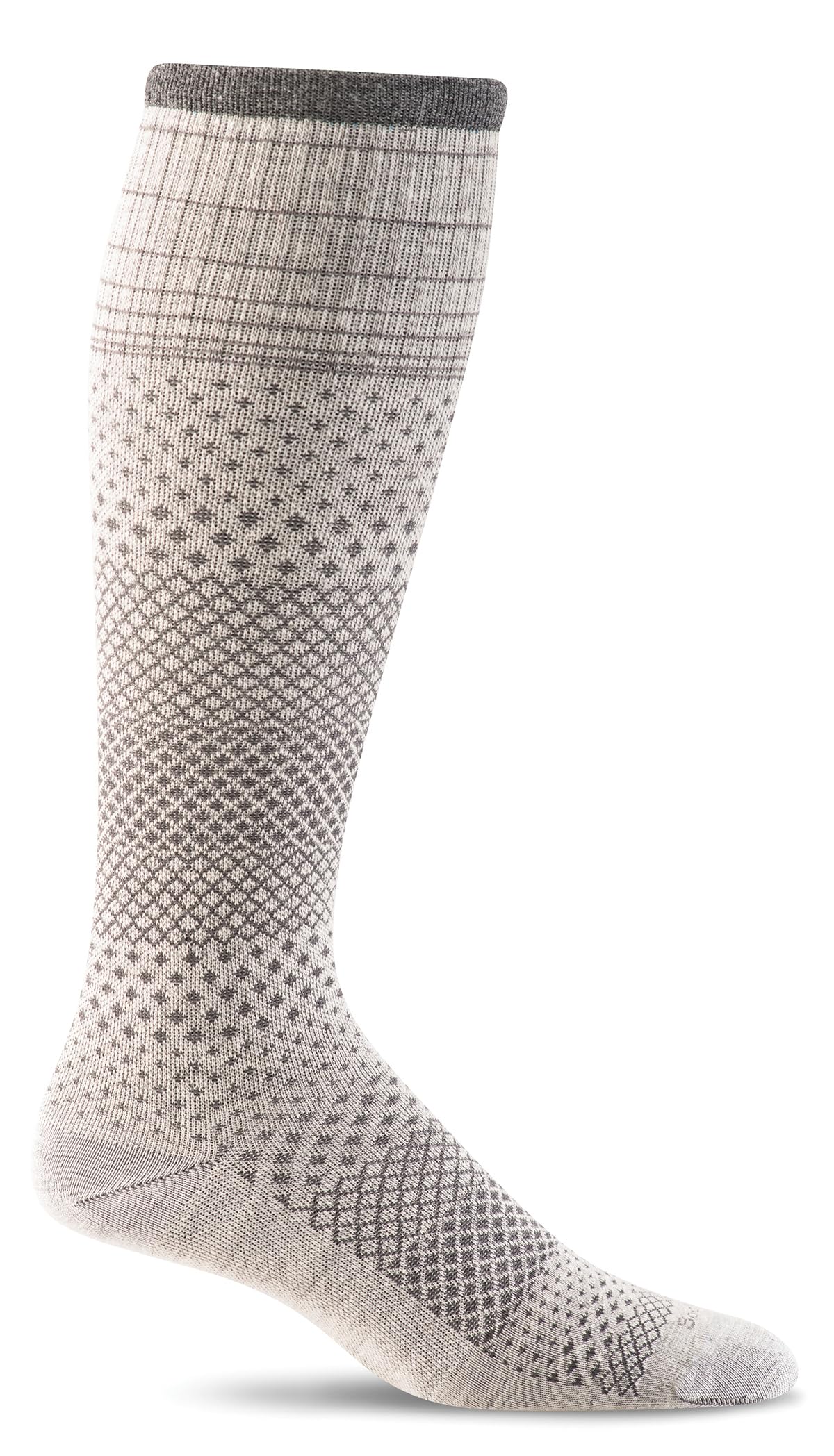
Sockwell uses a proprietary blend of 32% Merino Wool, 31% Rayon from Bamboo, and 32% Stretch Nylon with 5% Spandex. This specific combination provides excellent breathability and moisture wicking, which is critical when you’re wearing the same socks through a twelve-hour shift. The wool helps regulate temperature, keeping feet cool in warm units and warm in cold ones.
The graduated compression uses Accu-fit Technology with four zones of pressure, and the seamless toe closure eliminates irritation at the front of the foot. Nurses who reviewed these specifically noted they arrived home with no swelling after long critical care shifts, and the fabric stayed dry and flexible even when worn under scrub pants all day.
The only real consideration is the price point — these sit at the premium end of the market. However, multiple reviewers reported buying additional pairs after the first purchase, citing the durability through repeated washing and the consistent fit as reasons the upfront cost pays off over time.
Why it’s great
- Breathable merino wool blend prevents overheating and sweat buildup
- Seamless toe design eliminates rubbing and irritation inside shoes
- Multiple compression strengths available for customized fit
Good to know
- Premium pricing compared to synthetic blend socks
- Size chart must be followed carefully to get correct ankle and calf fit
2. Physix Gear Compression Socks

Physix Gear delivers a 20-30 mmHg compression level that targets more significant swelling and fatigue. The graduated design provides higher pressure at the ankle and gradually decreases up the calf, which helps push fluid back up the leg. The sock also includes built-in arch support, a feature many nurses appreciate when standing on hard floors all day.
Customer feedback from nurses working twelve-hour shifts with 12,000-plus steps per day shows this sock eliminated ankle swelling and reduced knee pain associated with ligament issues. The floral pattern is woven into the fabric rather than printed, so it holds up to repeated machine washing without fading or peeling.
Some users with shoe size 10 or 11 noted the toe area can feel slightly small, leaving the pinky toe close to the seam. If you have wider feet, you may want to size up based on the calf measurement rather than the shoe size alone. The socks are also noticeably long — buyers with shorter legs should check the height measurement against their calf length.
Why it’s great
- Strong 20-30 mmHg compression reduces significant swelling and fatigue
- Built-in arch support adds comfort during long standing shifts
- Woven pattern lasts through many wash cycles without damage
Good to know
- Toe box may feel snug for size 10+ feet with wide toes
- Length can be too long for individuals with shorter calves
3. LEVSOX Plus Size Compression Socks Wide Calf
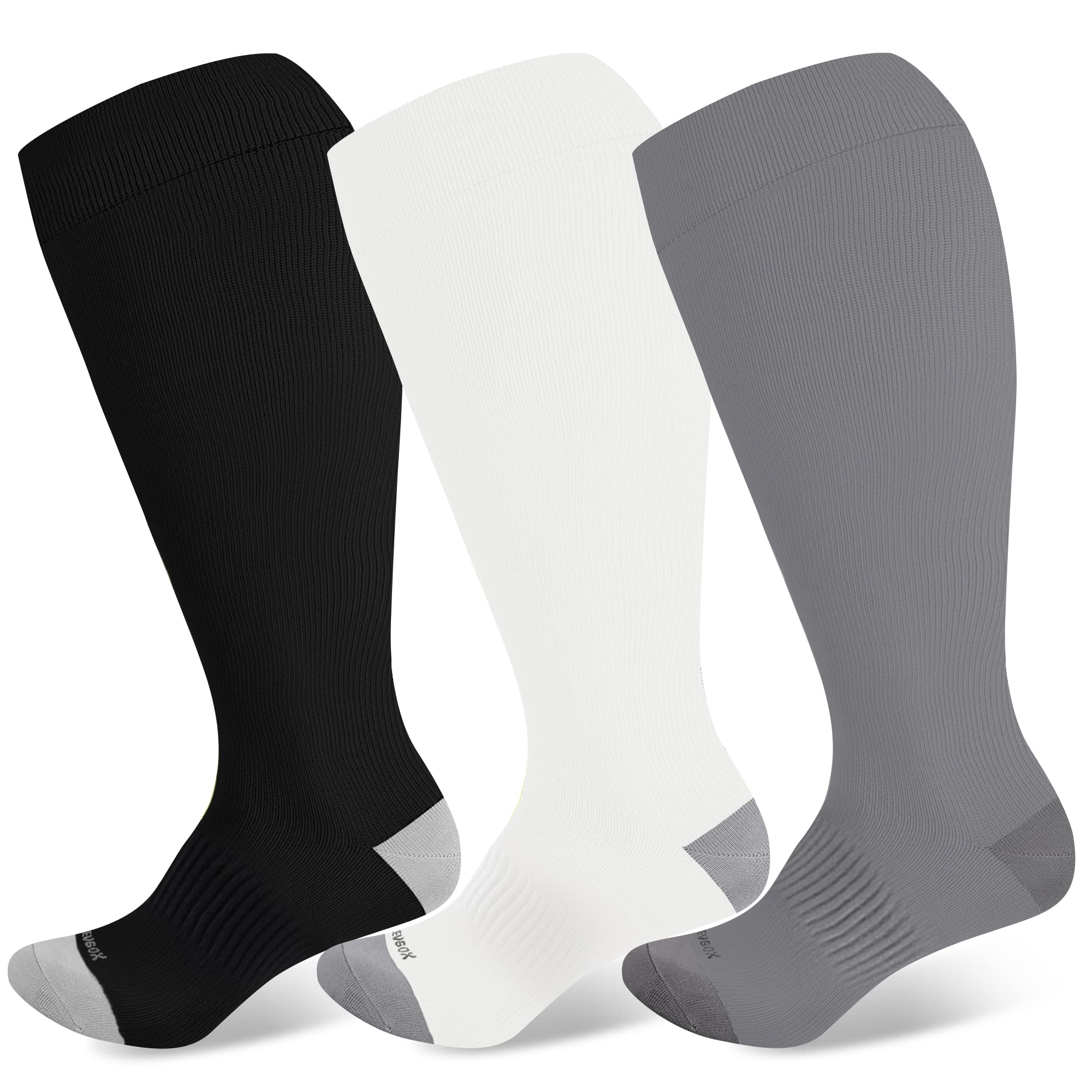
The LEVSOX wide calf compression socks are specifically built for individuals with larger calves who find standard sizes too tight or restrictive. The blend includes 20% spandex, providing extra stretch without losing the graduated compression needed to manage circulation. The 20-30 mmHg pressure rating makes these suitable for nurses dealing with lymphedema or persistent edema.
Reviewers with plus-size builds and swelling reported that these socks fit comfortably around the ankle and calf without digging in or rolling down. The toe seam is non-irritating, and the fabric is soft enough for extended wear — some users wore them 24/7 to manage fluid retention and saw significant reduction in edema within a week.
A few buyers noted a strong chemical or mothball-like odor straight out of the package, though this faded after the first wash. The socks also run long, and some users found the top band hits the back of the knee if the calf measurement is on the shorter side. Check the sizing chart carefully, especially the calf height.
Why it’s great
- 20% spandex provides excellent stretch for wide calves without binding
- Strong 20-30 mmHg compression effectively reduces edema quickly
- Soft toe fabric and non-irritating seams for all-day comfort
Good to know
- New socks may have a strong odor that requires a pre-wash to remove
- Length may be too tall for shorter individuals causing knee-band discomfort
4. Iseasoo Copper Compression Socks 8-Pair
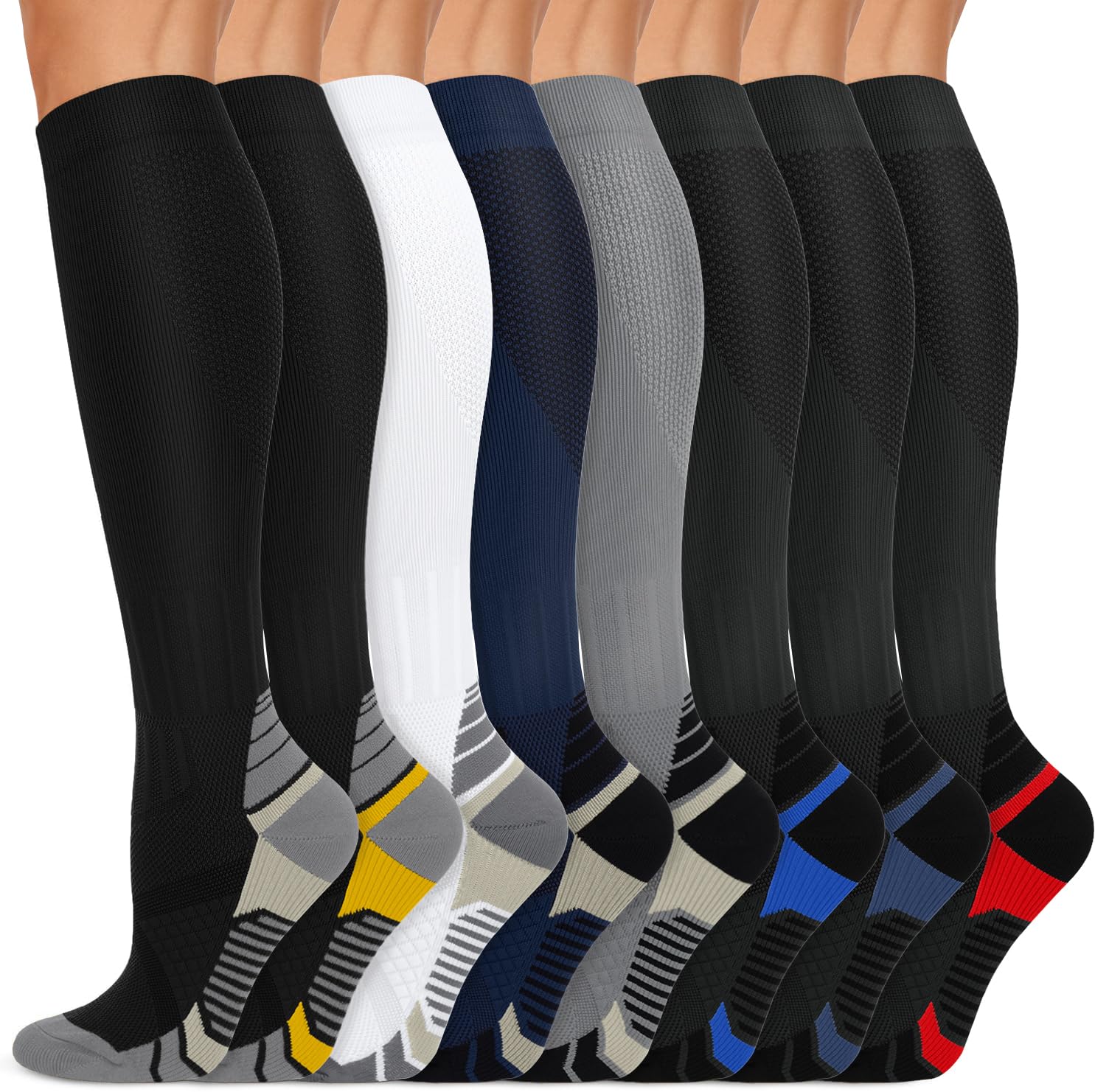
The Iseasoo 8-pair pack offers a week’s worth of socks in a single purchase, making it the most economical choice for nurses who want to stock up. The compression level is 15-20 mmHg, which is appropriate for general leg fatigue and mild swelling rather than significant edema. The fabric is 85% Nylon and 15% Polyester with copper-infused fibers intended to help with odor control.
Buyers reported that the socks are comfortable, not too thick, and easy to put on and take off — an important detail when you’re tired after a shift. The size L/XL fits a women’s shoe size 7 well, and reviewers noted the compression helped relieve knee pain and reduce swelling in the feet. The ribbed material leaves a slight indentation but doesn’t cause deep grooves or discomfort.
The copper infusion is marketed for circulation support, though the primary benefit most users experienced was the moisture-wicking and odor reduction during long wear. The socks are machine washable and held up well through multiple cycles. If you need higher compression for diagnosed edema, the 20-30 mmHg options above will serve you better, but for general shift support this pack delivers strong value.
Why it’s great
- Eight pairs provide a full week of rotation with minimal laundry
- Copper-infused fabric helps control odor during long shifts
- Easy to pull on and off, even with mild edema or tired hands
Good to know
- 15-20 mmHg compression may not be enough for significant swelling
- Foot section is designed for a narrower male foot shape
5. XZD Compression Socks 3-Pair
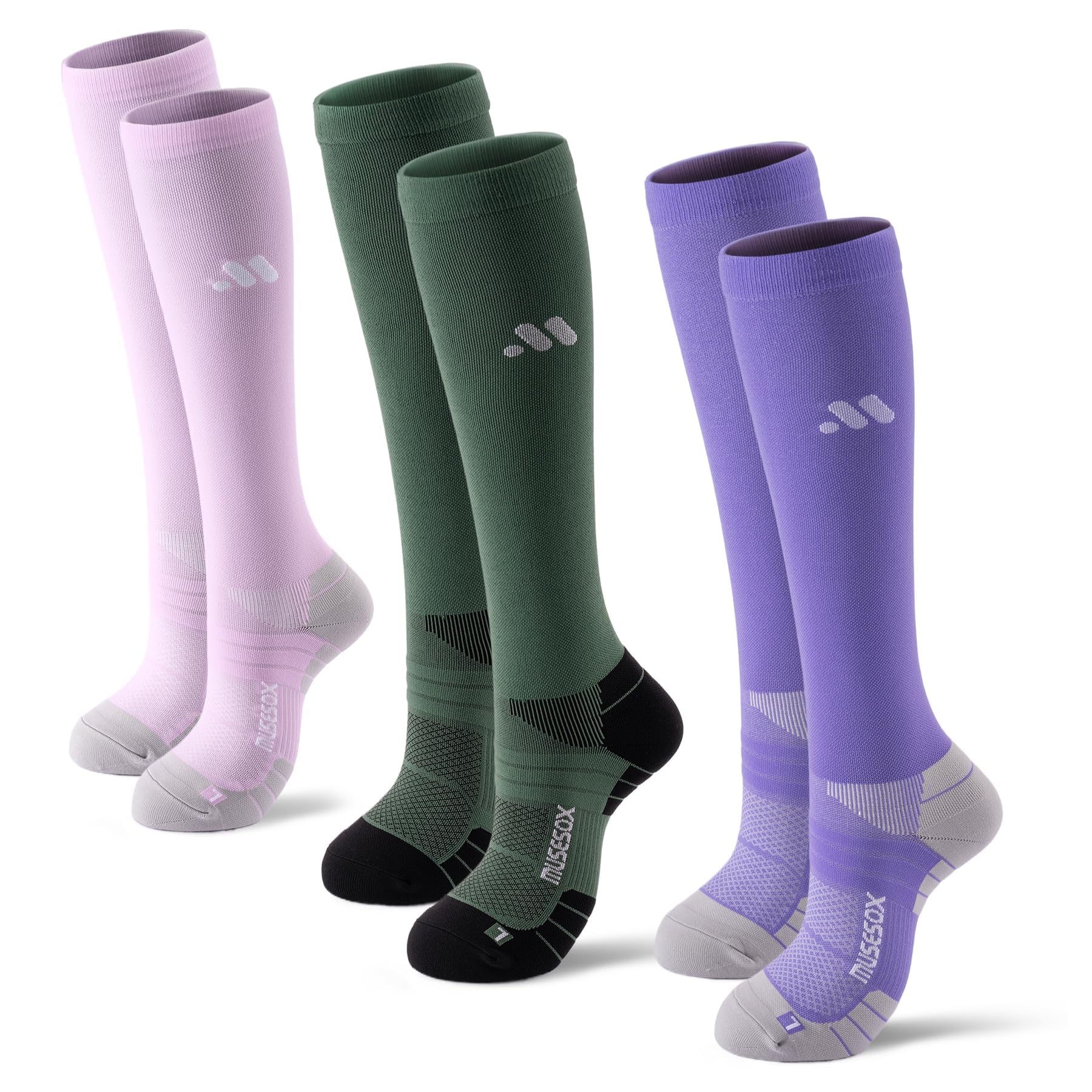
The XZD 3-pair set is a straightforward entry into compression wear for nurses who are new to wearing graduated socks. The 15-20 mmHg level provides a mild squeeze that helps prevent the heavy-leg feeling by the end of a shift, without the intense pressure of a 20-30 mmHg sock. Reviewers in food service and salon work — both standing jobs — reported that the socks drastically relieved calf pain after eight-hour shifts.
The fabric is soft and comfortable, with a fit that hugs without being difficult to pull on. The sizing chart includes instructions for those with arthritic hands, which is helpful for older nurses or anyone with grip issues. The height hits just below the knee for most users, and the compression is even enough that it doesn’t leave deep marks or cause a tourniquet effect.
The main drawback is the limited color variety — the patterns are basic, and some buyers wanted more options to match scrub colors. For the price, the quality is solid, and the three-pair count gives you enough to rotate through a few shifts. If you’re unsure whether compression socks will work for you, this set lets you test the experience without a large investment.
Why it’s great
- Mild 15-20 mmHg compression is ideal for beginners new to compression wear
- Soft, butter-feel fabric doesn’t dig in or leave marks
- Easy to put on with clear sizing instructions for limited hand strength
Good to know
- Limited color and pattern selection compared to other brands
- Not recommended for severe edema needing higher 20-30 mmHg pressure
FAQ
Should I wear compression socks only during my nursing shift or after work too?
How do I know if I need 15-20 mmHg or 20-30 mmHg compression?
Can compression socks cause circulation problems if they are too tight?
Final Thoughts: The Verdict
For most nurses, the best compression socks for nurses winner is the Sockwell Women’s Micro Grade because the merino wool blend manages moisture and temperature better than any synthetic sock in this category, and the seamless toe prevents irritation during twelve-hour shifts. If you need stronger support for significant edema, grab the Physix Gear Compression Socks. And for nurses with wide calves who struggle to find a fit that doesn’t dig in, nothing beats the LEVSOX Plus Size Wide Calf.

Mo Maruf
I created WellFizz to bridge the gap between vague wellness advice and actionable solutions. My mission is simple: to decode the research and give you practical tools you can actually use.
Beyond the data, I am a passionate traveler. I believe that stepping away from the screen to explore new environments is essential for mental clarity and physical vitality.