Our readers keep the lights on and my smoothie glass nicely filled. As an Amazon Associate, I earn from qualifying purchases.
Hard water stains on glass aren’t just unsightly — they’re mineral deposits fused to the surface, impervious to standard glass sprays and paper towels. The cloudy film that builds up on shower doors, windows, and auto glass requires an acidic or abrasive chemistry specifically formulated to dissolve calcium and lime without damaging the glass itself.
I’m Mohammad Maruf — the founder and writer behind WellFizz. I’ve spent countless hours analyzing consumer cleaning chemistry, comparing the active ingredients, dwell times, and application methods across dozens of products to identify which formulations actually break the crystalline bond of hard water minerals on glass surfaces.
This guide zeroes in on the five formulas that earn their spot by dissolving stubborn mineral deposits, not just smearing them around. After deep research into real user outcomes and ingredient profiles, here is the definitive list of the best cleaner for hard water stains on glass.
How To Choose The Best Cleaner For Hard Water Stains On Glass
Not all hard water stain removers are the same. The mineral bonds that form on glass require either an acidic chemical reaction (like sulfamic or hydrochloric acid) or a mild abrasive suspended in a cream or lotion. Choosing the wrong type can leave you scrubbing for hours — or worse, etching the glass surface.
Acid Strength vs. Surface Safety
Stronger acids dissolve calcium faster, but they also pose a higher risk of damaging glass coatings, metal fixtures, and surrounding tile grout. Sulfamic acid and phosphoric acid are common active ingredients that strike a balance — potent enough to break down limescale but gentle enough for routine use on glass shower enclosures and auto windows.
Application Method: Spray, Gel, or Lotion
Vertical glass surfaces like shower doors demand a formula that clings. Thin liquids drip off before the dwell time needed to dissolve deposits. Thicker gels or cream-based lotions stay put, giving the active ingredients time to work. For flat glass like windows or tabletops, a spray-on formula can be effective if allowed to sit.
Frequency of Use and Maintenance
Some products are designed for weekly maintenance (apply, rinse, no scrubbing), while others are heavy-duty strippers meant for quarterly deep cleaning or one-time restoration of neglected glass. Understanding how often you’re willing to treat the glass dictates whether you need a no-scrub spray or a lotion you buff off like car wax.
Quick Comparison
On smaller screens, swipe sideways to see the full table.
| Model | Category | Best For | Key Spec | Amazon |
|---|---|---|---|---|
| CRL Bio-Clean Water Stain Remover | Premium Lotion | Stubborn, layered mineral deposits | 16 fl oz cream-based formula | Amazon |
| CLR Calcium, Lime & Rust Remover with Cling | Gel Spray | Vertical shower surfaces | 22 oz spray bottle with cling tech | Amazon |
| Wet & Forget Shower Cleaner | No-Scrub Spray | Weekly maintenance, light buildup | 64 fl oz bleach-free spray | Amazon |
| CRL “Sparkle” Cleaner and Stain Remover | Lotion Wax | Auto glass and shower doors | 8 oz bottle, wax-like application | Amazon |
| CLR Free & Clear Calcium, Lime & Rust Remover | Fragrance-Free Spray | Sensitive households, multi-surface | 26 oz bottle, no dyes or fragrances | Amazon |
In‑Depth Reviews
1. CRL Bio-Clean Water Stain Remover

CRL Bio-Clean is the undisputed heavyweight for glass restoration. This cream-based lotion uses a mildly acidic chemistry to dissolve stage-one corrosion and layered mineral deposits that have been building for years. Users report removing seven-year-old hard water spots from truck and boat windows with two hand applications and elbow grease — a claim no spray cleaner can match. The unscented formula has a minty, acidic character and requires a mask during application, but the results justify the precaution.
The key differentiator is the physical consistency. Unlike thin sprays that run off vertical glass, Bio-Clean stays where you put it, allowing the active ingredients to dwell and work. A dry non-abrasive sponge is the recommended applicator, and multiple applications are often needed for the worst cases. Real-world feedback confirms it restores glass to a like-new clarity that other products simply cannot achieve on heavy buildup.
Where this product truly excels is on chronically neglected shower doors and auto glass. The ceramic tile and copper surfaces also benefit, and one user even bought it as a gift because it was the only thing that worked on their local hard water. For anyone battling stains that have been etched into the glass over months or years, Bio-Clean is the first and often last tool needed.
Why it’s great
- Removes years-old, layered mineral deposits effectively
- Cream formula clings to vertical glass surfaces
- Also works on tile, chrome, and porcelain
Good to know
- Requires physical buffing with a sponge
- Acidic fumes mean a mask is advisable
- May cause microscratches on delicate glass
2. CLR Calcium, Lime & Rust Remover with Cling
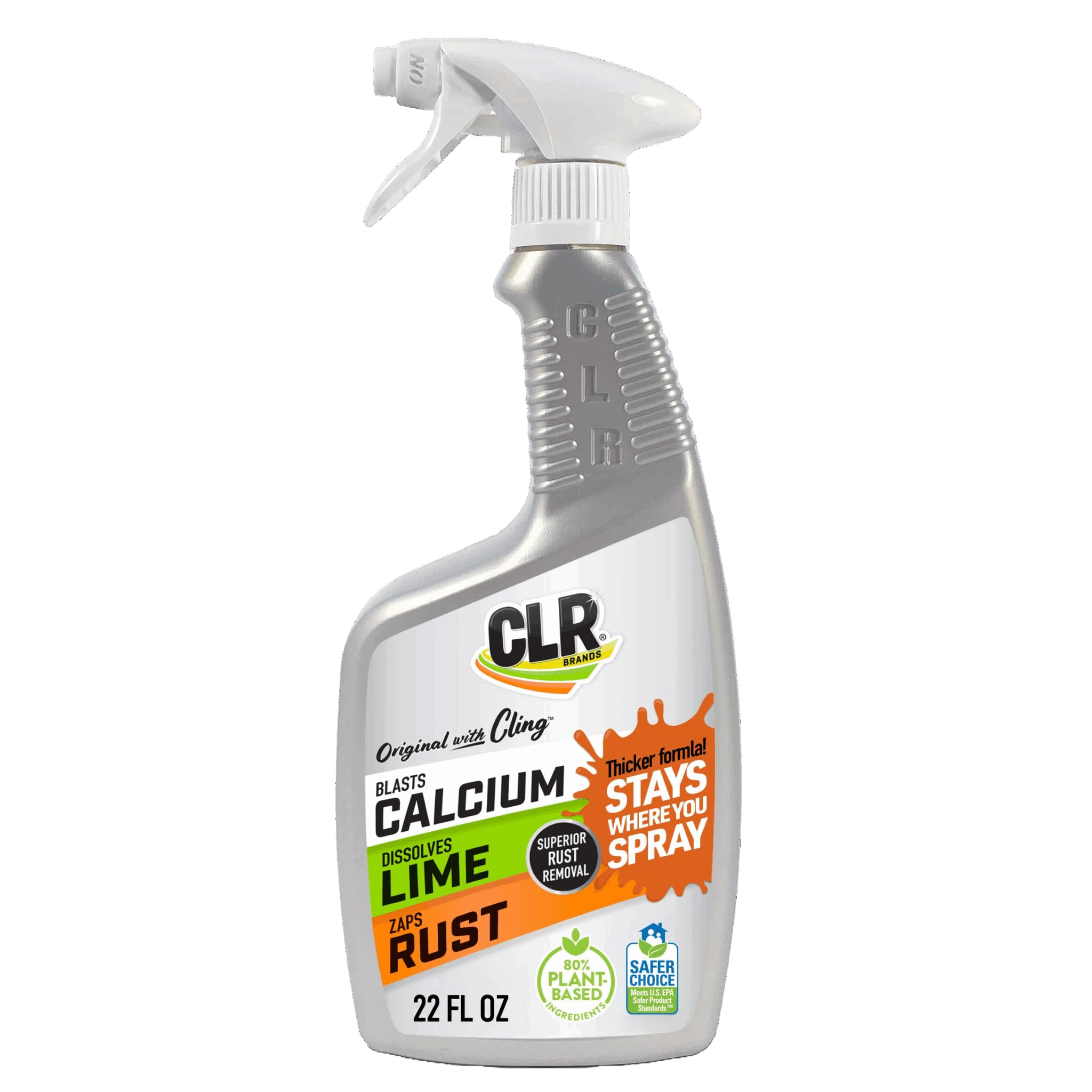
CLR’s Cling variant solves the fundamental problem of vertical glass cleaning: gravity. The enhanced gel formula stays where you spray it, maximizing dwell time on shower doors, toilet bowls, and faucet fixtures. Users consistently note that after just two minutes of contact time, heavy calcium and lime deposits loosen with light scrubbing — a massive time savings compared to traditional liquid CLR that drips away before it can work.
The chemistry is the same trusted CLR blend, but the delivery system changes everything. The gel eliminates the need for repeated spray-and-wait cycles common with thinner formulas. One review specifically highlights how this version outperforms other CLR products on toilet rings and vertical limescale in sinks. The trade-off is the smell; multiple users describe the odor as strong and lingering for several hours after use.
For households dealing with moderate to heavy hard water stains on glass shower enclosures, this is the most practical spray option available. It balances effectiveness with ease of use, requiring far less effort than cream-based lotions while still delivering visible results. The EPA Safer Choice certification adds peace of mind for those concerned about harsh chemical exposure.
Why it’s great
- Gel clings to vertical glass without dripping
- Fast acting — loosens deposits in about 2 minutes
- EPA Safer Choice certified
Good to know
- Strong chemical odor lingers for hours
- Slow on extremely thick, old deposits
- Not effective on glass etching from dishwashers
3. Wet & Forget Shower Cleaner

Wet & Forget takes a fundamentally different approach. Rather than a heavy-duty chemical stripper, it is a no-scrub maintenance formula designed to prevent buildup from accumulating. The clear, bleach-free liquid is applied weekly with the attached sprayer, left for 8 to 12 hours, then rinsed with warm water. Over time, soap scum and body oils dissolve without any physical abrasion — a literal set-it-and-forget-it system.
The vanilla scent is a notable relief compared to the harsh chemical odors of acid-based cleaners. Users report pleasant results on shower glass, tile, and grout, with years-old grout stains lifting after overnight applications. The formula is safe on glass, porcelain, fiberglass, and metal, though it is not recommended for natural marble. It is best suited for ongoing maintenance rather than first-time restoration of heavily calcified glass.
For users willing to adopt a weekly rhythm, Wet & Forget dramatically reduces deep-cleaning labor. The 64-ounce bottle delivers approximately 12 weeks of applications, making it a cost-effective long-term solution. However, for glass with existing thick mineral deposits, a pre-clean with a stronger product is necessary before this maintenance routine can take over.
Why it’s great
- No scrubbing required after application
- Pleasant vanilla scent, no bleach or ammonia
- Safe on most glass, tile, and metal surfaces
Good to know
- Requires 8-12 hours of dwell time
- Not effective for severe, existing calcium scale
- Needs consistent weekly application
4. CRL “Sparkle” Cleaner and Stain Remover

CRL Sparkle operates more like a car wax than a traditional cleaner. The thick lotion is applied with a damp cloth, allowed to dry to a white haze, and then buffed off to reveal a streak-free, glimmering shine. Users consistently describe the process as effortless — a thin coat, a wait of a few minutes, and a simple wipe with a dry cloth restores glass to like-new clarity.
This product has a cult following among auto enthusiasts who use it on vehicle windows to remove water spots and even smoke or vape residue. The same formula works on glass shower doors and porcelain glazed tile, with one user reporting that it made their shower doors look new again. The 8-ounce bottle is small, but a little goes a long way since it is applied as a thin wax layer rather than a drenching spray.
The limitation is on heavily etched or deeply layered mineral deposits. Multiple reviews confirm it removes light to moderate water staining effectively, but it does not remove glass etching caused by dishwasher detergent. For routine shining and light stain removal on auto windows and shower doors, Sparkle delivers the most satisfying finish of any product in this roundup.
Why it’s great
- Leaves a streak-free, wax-like shine
- Easy application and buff-off process
- Works on auto glass, shower doors, and tile
Good to know
- Not effective on glass etching
- 8 oz bottle is small for large areas
- Multiple applications needed for heavy stains
5. CLR Free & Clear Calcium, Lime & Rust Remover
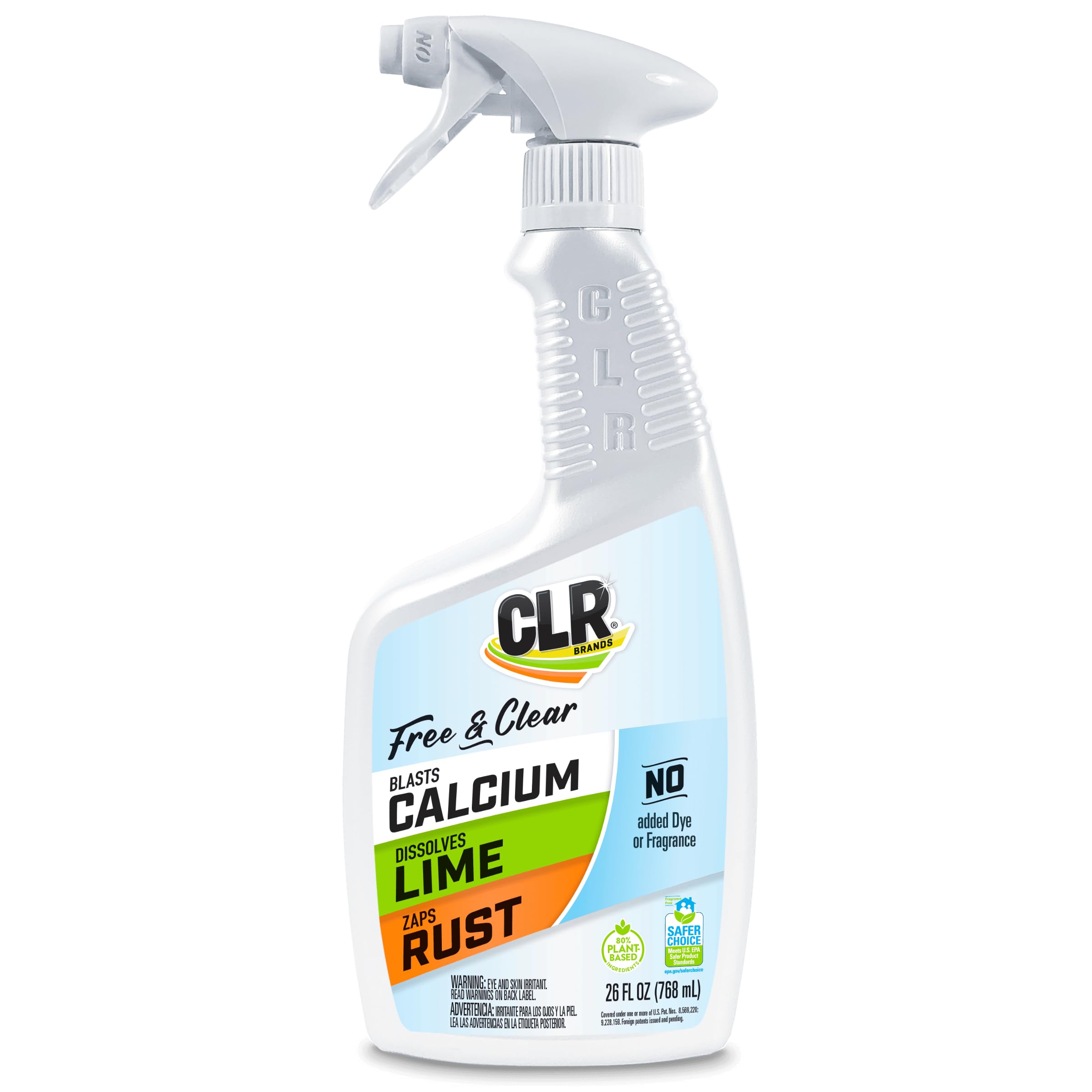
CLR Free & Clear is the same trusted formula that has been removing calcium and lime for decades, now stripped of dyes and fragrances. For households sensitive to artificial scents or those who prefer a cleaner chemical profile, this version delivers the same performance without the perfumed after-smell. Users confirm it handles iron and calcium buildup from standing water in toilets, shower cabins, and resin sinks with impressive speed.
The multi-surface compatibility is a major advantage. Beyond glass, this formula is safe on stainless steel, ceramic tile, porcelain, concrete, brick, and vinyl siding. The 26-ounce bottle is a practical size for tackling multiple problem areas around the house. One review notes that it works as the greatest soap scum remover for glass shower enclosures, while another highlights its effectiveness on a resin sink laden with deep calcium deposits.
The catch is that even the fragrance-free version still has a strong chemical smell due to its active acidic ingredients. It is also less effective on old, stubborn limescale compared to the Cling version or the cream-based Bio-Clean. For general maintenance and moderate buildup where scent sensitivity is the priority, this is the go-to option in the mid-range tier.
Why it’s great
- No dyes or fragrances for sensitive households
- Multi-surface safe on glass, tile, metal, and more
- Fast-acting on fresh to moderate mineral buildup
Good to know
- Still has a strong chemical odor despite being fragrance-free
- Not ideal for heavy, old limescale deposits
- Liquid formula runs off vertical surfaces quickly
FAQ
Can hard water stains on glass be removed without scratching the surface?
Why does my glass look etched even after using a hard water stain remover?
How often should I apply a hard water stain cleaner to my shower doors?
Final Thoughts: The Verdict
For most users, the best cleaner for hard water stains on glass winner is the CRL Bio-Clean Water Stain Remover because nothing else removes years of layered mineral deposits with the same chemical precision and physical cling. If you want a convenient no-scrub maintenance routine, grab the Wet & Forget Shower Cleaner. And for auto glass or light stains with a brilliant wax-like finish, nothing beats the CRL Sparkle Cleaner and Stain Remover.

Mo Maruf
I created WellFizz to bridge the gap between vague wellness advice and actionable solutions. My mission is simple: to decode the research and give you practical tools you can actually use.
Beyond the data, I am a passionate traveler. I believe that stepping away from the screen to explore new environments is essential for mental clarity and physical vitality.