Our readers keep the lights on and my smoothie glass nicely filled. As an Amazon Associate, I earn from qualifying purchases.
Choosing the right gaming monitor means balancing refresh rate, panel technology, and resolution to match the hardware inside your PC or console. The difference between a blurry, tearing mess and a silky-smooth victory lap often comes down to how well a monitor’s specs align with the games you actually play.
I’m Mohammad Maruf — the founder and writer behind WellFizz. I’ve spent countless hours analyzing panel specs, refresh rate testing methodologies, and adaptive sync standards to break down what really separates a competent gaming display from a truly elite one.
Whether you prioritize speed for competitive shooters or image quality for immersive single-player campaigns, this guide walks through the key specs and real-world performance of the top computer monitors for gaming currently available.
How To Choose The Best Computer Monitors For Gaming
Gaming monitors differ from general purpose displays in their priority on motion clarity, low latency, and adaptive sync compatibility. Three core decisions drive your choice: panel technology, resolution paired with refresh rate, and the adaptive sync ecosystem that matches your graphics card.
Panel Technology: IPS vs. VA vs. OLED
IPS panels deliver strong color accuracy and wide viewing angles, making them a reliable mid-range choice for mixed-use gaming and work. VA panels offer higher native contrast ratios, which improves shadow detail in dark scenes but can introduce smearing at lower frame rates. OLED panels, especially QD-OLED and WOLED, provide near-infinite contrast, pixel-level response times, and the best HDR experience, though they require burn-in mitigation features and careful use for static desktop elements.
Resolution and Refresh Rate Balance
1440p at 240Hz is the current sweet spot for competitive gaming on mid-to-high-end GPUs, offering sharp detail without the frame rate penalty of 4K. 4K at 165Hz suits those who prioritize visual fidelity in story-driven titles, while 1080p at high refresh rates like 320Hz or 330Hz benefits esports players who need maximum responsiveness. Dual-mode monitors let you switch between 4K at a lower refresh and 1080p at a higher refresh for versatile play.
Adaptive Sync and GPU Pairing
AMD FreeSync Premium requires a minimum 120Hz refresh rate at FHD resolution for a tear-free experience, while FreeSync Premium Pro adds HDR support and low latency. NVIDIA G-Sync Compatible certification ensures the monitor passes validation for tear-free performance with GeForce GPUs. Most modern monitors support both standards, but verify compatibility if you plan to use an HDMI 2.1 connection with a console.
Quick Comparison
On smaller screens, swipe sideways to see the full table.
| Model | Category | Best For | Key Spec | Amazon |
|---|---|---|---|---|
| MSI MPG 321URX | Premium QD-OLED | 4K 240Hz immersive gaming | 240Hz / 0.03ms / True Black 400 | Amazon |
| LG 32GX850A-B | Premium WOLED | Dual-mode 4K/1080p play | Dual 165Hz/330Hz / 0.03ms | Amazon |
| Alienware AW3425DW | Premium Ultrawide | Immersive ultrawide 21:9 gaming | 3440×1440 / 240Hz / QD-OLED | Amazon |
| ASUS ROG Strix XG27AQDMG | Premium Glossy OLED | High-end 1440p competitive play | 240Hz / 0.03ms / 99% DCI-P3 | Amazon |
| Samsung Odyssey G7 37″ | Mid-Range Curved 4K | Curved 4K immersion and HDR | 165Hz / 1ms / DisplayHDR 600 | Amazon |
| Samsung Odyssey OLED G5 | Mid-Range QD-OLED | Entry-level OLED with deep blacks | 180Hz / 0.03ms / Glare Free | Amazon |
| AOC Q27GAZD | Mid-Range QD-OLED | Budget OLED with fast response | 240Hz / 0.03ms / 1.5M:1 contrast | Amazon |
| LG 27GR83Q-B | Mid-Range IPS | Reliable 1440p 240Hz gaming | 240Hz / 1ms / DisplayHDR 400 | Amazon |
| Acer Nitro VG270K | Budget-Friendly 4K | 4K 160Hz on a budget | 160Hz / 0.5ms / FreeSync Premium | Amazon |
In‑Depth Reviews
1. MSI MPG 321URX QD-OLED

The MSI MPG 321URX combines a 32-inch 4K UHD QD-OLED panel with a 240Hz refresh rate and a 0.03ms GtG response time, making it one of the fastest and sharpest gaming monitors available. The Quantum Dot OLED technology delivers a DCI-P3 99% color gamut and VESA DisplayHDR True Black 400 certification, producing deep blacks and vibrant highlights that dramatically improve visibility in shadow-heavy game scenes. The 10-bit color depth ensures smooth gradients without banding in HDR content.
Practical features include a 90W USB-C port for laptop charging and KVM support for switching between two input sources with a single keyboard and mouse. OLED Care 2.0 uses pixel shift and logo detection to reduce burn-in risk, and MSI Gaming Intelligence provides AI-driven picture adjustments. The HDMI 2.1 ports support full 4K 240Hz on consoles and high-end GPUs, while the DisplayPort 1.4a handles high bandwidth with DSC compression.
Buyers should note the stand is somewhat chunky and takes up desk space, and the control knob can feel finicky during adjustments. Text clarity on the QD-OLED is good but not quite as sharp as a high-end IPS for productivity work. For pure gaming visual quality and speed in a 4K format, this monitor sets a high bar.
Why it’s great
- Stunning 4K 240Hz QD-OLED with True Black HDR
- KVM and 90W USB-C for multi-device setups
- OLED Care 2.0 minimizes burn-in risk
Good to know
- Stand is large and consumes desk space
- Control joystick can be imprecise
- Text clarity not as sharp as high-end IPS panels
2. LG 32GX850A-B UltraGear
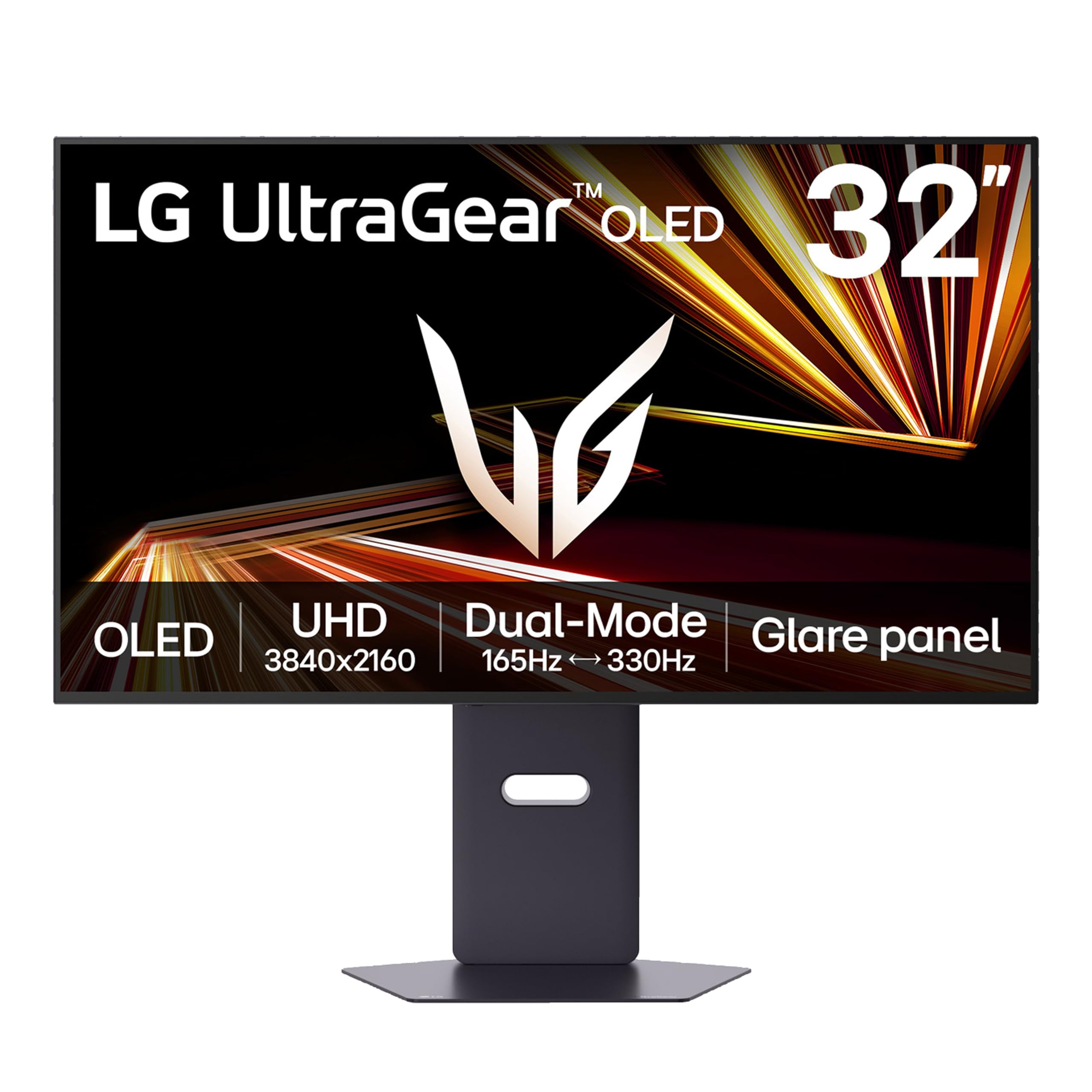
LG’s 32GX850A-B uses a glossy WOLED panel with Micro Lens Array+ technology to achieve 275 nits typical brightness and improved viewing angles over earlier OLED models. The dual-mode feature lets you toggle between 4K UHD at 165Hz and Full HD at 330Hz via a hotkey, making it equally suitable for immersive story-driven titles and fast-paced competitive shooters that benefit from the higher frame rate ceiling. The 1.5M:1 contrast ratio and True Black 400 certification produce exceptional shadow detail.
The monitor comes with a fully adjustable stand supporting height, tilt, swivel, and pivot adjustments, and three UL certifications for anti-glare, flicker-free, and low blue light comfort during long sessions. Dynamic Action Sync reduces input lag, while the Black Stabilizer feature brightens dark areas without washing out the rest of the image. Both G-Sync Compatible and FreeSync Premium Pro ensure smooth, tear-free gameplay across NVIDIA and AMD GPUs.
Some users report minor text clarity issues and occasional banding in gradients, which is common with WOLED panels. The glossy finish enhances color vibrancy but reflects ambient light, so positioning away from direct sources is recommended. The dual 1080p 330Hz mode is functional but the image softness at that resolution makes it a secondary option rather than a primary feature.
Why it’s great
- Dual-mode switch between 4K 165Hz and 1080p 330Hz
- Ergonomic stand with full adjustability
- Triple UL certification for eye comfort
Good to know
- Glossy finish reflects ambient light
- Text clarity and banding typical of WOLED
- 1080p dual-mode image is noticeably soft
3. Alienware AW3425DW

The Alienware AW3425DW uses a 34.2-inch WQHD (3440×1440) QD-OLED panel with an 1800R curve, creating an immersive field of view that wraps around your peripheral vision. The 240Hz refresh rate and 0.03ms response time deliver fluid motion in racing and flight sim titles, while the 99.3% DCI-P3 coverage and Delta E less than 2 color accuracy ensure HDR content looks vibrant and lifelike. The VESA DisplayHDR TrueBlack 400 certification provides deep blacks with 1000 nits peak brightness for highlights.
Connectivity includes DisplayPort 1.4, HDMI 2.1, and USB 3.2 ports, plus a four-pole headphone jack with DTS:X spatial audio support. The stand offers height, tilt, and swivel adjustments, and the monitor is VESA mount compatible. Alienware includes a microfiber cloth for safe cleaning of the delicate QD-OLED surface. Adaptive sync support covers FreeSync Premium Pro, G-Sync Compatible, and VESA AdaptiveSync for broad GPU compatibility.
The ultrawide format is less ideal for productivity workflows that rely on vertical screen space, and the 250 nits SDR brightness can feel dim in brightly lit rooms. Some users note slight text fringing due to the QD-OLED subpixel layout, though it is less pronounced on this generation panel. Burn-in risk requires using the built-in pixel refresh and logo dimming features consistently.
Why it’s great
- Immersive 21:9 ultrawide with 1800R curve
- Excellent color accuracy and True Black HDR
- Works with all three adaptive sync standards
Good to know
- Lower SDR brightness in bright rooms
- QD-OLED text fringing still noticeable
- Requires burn-in mitigation features
4. ASUS ROG Strix XG27AQDMG

The ASUS ROG Strix XG27AQDMG features a 26.5-inch QHD glossy WOLED panel with third-generation WOLED technology that improves full-screen white window brightness and text clarity compared to earlier generations. The 240Hz refresh rate and 0.03ms response time eliminate motion blur in competitive shooters, while the 99% DCI-P3 color gamut provides vivid, punchy colors that stand out without oversaturation. The custom heatsink and advanced airflow design actively reduce the risk of burn-in over long sessions.
ROG-exclusive OLED Anti-flicker technology minimizes flicker during frame rate fluctuations, and the uniform brightness setting maintains consistent luminance levels across the screen. The stand offers full height, tilt, swivel, and pivot adjustments, and DisplayWidget software allows quick profile switching via mouse clicks rather than on-screen menus. Connectivity includes HDMI 2.1, DisplayPort 1.4, and two USB 3.2 Gen 1 Type-A ports.
The auto-dimming features designed to protect the OLED panel can be distracting during static desktop use, though they can be disabled through the on-screen menu. There is no built-in speaker, so external audio is necessary. Some users report VRR flicker in certain GPU configurations, which can often be mitigated by disabling Variable Refresh Rate in the monitor’s OSD.
Why it’s great
- Glossy WOLED with excellent color and contrast
- Custom heatsink reduces burn-in risk
- Full ergonomic stand and anti-flicker tech
Good to know
- No built-in speakers
- Auto-dimming can be distracting for desktop use
- VRR flicker may occur with some GPUs
5. Samsung Odyssey G7 37″
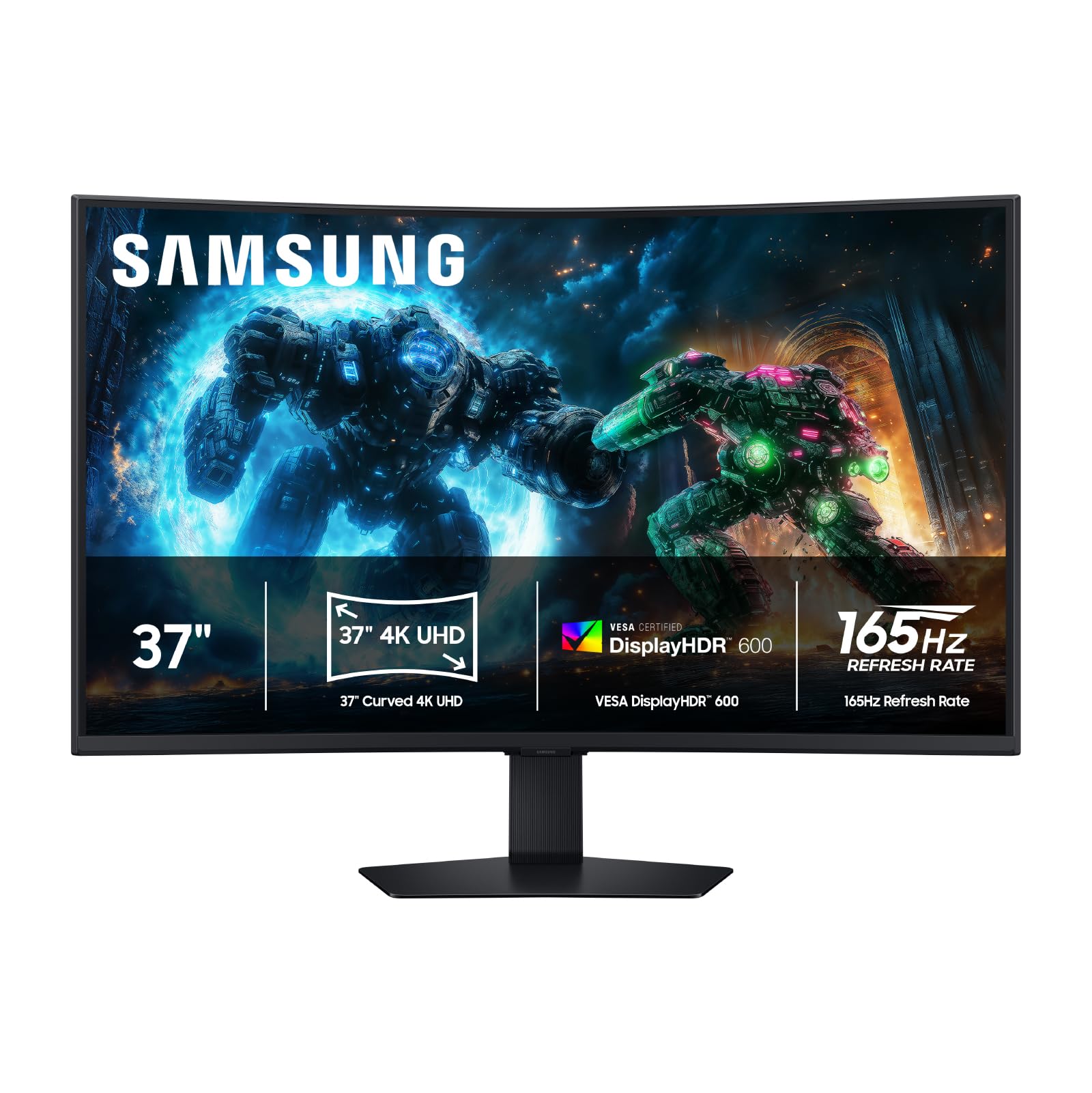
The Samsung Odyssey G7 uses a 37-inch 4K UHD VA panel with a 1000R curvature that matches the natural curve of the human eye for intense immersion in racing, flight, and open-world games. The VESA DisplayHDR 600 certification delivers brighter highlights and deeper blacks than standard HDR monitors, achieving a 3000:1 native contrast ratio that helps dark scenes retain detail without halo effects. The 165Hz refresh rate and 1ms GtG response time keep motion crisp in fast-paced titles.
The monitor supports AMD FreeSync Premium Pro for tear-free HDR gaming, and the included stand provides height, tilt, and swivel adjustments. The 37-inch size is unique — larger than standard 32-inch models but not as wide as a 34-inch ultrawide, offering more vertical screen real estate for productivity without the black bar issues of ultrawide formats. Connectivity includes DisplayPort 1.4 and HDMI 2.1 ports supporting full 4K 120Hz on consoles.
The VA panel’s black smearing, while reduced compared to older VA monitors, can still appear in very dark transitions, particularly at lower frame rates. The aggressive 1000R curve is immersive in games but can be disorienting for productivity tasks like spreadsheet work or photo editing. At full price, OLED alternatives offer better contrast and response time, making this a better value when discounted.
Why it’s great
- Deep contrast with DisplayHDR 600 certification
- Immersive 1000R curve for single-player games
- Unique 37-inch size balances screen real estate
Good to know
- VA black smearing can appear at low frame rates
- 1000R curve not ideal for productivity
- Better OLED options at comparable full price
6. Samsung Odyssey OLED G5

The Samsung Odyssey OLED G5 brings QD-OLED technology to a 27-inch QHD format at a price point that undercuts most premium OLED monitors. The 180Hz refresh rate and 0.03ms GtG response time deliver buttery-smooth motion, while the 1,000,000:1 contrast ratio creates the deep blacks and vibrant colors that make OLED gaming so visually impactful. Samsung’s Glare Free matte coating reduces reflections better than glossy OLED panels without crushing fine detail.
OLED Safeguard uses a Thermal Modulation System to actively cool the panel and prevent burn-in, and Pantone Validation ensures accurate color reproduction across 2100+ colors. Auto Source Switch+ automatically detects and switches between connected devices, which is convenient for multi-platform setups. Both G-Sync Compatible and AMD FreeSync are supported for adaptive sync across different GPUs, and the HDR10 support provides brighter highlights and nuanced shadows.
The plastic build feels less premium than aluminum-framed competitors, and the monitor lacks built-in speakers. The input selection is limited to one HDMI 2.1 port and one DisplayPort 1.4, which may be restrictive for users with multiple consoles and a PC. 180Hz is sufficient for most gamers but falls short of the 240Hz standard that competitive players prioritize for titles like Counter-Strike 2 or Valorant.
Why it’s great
- Affordable entry to QD-OLED gaming
- Deep contrast and vibrant HDR colors
- Glare Free coating reduces reflections
Good to know
- Plastic build with limited inputs
- No built-in speakers
- 180Hz refresh below 240Hz competitive standard
7. AOC Q27GAZD
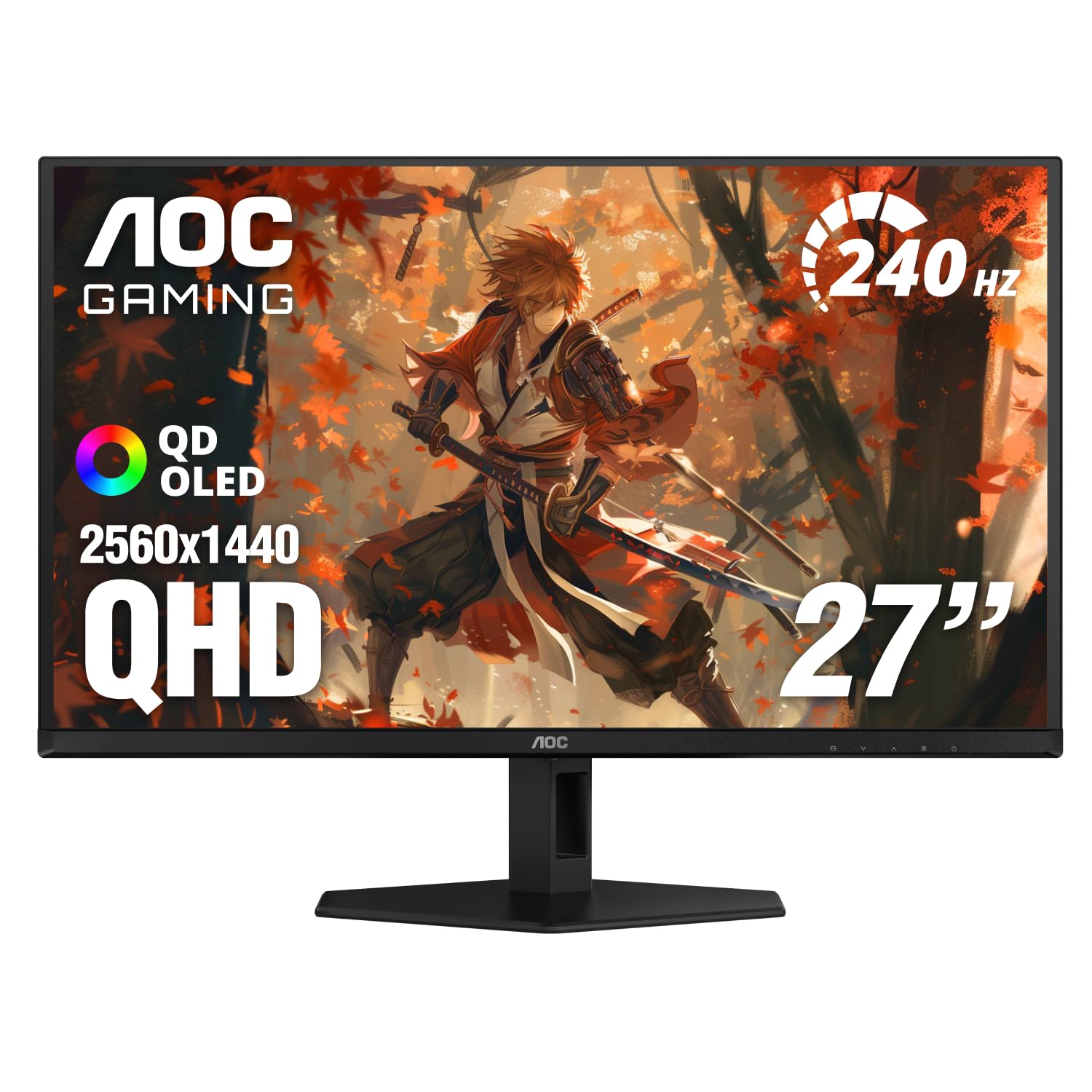
The AOC Q27GAZD pairs a 27-inch QHD QD-OLED panel with a full 240Hz refresh rate and a 0.03ms GtG response time, matching the motion clarity of far more expensive OLED monitors. The HDR400 True Black certification delivers deep blacks and strong peak brightness for HDR gaming, while the 147.6% sRGB and 110.2% DCI-P3 color gamut coverage ensures colors look vivid and accurate across both games and media. The 1,500,000:1 contrast ratio provides the signature OLED infinite contrast that makes dark scenes pop.
Adaptive-Sync compatibility eliminates screen tearing and stuttering, and the VESA mountable design works with standard monitor arms. The monitor includes HDMI and DisplayPort inputs, though the HDMI port is limited to 165Hz — achieving the full 240Hz requires using the DisplayPort connection. The anti-glare matte finish helps reduce reflections in brightly lit rooms, making it more versatile than glossy OLED panels.
The included stand lacks height adjustment and is wobbly enough that most users will want to replace it with a monitor arm or a third-party stand. The panel’s maximum brightness is lower than high-end OLEDs at around 250 nits, and HDR performance, while good, does not match the peak brightness of more expensive models with DisplayHDR 400 True Black 600 certification. Some units arrive with minor adhesive residue from the protective film that requires careful cleaning.
Why it’s great
- Full 240Hz QD-OLED at a competitive price
- Excellent color gamut coverage
- Anti-glare matte finish reduces reflections
Good to know
- HDMI limited to 165Hz; use DP for 240Hz
- Stand is wobbly and lacks height adjustment
- Lower peak brightness than premium OLEDs
8. LG 27GR83Q-B UltraGear
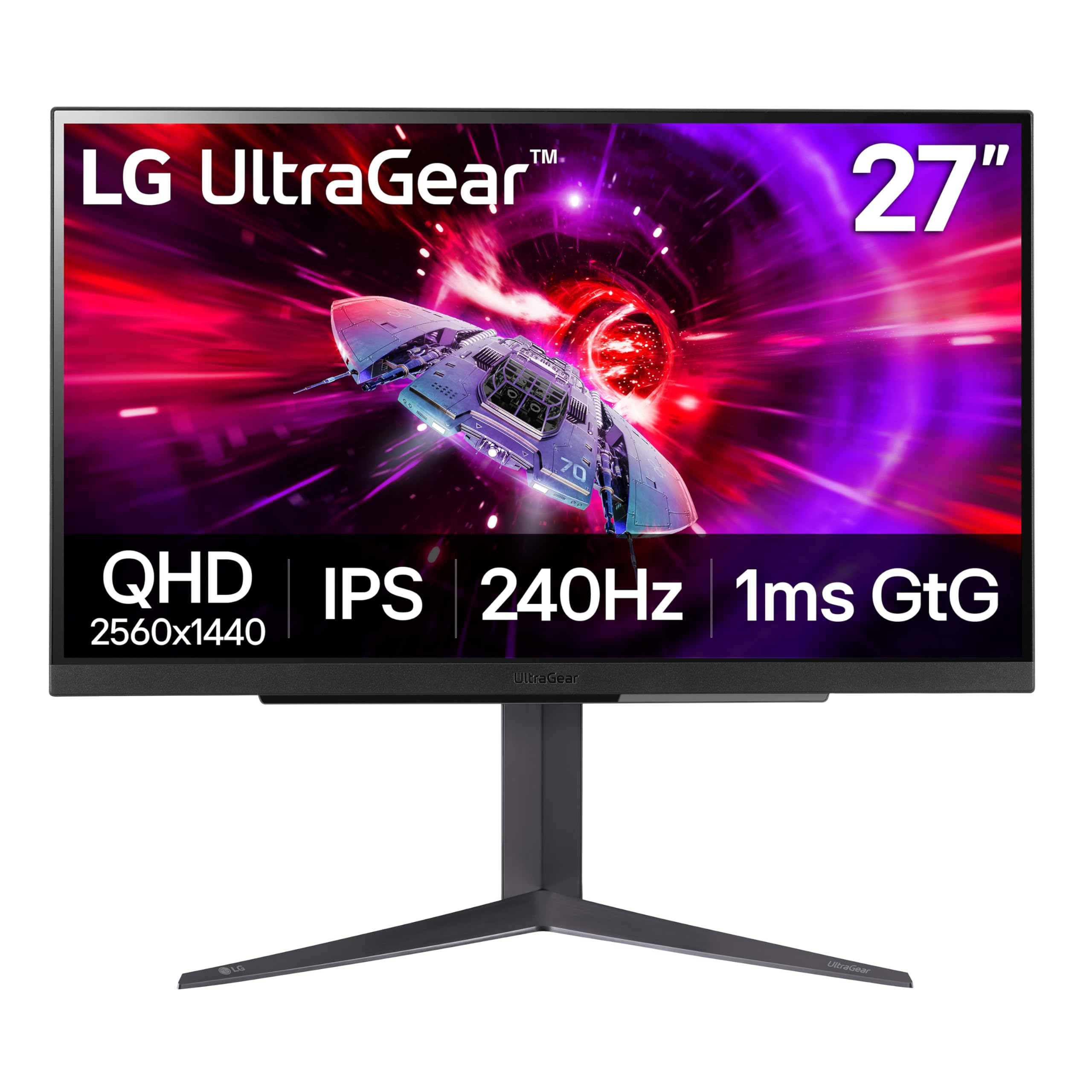
The LG 27GR83Q-B is a 27-inch QHD IPS gaming monitor that delivers 240Hz refresh rates over both DisplayPort 1.4 and HDMI 2.1, making it equally viable for PC and console gaming. The 1ms GtG response time keeps motion blur low in competitive shooters, while the DisplayHDR 400 certification and DCI-P3 95% color gamut provide above-average color vibrancy for an IPS panel. The monitor is officially validated as NVIDIA G-Sync Compatible and supports AMD FreeSync Premium for tear-free gameplay on both GPU ecosystems.
The ergonomic stand offers height, tilt, swivel, and pivot adjustments, allowing comfortable positioning for long sessions. Advanced gaming features include Dynamic Action Sync for reduced input lag, Black Stabilizer for improved visibility in dark scenes, and a built-in FPS counter. The four-pole headphone output with DTS Headphone:X provides spatial audio through a headset, carrying both stereo and microphone signals through a single cable.
Quality control issues with stuck or dead pixels appear in some units, requiring return or replacement. The IPS panel’s native contrast ratio is 1000:1, which means blacks look gray in dark room conditions compared to VA or OLED panels. The monitor’s HDR400 certification does not deliver the dynamic range needed for a convincing HDR experience, limiting it to SDR gaming for most users.
Why it’s great
- Full 240Hz over both DP 1.4 and HDMI 2.1
- Versatile ergonomic stand with pivot
- G-Sync Compatible and FreeSync Premium
Good to know
- IPS contrast ratio limits black levels
- Pixel quality control can be inconsistent
- HDR400 does not provide convincing HDR
9. Acer Nitro VG270K

The Acer Nitro VG270K offers a unique value proposition: a 27-inch 4K UHD IPS panel that can run at 160Hz at native 4K or switch to 320Hz at 1080p using Dynamic Frame Rate (DFR) technology. This makes it one of the most affordable ways to get a 4K high-refresh gaming experience, with the added flexibility of a 320Hz mode for competitive play. The 0.5ms GtG response time keeps motion clear in both resolutions, and AMD FreeSync Premium eliminates screen tearing across the frame rate range.
The HDR10 support with DCI-P3 90% color gamut provides improved color saturation and contrast over standard SDR monitors, while the zero-frame bezel design allows seamless multi-monitor setups. Connectivity includes two HDMI 2.1 ports and one DisplayPort 1.4, supporting full 4K 120Hz on consoles. The built-in speakers, while weak, provide basic audio output without needing external speakers for casual play.
Some units have reported HDMI port failure within the first month, requiring use of the DisplayPort connection instead. The stand offers only tilt adjustment with no height or swivel capability, so most users will want a VESA-compatible monitor arm for proper positioning. The 27-inch 4K format requires scaling for desktop use, and text can appear small at 100% scaling without adjustment.
Why it’s great
- Affordable entry to 4K 160Hz gaming
- DFR switch to 1080p 320Hz for competitive play
- Includes two HDMI 2.1 ports
Good to know
- HDMI port failures reported in some units
- Stand lacks height and swivel adjustment
- Built-in speakers are very weak
FAQ
Is 1440p 240Hz better than 4K 144Hz for gaming?
Do I need HDMI 2.1 for a gaming monitor?
What is OLED burn-in and should I worry about it?
What is black smearing on VA monitors?
Can I use a glossy OLED monitor in a bright room?
Final Thoughts: The Verdict
For most users, the computer monitors for gaming winner is the MSI MPG 321URX because it combines a stunning 4K 240Hz QD-OLED panel with practical features like KVM and USB-C charging at a price that undercuts competitors with similar specs. If you want the flexibility of switching between 4K 165Hz and 1080p 330Hz without sacrificing OLED image quality, grab the LG 32GX850A-B. And for an immersive ultrawide experience that transforms how you play racing and flight sims, nothing beats the Alienware AW3425DW.

Mo Maruf
I created WellFizz to bridge the gap between vague wellness advice and actionable solutions. My mission is simple: to decode the research and give you practical tools you can actually use.
Beyond the data, I am a passionate traveler. I believe that stepping away from the screen to explore new environments is essential for mental clarity and physical vitality.