Our readers keep the lights on and my smoothie glass nicely filled. As an Amazon Associate, I earn from qualifying purchases.
A home spanning 2,500 square feet or more is too large for a single standard router to handle without leaving frustrating dead zones. Streaming drops in the master bedroom, video calls stutter in the home office, and smart home devices in the garage refuse to stay connected. Fixing this requires a router engineered specifically for wide-area coverage without sacrificing top-end throughput.
I’m Mohammad Maruf — the founder and writer behind WellFizz. I’ve spent hundreds of hours analyzing wireless standards, antenna configurations, and real-world performance metrics to identify which routers genuinely solve the coverage problem for larger floor plans.
The right hardware eliminates Wi-Fi dead zones and keeps every device in your home running at full speed, which is why identifying the true best connectivity router for large homes requires looking beyond just raw speed numbers at antenna count, mesh capabilities, and multi-gig port support.
How To Choose The Best Connectivity Router For Large Homes
Selecting a router for a large home is a different process than picking one for a small apartment. The primary concerns shift from raw speed to signal penetration, client capacity, and wired backhaul options. Focus on three decisive factors to narrow your list.
Single Router vs. Mesh System Trade-Off
A single, high-power router with multiple external antennas and beamforming can cover up to 3,000 square feet in an open floor plan. However, homes with multiple floors, thick interior walls, or long narrow wings benefit far more from a mesh system that physically places a node in each zone. Mesh systems like the Tenda BE5100 or Amazon eero Max 7 allow wired Ethernet backhaul between nodes, which delivers the most stable wide-area coverage. If you can run cables between floors, a mesh system with wired backhaul is the superior long-term investment.
Wi-Fi Generation and Multi-User Capacity
Wi-Fi 6 remains a very capable standard for large homes, handling 30-50 devices with good efficiency using OFDMA and MU-MIMO. Wi-Fi 7 more than doubles the channel bandwidth to 320 MHz and introduces Multi-Link Operation (MLO), which lets devices bond across bands for lower latency and higher throughput. For a home with over 80 connected devices, frequent 4K/8K streaming, or gaming across multiple rooms, Wi-Fi 7 justifies its premium. For lighter usage, a well-implemented Wi-Fi 6 router like the TP-Link Archer AX80 provides excellent range at a lower investment.
Port Configuration and Multi-Gig Support
A router for a large home often sits at the center of a wired network. The number and speed of LAN ports matter as much as the Wi-Fi radio. Look for at least one 2.5 Gbps port on both WAN and LAN sides to avoid bottlenecks with modern fiber internet plans. The GL.iNet Flint 3 and ASUS RT-BE92U both offer multiple 2.5 Gbps ports, allowing wired backhaul and high-speed NAS connections without choking the network.
Quick Comparison
On smaller screens, swipe sideways to see the full table.
| Model | Category | Best For | Key Spec | Amazon |
|---|---|---|---|---|
| Synology RT6600ax | Premium | Prosumer control & VLAN | Tri-band, 2.5GbE port, SRM OS | Amazon |
| Amazon eero Max 7 | Premium | Mesh simplicity & Thread hub | 2x 10GbE ports, Wi-Fi 7 | Amazon |
| NETGEAR Nighthawk RS500 | Premium | High-speed single-unit | Tri-band BE12000, 3,000 sq. ft. | Amazon |
| ASUS RT-BE92U | Mid-Range | Wi-Fi 7 & AiMesh | BE9700, 320 MHz, 6 GHz | Amazon |
| GL.iNet Flint 3 | Mid-Range | VPN & OpenWRT custom | Tri-band BE9300, 5x 2.5GbE | Amazon |
| TP-Link Archer BE600 | Mid-Range | Future-proof single unit | BE9700, 10G port, 2600 sq. ft. | Amazon |
| NETGEAR Nighthawk RS200 | Mid-Range | Entry-level Wi-Fi 7 | BE6500, 2.5G port, 2500 sq. ft. | Amazon |
| Tenda BE5100 ME6 Pro | Budget-Friendly | Mesh for very large homes | 3-pack, 6600 sq. ft., Wi-Fi 7 | Amazon |
| TP-Link Archer AX80 | Budget-Friendly | Reliable workhorse | AX6000, 8 antennas, 2.5G port | Amazon |
In‑Depth Reviews
1. Synology RT6600ax

The Synology RT6600ax runs Synology Router Manager (SRM), the most polished router operating system available on consumer hardware. This tri-band 4×4 unit offers five separate network SSIDs, allowing you to physically segment IoT devices, guest traffic, and home office traffic using VLANs — a feature that alone justifies its premium positioning for large homes with many smart devices.
Coverage is excellent for a single unit, with no subscription fees for threat prevention, VPN server, or parental controls. The 2.5GbE WAN port handles multi-gig internet plans, and the router supports complete site-to-site VPN tunnels with 40 free licenses. Users upgrading from mesh systems consistently report fewer dropouts and faster roaming with wired backhaul via a separate switch.
The main hardware limitation is a single 2.5GbE LAN port and only four total Gigabit LAN ports, which forces most wired devices to share a 1 Gbps bottleneck. The router also lacks Wi-Fi 6E support, sticking with the 5.9 GHz expanded spectrum rather than the dedicated 6 GHz band newer devices prefer.
Why it’s great
- Best-in-class SRM operating system with VLAN support
- No subscription for threat prevention or VPN server
- Excellent parental controls and web filtering included
Good to know
- Only one 2.5GbE LAN port limits wired speeds
- Missing 6 GHz band support (no Wi-Fi 6E/7)
- 5 GHz channel selection can be finicky
2. Amazon eero Max 7
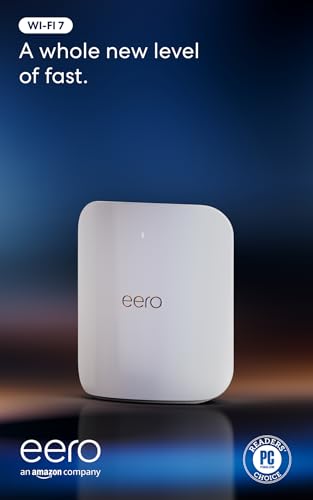
The eero Max 7 brings two 10 Gigabit Ethernet ports to a mesh node, making it the most future-proof wired backbone you can deploy in a large home. With Wi-Fi 7 technology delivering up to 4.3 Gbps wirelessly and support for over 250 devices, this single unit covers 2,500 square feet and can be expanded with additional eero nodes for multi-story homes.
TrueMesh intelligence dynamically routes data across the network, minimizing interference from neighboring Wi-Fi networks and thick construction. The unit also functions as a Thread, Matter, and Zigbee smart home controller, eliminating the need for a separate hub for most modern smart devices. Setup takes under 10 minutes using the eero app, and the three-year warranty provides exceptional peace of mind.
Some users report persistent issues with video conferencing platforms like Teams and Zoom even with wired backhaul, suggesting the QoS algorithms prioritize download throughput over real-time upload stability. The optional eero Plus subscription adds advanced security features, but the free tier lacks granular parental controls available on Synology or ASUS systems.
Why it’s great
- Dual 10GbE ports eliminate wired bottlenecks
- TrueMesh handles complex floor plans without dead zones
- Built-in Zigbee, Thread, and Matter hub
Good to know
- Video call performance can be inconsistent
- Advanced security requires paid subscription
- High entry price for single-unit purchase
3. NETGEAR Nighthawk RS500

The RS500 is NETGEAR’s answer to the single-unit large home challenge, packing a tri-band BE12000 Wi-Fi 7 radio into a sleek chassis with a smaller footprint than previous Nighthawk designs. Its four high-performance antennas deliver reliable coverage up to 3,000 square feet, making it one of the few single routers that can genuinely cover a whole large home without needing a mesh satellite.
The 2.5 Gigabit internet port unlocks full multi-gig fiber speeds, and the tri-band architecture dedicates a 6 GHz band for high-bandwidth devices like gaming consoles and streaming boxes. The Nighthawk app provides straightforward setup and network management, including guest network controls and device prioritization. Users report consistent 7ms wired and 9ms wireless ping times, ideal for competitive gaming.
The router does not include a built-in modem, so a separate cable modem or fiber ONT is required. Some units shipped from Amazon have arrived as refurbished products despite being sold as new, so verify packaging integrity at delivery. The lack of any mesh expansion option means homes over 3,000 square feet will still require a separate extender.
Why it’s great
- Highest single-unit coverage at 3,000 sq. ft.
- Tri-band BE12000 eliminates band congestion
- Very low latency for gaming and video calls
Good to know
- No mesh expansion path for larger homes
- Refurbished units sometimes sold as new
- Requires separate modem
4. ASUS RT-BE92U

The ASUS RT-BE92U brings 320 MHz channel support across the 6 GHz band with 4096-QAM modulation, pushing theoretical throughput to 9700 Mbps. For a large home, the real advantage is AiMesh compatibility — you can add any other AiMesh-capable ASUS router to extend coverage without replacing your hardware. This makes it a smart foundation node for a phased mesh build-out.
AI WAN detection automatically configures internet connectivity, handling 4G LTE and 5G mobile tethering through the USB port as a failover. Subscription-free AiProtection Pro provides commercial-grade threat protection without recurring fees. The web interface offers granular control over VLANs, QoS, and VPN profiles, catering to power users who want full network customization.
Several users report a known MLO compatibility issue with Samsung and Apple devices that causes intermittent Wi-Fi drops, requiring disabling MLO or applying workaround firmware. The 2.4 GHz band has also been reported to stop broadcasting entirely on some units after a few weeks, necessitating a factory reset. The wall mount kit is flimsy and not suitable for permanent installation.
Why it’s great
- AiMesh allows easy expansion with existing ASUS routers
- Subscription-free AiProtection Pro security
- 320 MHz channels maximize Wi-Fi 7 throughput
Good to know
- MLO compatibility issues with Samsung and Apple devices
- 2.4 GHz radio can fail after weeks of use
- Included wall mount is poorly designed
5. GL.iNet Flint 3 (BE9300)

The Flint 3 runs a full OpenWRT operating system, giving advanced users complete control over routing, firewall rules, and custom plugins. It features five 2.5 Gigabit Ethernet ports, allowing wired backhaul to a switch, NAS, gaming PC, and streaming box simultaneously without any port contention — a rare configuration at this price point.
Wireguard and OpenVPN speeds both reach up to 680 Mbps, making it one of the fastest VPN routers available for protecting an entire household’s traffic without crippling internet speed. Built-in AdGuard Home blocks tracking and advertisements network-wide, and the router supports Bark parental monitoring for filtering content and managing screen time. MLO technology bonds across bands for ultra-low latency during gaming and video calls.
Wi-Fi range measures roughly half that of a typical ISP-provided router, covering only about 2,000 square feet reliably. Users report USB 3.0 NAS performance drops to around 30 MB/s, which is poor compared to dedicated NAS solutions. The initial setup requires a wired connection to the admin panel and a mandatory firmware update to achieve full stability.
Why it’s great
- Five 2.5GbE ports for wired home networks
- Very fast Wireguard and OpenVPN throughput
- Full OpenWRT with custom plugin support
Good to know
- Wi-Fi range is below par at 2,000 sq. ft.
- USB 3.0 NAS performance is slow
- Requires wired setup and firmware update
6. TP-Link Archer BE600

The Archer BE600 packs a 10 Gbps WAN/LAN port alongside a 2.5 Gbps WAN/LAN port and three additional 2.5 Gbps LAN ports, providing wired connectivity that can handle the fastest fiber plans available today. Its tri-band BE9700 Wi-Fi 7 radio covers up to 2,600 square feet with six optimally positioned internal antennas and beamforming that focuses signals toward hard-to-cover areas.
HomeShield provides basic network security scanning, IoT device identification, and parental controls at no extra cost — a solid free tier compared to competitors. The Tether app handles setup in minutes, and the router supports VPN client and server configurations so remote workers can access the home network securely. Users upgrading from Wi-Fi 5 routers report 2-3x speed increases and dramatically improved coverage in older homes with plaster walls.
Some units suffer from constant rebooting when handling heavy wireless traffic, even after firmware updates. The web interface is bloated with large icons and persistent advertisements for the Tether app, making advanced configuration tedious. If you need to downgrade firmware to resolve a bug, the process is irreversible and can brick the unit.
Why it’s great
- 10 Gbps + 2.5 Gbps multi-gig port setup
- Excellent coverage with beamforming antennas
- Free HomeShield security and parental controls
Good to know
- Firmware bugs can cause continuous rebooting
- Web interface has aggressive app advertising
- No downgrade path for problematic firmware
7. NETGEAR Nighthawk RS200

The RS200 is the entry point into NETGEAR’s Wi-Fi 7 ecosystem, offering BE6500 dual-band speeds at a price that undercuts most tri-band competitors. It covers up to 2,500 square feet with a compact footprint that fits neatly on a shelf, and the Nighthawk app makes setup genuinely easy — even for users who aren’t networking experts.
The 2.5 Gigabit internet port is sufficient for gigabit and multi-gig fiber plans up to 2 Gbps, and the router handles up to 80 devices simultaneously. Users report achieving full gigabit wired speeds and seeing 50% improvements in Wi-Fi throughput compared to standard ISP gateways. The separate guest network and channel control features work well with Xfinity and other cable providers.
Changing the Wi-Fi name and password forces a complete reconnection of all smart home devices, which can be a multi-hour chore for homes with dozens of IoT gadgets. The router lacks auto-recovery after internet outages, requiring a hard reset to restore functionality when the WAN connection drops and comes back. Admin access fails entirely when the internet is down, preventing local network troubleshooting.
Why it’s great
- Very easy app-based setup
- Compact design saves shelf space
- Good value entry to Wi-Fi 7
Good to know
- No auto-recovery after internet outages
- Changing SSID requires reconnecting all IoT devices
- Admin access fails when internet is down
8. Tenda BE5100 ME6 Pro
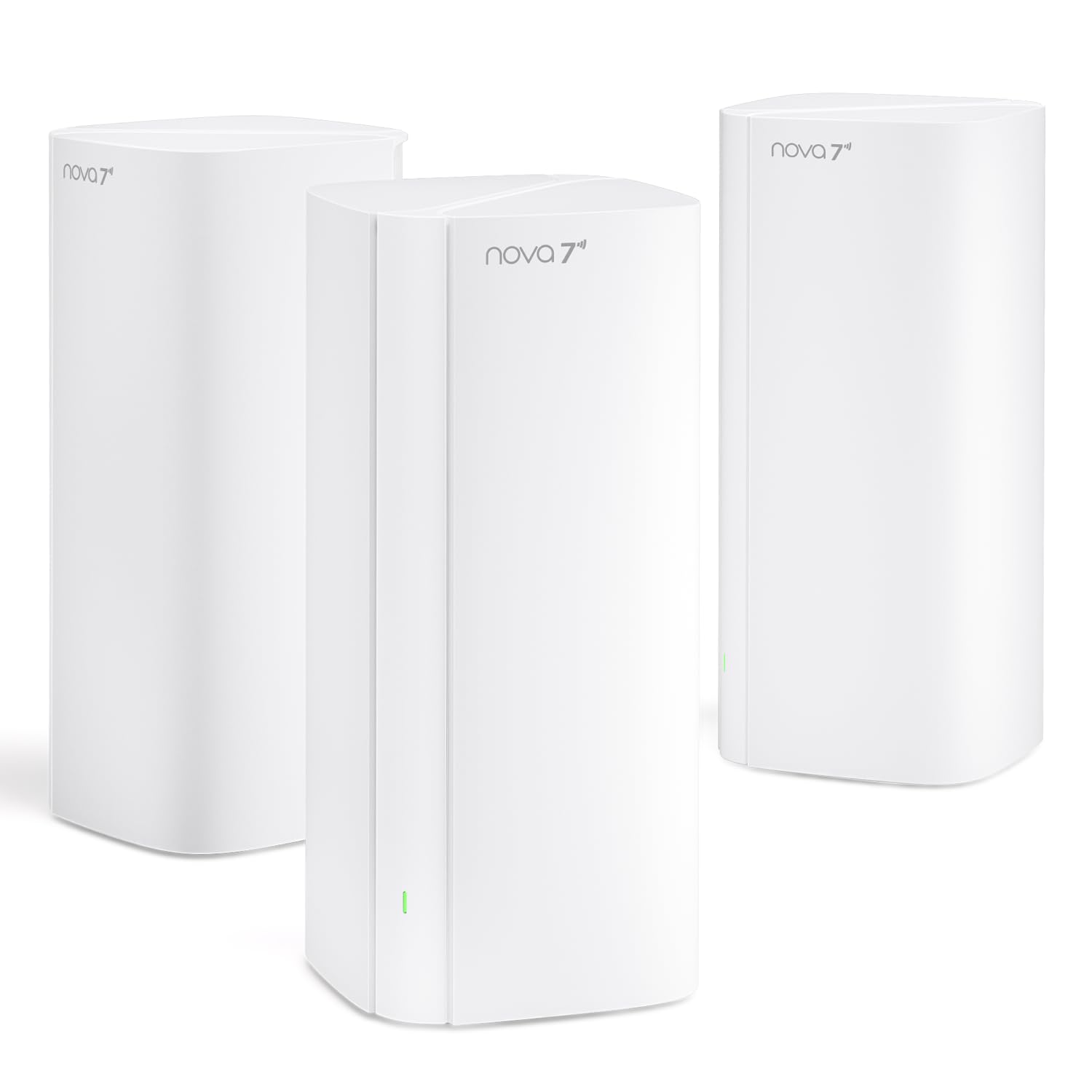
The ME6 Pro three-pack is the most aggressive value play for very large homes, covering up to 6,600 square feet with dual-band Wi-Fi 7 mesh nodes. Each node features 5 internal antennas and independent high-power FEMs, and the system supports wired Ethernet backhaul between nodes for interference-free roaming. MLO technology bonds the 2.4 GHz and 5 GHz bands for smoother connections across the entire coverage area.
Users upgrading from older Tenda Nova mesh kits report noticeably more consistent speeds, achieving 600-800 Mbps on a 900 Mbps plan across multiple rooms. The Tenda WiFi App provides straightforward network management, Alexa voice control, and real-time device monitoring. For homes with challenging construction like central chimneys or thick brick walls, the mesh approach solves dead zones that individual routers cannot overcome.
Customer support is essentially non-existent — users who encounter setup issues are unable to reach anyone for help. Some buyers report that only one of the three nodes connects successfully, leaving them with a non-functional system that is past the return window. The lack of a dedicated 6 GHz band means the system relies on the 5 GHz band for backhaul unless you wire Ethernet between nodes.
Why it’s great
- Massive 6,600 sq. ft. coverage with 3-pack
- Wired Ethernet backhaul support for stability
- Excellent price-per-square-foot value
Good to know
- No customer support available
- Nodes may fail to connect out of the box
- Lacks 6 GHz band for wireless backhaul
9. TP-Link Archer AX80

The Archer AX80 proves that Wi-Fi 6 hardware can still deliver exceptional coverage for large homes without jumping to the latest standard. Eight high-gain antennas with beamforming push the signal across entire homes, outperforming even some newer and more expensive TP-Link models in real-world range tests. The AX6000 dual-band configuration provides up to 4804 Mbps on 5 GHz and 1148 Mbps on 2.4 GHz.
OneMesh support allows adding a compatible range extender to create a single seamless network, providing a path for future expansion if your coverage needs grow. The 2.5 Gbps multi-gig port ensures the router won’t bottleneck modern gigabit internet plans. HomeShield offers basic security scanning and parental controls for free, and the router works reliably with all major ISPs including Comcast, AT&T, and Verizon.
Some users find that enabling QoS causes network dropouts and must be disabled for stable operation. The VPN client works but does not support all providers seamlessly, and the router struggles with bypassing CGNAT on Starlink connections, resulting in moderate NAT types for gaming. The initial setup wizard can be confusing for users who need ISP-specific activation steps rather than generic instructions.
Why it’s great
- Excellent real-world range with 8 antennas
- OneMesh enables easy coverage expansion
- 2.5 Gbps port prevents wired bottlenecks
Good to know
- QoS can cause network instability when enabled
- Starlink CGNAT bypass is not supported
- Setup wizard may confuse ISP-specific activation
FAQ
Do I need a mesh system or can a single router cover my whole house?
What is the difference between Wi-Fi 6 and Wi-Fi 7 for coverage?
How many devices can a large home router handle before slowing down?
Should I place the router centrally or near the modem?
Final Thoughts: The Verdict
For most users, the best connectivity router for large homes winner is the Amazon eero Max 7 because it combines dual 10GbE wired ports with Wi-Fi 7 mesh intelligence and smart home hub functionality in a package that covers 2,500 square feet per node with effortless setup. If you want granular network control with VLAN segmentation and free threat protection, grab the Synology RT6600ax. And for a single-unit solution that covers 3,000 square feet without needing satellites, nothing beats the NETGEAR Nighthawk RS500.

Mo Maruf
I created WellFizz to bridge the gap between vague wellness advice and actionable solutions. My mission is simple: to decode the research and give you practical tools you can actually use.
Beyond the data, I am a passionate traveler. I believe that stepping away from the screen to explore new environments is essential for mental clarity and physical vitality.