Our readers keep the lights on and my smoothie glass nicely filled. As an Amazon Associate, I earn from qualifying purchases.
Standing at the front of a classroom for hours — moving between desks, crouching to help a student, pacing during a lesson — puts relentless pressure on your lower legs. That familiar afternoon ache, the throbbing in your ankles, or the sensation of heavy, tired legs isn’t just discomfort; it’s a signal your circulatory system is struggling against gravity. The right pair of compression socks can change that equation, turning a punishing eight-hour day into one where your legs feel supported and energized from first bell to last.
I’m Mohammad Maruf — the founder and writer behind WellFizz. I’ve spent hundreds of hours cross-referencing fabric blends, pressure gradients, real user feedback, and durability tests to isolate which compression socks actually deliver measurable relief for educators who spend their entire shift on their feet.
After analyzing dozens of top-rated options against the specific demands of teaching, I’ve narrowed the field to five outstanding models. Whether you need gentle support for light swelling or firm medical-grade compression for chronic pain, this guide to compression socks for teachers will help you find the perfect match for your classroom.
How To Choose The Best Compression Socks For Teachers
Choosing the right pair isn’t about grabbing the cheapest pack or the highest pressure rating. Teachers have unique constraints — you need socks that hold up through repeated machine washing, breathe during active movement, and hit a pressure level that relieves fatigue without cutting off circulation during a full school day.
Match the mmHg to Your Fatigue Level
Compression strength is measured in millimeters of mercury (mmHg). The 8-15 mmHg range is ideal for light fatigue and mild swelling — it provides a gentle supportive squeeze without feeling restrictive. For teachers who notice significant ankle puffiness by mid-afternoon or have a history of varicose veins, 15-20 mmHg offers a more substantial push against blood pooling. The 20-30 mmHg category is considered medical-grade and should only be used if your swelling is pronounced or a healthcare provider recommends it.
Material Matters for Heat and Moisture
Classrooms rarely have ideal ventilation. You’re moving, bending, and sometimes standing near a heater or under a direct vent. Merino wool blends naturally regulate temperature and resist odor buildup, making them a strong option for full-day use. Bamboo viscose is lightweight, soft against the skin, and wicks moisture effectively without overheating. Standard nylon/spandex blends offer durability and compression integrity but can trap heat — look for moisture-wicking claims or mesh ventilation panels if you run warm.
Construction and Fit Details
Flat toe seams prevent irritation inside your shoes — a critical detail when you’re on your feet for hours. A wide, non-binding top band keeps the sock from rolling down behind your knee or leaving a painful imprinted ring. Some models use a left-foot/right-foot anatomic design that reduces bunching and blister risk. Check calf circumference measurements in the size chart; a sock that’s too narrow at the top will act like a tourniquet, and one that’s too wide will slide down and lose its graduated effect.
Quick Comparison
On smaller screens, swipe sideways to see the full table.
| Model | Category | Best For | Key Spec | Amazon |
|---|---|---|---|---|
| Physix Gear Compression Socks 20-30 mmHg | Premium | Chronic fatigue and swelling | 20-30 mmHg graduated compression | Amazon |
| Merino Wool Compression Socks 15-20 mmHg | Premium | Sensitive skin and hot classrooms | Merino wool/bamboo blend, 15-20 mmHg | Amazon |
| Medical Compression Socks 20-30 mmHg – BBFREY | Mid-Range | All-day wear with medical-grade support | 20-30 mmHg, 3 pairs, seamless toe | Amazon |
| Bluemaple Copper Compression Socks 6 Pack | Mid-Range | Budget-friendly variety pack | Graduated compression, copper-infused | Amazon |
| Doctor’s Select Bamboo Viscose Light Compression Socks | Budget | Mild fatigue and first-time users | 8-15 mmHg lightweight bamboo | Amazon |
In‑Depth Reviews
1. Physix Gear Compression Socks 20-30 mmHg

The Physix Gear socks deliver the highest compression level in this lineup — 20-30 mmHg — making them the top choice for teachers who deal with moderate to severe swelling, shin splints, or chronic leg fatigue. The graduated compression is strongest at the ankle and eases gradually up the calf, which effectively pushes blood and fluid back toward the heart. The fabric has a cushioned sport-sock feel underfoot, adding a layer of shock absorption for every step you take across the classroom floor.
Real users note that the arch support is noticeable and helps stabilize the foot during long periods of standing. The fabric quality holds up well through repeated machine washing, and the floral pattern is actually woven in — not printed — so the design doesn’t peel or fade. The XL size accommodates calf circumferences up to 16 inches and shoe sizes up to 11.5 wide, making it one of the most inclusive fits in the group.
One minor complaint is the length — some users with shorter legs find the sock reaches the knee bend, causing it to wrinkle behind the ankle. The toe area can also feel narrow for women wearing size 10 or larger shoes. Still, if your legs feel exhausted by lunchtime and you need serious compression intervention, these are the pair to consider.
Why it’s great
- Strongest compression level for significant swelling relief
- Arch support and cushioned footbed for all-day standing comfort
- Durable woven pattern that survives machine washing
Good to know
- May be too long for shorter legs, causing wrinkling at the ankle
- Toe area runs narrow; possible fit issue with larger shoe sizes
2. Merino Wool Compression Socks 15-20 mmHg
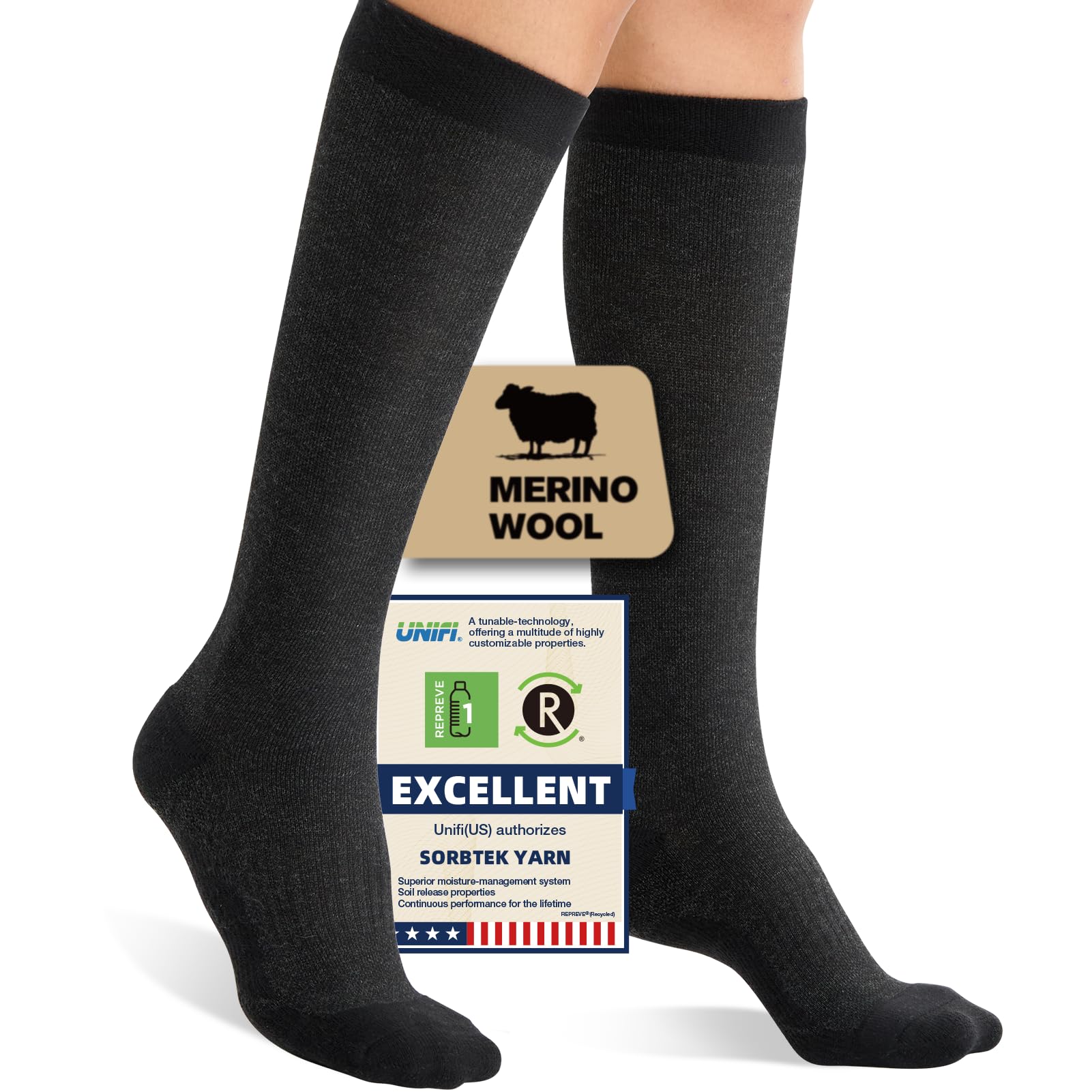
Merino wool is rarely the first material you associate with compression socks — most mass-market options use nylon and spandex — but this pair proves why natural fibers deserve attention. The merino wool and bamboo blend creates a soft internal buffer that eliminates the skin irritation, itching, and rough knitted joins common in all-synthetic designs. At 15-20 mmHg, it provides a firm but not aggressive squeeze that relieves swelling from varicose veins and general leg fatigue after a full day of teaching.
Users consistently highlight how easy these are to put on compared to tighter alternatives. There’s no wrestling or struggling — the fabric slides into position, and a printed diagram on the inside shows the correct application method. The material doesn’t trap sweat, so your feet and calves stay dry even inside non-breathable work shoes. Multiple reviewers mention wearing these for 12+ hours without the urge to rip them off, which is the highest compliment a compression sock can earn.
The only note of caution is about the striped variant — the ribs created by the pattern are slightly more prominent and less comfortable than the solid-color version. Stick with the non-patterned options if you prioritize a smooth interior. Otherwise, this is the most skin-friendly compression sock in the roundup.
Why it’s great
- Merino wool/bamboo blend prevents itching and skin irritation
- Easy to put on with helpful diagrammed instructions
- Breathable fabric keeps legs dry and comfortable all day
Good to know
- Striped version has internal ribs that may feel less smooth
- Limited color and pattern variety compared to other brands
3. Medical Compression Socks 20-30 mmHg – BBFREY (3 Pairs)
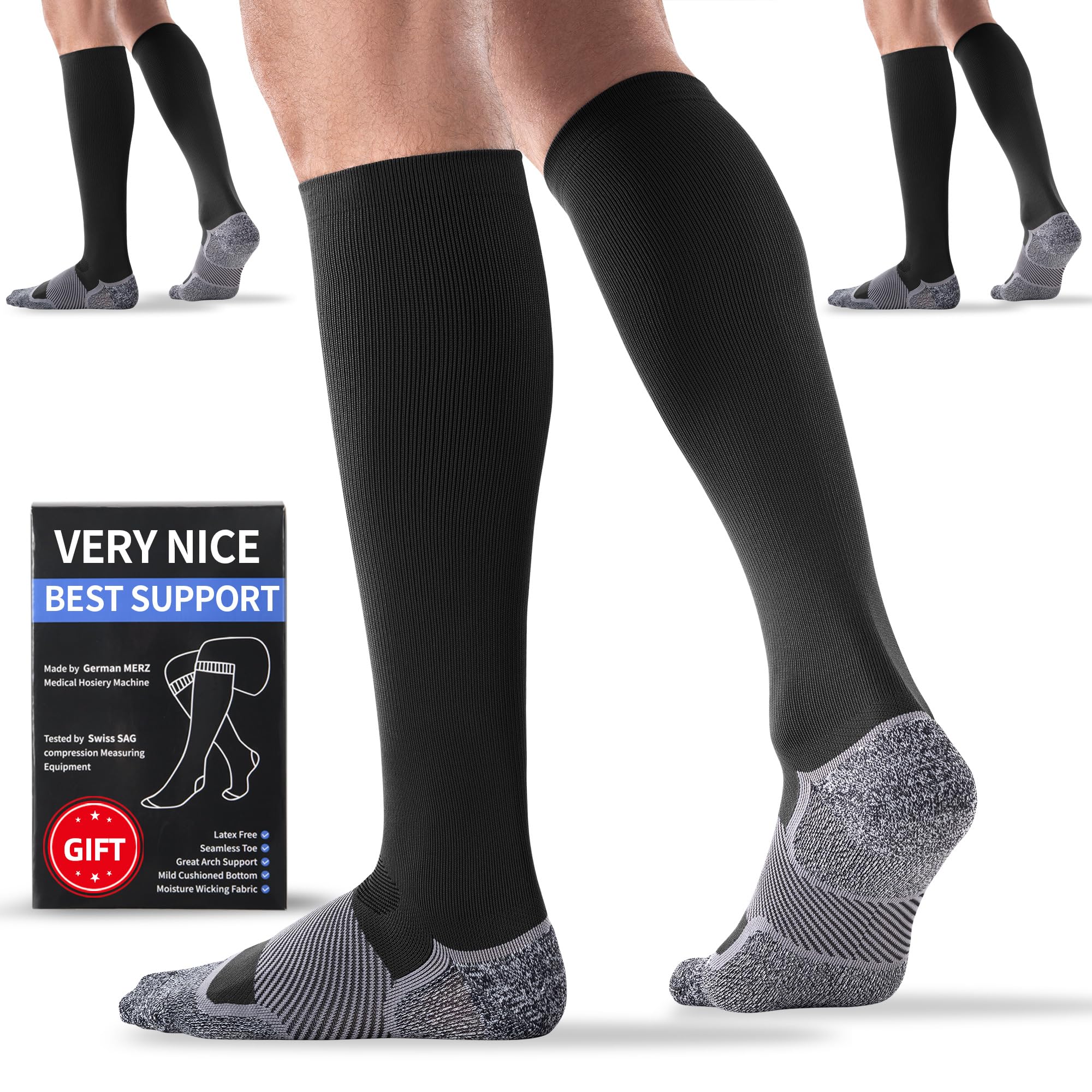
The BBFREY socks offer medical-grade compression at 20-30 mmHg in a convenient three-pack bundle, giving you a full week’s rotation for roughly the same cost as a single premium pair. German-made sock machines produce the graduated pressure gradient, and each pair is tested for consistency before leaving the factory. The toe and heel areas feature light cushioning — not enough to crowd your shoe, but enough to soften every step during a long day of walking between classrooms or standing at the whiteboard.
Anatomic design with a left-foot and right-foot fit reduces bunching and friction, which directly prevents blisters — a persistent problem for teachers who clock 8,000 to 12,000 steps daily. The seamless toe stitching is genuinely flat and doesn’t create a pressure ridge across your toes. Reviewers with size 10.5 women’s shoes and 14.5-inch calf circumferences report a perfect fit after consulting the size chart, with no slippage or rolling after 11 hours of wear.
The fabric blend is 70% microfiber nylon, which feels smooth against the skin but isn’t as breathable as the merino wool option. If your classroom runs warm or you teach physical education, hot feet may become an issue. The color palette is also limited — neutral tones only, with no floral or novelty patterns for those who want style alongside support.
Why it’s great
- Three pairs included for rotating through the work week
- German-engineered graduated compression with testing
- Anatomic left/right fit with seamless toe prevents blisters
Good to know
- Microfiber nylon can feel warm in non-breathable environments
- Limited color options for those wanting expressive patterns
4. Bluemaple Copper Compression Socks 6 Pack

The Bluemaple pack is the volume leader — six pairs at a per-unit cost that makes it easy to stock your entire sock drawer without a major upfront investment. The graduated compression uses a copper-infused fabric, which some users report helps with odor control and skin comfort. The wide top band is designed to stay in place without rolling, even during active movement like bending down to tie a child’s shoe or reaching up to adjust a bulletin board.
Multiple colors and patterns are included, giving you variety across the week. Several reviewers with small feet (size 6 women’s) confirm a good fit, while those further along in pregnancy found them easy to put on despite increased leg swelling. The fabric is thin and lightweight, which helps with breathability — a real advantage for teachers who don’t want to feel like they’re wearing winter socks in September. The compression level sits around 15-20 mmHg based on user reports, making it suitable for mild to moderate daily fatigue.
Some users mention an initial chemical or synthetic smell fresh out of the package, which disappears after the first wash. The copper infusion is a marketing differentiator rather than a clinical guarantee — but as a budget-friendly way to try a wide range of colors and compression levels, this pack is hard to beat.
Why it’s great
- Six pairs at a low per-unit cost for a full week’s rotation
- Wide top band stays in place without rolling down
- Thin, breathable fabric suitable for warm classrooms
Good to know
- Initial chemical smell that washes out after the first cycle
- Copper infusion adds novelty but isn’t clinically proven to enhance compression
5. Doctor’s Select Bamboo Viscose Light Compression Socks 8-15 mmHg
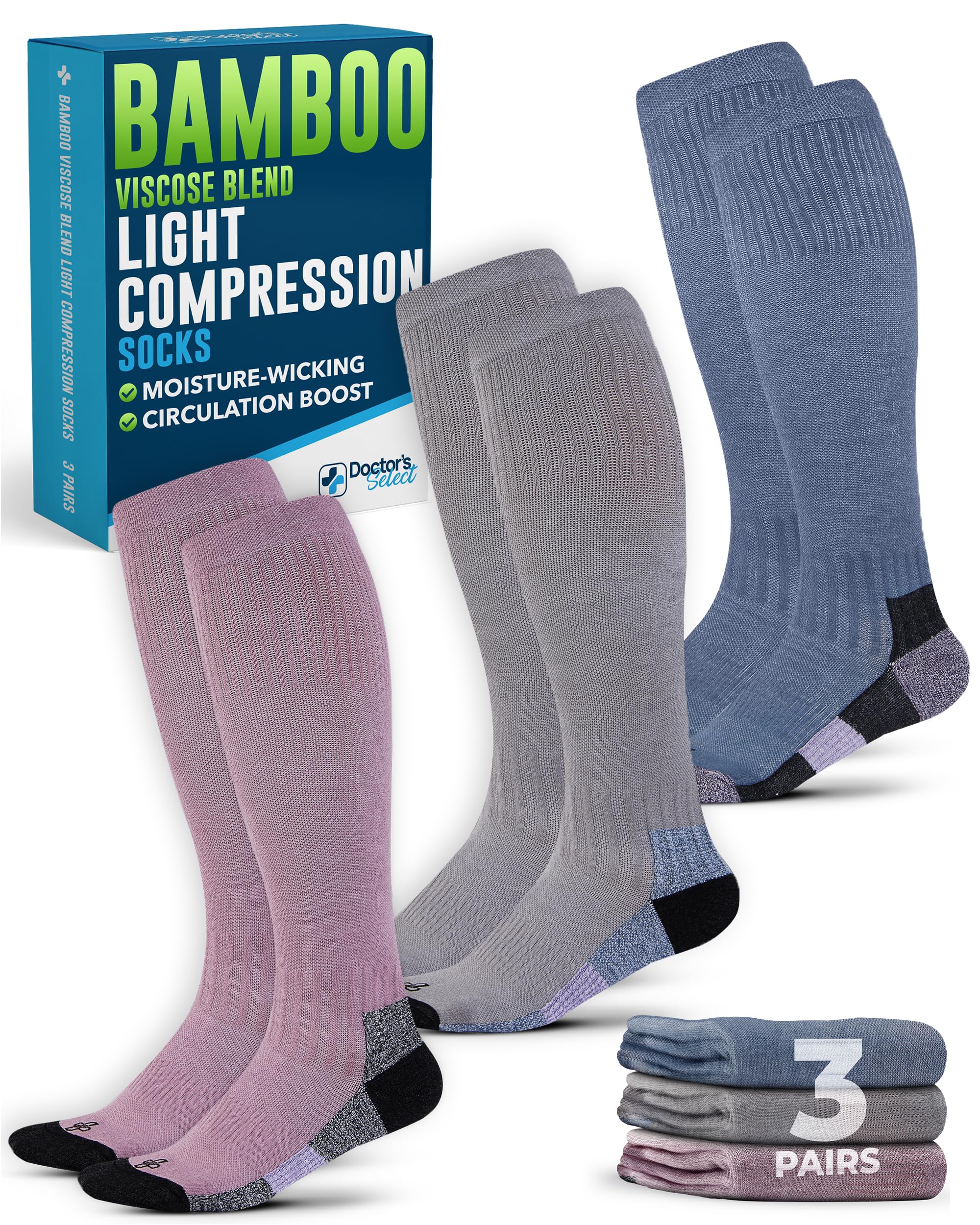
Not every teacher needs firm medical-grade compression. If your legs feel slightly heavy by dismissal but you don’t deal with visible swelling or varicose veins, the 8-15 mmHg range in the Doctor’s Select bamboo viscose socks offers a gentle supportive squeeze without the restrictive feeling of higher-pressure alternatives. The bamboo material is noticeably softer and lighter than standard nylon blends — several reviewers described it as “like wearing a gentle hug around your calves” rather than a constricting bandage.
The fabric wicks moisture effectively and doesn’t trap heat, making it a strong match for teachers who run warm or work in rooms without climate control. The stretch is generous, so sliding them on and off requires minimal effort — a meaningful convenience when you’re rushing between a parent meeting and after-school duties. Users who walked over seven miles in a single day reported no leg swelling or pain, which confirms the socks are doing their job even at this lower pressure level.
The only recurring complaint is aesthetic — the floral print pattern can leave temporary imprints on the skin after removal, which some users find visually distracting. If that doesn’t bother you, the feel and function of these socks make them the most comfortable starting point for educators new to compression wear.
Why it’s great
- Lighter compression ideal for beginners or mild fatigue
- Bamboo viscose fabric is ultra-soft, breathable, and cool
- Easy to put on and remove without a struggle
Good to know
- Floral pattern may leave temporary imprints on the skin
- Lower pressure level won’t relieve moderate or severe swelling
FAQ
Should I wear compression socks every day as a teacher?
How do I know if I need 15-20 mmHg or 20-30 mmHg compression?
Can compression socks help with shin splints for teachers on their feet?
Final Thoughts: The Verdict
For most users, the compression socks for teachers winner is the Physix Gear Compression Socks 20-30 mmHg because they deliver the highest level of medical-grade support combined with cushioned comfort that lasts through an entire school day. If you want the most skin-friendly, breathable material that prevents irritation and overheating, grab the Merino Wool Compression Socks. And for those seeking a budget-friendly rotation that covers the full work week with good performance, nothing beats the Bluemaple 6 Pack Copper Compression Socks.

Mo Maruf
I created WellFizz to bridge the gap between vague wellness advice and actionable solutions. My mission is simple: to decode the research and give you practical tools you can actually use.
Beyond the data, I am a passionate traveler. I believe that stepping away from the screen to explore new environments is essential for mental clarity and physical vitality.