Our readers keep the lights on and my smoothie glass nicely filled. As an Amazon Associate, I earn from qualifying purchases.
Choosing a compact camera for video recording used to mean sacrificing either image quality or portability. The current generation of pocket-sized cameras, however, packs large sensors, sophisticated stabilization, and professional codecs into bodies that slip into a jacket pocket or small bag. Whether you are vlogging on the move, capturing travel memories, or producing content for social platforms, the right compact camera can deliver footage that rivals far bulkier rigs.
I’m Mohammad Maruf — the founder and writer behind WellFizz. I’ve spent hundreds of hours analyzing sensor sizes, stabilization systems, bitrates, and real-world video performance across the latest compact camera models to help you cut through the marketing noise.
After extensive research into sensor performance, autofocus speed, and real-world user feedback, I’ve curated this guide to help you find the best compact camera for video recording that fits your specific needs and budget.
How To Choose The Best Compact Camera For Video Recording
Selecting the right compact video camera involves balancing sensor size, stabilization, autofocus, and form factor. A camera that excels in controlled studio conditions may struggle during a fast-paced outdoor vlog. Understanding the key specifications and how they relate to your shooting style is essential.
Sensor Size and Low-Light Performance
The sensor is the heart of any camera. For video, a larger sensor typically captures more light, resulting in better low-light performance, shallower depth of field (that pleasing blurred background effect), and improved dynamic range. Compact video cameras typically use 1-inch, Micro Four Thirds, or APS-C sensors. A 1-inch sensor, found in cameras like the DJI Osmo Pocket 3, is excellent for portability and good light, but an APS-C sensor, like the one in the Sony ZV-E10, offers noticeably better low-light capability and creative control over background blur.
Stabilization: Mechanical vs. Electronic
Shaky footage is the hallmark of an amateur video. Compact cameras combat this in two ways. Mechanical stabilization uses a gimbal or moving sensor to physically counteract movement, delivering the smoothest results even while walking. The DJI Osmo Pocket 3’s 3-axis gimbal is a prime example. Electronic stabilization (EIS) crops into the image and uses software to smooth out shakes. It is effective for minor movements but can introduce a jello effect in severe cases. For run-and-gun vlogging or action shots, mechanical stabilization is a significant advantage.
Autofocus Speed and Reliability
For video, continuous autofocus (AF-C) that can smoothly and accurately track a subject is non-negotiable. Phase-detection autofocus (PDAF) is faster and more reliable than contrast-detection (CDAF) for video. Cameras with real-time eye tracking, like the Sony a6400 and ZV-E10, can lock onto a subject’s eye and keep it in focus, even if they move around the frame. This feature is invaluable for solo vloggers who do not have a dedicated camera operator.
Quick Comparison
On smaller screens, swipe sideways to see the full table.
| Model | Category | Best For | Key Spec | Amazon |
|---|---|---|---|---|
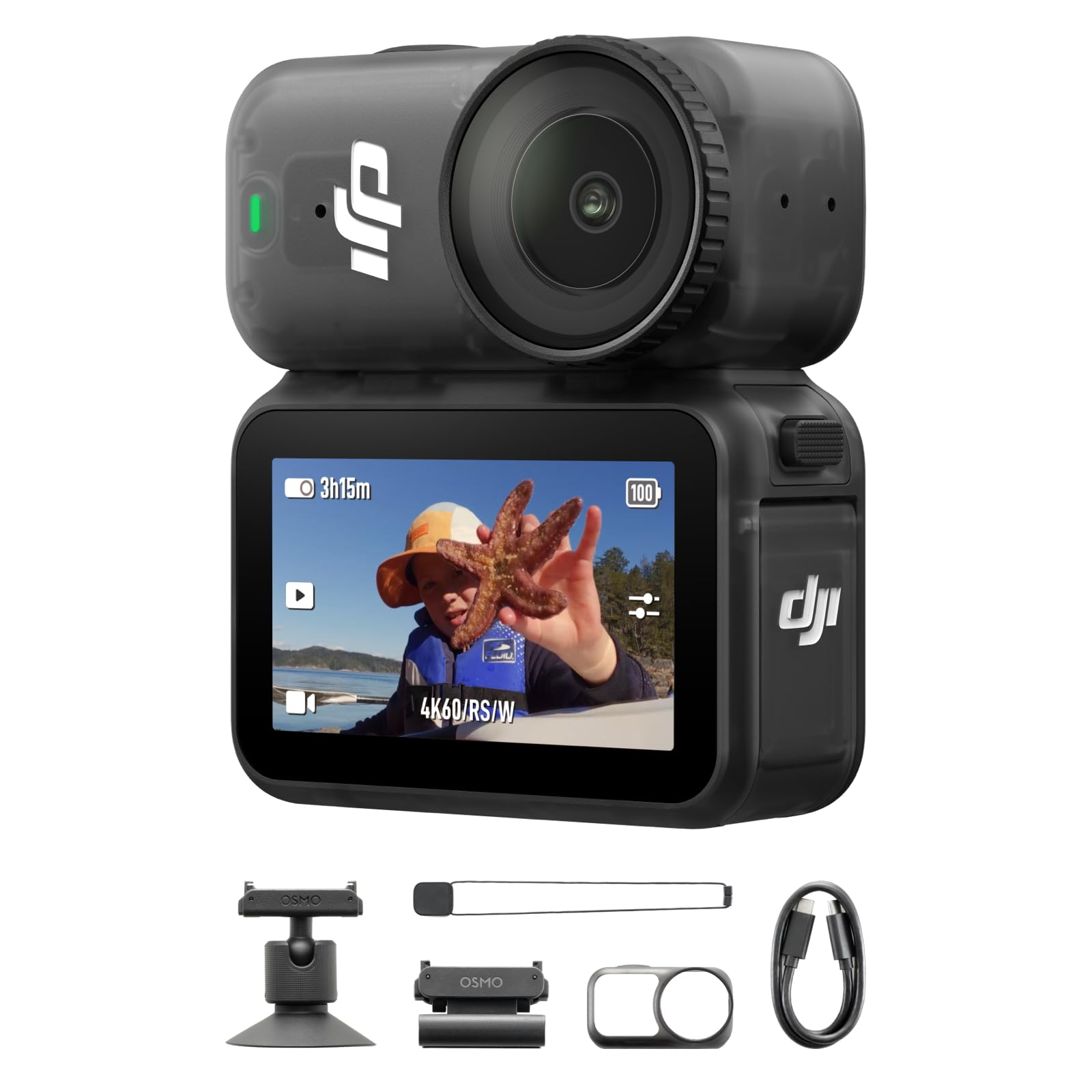
| DJI Osmo Pocket 3 Creator Combo | Pocket Gimbal | Vloggers who need gimbal-smooth footage | 1″ CMOS, 4K/120fps, 3-Axis Mech. Stabilization | Amazon |
| Sony Alpha ZV-E10 | Interchangeable Lens | Content creators wanting APS-C quality & lens options | 24.2MP APS-C, 4K 6K Oversampled | Amazon |
| Nikon Z 30 | Mirrorless Camera | Streamers and vloggers who need unlimited 4K recording | 20.9MP APS-C, Unlimited 4K 30p, USB-C Streaming | Amazon |
| Sony Alpha a6400 | Mirrorless Camera | Fast action and real-time subject tracking | 24.2MP APS-C, 0.02s AF, 425 Phase-Detect Points | Amazon |
| Panasonic LUMIX G85 | Mirrorless Camera | Hybrid shooters wanting IBIS and weather-sealing | 16MP MFT, 5-Axis IBIS, Weather-Sealed Kit | Amazon |
| Insta360 GO Ultra | Action Camera | Hands-free POV & magnetic wearable shooting | 1/1.28″ Sensor, 4K/60fps, 53g, IPX8 Waterproof | Amazon |
| DJI Osmo Nano Standard Combo | Wearable Cam | Compact magnetic POV with extended battery life | 1/1.3″ Sensor, 4K/60fps, 200-Min Battery | Amazon |
| Panasonic LUMIX G100 | Mirrorless Camera | Vloggers who want a built-in tracking microphone | 20.3MP MFT, 4K 24/30p, 360° Tracking Mic | Amazon |
| Canon EOS R100 | Mirrorless Camera | Entry-level users entering the interchangeable lens ecosystem | 24.1MP APS-C, 4K 24p, Dual Pixel CMOS AF | Amazon |
| OM System OLYMPUS Tough TG-7 | Rugged Camera | Adventurers requiring waterproof, shockproof design | 12MP BSI CMOS, 4K 30p, Waterproof 15m, Macro System | Amazon |
| Canon PowerShot V10 | Vlog Camera | Ultra-compact, pocketable vlogging with a built-in stand | 15.2MP 1″ Sensor, 4K 30p, Built-In Stand | Amazon |
In‑Depth Reviews
1. DJI Osmo Pocket 3 Creator Combo

The DJI Osmo Pocket 3 sets the benchmark for what a compact video camera can achieve. Its 1-inch CMOS sensor captures 4K resolution at up to 120 frames per second, delivering footage with excellent dynamic range and low-light capability that outpaces most smartphone sensors. The inclusion of a 3-axis mechanical gimbal is the standout feature, providing buttery-smooth stabilization even during active walking or panning.
The 2-inch rotatable touchscreen is a masterstroke for vloggers, allowing seamless switching between horizontal and vertical shooting without rigging. ActiveTrack 6.0 keeps subjects locked in the frame, and the D-Log M 10-bit color profile gives editors significant latitude for grading. The Creator Combo bundle includes the DJI Mic 2 transmitter, a wide-angle lens, and a battery handle, making it a complete content creation kit out of the box.
Battery life is rated at 166 minutes, and the unit supports fast charging via USB-C. There is no interchangeable lens system, so you are limited to the fixed wide-angle focal length, and the small sensor cannot match the shallow depth-of-field of larger APS-C interchangeable lens cameras. For pure run-and-gun vlogging and travel, however, this is an extraordinarily capable and convenient tool.
Why it’s great
- Exceptional 3-axis mechanical stabilization eliminates the need for an external gimbal.
- 4K/120fps recording for smooth slow-motion capture.
- Included wireless microphone and comprehensive Creator Combo accessories.
Good to know
- Fixed wide-angle lens limits creative framing and zoom flexibility.
- 1-inch sensor cannot match the shallow depth-of-field or low-light ceiling of APS-C cameras.
2. Sony Alpha ZV-E10
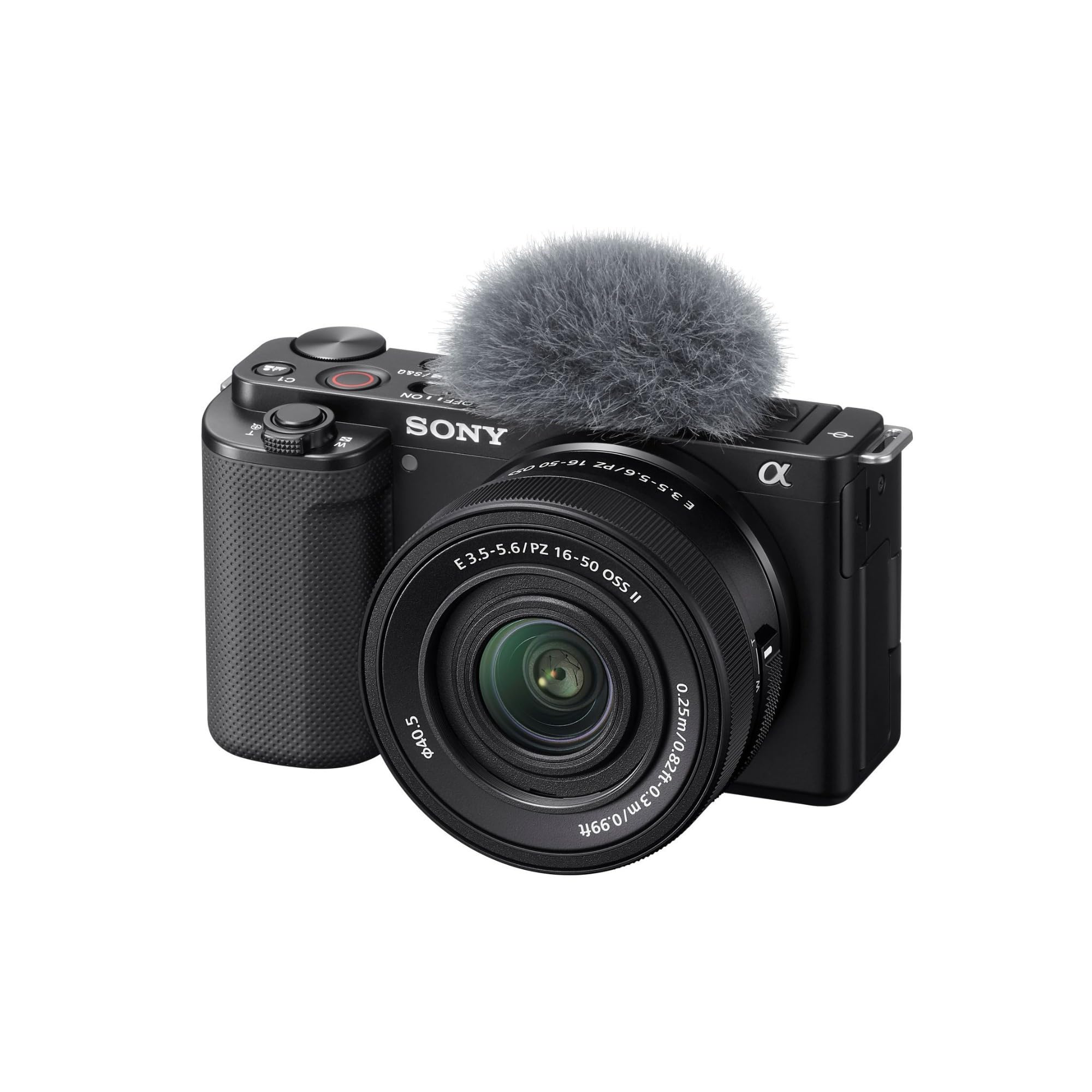
The Sony ZV-E10 bridges the gap between pocketable convenience and serious image quality by using a 24.2-megapixel APS-C sensor. For video, it oversamples 4K footage from a 6K readout, resulting in exceptionally sharp and detailed images with minimal moiré. The sensor’s larger physical size compared to 1-inch cameras provides noticeably better low-light performance and more natural background separation.
Sony has tailored the ZV-E10 for video creators with dedicated features. The Product Showcase Setting transitions focus from your face to an object you hold up, ideal for review videos. The Background Defocus button instantly toggles between a sharp background and a blurred bokeh effect. The updated kit lens (Sony E PZ 16-50mm F3.5-5.6 OSS II) offers optical stabilization and a power zoom rocker for smooth focal length changes.
The lack of in-body image stabilization (IBIS) means you will rely on the lens OIS or electronic stabilization, which introduces a crop. The single UHS-I SD card slot is a limitation for professional workflows, and the battery life, while manageable, will require spares for a full day of shooting. For creators who want APS-C image quality in a compact, video-first body with lens interchangeability, this is a strong contender.
Why it’s great
- APS-C sensor with oversampled 4K delivers outstanding sharpness and low-light quality.
- Dedicated video features (Product Showcase, Background Defocus) simplify content creation.
- E-mount lens system provides a wide path for future upgrades and creative lenses.
Good to know
- Lacks in-body image stabilization; relies on lens-based stabilization which can be less effective.
- Single SD card slot and average battery life require extra planning for extended shoots.
3. Nikon Z 30 with 16-50mm VR Lens

Nikon designed the Z 30 specifically for creators moving beyond smartphone video. Its 20.9-megapixel APS-C sensor paired with the Z-mount system delivers excellent image quality, and the camera records 4K 30p video with no recording time limit, a critical feature for long interviews, live streams, or event coverage. The flip-out touchscreen selfie monitor is bright and responsive, making framing yourself a breeze.
Connectivity is a major strength. The Z 30 functions as a plug-and-play webcam over USB-C for Full HD 60p streaming or can output 4K 30p over HDMI. Constant power delivery over USB-C means you can shoot or stream for hours without battery worry. The autofocus system with eye tracking for people and pets is reliable and smooth, keeping sharp focus without hunting.
The lack of a built-in electronic viewfinder (EVF) is a deliberate trade-off to keep the size down, but it may frustrate those accustomed to composing through a viewfinder. The kit lens, while versatile, has a variable aperture that limits low-light performance compared to faster prime lenses. For streamers and vloggers who want a reliable, long-recording APS-C system with excellent lens upgrade potential, the Z 30 is a compelling package.
Why it’s great
- Unlimited 4K 30p recording ideal for long sessions and live streaming.
- USB-C power delivery and plug-and-play webcam functionality.
- Compact, lightweight design with excellent NIKKOR Z lens compatibility for future growth.
Good to know
- No electronic viewfinder; all composition is via the rear screen, which can be challenging in bright sun.
- Kit lens aperture is variable, reducing low-light performance compared to a constant-aperture or prime lens.
4. Sony Alpha a6400 (Body Only)

The Sony a6400 is renowned for its class-leading autofocus performance. Its 425 phase-detection points covering approximately 84% of the sensor enable the world’s fastest 0.02-second autofocus acquisition. Real-Time Eye AF for humans and animals works during video recording, keeping subjects tack-sharp even as they move through the frame. This AF performance is a significant asset for vloggers who move around or film unpredictable subjects like pets.
The 24.2-megapixel APS-C sensor delivers excellent 4K video quality with full pixel readout, and the camera offers a wide dynamic range via its S-Log and HLG profiles. The 180-degree flip-up touchscreen is perfect for vlogging, and the camera supports a full suite of Sony E-mount lenses. The a6400 body is compact and ruggedly built, feeling substantial despite its small size.
The menu system is notoriously complex, and the touchscreen functionality is limited primarily to focus point selection, not full menu navigation. The 4K video suffers from a pronounced rolling shutter effect when panning quickly or capturing fast motion, which is a known drawback. It also lacks a headphone jack for audio monitoring. For users who prioritize blazing-fast and reliable autofocus above all else, the a6400 remains a top choice.
Why it’s great
- Industry-leading autofocus with Real-Time Eye Tracking for video.
- Durable, compact build with 180-degree flip screen and extensive lens ecosystem.
- Excellent image quality with professional color profiles (S-Log/HLG).
Good to know
- Significant rolling shutter in 4K mode; jerky panning can ruin shots.
- No headphone jack; menus are dense and touchscreen is underutilized.
5. Panasonic LUMIX G85 with 12-60mm Lens

The Panasonic LUMIX G85 offers exceptional value by bundling 5-axis in-body image stabilization (IBIS) with a weather-sealed 12-60mm kit lens. This combination allows for sharp handheld video in a wide range of conditions, a rare feature at this price point. The 16-megapixel Micro Four Thirds sensor, which lacks a low-pass filter, delivers surprisingly fine detail and good dynamic range.
The camera is a hybrid shooter’s dream, featuring a high-resolution OLED live viewfinder and a fully articulating touchscreen LCD. The 4K video recording is clean and detailed, and Panasonic’s DFD autofocus system is reliable for general use. The magnesium alloy body feels robust, and the controls are logically laid out with direct access to key settings. The included 12-60mm (24-120mm equivalent) lens covers a very practical zoom range for travel and daily shooting.
The contrast-detect autofocus system can struggle and hunt in low-light conditions, especially when tracking moving subjects in 4K. Battery life is mediocre, and it lacks a headphone jack for audio monitoring. The Micro Four Thirds sensor is smaller than APS-C, so low-light performance and shallow depth-of-field are not class-leading. For budget-conscious creators who need IBIS, weather-sealing, and a versatile kit zoom, the G85 is a robust and reliable workhorse.
Why it’s great
- In-body 5-axis stabilization works with any lens for smooth handheld footage.
- Weather-sealed magnesium alloy body with a practical 12-60mm kit lens.
- Excellent value for a feature-rich mirrorless camera with a high-res viewfinder.
Good to know
- Contrast-detect AF struggles in low light for video compared to phase-detect systems.
- No headphone jack; smaller sensor limits low-light and bokeh compared to APS-C.
6. Insta360 GO Ultra
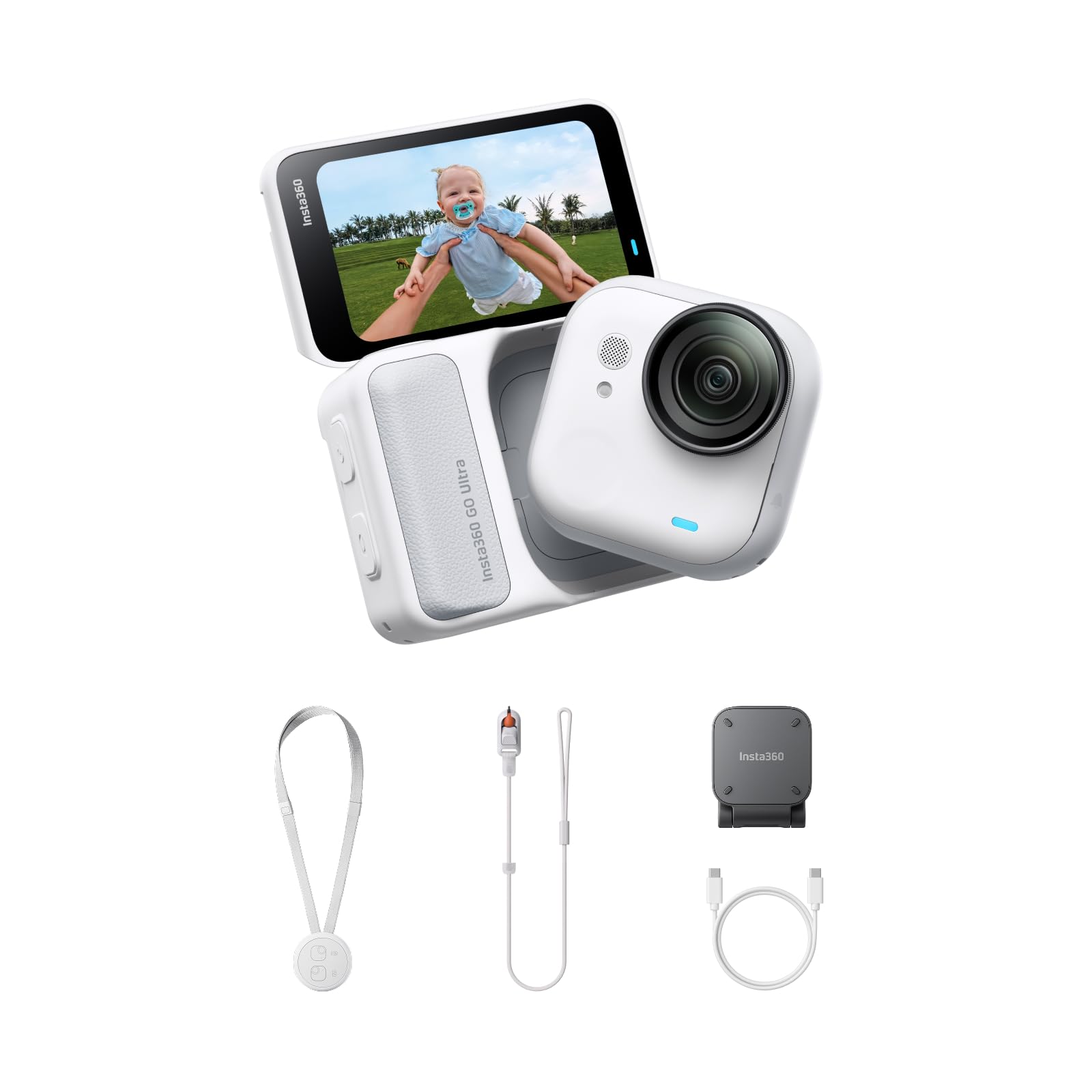
The Insta360 GO Ultra redefines compactness in the video camera space. Weighing just 53 grams and roughly the size of a wristwatch, this tiny camera is designed for magnetic, wearable, hands-free POV shooting. Its 1/1.28-inch sensor captures 4K 60fps video, and with features like 4K Active HDR and a PureVideo Mode for low light, the image quality is surprisingly robust for its size.
The magnetic mounting system is the key innovation. You can clip it to a cap, wear it around your neck with the Magnet Pendant, or attach it to virtually any metal surface. This opens up unique creative perspectives that are impossible with a traditional camera. The FlowState Stabilization and 360 Horizon Lock keep footage incredibly steady. The battery delivers 70 minutes from the standalone camera, which extends to 200 minutes with the Action Pod, and fast charging achieves 80% in 12 minutes.
The main trade-off for this extreme portability is the lack of a viewfinder or built-in screen for live preview. The Action Pod adds a screen, but it is still a secondary device. The battery is not user-swappable, and the lens is fixed. For capturing unique first-person perspectives in sports, travel, and daily life without being burdened by equipment, the GO Ultra is in a league of its own.
Why it’s great
- Extremely compact and lightweight (53g) for hands-free, wearable POV shots.
- Versatile magnetic mounting system enables creative camera placement.
- Fast charging (0-80% in 12 minutes) and good overall battery life with the pod.
Good to know
- No built-in screen for live framing; composition relies on the smartphone app or Action Pod.
- Non-swappable battery and fixed wide-angle lens limit flexibility.
7. DJI Osmo Nano Standard Combo (128GB)
The DJI Osmo Nano is a direct competitor to the Insta360 GO Ultra, offering a magnetic wearable design with a larger 1/1.3-inch sensor. It records sharp 4K 60fps video with a 143-degree ultra-wide field of view, making it ideal for immersive POV footage. The 10-bit and D-Log M color profiles are a pro-level feature rarely found in this form factor, allowing for serious color grading in post-production.
A standout feature is the 200-minute extended battery life when using the multifunctional Vision Dock, with fast charging support. The 128GB of built-in storage is generous and means you can start recording immediately without an SD card. The magnetic mounting accessories, including a dual-direction mount and hat clip, provide versatile placement options. OsmoAudio support allows direct connection to two DJI wireless microphones for high-quality audio.
The Vision Dock, while providing a screen and extra battery, can drain its battery relatively quickly even when the camera is off. The recording time on the standalone camera alone is around 60 minutes at 4K, requiring the dock for longer sessions. The compact size means the internal components can heat up during high-resolution recording, triggering overheat protection if used continuously for very long periods. For a magnetic, ultra-portable 4K POV camera with professional color science, this is a very strong option.
Why it’s great
- Large 1/1.3-inch sensor with 10-bit color and D-Log M for professional grading.
- 128GB of built-in storage plus expandable memory removes immediate storage pressure.
- Excellent battery life of 200 minutes with the Vision Dock and fast charging.
Good to know
- Vision Dock battery drains passively when not in use, requiring regular charging attention.
- Compact design can lead to overheating during sustained high-resolution recording sessions.
8. Panasonic LUMIX G100 with 12-32mm Lens

The Panasonic LUMIX G100 carves a unique niche for itself by prioritizing audio quality. It features a built-in, high-performance microphone with tracking functionality that auto-adjusts to record audio clearly from the direction of the subject, whether you are indoors, outdoors, in a crowd or a quiet nature setting. This is a significant advantage for solo vloggers who want to avoid the hassle of an external microphone setup.
The camera uses a 20.3-megapixel Micro Four Thirds sensor and records 4K 24/30p video. The intelligent Auto (iA) mode makes it very easy for beginners to get great results, while manual controls allow for creative growth. It is compatible with all LUMIX Micro Four Thirds lenses, offering a clear upgrade path. The frame marker feature for social media aspect ratios is a thoughtful touch for content creators.
A major limitation is the 4K video recording time, which is capped at a short maximum duration, making it unsuitable for filming long events or interviews. The contrast-detect autofocus can be slow and prone to hunting in challenging conditions. The battery life is also on the lower side. For vloggers who value excellent built-in audio and a compact, user-friendly experience for short-form content, the G100 is a specialized and capable tool.
Why it’s great
- Unique built-in microphone with subject tracking delivers superior audio without extra gear.
- Very user-friendly with excellent iA mode, perfect for beginners transitioning from smartphones.
- Compact and lightweight, with access to the extensive Micro Four Thirds lens ecosystem.
Good to know
- Severely limited 4K recording time makes it unsuitable for long-form video.
- Contrast-detect AF can be slow and hunt in low-light or low-contrast scenes.
9. Canon EOS R100 with RF-S18-45mm Lens

The Canon EOS R100 serves as the most accessible entry point into the Canon EOS R mirrorless system. Its 24.1-megapixel APS-C CMOS sensor and DIGIC 8 processor deliver excellent still image quality and 4K 24p video. The Dual Pixel CMOS AF provides smooth and reliable autofocus for video, with human and animal eye detection, a major advantage over many entry-level competition.
The camera is remarkably compact and lightweight, ideal for creators who want to step up from a phone without carrying a large kit. The RF-S 18-45mm lens covers a versatile wide-angle to standard zoom range for general use. The menu system is Canon’s typically user-friendly GUI, making it easy for beginners to navigate. Wi-Fi and Bluetooth connectivity allow for easy image transfers to a smartphone.
The 4K video is limited to 24fps, not 30fps, which is a notable compromise. The lack of a headphone jack and a fully articulating touchscreen can be restrictive for serious vloggers. The single SD card slot is also a budget constraint. For absolute beginners wanting to enter the capable Canon RF lens ecosystem with a budget-friendly body that offers good autofocus, the R100 is a valid starting point, though its video specifications are entry-level.
Why it’s great
- Excellent Dual Pixel CMOS AF provides reliable, smooth autofocus for video.
- Compact and lightweight body, highly portable for everyday carry.
- Easy-to-use menus and controls, ideal for beginners moving from smartphone cameras.
Good to know
- 4K video is capped at 24fps, lacking the smoother 30fps standard.
- No headphone jack and the screen is not fully articulating, limiting vlogging capability.
10. OM System OLYMPUS Tough TG-7 Red

The OM System Tough TG-7 is the dedicated tool for creators who shoot in extreme environments. It is waterproof to 15 meters (50 feet), shockproof from 2.1 meters, crushproof to 100kgf, and freezeproof to -10°C. This ruggedness means you can take it snorkeling, hiking through dust storms, or drop it on the trail without worry. Its 4K video recording and 120fps high-speed movie mode are practical for documenting adventure.
A standout feature is its variable macro system, allowing you to focus as close as 1cm from the end of the lens. The five underwater shooting modes, including underwater microscope and HDR, are specialized tools for underwater photography. The F2.0 lens is bright for a compact zoom, helping in lower light. The built-in GPS and field sensor system log location and environmental data, adding context to your footage.
The 12-megapixel sensor is small by modern standards, and low-light image quality is noticeably noisy compared to any camera with a larger sensor. Video autofocus can be slow and uncertain compared to modern mirrorless systems. The TG-7 is a specialized rugged camera, not a general-purpose video powerhouse. For divers, hikers, and adventurers for whom durability is the primary requirement, it is unmatched.
Why it’s great
- Industry-leading ruggedness: waterproof to 15m, shockproof, crushproof, and freezeproof.
- Exceptional macro and underwater shooting modes, including underwater microscope.
- Built-in GPS and environmental sensor log valuable adventure data.
Good to know
- Small 12MP sensor leads to poor low-light performance and noisy footage.
- Video autofocus is slow and less reliable compared to modern mirrorless or action cameras.
11. Canon PowerShot V10

The Canon PowerShot V10 is designed as the ultimate pocketable vlogging companion. Its 15.2-megapixel 1-inch back-illuminated CMOS sensor provides solid image quality for a camera that easily slips into a pocket. The unique built-in stand that folds in front or back allows for hands-free operation on a table, making it incredibly convenient for self-recording.
The V10’s volume is small, but its feature set is targeted. The retractable front-facing screen is purpose-built for vlogging, and the built-in stereo microphones with a third center microphone for noise reduction capture decent audio. The 19mm wide-angle lens is wide enough for easy self-framing. Image stabilization modes (IS On, IS Enhanced) help smooth out handheld footage. The USB-C charging is practical for travel.
The camera’s largest limitation is its fixed wide-angle lens with no zoom capability at all during video recording, restricting creative framing. The battery life is also below average, and the lack of a hot shoe or mic input limits external audio options. For the simplest possible vlogging experience — point, flip the screen, and record — the V10 is an accessible tool, but its lack of flexibility may frustrate users who want to grow their skills.
Why it’s great
- Extremely compact and pocketable with a clever built-in stand for hands-free vlogging.
- 1-inch sensor provides better quality than a phone camera in a dedicated video form factor.
- Simple, purpose-built interface with a front-facing screen for easy self-recording.
Good to know
- Fixed wide-angle lens with no zoom during video significantly limits framing options.
- Mediocre battery life and lack of external mic input restrict longer or higher-quality shoots.
FAQ
What is the most important spec for a video-focused compact camera?
Can a compact camera with a 1-inch sensor replace my smartphone for video?
How many frames per second do I need for smooth video?
Why do some cameras have a recording time limit?
Final Thoughts: The Verdict
For most users, the best compact camera for video recording winner is the DJI Osmo Pocket 3 Creator Combo because it combines a high-quality 1-inch sensor with game-changing 3-axis mechanical stabilization in a truly pocketable form factor, and includes everything you need to start creating high-quality content immediately. If you want APS-C sensor quality and the flexibility of interchangeable lenses for serious creative video work, grab the Sony Alpha ZV-E10. And for a rugged, go-anywhere camera that handles snorkeling, drops, and extreme weather while still recording 4K video, nothing beats the OM System OLYMPUS Tough TG-7.

Mo Maruf
I created WellFizz to bridge the gap between vague wellness advice and actionable solutions. My mission is simple: to decode the research and give you practical tools you can actually use.
Beyond the data, I am a passionate traveler. I believe that stepping away from the screen to explore new environments is essential for mental clarity and physical vitality.