Our readers keep the lights on and my smoothie glass nicely filled. As an Amazon Associate, I earn from qualifying purchases.
Skim coating a wall that has never been smooth is one of those jobs where the thin line between a glass-like finish and a frustrating, lumpy mess comes down entirely to the compound you choose. The wrong mix either shrinks, cracks, sets too fast, or sands like concrete — turning a weekend project into a weeks-long ordeal.
I’m Mohammad Maruf — the founder and writer behind WellFizz. I’ve spent hundreds of hours analyzing drywall finishing compounds, comparing cure times, shrinkage rates, sanding ease, and real-world user feedback to separate the products that deliver a true flat finish from those that just claim to.
With typical all-purpose mud, you fight pinholes, excessive dust, and slow drying between coats. Choose wrong and you add work instead of finishing it. This guide cuts through the noise to find the best compound for skim coating that actually delivers a smooth, durable surface with fewer passes.
How To Choose The Best Compound For Skim Coating
Skim coating demands a compound that spreads thin without tearing, resists shrinkage so you don’t need three passes, and sands smooth without damaging the base layer. The wrong choice leads to pinholes, cracking, or endless sanding. Here are the critical factors to weigh before you buy.
Shrinkage and body
For a skim coat, shrinkage is your biggest enemy. A compound that pulls back as it dries leaves low spots you must fill again. Look for formulas labeled “low shrink” or “heavy duty” — they hold their thickness and require fewer coats for a flat surface.
Dry time and workability
Fast-drying compounds get hard in an hour or less, which is great for speed but punishing for beginners. Slower-setting formulas (four to 24 hours) give you more working time to feather edges and eliminate ridges. For a first-time skim coat, a slower dry time reduces panic and waste.
Dust generation and sanding ease
Lightweight and “low dust” compounds produce less airborne particles during sanding, making cleanup faster and healthier. The trade-off is that some lightweight mixes trap air bubbles. A de-aired formula eliminates that problem while keeping sanding easy.
Quick Comparison
On smaller screens, swipe sideways to see the full table.
| Model | Category | Best For | Key Spec | Amazon |
|---|---|---|---|---|
| DAP DryDex Low Dust | Lightweight | Color-change drying indicator | 70% less airborne dust | Amazon |
| Zinsser MH Ready Patch | Heavy Duty | Hard, shrink-resistant finish | 1-hour dry-to-touch | Amazon |
| U S Gypsum Plus3 | Lightweight | Smooth consistency and adhesion | 3.5 qt lightweight formula | Amazon |
| DAP White Lightweight | All Purpose | Water-resistant skim layers | 24-hour full cure time | Amazon |
| DAP DryDex Spackling 2-Pack | Color Change | Beginners needing dry-signal | Pink-to-white indicator | Amazon |
In‑Depth Reviews
1. DAP DryDex Lightweight Low Dust Joint Compound
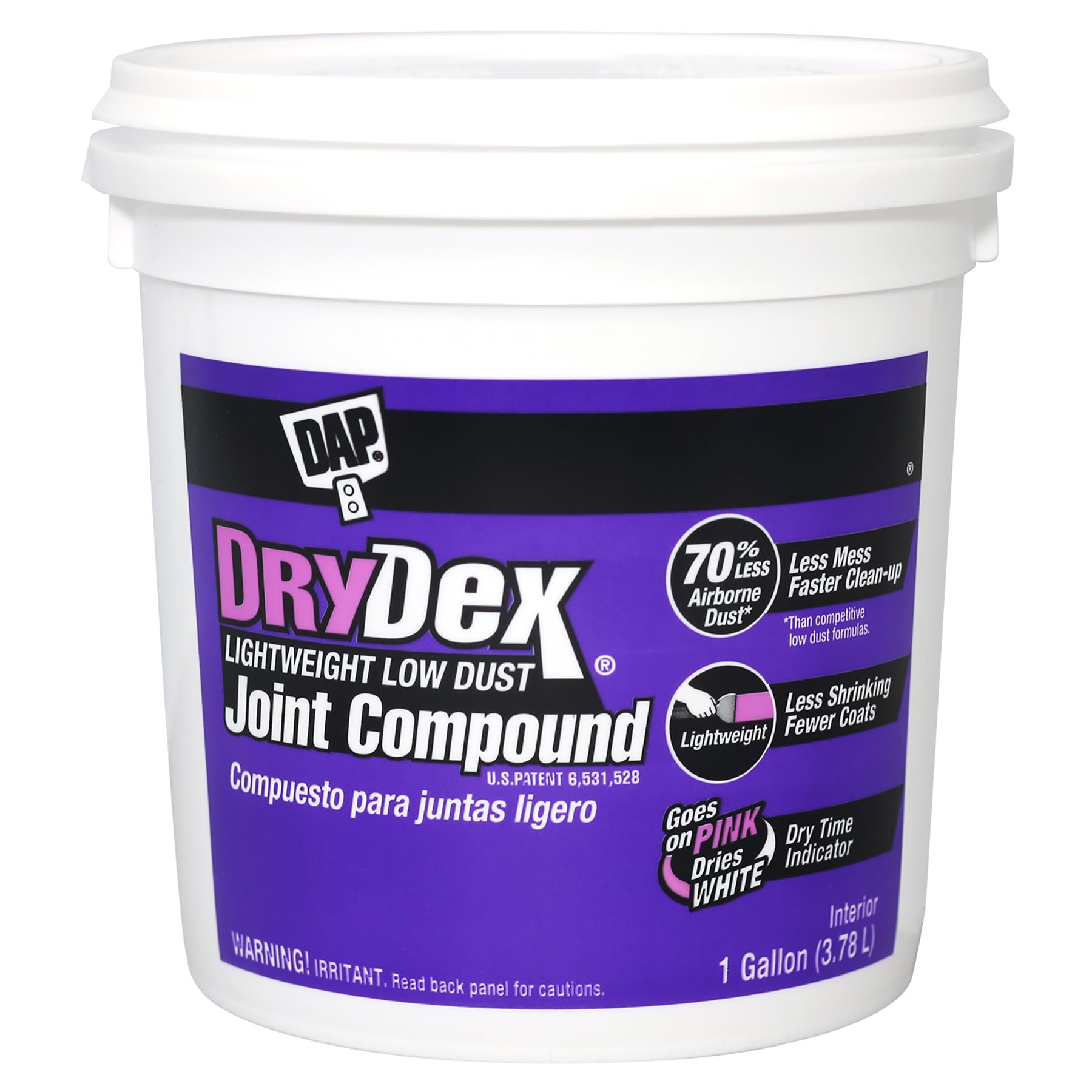
The DAP DryDex stands apart because it goes on pink and turns white when dry, removing all guesswork from the curing process. For skim coating, that visual signal means you never sand too early or apply a second coat over half-wet material. The low-dust formula generates 70 percent less airborne particles than standard compounds, keeping your workspace cleaner and your lungs clearer.
The lightweight body spreads smoothly over large wall sections without sagging, and the de-aired formulation eliminates pinhole bubbles that plague cheaper mixes. Users consistently praise the quick drying time — a full skim coat on a wall dries fast enough to recoat the same day, cutting project timelines in half.
The trade-off is that lightweight compounds sometimes feel less substantial on deep repairs. For pure skim coating over textured walls or damaged drywall, this is the most forgiving and efficient option available.
Why it’s great
- Color-change drying indicator eliminates sanding guesswork
- 70% less dust than standard joint compounds
- De-aired formula prevents pinhole bubbles
Good to know
- Lightweight body may require extra care on deep gouges
- Interior use only — not rated for exterior skim coats
2. Zinsser MH Ready Patch Low VOC Spackling
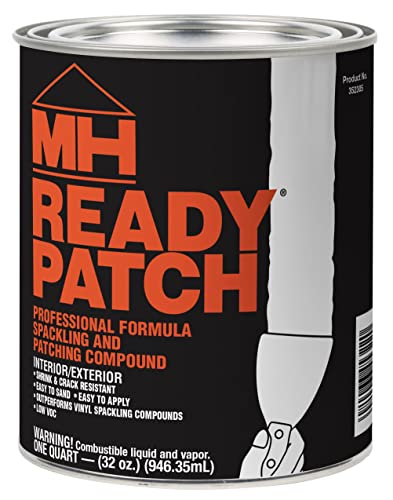
Zinsser MH Ready Patch is a full-bodied spackling compound that cures to a hardness resembling rock — no shrinkage, no cracking after drying. For skim coating exterior doors, metal surfaces, or areas that need a durable, impact-resistant base, this compound outperforms standard vinyl spackles by a wide margin.
The paste consistency spreads thickly and stays where you put it without droop or drip, which is critical when you are leveling a deep patch as part of a skim coat. It dries to touch in one hour and fully cures to a very hard, smooth finish that sands cleanly without crumbling.
One notable limitation: the product is best for indoor use. Users report cracking within weeks when applied outdoors in sun and cold. Stick to interior skim coating and you get a dense, shrink-resistant layer that holds up under paint.
Why it’s great
- Dries rock hard with zero shrinkage
- Spreads without dripping or sagging on vertical surfaces
- Low-VOC formula for safer indoor use
Good to know
- Not suitable for exterior applications long-term
- Dries fast — you must work quickly to feather edges
3. U S Gypsum Plus3 Lightweight Compound

U S Gypsum Plus3 delivers a smooth, consistent texture that mixes effortlessly and applies without clumps. For skim coating where workability is your top priority — thin, even layers that feather beautifully — this compound makes the process feel almost pleasant. Users switching from a less refined product report immediate improvement in finish quality.
The lightweight formula minimizes shrinkage and cures to a durable finish that resists cracking. Sanding is noticeably easier compared to standard-weight mud, which saves hours on large wall sections. The 3.5-quart container provides enough material for several rooms without committing to a five-gallon bucket.
Some users note the compound is manufactured in China, which may matter for sourcing preferences. Otherwise, the adhesion and minimal shrinkage earn consistent praise for patch work and full skim coats alike.
Why it’s great
- Exceptionally smooth consistency for easy application
- Lightweight, minimal shrinkage after drying
- Sands very easily for a flat finish
Good to know
- Not an all-purpose heavy-duty patching compound
- Some users may prefer US-sourced materials
4. DAP White Lightweight Joint Compound 1 gal (4-Pack)

DAP White Lightweight Joint Compound is engineered with a water-resistant formula that holds up in kitchens, bathrooms, and other moisture-prone rooms — exactly where skim coating often fails when standard mud re-emulsifies. The compound spreads evenly over ceilings and walls, drying to a smooth finish that resists moisture damage over time.
The four-pack provides generous supply for larger renovation projects without constant reordering. Users report it dries quickly but still allows enough working time to feather edges cleanly. Sanding is straightforward, producing a fine dust that cleans up fast with a shop vacuum.
The main criticism is that the compound tends to shrink more than premium options, requiring a second coat for full flatness on deeper areas. For a pure skim coat over previously painted surfaces, the water resistance makes it a smart choice for humid rooms despite the extra coat requirement.
Why it’s great
- Water-resistant formula ideal for bathrooms and kitchens
- Four tubs provide ample coverage for large projects
- Easy to sand and smooths evenly
Good to know
- Higher shrinkage than premium alternatives
- May need a second skim coat for full flatness
5. DAP DryDex Interior/Exterior Spackling 2-Pack
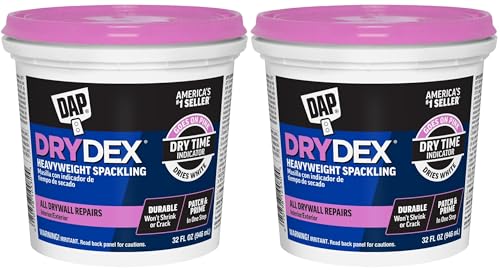
The DAP DryDex 2-Pack brings the same color-changing technology as the larger tub but in a smaller, more portable format. It applies pink and dries white, giving you an unmistakable visual cue that the skim coat is ready for sanding or paint. This feature is invaluable for DIYers who struggle to judge dryness by touch or time alone.
The acrylic-based spackling works on drywall, plaster, wood, brick, and even plastic, making it a versatile option for small skim coating patches, crack filling, and leveling imperfect surfaces. Cleanup requires only water, and the smooth paste sands easily with a damp sponge — no heavy sanding block required.
The pack of two provides good value for multiple small projects, but the smaller container size means you will run through it quickly on a full wall skim coat. Best kept for repair work and touch-up skim areas rather than whole-room applications.
Why it’s great
- Color-change indicator perfect for beginners
- Works on multiple surfaces including wood and brick
- Water cleanup and minimal sanding needed
Good to know
- Small tubs not suited for large skim coat projects
- Higher cost per ounce compared to bulk joint compound
FAQ
Can I use all-purpose joint compound for skim coating a whole wall?
How many coats of skim coat compound do I need for a smooth finish?
Final Thoughts: The Verdict
For most users, the compound for skim coating winner is the DAP DryDex Low Dust because it combines a color-change drying indicator, 70 percent less dust, and a de-aired formula that eliminates pinholes — all in a lightweight package that sands effortlessly. If you want a rock-hard, shrink-resistant finish for heavy repairs, grab the Zinsser MH Ready Patch. And for moisture-prone bathrooms and kitchens, nothing beats the DAP White Lightweight water-resistant formula.

Mo Maruf
I created WellFizz to bridge the gap between vague wellness advice and actionable solutions. My mission is simple: to decode the research and give you practical tools you can actually use.
Beyond the data, I am a passionate traveler. I believe that stepping away from the screen to explore new environments is essential for mental clarity and physical vitality.