Our readers keep the lights on and my smoothie glass nicely filled. As an Amazon Associate, I earn from qualifying purchases.
A tub should be a place to soak away stress, not a monument to yesterday’s bath. Yet mineral rings, rust spots, and stubborn soap scum can turn your cleanest fixture into a daily eyesore. Finding a formula that actually dissolves these deposits without damaging the surface or requiring a workout is the real challenge.
I’m Mohammad Maruf — the founder and writer behind WellFizz. I’ve combed through user test results, chemical breakdowns, and hundreds of verified reviews to find which cleaners deliver on their claims for the toughest tub stains.
This guide breaks down the five most effective formulations to help you pick the right cleaner for tub stains based on stain type, surface compatibility, and the effort you’re willing to put in.
How To Choose The Best Cleaner For Tub Stains
Not all tub stains are the same. A rust deposit from iron-heavy water requires a different chemical approach than a calcium ring left by hard water or the oily film of body soap scum. Matching the cleaner to the stain type is the first step, but surface compatibility and application convenience are just as critical for a lasting result.
Identify Your Stain Type
Rust stains appear as orange or brown spots and require an acid-based formula like oxalic acid or phosphoric acid to dissolve the metallic residue. Hard water stains are white or chalky calcium carbonate deposits that respond best to mild acids or chelating agents. Soap scum is a waxy film of lime soaps that needs surfactants or alkaline cleaners to break down the fat bonds. Using the wrong active ingredient wastes time and can set the stain deeper into porous surfaces.
Check Surface Compatibility
Porcelain enamel, fiberglass, acrylic, and cast iron each react differently to strong acids, bleach, and abrasives. Abrasive creams can scratch glossy acrylic tubs, while bleach-based sprays may yellow fiberglass over repeated use. Acidic descalers are safe on ceramic tile and stainless steel but can dull natural stone or etched glass. Always test on an inconspicuous area before full application.
Evaluate Required Effort
Some formulas require a long dwell time of eight to twelve hours, while others work in minutes. No-scrub sprays are ideal for regular maintenance but may fail on a years-old ring. Cream cleansers give you mechanical scrubbing control for thick deposits. Consider how much time you can realistically dedicate per cleaning session — a weekly maintenance spray is very different from a one-time deep restoration.
Quick Comparison
On smaller screens, swipe sideways to see the full table.
| Model | Category | Best For | Key Spec | Amazon |
|---|---|---|---|---|
| Zud Cream Cleanser (2-Pack) | Cream Cleaner | Bleach-free rust & mineral stain removal | Oxalic acid formula, 38 oz total | Amazon |
| Bar Keepers Friend MORE Spray + Foam | Spray & Foam | Multi-surface daily cleaning with vertical cling | Oxalic acid, 25.4 oz bottle (2-pack) | Amazon |
| CLR Calcium, Lime & Rust Remover | Acid Descaler | Hard water & rust on multiple surfaces | No dyes or fragrances, 26 oz | Amazon |
| Zep Mold Stain and Mildew Stain Remover | Bleach-Based Spray | Mold, mildew & organic stain whitening | Bleach-based, no-scrub, 4-pack of 32 oz | Amazon |
| Wet & Forget Shower Cleaner | Weekly Spray | Low-effort weekly maintenance for soap scum | Bleach-free, vanilla scent, 64 oz | Amazon |
In‑Depth Reviews
1. Zud Cream Cleanser (2-Pack)
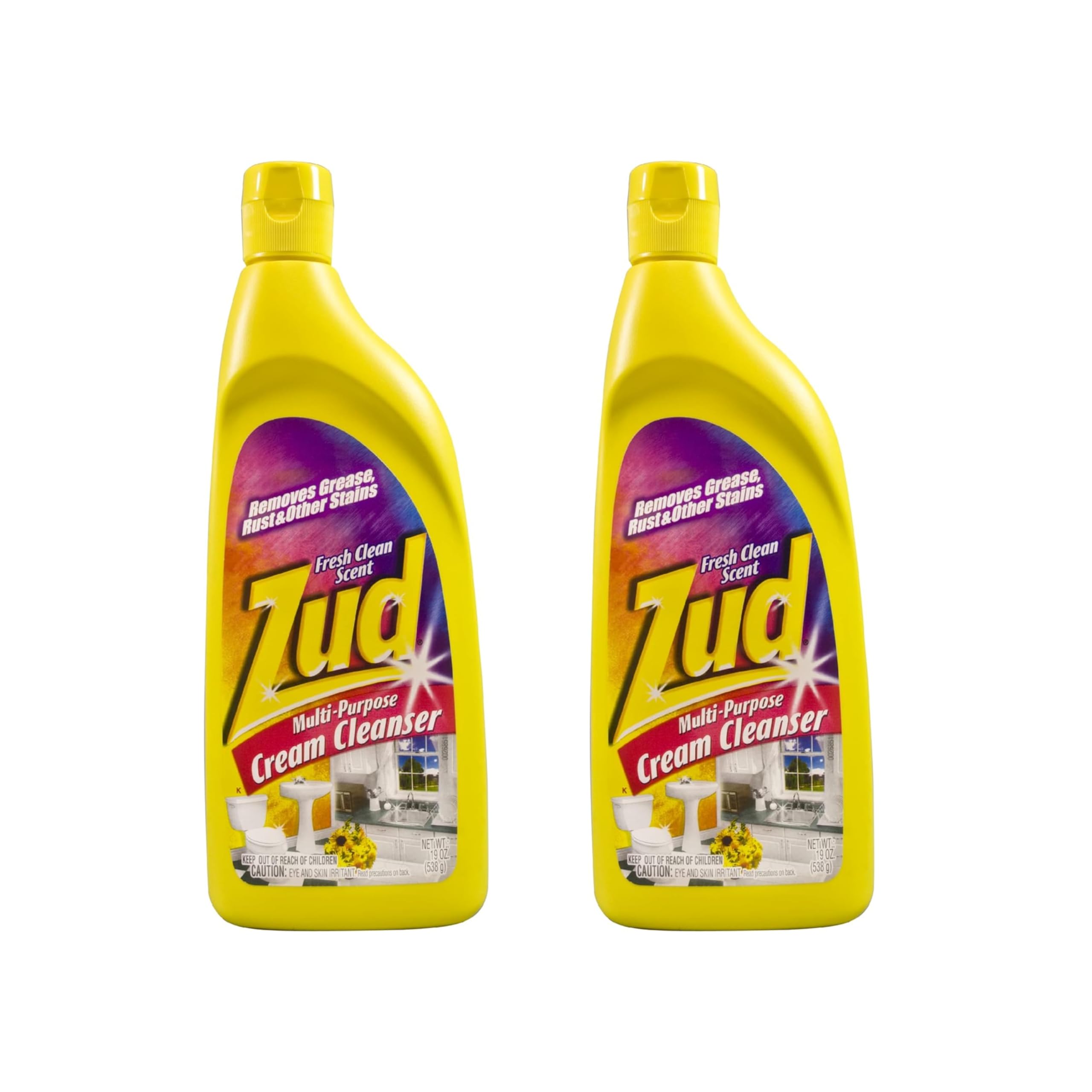
Zud’s cream cleanser thrives where weaker products fail — dissolving the yellow mineral stains that accumulate on tub bottoms and shower floors from iron-laden water. The oxalic acid base targets rust and hard water deposits chemically rather than relying on abrasive scrubbing, so you can spread it on, let it sit, and rinse away the discoloration without marring the tub’s finish.
The two-pack provides excellent value for households with multiple bathrooms. Users consistently report that this formula outperforms standard “heavy duty” sprays on stubborn mineral rings that resist repeated applications of other brands. Because it is bleach-free, it won’t yellow fiberglass or discolor colored grout, making it a safe choice for older tubs and non-porous surfaces alike.
Application requires a bit more manual effort than a simple spray — you spread the cream over the stain and allow it to dwell — but the result is a deeper clean with less total scrubbing than any abrasive powder. It also handles kitchen sink stains and glass cooktop residue effectively, though it excels most in the bathroom.
Why it’s great
- Dissolves tough mineral and rust stains better than spray-only formulas
- Bleach-free formula preserves tub color and grout integrity
- Value two-pack provides months of treatment
Good to know
- Requires spreading and dwell time, not a quick spray-and-rinse
- Not recommended for use on natural stone surfaces
2. Bar Keepers Friend MORE Spray + Foam
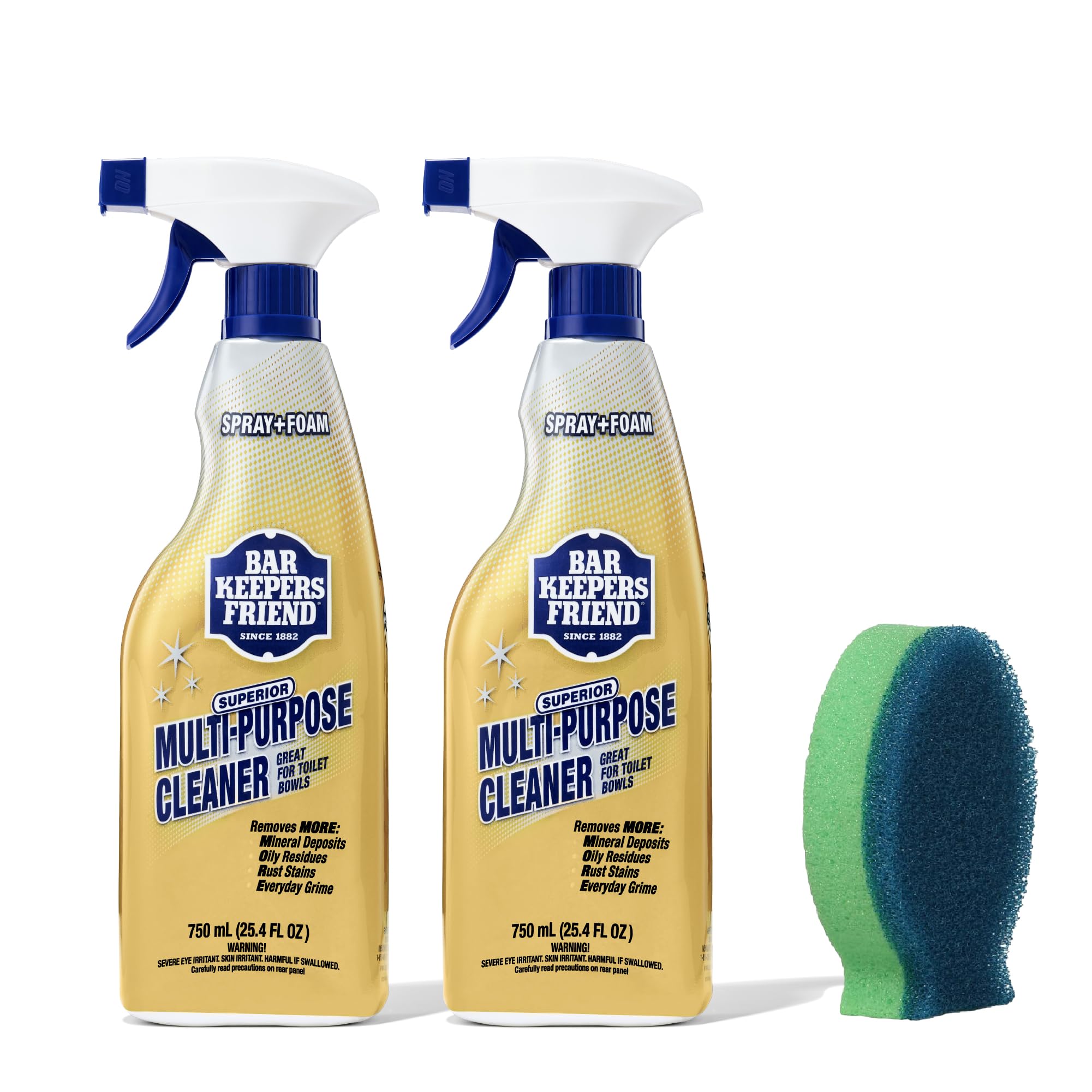
Bar Keepers Friend continues its legacy of hard-surface cleaning with this versatile spray-plus-foam applicator that solves the vertical surface problem. The foam setting clings to tile walls and shower doors, allowing the oxalic acid to dwell on soap scum and hard water deposits without dripping onto the tub floor. The spray mode works well for flat surfaces like sinks and countertops.
Verified reviews praise its ability to cut through greasy residues and restore shine to stainless steel fixtures and ceramic tile. While it performs admirably on rust stains and calcium deposits, users note it is less effective on thick, old hard water stains on glass shower doors specifically. The formula leaves a streak-free finish that reduces post-cleaning wipe-down time.
This is a mid-range option that works best for regular cleaning cycles rather than a single heavy restoration. The dual-mode nozzle gives you flexibility to tackle different angles and surface types in one session. It is a strong alternative to bleach-based sprays if you prefer a gentler acid approach with good scent.
Why it’s great
- Foam mode clings to vertical shower walls and glass doors
- Safe on stainless steel, ceramic, porcelain, and copper
- Leaves streak-free shine on fixtures and tile
Good to know
- Does not fully remove heavy hard water stains on glass doors
- Not safe for use on granite, marble, or natural stone
3. CLR Calcium, Lime & Rust Remover Free & Clear
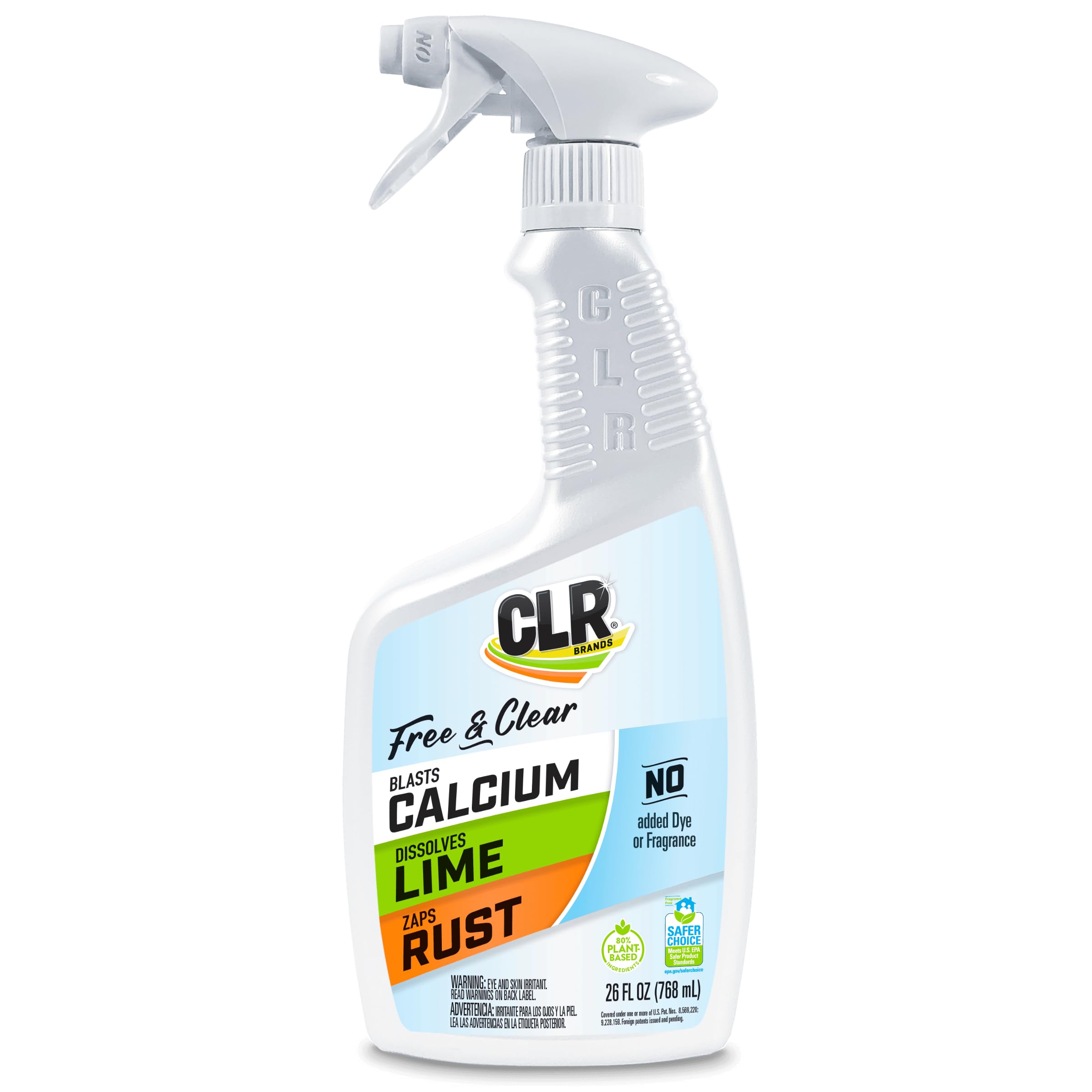
CLR’s updated formula removes the dyes and fragrances while retaining the same effective acid chemistry that households have trusted for decades. The liquid descaler is particularly effective on calcium deposits from hard water and rust stains on porcelain, ceramic tile, and glass. Multiple verified reviews highlight its ability to restore sinks and toilets that had years of iron staining.
The EPA Safer Choice certification gives peace of mind for households sensitive to harsh chemical fumes, though users note the fragrance-free version still has a noticeable chemical odor during application — it’s the acid working, not added perfumes. For weekly maintenance on shower enclosures and fixtures, a quick spray and rinse keeps hard water rings from building up between deep cleans.
Where this product falls short is on old, thick limescale that has been accumulating for years. For deep-seated crystalline deposits, you may need to apply multiple treatments and allow longer dwell times. The 26-ounce bottle is a reasonable size for testing, but heavy users will want the larger gallon format.
Why it’s great
- Effectively dissolves calcium, lime, and rust stains without scrubbing
- Free of dyes and fragrances, EPA Safer Choice certified
- Works on many surfaces including stainless steel, glass, and tile
Good to know
- Less effective on very old or thick limescale deposits
- Still has a noticeable chemical smell despite being fragrance-free
4. Zep Mold Stain and Mildew Stain Remover (4-Pack)
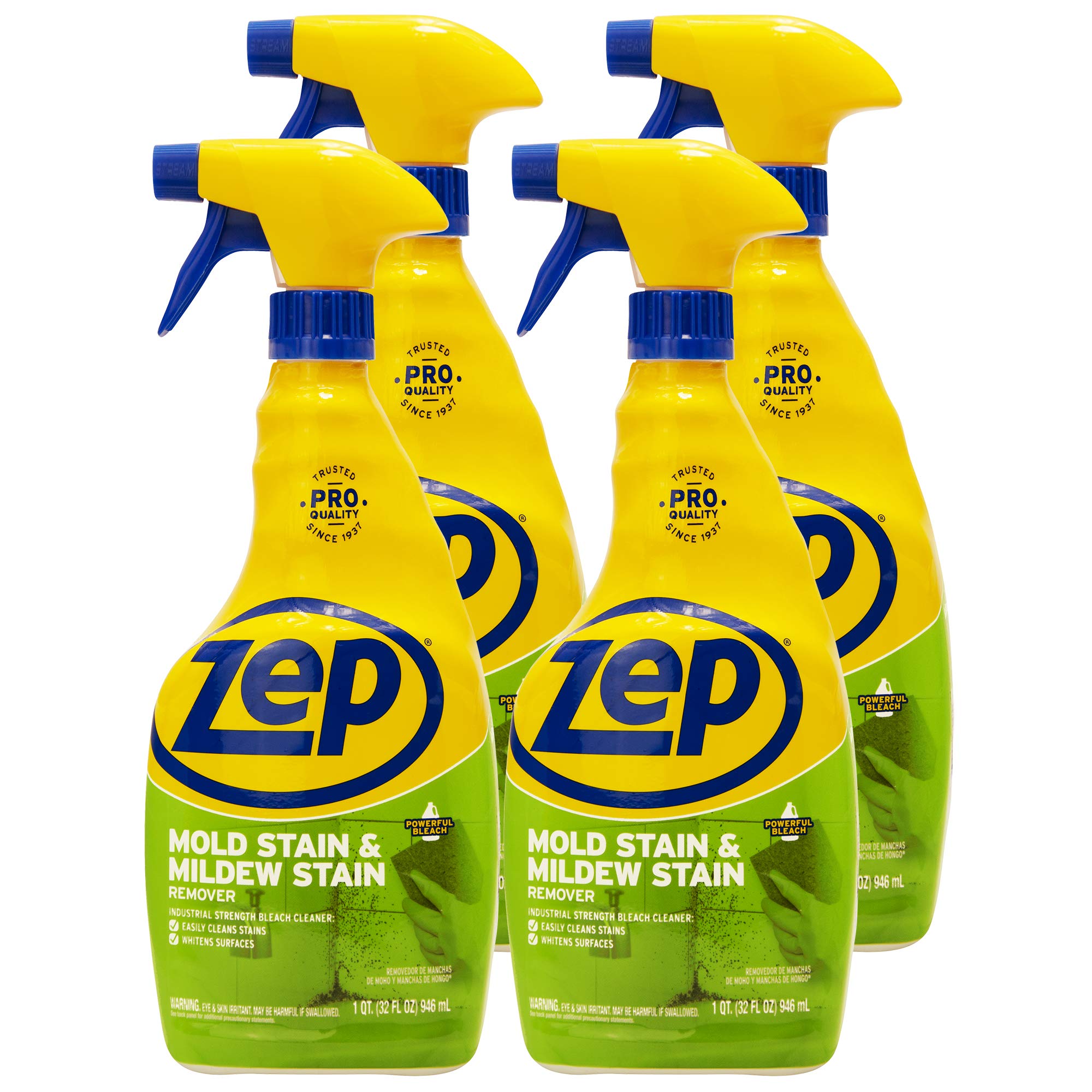
Zep’s professional-strength bleach formula delivers fast results on organic stains like mold, mildew, and the yellow discoloration that builds up in bathtub corners and grout lines. The no-scrub promise holds true for most surface stains — you spray it on, let it sit for a few minutes, and rinse to reveal whiter tile and brighter porcelain. Verified users report it removed yellow bathtub stains instantly where other products had failed.
The four-pack of 32-ounce bottles provides an enormous volume of cleaner for larger bathrooms or commercial use. Because it is bleach-based, it excels at whitening and sanitizing but should not be used on vinyl, marble, or any surface that could be etched or discolored by chlorine. Strong odor is the main trade-off; the chemical smell requires open windows and ventilation during and after use.
This cleaner is specifically formulated for mold, mildew, and organic yellowing, not for mineral deposits or soap scum. Users note it is ineffective on hard water rings and soap scum buildup. Keep it in your arsenal specifically for the biological stains it targets, and pair it with an acid-based cleaner for mineral issues.
Why it’s great
- Fast-acting on mold, mildew, and organic yellow stains
- No-scrub application saves effort on grout lines
- Excellent value with four large bottles
Good to know
- Strong bleach odor requires good ventilation
- Does not remove soap scum or hard water deposits
5. Wet & Forget Shower Cleaner

Wet & Forget takes the opposite approach of the instant-stain-removers — it is a slow-acting maintenance product that prevents buildup rather than attacking heavy stains in one session. The weekly spray requires an 8-12 hour dwell time, then rinses away soap scum and body oils gradually. Users with mobility issues appreciate not having to scrub; an 80-year-old reviewer with decreased flexibility reported complete removal of months of grime after three treatments.
The formula is bleach-free and ammonia-free, with a light vanilla scent that dissipates quickly. The 64-ounce bottle provides about 12 weeks of weekly application for a standard shower. It is safe on glass, porcelain, fiberglass, metal, and tile — but not on natural marble. The slow approach means you need patience, and results vary on textured or non-slip tub surfaces where the cleaner cannot penetrate evenly.
This is the best option for someone who wants to stop scrubbing permanently and is willing to follow a consistent weekly routine. It will not remove a thick calcium ring or years-old rust stain on the first use, but consistent application keeps new stains from forming. If your tub stains are light to moderate and you want a set-and-forget solution, this is the route to take.
Why it’s great
- Gently dissolves soap scum and grime without scrubbing
- Bleach-free and ammonia-free with a mild vanilla scent
- Safe on most shower surfaces including glass and fiberglass
Good to know
- Long 8-12 hour dwell time; not an instant stain remover
- Less effective on textured or non-slip tub bottoms
FAQ
Can I use a tub stain cleaner on my acrylic tub?
Why does my tub still have stains after using a bleach cleaner?
How often should I apply a weekly no-scrub cleaner?
Final Thoughts: The Verdict
For most users, the cleaner for tub stains winner is the Zud Cream Cleanser (2-Pack) because its oxalic acid formula dissolves rust and mineral deposits without bleach, works on multiple surfaces, and comes in a generous value pack. If you want a versatile daily cleaner that clings to vertical walls, grab the Bar Keepers Friend MORE Spray + Foam. And for a hands-off weekly maintenance routine that prevents stains from building up in the first place, nothing beats the Wet & Forget Shower Cleaner.

Mo Maruf
I created WellFizz to bridge the gap between vague wellness advice and actionable solutions. My mission is simple: to decode the research and give you practical tools you can actually use.
Beyond the data, I am a passionate traveler. I believe that stepping away from the screen to explore new environments is essential for mental clarity and physical vitality.