Our readers keep the lights on and my smoothie glass nicely filled. As an Amazon Associate, I earn from qualifying purchases.
The jump from a smartphone to a dedicated camera is measured not just in megapixels, but in the freedom to control every variable of your image. Whether you are chasing the perfect vlog setup, building a streaming studio, or capturing cinematic b-roll, the camera you choose defines your ceiling. A great content creator camera delivers the specific toolset for your workflow without forcing you to fight the hardware.
I’m Mohammad Maruf — the founder and writer behind WellFizz. This guide is built on countless hours dissecting sensor specs, autofocus systems, bit rates, and the real-world use cases that separate a smart buy from an expensive mistake.
After testing the market’s top contenders, this deep dive into the best content creator camera for your specific needs covers everything from pocket-ready gimbals to full-frame powerhouses.
How To Choose The Best Content Creator Camera
The ideal camera for your channel or studio balances sensor performance, autofocus reliability, and codec flexibility against your specific shooting style. A run-and-gun vlogger prioritizes stabilization and size, while a narrative filmmaker needs RAW recording and robust dynamic range.
Sensor Size and Low-Light Performance
Sensor size directly dictates how much light the camera can gather, impacting depth of field and noise at higher ISOs. Full-frame sensors (35mm equivalent) offer the widest dynamic range and shallowest depth of field, making them ideal for cinematic looks and indoor shoots. APS-C and Micro Four Thirds sensors are smaller, which allows for more compact bodies and lenses, but they generally require more light to match full-frame noise performance.
Autofocus and Subject Tracking
Reliable autofocus is non-negotiable for solo creators. Look for phase-detection systems with eye, face, and animal tracking. Advanced AI-powered tracking, like Sony’s Real-time Eye AF or Canon’s Dual Pixel CMOS AF II, lets you move freely in the frame while the camera keeps you in sharp focus, reducing the need for a dedicated camera operator.
Video Codecs and Color Depth
Internal recording capabilities define your post-production flexibility. 10-bit 4:2:2 color sampling and Log profiles (like V-Log, S-Log, or C-Log) preserve more data in highlights and shadows, enabling serious color grading. For the highest quality, RAW recording (like REDCODE or CinemaDNG) captures the uncompressed sensor data, offering maximum latitude for color correction.
Quick Comparison
On smaller screens, swipe sideways to see the full table.
| Model | Category | Best For | Key Spec | Amazon |
|---|---|---|---|---|
| Canon EOS R5 | Premium Hybrid | High-res photo & 8K video hybrid | 45MP full-frame, 8K RAW | Amazon |
| Sony Alpha 7C II | Compact Full-Frame | Travel vlogging & everyday hybrid | 33MP full-frame, 4K 60p 10-bit | Amazon |
| Blackmagic Pocket 6K | Cinema Camera | Narrative filmmaking & RAW workflow | Super35 sensor, 6K RAW at 60fps | Amazon |
| Sony Alpha ZV-E10 II | APS-C Vlog | Entry-level vlogging & streaming | 26MP APS-C, 4K 60p with AI AF | Amazon |
| Nikon RED Z Cinema | Cinema RAW | Professional cinema & 32-bit float audio | 6K full-frame, R3D RAW capture | Amazon |
| Canon EOS R8 | Entry Full-Frame | Budget full-frame photo & 4K video | 24.2MP full-frame, 4K 60p | Amazon |
| Panasonic LUMIX S9 | Style-Led Full-Frame | Social media content & LUT workflow | 24.2MP full-frame, 6K Open Gate | Amazon |
| Logitech Mevo Core | Live Streaming | Multi-cam streaming & podcasting | MFT mount, 4K 30p streaming | Amazon |
| Sony a7 III | Versatile Full-Frame | Reliable hybrid for stills & video | 24.2MP full-frame, 4K 30p | Amazon |
| Panasonic LUMIX G97 | Budget Hybrid | Budget stills & 4K video with IBIS | 20MP MFT, 4K 30p | Amazon |
| DJI Osmo Pocket 3 | Pocket Vlog | Ultra-portable on-the-go vlogging | 1-inch sensor, 4K 120fps | Amazon |
In‑Depth Reviews
1. Canon EOS R5

The Canon EOS R5 is the benchmark for hybrid mirrorless cameras, packing a 45-megapixel full-frame sensor into a body capable of internal 8K RAW recording. This level of resolution and data capture makes it a two-in-one studio tool for photographers who need high-resolution stills and videographers who demand the latitude of Cinema RAW Light. The DIGIC X processor powers both 12 fps mechanical and 20 fps electronic burst shooting with full autofocus tracking.
Video features include oversampled 4K at up to 120fps and internal 10-bit HDR PQ, giving you professional color space options straight out of the camera. Dual Pixel CMOS AF II covers 100% of the frame with deep-learning-based subject detection for people, animals, and vehicles. The 5-axis IBIS system provides up to 8 stops of shake correction, allowing stable handheld shots even at long focal lengths.
Real-world overheating concerns around 8K recording have been largely overblown, as standard firmware and workflow management make it manageable for most productions. The RF lens mount offers immediate access to Canon’s exceptional L-series glass, though the body-only price positions it firmly within the premium tier. It is a top-tier choice for creators who need the absolute best in resolution and flexibility in a single camera body.
Why it’s great
- 45MP sensor with incredible dynamic range and detail.
- Internal 8K RAW and oversampled 4K 120p video.
- Class-leading IBIS with up to 8 stops of correction.
Good to know
- Premium investment; body-only kit.
- Battery life is lower than some competitors under heavy use.
- 8K recording can trigger thermal management in hot environments.
2. Sony Alpha 7C II

The Sony Alpha 7C II redefines the full-frame compact, packing a 33-megapixel sensor and the dedicated AI processing unit from its higher-end siblings into a body that rivals APS-C cameras in portability. The BIONZ XR processor enables Real-time Eye AF for humans, animals, and birds, with tracking that is both fast and sticky. For video, it records 4K 4:2:2 10-bit at up to 60p, giving you significant color grading headroom for a body this small.
Ergonomics have been refined with a deeper grip and updated menu system compared to the original a7C. The flip-out vari-angle screen is excellent for vlogging, and the inclusion of IBIS helps smooth handheld movement. Wireless connectivity is fast for transferring files to a smartphone through the Creators’ App, making it a strong choice for on-the-go social media publishing.
The EVF resolution and single SD card slot are areas where cost-saving is visible, but for a travel-focused or everyday hybrid setup, the trade-off is justified. It offers full-frame depth of field and low-light performance without the bulk of traditional DSLR-sized bodies. For creators who prioritize mobility without sacrificing sensor performance, this is a balanced, mid-range contender.
Why it’s great
- Very compact and lightweight full-frame body.
- Excellent AI-based autofocus with fast subject tracking.
- 10-bit 4:2:2 4K 60p internal recording.
Good to know
- Single UHS-II SD card slot.
- Electronic viewfinder is smaller than professional models.
- Body-only; cost of quality E-mount lenses adds up.
3. Blackmagic Pocket Cinema Camera 6K
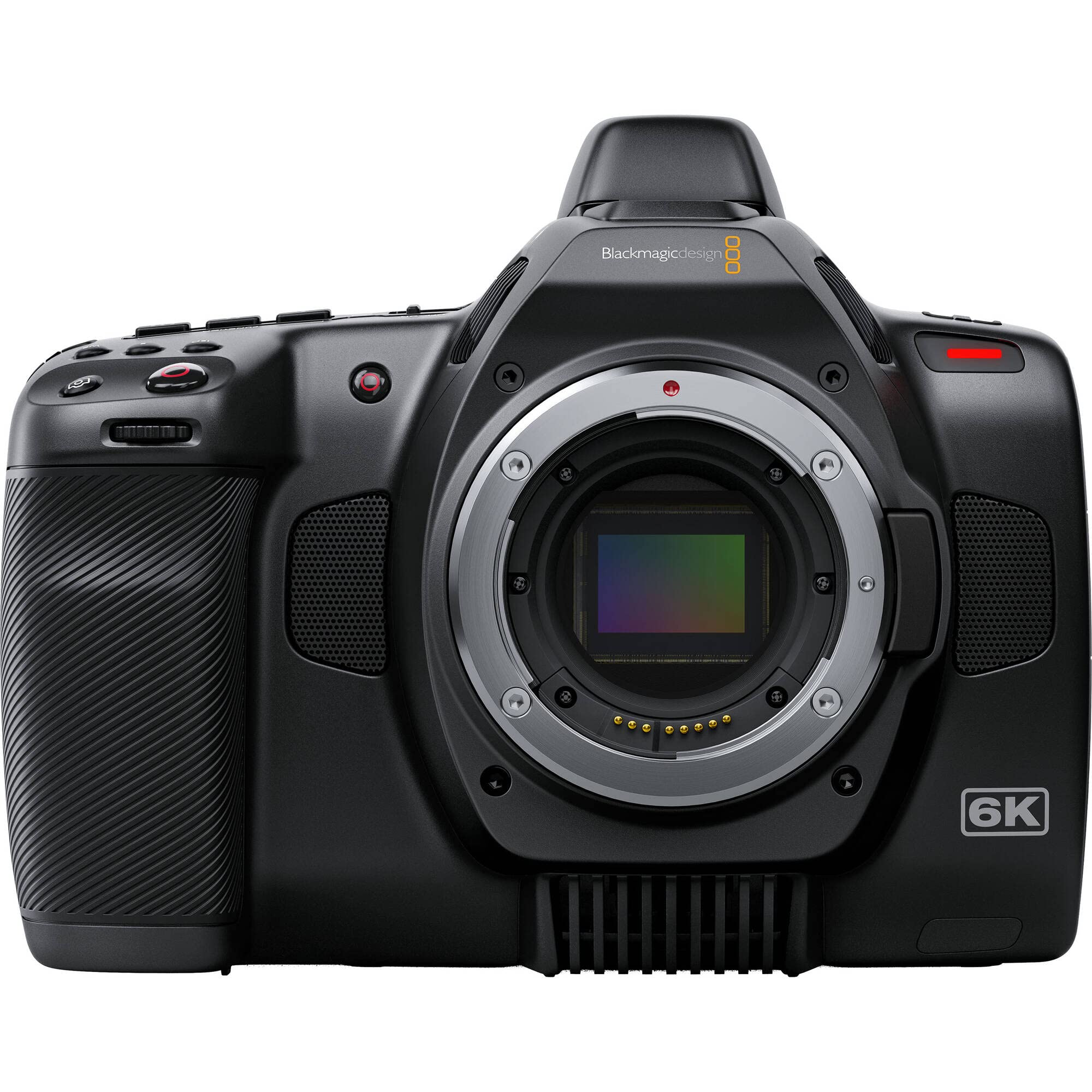
The Blackmagic Pocket Cinema Camera 6K is a dedicated cinema tool that records 6K Blackmagic RAW up to 60 fps, offering the kind of color science and dynamic range typically found in cameras costing several times more. The Super35 sensor is paired with an EF lens mount, giving you access to a vast library of affordable and high-end glass. The included DaVinci Resolve Studio license makes the post-production workflow seamless and cost-effective.
Its form factor feels familiar to DSLR users, but the internal hardware is built for video first. The 5-inch touchscreen provides on-set monitoring with histograms, focus peaking, and false color. Recording to standard CFast or SD cards is not an option; you will need fast CFast 2.0 or external SSDs via USB-C, which adds accessory costs. The lack of built-in ND filters and autofocus means it is better suited for controlled shoots than gimbal work.
Battery life is short with the internal LP-E6, so an external V-mount battery rig is almost mandatory for all-day shoots. However, for narrative filmmaking, music videos, or any project where image quality and color grading flexibility are paramount, the BMPCC6K remains a mid-range powerhouse. It is a specialist’s tool that rewards a deliberate shooting style with professional-grade output.
Why it’s great
- True 6K RAW recording with excellent dynamic range.
- Includes full DaVinci Resolve Studio license.
- EF lens mount offers huge variety of affordable lenses.
Good to know
- No autofocus system; manual focus required.
- Poor battery life; external power recommended.
- Without built-in ND filters, rigging is often necessary.
4. Sony Alpha ZV-E10 II

The Sony ZV-E10 II builds on the success of its predecessor with a refined 26-megapixel APS-C sensor and the BIONZ XR processor, bringing AI-based subject recognition to an entry-level body. The camera captures 4K 60p video and includes the Product Showcase Setting, making it an excellent tool for reviewers and product-focused content. Its variable-angle touchscreen and built-in directional three-capsule mic are tailored for solo recording.
The E-mount system provides a massive selection of lenses, from the included 16-50mm OSS II kit zoom to high-aperture primes. The Real-time Eye AF for humans and animals is inherited from Sony’s more expensive models, delivering reliable focus for vlogging or run-and-gun shooting. The S&Q mode allows 5x slow motion recording in HD, adding creative flexibility without extra gear.
Navigation is user-friendly, with a dedicated button for toggling bokeh and the Creative Look presets for in-camera color adjustments. The battery life is manageable but best paired with a USB power bank for extended recording sessions. At this price point, it is the most rounded entry-level option for creators moving beyond their smartphone without stepping into a full-frame budget.
Why it’s great
- AI-powered autofocus with reliable eye tracking.
- Lightweight body with vlogger-friendly features.
- Access to extensive Sony E-mount lens system.
Good to know
- No electronic viewfinder.
- APS-C sensor limits low-light performance vs full-frame.
- Kit lens is a variable aperture zoom.
5. Nikon RED Z Cinema

The Nikon RED Z Cinema camera merges RED’s legendary color science with Nikon’s engineering, resulting in a 6K full-frame cinema camera that records R3D RAW footage internally. It boasts over 15 stops of dynamic range and dual base ISO, allowing for exceptional latitude in both shadows and highlights. The inclusion of 32-bit float audio recording is a standout feature, allowing creators to record audio without worrying about clipping levels.
The use of the Nikon Z mount means compatibility with some of the world’s widest and fastest lenses, and the lightweight 1.18-pound body makes it easy to rig for gimbal or handheld use. The 4-inch DCI-P3 touchscreen swivels for flexible framing. It is designed primarily as a dedicated cinema camera, so hybrid stills shooting is not its core strength.
The camera requires high-speed CFexpress Type B cards to handle the massive data rates from 6K R3D files, which adds to the cost of entry. For filmmakers who value a compact, professional-grade cinema workflow with the ability to record broadcast-quality audio directly in-camera, the RED Z Cinema is a premium, specialist tool that justifies its price tag with output quality.
Why it’s great
- Genuine RED color science with R3D RAW recording.
- 32-bit float audio for professional sound capture.
- Very lightweight 1.18 lb full-frame cinema body.
Good to know
- Not a hybrid camera; photos are secondary.
- Expensive CFexpress Type B cards required.
- Pure cinema workflow may overwhelm beginners.
6. Canon EOS R8

The Canon EOS R8 provides an affordable gateway into full-frame mirrorless photography and video. It uses the same 24.2-megapixel sensor and DIGIC X processor as the more expensive EOS R6 Mark II, delivering identical stills quality and a 4K 60p video mode oversampled from 6K. The Dual Pixel CMOS AF II system offers excellent subject tracking, making it easy to shoot sharp images and video.
Its weight is a major advantage, as it is the lightest full-frame RF-mount camera Canon makes. The vari-angle touchscreen is useful for composing from tricky angles. However, to achieve this weight, Canon used a smaller LP-E17 battery, leading to shorter shooting times compared to the R6 series. High-speed continuous shooting is limited to 6fps with the mechanical shutter.
The absence of in-body image stabilization means you will need stabilized lenses for smooth handheld video. The single UHS-II SD card slot is a limitation for professional backups. Despite these compromises, it offers the best price-to-performance ratio for those wanting to enter the full-frame RF ecosystem for stills and high-quality 4K video without the higher cost of a professional body.
Why it’s great
- Excellent full-frame image quality at a lower price.
- Lightest RF mount body, ideal for travel.
- Oversampled 4K 60p video with Canon Log 3.
Good to know
- No in-body image stabilization.
- Small battery leads to shorter run times.
- Single SD card slot.
7. Panasonic LUMIX S9

The Panasonic LUMIX S9 is designed specifically for the content creator who needs quick, stylish output for social media. Its standout feature is the Real Time LUT, allowing users to apply custom or pre-loaded color grades instantly in-camera, eliminating the need for desktop editing for many posts. The 24.2-megapixel full-frame sensor and L-Mount compatibility deliver proper image quality and dynamic range.
It records 6K video in an Open Gate mode, letting you reframe to vertical or horizontal in post without losing resolution. The LUMIX Lab app provides ultra-fast wireless file transfer and direct LUT management from your phone. The compact body is available in attractive color finishes, appealing to creators who view the camera as a personal accessory.
Critically, the S9 lacks an electronic viewfinder and has a contrast-detect autofocus system that, while improved, does not match the phase-detect speed of competitors in fast-moving scenarios. It also lacks IBIS, so stabilization relies on lens-based or digital correction. It is a specialist for the social media-first creator who values a seamless shooting-to-sharing workflow over tracking performance.
Why it’s great
- In-camera Real Time LUT for instant color grading.
- 6K Open Gate for flexible aspect ratio cropping.
- Stylish, compact full-frame body with fast app connectivity.
Good to know
- No electronic viewfinder and no IBIS.
- Contrast-detect AF struggles with fast action.
- Battery life is average for its class.
8. Logitech Mevo Core

The Logitech Mevo Core is a wireless live-streaming camera built around the Mevo Multicam ecosystem, operating with Wi-Fi 6E for low-latency control and streaming directly to platforms like YouTube and Twitch. It is a Micro Four Thirds camera with interchangeable lenses, offering more image control than fixed-lens webcams. Its built-in 6-hour battery allows for lengthy live streams without power constraints.
The camera features a three-mic array with noise cancellation, and also accepts external analog or digital audio sources. The Mevo Multicam app allows seamless switching between multiple Core cameras, making it ideal for podcasters, church streams, or studio productions. The included USB-C output also lets it function as a high-end 4K webcam.
While the image quality is very good for live streaming, the 4K 30p maximum resolution and contrast-detect autofocus limit its appeal for dedicated filmmaking. The cost is also positioned well above a standard webcam, but the combination of wireless freedom, app control, and a true lens system makes it a unique premium tool in the streaming space.
Why it’s great
- Wireless 4K streaming with a 6-hour battery.
- Easy multi-cam control via the Mevo app.
- Interchangeable MFT lenses for creative control.
Good to know
- Contrast-detect AF is not ideal for fast movement.
- Designed for streaming, not general filmmaking.
- Premium price for a niche streaming camera.
9. Sony a7 III

The Sony a7 III remains a popular and capable full-frame option for creators on a budget. Its 24.2-megapixel back-illuminated sensor and 15-stop dynamic range deliver excellent image quality and low-light performance. The 693-point phase-detection AF system provides reliable tracking, and the 10fps burst shooting is sufficient for most action scenarios.
Video capabilities include 4K 30p from the full sensor width, with Sony’s S-Log profiles for color grading. The NP-FZ100 battery offers industry-leading longevity, often lasting through a full day of mixed shooting. The dual SD card slots and USB-C connectivity are practical features for field work.
It lacks the more advanced AI autofocus and 10-bit video recording found in newer models, but at its adjusted price point, it offers proven full-frame performance. The 28-70mm kit lens provides a versatile starting range but benefits from an upgrade. It is an ideal entry for those who want to build a Sony FE system without the cost of the latest generation body.
Why it’s great
- Excellent full-frame image quality and dynamic range.
- Outstanding battery life for a mirrorless camera.
- Reliable phase-detection autofocus system.
Good to know
- Only 8-bit 4:2:0 internal video recording.
- Autofocus is less advanced than newer AI models.
- Kit lens will limit image quality potential.
10. Panasonic LUMIX G97
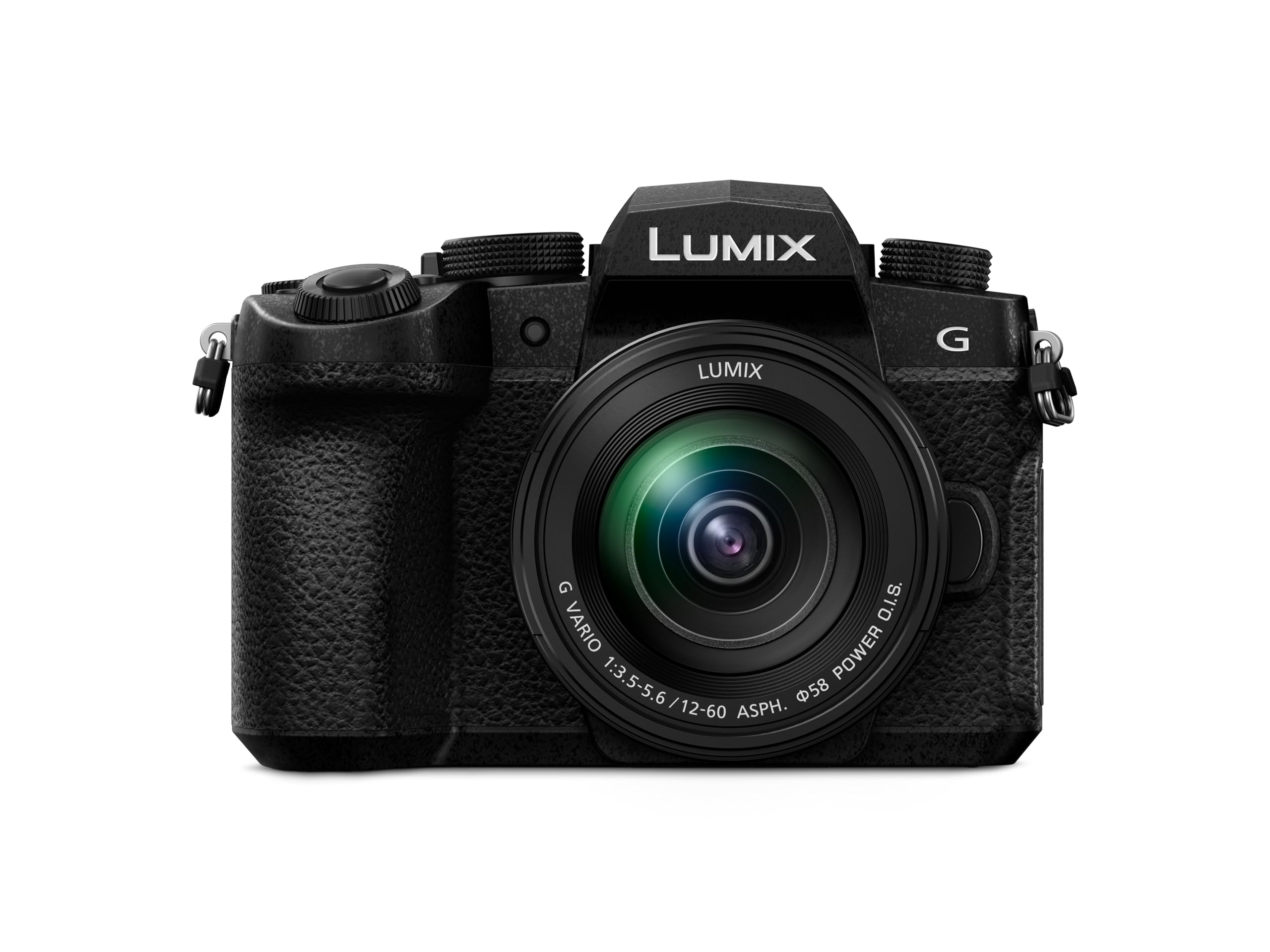
The Panasonic LUMIX G97 offers an affordable entry into interchangeable lens cameras with the benefit of 5-axis in-body image stabilization. The 20-megapixel Micro Four Thirds sensor is compact, and the camera includes V-Log L with 12 stops of dynamic range for cinematic color grading in an entry-level body. The included 12-60mm kit lens provides a useful wide-to-telephoto range for travel and general content.
It features a 1,840k-dot free-angle touchscreen and a 2,360k-dot OLED viewfinder, both of which are effective for framing. The Live View Composite mode is useful for creating long-exposure effects without overexposing highlights. The body is durable with weather-sealing for shooting in less-than-ideal conditions.
The autofocus system is best suited for static or predictable movement, as the contrast-detect system may hunt in low light. The battery life is average, and recording 4K video will require spare power. For budget-conscious creators who want stabilization and a solid entry to the Micro Four Thirds system, the G97 is a very capable hybrid.
Why it’s great
- Effective 5-axis IBIS for handheld video.
- V-Log L pre-installed for color grading.
- Weather-sealed body with good ergonomics.
Good to know
- Contrast-detect AF can be slow in low light.
- MFT sensor is smaller than APS-C or full-frame.
- Battery life is limited for extended 4K recording.
11. DJI Osmo Pocket 3

The DJI Osmo Pocket 3 is the ultimate ultra-portable vlogging solution, combining a 1-inch CMOS sensor with a 3-axis gimbal in a pocketable form factor. It records 4K video at up to 120fps, allowing smooth slow-motion, and the gimbal stabilization virtually eliminates shake without any bulky rigging. The 2-inch rotatable touchscreen automatically switches between horizontal and vertical shooting, perfect for cross-platform publishing.
ActiveTrack 6.0 ensures you stay center-frame even while moving, and the included DJI Mic 2 transmitter in the Creator Combo provides professional wireless audio. The device supports up to 166 minutes of battery life with the included battery handle, which is more than enough for a full day of vlogging. The D-Log M color mode allows for some color grading in post.
It is not an interchangeable lens camera, and the built-in wide-angle lens is fixed. Low-light performance is good for its sensor size, but it does not rival larger sensor cameras in dim conditions. For the creator whose primary demand is immediate, super-stable footage with no setup time, the Osmo Pocket 3 is a uniquely practical and capable tool.
Why it’s great
- Incredibly portable with a built-in gimbal for smooth footage.
- 4K 120fps and 1-inch sensor for great image quality in a small package.
- ActiveTrack 6.0 and excellent wireless mic integration.
Good to know
- Non-interchangeable, fixed wide-angle lens.
- Limited low-light performance compared to larger sensors.
- D-Log M has less grading flexibility than full Log profiles.
FAQ
Is a full-frame camera necessary for content creation?
What is the difference between optical and electronic image stabilization?
Do I need a camera that records RAW video?
Why does autofocus matter more for solo creators than for teams?
Final Thoughts: The Verdict
For most users, the best content creator camera winner is the Sony Alpha 7C II because it delivers exceptional full-frame image quality and reliable AI autofocus in the most portable body, making it a versatile hybrid for both social and professional work. If you want uncompromised resolution and hybrid power, grab the Canon EOS R5. And for the creator focused on narrative cinema and professional color grading, nothing beats the Blackmagic Pocket Cinema Camera 6K.

Mo Maruf
I created WellFizz to bridge the gap between vague wellness advice and actionable solutions. My mission is simple: to decode the research and give you practical tools you can actually use.
Beyond the data, I am a passionate traveler. I believe that stepping away from the screen to explore new environments is essential for mental clarity and physical vitality.