Our readers keep the lights on and my smoothie glass nicely filled. As an Amazon Associate, I earn from qualifying purchases.
The difference between a clean paver and one that looks permanently stained is rarely about elbow grease—it is about choosing the right chemistry for the mineral surface you are treating. Efflorescence, rust runoff, mildew colonies, and tire marks each demand a distinct active ingredient, and using a generic degreaser often seals the stain deeper into the porous concrete.
I’m Mohammad Maruf — the founder and writer behind WellFizz. I’ve spent countless hours analyzing the chemistry, application methods, and real-world feedback on paver-specific cleaning formulations to separate the formulas that truly lift mineral deposits from those that simply mask the problem.
After cross-referencing hundreds of verified owner experiences and lab-grade specifications, I’ve built a shortlist that covers every common paver headache. Use this guide to find the best cleaner for pavers that matches your specific stain type and surface porosity.
How To Choose The Best Cleaner For Pavers
Paver surfaces are chemically distinct from asphalt or sealed concrete—they are typically high-porosity cement or clay that absorbs moisture and stains rapidly. The wrong cleaner can etch the surface permanently or leave a white chalky residue that attracts more dirt. You need to match the cleaner to both the stain type and the paver material.
Identify the Stain Chemistry First
Efflorescence (white salt deposits) requires an organic or mild mineral acid that dissolves calcium carbonate without attacking the cement binder. Mildew and algae demand a sodium hypochlorite or peroxide-based formula that kills spores at the root. Rust stains need a specific chelating agent—general-purpose acids often spread the rust mark wider before removing it.
Check Your Application Method
Large patios and driveways benefit from concentrated formulas designed for pressure washer siphon systems or pump sprayers. Small walkways are fine with ready-to-use trigger bottles. Pay attention to dwell time: most paver stains need 5-15 minutes of contact; rinsing too early leaves the stain partially lifted, and rinsing too late can etch the paver face.
Safety on Surroundings
Because paver cleaners contain active acids or bleach, runoff can kill grass, harm flower beds, or etch glass windows. Biodegradable and plant-safe formulas reduce the risk, but every concentrate should be rinsed thoroughly and kept away from storm drains. Gloves and eye protection are non-negotiable with any bleach or acid-based product.
Quick Comparison
On smaller screens, swipe sideways to see the full table.
| Model | Category | Best For | Key Spec | Amazon |
|---|---|---|---|---|
| Eco Etch Pro | Acid Etcher | Efflorescence & rust on concrete | Biodegradable organic acid | Amazon |
| Zep Pressure Wash Concentrate | Concentrate | Large paver patios & siding | Makes up to 20 gal | Amazon |
| RMR-86 Instant Mold Remover | Bleach-based | Mildew stains on pavers & grout | No scrubbing needed | Amazon |
| Nature’s Freedom 45% Vinegar | Acid Concentrate | Weed & light mineral stains | 9x stronger than household | Amazon |
| DeckMax Premium Deck Cleaner | Eco Formula | Composite & wood adjacent to pavers | Zero VOCs | Amazon |
In‑Depth Reviews
1. Eco Etch Pro Concrete Cleaner & Etcher
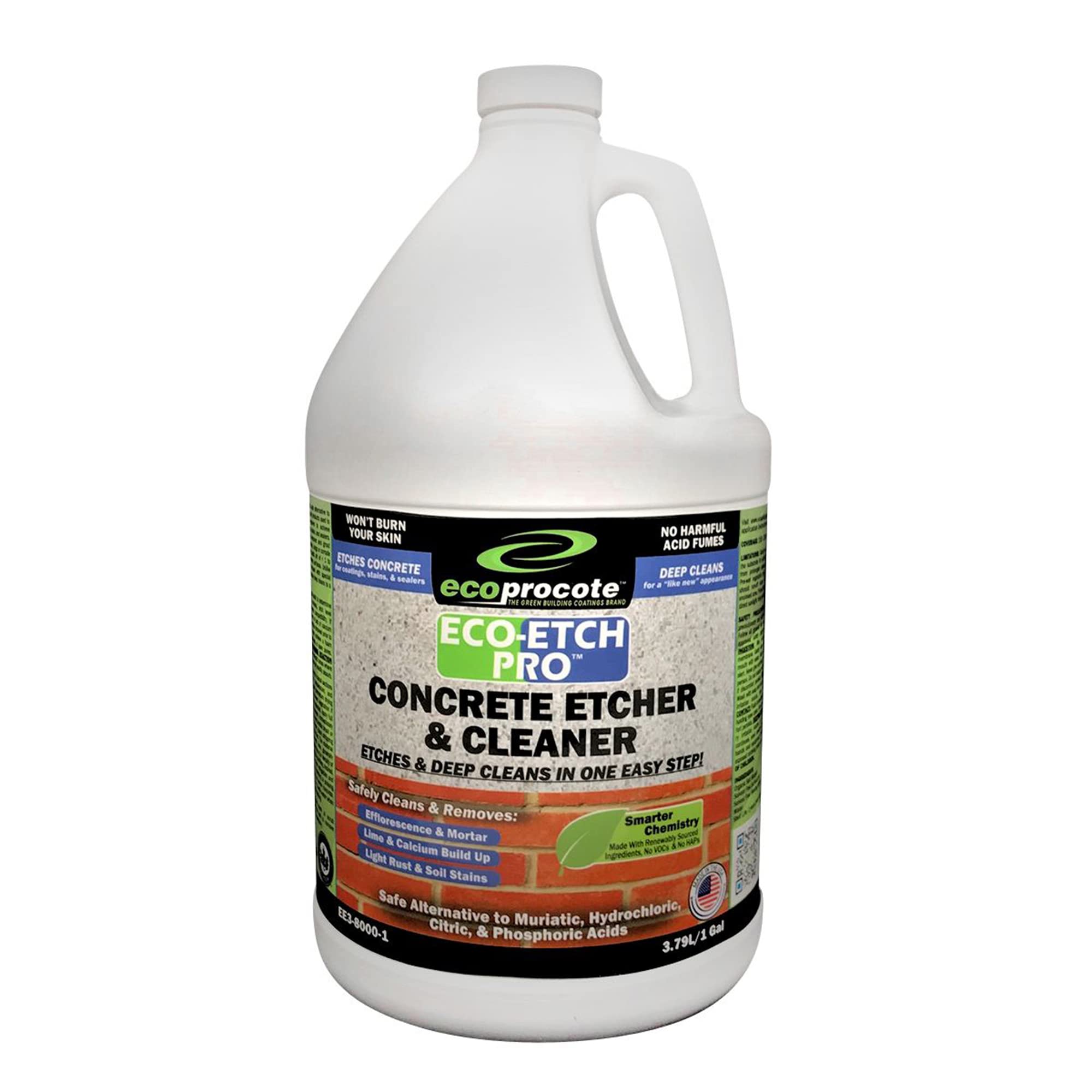
This is the only premium pick on the list specifically formulated to dissolve efflorescence—the white calcium salt that blooms on new paver installations. The organic acid chemistry is twice as strong as phosphoric acid yet biodegradable, so runoff won’t scorch your lawn or flower beds like muriatic acid would. Owners report that it foams aggressively upon contact with mineral deposits, lifting the salts without damaging the paver surface.
The gallon jug is best used with a pump sprayer on dry pavers, letting the foam dwell for 5-10 minutes before a stiff brush and rinse. It also doubles as a concrete etcher if you plan to seal or stain your pavers later, because it opens micropores for coating adhesion. Early adopters note it works well on sealed concrete only after the sealer is removed—the acid cannot penetrate a cured topcoat.
For anyone battling recurring white deposits on a new paver patio or driveway, this is the most targeted solution you can use without compromising safety. The lack of toxic fumes means you can work without a respirator, though gloves are still recommended given the acidity.
Why it’s great
- Dissolves efflorescence and cement mortar deposits on contact
- No hazardous fumes; biodegradable formula
- Also etches concrete for sealer or stain prep
Good to know
- Won’t penetrate existing sealer—strip sealer first
- Mixed results on painted or coated paver surfaces
2. Zep House and Siding Pressure Wash Concentrate

Zep’s concentrate is a workhorse for homeowners cleaning large paver driveways or patios with a pressure washer. The construction-grade formula lifts caked-on dirt, algae, and mildew from concrete and brick pavers without etching the surface—it relies on surfactants rather than strong acids. Users report that a single gallon mixed per the heavy-soil ratio covers roughly a quarter of a standard house, which translates to a very large paver area.
Application is straightforward: mix with water in a pump sprayer, apply from bottom to top to avoid streaks, let it dwell for 5 minutes, then rinse with a pressure washer or garden hose. The formula is bleach-free and produces no harsh fumes, making it comfortable for long cleaning sessions. Because it is designed for siding and hard-coat stucco, it is equally safe on dense clay pavers and interlocking concrete blocks.
For the price per square foot, this is the most economical choice if your primary stain is organic grime rather than mineral efflorescence. The two-pack provides enough concentrate for an entire driveway and a separate patio project, and the streak-free rinse means no re-scrubbing.
Why it’s great
- High-yield concentrate covers up to 5,000 sq ft per bottle
- Safe on brick, concrete, and clay pavers
- No harsh fumes during extended pressure washing
Good to know
- Not formulated for efflorescence or rust stains
- Some tough algae requires a second application
3. RMR-86 Instant Mold and Mildew Stain Remover

When paver seams or shaded areas develop black mildew that resists scrubbing, RMR-86 delivers the aggressive oxidizer needed to kill the stain instantly. The formula is essentially a supercharged bleach solution that begins lifting discoloration the moment it contacts the paver surface. Owners consistently report that mold and mildew stains vanish in seconds without any scrubbing, which makes it ideal for tight joints between brick pavers where a brush cannot reach.
The caveat is the fume strength—multiple verified buyers warn that the chlorine gas is potent enough to cause throat burning and tearing, so a full-face respirator, chemical gloves, and maximum ventilation are mandatory. The gallon jug should be stored with the original cap rather than the spray nozzle, because the seal can leak and damage flooring. On the positive side, a single application keeps mildew from returning for several months on most paver surfaces.
This is not a product for general cleaning or efflorescence. It is a targeted weapon for owners who have tried everything else on stubborn mildew staining and need instant chemical action. Use it sparingly on small areas and rinse thoroughly to avoid bleaching nearby plants.
Why it’s great
- Stains disappear within seconds without scrubbing
- Long-lasting mildew prevention after treatment
- Effective on grout, brick, and concrete pavers
Good to know
- Extremely strong fumes require full PPE and ventilation
- Will bleach fabric, painted surfaces, and plants instantly
4. Nature’s Freedom 45% Concentrated Vinegar
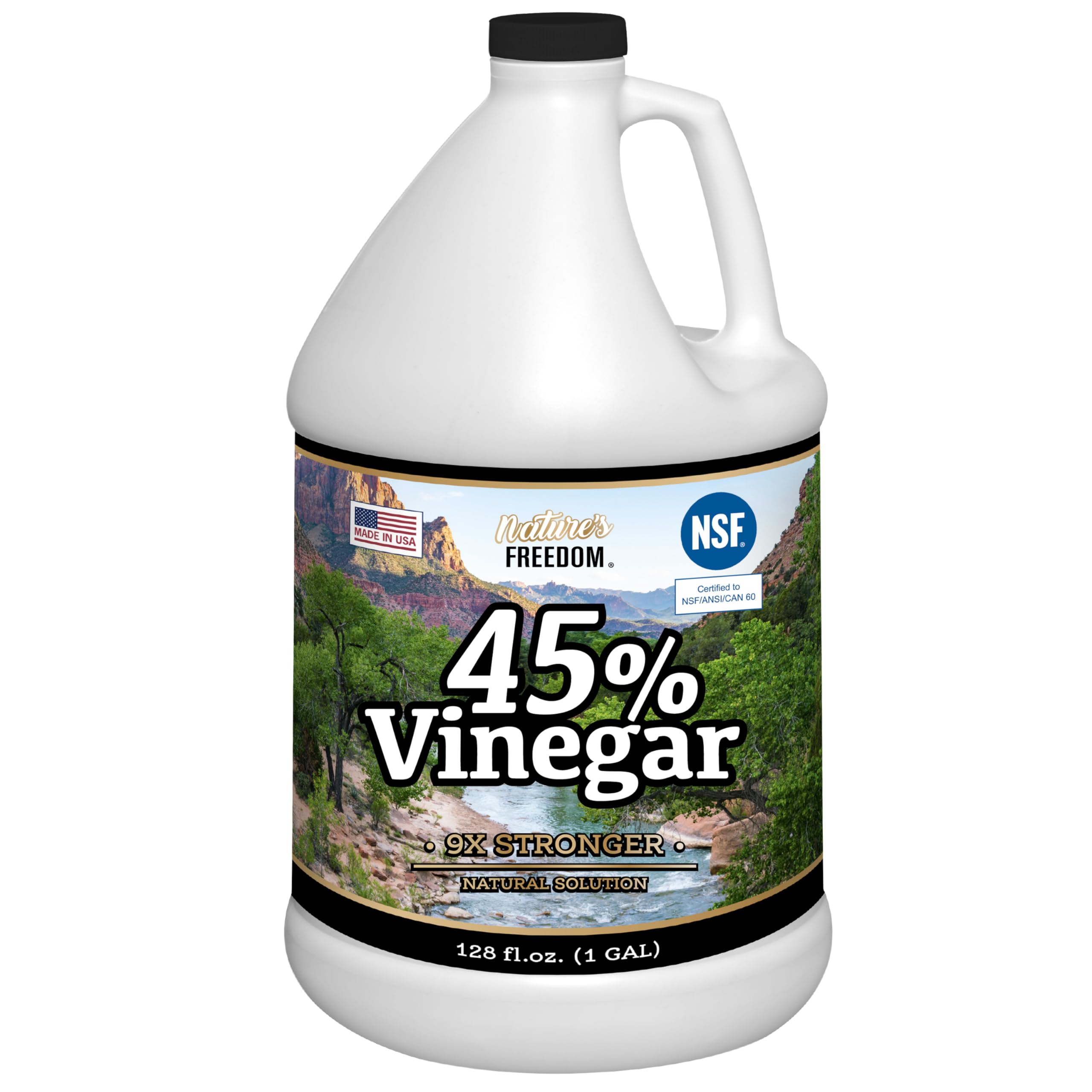
If you prefer a cleaner that serves double duty as a weed killer and a mild acid wash for paver stains, this 45% acetic acid concentrate is a versatile option. At nine times the strength of household vinegar, it will dissolve light mineral deposits and efflorescence on concrete and brick pavers without introducing synthetic bleach or quat compounds. User reports are overwhelmingly positive for weed control in paver joints—sprayed directly, it browns weeds within a day and suppresses regrowth for months.
For paver cleaning, dilute the concentrate at roughly 1:8 with water for general grime, or use it full-strength on tough calcium stains. Because it is NSF certified for water treatment, you can be confident it contains no hidden fillers. The acetic acid smell is strong but much less toxic than chlorine or muriatic acid fumes; a mask and glasses are still recommended. One caveat: the 45% concentration is corrosive to skin and can etch glass and aluminum, so keep it away from window frames and metal furniture.
This is best suited for homeowners who want a single product that handles light paver cleaning, weed management, and general outdoor descaling. It is the most budget-friendly option per gallon, but it will not match the efficacy of dedicated efflorescence removers on thick white salt deposits.
Why it’s great
- Dual purpose—kills weeds and cleans mineral stains
- NSF certified, no synthetic additives
- Highly concentrated; one gallon equals nine standard gallons
Good to know
- Not as effective on thick efflorescence as organic acid etch
- Requires careful dilution; full strength can etch glass and metal
5. DeckMax Premium Deck Cleaner Kit

DeckMax is formulated primarily for composite and wood decking, but its gentle, oxygen-based chemistry works well on paver surfaces that are adjacent to deck areas or when you need a single cleaner for both zones. The zero-VOC formula is safe for pets, kids, and nearby plants, making it a strong choice for family patios where plenty of rinsing might not be possible. Users on composite decks report clean results on grease, dirt, and dog stains with moderate scrubbing effort.
Applied with the included natural bristle brush (which can be screwed onto a broom handle, though users note this is not included), the cleaner lifts organic grime without bleaching or etching the pavers. For deeper paver stains like engine oil or rust, this formula will underperform—it lacks the acid or bleach power needed for mineral-bound discoloration. The concentrate covers up to 1,500 square feet, which is adequate for a medium paver patio.
Consider this product if your primary paver concern is surface dirt and food grease from outdoor dining, and if you want a non-toxic solution that leaves no residue. It is not your answer for heavy efflorescence or black mildew, but it fills a specific niche for gentle, everyday paver maintenance.
Why it’s great
- Zero VOCs and safe around children and pets
- Works on composite wood and concrete pavers alike
- Includes a scrub brush for manual application
Good to know
- Not effective on efflorescence, rust, or heavy mildew
- Brush lacks a handle; you’ll need to attach one
FAQ
Will a paver cleaner remove efflorescence permanently?
Can I use a pressure washer with any paver cleaner?
How do I prevent killing grass when rinsing paver cleaner?
Final Thoughts: The Verdict
For most users, the best cleaner for pavers winner is the Eco Etch Pro because it tackles the two most stubborn paver issues—efflorescence and surface prep for sealing—with a biodegradable acid that is safe for landscaping. If you want a high-coverage concentrate for routine algae and dirt on a large driveway, grab the Zep Pressure Wash Concentrate. And for instant mildew removal from paver joints without scrubbing, nothing beats the RMR-86 (as long as you respect the fumes).

Mo Maruf
I created WellFizz to bridge the gap between vague wellness advice and actionable solutions. My mission is simple: to decode the research and give you practical tools you can actually use.
Beyond the data, I am a passionate traveler. I believe that stepping away from the screen to explore new environments is essential for mental clarity and physical vitality.