Our readers keep the lights on and my smoothie glass nicely filled. As an Amazon Associate, I earn from qualifying purchases.
Finding a clear waterproof sealant that genuinely bonds with wood and stays transparent through seasons of rain and sun requires sifting through marketing promises to find the formulas that actually hold up. A hazy, yellowed, or peeling sealant not only ruins the natural look of the grain but also fails at its primary job — keeping moisture out of the fibers where rot begins.
I’m Mohammad Maruf — the founder and writer behind WellFizz. I have spent hundreds of hours examining chemical compositions, coverage rates, and UV stability data across dozens of clear sealants to map which formulations deliver on their waterproofing claims without compromising clarity.
Whether you are protecting a cedar deck, Douglas fir window trim, or a teak garden bench, this guide cuts through the solvent-based confusion to recommend the best clear waterproof sealant for wood based on real application scenarios and independent user evidence.
How To Choose The Best Clear Waterproof Sealant For Wood
Selecting the right sealant begins with understanding the chemical base and how it interacts with the wood surface. A wrong choice here leads to peeling, cracking, or a milky haze that hides the wood’s natural beauty.
Solvent-Based vs. Water-Based Formulas
Solvent-based sealants like Thompson’s WaterSeal penetrate deeper into wood fibers and offer superior resistance against heavy rain and foot traffic, making them ideal for exterior decks and fences. Water-based options such as the Minwax Sanding Sealer dry faster, emit lower VOCs, and clean up with soap and water, but they often require more coats for comparable waterproofing on outdoor surfaces. For interior furniture or cabinets where low odor and fast recoating matter, water-based wins. For maximum exterior moisture protection, solvent-based is the standard.
Coating Description and UV Stability
Not all clear sealants stay clear. Many contain additives that turn amber or yellow after prolonged sun exposure. Look for formulations explicitly labeled “non-yellowing,” like the Varathane Ultimate Spar Urethane, which uses a UV-absorbing chemistry to maintain a crystal-clear finish despite direct sunlight. Ignoring UV stability means your clear sealant will look more like a yellow varnish within one season.
Coverage and Application Method
Coverage rates vary dramatically: some sealants cover 350 sq. ft. per gallon, while premium penetrating sealers cover far less because they soak deeper into the wood. A higher coverage number might save money upfront but could indicate a thinner film that needs multiple coats for real waterproofing. Always factor in whether you plan to spray, brush, or roll the sealant onto the surface, as some formulas level better with certain applicators.
Quick Comparison
On smaller screens, swipe sideways to see the full table.
| Model | Category | Best For | Key Spec | Amazon |
|---|---|---|---|---|
| Varathane Spar Urethane | Polyurethane | Outdoor furniture, UV exposure | Quart covers 87 sq. ft., non-yellowing, satin finish | Amazon |
| Seal-Once Nano Clear | Penetrating Sealer | Siding, log homes, high-traffic wood | Water-based penetrating formula, 33 oz | Amazon |
| Thompson’s WaterSeal Clear | Solvent-Based | Decks, fences, concrete | Gallon covers 350 sq. ft., solvent-based | Amazon |
| Minwax Sanding Sealer | Water-Based Primer | Interior furniture, cabinets | Quart covers 500 sq. ft./gal, dries in 1 hour | Amazon |
| Thompson’s Semi-Transparent Stain | Stain + Sealer | Deck color + waterproofing | Gallon covers 150-400 sq. ft., UV resistant | Amazon |
In‑Depth Reviews
1. Varathane 250241H Water-Based Ultimate Spar Urethane

The Varathane Ultimate Spar Urethane is engineered for exterior wood that faces direct sunlight and precipitation. Its water-based polyurethane formula resists yellowing even after months of UV exposure, which is the primary failure mode of cheaper sealants. With a satin finish that stays crystal clear, it enhances the grain without adding a plastic sheen.
Drying to the touch in 30 minutes and allowing recoating in 2 hours, this urethane makes it possible to apply three coats in a single day — a major time saver for furniture refinishing. The low-odor chemistry also means you can work in ventilated indoor spaces without overwhelming fumes. Coverage sits at 87 sq. ft. per quart, which is typical for a film-forming polyurethane that builds thickness.
User reports confirm that it holds up on teak boat interiors and outdoor birdhouses without peeling, clouding, or discoloring adjacent white paint. The only real caution is that brushing on non-porous surfaces reveals strokes; on bare wood, the self-leveling action produces a smooth, uniform coat.
Why it’s great
- Non-yellowing formula stays clear in direct sun
- Fast drying permits three coats in one day
- Low odor for comfortable interior application
Good to know
- Only 87 sq. ft. coverage per quart — smaller containers for large decks
- Brush strokes visible on non-porous surfaces; best on raw wood
2. Seal-Once Nano Clear Penetrating Wood Sealer
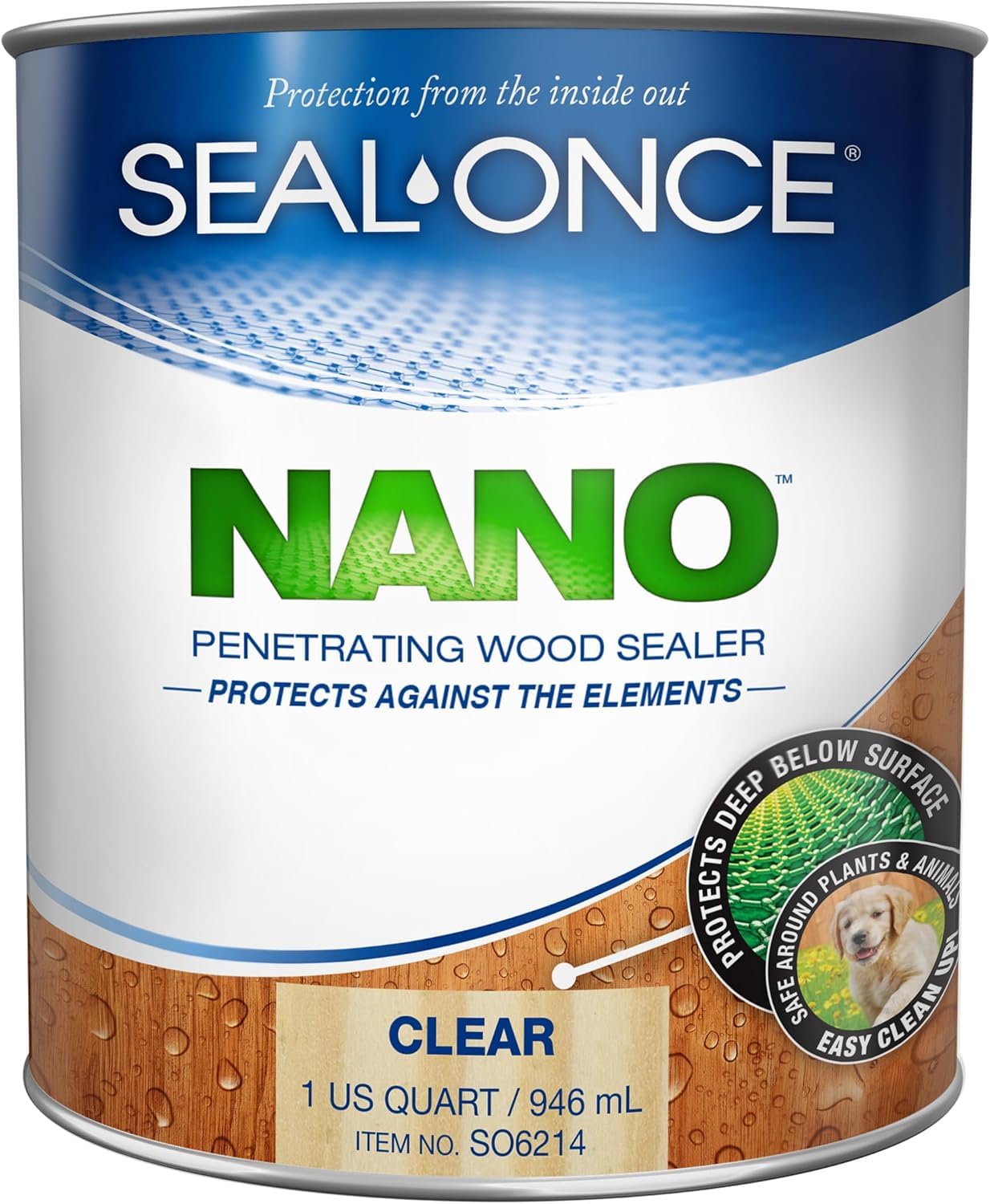
The Seal-Once Nano Clear takes a fundamentally different approach from film-forming sealants. Instead of sitting on top of the wood, the nanomolecular particles penetrate below the surface, bonding with the wood fibers to create a water-resistant barrier from within. This “breathable” protection allows the wood to release internal moisture while blocking liquid water from penetrating.
It is odorless and ultra-low VOC, making it ideal for enclosed spaces like log home interiors or covered porches where chemical fumes linger. The clear finish leaves the wood looking completely natural — there is no gloss or sheen, just the raw texture with a hydrophobic shield. Users report effortless cleanup with soap and water, and the sealer can be applied with a brush, roller, or sprayer without requiring specialized equipment.
The main trade-off is that penetrating sealers generally need more frequent recoating than film-forming urethanes, especially in high-traffic deck areas. One reviewer noted that in southern sun, a second coat was needed after six months. For vertical surfaces like siding and fences that see less direct wear, the longevity is excellent.
Why it’s great
- Penetrates wood fibers rather than forming a surface film
- Odorless and ultra-low VOC for enclosed areas
- Leaves wood feeling natural without gloss
Good to know
- May require reapplication after 6 months in harsh direct sun
- Quart size limited — large projects need multiples
3. Thompson’s WaterSeal Clear Wood Sealer
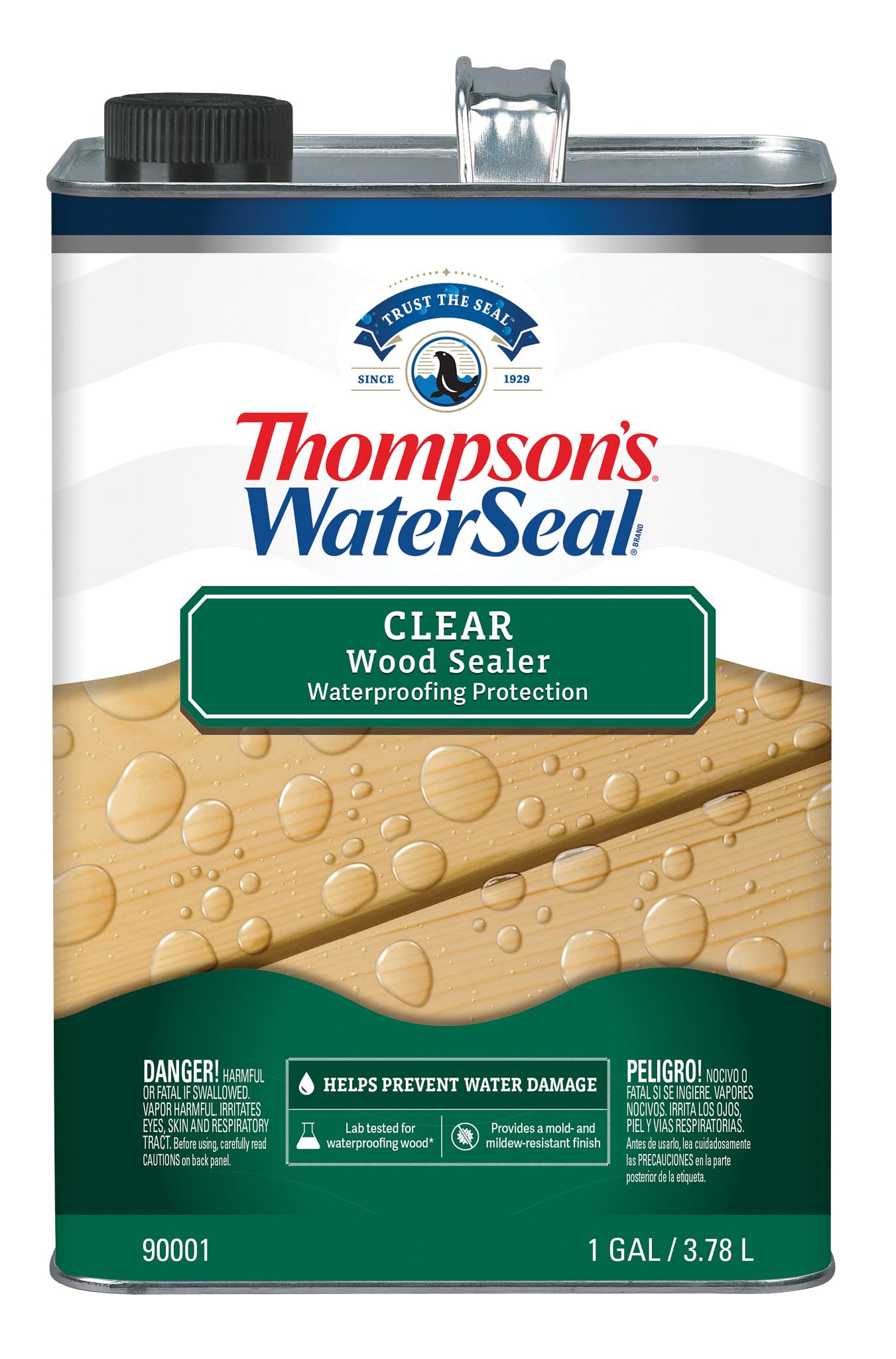
Thompson’s WaterSeal Clear is the solvent-based workhorse that has protected outdoor wood for decades. Its formula is designed to soak into the wood and prevent water damage while allowing the natural color to show through. A single gallon covers up to 350 sq. ft., making it one of the most economical options for large decks, fences, and even concrete surfaces.
The solvent base gives it deep penetration in porous wood like pressure-treated pine and cedar. Users consistently report that rainwater beads and rolls off treated surfaces immediately, even after months of heavy exposure. The clear finish does not alter the wood’s tone — it simply locks out moisture. Application with a brush or sprayer is straightforward, and soap and water cleanup works while the product is still wet.
One limitation is that solvent-based sealants emit stronger fumes during application, so proper ventilation is mandatory. Additionally, some users note that the sealant may need annual reapplication in high-wear areas, which is typical for penetrating sealers that flex with the wood rather than forming a rigid coating.
Why it’s great
- Covers 350 sq. ft. per gallon — excellent value for large projects
- Proven water beading performance on decks and fences
- Can also seal concrete, brick, and masonry
Good to know
- Solvent-based; strong fumes require good ventilation
- Annual reapplication recommended for high-traffic areas
4. Minwax Clear Sanding Sealer Water-Based

The Minwax Clear Sanding Sealer is not a standalone waterproof topcoat — it is a primer-stage sealant designed to seal the grain of bare wood before applying a polyurethane finish. For interior projects like furniture, cabinets, doors, and floors, this step prevents the topcoat from absorbing unevenly, which causes blotchiness and a rough surface.
Its water-based formulation dries in just one hour, allowing you to sand, seal, and topcoat all in the same day. Coverage stretches to about 500 sq. ft. per gallon, so a quart goes a long way for sealing multiple pieces. The clear liquid does not alter the wood’s color or raise the grain drastically when applied correctly — a critical advantage over solvent-based sanding sealers that can darken lighter woods.
Users highlight its effectiveness on problem substrates like MDF, veneers, and stained wood, where it locks down loose fibers and creates an even base. However, it is explicitly not intended for exterior use; direct rain and UV exposure will degrade it quickly. For the waterproofing layer, you must follow it with a spar urethane or exterior-grade polyurethane.
Why it’s great
- Fast drying — sandable and recoatable in 1 hour
- Excellent grain sealing prevents blotchy topcoat absorption
- Works on MDF, veneers, and stained wood
Good to know
- Primer only — requires separate waterproof topcoat for moisture protection
- Not rated for exterior use
5. Thompson’s WaterSeal Semi-Transparent Wood Stain and Sealer
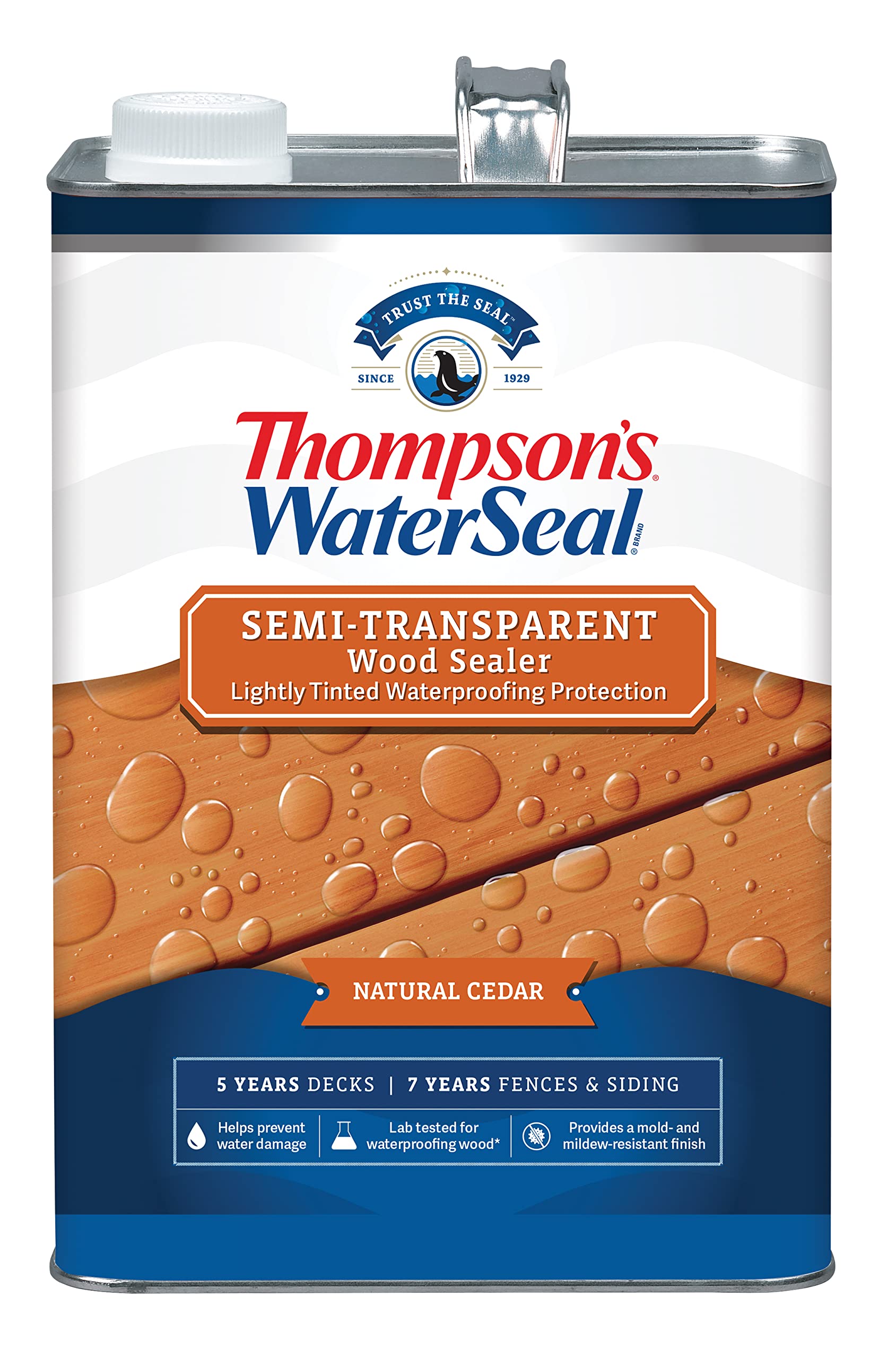
Thompson’s WaterSeal Semi-Transparent Stain combines waterproofing with pigment for users who want to refresh the color of their deck or fence while protecting against moisture. The Natural Cedar variant adds a warm, lightly tinted finish that hides some grain variation while still allowing the wood texture to show through. It meets ASTM D-4446 standards for waterproofing wood, confirming its performance under regulated testing.
Application is forgiving: the stain self-levels during drying, so uneven brush strokes even out. Garden sprayer and roller methods both work well, and coverage ranges from 150 to 400 sq. ft. per gallon depending on the porosity of the wood. The advanced polymers provide fade resistance, keeping the color from washing out under UV exposure through multiple seasons.
Users in hot, rainy climates note that the stain beads water immediately after application but may need recoating after four months in extreme conditions — reapplication restores the beading effect. The semi-transparent finish is darker than the clear option, so if your priority is preserving the exact original wood tone, a clear sealant is a better match. For adding life and color simultaneously, this is a strong choice.
Why it’s great
- Combines waterproofing with fade-resistant color
- Self-leveling application reduces lap marks
- Meets ASTM D-4446 industry standard for waterproofing
Good to know
- Color is darker than depicted on the can — test first
- More frequent reapplication needed in extreme sun/rain
FAQ
Can I use a clear waterproof sealant over an existing stain?
How long should I wait before applying a second coat?
Will a clear sealant prevent wood from turning gray outdoors?
Final Thoughts: The Verdict
For most users, the best clear waterproof sealant for wood winner is the Varathane Ultimate Spar Urethane because it delivers a non-yellowing, UV-stable film that stays crystal clear on outdoor furniture and trim while drying fast enough to finish in one day. If you want a penetrating sealant that leaves the wood feeling completely natural and untreated, grab the Seal-Once Nano Clear. And for a budget-friendly gallon that covers a whole fence or deck in one pour, nothing beats the Thompson’s WaterSeal Clear.

Mo Maruf
I created WellFizz to bridge the gap between vague wellness advice and actionable solutions. My mission is simple: to decode the research and give you practical tools you can actually use.
Beyond the data, I am a passionate traveler. I believe that stepping away from the screen to explore new environments is essential for mental clarity and physical vitality.