Our readers keep the lights on and my smoothie glass nicely filled. As an Amazon Associate, I earn from qualifying purchases.
Steel rebar, wet concrete, loose gravel, and 10-hour days on unforgiving surfaces demand footwear that protects without punishing your feet. A proper construction shoe delivers more than just a safety rating—it’s the difference between finishing a shift with energy to spare and hobbling to the truck at lunch.
I’m Mohammad Maruf — the founder and writer behind WellFizz. I’ve spent hundreds of hours analyzing safety certifications, outsole compounds, midsole geometries, and real-world user feedback from tradespeople to identify which construction shoes actually hold up under daily abuse.
This guide cuts through the marketing to evaluate seven models ranging from budget-friendly slip-ons to premium athletic-style safety shoes, highlighting the specific features that matter most on active job sites.
How To Choose The Best Construction Shoes
Not all work shoes are created equal. The right pair balances impact protection, traction, and all-day comfort. Here are the critical factors to evaluate before you buy.
Safety Toe Material: Steel vs. Composite vs. Alloy
Steel toes offer the highest impact protection—often exceeding 1,000 pounds of compression resistance—but conduct cold and set off metal detectors. Composite toes are lighter, non-metallic, and thermally insulating, making them better for outdoor work in cold climates. Alloy toes split the difference: lighter than steel but still metallic. For general construction with heavy objects, steel remains the standard; for long shifts where weight matters, composite wins.
Outsole Traction and Oil/Slip Resistance
Look for ASTM F2913-11 or SATRA TM144 slip ratings, not just vague “slip resistant” claims. A proper oil- and slip-resistant rubber compound prevents falls on wet concrete, grease, and smooth steel surfaces. The tread pattern should be wide-spaced enough to shed mud and debris rather than trap it.
Midsole Cushioning and Arch Support
Your feet absorb hundreds of tons of force per shift. Shoes with EVA or polyurethane midsoles reduce impact fatigue significantly more than flat rubber slabs. Memory foam insoles add immediate plushness but may compress permanently after 4-6 months. For chronic foot pain or plantar fasciitis, look for removable insoles so you can swap in custom orthotics.
Quick Comparison
On smaller screens, swipe sideways to see the full table.
| Model | Category | Best For | Key Spec | Amazon |
|---|---|---|---|---|
| ARIAT Outpace Composite Toe | Mid-Range | Long shifts on concrete | Slip-resistant outsole, 10-hr cushion | Amazon |
| Timberland PRO Intercept Steel Toe | Mid-Range | All-day comfort on hard floors | 24/7 Comfort System, 15.6 oz per shoe | Amazon |
| PUMA Safety Iconic Leather Low | Mid-Range | Style with safety in light duty | EVERCUSHION footbed, suede upper | Amazon |
| KEEN Utility Kenton Mid Comp Toe | Premium | Wide toe box, light duty work | 18.3 oz per shoe, LWG leather | Amazon |
| CAT Venward Composite Toe | Mid-Range | Retro style, everyday work | Non-metallic toe, SD-10 protection | Amazon |
| SUREWAY Slip On Work Boots | Budget | Quick on/off, fire/station use | Full grain leather, EH rated | Amazon |
| Skechers Cankton Steel Toe | Budget | Wide feet, memory foam comfort | Memory foam insole, 1,000 lb toe | Amazon |
In‑Depth Reviews
1. ARIAT Outpace Composite Toe Safety Shoe
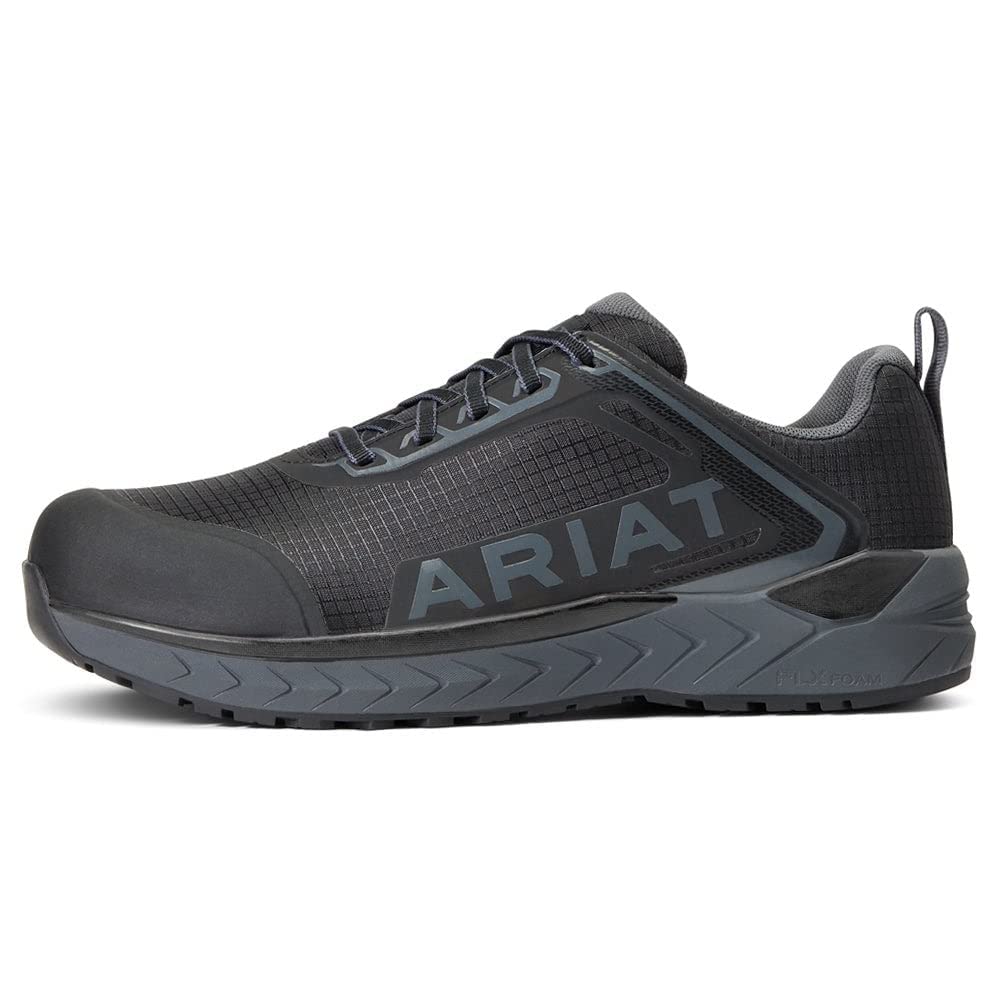
The ARIAT Outpace sets the standard for what a modern construction shoe should feel like—a sneaker-like ride with genuine composite toe protection and a slip-resistant outsole that bites into wet, oily concrete. Users consistently report zero foot pain during 9- to 10-hour shifts, even for those with flat feet or plantar fasciitis, thanks to the cushioned insole and solid arch support that requires no break-in period.
The construction uses a durable rubber outsole with aggressive tread that sheds debris effectively, and the lightweight design keeps fatigue low across the workday. Multiple reviewers mention the Outpace outlasting other premium brands like Brooks and Timberland in daily abuse, with some logging over a year of use before the padding begins to wear down.
The only practical trade-off is that the laces tend to loosen during the day and may need a double knot to stay secure. For anyone working extended shifts on hard surfaces who needs reliable traction and impact absorption, this shoe delivers the best balance of comfort, safety, and long-term value.
Why it’s great
- Plush cushioning with arch support—no break-in required
- Excellent slip resistance on wet and oily concrete
- Lightweight enough for all-day wear without foot fatigue
Good to know
- Laces may slip during the day; double knot recommended
- Some users with very wide feet report a snug fit
2. Timberland PRO Men’s Intercept Steel Safety Toe
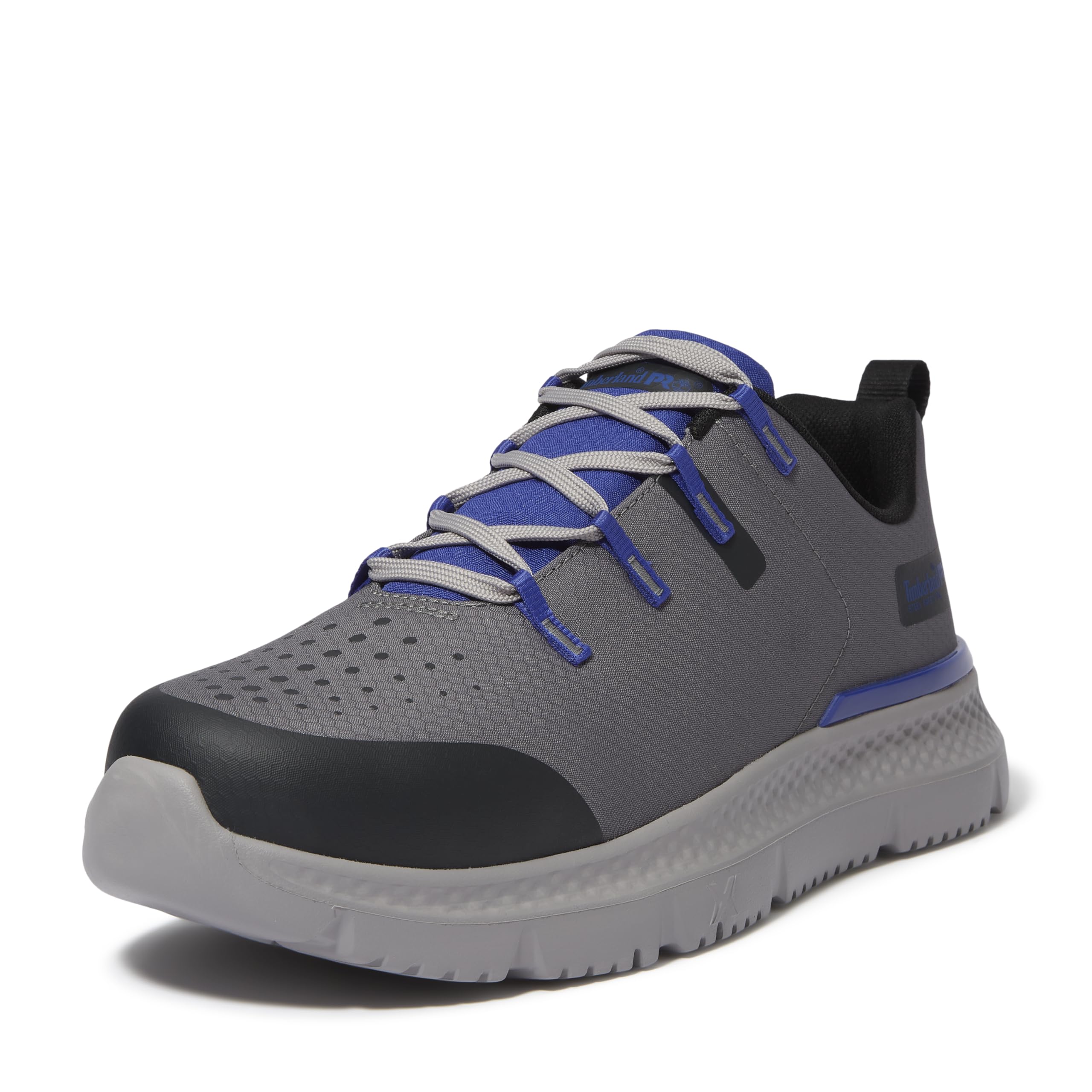
The Timberland PRO Intercept feels like an athletic sneaker disguised as a safety shoe, using their 24/7 Comfort System technology that pairs a suspension system arch support with cushioned EVA midsole. The asymmetrical steel toe follows the natural shape of the foot for better fit, and the ripstop nylon upper resists abrasion without adding weight.
Buyers who work 12-hour shifts on concrete describe these shoes as transformative for foot fatigue, with the breathable mesh lining keeping feet cool. The injection-molded EVA outsole includes anatomically positioned flex grooves that improve natural walking motion, and the non-marking rubber provides reliable traction on smooth surfaces without leaving scuffs.
Note that sizing runs slightly large—most buyers recommend going a half size down for a secure fit. The factory insoles are thin, so swapping them for a high-arch orthotic significantly improves long-shift comfort. The steel toe is durable, though some users note the toe cap can dent if struck directly on the seam.
Why it’s great
- Remarkably lightweight for a steel-toe shoe
- Flex grooves allow natural foot movement
- Breathable mesh upper reduces heat buildup
Good to know
- Runs a half size large; size down
- Factory insoles lack arch support; replaceable
3. PUMA Safety Iconic Leather Low ASTM SD
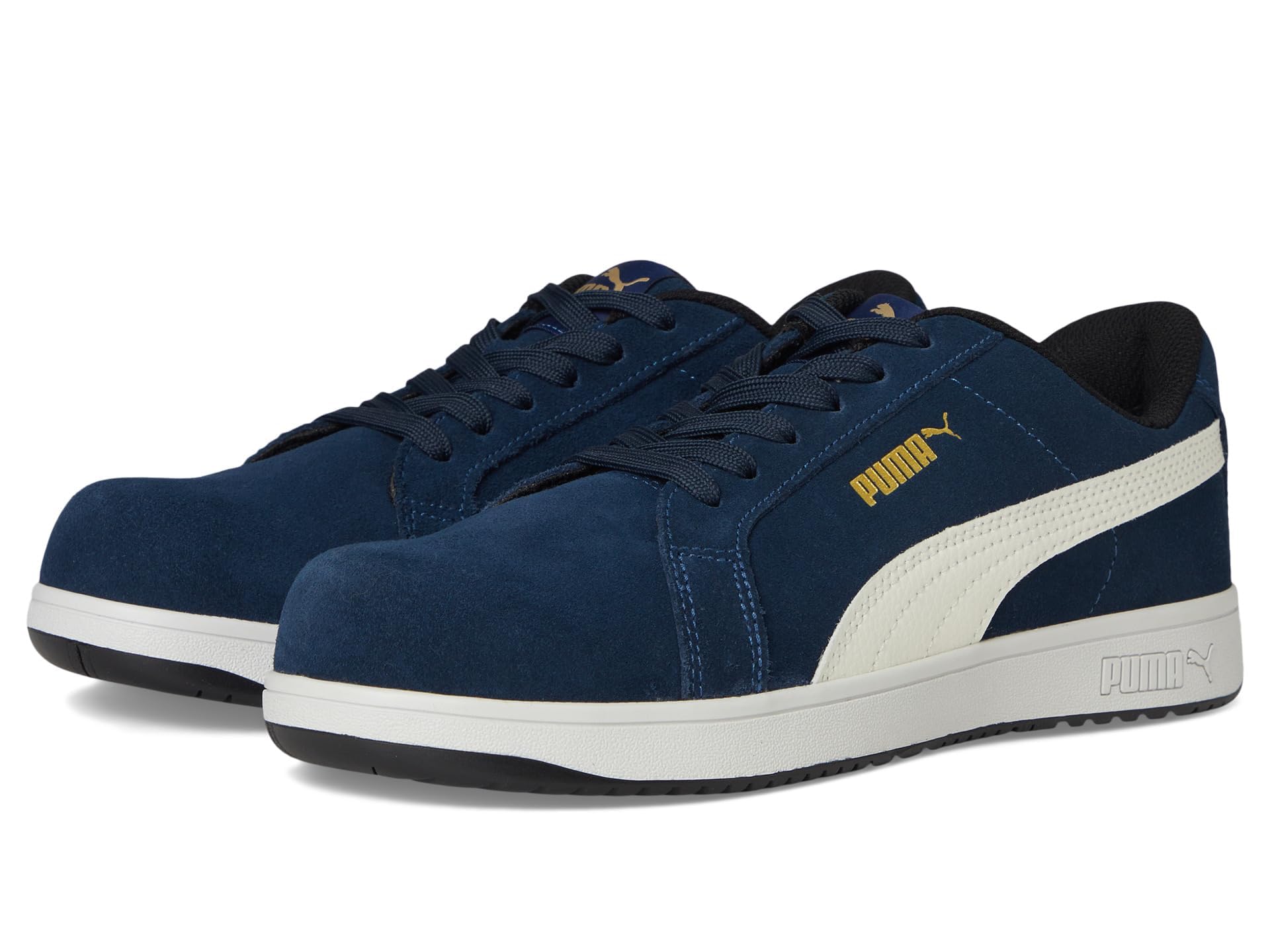
The PUMA Iconic proves that safety shoes don’t have to look like work boots. It features a classic suede upper that requires no break-in and a design so subtle that many coworkers never realize it contains a composite safety toe. The EVERCUSHION RELIEF footbed provides all-day cushioning on hard surfaces, and the rubber outsole delivers oil and slip resistance.
Real-world feedback from floor supervisors and tradespeople shows these shoes consistently outlast 5 to 6 other brands, with one reviewer reporting the pair still looked like new after a year of daily abuse in a printing shop. The composite toe offers ample room without squishing toes, making it a standout option for those who find steel toes too restrictive.
Sizing runs slightly larger than true to size, so consider ordering a half size down. The EVA cushion material in the forefoot and heel provides good shock absorption, but the suede upper is less water-resistant than leather or synthetic options. For light-duty construction, warehouse, and shop environments where style matters, these are a strong pick.
Why it’s great
- No break-in period needed—comfortable from day one
- Undetectable safety toe; stylish enough for casual wear
- Excellent durability, often outlasting premium competitors
Good to know
- Suede upper is less water-resistant than leather
- Slightly large fit; consider half size down
4. KEEN Utility Kenton Mid (Comp Toe)

The KEEN Utility Kenton Mid is built on KEEN’s traditional wider footwear form, providing exceptional toe room for those with naturally wide feet or who need extra space for orthotics. The lightweight mid-top design offers a bit of ankle support without the bulk of a full boot, making it suitable for assembly lines, maintenance, and warehouse work.
Traction is a standout feature—the outsole grips oily concrete tenaciously and resists fluid penetration with minimal tread wear reported by automotive shop workers. One buyer has purchased three sets, each lasting about two years of daily use. The Leather Working Group-certified leather upper adds a sustainability angle without sacrificing durability.
These shoes are not waterproof; water seeps through the mesh areas quickly, limiting their use in wet site conditions. The midsole cushioning is adequate but harder than some competitors—users on their feet for very long shifts may find the soles firm and prefer additional insole padding. For light-duty work where a roomy, breathable shoe is the priority, the Kenton is a top contender.
Why it’s great
- Generous toe box for wide feet and orthotics
- Excellent oil- and slip-resistant traction
- Durable construction with LWG-certified leather
Good to know
- Not waterproof—water seeps through mesh
- Midsole is firm; may need aftermarket insole for long shifts
5. CAT Venward Composite Toe SD

The CAT Venward SD bridges retro sneaker aesthetics with genuine work protection, featuring a non-metallic composite toe and SD-10 (static dissipative) rating. It’s one of the lightest composite-toe shoes in its class, making it comfortable for all-day wear without the clunkiness that plagues heavier boots. The silhouette blends seamlessly with casual clothing for after-work wear.
Feedback from tradespeople highlights the shoe’s durability and comfort—many report no foot pain at the end of the day, even with wide feet. The outsole provides solid grip on many surfaces, and the absence of metal components makes it ideal for jobs that require passing through metal detectors or working in cold environments where steel toes would conduct chill.
However, the toe box is somewhat narrow; buyers with wider feet may need to order the wide version to avoid blistering on the big toe. The sole is comfortable for short to moderate shifts but some users find it less forgiving during extended periods on concrete. For the price, the Venward offers excellent protection and style for everyday construction and shop use.
Why it’s great
- Lightweight composite toe reduces foot fatigue
- Stylish retro design works off the job site
- SD-10 rating for electrostatic discharge sensitive areas
Good to know
- Toe box runs narrow; consider wide size
- Cushioning is adequate but not plush for very long shifts
6. SUREWAY Men’s Slip On Work Boots
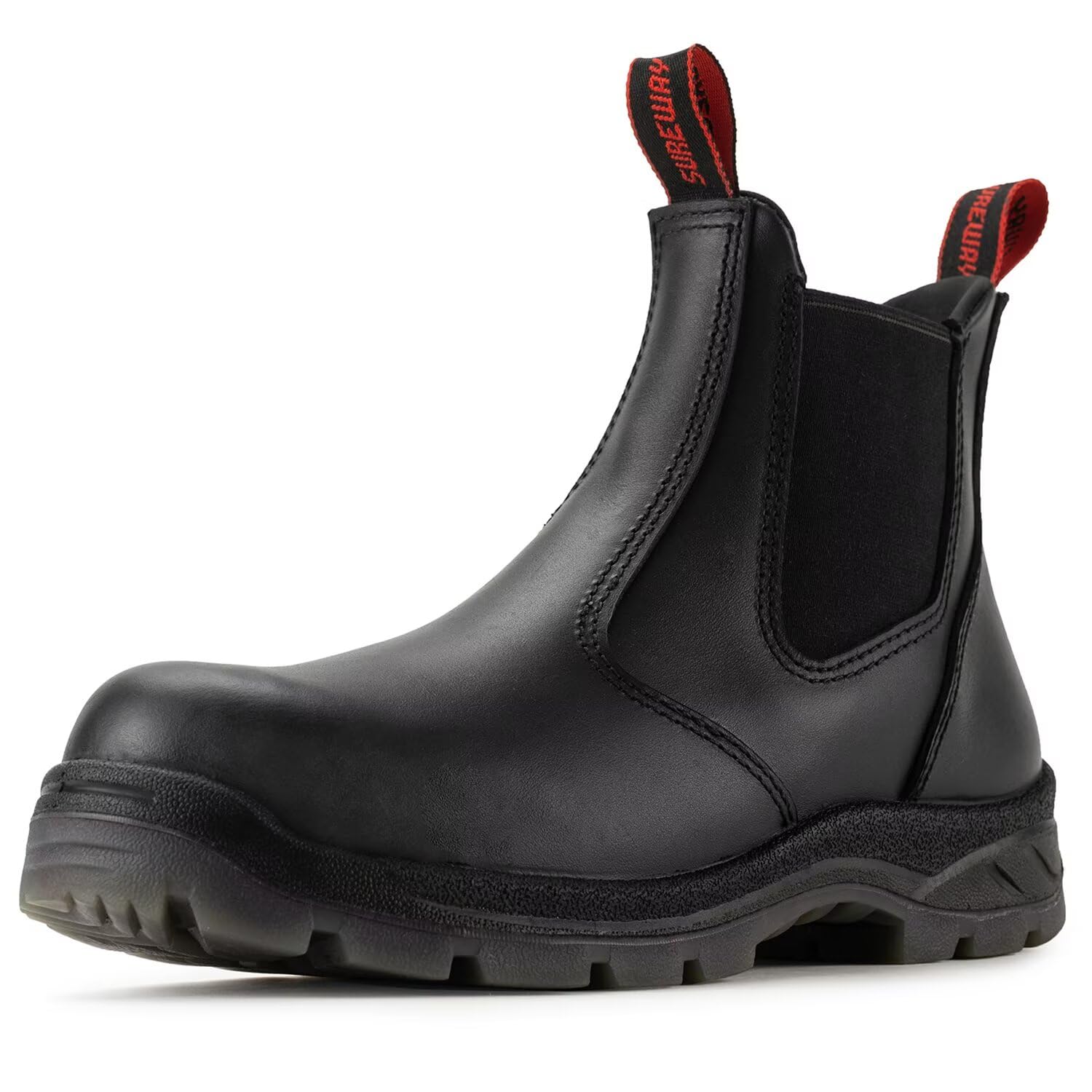
The SUREWAY Slip On is designed for environments where fast changes are essential—fire stations, mechanic shops, and warehouse floors. The full-grain leather upper provides durability, while the slip-on, pull-tab design allows for easy on and off. It carries an ASTM F2413-18 electrical hazard rating, adding a layer of safety for work near live circuits.
Buyers appreciate the comfortable fit out of the box, with many noting the shoe accommodates orthotic insoles thanks to a removable spacer. The oil- and slip-resistant outsole performs well on wet surfaces, and the steel toe offers solid protection for basic construction and industrial tasks. The wedge moc toe style also holds up well to casual wear.
These boots are relatively heavy compared to athletic-style safety shoes, which can fatigue some users during very long shifts. The composite toe version may press on the top of the foot during break-in, though this resolves quickly. They are best suited for those who prioritize quick entry and solid protection over featherweight comfort.
Why it’s great
- Easy slip-on design for fast donning and doffing
- Removable insole with spacer for custom orthotics
- Full-grain leather upper for long-term durability
Good to know
- Heavier than most lace-up safety shoes
- Initial stiffness in composite toe area requires brief break-in
7. Skechers Men’s Cankton Steel Toe Construction Shoe
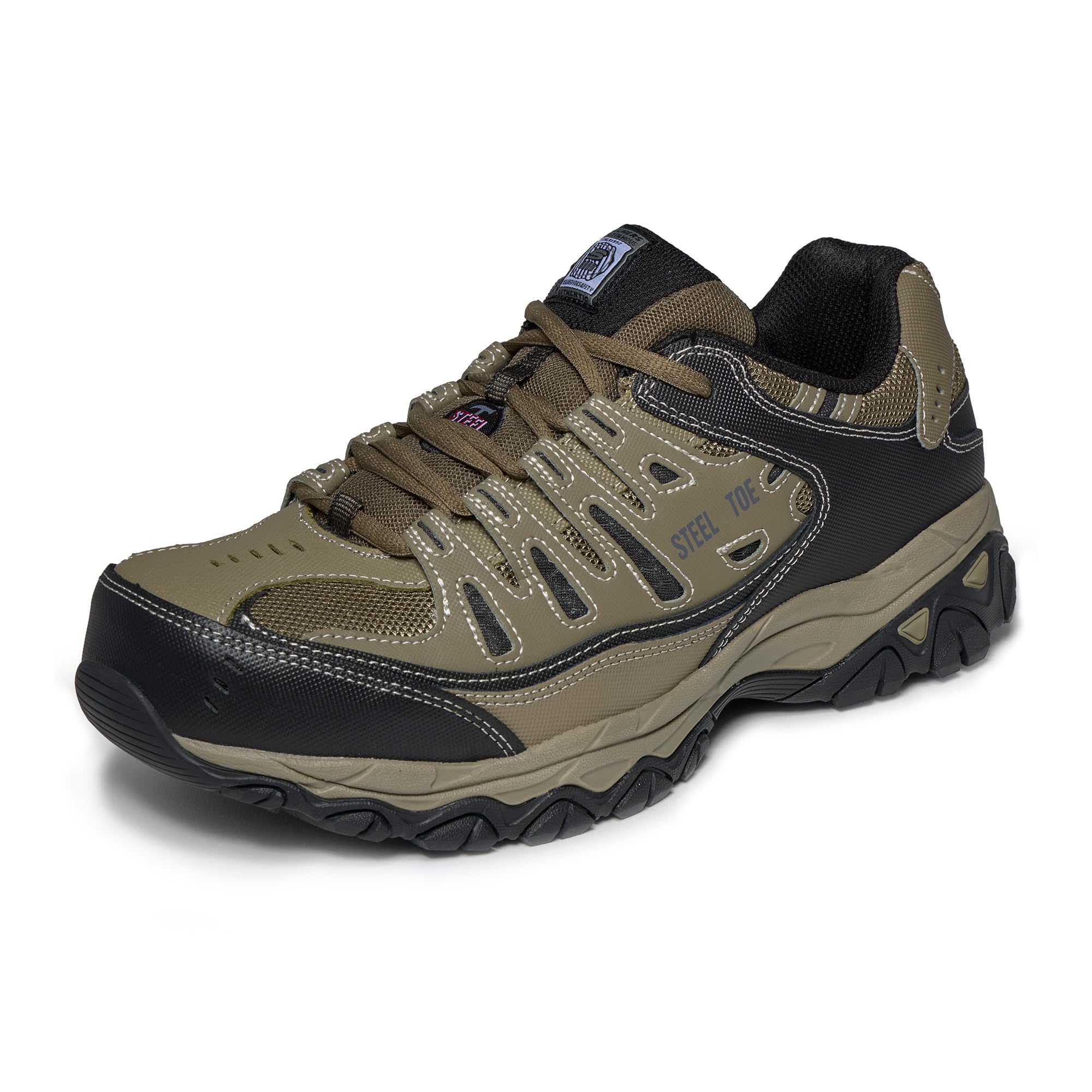
The Skechers Cankton delivers surprising value for its price point, combining a steel toe rated for over 1,000 pounds of compression with a memory foam insole for immediate underfoot softness. The thick rubber outsole layer over EVA provides good durability, and the design is well-suited for wide feet (EE), making it a reliable budget option for construction, warehouse, and industrial settings.
Multiple users with wide feet report that the Cankton fits better than premium brands they tried after multiple returns. The electrical hazard rating adds versatility for jobs near live circuits. The water-resistant upper and grippy outsole handle basic job site conditions effectively, and the lace-up closure allows for a secure, adjustable fit.
The main trade-off is weight—these are heavy shoes, and the steel toe combined with thick rubber adds noticeable heft that can fatigue your legs on long shifts. The memory foam insoles tend to develop holes after roughly 8 months of daily use, requiring replacement. For those on a tighter budget who need reliable steel-toe protection and a true wide fit, the Cankton is a solid entry-level choice.
Why it’s great
- Excellent fit for wide (EE) feet
- High-impact steel toe with strong compression rating
- Memory foam insole provides immediate comfort
Good to know
- Significantly heavier than most competitors
- Memory foam insoles develop holes after extended use
FAQ
Can I use steel-toed shoes for electrical work?
How long should a pair of construction shoes typically last?
Is a composite toe as safe as a steel toe?
Final Thoughts: The Verdict
For most users, the construction shoes winner is the ARIAT Outpace Composite Toe because it pairs true sneaker-like cushioning with reliable composite toe protection and excellent slip resistance, eliminating foot pain even on 10-hour concrete shifts. If you want the athletic-lightest steel-toe option with flex grooves that mimic natural walking, grab the Timberland PRO Intercept. And for those with wide feet who need a roomy toe box and durable traction for light-duty work, nothing beats the KEEN Utility Kenton Mid Comp Toe.

Mo Maruf
I created WellFizz to bridge the gap between vague wellness advice and actionable solutions. My mission is simple: to decode the research and give you practical tools you can actually use.
Beyond the data, I am a passionate traveler. I believe that stepping away from the screen to explore new environments is essential for mental clarity and physical vitality.