Our readers keep the lights on and my smoothie glass nicely filled. As an Amazon Associate, I earn from qualifying purchases.
The sharp, aching pain along your shin bone doesn’t have to end your run or sideline your shift. Proper graduated compression socks work by reducing muscle oscillation and improving venous return, directly targeting the tibial stress that defines shin splints.
I’m Mohammad Maruf — the founder and writer behind WellFizz. I’ve spent hundreds of hours analyzing medical textiles, gradient pressure charts, and real-user recovery data to separate the socks that actually stabilize the lower leg from those that just squeeze.
Below, I break down the five best models for shin splint relief, ranked by compression integrity, targeted support zones, and long-term durability. This is the definitive guide to finding the best compression socks for shin splints.
How To Choose The Best Compression Socks For Shin Splints
Shin splints, or medial tibial stress syndrome, occur when the muscles and tendons around the tibia become inflamed from repetitive impact. The right compression sock reduces micro-vibration and supports the posterior tibial muscle. Here are the specific metrics that matter.
Compression Level: 20-30 mmHg Is The Target Zone
For shin splints, mild 15-20 mmHg socks offer general leg fatigue relief but lack the pressure needed to stabilize the deep calf muscles against the tibia. The 20-30 mmHg range is the clinical standard for managing tibial stress. It provides firm enough compression to limit muscle oscillation during running or standing without cutting circulation. Avoid anything lower if your primary goal is shin pain management.
Length: Knee-High Over Calf-High
Knee-high or over-the-calf length is non-negotiable for shin splints. Calf-length socks stop below the belly of the gastrocnemius, missing the upper calf, where the muscle pulls most on the tibial attachment. A full knee-high sock encases the entire gastrocnemius and soleus, creating a continuous pressure gradient that unloads the tibial periosteum. Short ankle socks will not help.
Anatomical Fit And Targeted Arch Support
Look for left/right-specific designs instead of unisex tubes. Anatomical socks conform to the natural curve of the foot, reducing bunching at the heel and preventing seam pressure. Integrated arch support also plays a role in shin splint relief: a supported arch reduces pronation, which in turn reduces rotational stress transferred to the tibia.
Quick Comparison
On smaller screens, swipe sideways to see the full table.
| Model | Category | Best For | Key Spec | Amazon |
|---|---|---|---|---|
| Zensah Tech+ | Premium | Serious Runners & Injury Prevention | Left/Right anatomical, 200-needle knit | Amazon |
| SB SOX 20-30mmHg | Premium | All-Day Wear & Wide Calves | 20-30 mmHg, sizes up to 20-24 in calf | Amazon |
| Physix Gear Sport | Mid-Range | Long Shifts & General Use | 20-30 mmHg, reinforced heel & toe | Amazon |
| PAPLUS Ankle Support | Budget | Daily Comfort & Arch Support | Firm arch band, 2/4/6 pairs available | Amazon |
| Bluemaple Copper | Budget | Fashion-Forward & Travel | 20-30 mmHg graduated, wide top band | Amazon |
In‑Depth Reviews
1. Zensah Tech+ Compression Socks
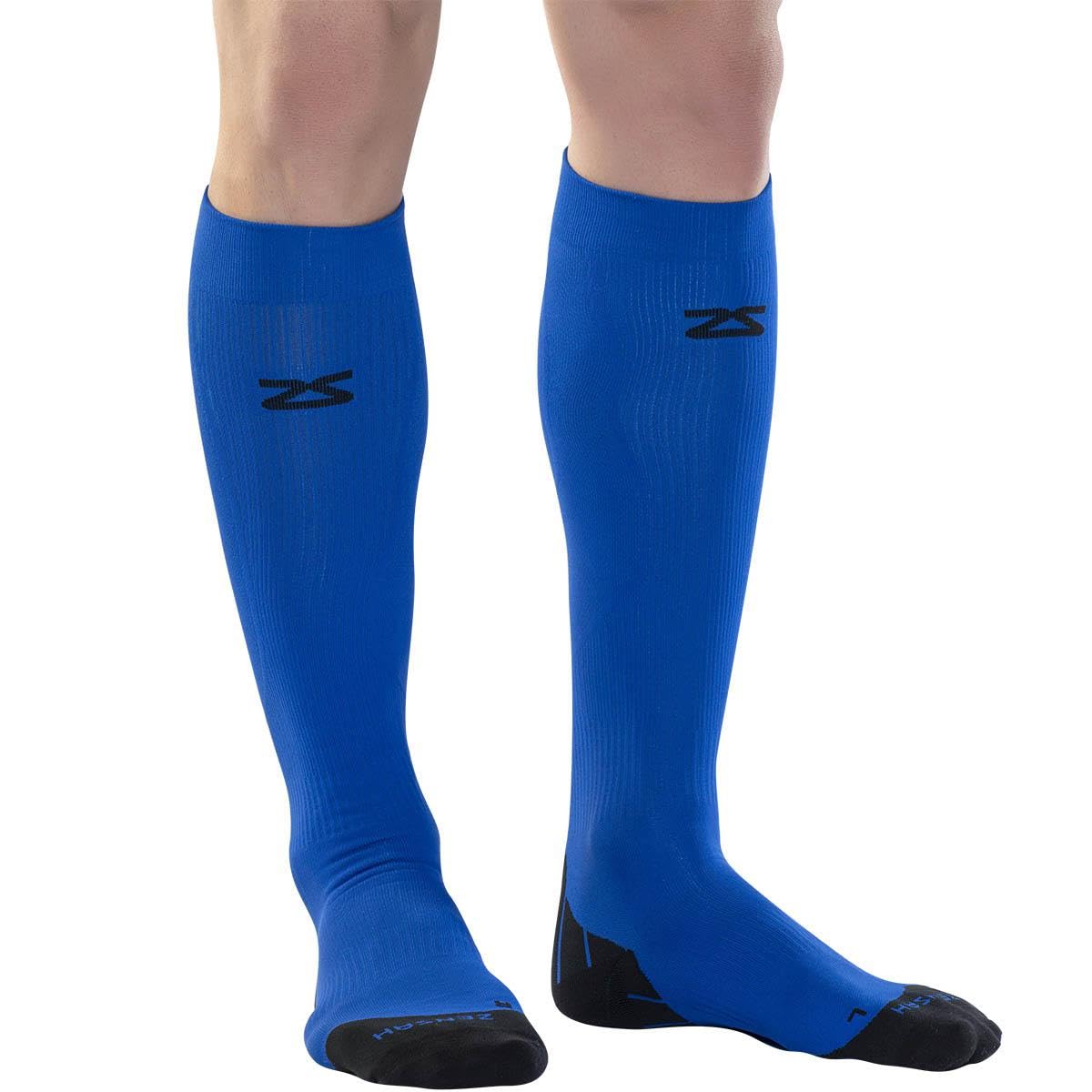
The Zensah Tech+ is the only sock in this review specifically engineered with shin splints as a named target use case. Its 200-needle count construction creates a denser, more durable knit than standard 168-needle alternatives, translating to more consistent gradient compression across the calf and ankle. The left/right anatomical fit eliminates twisting at the heel, a common irritation during long runs.
Made in Italy from an 82% polyamide and 18% elastane blend, the fabric is lightweight, moisture-wicking, and thermal-regulating — critical for runners who log miles in both cold mornings and humid afternoons. The seamless toe reduces blister risk, and the arch band prevents the sock from shifting forward during high-impact strides. Graded compression is strongest at the ankle and tapers up the calf, exactly the gradient needed to push venous blood back and reduce muscle vibration along the tibia.
Users consistently report zero blisters on runs longer than five miles and that the sock stays warm in subfreezing temperatures. The tightness is real — the inside-out technique is recommended for easier on-off — but the trade-off is exceptional durability, with dozens of users reporting no structural failure after more than 100 runs and multiple wash cycles.
Why it’s great
- 200-needle knit provides dense, long-lasting compression
- Left/right anatomical design prevents bunching
- Seamless toe and arch band significantly reduce blisters
Good to know
- More expensive than most alternatives
- Very tight to put on; requires proper rolling technique
- Sizing can be tricky for in-between foot sizes
2. SB SOX Compression Socks (20-30mmHg)

SB SOX offers the widest size range of any sock on this list, with calf circumferences from 11 inches up to 24 inches. This is a decisive advantage for anyone who has struggled with knee-high socks that dig in or roll down. The 20-30 mmHg pressure rating is right in the therapeutic zone for shin splint management, and the reinforced heel and toe cushioning adds comfort for long standing sessions.
The blend of 80% nylon and 20% spandex provides a balanced combination of structure and stretch. Users note that the top band stays up without leaving deep red marks, a common complaint with tighter brands. The toe area has slightly less compression than the ankle, allowing for natural toe splay during walking or hiking — a thoughtful detail that prevents circulation restrictions in the forefoot.
Multiple users report that these socks outperform medical-grade prescription brands they tried previously. The durability is consistently praised: several reviews mention buying more pairs after the initial purchase held up for years of regular wear. The main trade-off is that the fabric pills cosmetically over time, but this does not affect compression performance.
Why it’s great
- Available in six sizes including XX-Large with 20-24 in calf
- Graduated 20-30 mmHg delivers reliable therapeutic pressure
- Reinforced heel and toe add cushion without bulk
Good to know
- Cosmetic pilling appears after repeated washes
- Sizing chart can be confusing for sensitive skin
- Not designed specifically for high-impact running
3. Physix Gear Compression Socks (20-30 mmHg)

Physix Gear occupies the sweet spot between entry-level price and premium compression performance. The socks feature a woven floral pattern that is not just decorative — the knit structure creates a tighter weave at the ankle with a gradual reduction toward the knee, effectively delivering graduated compression. The fabric is soft and breathable, yet dense enough to reduce muscle oscillation during 12-hour standing shifts.
One of the strongest aspects is the arch support. The woven band across the mid-foot provides targeted lift that helps control over-pronation, a known contributor to medial tibial stress. Users with foot sizes in the 10-11.5 range report a comfortable fit with no slipping at the heel, though those at the upper end of the size chart occasionally note that the toe area feels slightly snug.
Real-world feedback from nurses and warehouse workers confirms that the socks eliminate ankle swelling and reduce knee pain related to osteoarthritis. The gradient compression pushes fluid out of the lower leg effectively. The main limitation is the length: the socks reach just past the knee, which some users with very long legs find slightly short, causing the fabric to bunch at the ankle.
Why it’s great
- Effective 20-30 mmHg graduated compression at a mid-range price
- Arch support helps reduce pronation and tibial stress
- Soft, breathable fabric comfortable for all-day wear
Good to know
- Tight at the toe for larger foot sizes (women’s 10-11)
- Knee length may be slightly short for taller users
- Seam can be noticeable against the toes
4. PAPLUS Compression Socks
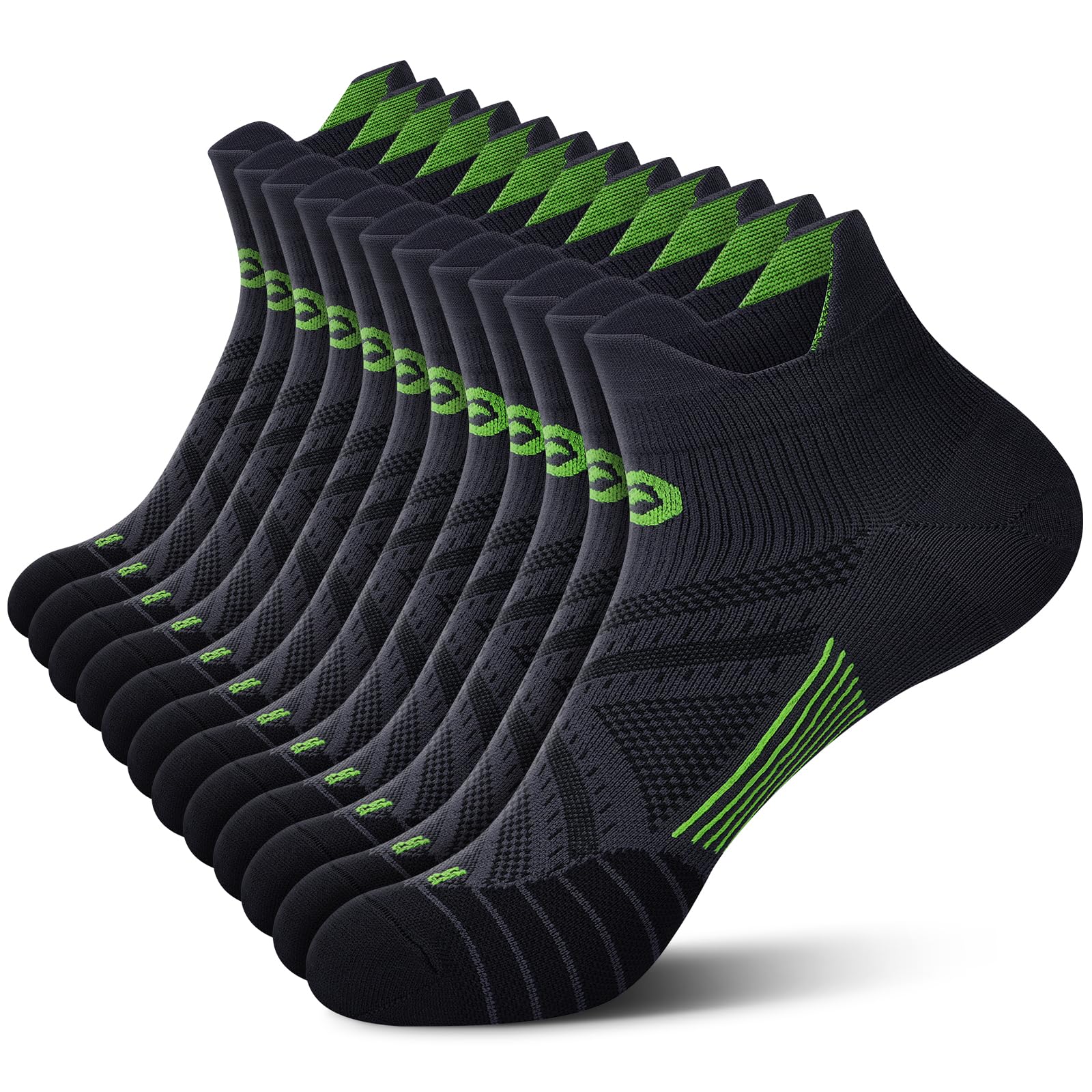
PAPLUS delivers a solid entry-level option at a price point that makes buying multiple pairs painless. These are ankle-length socks, not knee-high — which means they are not designed for full shin splint management — but they do include a firm arch support band that reduces foot fatigue and mild tibial discomfort in users with mild symptoms. The fabric is soft, breathable, and washes well without losing shape.
The socks fit true to size for men’s shoe sizes up to 7.5, and the compression level is suitable for general recovery rather than therapeutic use. Users report that the socks successfully reduce foot tingling and cold feet by promoting better circulation. The lack of left/right markings (which are pictured on some colorways but absent on others) is a minor inconvenience for runners who care about precise fit.
Multiple users highlight the value proposition: soft, durable material that holds up to repeated washing without pilling or bagging. The primary limitation is the length. For shin splint relief, knee-high coverage is non-negotiable. These work best as a low-cost daily wear option for mild leg fatigue or as a backup pair for post-workout recovery.
Why it’s great
- Multi-pack offers great value for daily rotation
- Arch support band reduces foot fatigue and tingling
- Soft, breathable fabric that holds up in the wash
Good to know
- Ankle length is too short for full shin splint management
- No left/right markings on most colorways
- Compression level is mild compared to knee-high options
5. Bluemaple Copper Compression Socks

Bluemaple markets its copper-infused fabric as a differentiator, but the real value here is the graduated 20-30 mmHg compression delivered through a comfortable wide top band that prevents rolling or digging in. The socks are knee-high and made from a thin, breathable spandex blend that makes them easy to wear under pants without visible bulk. The pattern selection is playful, adding a visual incentive to keep them on all day.
Users with smaller foot sizes (women’s size 6) report a snug fit without slipping, and the gradual gradient from the toes to the knee ensures that circulation is improved without cutting off blood flow behind the knee. Multiple reviews note that the socks maintain their compression after machine washing and drying without noticeable shrinkage, a durability point that many budget socks fail to achieve.
These are a strong pick for travelers or those who want the therapeutic benefits of knee-high compression without sacrificing style. The main caveat is that the copper claim is not medically verified as a separate source of relief; the graduated compression does the work. If you have larger calves, the sizing runs close to the chart, so measuring before purchasing is recommended.
Why it’s great
- Graduated 20-30 mmHg for effective shin and calf support
- Wide top band stays up without leaving deep marks
- Breathable, thin fabric ideal for all-day wear under pants
Good to know
- Copper infusion offers no proven added benefit over standard compression
- Sizing runs snug for larger calf circumferences
- Initial fabric odor reported by some users, washes out easily
FAQ
Will compression socks cure my shin splints?
Can I wear compression socks for shin splints while sleeping?
Final Thoughts: The Verdict
For most users, the best compression socks for shin splints winner is the Zensah Tech+ because its 200-needle knit, left/right anatomical fit, and seamless toe construction provide the most precise, durable support for the tibial area during high-impact activity. If you need a wide-calf option that still delivers therapeutic 20-30 mmHg pressure, grab the SB SOX. And for a budget-friendly mid-range choice that balances compression, arch support, and all-day comfort, nothing beats the Physix Gear Sport.

Mo Maruf
I created WellFizz to bridge the gap between vague wellness advice and actionable solutions. My mission is simple: to decode the research and give you practical tools you can actually use.
Beyond the data, I am a passionate traveler. I believe that stepping away from the screen to explore new environments is essential for mental clarity and physical vitality.