Our readers keep the lights on and my smoothie glass nicely filled. As an Amazon Associate, I earn from qualifying purchases.
That spike in your electric bill and the weak airflow from your vents are often signs of one thing: fouled condenser coils. Grime, pollen, and airborne grease bake onto the fins, forcing your AC compressor to work harder and shortening its life. A targeted chemical cleaner dissolves that baked-on layer safely, restoring heat exchange without bending the fragile aluminum fins.
I’m Mohammad Maruf — the founder and writer behind WellFizz. I’ve spent hundreds of hours analyzing technical specifications, cross-referencing chemical formulations, and sifting through verified user feedback on HVAC maintenance products to bring you a guide that cuts through the marketing fog.
After evaluating foam density, acidity levels, dilution ratios, and real-world cleaning results across five different formulations, I’ve identified the most effective options for every scenario. This is your complete resource for finding the best condenser coil cleaner that matches both your unit’s condition and your maintenance approach.
How To Choose The Best Condenser Coil Cleaner
Choosing the wrong formulation can damage your coil fins or leave behind a corrosive residue. Focus on three variables: chemical aggressiveness, application format, and the specific metal compatibility your unit requires.
Acid vs. Non-Acid Formulations
Acid-based cleaners (usually containing hydrofluoric or phosphoric acid) strip heavy oxidation quickly but can pit aluminum fins and damage microchannel coils if left on too long. Non-acid alkaline cleaners use a high-pH foam that saponifies grease and lifts dirt without etching metal. For modern residential units with microchannel coils, non-acid is the safer default. Acid is reserved for heavily oxidized commercial coils and requires strict dwell-time control.
Aerosol Foam vs. Concentrated Liquid
Aerosol foam cans offer convenience — spray, wait, rinse — and are ideal for single-unit homeowners who want a fast job without mixing. Concentrated liquids (typically quart or gallon jugs) must be diluted 3:1 to 10:1 with water and applied via a pump sprayer. They are more economical per application for larger units or multiple coils, and they allow you to adjust the strength based on how dirty the coil is.
Rinse Requirement and Residue
Some formulations are labeled “self-rinsing,” meaning the foam breaks down and runs off with condensate, leaving no chemical film. Others require a dedicated water rinse to neutralize the cleaner. Units in tight spaces or vertical installations benefit from a no-rinse formula, while exposed outdoor condensers are easy to hose down, making a rinse-required product just as convenient.
Quick Comparison
On smaller screens, swipe sideways to see the full table.
| Model | Category | Best For | Key Spec | Amazon |
|---|---|---|---|---|
| EZGA EZ Green | Mid-Range Aerosol | Quick residential cleaning | 19 oz aerosol, biodegradable | Amazon |
| Rectorseal Clean-N-Safe | Mid-Range Aerosol | Microchannel coils | 20 oz non-acid aerosol | Amazon |
| Coil King Concentrate | Premium Concentrate | Heavy-duty multiple units | 1 qt concentrate, dilutes 3:1 | Amazon |
| 3X:Chemistry Foaming Coil Cleaner | Premium Aerosol | No-rinse convenience | 18 oz no-rinse foam | Amazon |
| QwikProducts Foaming Coil Cleaner | Premium Aerosol | Self-rinsing all-purpose | No-rinse alkaline foam | Amazon |
In‑Depth Reviews
1. 3X:Chemistry Foaming Coil Cleaner 46822

This 18-ounce no-rinse aerosol is formulated with organic materials that leave no harsh fumes — a major advantage for indoor use or units where hosing down is impractical. The foam expands aggressively and clings to vertical surfaces, allowing it to stay in contact with the coil fins long enough to dissolve organic grime and mold. Users report it turning grey coils back to a bright silver finish after a single application.
The self-rinsing nature means the foam breaks down into a harmless liquid that drains naturally through the condensate line, which is especially useful for window units, mini-splits, and car evaporators where access is tight. Users have noted it can be mildly aggressive on aluminum if left for extended periods, so sticking to the recommended dwell window matters. It handles odor removal particularly well, making it a strong choice for units with biological buildup.
While the can volume is smaller than some competitors, the concentrated foaming action often means one can covers a standard residential condenser. The trade-off is that very large or heavily soiled units may require a second can. For anyone who wants a fast, no-mess clean without dragging out a hose, this is a premium solution in a compact package.
Why it’s great
- Zero rinsing required — foam self-drains
- Excellent at removing mold and biological odors
- Organic formula leaves no chemical smell
Good to know
- Smaller can size may not cover large commercial units
- Can damage aluminum if dwell time is excessive
2. Coil King Heavy Duty Foaming Concentrate 90-099
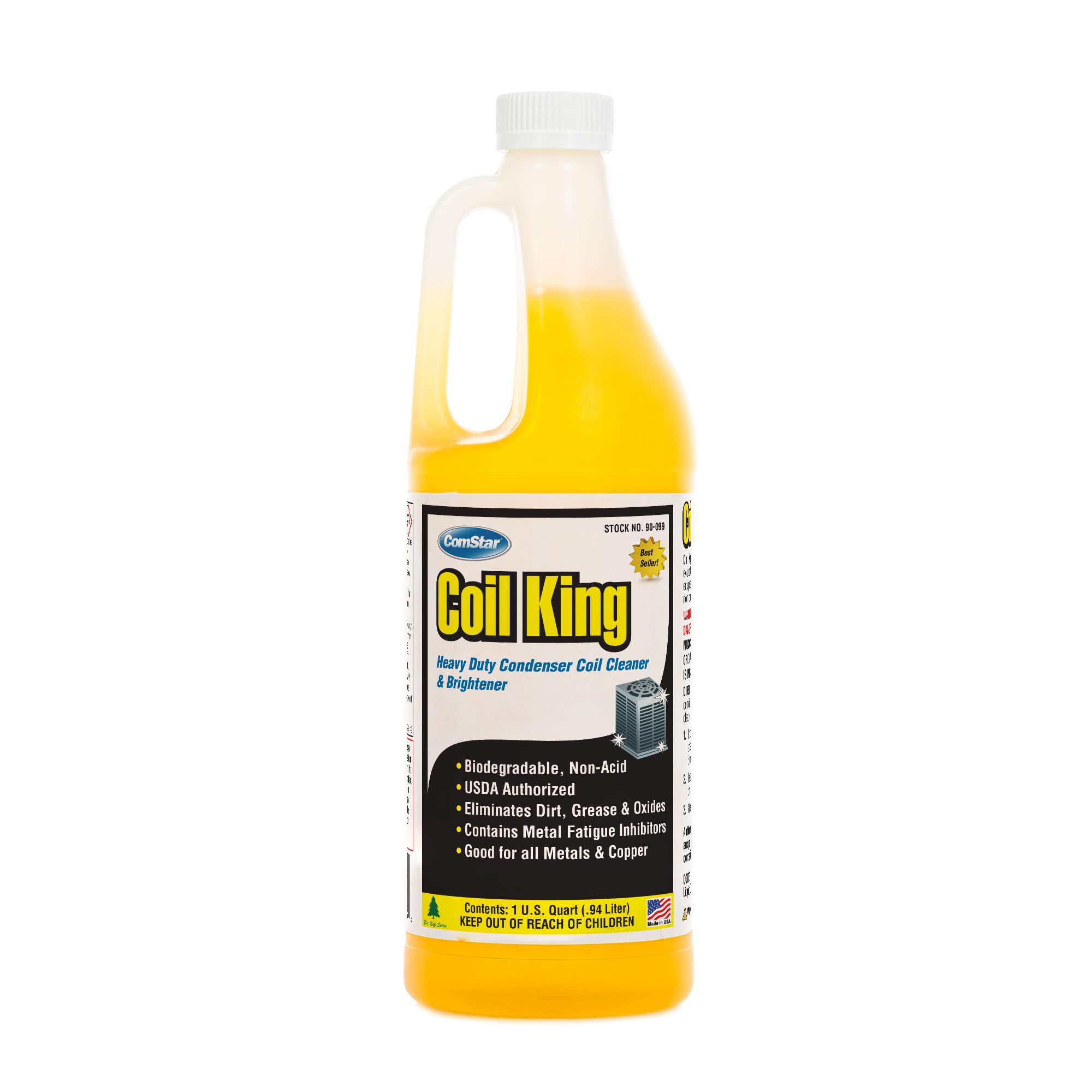
This one-quart concentrated alkaline cleaner from ComStar is the most versatile option in this guide because you control the strength. Dilute it 3:1 for heavy grease and baked-on grime, or stretch it 10:1 for routine maintenance. The high-foaming chemistry is non-acid, making it safe for aluminum, copper, and steel — including modern microchannel coils. Users consistently praise its ability to make filthy outdoor units look factory-fresh after a 15-minute dwell.
Because it is a concentrate, a single quart yields multiple gallons of usable cleaner, making it far more economical per cleaning than any aerosol can. A pump sprayer is required for application, which gives you precise nozzle control over the fin spacing. The foam is thick and clings well even on vertical surfaces, though the alkaline base produces a strong odor during application — a respirator and gloves are recommended, especially in enclosed spaces.
The main drawback is the extra setup and cleanup: you need to mix the solution, load a sprayer, and rinse thoroughly afterward. But for anyone with a larger condenser, multiple units, or annual maintenance routines, the performance-per-dollar is unmatched. It is a professional-grade product that rewards the extra effort with visibly cleaner coils and measurable efficiency gains.
Why it’s great
- Adjustable dilution for light to heavy soiling
- Extremely cost-effective per application
- Safe on all metals including microchannel
Good to know
- Requires pump sprayer and rinsing
- Strong alkaline fumes require ventilation and PPE
3. QwikProducts Foaming Coil Cleaner

This self-rinsing alkaline detergent from Mainstream Engineering bridges the gap between aerosol convenience and professional cleaning power. It breaks down grease, oil, and dust without requiring a water rinse — the foam dissolves and flows away on its own, making it ideal for rooftop units, car radiators, and hard-to-reach condensers. Users report it handles nicotine residue and heavy dust buildup effectively, even in window units and mini-splits.
The pleasant lemon scent is a rare feature in this category; most coil cleaners smell aggressively chemical or are completely odorless. This makes the product more tolerable for residential use where the unit is near living spaces. The foam expands noticeably during application, pushing into tight fin gaps that a spray-only approach would miss. Users have noted it works well on refrigerator coils and computer heatsinks in addition to HVAC equipment.
On the downside, the label does not specify a precise dwell time for heavy contamination, so some trial and error may be needed for extremely dirty coils. A few users mentioned that very large condensers required a second can for full coverage. For the typical homeowner who wants a single, no-fuss product that works across multiple coil types and leaves a fresh scent, this is a well-rounded choice.
Why it’s great
- Self-rinsing with no water needed
- Pleasant lemon scent neutralizes odors
- Works on HVAC, auto, and fridge coils
Good to know
- May need two cans for larger condenser units
- Dwell time guidance is minimal on label
4. EZGA EZ Green Biodegradable Coil Cleaner

This 19-ounce aerosol foam is a solid entry-level option that balances cleaning effectiveness with environmental considerations. The formula is biodegradable and exceeds typical green certification standards, making it safe for use where runoff could reach landscaping or groundwater. The integrated 360-degree nozzle is a practical touch — it simplifies reaching the back and bottom of a condenser without contorting your wrist, which matters when working in tight spaces.
Users describe the foam as thick and heavily expanding, with a pleasant fresh scent during application. The recommended dwell time of 5 to 10 minutes is on the shorter side, and a water rinse is required afterward. Reviews consistently note that one can is sufficient to clean both the inside and outside coils of a standard residential unit, and that the result is a noticeable improvement in airflow and cooling performance. It handles moderate dirt well, though extremely caked-on grime may need a second application.
The main limitation is the relatively small can size and the requirement for rinsing, which means you need a hose nearby. The price point is approachable for first-time users who want to try professional-level cleaning without investing in large concentrates or specialized sprayers. It is a capable, low-commitment starting point for seasonal condenser maintenance.
Why it’s great
- Biodegradable formula safe for landscaping runoff
- 360-degree nozzle accesses hard-to-reach fins
- One can covers a standard residential unit
Good to know
- Requires hose rinse after use
- Short dwell time may not loosen heavy buildup
5. Rectorseal Clean-N-Safe 83780

Rectorseal’s Clean-N-Safe is a 20-ounce non-acid aerosol designed specifically for microchannel coils, where acid-based cleaners can cause irreversible pitting. The foam is biodegradable and presents minimal hazard to plants and aquatic life, making it acceptable for areas where rinsing water must be handled responsibly. The application is straightforward — spray directly onto dry coils, let the foam lift the dirt, and rinse with a gentle stream of water.
Users report impressive results on moderately dirty outdoor condensers, with the foam revealing bright metal underneath in a single session. The lack of a harsh chemical odor is a recurring positive note — it simplifies the job if you are working near open doors or windows. Rectorseal’s standing in the HVAC trades adds confidence for professionals, though the product is just as accessible to homeowners. The 20-ounce can size is generous but may still fall short for larger 4-ton units, based on user feedback mentioning needing two cans for a 32-inch square condenser.
The cleaner is unscented and leaves no sticky residue, which helps prevent future dirt accumulation. The main caveat is that it requires a thorough water rinse to remove all foam and suspended debris. This is not an issue for an outdoor unit with a garden hose, but it makes the product less convenient for indoor evaporator coils or window units where controlling rinse water is tricky. For outdoor microchannel coils, this is a safe and effective choice.
Why it’s great
- Specifically safe for microchannel coils
- Biodegradable with minimal environmental risk
- Low odor during application
Good to know
- One can may not cover larger 32-inch units
- Requires thorough water rinse
FAQ
Can I clean my condenser coils without removing the fan shroud?
How often should I apply a condenser coil cleaner?
What is the difference between evaporator and condenser coil cleaner?
Final Thoughts: The Verdict
For most users, the best condenser coil cleaner winner is the Coil King Heavy Duty Concentrate because its adjustable dilution ratio lets you dial in exactly the strength you need for any contamination level, and the concentrated quart makes multiple gallons, giving you the lowest cost per cleaning. If you want a no-rinse aerosol for indoor or tight-space convenience, grab the 3X:Chemistry Foaming Coil Cleaner. And for microchannel coils where acid damage is a real risk, nothing beats the Rectorseal Clean-N-Safe 83780.

Mo Maruf
I created WellFizz to bridge the gap between vague wellness advice and actionable solutions. My mission is simple: to decode the research and give you practical tools you can actually use.
Beyond the data, I am a passionate traveler. I believe that stepping away from the screen to explore new environments is essential for mental clarity and physical vitality.