Our readers keep the lights on and my smoothie glass nicely filled. As an Amazon Associate, I earn from qualifying purchases.
A deck that scorches bare feet on a sunny afternoon defeats the purpose of outdoor living. Heat-resistant composite decking boards are engineered to stay cooler under direct sunlight compared to standard wood or dark synthetic materials, making them a genuine upgrade for patios, balconies, and pool surrounds where comfort matters as much as durability.
I’m Mohammad Maruf — the founder and writer behind WellFizz. I’ve spent hundreds of hours analyzing the material science, thermal performance claims, and real-world durability data behind modern decking products to separate marketing hype from measurable comfort.
This guide focuses on the specific thermal properties and construction methods that define the best heat-resistant composite decking boards, helping you choose a surface that stays comfortable even during peak summer hours.
How To Choose The Best Heat-Resistant Composite Decking Boards
Choosing a decking board that resists heat requires looking beyond basic color swatches. Surface temperature is influenced by the material composition, the finish coating, the thickness of each board, and the drainage gap beneath the tile. A well-ventilated base can drop surface temps significantly compared to solid planks sitting flush on concrete.
Material Core and Density
Solid acacia wood naturally dissipates heat better than PVC-heavy composites because the wood fibers hold less thermal energy than dense polymers. Look for boards with a high wood-fiber-to-plastic ratio if you want a surface that feels cooler earlier in the morning and stays manageable through the afternoon.
Finish Type and Reflectivity
Oil-rubbed and matte finishes absorb less infrared radiation than glossy or dark-stained surfaces. Acacia wood pre-finished with cured linseed oil or a UV-resistant polymer coating will stay noticeably cooler than raw, dark-stained wood or cheap black plastic grids.
Ventilation and Water Drainage
Elevated bases that allow air circulation underneath each tile create a natural cooling effect. A raised PP polypropylene bottom or plastic grid structure lifts the wood off the hot subfloor, reducing heat transfer and preventing trapped moisture from accelerating degradation.
Quick Comparison
On smaller screens, swipe sideways to see the full table.
| Model | Category | Best For | Key Spec | Amazon |
|---|---|---|---|---|
| NewTechWood UltraShield Naturale | Premium Composite | Permanent deck upgrade | 0.88 inch thickness, polymer-coated wood fiber | Amazon |
| THYOI Premium Deck Tiles | Mid-Range Acacia | Covering 10 sq ft quickly | 0.75 inch thick, PPC base grid | Amazon |
| Idzo Interlocking Deck Tiles | Mid-Range Acacia | Checkered pattern style | 0.91 inch thick, sanded & oiled finish | Amazon |
| DECKIFY 9Pcs Acacia Tiles | Budget Entry | Small patio refresh | 0.9 inch thick, linseed oil finish | Amazon |
| GREEN ALLUVIUM Acacia Tiles | Budget Entry | Renter-friendly balcony | 0.9 inch thick, 466-lb capacity | Amazon |
In‑Depth Reviews
1. NewTechWood UltraShield Naturale Quick Deck Composite Tile
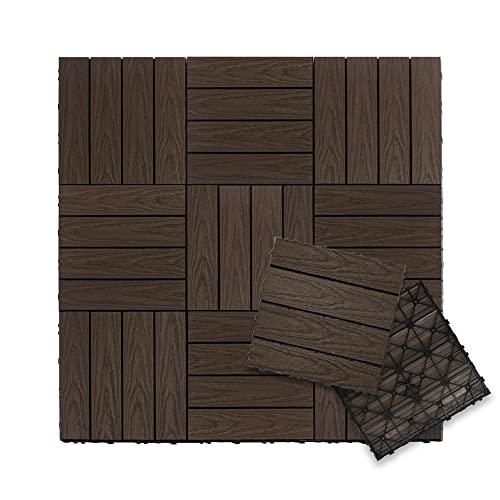
The NewTechWood UltraShield Naturale stands apart from standard wood tiles because its core is made from high-density polyethylene plastic and wood fibers wrapped in a polymer coating. This composite construction resists fading, cracking, and bending better than raw acacia, and the polymer shell reduces the surface temperature absorption that dark-stained wood boards suffer from in direct sun. At 0.88 inches thick and 25 pounds per 10-tile box, it’s the densest option in this lineup and feels substantially more solid underfoot than thinner budget tiles.
The raised base creates a consistent drainage gap that encourages air movement underneath, which actively helps keep the walking surface cooler during peak afternoon heat. Owners report that the Spanish Walnut color holds its vibrancy even after four years of rain and sun exposure with zero maintenance beyond occasional rinsing. The interlocking system uses rust-proof screws and a plastic grid, making it completely corrosion-proof around pools or outdoor kitchens.
The only catch is that these tiles only work within the NewTechWood system — you cannot mix them with generic interlocking bases or cut tiles from other brands. The higher upfront cost is offset by the long-term durability and heat-dissipating composite shell that cheaper wood-only tiles cannot match. For anyone building a permanent deck surface that needs to stay comfortable through summers, this is the clear choice.
Why it’s great
- Polymer coating reduces surface heat absorption compared to raw wood
- Raised base design promotes airflow for passive cooling
- Proven color retention after years of UV exposure
Good to know
- Only compatible with NewTechWood tiles — no cross-brand mixing
- Premium tier requires higher initial investment
2. THYOI Premium Deck Tiles 10-Pack Acacia Wood

The THYOI 10-pack delivers 100% natural acacia wood with a deep-oil finish that stays cooler than dark polymer alternatives. The 0.75-inch thickness is slightly thinner than the NewTechWood option, but the PPC base grid lifts the tiles off the subfloor, creating a ventilated cavity that reduces heat transfer from hot concrete or stone underneath. The slat spacing and snap-lock mechanism also double as a drainage system that keeps water from pooling and causing heat-magnifying humidity.
Users who installed these on 17th-floor balconies report that the tiles withstood 40 mph wind without shifting, thanks to the puzzle-lock system that does not rely on screws or adhesive. The 10-tile set covers roughly 10 square feet, making it a practical size for small patios, shower floors, or pool surrounds. The crossed pattern with square joints allows creative layouts without weird gaps at the edges — owners have successfully trimmed tiles with a garden shears or hacksaw to fit irregular spaces.
One real-world durability report noted minimal color loss after a full year of extreme conditions including rain, high humidity, and heavy foot traffic. The acacia wood is sanded smooth and splinter-free, which matters for barefoot walking around pools. The tradeoff is that the 0.75-inch thickness means it feels a little less hefty under concentrated furniture legs, so using floor pads under narrow table legs is recommended to avoid dimpling over time.
Why it’s great
- PPC base grid creates ventilation gap for cooler surface temps
- Natural acacia with oil finish stays cooler than dark composites
- 10-tile set covers exactly 10 sq ft with no waste
Good to know
- Thinner profile requires furniture pads to avoid marks
- Color variation between boxes possible due to natural wood grain
3. Idzo Interlocking Deck Tiles 10-Pack Acacia Wood Checkered

Idzo’s deck tiles stand out because of the checkered slat pattern that alternates direction across each square tile, creating a more dynamic visual than standard parallel slats. The acacia hardwood is sanded and oiled, giving it a non-slip, scratch-resistant finish that does not blister under UV exposure the way some cheaper lacquered boards do. At 0.91 inches thick, it’s slightly taller than the THYOI option, providing a bit more rigidity over uneven subfloors.
The waterproof PP polypropylene bottom is key for heat resistance. Polypropylene plastic has a lower thermal conductivity than solid concrete or metal-based bases, meaning it transfers less heat upward from the ground. The net-like drain structure also allows water to escape quickly, preventing the humid microclimate that can make dark-colored tiles feel hotter. Owners who installed these around pond edges and on balconies reported that the tiles stayed comfortable to touch even after six months of full sun exposure with no visible warping.
The snap-lock mechanism is genuinely tool-free and can be disassembled just as easily for relocating or seasonal storage. However, some buyers noticed that the clear connector tabs are visible along the edges of installations that butt against walls or fences, so adding a trim strip or river rock border may be necessary for a finished look.
Why it’s great
- Checkered pattern offers unique visual appeal
- PP base transfers less ground heat than other materials
- 0.91 inch thickness adds rigidity on uneven surfaces
Good to know
- Connector tabs visible on perimeter edges
- Box covers 9.6 sq ft, not a full 10 sq ft
4. DECKIFY 9Pcs Premium Acacia Wood Interlocking Patio Deck Tiles
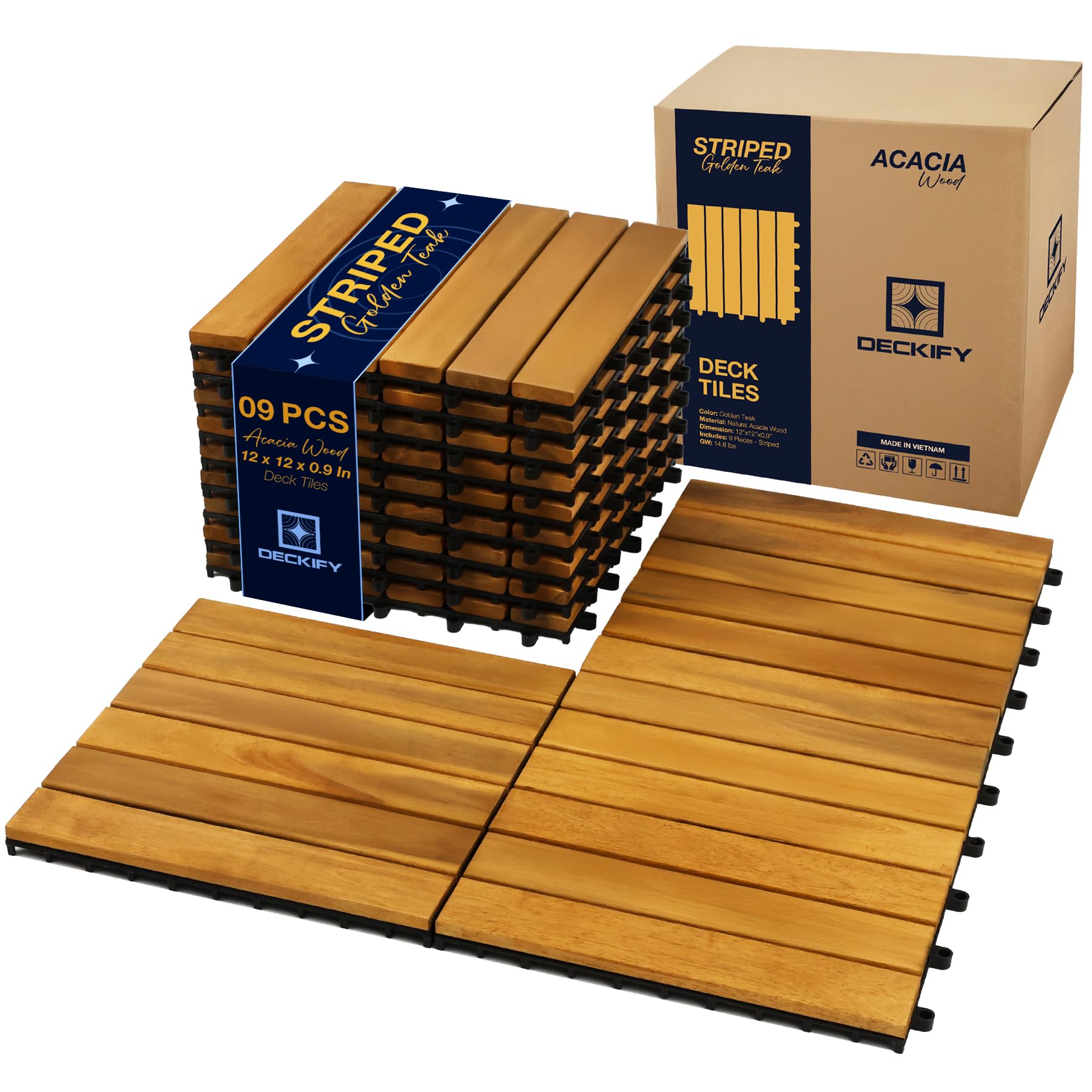
The DECKIFY 9-pack is a budget-friendly entry point for anyone wanting a heat-resistant acacia surface without paying for a full premium-tier system. The solid slats are 0.9 inches thick and pre-finished with cured linseed oil, which naturally resists water absorption and keeps the wood from swelling in humid conditions — direct swelling would trap heat by closing the ventilation gap underneath. The deep-groove slat design channels water to the elevated base, keeping the walking surface dry and preventing the kind of heat-amplifying moisture that darkens wood.
At 490 pounds of distributed load capacity, these tiles hold standard patio furniture and foot traffic without cracking or bowing. The interlocking connectors work on cut tiles too, so you can trim pieces around corners or posts without losing the snap-fit joinery. Owners have used these to cover old concrete patios and reported that the surface stayed noticeably cooler underfoot than the bare concrete next to it. The 9-tile set covers exactly 9 square feet, which keeps the entry cost low for small spaces like bistro table areas or entryway landings.
The main compromise here is coverage — you only get 9 square feet per box, and the tiles come in a single Golden Teak striped pattern. If you need to cover a larger expanse or prefer a checkered layout, you will need multiple boxes and will have visible seams where raw cut edges meet. For small area upgrades where heat comfort is the priority, this is a smart value play.
Why it’s great
- Linseed oil finish prevents heat-trapping moisture absorption
- Deep-groove slats keep walking surface elevated and dry
- 490-lb load capacity for standard patio use
Good to know
- 9 sq ft per box — larger areas need multiple boxes
- Only striped pattern available in this set
5. GREEN ALLUVIUM Premium Acacia Wood Interlocking Deck Tiles 9-Pack
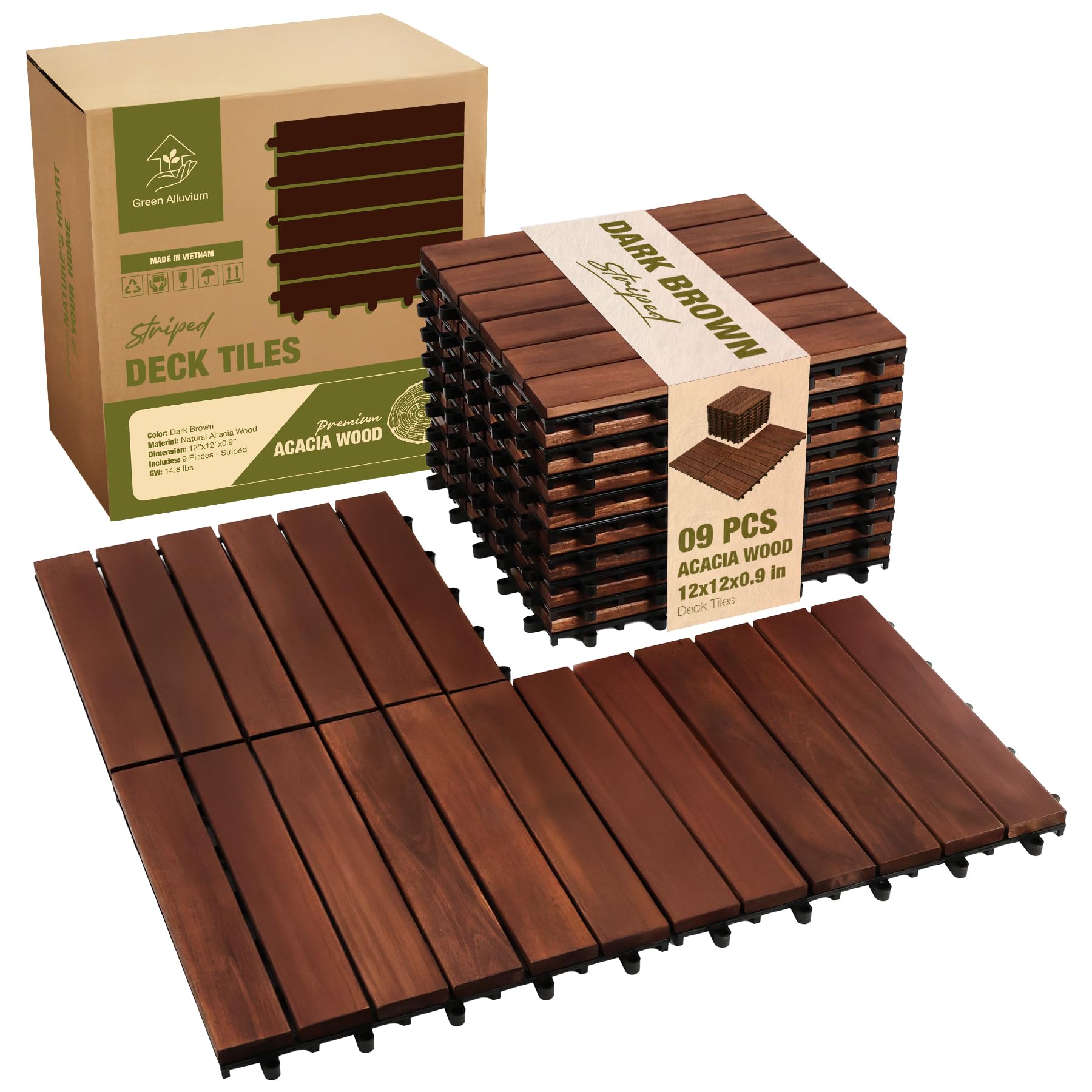
The GREEN ALLUVIUM tiles offer solid Vietnamese acacia wood in a Dark Brown finish, designed for wet-area readiness straight out of the box. The pre-cured linseed oil means no sealing or prep work, and the raised base channels water effectively to keep the surface dry in rain or pool splashes. The 466-lb distributed load capacity is slightly lower than the DECKIFY tile but still sufficient for foot traffic and lightweight patio seating arrangements typical of balconies and small patios.
The Dark Brown color absorbs slightly more infrared radiation than lighter finishes like Golden Teak, but the raised base ventilation compensates by allowing heat to dissipate underneath rather than transferring directly into the wood. Owners have reported that the tiles held up well to heavy rain and wind on balconies, with no visible shifting or cracking after exposure. The interlocking system pulls apart easily for storage or relocation, making these a strong choice for renters who want a heat-comfort upgrade without permanent installation.
The 9-tile set covers roughly 9 square feet, and the Dark Brown is available alongside Golden Teak and Grey color options if you need to match existing decor. The main note from real users is that to achieve a seamless edge you may need to sacrifice an entire tile row — the interlocking clips require all tiles in a row to be cut together, which means some material waste. For a small balcony or patio section, this is a minor inconvenience given the low entry cost and tool-free setup.
Why it’s great
- Pre-finished linseed oil — no sealing required
- Raised base ventilation reduces heat absorption from subfloor
- Multiple color options for design flexibility
Good to know
- Seamless edges may require sacrificing a full tile row
- 9 sq ft coverage limits use for large spaces
FAQ
Does composite decking get as hot as wood in direct sun?
What is the best finish for reducing heat absorption?
Can I install interlocking deck tiles over hot concrete or asphalt?
Final Thoughts: The Verdict
For most users, the heat-resistant composite decking boards winner is the NewTechWood UltraShield Naturale because the polymer-coated composite core and raised base deliver consistent passive cooling even under prolonged direct sun. If you want the natural warmth and color variety of solid acacia at a mid-range price, grab the THYOI 10-Pack. And for a small patio or balcony refresh on a tight budget, nothing beats the value of the DECKIFY Acacia Tiles.

Mo Maruf
I created WellFizz to bridge the gap between vague wellness advice and actionable solutions. My mission is simple: to decode the research and give you practical tools you can actually use.
Beyond the data, I am a passionate traveler. I believe that stepping away from the screen to explore new environments is essential for mental clarity and physical vitality.