Our readers keep the lights on and my smoothie glass nicely filled. As an Amazon Associate, I earn from qualifying purchases.
Getting a rose bush to produce those lush, fragrant, picture-perfect blooms is a science as much as an art, and the secret almost always lies beneath the soil. While generic garden soil can keep a plant alive, it rarely provides the specific nutrient balance—phosphorus for bud set, potassium for flower color, and organic matter for root health—that roses demand to truly thrive. The wrong compost mix leads to sparse foliage and disappointing flowers, wasting an entire growing season.
I’m Mohammad Maruf — the founder and writer behind WellFizz. I’ve spent hundreds of hours combing through laboratory data, customer trials, and formulation sheets to understand exactly which organic soil amendments deliver measurable improvements in bloom size, color intensity, and disease resistance for rose growers.
The problem is that many products labeled as rose food are too high in nitrogen, forcing green leaves at the expense of flowers. What you really need is a balanced, bloom-focused formula that feeds the soil microbiome first. That is why I put together this guide to the best compost for roses, breaking down the specific ingredients and ratios that produce show-stopping results.
How To Choose The Right Compost For Roses
Roses are heavy feeders that prefer a steady supply of organic nutrients released slowly over time. The ideal compost for roses balances nitrogen for strong canes with phosphorus for flowering, and includes trace minerals that synthetic fertilizers often omit. Here are the key factors to weigh before buying.
N-P-K Ratio and Bloom Focus
The three numbers on the bag—nitrogen, phosphorus, potassium—tell the story. A ratio with a higher middle number, like 2-6-4 or 4-3-2, signals a formula designed to encourage bud formation and flower production rather than just leaf growth. Avoid ratios where the first number (nitrogen) is the highest, as this pushes foliage at the cost of blooms.
Form: Liquid vs. Granular vs. Compost Extract
Liquid formulas provide an immediate nutrient hit, ideal for correcting a deficiency mid-season. Granular options like Rose-tone release nutrients over weeks, requiring fewer applications. Compost extracts combine the microbial benefits of soil activators with a liquid delivery system, feeding the biology in the root zone for long-term soil health.
Organic Certification and Soil Biology
Organic composts feed the mycorrhizae and beneficial bacteria that help rose roots access nutrients locked in the soil. Products approved for organic gardening or listed by the Organic Materials Review Institute (OMRI) ensure the mix is free from synthetic chemicals and safe for pollinator activity around your blooms.
Secondary Nutrients and Additives
Look for humic acids, seaweed extract, and calcium in the ingredient list. Humic acids improve nutrient uptake efficiency, seaweed adds trace minerals and natural growth hormones, and calcium strengthens cell walls, helping roses resist diseases like black spot and powdery mildew.
Quick Comparison
On smaller screens, swipe sideways to see the full table.
| Model | Category | Best For | Key Spec | Amazon |
|---|---|---|---|---|
| Great Big Roses Liquid Booster | Compost Extract | Soil activation & bloom revival | 70+ chelated trace minerals | Amazon |
| Espoma Organic Rose-tone | Granular | Steady slow-release feeding | 4-3-2 analysis with Bio-tone | Amazon |
| Neptune’s Harvest Rose & Flower | Liquid | Organic foliar & root feed | 2-6-4 NPK with calcium | Amazon |
| Heirloom Roses Fish Fertilizer | Liquid Emulsion | Quick nitrogen boost for foliage | Acidulated fish solubles | Amazon |
| Miracle-Gro Performance Organics | Granular | Budget-friendly large garden feed | 5-7-10 OMRI listed | Amazon |
In‑Depth Reviews
1. Great Big Roses and Flowers Liquid Fertilizer Booster
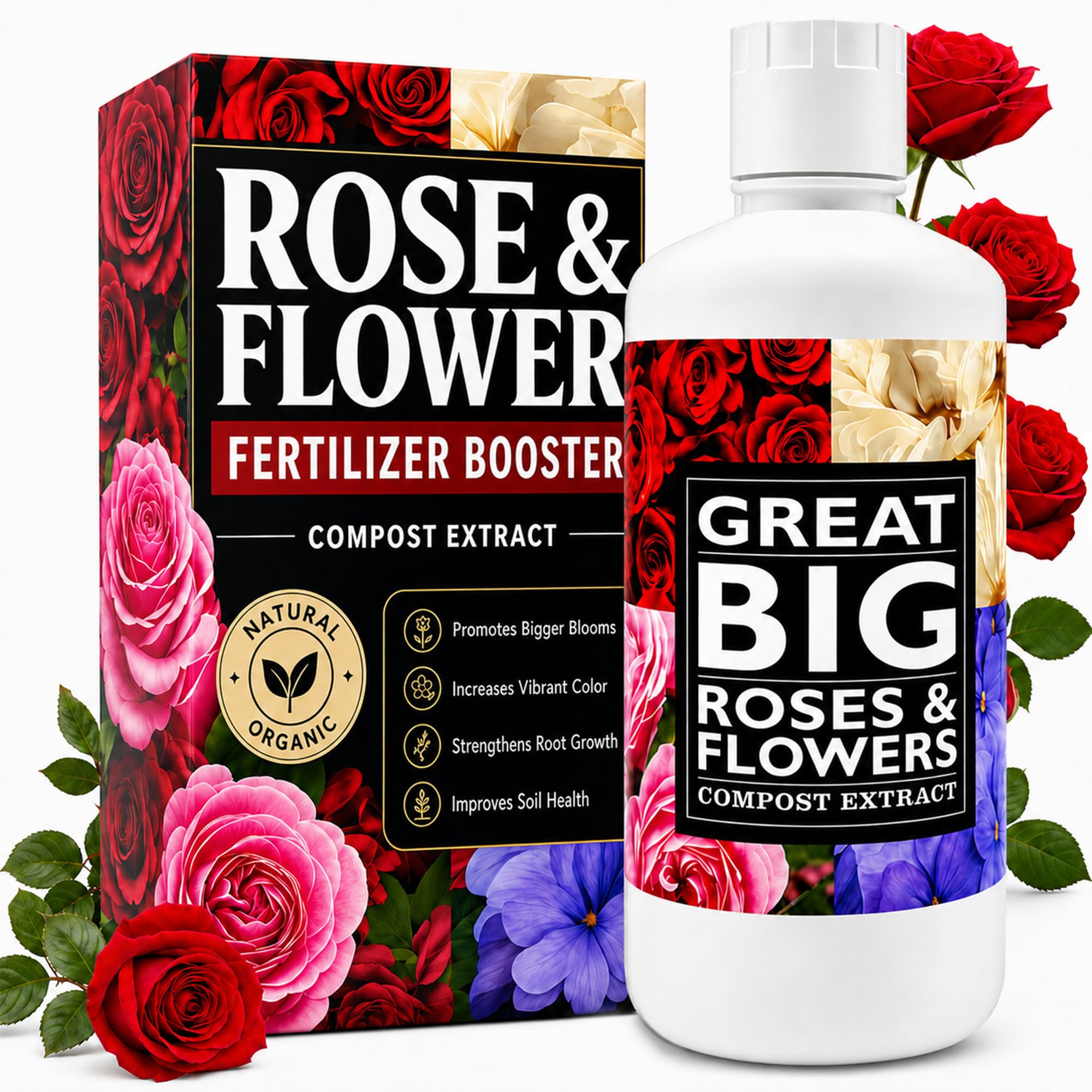
This liquid booster stands apart because it functions as a compost extract and soil activator rather than a straight fertilizer. The formula includes humic acids, seaweed, and over 70 chelated trace minerals that unlock nutrients already present in your soil, making existing feeds work harder. Customers report rose bushes that had not bloomed in years producing large flowers within weeks, which speaks to the depth of root-zone improvement this product delivers.
The 32-ounce bottle makes up to 8 gallons of solution, covering a full growing season for most home gardens. Mixing just 4 ounces per gallon of water and applying around the base requires no digging or tilling, so it fits into a busy gardener’s routine. The liquid form also makes it compatible with drip irrigation systems, allowing for consistent weekly feeding without manual mixing every time.
Several long-term users have confirmed three years of reliable results, noting that the formulation works across hydrangeas, citrus, and perennials as well. The only trade-off is the packaging—the wide-mouth jug can be messy when measuring, but the performance makes that a minor inconvenience. For any gardener serious about coaxing maximum bloom potential from their roses, this is the most comprehensive soil-building tool available.
Why it’s great
- Contains 70+ chelated trace minerals for complete nutrition
- Works as a soil activator to unlock existing nutrients
- One bottle covers a full season for most gardens
Good to know
- Wide-mouth jug can be messy when pouring concentrate
- Premium-tier price per ounce compared to basic formulas
2. Espoma Organic Rose-Tone 4-3-2 Fertilizer

Espoma’s granular Rose-tone offers the slow-release feeding that established rose beds need without the odor intensity of liquid fish emulsions. The 4-3-2 analysis is deliberately lower in nitrogen to prevent excessive leaf growth, steering energy into flower development. Its Bio-tone formula contains beneficial microbes that colonize the root zone, improving soil structure over time rather than just adding synthetic salts.
Application is straightforward: sprinkle the granules around the drip line of each bush, then water thoroughly. The 4-pound bag covers multiple plants for several months when applied monthly from May through September. Gardeners with drift roses reported that a single cup per plant per month transformed spindly growth into a dense cascade of blooms, proving that consistent granular feeding can dramatically alter plant performance.
The formulation is OMRI-listed for organic production and includes 5 percent calcium, which strengthens cell walls and helps roses resist common fungal issues. While the bag is compact, it covers ground efficiently—one reviewer noted the 18-pound size was a better value for large gardens. The mild odor dissipates quickly after watering, making it a neighbor-friendly option for suburban rose beds.
Why it’s great
- Slow-release granules reduce application frequency
- Contains beneficial microbes for long-term soil health
- OMRI-listed with added calcium for disease resistance
Good to know
- Small bag size; large gardens need the bulk option
- Slight organic odor some users notice after watering
3. Neptune’s Harvest Rose & Flowering Fertilizer 2-6-4
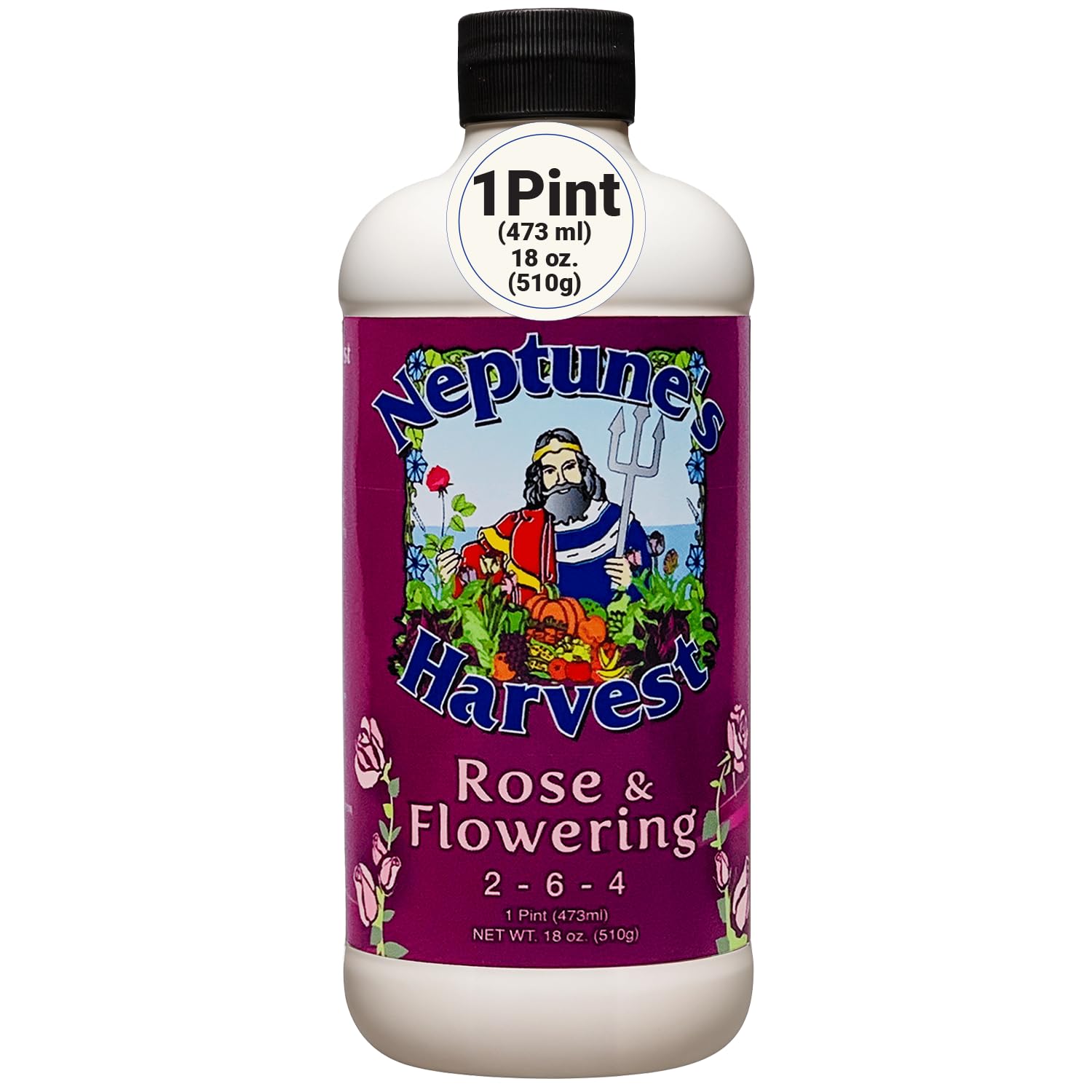
Neptune’s Harvest delivers the highest phosphorus-to-nitrogen ratio in this roundup at 2-6-4, making it a specialist bloom trigger. The formula combines fish, seaweed, molasses, humic acids, yucca extract, and liquid calcium into a single concentrate that can be applied as a soil drench or foliar spray. The presence of yucca extract acts as a natural wetting agent, improving nutrient penetration into both soil and leaf surfaces.
Users mixing 1 ounce per gallon of water saw dramatic results with indoor tomatoes and peppers first, then applied the same protocol to outdoor roses with equal success. The raised Brix level—sugar content in plant sap—naturally deters pests, reducing the need for separate insecticides. This dual-action effect makes it particularly valuable for organic growers who want to simplify their input routine.
The 18-ounce pint is a smaller volume than some competitors, but the concentration means it stretches across many applications. The ocean-derived smell is present during mixing but fades quickly once dry. For rose enthusiasts who want a liquid feed that also functions as a foliar treatment for rapid nutrient absorption, this pint punches well above its size class.
Why it’s great
- Highest phosphorus ratio for maximum bloom initiation
- Yucca extract improves nutrient penetration as a wetting agent
- Raises Brix to naturally deter pests
Good to know
- Strong fish-based odor during mixing
- Small pint bottle requires more frequent repurchasing
4. Heirloom Roses Founder’s Fish Fertilizer 32 oz
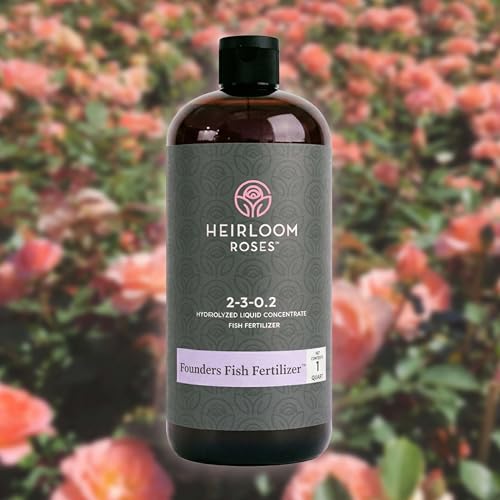
This liquid emulsion from Heirloom Roses uses acidulated fish solubles from multiple fish species to create a broad-spectrum organic feed that builds healthy soil bacteria. The mixing ratio of 4 ounces per gallon produces enough solution for 2 to 3 roses, and the bottle lasted a full season for one reviewer managing five new own-root rose plants. Each of those plants bloomed in its first year, which is a strong indicator of the formula’s ability to support immature root systems.
The organic matter in decomposed fish feeds mycorrhizae, the symbiotic fungi that expand root reach and improve water retention between waterings. Gardeners in zone 7a reported rapid new growth and healthier foliage within one month of starting the regimen. The fertilizer is also safe around pets, which matters for roses planted near pathways or play areas.
The primary drawback is the potent fish odor that lingers until the soil dries, requiring nighttime application to avoid disturbing neighbors. However, the results speak for themselves—several verified buyers called it the best rose food they had ever used for new plants. For anyone starting a rose garden from bare-root or young stock, this emulsion provides the gentle but effective nutrition those tender roots need.
Why it’s great
- Multi-species fish base for diverse mineralization
- Supports mycorrhizae for improved water retention
- Safe around pets and children once dried
Good to know
- Strong fish smell requires strategic timing for application
- Best used at night to avoid neighbor disturbance
5. Miracle-Gro Performance Organics Blooms 2.5 lb

Miracle-Gro’s organic entry offers a 5-7-10 ratio that is notably higher in potassium than most rose-specific formulas, making it a good option for sustaining blooms through the hottest part of the season. The OMRI-listed granules cover up to 165 square feet, which means a single container can handle a large border of knock-out roses or a mixed flower bed. Home gardeners reported seeing results within one to two weeks on plants like butterfly bush and Mandevilla.
Reapplication every four to six weeks keeps the nutrient supply consistent without the strong odor associated with liquid fish feeds. The granular form is dry and easy to handle, requiring only a scatter-and-water routine. One user noted that the paper seal under the lid was loose on arrival, but the granules themselves produced the expected performance once applied.
While the formula encourages more blooms compared to unfed plants, the 5-7-10 ratio delivers a broader feeding profile than a dedicated rose compost. It is a solid starter product for a new gardener who wants reliable organic results at a budget-friendly entry point. For experienced rose collectors, this works best as a supplementary feed between applications of a deeper soil conditioner.
Why it’s great
- High potassium content supports blooms through heat stress
- Covers 165 sq. ft. per container for large beds
- Dry granules with minimal odor for easy handling
Good to know
- Paper seal may arrive loose in transit
- Broad formula less specialized than rose-specific composts
FAQ
How often should I apply compost to my rose bushes?
Can I use general garden compost instead of a rose-specific formula?
Final Thoughts: The Verdict
For most users, the best compost for roses winner is the Great Big Roses Liquid Fertilizer Booster because it combines compost extract, humic acids, and over 70 trace minerals to activate the soil biology that sustains long-term bloom performance. If you want a set-and-forget granular feed, grab the Espoma Organic Rose-tone. And for a rapid liquid boost that also works as a foliar spray, nothing beats the Neptune’s Harvest Rose & Flowering Fertilizer.

Mo Maruf
I created WellFizz to bridge the gap between vague wellness advice and actionable solutions. My mission is simple: to decode the research and give you practical tools you can actually use.
Beyond the data, I am a passionate traveler. I believe that stepping away from the screen to explore new environments is essential for mental clarity and physical vitality.