Our readers keep the lights on and my smoothie glass nicely filled. As an Amazon Associate, I earn from qualifying purchases.
The snap of the ball is lost on slow feet. Football cleats are the single interface between an athlete’s explosive power and the turf, dictating whether a cut is sharp or a slip, whether a drive off the line is instant or delayed. The difference between a good season and a great one often comes down to the stud pattern, plate rigidity, and upper material wrapped around the foot.
I’m Mohammad Maruf — the founder and writer behind WellFizz. I’ve spent hundreds of hours analyzing the stud geometry, foam density, and upper construction across the latest drops from Nike, adidas, and Under Armour to save you the research fatigue.
The real metric that separates field-tested winners from cleats that get left in the locker room is traction consistency across grass and turf. My analysis of the market’s most compelling options led to this guide to the best cleats for football currently available, ranked by material science, fit reliability, and game-day durability.
How To Choose The Best Cleats For Football
Not all cleats are built for the same position or playing surface. A receiver needs lateral flexibility and a lightweight upper to change direction quickly. A lineman needs a stiff plate, a wide toe box, and durable synthetic overlays that can take a direct hit from a 300-pound opponent. Ignoring this relationship is the fastest way to waste money on a pair that fails before midseason.
Stud Configuration and Plate Stiffness
Molded studs (fixed, non-removable) are standard for most youth and high school players because they provide consistent grip on natural grass and turf without the risk of losing a stud mid-game. Detachable studs allow you to swap lengths based on field softness — longer for wet grass, shorter for hard turf — but require a compatible wrench and regular maintenance. Plate stiffness, measured by how much the forefoot resists bending, determines whether the cleat translates your push-off force into forward momentum (stiffer is better for linemen) or allows natural foot flexion for agile cuts (better for skill positions).
Upper Material and Durability
Synthetic mesh is lightweight and breathable but can tear if it catches a facemask or cleat in a pile. Full-grain or synthetic leather withstands abrasion and retains shape longer but adds ounces per foot, which accumulates fatigue over four quarters. Many premium cleats now use a knit or woven upper fused with a TPU film overlay in high-wear zones — a hybrid that balances weight loss with structural integrity. Check the stitching around the toe cap and heel counter; this is where cheap cleats fail first.
Fit, Width, and Break-In Curve
Football cleats should fit snug in the heel with a thumb’s width of space beyond the longest toe. Narrow-footed players often prefer Nike’s anatomical last, while athletes with wide forefeet report better results from adidas or Under Armour’s wider chassis designs. Some cleats, particularly those with a full-length plate, require a break-in period of three to five practices before the foam and upper conform to the foot’s contours. Ordering half a size up is common if you plan to wear thick ankle socks or a brace underneath.
Quick Comparison
On smaller screens, swipe sideways to see the full table.
| Model | Category | Best For | Key Spec | Amazon |
|---|---|---|---|---|
| Nike Vapor Edge Elite 360 2 | Premium | Agile cut specialists & top-tier traction | 360-degree TPU plate with wide stud placement | Amazon |
| Nike Alpha Menace 4 Pro NRG | Premium | Linemen & pass rushers needing durability | Reinforced upper with mixed-sticky-rubber plate | Amazon |
| Phenom Elite Quantum Speed 2.0 | Premium | Speed-first skill players & wide receivers | SprintSense patented traction plate | Amazon |
| Nike Alpha Menace Strong | Mid-Range | Trench warriors on mixed field conditions | Mixed sticky-rubber Alpha plate | Amazon |
| Adidas Adizero Football Cleats (Mesh) | Mid-Range | Speed with breathable mesh upper | Studded TPU outsole, mesh upper | Amazon |
| Adidas Adizero Impact.2 Molded | Budget-Friendly | Multi-surface traction, wide-foot comfort | Molded cleat outsole, wider fit | Amazon |
| Under Armour Spotlight Hammer | Budget-Friendly | Linemen needing wide-fit & durability | Lightweight, wide-friendly construction | Amazon |
In‑Depth Reviews
1. Nike Vapor Edge Elite 360 2

Nike’s Vapor Edge Elite 360 2 rewrites what a full-foot plate can do for a skill-position player. The wide stud placement across the forefoot and heel creates a massive footprint that distributes ground pressure evenly, allowing razor-sharp cuts at full sprint without the ankle roll that narrower stud patterns invite. The internal full-foot plate adds flexible support that doesn’t rob the foot of natural dorsiflexion — you can still feel the turf through the sole, which improves proprioception during direction changes.
The upper combines molded texture elements with a NikeSkin overlay that reinforces the heel without adding stiff plastic bulk. Reviewers consistently call out the true-to-size fit and the neon colorway’s visibility from the sidelines, a small advantage for coaches tracking their athletes in motion. The cleat has held up through two-a-day practices and summer camps with no separation at the toe or tear in the mesh, confirming the build quality matches the price bracket.
One caveat: the chassis is designed for athletes with narrow to medium-width feet. Reviewers with wide feet, particularly those requiring a 12.5W, reported the forefoot felt too restrictive and had to return the pair. For players who fit the anatomical last, these cleats improve lateral response immediately on the first wear with minimal break-in required.
Why it’s great
- Wide stud pattern delivers elite lateral grip on turf and natural grass
- Internal plate offers flexible support without sacrificing turf feel
- High-vis neon colorway stands out in practice and game film
Good to know
- Narrow fit excludes athletes with wide forefeet
- Premium-tier pricing reflects the advanced plate technology
2. Nike Alpha Menace 4 Pro NRG

Where the Vapor Edge favors agility, the Alpha Menace 4 Pro NRG is built for the scrum. The mixed-sticky-rubber plate is a genuine innovation — it uses a softer rubber compound in the forefoot studs for bite on slick grass and a firmer compound in the heel studs for stability when backpedaling. This dual-compound approach keeps linemen locked into their stance even after a rain-soaked second half when the field turns to mush.
The upper is noticeably tougher than typical mesh cleats, with webbed reinforcements that resist tearing from facemask contact and pile-ups. High-arched players and those with narrow heels reported the best fit, with the cleat hugging the midfoot snugly while leaving enough room in the toe box for foot swelling during long games. Multiple verified buyers noted the cleat required a short break-in period of about two practices before the plate softened enough for comfort, but after that, the durability was praised for surviving an entire Texas summer season with no structural failure.
The NRG designation adds a layer of reflective material to the upper for low-light visibility, but the real win is the plate stiffness. This cleat does not flex in the forefoot — it translates every ounce of push-off straight into the turf, which is exactly what defensive linemen and interior offensive linemen need to hold the point of attack.
Why it’s great
- Dual-compound rubber plate adapts to wet and dry field conditions
- Reinforced upper resists tears from pile-up contact
- Fits high arches and narrow heels exceptionally well
Good to know
- Requires a 2-3 practice break-in period for optimal comfort
- Not ideal for wide-footed athletes or skill positions needing agility
3. Phenom Elite Quantum Speed 2.0

The Phenom Elite Quantum Speed 2.0 targets the speed-first player — the wide receiver trying to separate on a go route or the cornerback closing on an underneath throw. Its patented SprintSense traction plate uses a specific spike arrangement under the metatarsal heads that aligns with the foot’s natural push-off angle, reducing the milliseconds lost when a conventional cleat’s studs sink unevenly into turf. This plate is also lighter than Nike’s equivalent TPU mold, shaving measurable weight off each foot for the final sprint to the end zone.
Multiple customer reviews confirm the cleat’s bright colorways make sideline identification easy, and flag football players (including a female athlete) reported high comfort for multi-game weekends. However, sizing requires attention: the brand recommends ordering a full size up from your normal street shoe, and several reviewers found the stock sizing guide ran small — those who ordered one size up reported a perfect fit. The unisex-adult sizing means the cleat accommodates both men’s and women’s foot shapes, though women with narrower heels may need a thicker sock to fill the heel pocket.
Durability after multiple months of use has been strong, with no separation between the upper and the plate, even in high-flex zones. The only downside is the collar design — the tight ankle opening requires loosening laces aggressively to get the foot in, and some athletes found this annoying before practice. Once on, the lock-down is secure and the lightweight feel is noticeable.
Why it’s great
- SprintSense plate aligns with natural push-off mechanics for faster acceleration
- Lightweight build reduces fatigue over four quarters
- Bright colorways make field identification easy for coaches
Good to know
- Runs small — order a full size up for proper fit
- Tight ankle collar makes entry difficult without loosening laces fully
4. Nike Alpha Menace Strong
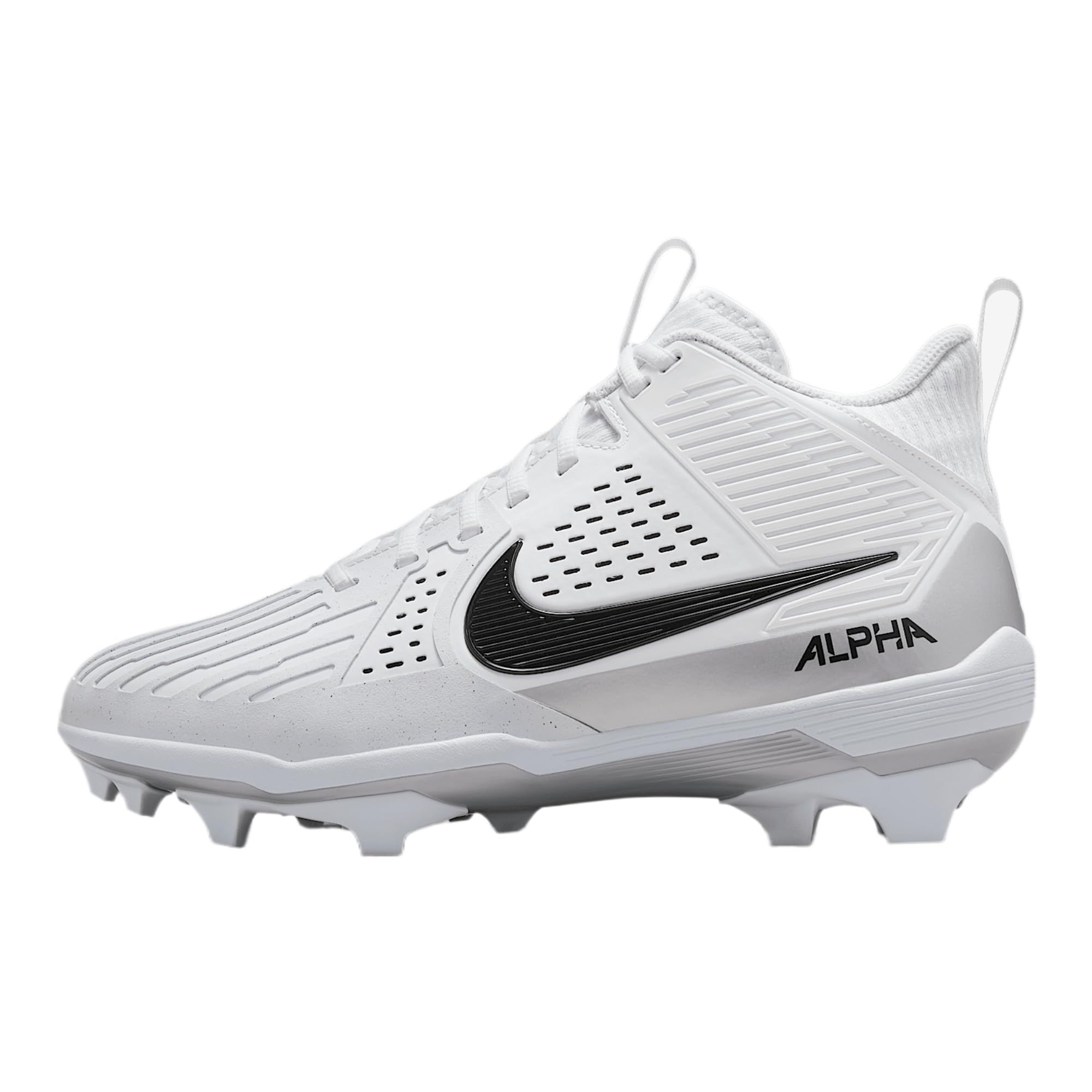
Sitting at a mid-range price point, the Alpha Menace Strong bridges the gap between budget lineman cleats and the premium Pro NRG. The Alpha plate uses mixed sticky rubber — the same foundational tech as the Pro line — to provide weather-agnostic traction that does not slip on dusty turf or wet grass. The soft foam midsole adds a layer of impact protection that reduces sting when planting hard on artificial turf, which is a common complaint among athletes who play on older fields with less give.
Players have confirmed these cleats hold up through a full season of both football and rugby, surviving the abrasion of both sports without tearing. The upper’s mid-weight construction means they feel substantial without being heavy, and the colorways do not fade after repeated mud washes. One reviewer noted mild discomfort after an hour of wear during break-in, but this resolved after two practices as the foam conformed to the foot.
The cleat performs best for trench players — interior offensive and defensive linemen — who need stable traction and a locked-down heel. The tread pattern includes perimeter studs that dig in when a lineman drops into a lateral slide, providing side-to-side grip that prevents being washed out by a double team. A half-size up is recommended for thick socks, but otherwise the fit is consistent with Nike’s standard sizing.
Why it’s great
- Mixed sticky rubber plate maintains grip on wet and dusty surfaces
- Soft foam midsole reduces impact shock on artificial turf
- Durable enough for multi-sport use across football and rugby
Good to know
- May cause mild discomfort during the first two practices
- Mid-weight construction feels less agile than dedicated speed models
5. Adidas Adizero Football Cleats (Mesh Upper)

The mesh-based Adizero cleats from adidas prioritize breathability and weight reduction, making them a strong option for skill players in hot climates where synthetic uppers trap sweat. The studded TPU outsole features a conical stud layout that provides multi-directional grip without the aggressive bite of blade-style studs — a compromise that reduces the risk of catching a stud on a turf seam while maintaining enough traction for standard cuts. The mesh is layered with TPU overlays in high-wear zones to delay the tearing that kills cheap mesh cleats by week six.
Reviewers consistently note that this cleat runs a half size small, so ordering up is advised. One verified buyer, a high school receiver, reported the cleat accommodated an ankle brace without uncomfortable pressure points at the collar. Another parent mentioned the white colorway gets dirty quickly — a cosmetic concern rather than a functional one, but worth noting if you are image-conscious on game day. The cleat works for lacrosse as well, which speaks to the outsole’s versatility on natural grass.
The fit is snug, which enhances foot-to-plate connection for better proprioception, but the narrow toe box can press on the pinky toe during the first couple of wears. The lightweight construction is the standout feature here: at several ounces less per foot than a full-leather cleat, the Adizero reduces the cumulative metabolic cost of running routes or covering kicks in the fourth quarter.
Why it’s great
- Breathable mesh upper keeps feet cooler in hot weather
- Conical stud layout provides balanced multi-directional traction
- Lightweight build reduces foot fatigue in late-game situations
Good to know
- Runs a half size small — order up for proper length
- White colorway shows dirt and grass stains quickly
6. Adidas Adizero Impact.2 Molded
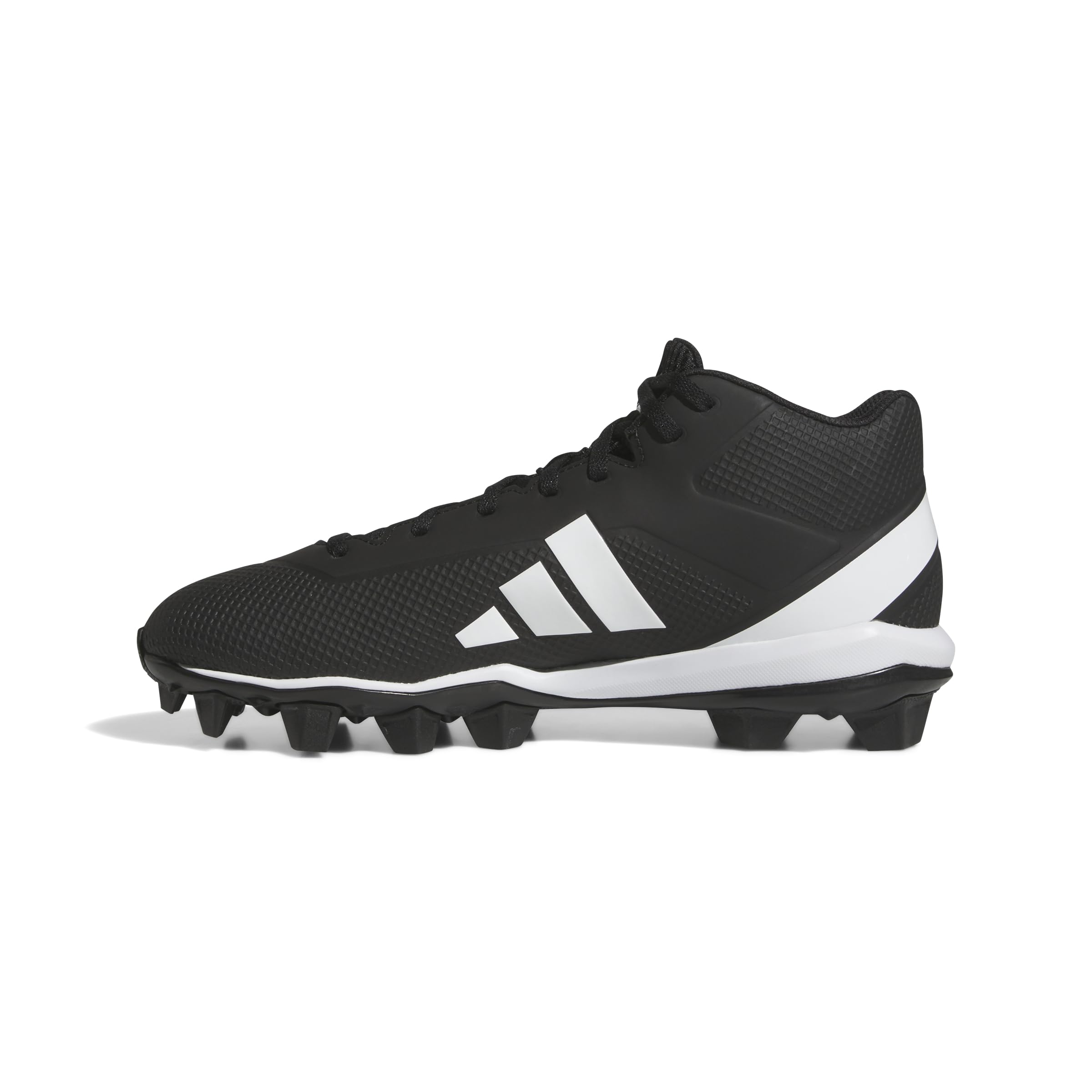
The Adizero Impact.2 Molded cleats solve a persistent problem for linemen who cannot find a comfortable fit in standard-width cleats. The molded outsole uses a chevron-style stud pattern that provides reliable traction on both natural grass and turf without the maintenance of detachable studs. The synthetic and textile upper is lighter than full leather but retains enough structure to resist stretching over a season, and several reviews from linemen confirmed these held up as well as adidas’s own line from previous years.
Multiple customers noted these cleats are not super narrow — a meaningful distinction in a market where many speed cleats cram the forefoot into a sharp taper. The fit works well for players with wider forefeet who have struggled with other brands, and the overall construction survived a full lacrosse season without tearing, which suggests the seams and overlays are properly bonded. The price point makes this a strong entry-level buy for youth players whose feet are still growing.
The main trade-off is the midfoot support. The synthetic upper does not lock the heel down as aggressively as a TPU-fused knit, so athletes making extremely sharp cuts may feel a small amount of lift in the heel during direction changes. Adding a heel-lock lacing technique solves this. For the price, the value proposition is hard to beat — you get adidas’s baseline traction technology with a fit that accommodates a wider population of athletes.
Why it’s great
- Wider forefoot fit accommodates players with broader feet
- Molded studs provide reliable traction without detachable maintenance
- Competitive price point for a brand-name lineman cleat
Good to know
- Midfoot support is less aggressive than premium adidas models
- Heel lift may occur during sharp cuts without lacing adjustments
7. Under Armour Spotlight Hammer Football Cleats
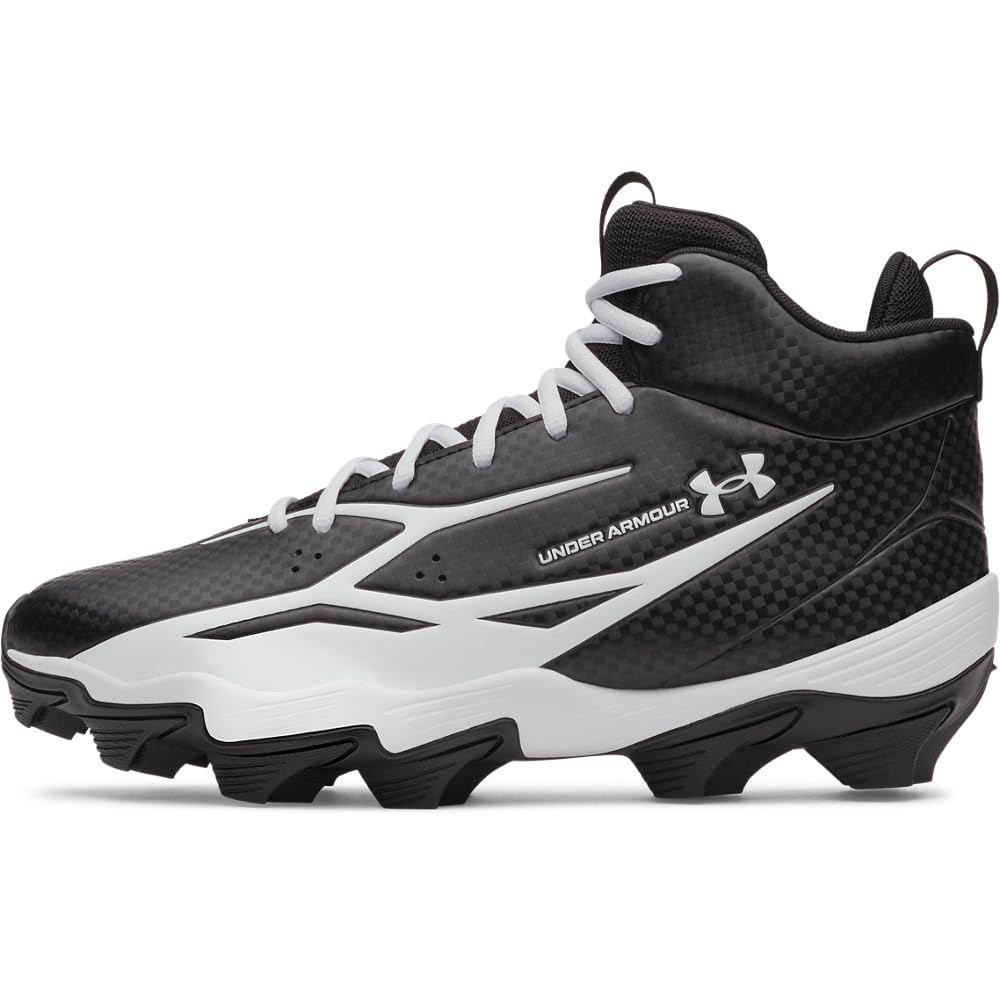
Under Armour’s Spotlight Hammer is designed specifically for the trenches, and the company’s reputation for wide-friendly fit carries through in this model. Multiple reviewers called out the generous width for players with E-width feet who routinely struggle with other brands. The cleat’s construction uses a lightweight upper wrapped around a supportive chassis that does not force the toes into a narrow pinch point, reducing the risk of blisters on the outside of the foot during long practices.
Traction on astroturf is rated highly by a verified linebacker who noted the studs provide consistent grip without being so aggressive that they catch and cause ankle twisting. The mud-shedding capability is also a plus — the stud spacing allows debris to fall out rather than packing in, which means weight does not increase during wet games. One reviewer mentioned the laces are shorter than expected, making a double-knot difficult, so swapping in longer laces may be necessary for athletes who prefer a tighter midfoot wrap.
Under Armour’s sizing runs about a half size small, so ordering up is recommended. The Spotlight Hammer does not have the advanced plate technology of a premium Nike or adidas model, but the core requirements — support, traction, and durability — are met at a budget-friendly price point. For a youth or high school lineman who is still growing, this cleat delivers acceptable performance without the sting of replacing a pair when the season ends.
Why it’s great
- Wide-fit design accommodates E-width feet comfortably
- Good mud-shedding stud pattern for wet field conditions
- Lightweight build for a lineman-focused cleat
Good to know
- Laces are shorter than standard, limiting double-knot options
- Runs a half size small — order up for proper fit
FAQ
What is the difference between molded and detachable cleats for football?
Should I buy football cleats a half size up or down?
Can I use football cleats for lacrosse or rugby?
Final Thoughts: The Verdict
For most players, the best cleats for football is the Nike Vapor Edge Elite 360 2 because its wide stud placement and internal full-foot plate deliver elite lateral traction and support that suits skill positions and agile defenders. If you want a reinforced upper and dual-compound rubber plate for wet-field trench warfare, grab the Nike Alpha Menace 4 Pro NRG. And for speed-first players seeking a lightweight plate engineered for faster push-off, nothing beats the Phenom Elite Quantum Speed 2.0.

Mo Maruf
I created WellFizz to bridge the gap between vague wellness advice and actionable solutions. My mission is simple: to decode the research and give you practical tools you can actually use.
Beyond the data, I am a passionate traveler. I believe that stepping away from the screen to explore new environments is essential for mental clarity and physical vitality.