Our readers keep the lights on and my smoothie glass nicely filled. As an Amazon Associate, I earn from qualifying purchases.
Making a professional-grade camera truly portable means leaving the bulk of a full DSLR kit behind without sacrificing control over depth of field, dynamic range, or raw file flexibility. That trade-off demands a body that slips into a jacket pocket yet houses a sensor and lens system capable of delivering publishable results in mixed lighting, on the street, or in the studio.
I’m Mohammad Maruf — the founder and writer behind WellFizz. I’ve spent hundreds of hours dissecting sensor architectures, autofocus algorithms, and optical formulas to find the compact bodies that earn their place in a pro’s bag.
Whether you need silent shutter operation for a wedding, a weather-sealed body for documentary work, or a lens system that rivals full-frame primes, this guide separates the truly capable from the merely convenient by examining the best compact camera for professionals across every meaningful metric.
How To Choose The Best Compact Camera For Professionals
Selecting the right tool for professional work goes far beyond megapixel counts. You need to weigh sensor size, lens ecosystem, autofocus reliability, build quality, and the specific scenarios where a compact body must perform without compromise. Below are the three most critical factors to consider before you commit.
Sensor Size and Dynamic Range
A full-frame sensor gives you the widest dynamic range, best low-light performance, and shallowest depth of field — essential for client work in variable lighting. APS-C sensors, like those in the Fujifilm X100VI or Ricoh GR IIIx, offer excellent image quality in a smaller package but produce more noise at high ISO and less background separation with equivalent apertures. For commercial portrait or event work, prioritize full-frame bodies. For street and travel, a high-res APS-C sensor can be the smarter choice due to its smaller size.
Autofocus System and Subject Tracking
Professional scenarios — moving subjects in a wedding, unpredictable action on a documentary shoot, or a model walking toward you during a fashion test — demand an autofocus system that locks on and stays locked. Look for phase-detection pixels covering at least 90% of the frame, dedicated AI processors for eye/animal/vehicle tracking, and a buffer that can sustain 10+ frames per second. Hybrid systems that combine phase and contrast detection (like those in the Canon EOS R8 or Sony a7C II) offer the highest keeper rates in continuous shooting.
Lens Ecosystem and Maximum Aperture
A compact professional camera is only as good as the glass in front of the sensor. Fixed-lens cameras like the Leica Q3 or Ricoh GR IIIx provide unmatched image quality in the smallest possible footprint, but you are locked into one focal length. Interchangeable-lens options (Sony a7C II, Canon EOS R8) give you flexibility at the cost of a larger overall kit when carrying multiple lenses. For maximum low-light performance, look for a maximum aperture of f/1.8 or wider. For versatility in a single body, a lens like the 24-70mm f/2.8 zoom range is the gold standard.
Quick Comparison
On smaller screens, swipe sideways to see the full table.
| Model | Category | Best For | Key Spec | Amazon |
|---|---|---|---|---|
| Leica Q3 | Full-Frame Fixed | Ultimate image quality in a compact body | 60MP Full-Frame BSI CMOS | Amazon |
| Fujifilm X100VI | APS-C Fixed | Street and travel with film simulations | 40.2MP X-Trans CMOS 5 HR | Amazon |
| Sony Alpha 7C II | Full-Frame ILC | Versatile full-frame in a lightweight ILC | 33MP Full-Frame Exmor R | Amazon |
| Canon EOS R8 | Full-Frame ILC | Affordable full-frame hybrid work | 24.2MP Full-Frame CMOS | Amazon |
| Sony a7 III | Full-Frame ILC | Reliable all-around full-frame performance | 24.2MP BSI Full-Frame CMOS | Amazon |
| Panasonic LUMIX S9 | Full-Frame ILC | Social media and travel content | 24.2MP Full-Frame CMOS | Amazon |
| Ricoh GR IIIx | APS-C Fixed | Pocketable street photography | 24.2MP APS-C CMOS | Amazon |
| Canon PowerShot V1 | Fixed Zoom | Vlogging and live streaming | 1.4-Type 22.3MP Sensor | Amazon |
| Sony RX100 III | 1-inch Fixed Zoom | Pocketable point-and-shoot with fast lens | 20.1MP 1-inch Exmor R | Amazon |
| OM SYSTEM E-M10 Mark IV | Micro Four Thirds ILC | Lightweight travel and everyday shooting | 20MP Live MOS | Amazon |
| Nikon Z 30 | APS-C ILC | Vlogging and content creation | 20.9MP DX-Format CMOS | Amazon |
| Panasonic LUMIX TZ/ZS99 | Fixed Zoom | Travel and concerts with super zoom | 20.3MP 1/2.3-inch MOS | Amazon |
| Nikon COOLPIX P1100 Bundle | Fixed Super Zoom | Extreme reach for wildlife and sports | 16MP BSI CMOS | Amazon |
In‑Depth Reviews
1. Leica Q3
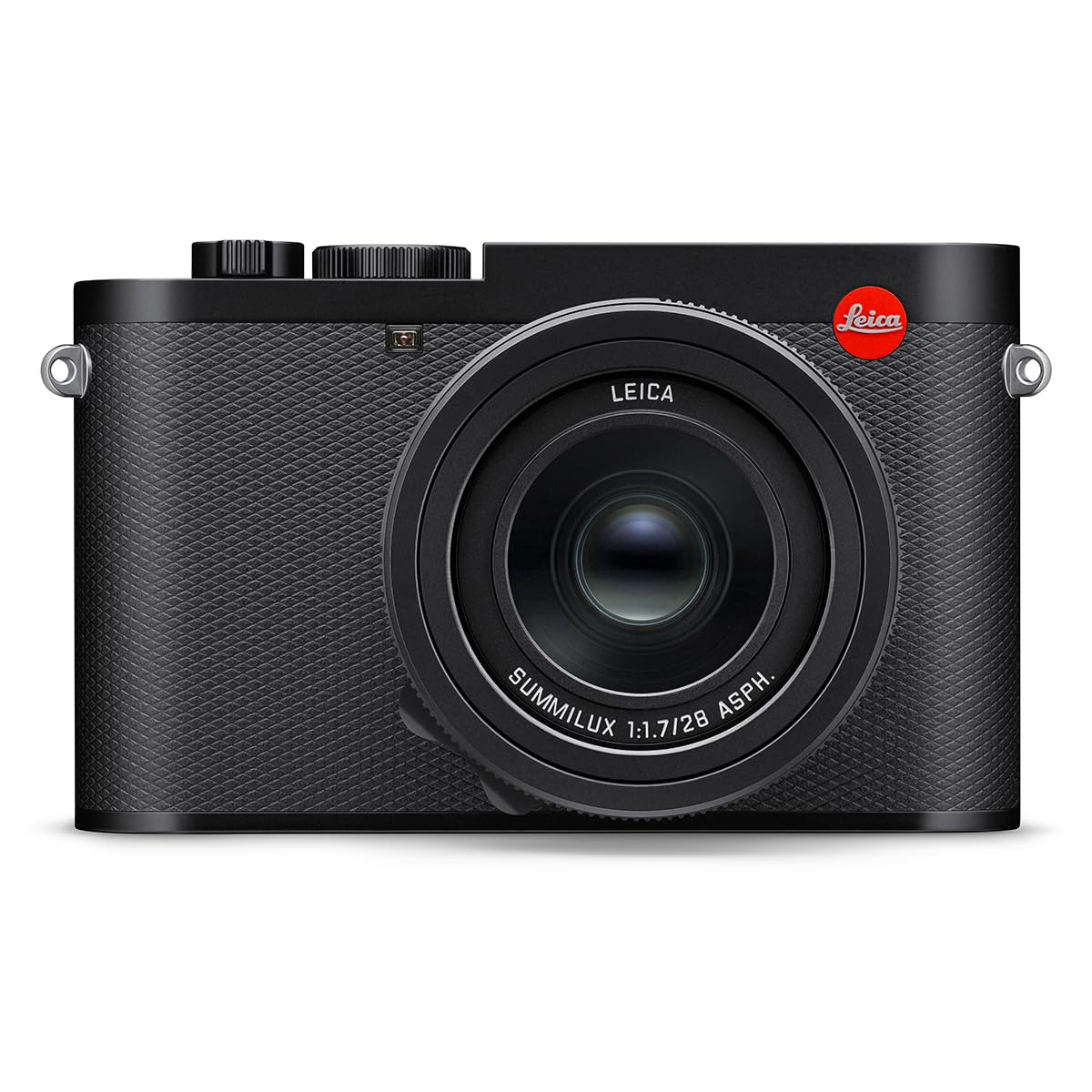
The Leica Q3 sets a new benchmark for what a fixed-lens compact can achieve. Its 60MP BSI CMOS sensor with Triple Resolution Technology delivers an extraordinary amount of detail, allowing you to crop aggressively without losing usable resolution — a feature that effectively gives you multiple focal lengths from the same 28mm f/1.7 Summilux lens. The Maestro IV processor and 8GB of internal memory ensure that the camera never feels sluggish, even when writing large RAW files in burst mode.
Build quality is exceptional, with a full metal chassis and tactile control dials that make every adjustment deliberate. The hybrid autofocus system combines contrast and phase detection with reliable subject tracking, making it suitable for everything from environmental portraits to fast-moving street scenes. The built-in electronic viewfinder is crisp, and the vari-angle touchscreen adds flexibility for low-angle compositions.
The 28mm f/1.7 lens is optically superb — sharp in the center and corners even wide open, with a beautiful rendering that many photographers describe as having a “Leica look” that is difficult to replicate with other glass. While the price point puts it in a category of its own, for a professional who demands the highest possible image quality in a truly portable package, the Q3 is the definitive choice.
Why it’s great
- 60MP full-frame sensor offers unmatched resolution and cropping flexibility.
- Summilux 28mm f/1.7 lens is one of the sharpest fixed lenses available in any compact.
- Hybrid autofocus with subject tracking is reliable for professional use.
Good to know
- Premium price requires significant investment.
- Fixed 28mm lens limits framing without cropping; no interchangeable lens option.
- Battery life is adequate but carrying a spare is recommended for full-day shoots.
2. Fujifilm X100VI

The Fujifilm X100VI has become a cultural phenomenon for good reason. The 40.2MP X-Trans CMOS 5 HR sensor delivers APS-C image quality that rivals some full-frame sensors of a few years ago, while the 23mm f/2 lens (equivalent to 35mm full-frame) provides a classic field of view that works beautifully for street, documentary, and environmental portraiture. The addition of 5-axis in-body image stabilization — a first for the X100 series — allows sharp handheld shots at shutter speeds that would have been impossible in earlier models.
Fujifilm’s film simulations remain a killer feature for professionals who want to deliver finished JPEGs straight from the camera. The ability to customize simulations and apply them in-camera saves significant post-processing time on fast-turnaround jobs. The hybrid optical/electronic viewfinder is a joy to use, letting you switch between a bright optical finder for composing and a full electronic view for reviewing exposure and focus.
The autofocus system, while improved, still lags behind the fastest phase-detection systems in Sony and Canon bodies — particularly in continuous tracking of moving subjects. The fixed 35mm-equivalent lens is perfect for some but limiting for those who need wider or tighter framing. That said, for a professional who values the shooting experience and out-of-camera color science as much as raw specs, the X100VI is a near-perfect companion.
Why it’s great
- 40.2MP sensor with 5-axis IBIS delivers exceptional image quality and low-light performance.
- Film simulations allow professional-grade JPEG output with minimal editing.
- Hybrid optical/electronic viewfinder is unique and enjoyable to use.
Good to know
- Autofocus tracking is not as consistent as Sony or Canon systems for fast-moving subjects.
- Fixed 35mm-equivalent lens limits focal length flexibility.
- Battery life is marginal; carrying two or three spare batteries is recommended for a full day of shooting.
3. Sony Alpha 7C II

The Sony Alpha 7C II packs a full-frame sensor into a body that is only slightly larger than the APS-C ZV-E10. The 33MP Exmor R CMOS sensor delivers excellent dynamic range and low-light performance, while the BIONZ XR processor paired with a dedicated AI chip provides class-leading autofocus with real-time eye tracking for humans, animals, and even vehicles. The 759 phase-detection points cover nearly the entire frame, ensuring that even subjects at the edges stay in focus during continuous shooting.
Video features are equally impressive, with 4K 4:2:2 10-bit recording up to 60 fps, unlimited recording times, and effective in-body stabilization that smooths out handheld footage. The compact size makes it easy to rig for gimbal work or carry as a walkaround camera on days off. The menu system has been refined significantly compared to older Sony bodies, and the touchscreen responsiveness is much improved.
The primary trade-offs are a lower-resolution electronic viewfinder (2.36M dots) compared to larger Sony bodies, a single UHS-II SD card slot, and a smaller battery than the A7 IV — though battery life is still excellent for a body this size. For a professional who needs full-frame performance in the smallest practical interchangeable-lens camera, the A7C II is an outstanding choice.
Why it’s great
- 33MP full-frame sensor with exceptional dynamic range and low-light performance.
- AI-powered autofocus with 759 phase-detection points delivers near-perfect tracking.
- Compact body makes it easy to carry and rig for video work.
Good to know
- EVF resolution is lower than larger Sony full-frame bodies.
- Single SD card slot limits backup options for critical paid work.
- No built-in flash; external flash requires hotshoe accessory.
4. Canon EOS R8

The Canon EOS R8 takes the sensor and processor from the much more expensive EOS R6 Mark II and places them in a significantly lighter and more compact body. The 24.2MP full-frame sensor delivers excellent image quality with Canon’s signature color science, and the Dual Pixel CMOS AF II system provides incredibly fast and accurate autofocus with subject detection for people, animals, and vehicles across 100% of the frame. Up to 40fps with the electronic shutter means you can capture fast action without hesitation.
Video capabilities are a major selling point: uncropped 4K 60p oversampled from 6K, 180fps Full HD for slow-motion, and Canon Log 3 for grading flexibility. The camera can record for up to two hours continuously when powered via USB-C, making it a solid choice for interview or event videography. At just 461 grams, it is Canon’s lightest full-frame RF-mount body and a joy to carry all day.
The compromises are the small LP-E17 battery (rated for around 400 shots), the lack of in-body image stabilization, and a single UHS-II SD card slot. The mechanical shutter is limited to 6fps, so the electronic shutter needs to perform most of the fast work. For a professional on a budget who wants full-frame performance and does not need IBIS, the R8 is a phenomenal value.
Why it’s great
- Shares the R6 II sensor and autofocus system at a much lower price point.
- Lightest full-frame RF body, ideal for travel and handheld work.
- Excellent 4K 60p video with C-Log3 and long record times.
Good to know
- No in-body image stabilization, requiring stabilized lenses for smooth handheld video.
- Small battery life means carrying multiple spares for full-day shoots.
- Single SD card slot lacks redundancy for paid work.
5. Sony a7 III

The Sony a7 III has become a benchmark for reliable full-frame mirrorless performance since its release, and for good reason. The 24.2MP back-illuminated sensor provides 15 stops of dynamic range with excellent shadow recovery, and the 693 phase-detection autofocus points cover 93% of the frame for consistent subject tracking. The camera can shoot up to 10fps with continuous autofocus, making it suitable for action, events, and wildlife.
Battery life remains a standout feature — the NP-FZ100 battery is rated for over 700 shots per charge, far exceeding most compact mirrorless cameras. The dual card slots (one UHS-II SD, one UHS-I SD) provide backup flexibility that is missing from the smaller A7C II. The body also includes a built-in flash and a solid grip that balances well with larger lenses.
The menu system, while much improved over earlier Sony cameras, can still feel dense and cumbersome to new users. Video capabilities cap at 4K 30p 8-bit without Log, which is adequate for many professional workflows but not as advanced as newer cameras. For a professional who values battery life, dual card slots, and proven reliability, the A7 III remains a compelling choice.
Why it’s great
- Excellent battery life with over 700 shots per charge.
- Dual card slots provide backup for professional work.
- Proven autofocus system with 693 phase-detection points remains competitive.
Good to know
- Menu system can be complex and overwhelming at first.
- Video limited to 4K 30p 8-bit without advanced Log profiles.
- Body is slightly larger and heavier than newer compact full-frame options.
6. Panasonic LUMIX S9

The Panasonic LUMIX S9 is designed for the professional who needs instant social media delivery without compromising on image quality. The full-frame 24.2MP sensor and the new 18-40mm retractable lens combine in a body that is remarkably small, and the LUMIX Lab app allows wireless transfer and real-time LUT application for on-the-go grading. Open gate recording allows flexible framing for different aspect ratios directly from the camera.
The camera lacks a hotshoe or electronic viewfinder, which may be a dealbreaker for traditional photographers but for social media and travel content creators, these omissions make the body even more compact and less intimidating. The IBIS is effective, and the unlimited 4K 30p recording capability (with no overheating) makes it a solid video tool.
Image quality from the S9 is very good for its class, with solid dynamic range and pleasing color science. The lack of a flash (even a pop-up) and the need for an aftermarket grip for comfortable one-handed use are notable drawbacks. For a professional whose primary deliverable is social content or travel video, the S9 is a unique and capable tool.
Why it’s great
- Incredibly compact for a full-frame body with a retractable zoom lens.
- LUMIX Lab app enables fast grading and sharing directly from the camera.
- Open gate recording for flexible aspect ratio framing.
Good to know
- No hotshoe or flash capability, limiting accessory use.
- No electronic viewfinder, making it less suitable for bright outdoor shooting.
- An aftermarket grip is strongly recommended for comfortable handling.
7. Ricoh GR IIIx

The Ricoh GR IIIx has earned a cult following among street and documentary photographers for its unmatched portability and sharpness. The 24.2MP APS-C sensor is paired with a 40mm f/2.8 lens (full-frame equivalent) that is incredibly sharp corner to corner and captures images with a natural perspective that is distinct from the wider 28mm version.
The in-body image stabilization provides up to 4.5 stops of compensation, allowing sharp handheld shots in dim conditions. The user interface is designed for one-handed operation, with quick access buttons for the most important settings. The built-in 2GB memory is a nice safety net if you forget your SD card, and the USB-C charging is convenient for travel.
The primary drawbacks are the short battery life (around 200 shots per charge), the lack of a viewfinder, and the fixed lens which cannot be changed. The autofocus is generally reliable but lacks the AI-driven eye tracking of newer competitors. For a professional who needs a camera that disappears into a pocket but delivers APS-C quality, the GR IIIx is a powerful weapon.
Why it’s great
- Pocketable size with APS-C sensor and one of the sharpest fixed lenses available.
- In-body stabilization allows sharp handheld shots in low light.
- Near-instant startup time for capturing decisive moments.
Good to know
- Battery life is short; carrying multiple spares is necessary for extended shoots.
- No viewfinder; relies on rear LCD which can be hard to see in bright sunlight.
- Fixed 40mm lens limits compositional flexibility; no zoom.
8. Canon PowerShot V1

The Canon PowerShot V1 is a purpose-built hybrid for vloggers, streamers, and content creators who need professional quality in a compact fixed-lens body. The 1.4-type sensor (larger than a typical 1-inch sensor at 22.3MP for stills and 18.7MP for video) combined with the built-in 16-50mm f/2.8-4.5 wide-angle zoom lens provides excellent image quality and a useful focal range for self-shooting and interviews. The built-in cooling fan allows extended 4K recording times without overheating.
Video features are where the V1 shines: Canon Log 3 with 10-bit color depth provides significant grading flexibility, and the fast hybrid autofocus with subject tracking keeps faces sharp even during movement. The microphone input and headphone jack make it easy to capture professional audio, and the USB-C connection allows for clean HDMI output for live streaming.
The primary limitation for professionals is the lack of a viewfinder and the reliance on the vari-angle LCD. The lens is also not exceptionally fast at the telephoto end (f/4.5) and lacks optical image stabilization, relying on electronic stabilization which can impact image quality during walking shots. For a dedicated content creation tool, the V1 is excellent, but it is less suited for traditional photography than interchangeable-lens cameras.
Why it’s great
- Larger-than-typical 1.4-type sensor with 22.3MP for excellent stills and video.
- Built-in cooling fan enables unlimited 4K recording without overheating.
- Canon Log 3 with 10-bit color for professional grading flexibility.
Good to know
- No viewfinder; relies on vari-angle LCD.
- Lens lacks optical image stabilization; electronic stabilization can affect quality.
- SD card slot is located under the battery door, which can be inaccessible with a quick-release plate attached.
9. Sony RX100 III

The Sony RX100 III remains a classic in the premium compact category thanks to its fast 24-70mm f/1.8-2.8 Zeiss zoom lens and 1-inch 20.1MP Exmor R sensor. The lens can open to f/1.8 at the wide end, allowing good low-light performance for such a small camera, and the built-in pop-up electronic viewfinder is a rarity in a body this compact. The tilting 180-degree LCD makes it easy to compose selfies or low-angle shots.
Image quality is excellent for a 1-inch sensor, with good color and detail up to moderate ISOs. The camera is truly pocketable and can be taken anywhere discretely. The Bionz X processor provides fast performance and responsive controls, and the camera includes basic in-camera creative modes that can be useful for quick turnarounds.
The autofocus system, with 25 contrast-detection points, is functional but not competitive with modern phase-detection systems. The 24-70mm zoom range can feel limiting for professional work that requires longer reach, and the video quality is limited to Full HD. For a professional needing a pocketable backup or a discrete camera for casual shooting, the RX100 III offers a great balance of size and capability.
Why it’s great
- Fast f/1.8-2.8 Zeiss zoom lens in a truly pocketable body.
- Built-in pop-up EVF and tilting LCD for flexible composition.
- Excellent image quality for a 1-inch sensor with good low-light performance.
Good to know
- Autofocus uses contrast detection only, which is slower than modern phase-detection systems.
- Zoom range limited to 24-70mm, not suitable for distant subjects.
- Video limited to 1080p; no 4K recording.
10. OM SYSTEM Olympus E-M10 Mark IV

The OM SYSTEM E-M10 Mark IV is one of the smallest interchangeable-lens cameras with in-body stabilization, making it an excellent choice for travel and everyday professional use. The 20MP Micro Four Thirds sensor is capable of producing high-quality images, and the 5-axis IBIS is remarkably effective — allowing sharp handheld exposures of up to four seconds, a feature that is rare at this price point and size. The 14-42mm EZ pancake lens keeps the entire kit compact enough to fit in a jacket pocket.
The camera includes a flip-down touchscreen with a dedicated selfie mode, and the 16 Art Filters provide creative options for quick delivery without editing. The interface is user-friendly while still offering full manual controls for professionals who need them. The kit lens is adequate for general use, while upgrading to a higher-quality lens like the OM System 12-45mm f/4 PRO improves sharpness significantly.
The Micro Four Thirds sensor has a 2x crop factor, which limits depth of field control compared to larger sensors. The 121 contrast-detection autofocus points are fast for casual shooting but can struggle with fast-moving subjects. The lack of USB-C charging (using a proprietary cable) is a minor but noticeable inconvenience for modern workflows. For a professional who prioritizes portability and stabilization above all else, the E-M10 Mark IV is a lightweight powerhouse.
Why it’s great
- Remarkably compact for an interchangeable-lens camera with IBIS.
- 5-axis IBIS allows sharp handheld shots at exposure times of several seconds.
- User-friendly interface with full manual control for growing professionals.
Good to know
- Micro Four Thirds sensor has a 2x crop factor, limiting depth of field control.
- Autofocus uses contrast detection; slower than phase-detection for action.
- No USB-C charging; uses a proprietary cable.
11. Nikon Z 30

The Nikon Z 30 is Nikon’s most compact mirrorless camera, designed explicitly for vloggers, streamers, and content creators who want a dedicated camera for video. The 20.9MP DX-format sensor paired with the 16-50mm VR lens provides sharp video and images, and the autofocus system with eye tracking for people and pets is fast and reliable. The camera is very lightweight at 405 grams, making it easy to hold for extended recording sessions.
Video capabilities include crisp 4K resolution, plug-and-play webcam operation via USB-C with Full HD 60p streaming, and constant power over USB-C for long recording sessions. The flip-out touchscreen selfie monitor makes framing easy, and the built-in stereo microphone with adjustable sensitivity provides decent audio for run-and-gun shooting. The lack of a viewfinder is not an issue for vloggers who rely on the screen.
The primary limitation is the DX sensor which, while capable, does not match full-frame quality for low-light or dynamic range. The kit lens is also relatively slow at f/3.5-6.3. There is no in-body stabilization, relying on the lens-based VR, which is adequate but not as effective as IBIS. For a professional starting in content creation or needing a lightweight second camera for video, the Z 30 is a solid choice.
Why it’s great
- Nikon’s most compact mirrorless camera, ideal for vlogging and streaming.
- Fast autofocus with eye tracking for people and pets.
- Plug-and-play webcam functionality over USB-C with constant power.
Good to know
- No viewfinder; relies on the flip-out screen for composition.
- DX sensor and slow kit lens limit low-light performance compared to full-frame.
- No in-body stabilization; relies on lens-based VR.
12. Panasonic LUMIX TZ/ZS99

The Panasonic LUMIX TZ/ZS99 is the ultimate travel companion for professionals who need extreme reach in a pocketable body. The 30x optical zoom Leica lens (24-720mm equivalent) allows you to compose shots from a concert crowd or capture wildlife from a safe distance, all in a camera that slides into a coat pocket. The 20.3MP sensor and 4K video at 30p are respectable, and the tiltable touchscreen offers flexibility for tricky angles.
Image quality is good for a small-sensor superzoom, with decent color accuracy and sharpness at the wide end. The built-in Bluetooth and Wi-Fi enable quick image transfer to your phone for social media delivery, and a dedicated Send Image button simplifies the process. The automatic mode works well for beginners, while manual PASM controls allow more experienced shooters to take control.
The 1/2.3-inch sensor shows its limitations in low light, with noise becoming prominent above ISO 800. The autofocus system is slower and less reliable than larger-sensor cameras, and the LCD can be difficult to see in bright daylight. For a professional who needs a compact backup with massive zoom, the ZS99 is a practical tool, but image quality will not match larger-sensor cameras.
Why it’s great
- 30x optical zoom (24-720mm) in a truly pocketable body.
- 4K video and fast image sharing via Bluetooth/Wi-Fi.
- Tiltable touchscreen and manual PASM controls offer flexibility.
Good to know
- Small 1/2.3-inch sensor limits low-light performance and dynamic range.
- Autofocus can be slow and unreliable compared to larger-sensor cameras.
- LCD can be difficult to see in bright daylight.
13. Nikon COOLPIX P1100 Bundle

The Nikon COOLPIX P1100 is the definitive superzoom compact, offering an astonishing 125x optical zoom that spans a 24-3000mm focal length. This is the camera for professionals who need to capture wildlife, sports, or celestial events from extreme distances. The 16MP backside-illuminated CMOS sensor provides decent image quality and works well up to ISO 3200, while the Dual Detect Optical Vibration Reduction helps stabilize shots at maximum zoom.
The vari-angle 3.2-inch LCD and the 2.36M-dot electronic viewfinder provide flexible framing options. The camera can record 4K UHD video at 30fps, and the incredible zoom range makes it a powerful tool for nature and sports videography. The Clean HDMI output allows for external recording, and the 3.5mm microphone jack improves audio capture.
The bundle includes a padded case, extra batteries, memory cards, and a cleaning kit, providing a complete setup for fieldwork. The camera body is large for a “compact” — it is notably bigger than most other cameras in this guide — and the included accessories may not be of the highest quality. The 1/2.3-inch sensor still struggles in low light compared to larger sensors. For professionals who absolutely need the longest reach in a single lens, the P1100 is unmatched.
Why it’s great
- 125x optical zoom (24-3000mm) provides unparalleled reach for distant subjects.
- Dual Detect Optical VR helps stabilize shots at extreme focal lengths.
- Bundle includes case, extra batteries, and memory cards for fieldwork.
Good to know
- Camera is physically large compared to other “compact” options.
- Small 1/2.3-inch sensor has limited dynamic range and low-light performance.
- Bundle accessories may be of lower quality; buying camera alone may be preferable.
FAQ
Is a fixed-lens compact camera a viable tool for professional photography?
How important is in-body image stabilization for a professional compact camera?
What is the difference between phase-detection and contrast-detection autofocus?
Final Thoughts: The Verdict
For most professionals, the best compact camera for professionals winner is the Leica Q3 because it combines an unrivaled 60MP full-frame sensor with a legendary 28mm f/1.7 lens in a body that is genuinely portable. If you want Fujifilm film simulations and a classic shooting experience, grab the Fujifilm X100VI. And for full-frame versatility with an interchangeable lens system, nothing beats the Sony Alpha 7C II.

Mo Maruf
I created WellFizz to bridge the gap between vague wellness advice and actionable solutions. My mission is simple: to decode the research and give you practical tools you can actually use.
Beyond the data, I am a passionate traveler. I believe that stepping away from the screen to explore new environments is essential for mental clarity and physical vitality.