Our readers keep the lights on and my smoothie glass nicely filled. As an Amazon Associate, I earn from qualifying purchases.
Forgetting a moment just because your smartphone doubles as a camera, the real pain hits when you want a dedicated device that doesn’t drain your battery, lets your kids actually hold it without a panic attack, and gives you a genuine optical zoom that doesn’t look like a blurry mess. A cheap point and shoot digital camera solves that exact problem—it puts a real lens, a real shutter button, and a real flash back in your hands without asking for a mortgage payment.
I’m Mohammad Maruf — the founder and writer behind WellFizz. I spend my days in the trenches of Amazon spec sheets, customer complaints, and side-by-side image comparisons to find the sub- cameras that actually hold their own against smartphone convenience.
After sifting through hundreds of user reviews and technical specs, I zeroed in on the seven models that deliver real value. This guide covers my top picks for a best cheap point and shoot digital camera that won’t leave you disappointed.
How To Choose The Best Cheap Point And Shoot Digital Camera
Not all budget cameras are created equal. Some rely on inflated megapixel numbers to hide a poor sensor, while others cut corners on autofocus speed or battery capacity. Here’s what actually matters at this price tier.
Autofocus: Real vs. Decorative
Many sub- cameras claim “autofocus” but actually use a fixed-focus lens that never adjusts. Real autofocus uses contrast detection or phase detection to lock onto a subject when you half-press the shutter. If you’re shooting kids or pets, skip any camera that lists “fixed focus” — you’ll end up with more blur than keepers.
Megapixels: The Trap
An 88MP interpolated sensor sounds impressive, but interpolation just guesses pixel values to inflate the number. What matters more is the native sensor resolution and the quality of the image processing. A genuine 16MP sensor from a known brand often produces sharper, more color-accurate photos than a 64MP sensor from an unknown manufacturer.
Optical vs. Digital Zoom
Digital zoom is just a crop — it throws away pixels and reduces image quality. Optical zoom uses physical glass to magnify the scene without degrading resolution. At this price, the Kodak PIXPRO FZ55’s 5X optical zoom is a standout feature. Most other budget cameras rely entirely on digital zoom, which means distant subjects will look noisy and soft.
Quick Comparison
On smaller screens, swipe sideways to see the full table.
| Model | Category | Best For | Key Spec | Amazon |
|---|---|---|---|---|
| Kodak PIXPRO FZ55 | Point & Shoot | Everyday optical zoom | 5X Optical Zoom | Amazon |
| ZEOUPT CV21 | Vlogging | Flip screen selfies | 270° Flip Screen | Amazon |
| LOUM 8K WiFi | Vlogging | Wireless sharing | 8K Video/88MP Photo | Amazon |
| Lmzour 4K Rotating | Vlogging | Face tracking vlogging | 330° Rotating Lens | Amazon |
| FLATIC 5K WiFi | Vlogging | Macro & wide-angle | 5K Video/64MP Photo | Amazon |
| Frenitt 4K | Beginner | Quick mode switching | 16X Digital Zoom | Amazon |
| Minolta MND20 | Entry-Level | Absolute lowest budget | 44MP Sensor | Amazon |
In‑Depth Reviews
1. Kodak PIXPRO FZ55

The Kodak PIXPRO FZ55 is the only camera on this list with genuine 5X optical zoom — a massive advantage over every competitor that relies on digital cropping. The 28mm wide-angle lens lets you fit groups indoors, while the optical zoom brings distant subjects closer without the pixelated mess that digital zoom creates. At this price, that optical glass alone justifies its position.
The 16MP CMOS sensor produces natural colors and decent dynamic range in good light. The 2.7-inch LCD is crisp enough for composing shots, and the rechargeable Li-ion battery holds up for a full day of casual shooting. It records 1080p Full HD video, which is plenty for family clips or simple vlogs. The build is lightweight and pocketable — smaller than most modern smartphones.
Where it falls short is low-light performance. The narrow aperture range (F3.9 at wide to F6.3 at tele) means you’ll need good daylight or the built-in flash for indoor shots. It also lacks the flip screen and WiFi connectivity that some competitors offer. But if you value actual optical zoom over gimmicky high megapixel counts, this is the clear winner.
Why it’s great
- Genuine 5X optical zoom for clear distant shots
- Compact, pocket-friendly size
- Easy to use out of the box with no learning curve
Good to know
- Low-light image quality is mediocre
- No flip screen for selfies
- No WiFi for instant sharing
2. ZEOUPT CV21
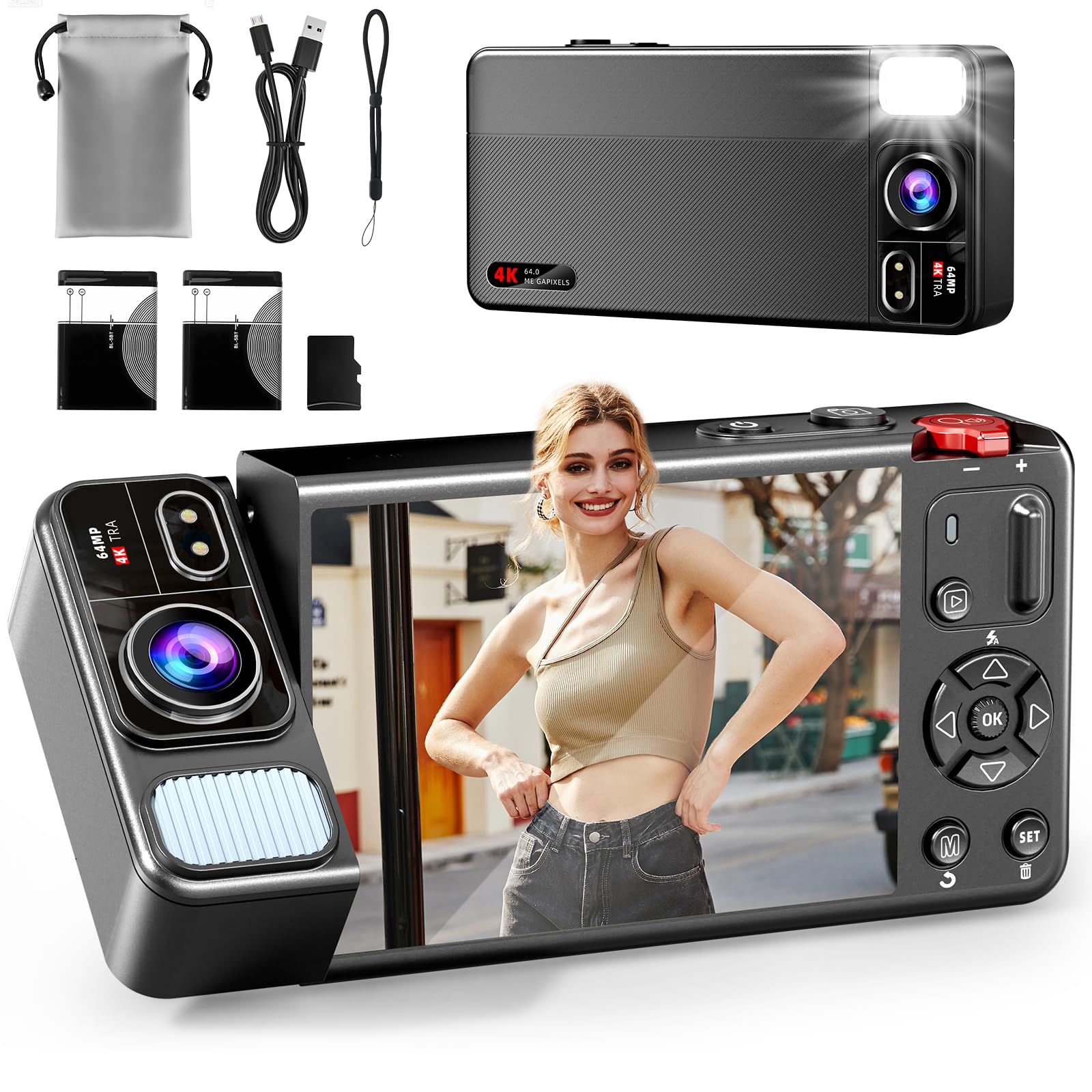
The ZEOUPT CV21 packs a 64MP sensor and 4K video into a body that’s smaller than a smartphone. Its standout feature is the 270-degree flip screen — you can rotate it forward for selfies, upward for overhead shots, or tuck it away for protection. The 3.0-inch LED display is bright enough for outdoor framing, and the 18X digital zoom is usable in good light.
Autofocus here uses contrast detection that locks on in about a second — not the fastest, but reliable for still subjects. The kit includes two rechargeable batteries and a dedicated charging station, which solves the biggest complaint about budget cameras: dying mid-shoot. It also includes a 64GB memory card, so you’re ready to start shooting immediately. The built-in flash and fill light help in darker environments.
The main trade-off is that the 18X digital zoom degrades image quality quickly past 5X. Details become soft and noise increases. The camera also struggles with fast-moving subjects due to the slower autofocus. Still, for the price, you’re getting a versatile kit that’s ideal for teens and beginners who want a dedicated camera for vlogging and casual photography.
Why it’s great
- 270° flip screen for flexible framing
- Two batteries with charging station included
- 64GB card ready out of the box
Good to know
- Digital zoom loses quality quickly
- Autofocus is slow for action shots
3. LOUM 8K WiFi Camera
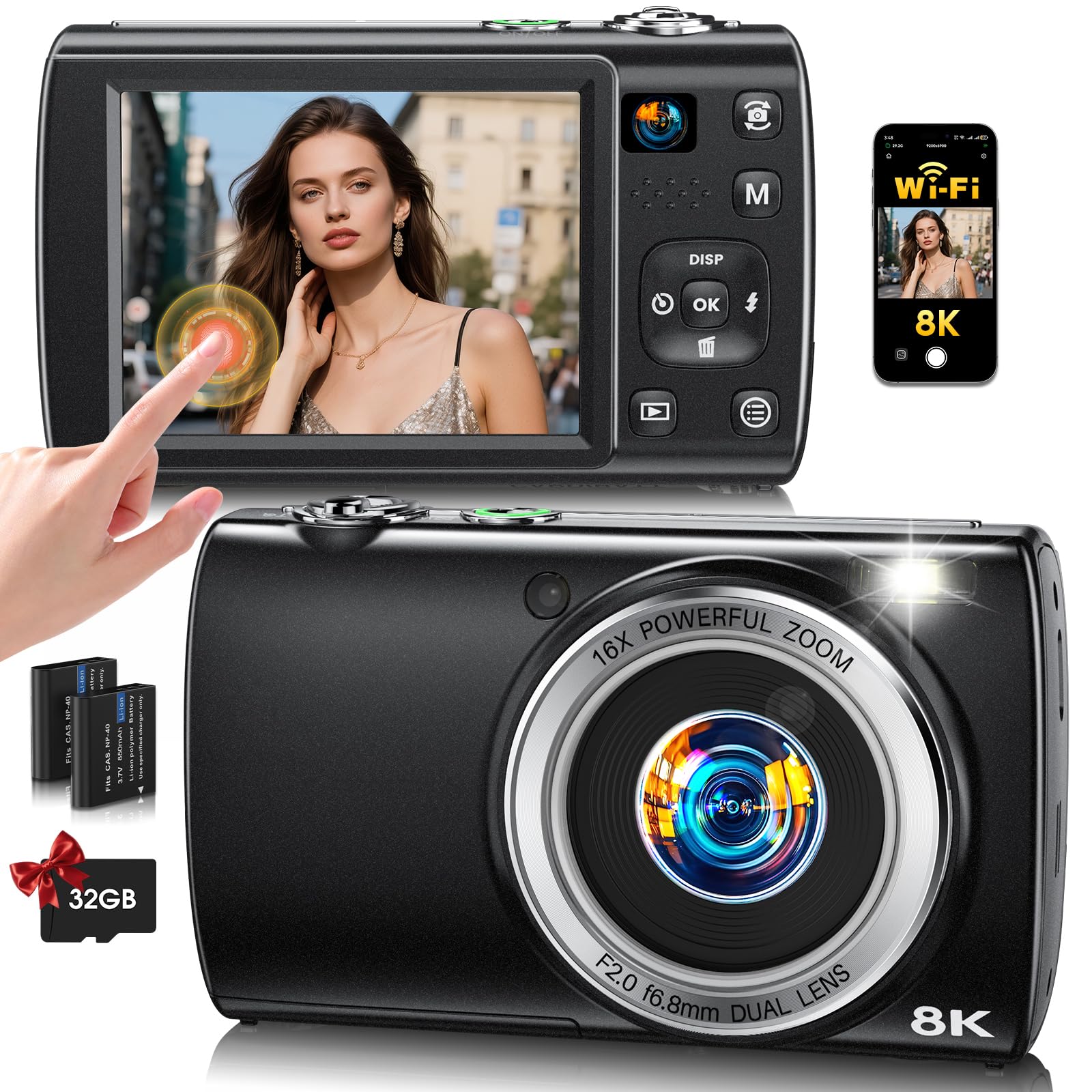
The LOUM 8K WiFi camera stands out for its built-in wireless transfer — you can send photos and videos directly to your phone without digging for a USB cable. The 2.8-inch IPS touchscreen is responsive and makes navigating menus simple. The dual-camera system includes a front-facing lens for selfies and vlogging, eliminating the need to flip a physical screen.
The 88MP photo resolution is interpolated, but the 8K video at 15FPS is a genuine selling point for content creators who want ultra-high resolution timelapses or slow-motion footage. The 5-axis anti-shake stabilization helps smooth out handheld walking shots, which is rare at this price. The kit includes a 32GB card and two rechargeable batteries, plus a carrying bag for travel.
However, the 15FPS 8K mode is more of a marketing spec than a daily-use feature — at that frame rate, anything with motion will look choppy. Stick to 4K 30FPS for smooth video. The WiFi connection can occasionally drop and require re-pairing. Low-light performance is acceptable but not exceptional, with visible noise above ISO 800.
Why it’s great
- WiFi for instant phone sharing
- Touchscreen interface is intuitive
- 5-axis stabilization helps handheld video
Good to know
- 8K only shoots at 15FPS
- WiFi connection can be finicky
4. Lmzour 4K Vlogging Camera
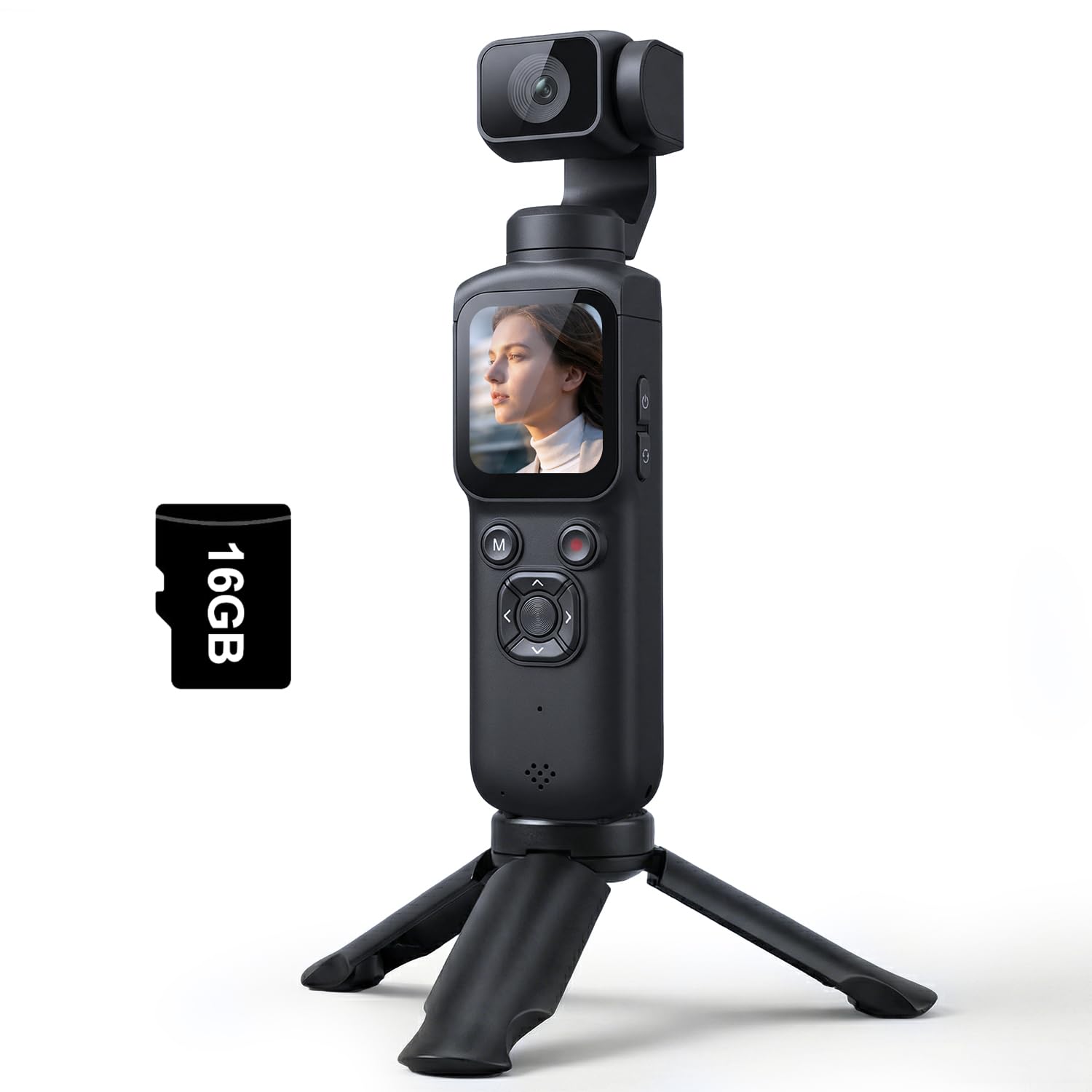
The Lmzour vlogging camera solves a unique problem: how to film yourself without a tripod or an assistant. The 330-degree rotating lens lets you point the camera at yourself while the screen stays facing you — no flip screen needed. The face tracking feature actively follows your face during recording, which is a feature usually found on cameras costing three times as much.
The 4K video at 30FPS looks sharp and the 75MP photos are detailed enough for social media. The wide-angle 79-degree field of view captures more of the background, making it ideal for travel vlogs. The kit includes a mini tripod, 16GB card, carrying bag, and wrist strap — everything you need to start filming. The WiFi function lets you preview and transfer files to your phone.
Battery life is the main limitation here — rated at about 1.5 hours of continuous recording, you’ll want to carry the included spare or an external power bank. The lack of a flash means low-light indoor shots rely entirely on the ambient light or the fill light. The touchscreen is responsive but can be difficult to see in direct sunlight.
Why it’s great
- Rotating lens eliminates need for flip screen
- Face tracking keeps you centered
- Complete kit with tripod and bag
Good to know
- 1.5-hour battery life is below average
- No flash for dark environments
5. FLATIC 5K WiFi Camera
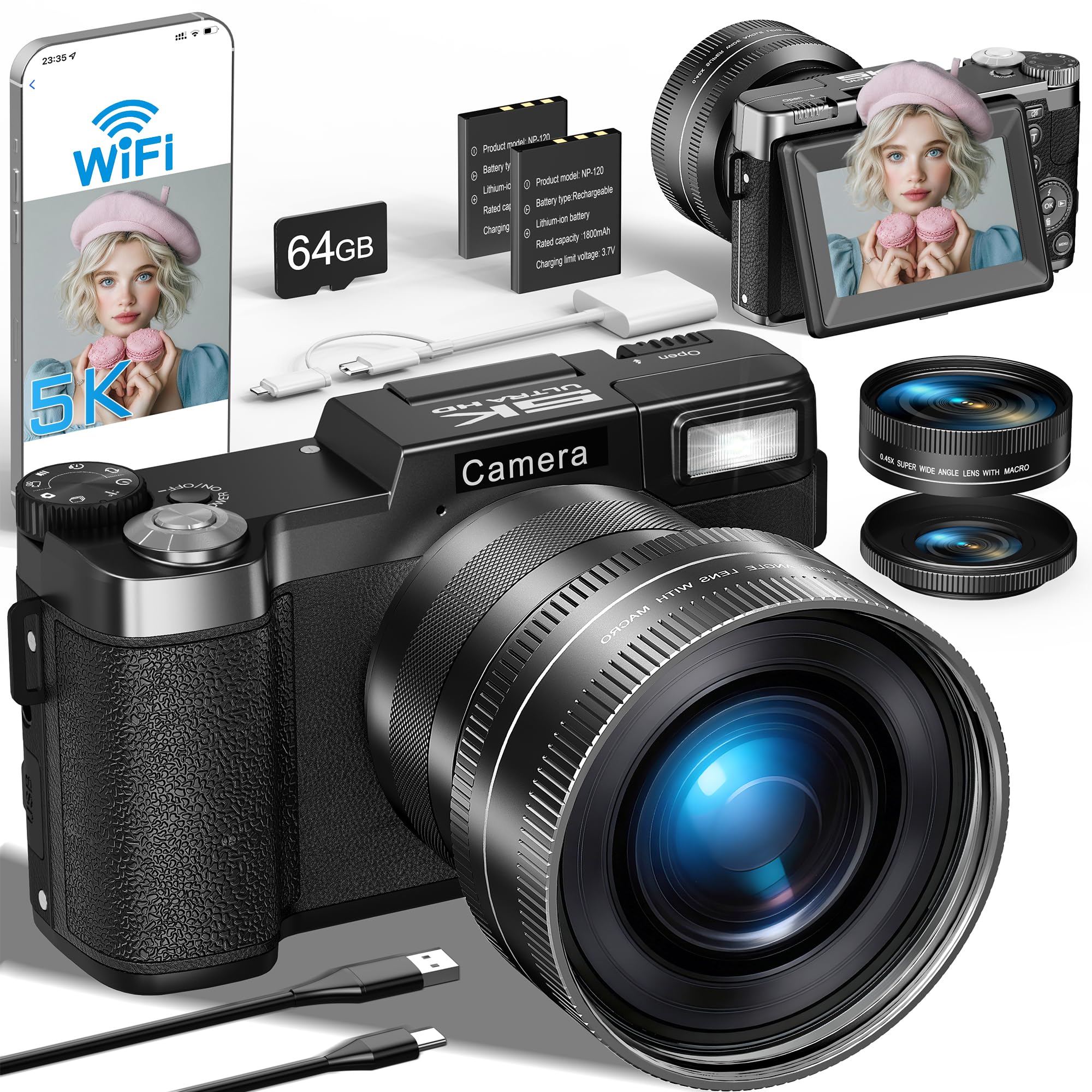
The FLATIC 5K camera delivers higher-than-4K resolution at a price that undercuts most competitors in this list. The 64MP sensor captures fine detail, and the 5K video gives you more cropping flexibility in post-production. The included macro and wide-angle lenses let you switch between close-up product shots and expansive landscapes — a rare addition at this price.
The 180-degree flip screen makes selfie framing straightforward, and the autofocus uses phase detection for faster locking than contrast-based systems. The WiFi feature works well for transferring images to your phone, and the two included batteries mean you can swap and keep shooting. The 64GB memory card included in the box is generous and saves you an immediate accessory purchase.
Some users report that the autofocus can take up to 30 seconds in low contrast scenes, which is frustrating for spontaneous shots. The 18X digital zoom is useful only up to about 8X before quality drops significantly. The lack of optical zoom means you’re entirely dependent on sensor resolution for close-ups of distant subjects.
Why it’s great
- Macro and wide-angle lenses included
- Higher 5K video resolution than standard 4K
- Two batteries and 64GB card in the kit
Good to know
- Autofocus can be slow in low contrast
- Digital zoom degrades past 8X
6. Frenitt 4K Digital Camera
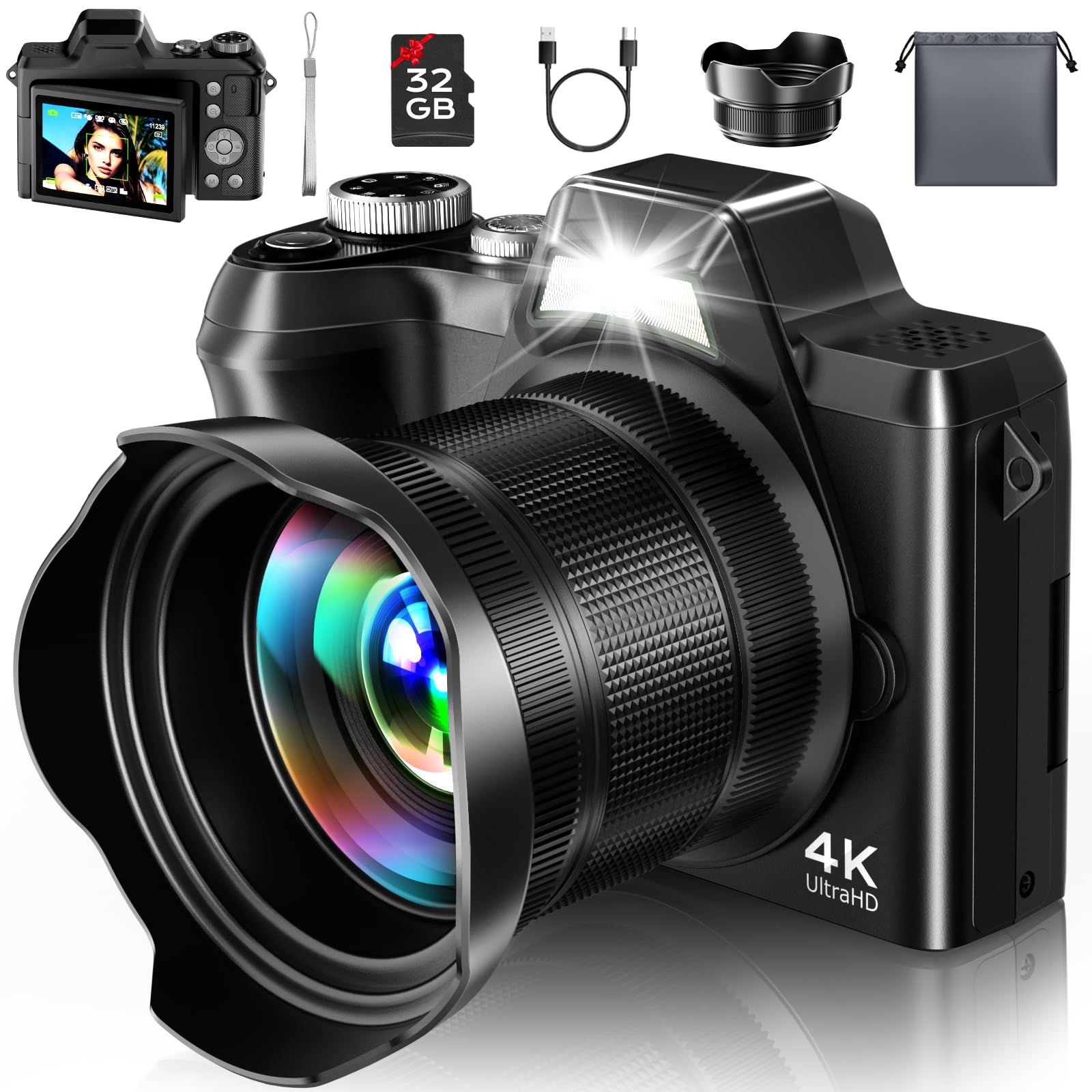
The Frenitt 4K camera is designed specifically for people who don’t want to read a manual. The 360-degree rotating mode dial lets you switch between photo, video, slow motion, time-lapse, smile capture, and motion detection with a single thumb roll. This physical dial eliminates the menu-diving that frustrates beginners. The 180-degree flip screen makes selfie and vlog framing painless.
The 56MP sensor combined with 4K 30FPS video produces decent results in good light. Autofocus works with a half-press of the shutter and locks quickly on well-lit subjects. The 16X digital zoom is usable for moderate distance shots, and the included lens hood reduces glare in bright outdoor conditions. The kit includes a 32GB card, USB-C cable, and a drawstring pouch for storage.
Image quality in low light is acceptable but not impressive — noise becomes visible indoors without the fill light. The digital zoom at maximum 16X produces noticeably soft results. The camera lacks WiFi, so transferring photos requires a USB cable or pulling the memory card. For absolute beginners who want simplicity first, this is the most intuitive option.
Why it’s great
- 360° dial makes mode switching effortless
- Includes lens hood and 32GB card
- USB-C charging and data transfer
Good to know
- No WiFi for wireless sharing
- Digital zoom gets soft at max range
7. Minolta MND20
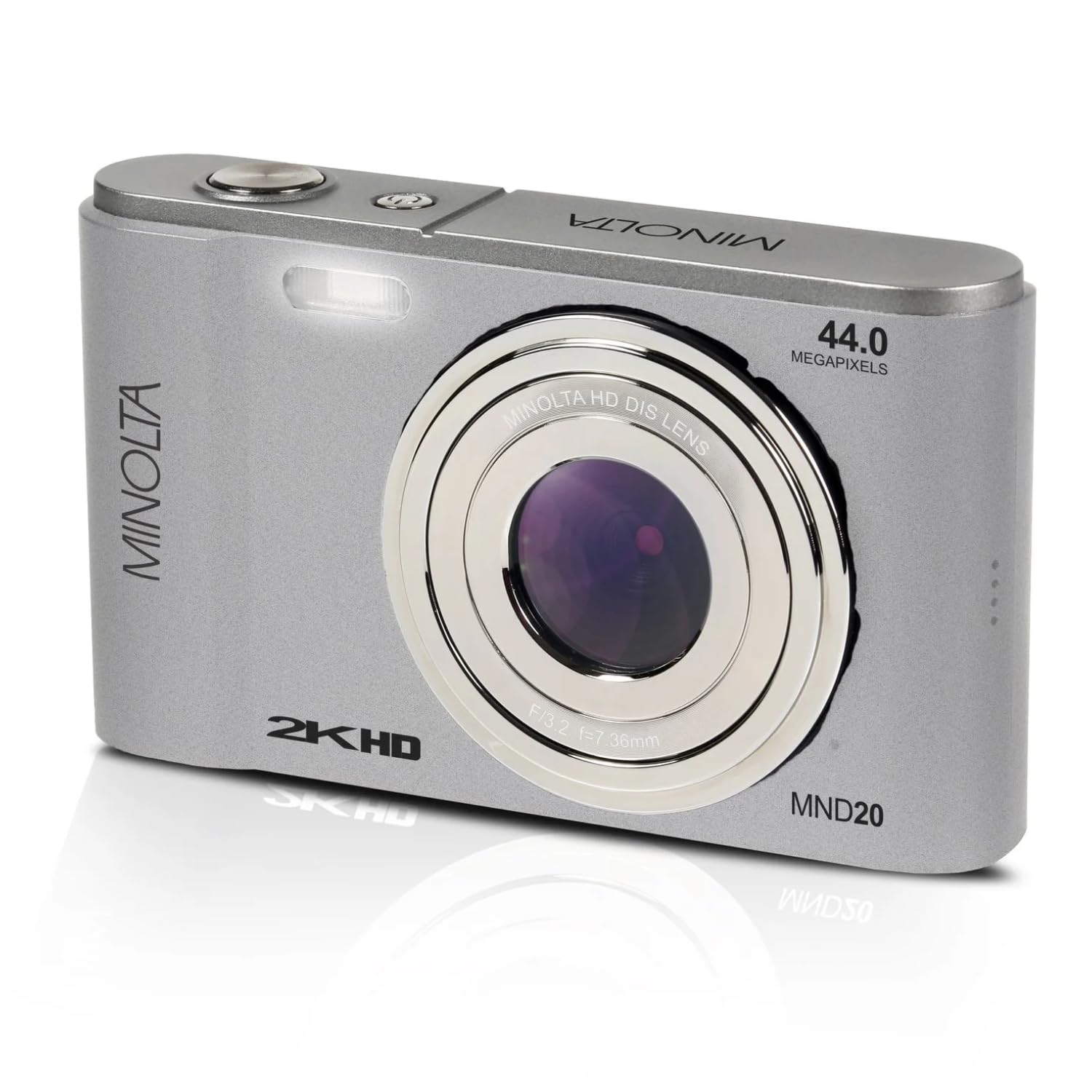
The Minolta MND20 brings a legacy brand name to the budget camera space, but it arrives with significant caveats. The 44MP sensor is interpolated — the actual sensor resolution is 12MP, which means you’re effectively getting a 12MP camera that software upscales to 44MP. In practice, photos look decent on a phone screen but show pixelation when viewed on a monitor.
The 2.7K Quad HD video is a step up from 1080p, and the 16X digital zoom is standard for this tier. The 2.9-inch LCD is a good size for reviewing shots, and features like face detection, smile capture, and time-lapse add creative flexibility. The built-in anti-shake stabilization helps reduce blur from hand movement, though it’s a software solution rather than optical stabilization.
Where the MND20 disappoints is autofocus — it uses contrast detection with only a single autofocus point, and many users report a high rate of blurry shots. The fixed F3.2 aperture means you can’t control depth of field. Battery life is below average, and the proprietary battery is less convenient than standard AA-compatible alternatives. This is best for young children who want the feel of a real camera without risking an expensive device.
Why it’s great
- Very light at only 8 ounces
- Features face and smile detection
- Time-lapse mode included
Good to know
- 44MP is interpolated from 12MP sensor
- No true autofocus — fixed focus
- Poor battery life with proprietary battery
FAQ
Is a cheap point and shoot camera better than my smartphone?
Can I use a cheap point and shoot for vlogging?
What memory card speed do I need for 4K video?
Final Thoughts: The Verdict
For most users, the best cheap point and shoot digital camera winner is the Kodak PIXPRO FZ55 because its 5X optical zoom actually delivers clear distant shots — a feature every other budget camera in this price range fakes with digital cropping. If you want a flip screen for selfies and vlogging, grab the ZEOUPT CV21. And for the absolute easiest beginner experience with a rotating mode dial, nothing beats the Frenitt 4K.

Mo Maruf
I created WellFizz to bridge the gap between vague wellness advice and actionable solutions. My mission is simple: to decode the research and give you practical tools you can actually use.
Beyond the data, I am a passionate traveler. I believe that stepping away from the screen to explore new environments is essential for mental clarity and physical vitality.