Our readers keep the lights on and my smoothie glass nicely filled. As an Amazon Associate, I earn from qualifying purchases.
Swapping soy sauce for a coconut-based alternative usually comes down to one question: does it actually taste good on its own, or do you have to drown it in ginger and garlic to make it work? The best coconut aminos walk a tight line between sweet, tangy, and savory without leaning too hard on any one note. That balance determines whether a bottle ends up in weekly rotation or gets pushed to the back of the fridge.
I’m Mohammad Maruf — the founder and writer behind WellFizz. Over the past several weeks I’ve dug into the ingredient lists, sodium counts, and real-world reviews of the most popular coconut aminos on the market to see which bottles deliver on the promise of a genuinely satisfying soy sauce replacement.
Whether you are avoiding soy, cutting sodium, or simply curious about a pantry upgrade, this guide breaks down five standout options to help you pick the bottle that actually fits your cooking. That is exactly what this guide to the best coconut aminos is built to deliver.
How To Choose The Best Coconut Aminos
Coconut aminos is a simple condiment — usually just fermented coconut blossom nectar and sea salt. But tiny differences in the ingredient balance, sodium level, and bottle size can shift the flavor from “just like soy sauce” to “way too sweet for dinner.” Here is what to watch for before you add a bottle to your cart.
Sodium Content Per Serving
The whole point for many buyers is getting a lower-sodium alternative to traditional soy sauce. Soy sauce packs around 300 mg of sodium per teaspoon. Coconut aminos typically range from 60 mg to 140 mg per serving. The lowest-sodium bottles taste noticeably sweeter because there is less salt to counter the natural sugar in the coconut sap. If you are cooking with aminos daily, that difference in sodium can add up quickly.
Sweetness Level and Aftertaste
Coconut blossom nectar contains natural sugars, so every bottle of aminos has a mild sweetness. Some brands lean into that sweetness and produce a flavor closer to teriyaki sauce. Others use a longer fermentation process or add apple cider vinegar to create a tangier, more savory finish that works better as a direct soy sauce swap for sushi or sashimi. Your choice depends on whether you want a marinade base or a table condiment.
Ingredient List and Certifications
A clean label matters here because cheap aminos can include added sugars, yeast extract, or preservatives to mimic umami without proper fermentation. Look for bottles labeled USDA Organic, non-GMO, and soy-free. The best products contain just two ingredients — coconut sap and sea salt — with no fillers. Sustainable sourcing and fair trade practices are also common markers of higher quality in this category.
Quick Comparison
On smaller screens, swipe sideways to see the full table.
| Model | Category | Best For | Key Spec | Amazon |
|---|---|---|---|---|
| Bragg Organic | Mid-Range | All-purpose soy sub | 16 oz, with apple cider vinegar | Amazon |
| BetterBody Foods | Premium | Low-sodium cooking | 2-pack, 33.8 oz total | Amazon |
| Coconut Secret | Premium | Lowest sodium choice | 2-pack, 33.8 oz total | Amazon |
| Big Tree Farms | Mid-Range | Thicker marinades | 16.9 oz, thicker consistency | Amazon |
| Trader Joe’s Pack | Budget | Everyday value | 2-pack, 17 oz total | Amazon |
In‑Depth Reviews
1. Bragg Organic Coconut Aminos
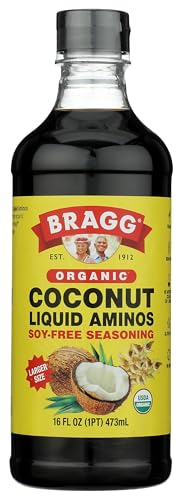
Bragg brings its signature apple cider vinegar into this coconut aminos, which gives the bottle a noticeably tangier, more savory edge than most competitors. That acidity cuts the natural sweetness of the coconut sap, making this one of the better options for anyone who wants a direct soy sauce replacement without a lingering sugary aftertaste. Reviewers consistently mention using it on salads, vegetables, tempeh, and as a marinade base — it fits almost any cooking application you can throw at it.
The ingredient list is clean and short: organic coconut blossom nectar, organic apple cider vinegar, and Balinese sea salt. No added sugars, no yeast extract, and no preservatives. It is also soy-free, gluten-free, and vegan. The 16-ounce bottle is a standard pantry size, though several long-term users note that the vinegar-forward flavor makes it less ideal as a straight dipping sauce for sushi compared to blander options.
Customer feedback is overwhelmingly positive, with many citing this as their permanent swap from conventional soy sauce. The only recurring practical note is that the bottle should be refrigerated after opening to maintain freshness, which is typical for this category but worth remembering if you keep your soy sauce in the cupboard habitually.
Why it’s great
- Tangy, savory flavor profile that closely mimics soy sauce
- Clean two-ingredient base plus sea salt
- Versatile across salads, marinades, and cooked dishes
Good to know
- Vinegar tang may not suit straight sushi dipping
- Requires refrigeration after opening
2. BetterBody Foods Organic Coconut Aminos
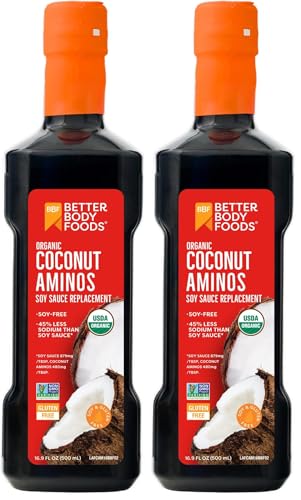
BetterBody Foods delivers a 2-pack of 16.9-ounce bottles, giving you over a quart of coconut aminos for a very reasonable per-ounce cost. The flavor profile leans sweeter than Bragg, owing to the absence of vinegar in the ingredient list. This makes it an excellent choice for stir-fry sauces, glazes, and marinades where a mild sweetness complements the dish rather than competing with it.
The sauce is made from organic coconut blossom nectar and Himalayan salt, with no added sugar and no soy. It is also USDA Organic certified, gluten-free, and non-GMO. Several reviewers call it the best-tasting coconut aminos they have tried specifically because the sweetness feels balanced rather than cloying. The plastic bottle is a practical upgrade over glass — lighter, shatterproof, and easier to squeeze toward the end of the bottle.
One consistent observation is that this sauce tastes closer to teriyaki than straight soy sauce, so it is not the best pick for raw sushi dipping. But for cooking volume and general pantry replacement, the combination of flavor, certification, and bottle count makes this a compelling mid-range option.
Why it’s great
- Generous 2-pack provides excellent per-ounce value
- Well-balanced sweetness works great in marinades and stir-fries
- Plastic bottle is lightweight and shatter-resistant
Good to know
- Sweeter profile may not suit all soy sauce replacement needs
- Not ideal as a straight dipping sauce for sushi
3. Coconut Secret Coconut Aminos
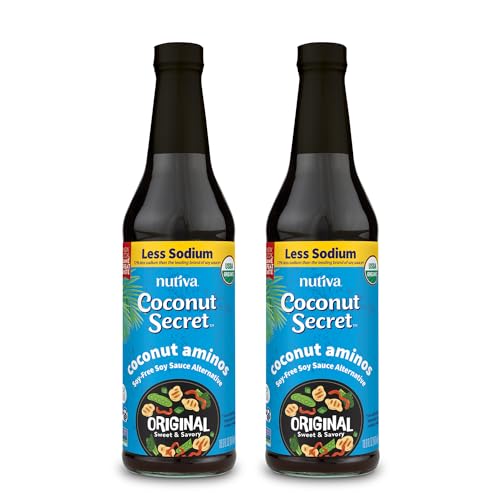
Coconut Secret is widely regarded as the original brand that defined the coconut aminos category, and its 2-pack of 16.9-ounce bottles remains a benchmark for quality. The standout feature here is the sodium content — just 90 mg per teaspoon compared to 300 mg in traditional soy sauce, making it the lowest-sodium option among the popular brands. For anyone strictly limiting salt intake, this is the bottle to prioritize.
The two-ingredient recipe — organic coconut tree sap and sea salt — is about as clean as it gets. There is no added sugar, no vinegar, and no fermentation shortcuts. The flavor is tangy-sweet with a noticeably lighter body than thicker alternatives like Big Tree Farms.
The only trade-off is the price point, which is higher per ounce than several competitors. But for buyers who prioritize the lowest possible sodium and a verified two-ingredient label, the premium is justified. The brand also uses sustainable farming practices in the Philippines and follows fair trade guidelines, which adds ethical confidence to the purchase.
Why it’s great
- Lowest sodium content at 90 mg per teaspoon
- Just two ingredients — coconut sap and sea salt
- Lighter, cleaner taste ideal for sushi and sashimi
Good to know
- Higher per-ounce cost than mid-range brands
- Sweeter profile may not suit every dish
4. Big Tree Farms Organic Coco Aminos
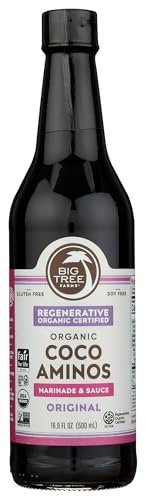
Big Tree Farms stands apart from the crowd with a noticeably thicker viscosity than other coconut aminos. Reviewers describe it as much thicker than competing brands, which means a little goes a long way — a single bottle stretches further in cooking applications that need body, like noodle sauces, glazes, and braises. The thickness also helps it cling to vegetables and protein better during stir-frying.
The ingredient list stays clean with no hydrogenated fats, high fructose corn syrup, or synthetic nitrates. It is also organic and soy-free. The flavor is less tangy than Bragg and less sweet than BetterBody Foods, sitting in a neutral middle zone that works well as a general soy sauce swap for most cooked dishes. A few users note it pairs particularly well with beef, mushrooms, and hearty greens thanks to its subtle umami baseline.
One potential drawback is the mouthfeel — if you are used to the thin, watery consistency of standard soy sauce, the thicker texture can feel unfamiliar at first. But for anyone who wants more cling and less splash, this is the bottle to reach for. It also works well as a base for homemade teriyaki sauce where extra body is already desired.
Why it’s great
- Thicker consistency provides better cling to food
- Neutral flavor profile suits a wide range of dishes
- Clean ingredients with no artificial additives
Good to know
- Thicker texture may not appeal to soy sauce purists
- Smaller single bottle compared to value 2-packs
5. Trader Joe’s Organic Coconut Aminos (2-Pack)

Trader Joe’s entry into the coconut aminos space has built a devoted following, and this 2-pack of 8.5-ounce bottles delivers solid quality at a budget-friendly price point. Reviewers frequently compare it favorably to Coconut Secret, noting that it tastes very similar but with a slightly sweeter edge reminiscent of tamari. The smaller bottle size is convenient for trying the product for the first time without committing to a quart.
The sauce is shelf-stable before opening and does not form the froth or sediment that some other brands develop over time. It works well for sushi, sashimi, and as a ponzu-style base when mixed with lime juice and sesame oil. The lower sodium content also makes it a practical option for anyone cutting back on salt without sacrificing flavor entirely.
The main practical issue reported by some buyers involves packaging defects — a few customers received units with loose lids that caused spillage during shipping. This is not a widespread problem, but worth inspecting upon arrival. The smaller total volume (17 ounces across two bottles) also means you will go through it faster if you cook with aminos daily, though the lower price point makes restocking less painful.
Why it’s great
- Budget-friendly entry point for trying coconut aminos
- Shelf-stable with no frothing or sediment issues
- Great flavor profile for sushi and ponzu dressings
Good to know
- Smaller bottles require more frequent restocking
- Occasional packaging defects with loose lids reported
FAQ
Is coconut aminos actually healthier than soy sauce?
Does coconut aminos taste like coconut?
Do I need to refrigerate coconut aminos after opening?
Can I use coconut aminos as a 1-to-1 substitute for soy sauce in recipes?
Final Thoughts: The Verdict
For most users, the best coconut aminos winner is the Bragg Organic Coconut Aminos because it strikes the best balance between savory depth, low sodium, and versatility across cooking styles. If you want the absolute lowest sodium content and a clean two-ingredient label, grab the Coconut Secret Coconut Aminos. And for a budget-friendly value pack that performs well in everyday cooking, nothing beats the Trader Joe’s Organic Coconut Aminos 2-Pack.

Mo Maruf
I created WellFizz to bridge the gap between vague wellness advice and actionable solutions. My mission is simple: to decode the research and give you practical tools you can actually use.
Beyond the data, I am a passionate traveler. I believe that stepping away from the screen to explore new environments is essential for mental clarity and physical vitality.