Our readers keep the lights on and my smoothie glass nicely filled. As an Amazon Associate, I earn from qualifying purchases.
The hunt for a camera that delivers professional-grade image quality without the bulk of a traditional DSLR ends with a specific sensor size: full-frame. But shrinking the body usually means compromising on handling, battery life, or stabilization. The current generation of compact full-frame mirrorless cameras has solved this equation, offering a body that fits in a small bag while retaining the dynamic range and low-light performance that serious photographers demand.
I’m Mohammad Maruf — the founder and writer behind WellFizz. I’ve spent hundreds of hours analyzing market trends, sensor specifications, and real-world user feedback to determine which of these high-stakes purchases actually deliver on their promise.
Whether you’re upgrading from APS-C or starting fresh, this guide cuts through the noise to help you find the absolute best compact full frame mirrorless camera for your specific shooting style and budget.
How To Choose The Best Compact Full Frame Mirrorless Camera
Choosing the right compact full-frame body means balancing portability against critical features like In-Body Image Stabilization (IBIS), autofocus speed, and video capabilities. The body is just the start — your choice determines the lens ecosystem you’ll invest in, which ultimately shapes your image quality more than any single spec.
IBIS and Stabilization: The Handheld Factor
A compact body lacks the weight to dampen your natural hand shake. IBIS compensates for this by physically shifting the sensor. Look for 5-axis systems offering 5 stops or more of correction — this lets you shoot at slower shutter speeds in dim light without a tripod, a critical feature for travel and street photography.
Autofocus Coverage and Subject Tracking
Phase-detection AF with wide coverage (90% or more of the frame) ensures your subject stays sharp, even at the edges. Real-time eye-tracking for humans, animals, and vehicles is now standard. Faster readout sensors eliminate the rolling shutter effect, making electronic shutter usable for candid or action shots without distortion.
Video Recording and Crop Factor
Many compact full-frame cameras introduce a crop when shooting 4K 60p, reducing the effective sensor size. For hybrid shooters, a camera that offers full-frame oversampled 4K without crop is ideal. Check for 10-bit internal recording and log profiles if you plan to color grade your footage.
Lens Ecosystem and Adaptability
The lens mount dictates your future options. Canon’s RF mount offers fast, compact glass but limits third-party options. Sony’s E-mount has the largest library of native and third-party lenses. Nikon’s Z mount uses a wide 55mm throat, enabling excellent optical designs. Consider the availability of small, compact primes and lightweight zooms before committing to a system.
Quick Comparison
On smaller screens, swipe sideways to see the full table.
| Model | Category | Best For | Key Spec | Amazon |
|---|---|---|---|---|
| Sony FX2 | Cinema | Dedicated video creators | 33MP, Dual Base ISO, 15+ Stops DR | Amazon |
| Canon EOS R5 | Pro Hybrid | High-res hybrid shooting | 45MP, 8K Video, 20fps e-shutter | Amazon |
| Nikon Z 7II | High-Res | Landscape and studio | 45.7MP, Dual Card Slots | Amazon |
| Sony Alpha 7 IV | All-Rounder | Hybrid stills and video | 33MP, 4K 60p 10-bit, S-Cinetone | Amazon |
| Panasonic S5II | Video Hybrid | Content creators | 24.2MP, Unlimited 4:2:2 10-bit | Amazon |
| Canon EOS RP (L Kit) | Entry | L-series glass on a budget | 26.2MP, RF 24-105mm f/4L IS | Amazon |
| Nikon Z 6II | Versatile | Action and events | 24.5MP BSI, 14fps, Dual Slots | Amazon |
| Canon EOS R8 | Lightweight | Travel and adventure | 24.2MP, Uncropped 4K 60p | Amazon |
| Sony a7 III | Legacy Value | Bargain full-frame entry | 24.2MP BSI, 693 AF points | Amazon |
| Panasonic S9 | Social Creator | Social media content | 24.2MP, Real Time LUT, Open Gate | Amazon |
| Nikon Z 5 (24-200mm) | All-In-One | Versatile travel zoom | 24.3MP, 24-200mm Lens, IBIS | Amazon |
| Nikon Z 5 (24-50mm) | Compact Entry | First full-frame upgrade | 24.3MP, Compact Kit Lens | Amazon |
| Canon EOS RP (24-105mm) | Budget Travel | Entry-level full-frame kit | 26.2MP, RF 24-105mm f/4-7.1 | Amazon |
In‑Depth Reviews
1. Sony FX2 Cinema Camera

The Sony FX2 is purpose-built for video-first creators who need cinematic tools in a manageable package. Its 33MP full-frame sensor and BIONZ XR processor deliver 15+ stops of dynamic range in Log mode, with dual base ISO at 800 and 4000. This architecture allows clean shadow recovery and excellent highlight retention across varied lighting conditions, a must for narrative and documentary work.
The Big6 interface streamlines exposure control via dedicated physical dials, while the angle-adjustable EVF permits comfortable shooting from low or high angles. Autofocus performance is top-tier, with 759 phase-detection points covering nearly the entire frame. The electronic viewfinder is sharp and bright, reducing the need for an external monitor in many run-and-gun scenarios.
For hybrid shooters, the FX2’s stills burst rate is limited, making it a weaker choice if photography is half your workflow. It also crops at 4K 60p. The lack of a built-in ND filter and the need for CFexpress Type A cards (for the best codecs) add to the system cost, but for pure video output, its color science and log flexibility are hard to beat.
Why it’s great
- Dual base ISO for clean low-light footage
- Excellent S-Cinetone color profile
- Bright, adjustable EVF for video work
Good to know
- Cropped 4K 60p, not full-frame
- Low stills continous shooting rate
- Requires fast media for best codecs
2. Canon EOS R5

The Canon EOS R5 remains a benchmark for hybrid performance, pairing a 45MP stacked CMOS sensor with 8K RAW internal recording. The DIGIC X processor enables 20 fps electronic shutter and 12 fps mechanical continuous shooting, making it viable for wildlife and sports alongside landscape work. The Dual Pixel CMOS AF II covers 100% of the frame with 1,053 zones, and Eye Control AF allows focus point selection just by looking through the EVF.
In-body stabilization works in concert with RF lenses to provide up to 8 stops of correction, a game-changer for handheld shooting in dim interiors. The 4K HQ mode oversamples from 8K, delivering exceptionally sharp footage with reduced moire. The build quality is robust with weather sealing, and the grip is comfortable enough for long days even though the body is relatively compact for its class.
The R5 is expensive, and while overheating during 8K recording is often overblown, it can limit extended 4K 120p clips. Battery life is below DSLR standards, and RF lenses, particularly the L-series, are a significant investment. For professionals who need top-tier stills and video in one body, the R5 justifies its cost with sheer versatility.
Why it’s great
- 8K internal RAW recording
- 8-stop IBIS for steady handheld shots
- Fast 20 fps electronic shutter
Good to know
- Premium price point
- Overheating caution with 8K video
- Battery drains faster than DSLR
3. Nikon Z 7II

The Nikon Z 7II is a resolution specialist, built for landscape, studio, and fine-art photographers who demand the finest detail. Its 45.7MP back-illuminated sensor captures extraordinary sharpness and dynamic range, with excellent color reproduction straight out of camera. The 493-point phase-detect AF system, while not as fast as Sony’s latest, is reliable for portraiture and still subjects.
The dual card slot setup (CFexpress/XQD plus UHS-II SD) gives professionals peace of mind and workflow flexibility. The Z 7II is compatible with Nikon’s impressive Z lens lineup and accepts over 360 F-mount lenses via the FTZ adapter. The body feels rugged and ergonomic, with a deep grip that belies its compact dimensions.
The continuous shooting speed of 10 fps is adequate but not class-leading, and the video features, while solid (4K 60p), lack the advanced log profiles and heat management of hybrid-focused rivals. Battery life is average for mirrorless. It excels as a stills-first camera but feels less capable as a hybrid.
Why it’s great
- Exceptional 45.7MP stills resolution
- Dual card slots for redundancy
- Excellent build and ergonomics
Good to know
- Only 10 fps burst rate
- Video features are basic for pro use
- Battery performance is middling
4. Sony Alpha 7 IV

The Sony A7 IV strikes the most balanced hybrid proposition in the market, combining a 33MP back-illuminated sensor with the BIONZ XR processor. It delivers 4K 60p 10-bit 4:2:2 with full pixel readout, oversampled 4K 30p from 7K, and S-Cinetone color science for pleasing skin tones. The 693 phase-detection AF points provide 94% frame coverage, and Real-time Eye AF for humans and animals is fast and sticky.
The articulating touchscreen is useful for vloggers and low-angle shooters, while the weather-sealed body handles light rain. The grip is deeper than the A7 III, improving handling with larger lenses. Battery life is strong for a mirrorless body at over 500 shots per charge, and the dual card slot (CFexpress Type A + SD) offers flexibility.
The electronic viewfinder resolution is 3.68M dots, which is good but not best-in-class. The 4K 60p mode uses a Super 35mm crop, reducing the wide-angle effect. For a single camera that does everything competently — from street photography to client video — the A7 IV is a versatile workhorse.
Why it’s great
- Excellent 33MP hybrid sensor
- Fast and reliable autofocus
- Articulating screen for flexible framing
Good to know
- 4K 60p uses a Super 35mm crop
- EVF resolution could be higher
- Menu complexity can be daunting
5. Panasonic LUMIX S5II
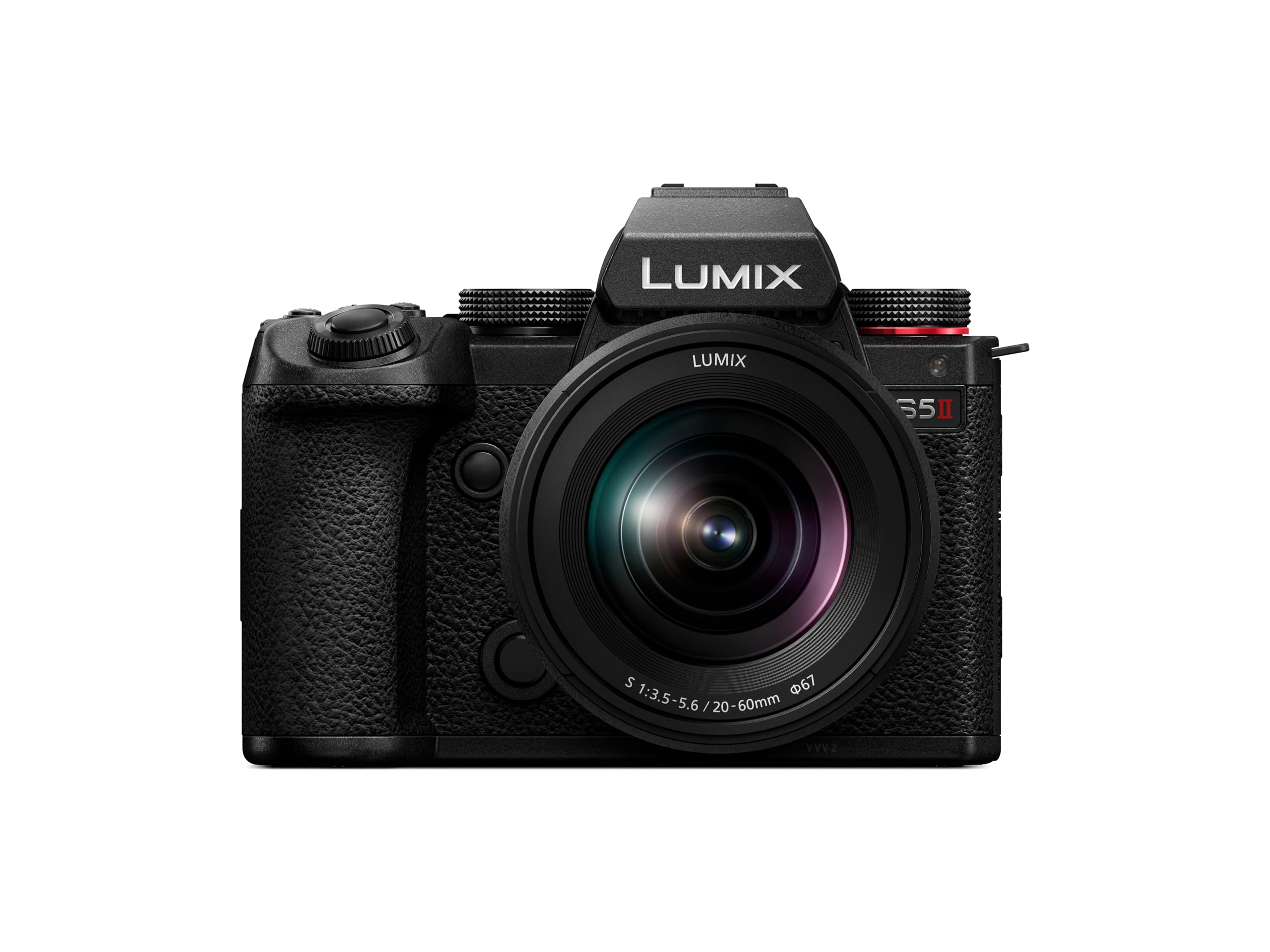
The LUMIX S5II is a major leap for Panasonic thanks to its introduction of Phase Hybrid Autofocus, eliminating the wobbling issues that plagued contrast-detect systems. This 24.2MP full-frame body offers unlimited 6K 30p Open Gate and 4K 60p 4:2:2 10-bit recording with a fan-assisted heat sink, making it a genuine beast for long-form content creation.
The new Active I.S. technology enhances stabilization when walking and shooting handheld, reducing the need for a gimbal in many situations. The V-Log/V-Gamut capture delivers 14+ stops of dynamic range, and the Real Time LUT feature lets you apply custom color grades in-camera, streamlining social media workflows. The 20-60mm kit lens is versatile and sharp.
Battery life is underwhelming, and the body’s square design picks up scratches easily. The L-mount ecosystem, while growing with Sigma and Leica support, still lags behind Sony and Canon in native telephoto options. It’s a powerhouse for video at a competitive price, but stills performance is solid rather than spectacular.
Why it’s great
- Unlimited 6K Open Gate recording
- Phase Hybrid AF for reliable focus
- Active I.S. for smooth walkaround shots
Good to know
- Battery life is short
- L-mount lens options are narrower
- Build prone to cosmetic wear
6. Canon EOS RP (RF 24-105mm f/4L Kit)

This bundle pairs the EOS RP, Canon’s lightest full-frame mirrorless camera, with the stellar RF 24-105mm f/4L IS USM lens. The 26.2MP sensor and DIGIC 8 processor produce pleasing, color-rich images typical of Canon output. The RP is very small and comfortable to hold, making it ideal for travel and casual shooting.
The L-series lens is the real star: constant f/4 aperture, 5-stop image stabilization, and Nano USM for silent, fast autofocus. It resolves excellent sharpness across the frame and handles chromatic aberration well. For stills photography, this combination punches well above its weight, especially in good light. The RP also accepts EF/EF-S lenses via an adapter, giving access to a huge used lens market.
The RP’s video features are dated: 4K is heavily cropped with no Dual Pixel AF, and the burst rate at 5 fps is slow. The LP-E17 battery has poor endurance, and the single UHS-II SD slot is a limitation for backup. This is a stills-first system that leverages superior glass to produce outstanding photos.
Why it’s great
- Amazing RF 24-105mm f/4L lens included
- Very lightweight and ergonomic
- Excellent stills image quality
Good to know
- Cropped 4K video without PDAF
- Slow 5 fps burst rate
- Small battery capacity
7. Nikon Z 6II

The Z 6II is a well-rounded mid-range option that excels in low light thanks to its 24.5MP BSI sensor. The dual EXPEED 6 processors enable 14 fps continuous shooting with a buffer capacity 3.5x larger than the original Z 6. This makes it suitable for fast-paced events and wedding photography where reliability matters.
4K UHD 60p video uses full pixel readout, and the 5-axis IBIS provides solid stabilization for handheld video. The dual card slots (CFexpress/XQD + UHS-II SD) offer professional-grade redundancy. The body accepts the MB-N11 vertical grip for extended battery life, and USB-C charging adds convenience for video shoots and livestreaming.
Autofocus, while improved, still loses tracking on erratically moving subjects occasionally. The Z mount lacks a native f/4 70-200mm lens, and the AF system isn’t as sticky as Sony’s latest. For a reliable all-rounder that handles low light beautifully, the Z 6II delivers consistent results.
Why it’s great
- Excellent low-light BSI sensor
- Dual card slots for professional use
- 14 fps continuous shooting
Good to know
- AF tracking can falter
- Limited native Z f/4 telephoto options
- Battery life is average
8. Canon EOS R8

The Canon EOS R8 is the lightest full-frame RF mount camera, making it a compelling option for adventure and travel photographers who prioritize weight. Despite its small size, it houses the same 24.2MP sensor and DIGIC X processor as the pro-level R6 II, delivering excellent image quality with minimal noise at high ISO. The Dual Pixel CMOS AF II covers 100% of the frame with 1,053 zones.
Video capabilities are impressive: uncropped 4K 60p oversampled from 6K, Full HD 180p for slow motion, and Canon Log 3 for color grading. The vari-angle LCD touchscreen is useful for framing from any angle, and the 0.39-inch OLED EVF has a smooth 120 fps refresh rate. USB-C charging and UVC/UAC support make it a viable webcam or streaming camera.
The primary trade-off is battery life — the LP-E17 is small, and you’ll need multiple spares for a day of shooting. The kit lens (RF 24-50mm f/4.5-6.3) is plastic and retracts, limiting optical quality. For an affordable, lightweight travel body that punches above its weight class, the R8 is hard to beat.
Why it’s great
- Very lightweight and compact body
- Uncropped 4K 60p from 6K oversample
- Fast, reliable Dual Pixel CMOS AF II
Good to know
- Poor battery life
- Kit lens has cheap build quality
- No in-body image stabilization
9. Sony a7 III

The Sony a7 III was a landmark camera that established the standards for full-frame mirrorless, and it remains a fantastic value for budget-conscious photographers. The 24.2MP BSI sensor still delivers sharp images with excellent dynamic range and low-light capability. The 693 phase-detection AF points cover 93% of the frame, and Eye AF works reliably for portraits.
Battery life is a highlight — the NP-FZ100 lasts for well over 700 shots per charge, a significant advantage over many rivals. The 10 fps continuous shooting with mechanical or silent shutter is adequate for most subjects. The camera supports 4K 30p with full pixel readout and has a solid 15-stop dynamic range. The E-mount ecosystem, with hundreds of native and third-party lenses, ensures you can find glass for any budget and style.
The main drawbacks are the older menu system, the small EVF, and the lack of a fully articulating screen. It also lacks a 10-bit video mode and has a slower 4K 60p with crop. For a pure stills shooter entering full-frame on a budget, the a7 III is a smart buy that leaves room for lens investment.
Why it’s great
- Excellent value for full-frame entry
- Superior battery life
- Huge E-mount lens ecosystem
Good to know
- Basic video specs without 10-bit
- Smaller EVF and rear screen
- Old, clunky menu system
10. Panasonic LUMIX S9

The LUMIX S9 is designed for a singular purpose: frictionless content creation for social media. It’s an ultra-compact body that fits in a jacket pocket, yet it packs a 24.2MP full-frame sensor and 6K Open Gate recording. The defining feature is Real Time LUT — you can apply custom color presets in-camera and see the result live, eliminating the need for post-processing for quick sharing.
Video-first specs include 6K 30p, 4K 60p, and 10-bit recording. The LUMIX Lab app offers ultra-fast Wi-Fi transfer, and you can wirelessly tether for a smooth workflow. The body looks stylish with multiple color finishes and is remarkably portable for a full-frame camera. Image quality is on par with Panasonic’s highly-regarded S5II, producing sharp, vibrant JPEGs straight out of camera.
The S9 makes intentional sacrifices: no electronic viewfinder, no mechanical shutter, and no hot shoe. These omissions make it less capable for traditional photography but excellent for casual users and content creators who prioritize speed and portability. The battery life is decent, but the lack of an EVF can be challenging in bright sunlight.
Why it’s great
- Extremely compact and stylish
- Real Time LUT for instant color grading
- 6K Open Gate recording
Good to know
- No electronic viewfinder
- No mechanical shutter
- No hot shoe for accessories
11. Nikon Z 5 (24-200mm Kit)

This kit places the Nikon Z 5 body with the versatile NIKKOR Z 24-200mm f/4-6.3 VR lens, creating an all-in-one travel solution. The 24.3MP sensor delivers excellent image quality with vibrant colors and great low-light performance. The 5-axis IBIS inside the Z 5 allows for sharp handheld shots at slower shutter speeds, a critical feature for a travel zoom package.
The 24-200mm lens covers wide-angle to telephoto, eliminating the need to swap lenses in dusty or fast-paced environments. Vibration Reduction (VR) inside the lens works in concert with IBIS for exceptional stabilization. The Z 5 body features dual UHS-II SD card slots and an OLED EVF with a 0.80x magnification. Eye-detection AF works reliably for people and pets.
The continuous shooting rate is just 4.5 fps, making it unsuitable for action or sports. The 4K video is cropped at 30p, and the AF system is slower than the Z 6II. The Z 5 is perfectly suited for the photographer who wants one camera and one lens for a trip — a sturdy, high-quality compact full-frame solution.
Why it’s great
- Versatile 24-200mm all-in-one lens
- 5-axis IBIS for steady handheld shots
- Dual UHS-II SD card slots
Good to know
- Slow 4.5 fps burst rate
- Cropped 4K video at 30p
- Autofocus not as fast as Z 6II
12. Nikon Z 5 (24-50mm Kit)

The Nikon Z 5 with the 24-50mm f/4-6.3 kit lens is an excellent entry point for photographers moving from crop-sensor DSLRs into full-frame mirrorless. The body is Nikon’s most compact full-frame Z series, and the retracting 24-50mm lens keeps the entire package very portable. Image quality is a big jump from APS-C sensors, with noticeably better depth, fine detail, and low-light performance.
The Z 5 inherits features from higher-end models, including weather sealing, a large OLED viewfinder, and a comfortable grip. The 5-axis IBIS compensates for the kit lens’s variable aperture, letting you shoot in dimmer conditions. The built-in Wi-Fi and Bluetooth via SnapBridge make image transfer straightforward. The camera is user-friendly for beginners while offering manual controls for growth.
The 24-50mm lens is limited in reach and aperture, and the 4.5 fps burst rate and slow AF are not ideal for moving subjects. 4K video is cropped and lacks advanced features. This kit is a clear upgrade path for stills photographers wanting full-frame quality without a big investment in new glass.
Why it’s great
- Affordable entry to full-frame mirrorless
- Compact kit lens for portability
- Robust weather-sealed body
Good to know
- Kit lens is slow and narrow range
- Slow 4.5 fps and basic AF
- Cropped 4K video output
13. Canon EOS RP (RF 24-105mm f/4-7.1 Kit)

The Canon EOS RP is the smallest and lightest full-frame EOS camera, making it a no-brainer for anyone who prioritizes portability above all else. The 26.2MP sensor and DIGIC 8 processor produce beautiful, characterful images that need minimal editing, especially for portraits and travel. The RF 24-105mm f/4-7.1 IS STM kit lens offers a useful zoom range with optical stabilization.
The RP is very easy to use for beginners coming from smartphones or entry-level DSLRs. The vari-angle touchscreen is intuitive, and the autofocus (Dual Pixel CMOS AF) is fast for stills. It can be powered and charged via USB-C, and the EOS Webcam Utility software turns it into a high-quality webcam. The body is comfortable to hold for long periods.
Video performance is the weak link: 4K is heavily cropped with no Dual Pixel AF, and the 30-minute recording limit persists. The burst rate is only 5 fps, and the kit lens is soft at the edges and slow in dim light. For a budget-conscious stills shooter moving to full-frame, the RP delivers more image quality per gram than any other option here.
Why it’s great
- Lightest full-frame EOS camera
- Great stills image quality
- Vari-angle touchscreen for easy use
Good to know
- Cropped 4K video with no PDAF
- Kit lens is soft at edges
- Slow 5 fps burst rate
FAQ
Is a 24MP sensor enough for professional work?
What is the real benefit of in-body image stabilization?
Can I use my old DSLR lenses on these mirrorless bodies?
Why do some cameras crop 4K 60p video?
Which lens mount has the most affordable third-party options?
Final Thoughts: The Verdict
For most users, the best compact full frame mirrorless camera winner is the Sony Alpha 7 IV because it delivers a perfect balance of high-resolution stills and professional-grade video features in a weather-sealed, ergonomic body. If you want maximum portability for travel and content creation, grab the Panasonic LUMIX S9. And for uncompromising resolution and detail without moving to a medium format, nothing beats the Nikon Z 7II.

Mo Maruf
I created WellFizz to bridge the gap between vague wellness advice and actionable solutions. My mission is simple: to decode the research and give you practical tools you can actually use.
Beyond the data, I am a passionate traveler. I believe that stepping away from the screen to explore new environments is essential for mental clarity and physical vitality.