Our readers keep the lights on and my smoothie glass nicely filled. As an Amazon Associate, I earn from qualifying purchases.
Every standard diaper you throw away will sit in a landfill for centuries, wrapped in plastic that will never break down. Compostable diapers offer a tangible way out of this cycle — but only if they actually hold up to a real baby’s schedule without leaking, causing rashes, or falling apart before change time.
I’m Mohammad Maruf — the founder and writer behind WellFizz. I’ve spent countless hours cross-referencing material certifications, absorbency ratings, and real parent feedback to separate genuinely effective compostable diapers from products that trade performance for marketing claims.
This guide breaks down the top contenders, what makes a diaper truly compostable versus biodegradable, and which models deliver reliable overnight protection. Whether you are looking for best compostable diapers for sensitive newborn skin or a budget-friendly daytime option, the research here will help you make an informed choice.
How To Choose The Best Compostable Diapers
Not every diaper labeled eco-friendly breaks down in a real compost pile. Many so-called green diapers still contain superabsorbent polymers (SAP) derived from petroleum, making them biodegradable only in industrial facilities — not in your backyard. Understanding material certifications, absorbency cores, and fit geometry is essential to avoid wasting money on diapers that leak or fail to compost.
Material Certification vs. Marketing Language
Look for third-party certifications such as TÜV HOME Compostable or OK Compost HOME. These labels indicate the entire diaper — including the absorbent core — breaks down within a defined time frame in a home composting environment. Terms like plant-based or biodegradable are not regulated and often apply only to a small percentage of the diaper’s materials. A diaper claiming 30% plant-based content may still contain polypropylene backsheets that never decompose.
Absorbency and Core Composition
Compostable diapers typically replace synthetic SAP with wood pulp, cotton, or other natural fibers. This swap affects how much liquid the diaper can hold before leaking. Pay attention to the core weight (grams of absorbent material) listed in the specs. Diapers with a higher natural-fiber core density generally perform better overnight, while lighter cores suit daytime changes only. Real customer feedback about blowout frequency and overnight performance gives a clearer picture than marketing claims.
Fit and Elasticity
Compostable diapers often use plant-based elastics and adhesives, which can be less stretchy than petroleum-derived alternatives. Read reviews about the leg gusset seal and waistband tension — a poor seal leads to leaks regardless of absorbency. Some brands run significantly smaller or larger than standard sizing charts, so check user reports for the specific size you need.
Quick Comparison
On smaller screens, swipe sideways to see the full table.
| Model | Category | Best For | Key Spec | Amazon |
|---|---|---|---|---|
| Eco by Naty Size 2 | Premium | Zero-plastic skin contact | 100% plant-based materials on skin | Amazon |
| DYPER Charcoal Enhanced | Mid-Range | Odor control & sensitive skin | Charcoal-infused, 3D embossed liner | Amazon |
| ECO BOOM Viscose from Bamboo | Mid-Range | Softness & chemical-free materials | Bamboo top/back sheet, chlorine-free pulp | Amazon |
| Hello Bello Premium Size 1 | Mid-Range | Hypoallergenic daytime diapers | Cloth-like feel, paraben/phthalate-free | Amazon |
| Millie Moon Luxury Size 4 | Mid-Range | Blowout protection & in-between sizing | High-GSM topsheet, wetness indicator | Amazon |
| Esembly Cloth Diaper Bundle Size 1 | Premium | Reusable two-piece system | 100% organic cotton inner, TPU outer | Amazon |
| The Honest Company Comfort Dry | Premium | Plant-based backsheet & seasonal prints | OEKO-TEX certified, plant-based backsheet | Amazon |
In‑Depth Reviews
1. Eco by Naty Eco-Friendly Baby Diapers (Size 2)

Eco by Naty stands apart because no plastic touches your baby’s skin. The top sheet, back sheet, and absorbent core are all made from plant-based materials — sugar cane, corn, wood pulp, and cotton — backed by TÜV HOME compostable certification. The 132-count Size 2 pack offers solid value for a premium eco diaper, with real parent reports confirming zero diaper rash and no harsh odors.
Absorbency is reliable for daytime use and moderate overnight stretches. The flex-fit waist adapts well to active babies, though several reviewers note that Size 2 runs large and fits better once the baby reaches 10 pounds. The material is slightly less absorbent than synthetic competitors, so heavy wetters may need a mid-night change.
For families committed to zero-plastic diapering, this is the most complete product available. The compostability claim is verified by independent certification, not just marketing language. The trade-off is a slightly less forgiving fit around the legs — a concern for babies with very slim thighs.
Why it’s great
- Fully plant-based materials touching baby’s skin
- TÜV HOME compostable certification means real breakdown
- No diaper rash reported across hundreds of verified reviews
Good to know
- Size 2 fits larger than stated (recommended for 10+ lbs)
- Occasional leg-gap leaks for petite babies
- Less absorbent than premium synthetic diapers for overnight
2. DYPER Charcoal Enhanced Diapers (Size 1)
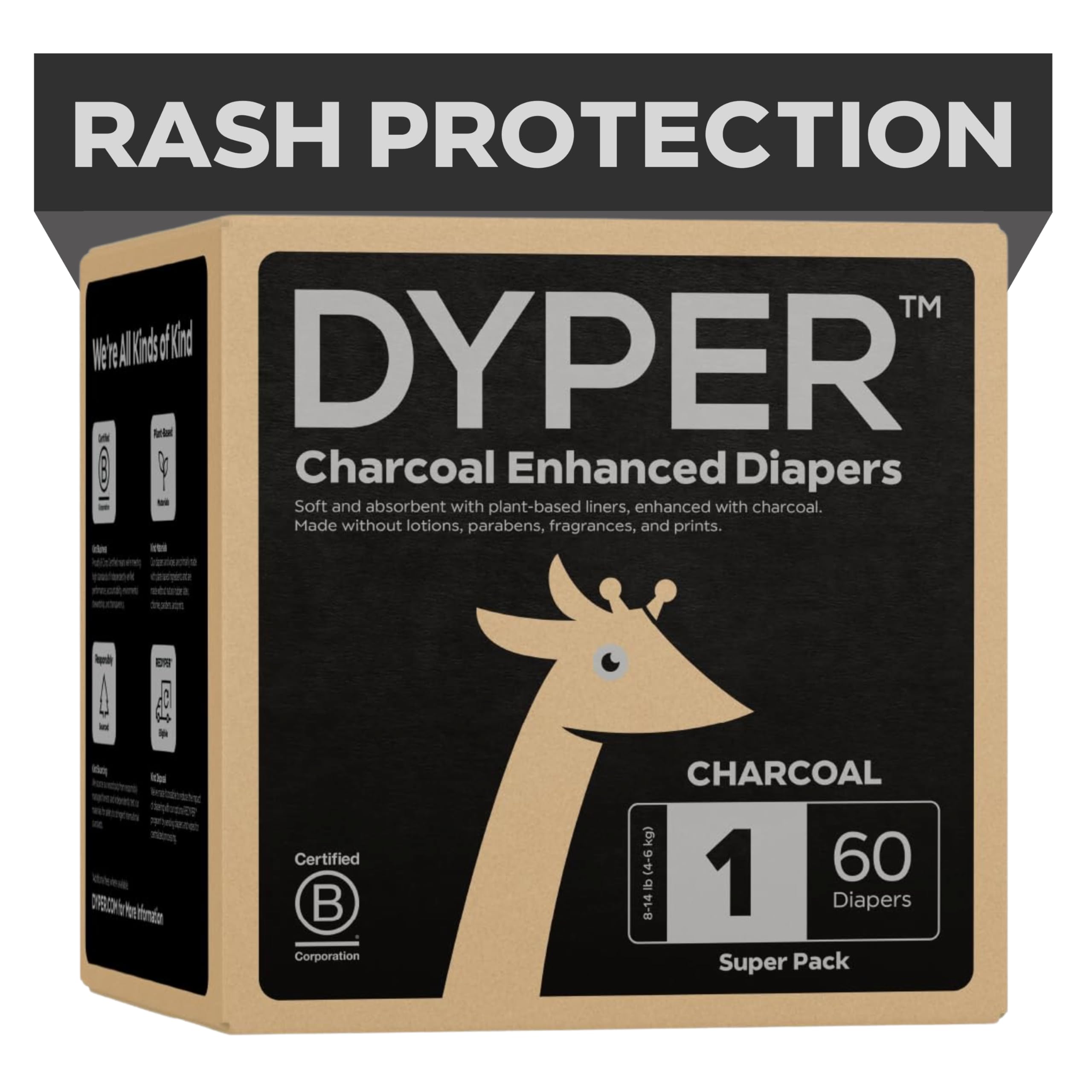
DYPER integrates activated charcoal directly into the diaper liner, a feature that neutralizes ammonia odors better than fragrances or chemical masking agents. The 3D embossed white inner liner feels soft and cloth-like, and the wide hip section reduces front-leak blowouts — a common pain point with other eco diapers. Reviewers consistently call it the best-fitting eco diaper they have tried.
The charcoal infusion does not compromise absorbency. Users report solid overnight performance with no skin wetness, and the absence of lotions, perfumes, and chlorine makes it a strong choice for sensitive skin. The diaper runs slightly large, which works well for chunkier babies but may cause gapping for newborns with slender legs.
DYPER is not a zero-plastic product — the outer layer contains plant-based materials but is not fully compostable in a home bin. If your priority is odor elimination and a secure fit rather than full compostability, this diaper delivers excellent real-world results at a mid-range price point.
Why it’s great
- Charcoal liner effectively traps odors without perfume
- Excellent leak and blowout protection with wide hip cut
- Ultra-soft 3D embossed liner feels cloth-like
Good to know
- Not fully compostable — outer layer contains plant-based blend
- Runs slightly large, may gap on small newborns
- Higher cost per diaper than mass-market alternatives
3. ECO BOOM Viscose from Bamboo Diapers (Size 3)

ECO BOOM uses 100% viscose from bamboo for both the top sheet and back sheet, creating a surface that many parents describe as the softest diaper they have ever used. The German-sourced super-absorption core locks moisture away efficiently, and the chlorine-free pulp bleaching process eliminates dioxin exposure. At a 68-count Size 3 pack, this is one of the most affordable bamboo diapers on the market.
The triple elastic ear tips and velcro tape are designed to avoid scratching delicate skin, and the addition of natural aloe oil on the surface adds a nourishing layer that reduces irritation. Dermatest certification confirms skin-friendliness for sensitive babies. However, some users report that the velcro closures can be tricky to secure reliably, especially during active diaper changes.
Leak performance is mixed — several reviewers report almost no leaks even during 12-hour overnight stretches, while others with smaller-thighed babies experience daily leakage. The bamboo construction is not certified as home compostable, though the plant-based materials do biodegrade faster than standard plastic diapers in industrial facilities.
Why it’s great
- Extremely soft bamboo top and back sheet
- Chlorine-free pulp and aloe oil for sensitive skin
- Affordable price point for a plant-based diaper
Good to know
- Velcro closures can be inconsistent during changes
- Leak performance varies significantly by baby’s leg shape
- Not certified home compostable — industrial compost only
4. Hello Bello Premium Diapers Surprise Pack (Size 1)

Hello Bello offers a hypoallergenic diaper made without parabens, phthalates, and latex, paired with fun surprise patterns that make changes less of a chore. The cloth-like outer feel is soft and breathable, and many parents report strong overnight absorbency lasting 12 hours without leaks. Consumer Reports also rated these diapers highly for overall performance.
The trade-off is inconsistent sizing and absorbency for a subset of users. Several verified reviews note that the leg holes do not seal well, causing blowouts with wet acidic stool, and that the waistband can feel tight while leaving gaps at the thighs. The moisture-wicking layer also leaves some hands feeling damp after checks, suggesting the top sheet does not always stay completely dry.
Hello Bello works best as a daytime diaper for babies with average proportions. The plant-based backsheet and clean ingredient list make it a solid mid-range choice, but the lack of a compostability certification means it still contributes to landfill waste.
Why it’s great
- Strong overnight absorbency for many users
- Hypoallergenic with no parabens, phthalates, or latex
- Fun surprise patterns and gender-neutral designs
Good to know
- Inconsistent leg seal causes blowouts for some babies
- Runs large — size 1 may swamp an 8-9 lb newborn
- Top sheet does not wick moisture away for all users
5. Millie Moon Luxury Diapers (Size 4)

Millie Moon focuses on a high-GSM (grams per square meter) topsheet that pulls moisture away from the skin quickly, reducing the chance of irritation. The wetness indicator changes from yellow to purple, giving parents a clear signal without needing to touch the inside of the diaper. The diapers are also free from lotions, latex, fragrance, and elemental chlorine.
What makes Millie Moon stand out is the sizing — the cut is slightly different from mainstream brands, making it ideal for babies who are between typical sizes. Parents report that these diapers eliminate blowouts that other brands could not contain, especially during the transition from size 3 to size 4. The cloud-touch softness is consistent across all sizes.
Millie Moon does not emphasize compostability in its marketing. The materials are plant-based in part but the diaper is designed for performance rather than decomposition. If your priority is leak protection and skin gentleness over eco-certification, this is a reliable luxury option.
Why it’s great
- High-GSM topsheet quickly wicks moisture away
- Unique sizing fills gaps between standard diaper sizes
- Virtually eliminates blowouts for most users
Good to know
- Not marketed as compostable or fully plant-based
- Lacks third-party eco certifications
- Premium price point with no compostability benefit
6. Esembly Cloth Diaper Bundle Size 1 (7-17lbs)
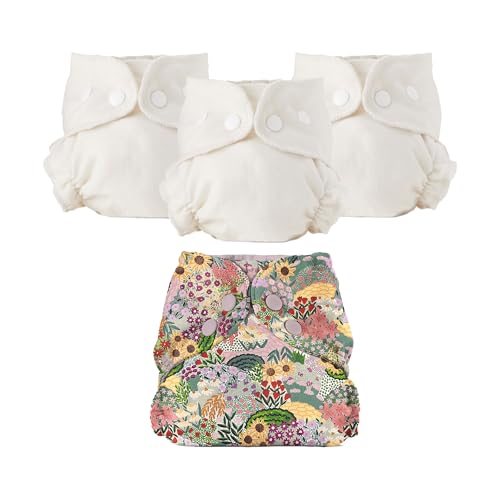
Esembly takes a different approach — a two-piece reusable system with an organic cotton inner that absorbs wetness and a waterproof outer made from recycled plastic bottles. This bundle includes three inners and one outer, enough to demonstrate the system before committing to a full stash. The unbleached organic cotton is OEKO-TEX certified, free from lead, BPA, PVC, and phthalates.
The butterfly-layered core is trimmer than traditional cloth diapers but still bulkier than disposables. Users report that 9 inners last about 1.5 days between washes, and the outer can be reused multiple times if not soiled. The adjustable snap closures at waist and legs allow a customizable fit as the baby grows. The outer also doubles as a swim diaper, adding versatility.
This is zero-waste diapering at its core — there is no disposable component, and the organic cotton composts at the end of its life. The upfront cost is higher than any disposable, but the long-term savings and environmental impact are unmatched. Be prepared for more laundry and a bulkier diaper profile.
Why it’s great
- 100% organic cotton inner with OEKO-TEX certification
- Reusable outer made from recycled plastic bottles
- Doubles as a swim diaper, adding practical value
Good to know
- Higher upfront cost for the full stash (24-30 inners recommended)
- Bulky fit compared to disposable diapers
- Requires consistent laundry routine and proper wash powder
7. The Honest Company Comfort Dry Diapers (Size 3)

The Honest Company upgraded its diaper line with a plant-based backsheet and OEKO-TEX STANDARD 100 certification, making this one of the most certified eco diapers available. The quilted bubble liner quickly pulls moisture away from the skin, and the wetness indicator takes the guesswork out of change timing. The stretchy sides handle wiggly toddlers well, and the seasonal prints (like Winter ’24 designs) add a touch of personality.
Absorbency is strong for daytime use and moderate overnight stretches, though some parents note that heavy wetters may need to size up for full overnight protection. The fit runs slightly snug compared to other brands, which is a plus for some babies but can cause red marks on chunkier thighs. The hypoallergenic inner lining and absence of latex, fragrance, and parabens keep rashes at bay for most users.
The plant-based backsheet is a step toward sustainability, but the diaper is not certified compostable — it still uses some synthetic materials in the absorbent core. For parents who want a trusted brand with strong certifications and cute designs, Honest Company delivers consistent quality at a premium price.
Why it’s great
- OEKO-TEX certified with plant-based backsheet
- Quilted bubble liner stays dry and prevents rashes
- Cute seasonal prints make changes more enjoyable
Good to know
- Not certified compostable — core contains synthetic materials
- Slightly snug fit may leave red marks on larger thighs
- Less overnight capacity than premium competitors
FAQ
Can compostable diapers go in my home compost bin?
How do compostable diapers compare to cloth diapers for waste?
Do compostable diapers cause more diaper rash than standard diapers?
Can I flush compostable diaper contents down the toilet?
Do compostable diapers hold enough liquid for overnight use?
Final Thoughts: The Verdict
For most users, the best compostable diapers winner is the Eco by Naty Size 2 because it is the only product that combines genuine home-compostable certification with zero plastic touching the baby’s skin and consistent leak protection. If you need superior odor control and a wider fit for chunkier babies, grab the DYPER Charcoal Enhanced. And for families ready to eliminate disposables entirely, nothing beats the Esembly Cloth Diaper Bundle — a reusable system that produces zero daily waste while keeping your baby in certified organic cotton.

Mo Maruf
I created WellFizz to bridge the gap between vague wellness advice and actionable solutions. My mission is simple: to decode the research and give you practical tools you can actually use.
Beyond the data, I am a passionate traveler. I believe that stepping away from the screen to explore new environments is essential for mental clarity and physical vitality.