Our readers keep the lights on and my smoothie glass nicely filled. As an Amazon Associate, I earn from qualifying purchases.
Bed bugs are relentless. Their bites cause itching, anxiety, and sleepless nights, and their resistance to many common pesticides makes eradication a serious challenge. Choosing the wrong chemical can waste time, money, and allow a small problem to explode into a full-scale infestation.
I’m Mohammad Maruf — the founder and writer behind WellFizz. I have spent countless hours analyzing pest control chemistry, reading verified buyer reports, and cross-referencing active ingredient efficacy data to build this guide.
Whether you need an instant spray for mattresses or a long-duration dust for wall voids, this research-backed breakdown of the best chemical to kill bed bugs will help you pick the right tool for your specific situation.
How To Choose The Best Chemical To Kill Bed Bugs
Not all bed bug chemicals are created equal. Resistance to pyrethroids is widespread in many populations, which means an outdated or poorly chosen spray can leave bugs alive and breeding. The key is matching the chemical’s mode of action to your infestation level and treatment surfaces.
Mode of Action: Contact Kill vs. Desiccant Dust
Contact sprays based on water or aerosol kill bugs when directly applied, but they often leave a short residual that may not reach hidden bugs. Desiccant dusts like silica gel work by absorbing the waxy outer layer of the bed bug’s exoskeleton, causing dehydration death over several days. Dusts remain active for years in undisturbed voids, making them ideal for long-term prevention.
Residual Protection Duration
A chemical that dries to a film and stays active for weeks is critical for breaking the egg-to-adult cycle. Sprays offering 30-day or 8-week residual protection reduce the number of reapplications needed. Short-lived products may require weekly treatment, which is impractical for severe infestations.
Surface Safety and Odor Profile
Water-based, odorless formulas are safe for mattresses, box springs, and upholstered furniture. Non-staining properties matter because bed bugs hide in visible areas. Dusts are generally safe on fabrics once dry, but fine particles require careful application to avoid inhalation.
Quick Comparison
On smaller screens, swipe sideways to see the full table.
| Model | Category | Best For | Key Spec | Amazon |
|---|---|---|---|---|
| Rockwell Labs Cimexa Dust | Desiccant Dust | Long-term wall void protection | Silica gel; lasts up to 10 years | Amazon |
| Harris 5 Minute Bed Bug Killer | Residual Spray | Fast kill with 30-day residual | Kills eggs in 5 minutes | Amazon |
| Bedlam Insecticide Spray | Aerosol | Fabrics, carpets, and egg control | Kills pyrethroid-resistant strains | Amazon |
| Good Night Bed Bug Spray | Water-Based Spray | Odorless multi-surface household use | Protection up to 8 weeks | Amazon |
| JT Eaton Bed Bug Spray | Water-Based Spray | Large area & mattress treatment | Gallon size with sprayer | Amazon |
In‑Depth Reviews
1. Rockwell Labs Cimexa Insecticide Dust

Cimexa is a desiccant dust made of amorphous silica gel — a step above diatomaceous earth because it absorbs the waxy cuticle of bed bugs faster, causing dehydration death in hours to days. User reports confirm 100% mortality on bed bugs within two weeks when applied inside mattress encasements and along baseboards. The dust remains effective for up to 10 years in undisturbed wall voids, making it a set-and-forget solution for long-term protection.
Unlike aerosol sprays, Cimexa does not off-gas or stain fabrics. Reviewers note that a single 4-ounce bottle provides enough coverage for several room treatments if applied thinly with a puffer. It works on pyrethroid-resistant populations and is safe around pets once the dust settles, though inhalation during application is a real concern that requires a mask and gloves.
The only downside is application precision — the fine powder drifts easily and requires a bellows duster for controlled placement. Some users report the bottle seems partially filled, but the actual weight of silica dust provides sufficient volume for most apartment-sized infestations when used sparingly.
Why it’s great
- Proven 100% kill rate on resistant bed bugs
- Lasts up to 10 years in undisturbed areas
- Odorless, non-staining, and pet-safe when dry
Good to know
- Requires a mask and puffer tool for safe application
- 4 oz bottle covers limited square footage
- Works slowly — takes days to dry out bugs
2. Harris 5 Minute Bed Bug Killer Spray

Harris delivers a water-based formula that kills bed bugs and their eggs within five minutes of direct contact — one of the fastest kill times available in a consumer spray. Its residual protection extends 30 days after drying, which reduces the frequency of reapplication. Users with moderate infestations report seeing live bugs stop moving almost instantly, and full eradication within a month with weekly treatment.
The spray is odorless and non-staining, designed for use on mattresses, box springs, bed frames, and baseboards. The 32-ounce bottle provides generous coverage for a single-bedroom setup. The active ingredients are EPA-registered for indoor use, giving confidence that the chemistry has been evaluated for safety on household surfaces.
Some users note that while the spray kills on contact effectively, it cannot reach bugs deep inside walls or under thick carpet padding. For severe infestations, combining Harris with a desiccant dust like Cimexa provides both immediate knockdown and long-term barrier protection. The product’s price sits in the mid-range, but the fast action offsets the cost for those needing urgent relief.
Why it’s great
- Kills bed bugs and eggs in 5 minutes
- Odorless and leaves no visible residue
- 30-day residual reduces reapplication workload
Good to know
- Not effective inside wall voids or dense padding
- Requires weekly re-application for best results
- Higher price per ounce than some alternatives
3. Bedlam Insecticide Spray

Bedlam is an aerosol designed specifically to address pyrethroid-resistant bed bug populations — a crucial feature since many over-the-counter sprays fail against modern superbugs. The formula penetrates cracks, seams, and fabric folds where bed bugs hide and lay eggs. It kills on contact and also has some residual activity against newly hatched nymphs.
Professional exterminators often recommend Bedlam as part of a multi-step regimen. User reviews consistently describe it as a critical component of a successful treatment strategy, especially for treating mattress seams, box spring edges, pleats, and zippers. The spray dries relatively quickly and leaves minimal staining on light-colored fabrics.
The main catch is that Bedlam alone rarely provides complete eradication in a single application. Most effective protocols require three to five treatments spaced three weeks apart to catch each new generation. The aerosol can is smaller than some gallon jug options, so heavy infestations may require multiple cans. Proper ventilation and a mask are recommended during use to avoid inhaling the mist.
Why it’s great
- Effective on pyrethroid-resistant bed bugs
- Penetrates seams, crevices, and fabric folds
- Formulated for bed bug eggs and nymphs
Good to know
- Requires multiple treatments for full control
- Small aerosol size — buy multiple cans
- Can streak walls if oversprayed
4. Good Night Bed Bug Spray

Good Night is a water-based, odorless spray that offers long residual protection for up to eight weeks — one of the longest durations among entry-level products. It targets bed bugs, lice, ticks, fleas, and dust mites, making it a versatile option for households with multiple pest concerns. The formula is EPA-registered and safe for use on mattresses, furniture, and carpets.
User feedback highlights its effectiveness on dust mites and fleas, with regulars reporting it as a staple for maintaining pest-free decks and homes. The spray applies easily with a trigger nozzle and dries clear without leaving a sticky film. For mild infestations or preventative spraying, it provides reliable coverage without the harsh chemical smell some users dislike.
However, several reviews note that severe bed bug infestations may outpace this product’s contact-kill speed. It works best as a monthly maintenance spray on known hiding spots, not as a single-shot eradicator. A few users also detect a slight scent after application, despite the odorless claim, though it fades rapidly.
Why it’s great
- Up to 8 weeks of residual protection
- Odorless and non-staining water-based formula
- Versatile — kills multiple pest types
Good to know
- Slower knockdown on heavy infestations
- Some users report a mild odor
- Less effective than dusts for wall voids
5. JT Eaton Bed Bug, Tick, and Mosquito Killer Spray
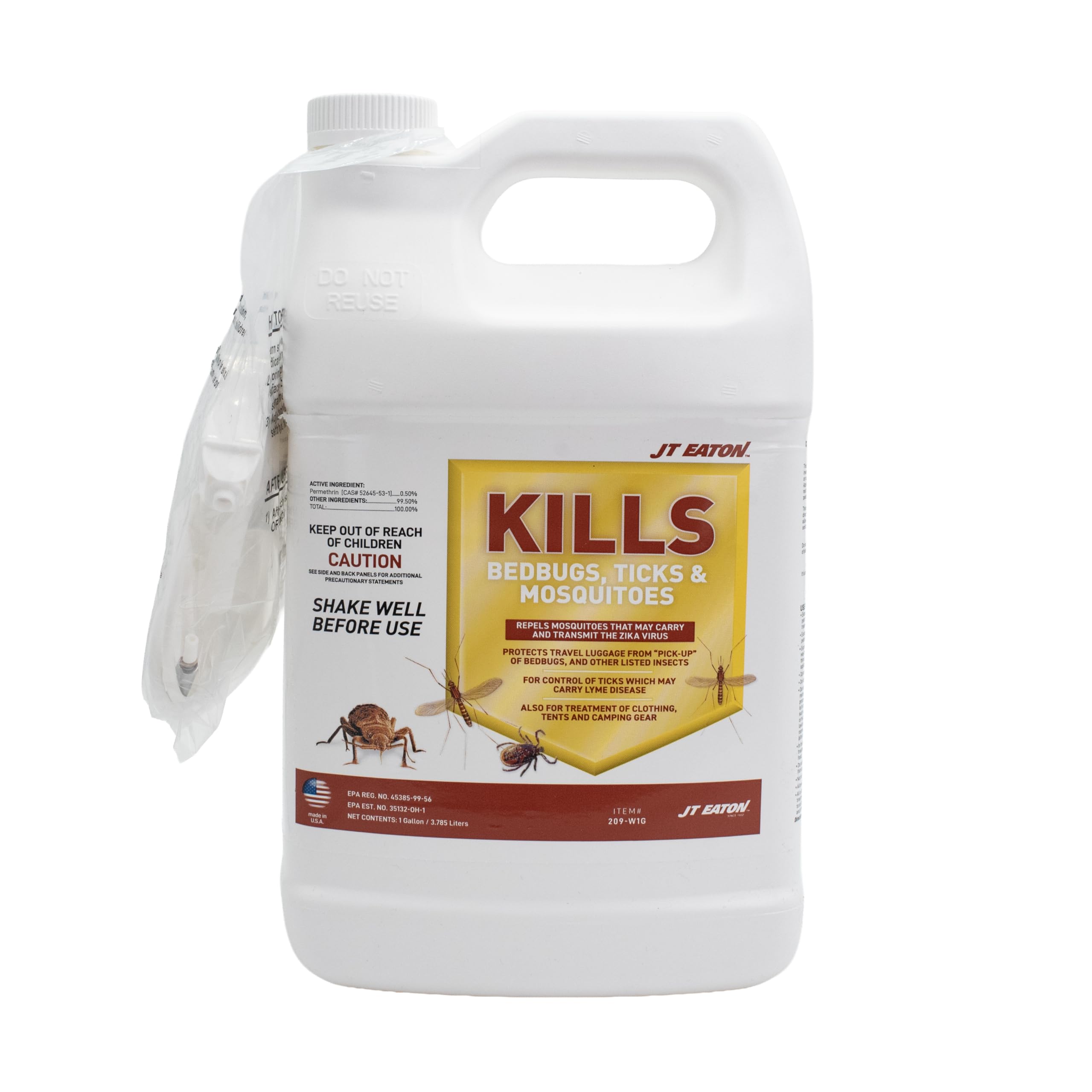
JT Eaton delivers a gallon of water-based insecticide with an included sprayer — the most economical volume option for treating multiple rooms. The formula kills bed bugs, ticks, and mosquitoes and is safe for application on mattresses, tents, clothing, and camping gear. Users report that the product kills bed bugs within an hour on contact and leaves no odor behind.
Hikers and outdoor enthusiasts particularly value this spray for treating clothing and gear to prevent tick and mosquito bites. Reviews highlight that treated clothing remains effective through several washes and provides at least four weeks of protection. The large bottle ensures you have enough chemical to finish a thorough, multi-session treatment plan without running out halfway.
One important consideration is that the label warns against use around cats, as the active ingredients can be toxic to felines. The spray also does not affect fleas, so if flea control is needed, a different product will be required. The included sprayer is basic — upgrading to a separate pump sprayer improves coverage consistency and reduces hand fatigue.
Why it’s great
- Gallon size covers large areas affordably
- Odorless and safe on fabrics when dry
- Effective on ticks and mosquitoes too
Good to know
- Not safe for use around cats
- Does not affect fleas
- Basic sprayer — consider upgrading
FAQ
Can silica dust harm my pets after it dries?
How many treatments does it take to get rid of bed bugs?
Are water-based sprays safe to use directly on my mattress?
What is the difference between Cimexa and diatomaceous earth?
Final Thoughts: The Verdict
For most users looking for a comprehensive solution, the best chemical to kill bed bugs is the Rockwell Labs Cimexa Dust because it kills resistant strains, lasts up to 10 years, and has no odor. If you need immediate relief on a mattress, grab the Harris 5 Minute Bed Bug Killer Spray for its five-minute knockdown and 30-day residual. And for heavy infestations requiring a multi-pronged attack, the Bedlam Insecticide Spray provides egg control and efficacy against pyrethroid-resistant bugs that many budget sprays miss.

Mo Maruf
I created WellFizz to bridge the gap between vague wellness advice and actionable solutions. My mission is simple: to decode the research and give you practical tools you can actually use.
Beyond the data, I am a passionate traveler. I believe that stepping away from the screen to explore new environments is essential for mental clarity and physical vitality.