Our readers keep the lights on and my smoothie glass nicely filled. As an Amazon Associate, I earn from qualifying purchases.
The Japanese Chin is a delicate toy breed with a refined palate and a compact digestive system. A kibble that works for a Labrador can overwhelm a Chin’s small jaw and sensitive stomach, making the search for properly sized, balanced nutrition a genuine challenge for dedicated owners.
I’m Mohammad Maruf — the founder and writer behind WellFizz. I’ve spent countless hours analyzing ingredient panels, kibble dimensions, protein profiles, and customer feedback to separate marketing fluff from genuinely Chin-safe nutrition.
This guide cuts through the noise to help you select the best dog food for japanese chin based on kibble geometry, digestibility guarantees, and breed-specific calorie density.
How To Choose The Best Dog Food For Japanese Chin
Selecting food for a Japanese Chin goes beyond grabbing any “small breed” bag off the shelf. Their brachycephalic (flat) face makes chewing difficult, and their fast metabolism demands high-quality fuel without excess calories that lead to obesity in this low-activity breed. Focus on kibble dimensions, protein digestibility, and coat-supporting fatty acids.
Kibble Size and Texture
Standard kibble is often too large for a Chin’s small mouth. Look for disc-shaped or tiny oval kibble measuring 8–11 mm. Softer, porous textures help protect delicate teeth and make chewing easier, especially for senior Chins with dental wear.
Protein Source and Digestibility
Chicken, turkey, and fish are excellent primary proteins. Avoid vague “meat meal” listings. A single, named protein source reduces the risk of food sensitivities that can manifest as skin irritation or loose stools in this breed.
Fatty Acids for Coat Health
The Japanese Chin’s signature silky coat requires omega-3 and omega-6 fatty acids from sources like salmon oil or flaxseed. Without these, the coat can become dry and brittle, and skin issues may develop.
Weight Management Considerations
Chins are content to nap beside you for hours. Without careful calorie control, weight gain happens quickly. Formulas with L-carnitine, fiber blends for satiety, or specifically labeled “weight care” recipes can help maintain ideal body condition.
Quick Comparison
On smaller screens, swipe sideways to see the full table.
| Model | Category | Best For | Key Spec | Amazon |
|---|---|---|---|---|
| Now Fresh Small Breed Adult | Premium Grain-Free | Picky eaters with chicken sensitivities | 8 mm kibble, 6 lb bag | Amazon |
| Royal Canin Small Weight Care | Weight Management | Overweight or low-activity Chins | 2.5 lb bag, L-carnitine added | Amazon |
| Open Farm Ancient Grains Small Breed | Humanely Raised | Owners wanting traceable ingredients | 4 lb bag, 100% traceable | Amazon |
| ACANA Wholesome Grains Small Breed | Grain-Inclusive | Digestive health with natural fiber | 11 mm disc kibble, 4 lb bag | Amazon |
| Bil-Jac Small Breed Adult | Soft Texture | Seniors or dogs with dental issues | Slow-cooked soft pellet, 6 lb bag | Amazon |
In‑Depth Reviews
1. Now Fresh Small Breed Adult Dry Dog Food

Now Fresh is formulated specifically for extra-small and small breeds, making it a natural match for the Japanese Chin. The kibble measures roughly 8 mm, small enough for a Chin to pick up and chew without struggling. Its chicken-free recipe features turkey, salmon, and duck, which reduces the likelihood of poultry-related sensitivities that can trigger skin or digestive reactions.
Fiber-rich pumpkin and probiotics support healthy digestion, and the inclusion of New Zealand green mussels provides joint-supporting glucosamine—valuable for a breed prone to patellar luxation. Owners report that even the pickiest eaters approach mealtime with enthusiasm, cleaning the bowl consistently.
The 6 lb bag offers a practical balance between freshness and value, and the grain-free formula suits Chins with grain sensitivities. The protein profile is high enough to maintain lean muscle without overloading calories for a lap-friendly breed.
Why it’s great
- Ultra-small kibble geometry fits Chin mouths perfectly
- Chicken-free for dogs with poultry sensitivities
- Probiotics and pumpkin support digestive regularity
Good to know
- Grain-free may not suit all Chins; transition slowly
- Premium price point compared to standard small-breed blends
2. Royal Canin Canine Care Nutrition Small Weight Care

Royal Canin targets a specific pain point for Japanese Chin owners: weight creep. This breed’s low activity level makes weight management a constant concern. The Small Weight Care formula provides L-carnitine to support fat metabolism while maintaining lean muscle mass, which is critical for a breed that carries weight easily in the midsection.
Clinical data from Royal Canin shows that 88% of slightly overweight small dogs fed this formula lost weight within two months. The fiber blend helps Chins feel full between meals, reducing begging behavior that often leads to overfeeding. The pellet size is tailored for small jaws, and the chicken-based protein is highly digestible.
Multiple owners confirm that even finicky Chins accept this food willingly, and the formula maintains muscle while encouraging gradual weight loss. The 2.5 lb bag is ideal for trial runs before committing to a larger purchase.
Why it’s great
- Clinically proven weight loss for small breeds
- L-carnitine helps burn fat without losing muscle
- Satiety fiber blend reduces begging
Good to know
- Smaller bag size means more frequent repurchases
- Not ideal for already lean or active Chins
3. Open Farm Ancient Grains Small Breed
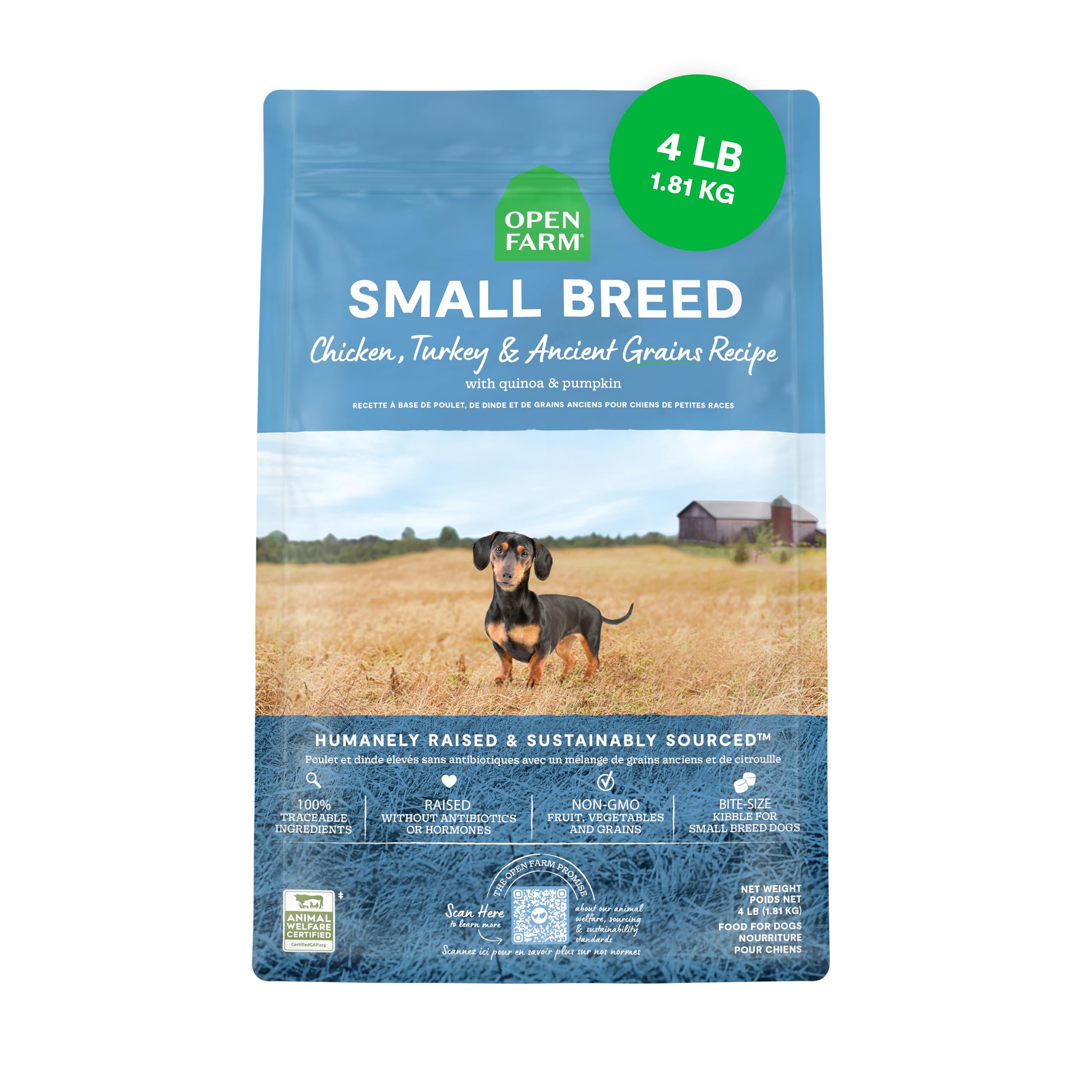
Open Farm stands out for owners who demand transparency. Every ingredient in this chicken and turkey recipe is traceable to its geographic origin, which provides peace of mind for those concerned about sourcing. The formula includes ancient grains like oats and quinoa, offering fiber and slow-release energy that suits a Chin’s moderate activity level.
The recipe excludes peas, potatoes, and legumes, making it a strong option for Chins with legume sensitivities that can cause digestive upset. The kibble size is designed for small breed mouths, and the high animal protein content (90% of protein from animal sources) supports the Chin’s coat and muscle maintenance.
Customer feedback notes that even picky Havanese and Chihuahua owners (breeds with similar eating habits to the Chin) see positive results with this food. The 4 lb bag is a practical size for single-dog households, and the lack of artificial preservatives aligns with a clean-feeding philosophy.
Why it’s great
- Full ingredient traceability from farm to bag
- Ancient grains support steady energy without blood sugar spikes
- Legume- and potato-free for sensitive digestion
Good to know
- Some Chin owners may find the pellet slightly firm
- Premium price compared to grocery-store brands
4. ACANA Wholesome Grains Small Breed Recipe
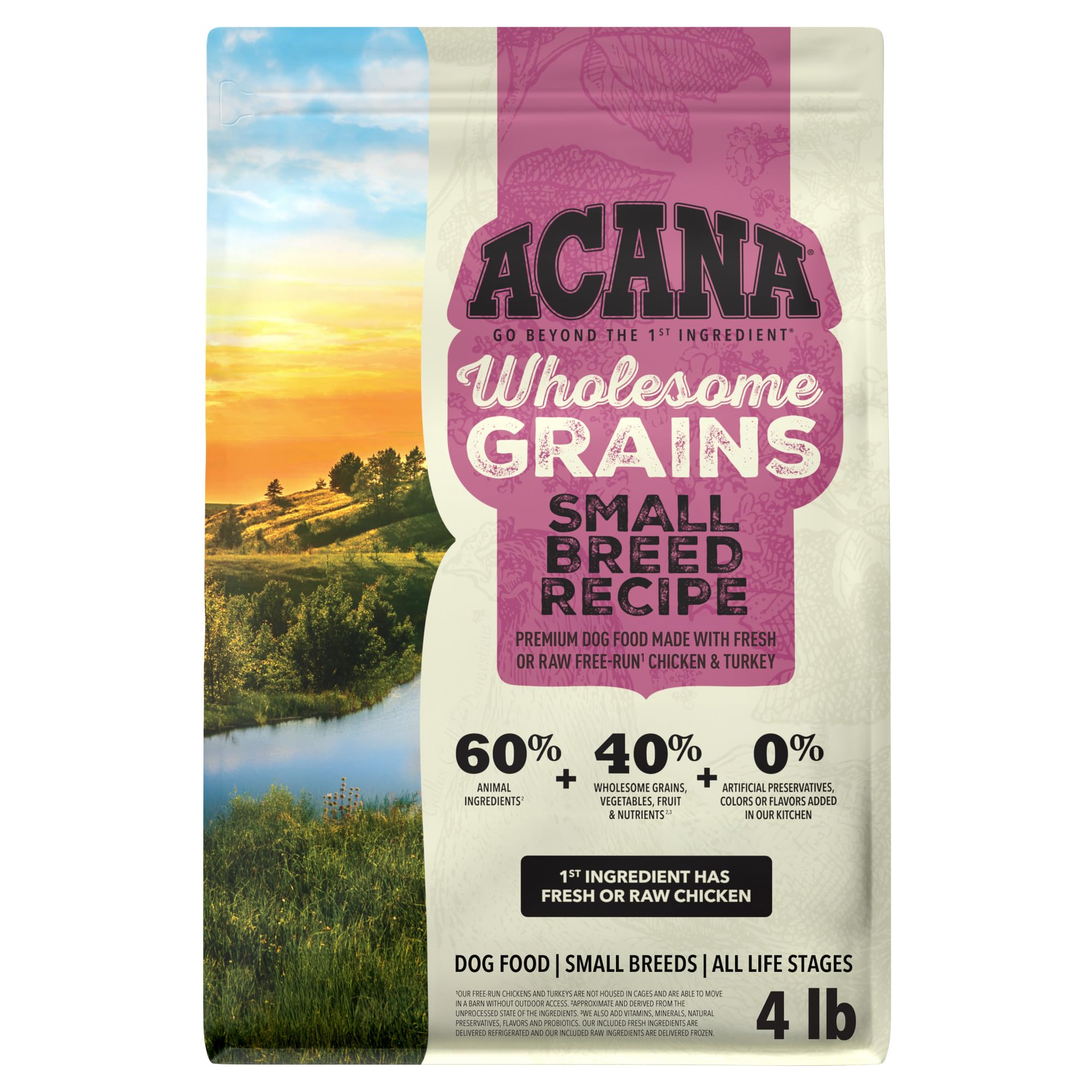
ACANA’s Wholesome Grains recipe for small breeds offers a balanced 60:40 ratio of animal ingredients to grains, fruits, and vegetables. For a Japanese Chin, this means high-quality protein from free-run chicken and turkey alongside fiber-rich oats, sorghum, and millet that support steady digestion without the gas that sometimes accompanies legume-heavy grain-free foods.
The kibble measures 11 mm in diameter and 4.5 mm thick—a disc shape that is easier for a Chin to pick up than spherical kibble. Natural omega-3 and omega-6 fatty acids from the animal ingredients help maintain the breed’s signature silky coat. Customer reviews note that toy breeds like Chihuahuas and toy poodles thrive on this formula, showing improved coat shine and consistent stool quality.
The 4 lb bag works well for trial periods. ACANA is manufactured in the USA with globally sourced ingredients, and the recipe avoids corn, wheat, and soy, which are common allergens for sensitive breeds.
Why it’s great
- Disc-shaped kibble easier for flat-faced dogs to manage
- Whole oats and millet provide gentle fiber for digestion
- Naturally occurring omegas support coat health
Good to know
- 11 mm diameter may still be large for some Chins
- Contains chicken and turkey; not for poultry-sensitive dogs
5. Bil-Jac Small Breed Adult Dry Dog Food
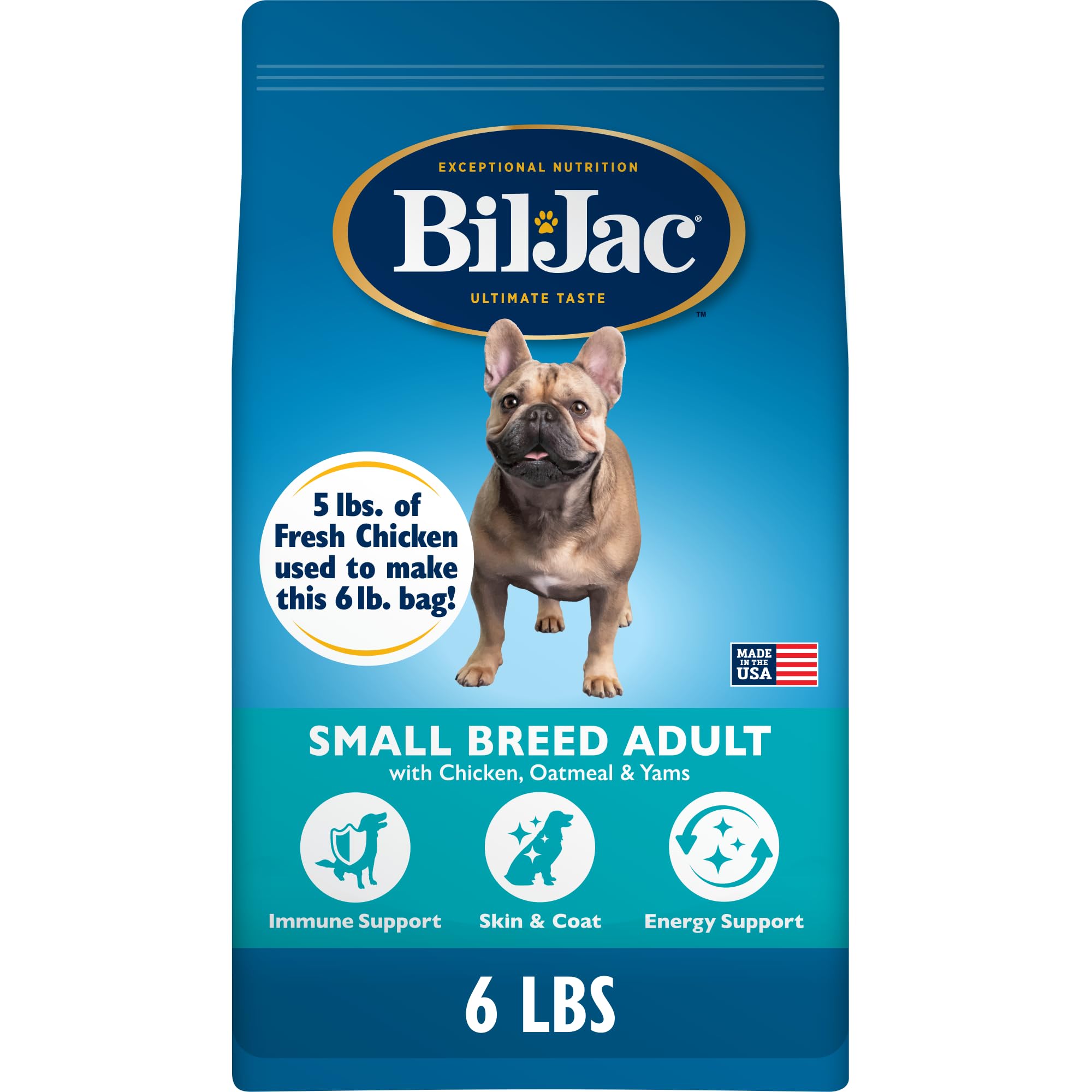
Bil-Jac’s unique slow-cook process creates a softer, porous kibble that is noticeably easier to chew than traditional hard pellets. This is a game-changer for Japanese Chin seniors or those with missing teeth or dental disease. The fresh chicken is the first ingredient, and the company avoids spraying fat on the outside of the kibble—flavor is cooked into the pellet itself, which means cleaner bowls and less residue.
Oatmeal and yams provide slow-release carbohydrates to fuel a Chin’s fast metabolism without causing energy crashes. Owners of Yorkies and other toy breeds report that this is the only dry food their dogs can comfortably chew, even when dental health is compromised. The 6 lb bag offers good value for daily feeding.
Some customers note that the softer texture can lead to more dust in the bag, so handling the bag gently during storage helps preserve the pellet integrity. For Chin owners whose dogs struggle with standard kibble hardness, Bil-Jac provides a measurable improvement in meal enjoyment.
Why it’s great
- Soft porous texture protects delicate teeth
- Fresh chicken as #1 ingredient, no sprayed-on fats
- Oatmeal and yams provide sustained energy
Good to know
- Softer kibble may crumble into dust in large bags
- Not grain-free; contains wholesome grains
FAQ
Can Japanese Chin eat grain-free dog food safely?
How often should I feed a Japanese Chin to maintain healthy weight?
Is a weight management formula always necessary for Japanese Chin?
Final Thoughts: The Verdict
For most users, the best dog food for japanese chin winner is the Now Fresh Small Breed Adult because its tiny 8 mm kibble geometry and chicken-free multi-protein recipe directly address the breed’s small mouth and common poultry sensitivities. If you want weight control support for a less active Chin, grab the Royal Canin Small Weight Care. And for a Chin with dental issues or missing teeth, nothing beats the Bil-Jac Small Breed Adult for its soft, easy-to-chew texture.

Mo Maruf
I created WellFizz to bridge the gap between vague wellness advice and actionable solutions. My mission is simple: to decode the research and give you practical tools you can actually use.
Beyond the data, I am a passionate traveler. I believe that stepping away from the screen to explore new environments is essential for mental clarity and physical vitality.