Our readers keep the lights on and my smoothie glass nicely filled. As an Amazon Associate, I earn from qualifying purchases.
An arrow that wobbles in flight or a broadhead that deflects off bone turns a perfect setup into a miss or a wounded animal. The balance between cutting diameter, blade thickness, ferrule material, and grain weight determines whether your broadhead flies true and penetrates deep enough for a clean, humane kill. Every bowhunter faces this trade-off when choosing between mechanical and fixed-blade designs.
I’m Mohammad Maruf — the founder and writer behind WellFizz. This guide is built from hours cross-referencing real field results, customer feedback on hundreds of shots, and the measurable specs that separate heads that group tight from heads that drift.
After comparing cutting diameters from 1 1/16 inches to 2 inches, ferrule materials from aluminum to stainless steel, and deployment mechanisms from fixed to front-deploying mechanicals, this analysis of the best compound bow broadheads isolates the models that deliver consistent accuracy and terminal performance without compromise.
How To Choose The Best Compound Bow Broadheads
Choosing a broadhead for your compound bow isn’t about picking the one with the largest cut or the sharpest marketing claim. The right head matches your bow’s kinetic energy, your arrow’s spine and FOC, and the game you pursue. Fixed-blade heads offer reliability and deep penetration at the cost of more wind drift. Mechanical heads fly like field points and create massive wound channels but require sufficient impact energy to deploy fully. A 55-pound bow launching a 400-grain arrow at 260 feet per second demands a different broadhead than a 70-pound bow pushing a 450-grain arrow at 300 feet per second. Ignore this relationship and even the best-ranked head will underperform.
Fixed Blade vs Mechanical Broadheads
Fixed-blade broadheads consist of a single-piece ferrule with blades ground directly into the tip or inserted into slots. They never fail to open because there is nothing to open. Penetration through shoulder bone, rib cage, and thick hide is exceptional because no energy is lost to deploying blades. The penalty is flight — exposed blades catch wind and cause planing at longer distances. Mechanical broadheads keep blades flush against the ferrule during flight, eliminating planing and matching field-point trajectory closely. On impact, the blades deploy outward to cutting diameters of 1.5 to 2 inches. The trade-off: if impact velocity is too low, blades may not open fully, reducing wound channel and penetration. Hunters taking quartering- to shots on mature bucks often prefer fixed heads for the bone-smashing authority. Hunters focused on broadside lung shots at moderate ranges lean toward mechanicals for the hemorrhaging wound channels.
Cutting Diameter and Blade Thickness
Cutting diameter refers to the maximum width of the wound channel. A 1 1/16-inch head creates a smaller hole than a 2-inch head, but that smaller diameter often penetrates deeper because less surface area creates less drag. For whitetail deer, a 1.25-inch cut that passes through both lungs is more lethal than a 2-inch cut that stops at the far-side rib. Blade thickness affects durability — .035-inch stainless blades bend less on impact with bone than .025-inch blades. Thicker blades also create more drag, so the trade-off is between structural integrity and penetration depth. For compound bows producing over 65 foot-pounds of kinetic energy, thicker blades are the safer choice. For lower-poundage setups, thinner blades reduce energy drain and improve pass-through probability.
Ferrule Material and Grain Weight Consistency
The ferrule is the central spine that holds the blades and threads into the arrow insert. Aluminum ferrules are lightweight and common on mid-range broadheads, keeping overall arrow weight low. Steel ferrules, often seen in one-piece designs, add weight forward (improving FOC) and increase toughness against impact bending. Grain weight must match what your arrow spine and bow tune require — 100 grain is the most common for modern compound bows, while 125 grain shifts FOC forward, improving penetration on heavy arrows. Spin-testing each broadhead before shooting reveals ferrule straightness and thread alignment. A head that fails the spin test — wobbling more than 1/16 inch at the tip — will not group with field points and should be discarded. Premium and mid-range brands often spin-test each head at the factory; budget brands sometimes skip this step.
Quick Comparison
On smaller screens, swipe sideways to see the full table.
| Model | Category | Best For | Key Spec | Amazon |
|---|---|---|---|---|
| G5 Deadmeat V2 | Mechanical | Maximum wound channel with field-point flight | 1.5-inch cut, 3-blade rear deployment | Amazon |
| Grim Reaper Razortip Whitetail Special | Mechanical | Long-range accuracy on whitetail | 2-inch cutting diameter, .035-inch blades | Amazon |
| Slick Trick GrizzTrick | Fixed Blade | Bone-splitting penetration on large game | 2-inch total cut, .035-inch stainless blades | Amazon |
| G5 Montec CS | Fixed Blade | Lightweight bows and pass-through penetration | 1 1/16-inch cut, one-piece carbon steel | Amazon |
| RamCat Broadheads | Fixed Blade | Field-point accuracy with offset blades | 1 3/8-inch cut, .032-inch blades | Amazon |
| New Archery Products Spitfire | Mechanical | Reliable front-deploying action for whitetail | 1.5-inch cut, front-deploying design | Amazon |
| Muzzy MX-3 | Fixed Blade | Budget-friendly entry into reliable fixed blades | 1.25-inch cut, .025-inch blades | Amazon |
In‑Depth Reviews
1. G5 Deadmeat V2

The G5 Deadmeat V2 stands out as a mechanical broadhead that combines rugged all-steel construction with a rear-deployment mechanism that keeps the three blades locked during flight. The SnapLock collar creates an audible click when each blade is secured, eliminating the worry of premature deployment that plagues lesser expandables. The 1.5-inch cutting diameter produces a massive wound channel while the hardened chisel tip initiates penetration on contact, driving the blades open as the arrow enters the animal. Field reports consistently show that this head flies with the same point of impact as its included BMP practice tip, a ballistic match that takes the guesswork out of tuning.
Hunters shooting bows from 57 pounds to 70 pounds have reported that the Deadmeat V2 delivers complete pass-throughs on whitetail deer, with blood trails starting within yards and recoveries under 75 yards. The rearward deployment design reduces the risk of blade deflection on angled impacts, and the all-steel ferrule resists bending even when hitting rib bones at full velocity. The blades and collar are replaceable, extending the head’s lifespan well beyond a single harvest. At the premium end of the market, this broadhead offers the highest reliability-to-cutting-diameter ratio among mechanicals.
The only real caution involves kinetic energy — like all mechanicals, the Deadmeat V2 requires sufficient impact force to deploy its blades fully. For bows generating less than 55 foot-pounds of kinetic energy, a fixed-blade model may be a safer choice. The 1.5-inch cut is slightly smaller than the 2-inch heads offered by competitors, but the consistent deployment and durability trade-off makes it a more dependable performer across varied shot angles and game sizes.
Why it’s great
- SnapLock collar offers audible blade retention security
- All-stainless-steel construction resists impact bending
- BMP practice tip matches flight perfectly
- Replaceable blades and collar extend product life
Good to know
- Requires sufficient kinetic energy for full blade deployment
- Premium price may not fit all budgets
2. Grim Reaper Razortip Whitetail Special
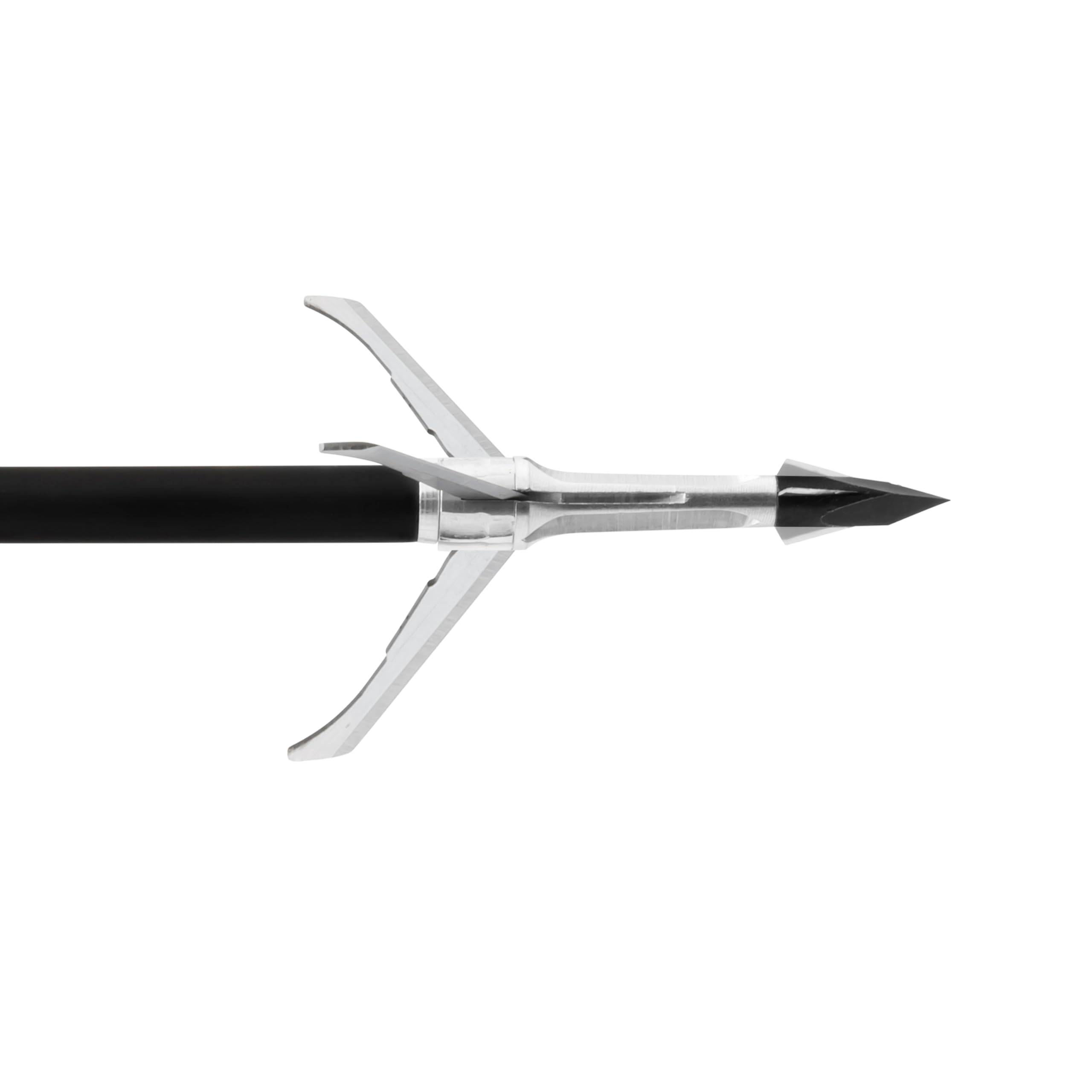
The Grim Reaper Razortip Whitetail Special pushes cutting diameter to 2 inches, making it one of the widest-cutting mechanical broadheads available for compound bows. The .035-inch 440 stainless steel blades provide enough thickness to withstand bone contact, while the Razor Tip with integrated mini-blade design improves initial penetration compared to traditional blunt-tip mechanicals. The included practice head allows shooters to confirm point-of-impact alignment before heading into the field — a critical step given that a 2-inch opening mechanism creates more drag potential than smaller designs. Experienced users report that the head flies consistently at extended ranges when shot from bows producing at least 65 foot-pounds of kinetic energy.
Field results on whitetail deer show that the Razortip creates exit wounds large enough to produce blood trails that begin within feet of the hit. Hunters recovering animals report pass-throughs on broadside shots, with the blade assembly holding together through rib penetration. The design focuses specifically on whitetail-sized game — for larger animals like elk or bear, the 1 3/4-inch or standard 1 1/8-inch models may offer better penetration depth. The head is also field-serviceable, with replacement blades available to restore cutting performance after multiple uses.
The main limitation is the kinetic energy floor. Below 65 foot-pounds, the blades may not achieve full deployment, reducing the effective cutting diameter and wound channel. The 2-inch wide-open profile also creates significant drag inside the animal, which can limit pass-through on quartering shots or heavy-boned shoulder impacts. For hunters running high-energy compound setups and prioritizing maximum hemorrhagic trauma, this head delivers the largest cut in its class.
Why it’s great
- 2-inch cutting diameter creates massive blood trails
- .035-inch 440 stainless blades resist bone damage
- Includes a matching practice head for tuning
- Replaceable blades extend broadhead lifespan
Good to know
- Requires high kinetic energy for reliable deployment
- Wide cut may reduce pass-through on heavy bone
3. Slick Trick GrizzTrick

The Slick Trick GrizzTrick marries the reliability of a fixed-blade design with an aggressive 2-inch total cutting surface achieved through a unique four-blade configuration. Two main blades and two bleeder blades create an X-shaped wound channel, and the .035-inch stainless steel construction ensures that blades resist rolling or bending when striking shoulder bone. The Super Steel ferrule adds structural rigidity, while the Alcatraz Bladelock system holds each blade firmly in place during flight and impact. Users report that the GrizzTrick flies identically to field points when shot from a well-tuned compound bow, grouping tight at 40 yards and beyond.
Long-term field performance from hunters who have used this head for nearly a decade shows consistent pass-through on deer and bear. The four-edge tip design splits bone on contact rather than glancing off, which is particularly valuable for quartering-toward shots where the arrow must penetrate the near shoulder. Bleeder blades add 1 inch of additional cutting surface, creating the same wound channel diameter as a 2-inch mechanical without the deployment risk. The 125-grain version provides extra forward weight for high-FOC arrow builds.
The downsides are the consequences of its fixed-blade design. The four exposed blades create more in-flight drag and wind planing potential than a two-blade or mechanical head, making it less forgiving in crosswinds at extreme ranges. The 125-grain weight also limits compatibility with standard arrow spines — shooters must confirm their arrow setup is tuned for the heavier tip. For hunters who prioritize guaranteed blade deployment and bone-splitting terminal performance, the GrizzTrick is the most aggressive fixed-blade on this list.
Why it’s great
- Four-blade design creates 2-inch cutting surface
- .035-inch stainless blades resist deformation on bone
- Alcatraz Bladelock ensures secure blade retention
- Proven decade-long track record on large game
Good to know
- Four exposed blades increase wind planing
- 125-grain weight may require arrow spine adjustment
4. G5 Montec CS
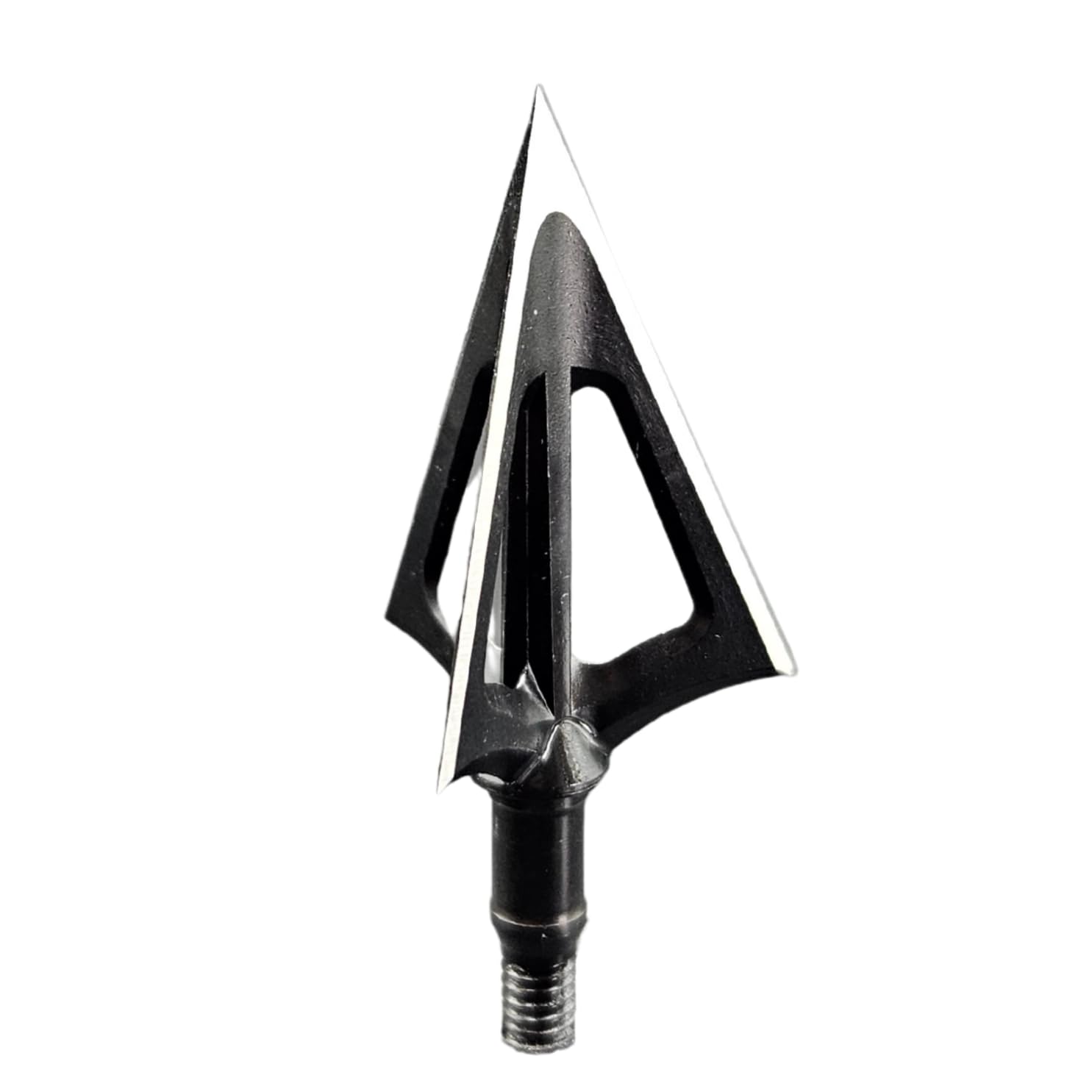
The G5 Montec CS represents the opposite philosophy from wide-cutting mechanicals: a one-piece metal injection molded (MIM) carbon steel construction with no blades to replace, no collars to snap, and nothing to deploy. The cutting diameter is a modest 1 1/16 inches, but because the entire head is a single solid unit, penetration efficiency is maximum — every bit of kinetic energy goes into forward momentum rather than separating components. Each broadhead is factory spin-tested, ensuring thread alignment and tip straightness that match field point accuracy out of the package. Users shooting lower-poundage bows (53 to 60 pounds) report dramatic penetration improvements over previous fixed and mechanical heads.
Hunters have used the Montec CS to take deer, elk, and even bear with full pass-throughs on shots that would have stopped a wider head. The diamond-cut edge holds sharpness well and can be touched up with a waterstone after harvest. The practice tips from G5 match the Montec’s flight characteristics precisely, allowing shooters to confirm broadhead groups without wasting the actual heads during sight-in. The one-piece design also eliminates any concern about blades loosening in the quiver or during repeated shots into foam targets.
The small cutting diameter produces a narrower wound channel, which can result in a less dramatic blood trail compared to 1.5-inch or 2-inch cuts. Hunters who prefer maximum hemorrhaging may find the Montec leaves less surface wounding, particularly on pass-through shots where the exit hole is only slightly larger than the entrance. The head also lacks replaceable blades, meaning that if the tip or cutting edge is damaged on a shoulder blade, the entire broadhead must be replaced rather than just a blade.
Why it’s great
- One-piece MIM carbon steel construction maximizes penetration
- Factory spin-tested for straightness and accuracy
- Excellent for lower-poundage bows needing deep penetration
- Diamond-cut edge can be resharpened with a waterstone
Good to know
- Small cutting diameter produces narrower wound channel
- If damaged, the entire head must be replaced
5. RamCat Broadheads
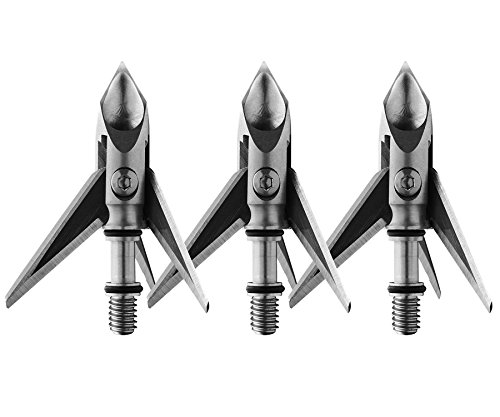
The RamCat Broadhead uses a one-piece stainless steel body with offset blades that create an airfoil effect, channeling wind over the blades to minimize planing and improve flight stability. The 1 3/8-inch cutting diameter sits between the compact Montec and the wider expandables, offering a balanced trade-off between wound channel size and penetration depth. The .032-inch blade thickness provides solid bone resistance while maintaining a sharp edge that cuts on entry and exit. Users consistently report that RamCats fly identically to field points out to 50 yards, eliminating the need for separate broadhead tuning after bow setup is complete.
Field reports from elk, deer, and javelina hunts describe pass-throughs on shoulder bone and heavy muscle, with the tip surviving impacts that would deform softer aluminum ferrules. The replaceable blades allow hunters to restore cutting performance after a harvest without replacing the entire head, and the double-edge cutting profile creates entry and exit trauma that improves blood trail visibility. Many hunters note that game animals drop within 30 yards of the shot, with recovery distances under 10 minutes after impact. The company no longer manufactures these heads, making remaining stock a limited find.
The main drawback is availability — as a discontinued model, finding three-packs at reasonable prices requires searching secondary marketplaces. The offset blade design also means that the head has a specific rotational preference that aligns with the arrow’s fletching, so shooters must confirm the blade orientation matches their arrow setup for optimal flight. While the one-piece stainless body is durable, the blades themselves can bend on extreme-angle bone impacts, requiring replacement.
Why it’s great
- Offset blade design eliminates wind planing in flight
- 1 3/8-inch cut balances wound size and penetration
- Replaceable blades extend broadhead life
- Stainless steel body survives heavy bone impacts
Good to know
- Discontinued model with limited remaining stock
- Blade orientation must match arrow fletching alignment
6. New Archery Products Spitfire

The New Archery Products Spitfire uses a front-deploying mechanical design, meaning the blades open forward from the tip upon impact rather than deploying from the rear. The Micro Grooved Slimline Ferrule reduces friction drag for better penetration, and the legendary Trophy Tip point splits bone on contact without blunting. The Spring Clip Technology holds the blades closed during flight and in the quiver without rubber bands or O-rings — a common failure point on competing expandables. The Diamize sharpening process produces blades sharp enough that users report opening cuts with minimal resistance, improving both entry wound size and overall blood loss.
On whitetail deer, the Spitfire expands to a 1.5-inch cutting diameter on impact and produces consistent pass-throughs on broadside shots. The spring clip mechanism ensures that blades stay closed during flight but release instantly on contact, preventing the partial deployment issues that plague some rear-deploy heads traveling at high speed. Hunters report that the heads remain reusable after harvest — blades can be cleaned with a wire brush and warm water, and the ferrule shows no deformation after multiple shots into game. The flat nose of the Trophy Tip also helps prevent the broadhead from glancing off angled surfaces such as ribs shot from a steep quartering angle.
The front-deploying mechanism creates a slightly larger frontal profile than rear-deploy designs, which can increase drag slightly on impact and reduce overall penetration depth on heavy-boned game. For elk or bear, the Spitfire’s penetration may fall short compared to a fixed-blade head or a rear-deploy mechanical with a more streamlined tip. Some users in the western states note that while the Spitfire works well on southeastern whitetail, they would switch to a heavier fixed blade for larger game species where deeper penetration is critical.
Why it’s great
- Front-deploying design opens blades reliably on impact
- Spring Clip Technology eliminates rubber-band failures
- Diamize sharpening creates exceptionally sharp blades
- Trophy Tip splits bone on contact
Good to know
- Front deployment adds drag, reducing penetration on large game
- Some users recommend switching to fixed blades for elk or bear
7. Muzzy MX-3

The Muzzy MX-3 is a compact fixed-blade broadhead built specifically for high-speed compound bows. The shorter overall length reduces lever arm forces that cause longer heads to wobble at arrow velocities exceeding 300 feet per second. The Trocar Tip design crushes bone rather than deflecting, and the 1.25-inch cutting diameter creates solid wound channels while keeping surface drag low enough for complete pass-throughs on whitetail. The aluminum ferrule keeps weight low, and the .025-inch blade thickness provides a balance of sharpness and durability that suits hunters who prefer lighter draw weights or faster arrow speeds.
Users report that the MX-3 flies identically to field points after bow tuning, with penetration depths in 8-inch foam targets reaching 12 to 14 inches compared to 6 inches for field points — a testament to the Trocar Tip’s ability to drive through resistance. Replaceable blades allow the head to be reused multiple times, and practice blades are available for tuning without wasting hunting heads. Long-time Muzzy users consistently cite the brand’s reliability over decades of use, with the MX-3 continuing that tradition at an entry-level price point. The three-pack configuration provides enough heads for multiple setups or backup arrows.
The .025-inch blade thickness is thinner than the .035-inch blades found on premium fixed-blade heads, making the MX-3 more susceptible to blade bending on hard bone impacts such as an elk shoulder. The aluminum ferrule is lighter and less durable than steel or stainless steel alternatives — users who regularly hunt large game may find the ferrule deforms after repeated high-impact shots. Some units may fail the spin test out of the box, reflecting manufacturing tolerances that are looser than premium brands. For the price, it remains the most accessible entry into dependable fixed-blade performance.
Why it’s great
- Short design minimizes wobble on high-speed compound bows
- Trocar Tip crushes bone for reliable penetration
- Replaceable blades and practice blades included
- Most budget-friendly entry into fixed-blade broadheads
Good to know
- .025-inch blades are thinner and may bend on heavy bone
- Aluminum ferrule less durable than steel for large game
- Some units may fail the spin test due to loose tolerances
FAQ
Should I use mechanical or fixed-blade broadheads with my compound bow?
How do I know if my arrow spine matches a 125-grain broadhead?
How important is the spin test for broadheads?
Can I reuse a compound bow broadhead after harvesting an animal?
Final Thoughts: The Verdict
For most users, the best compound bow broadheads winner is the G5 Deadmeat V2 because it combines a reliable SnapLock blade retention system with a 1.5-inch cutting diameter that provides massive wound channels without sacrificing penetration on a wide range of kinetic energies. If you want maximum cutting surface for high-energy setups, grab the Grim Reaper Razortip Whitetail Special. And for bone-splitting reliability on large game, nothing beats the Slick Trick GrizzTrick.

Mo Maruf
I created WellFizz to bridge the gap between vague wellness advice and actionable solutions. My mission is simple: to decode the research and give you practical tools you can actually use.
Beyond the data, I am a passionate traveler. I believe that stepping away from the screen to explore new environments is essential for mental clarity and physical vitality.